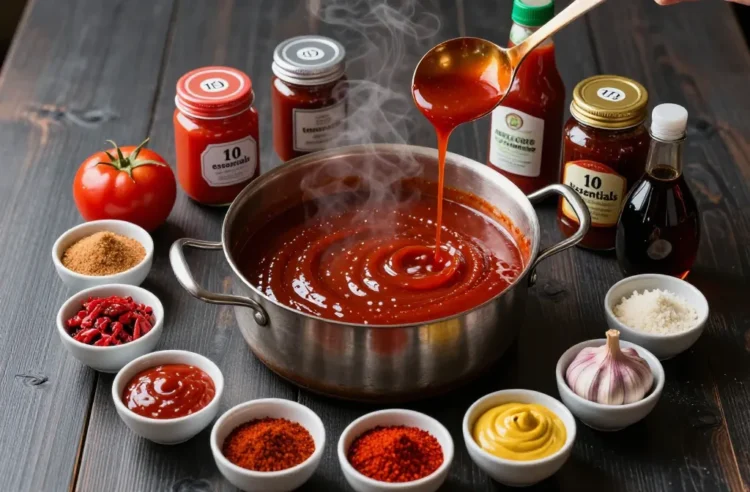
I learned to batch-cook BBQ sauce when my tiny kettle grill became the weekend hub for neighbors. My first big pot tasted flat after an hour on the simmer — and it only got worse on the second day. Bulk cooking magnifies balance issues, scorches sugar fast, and hides weak aromatics. In this guide, you’ll learn the 10 ingredients that keep flavor bold, stable, and scalable — and exactly how to use them so your sauce holds up from marinate to mop to table.
1. Tomato Base: The Backbone That Survives Long Simmering
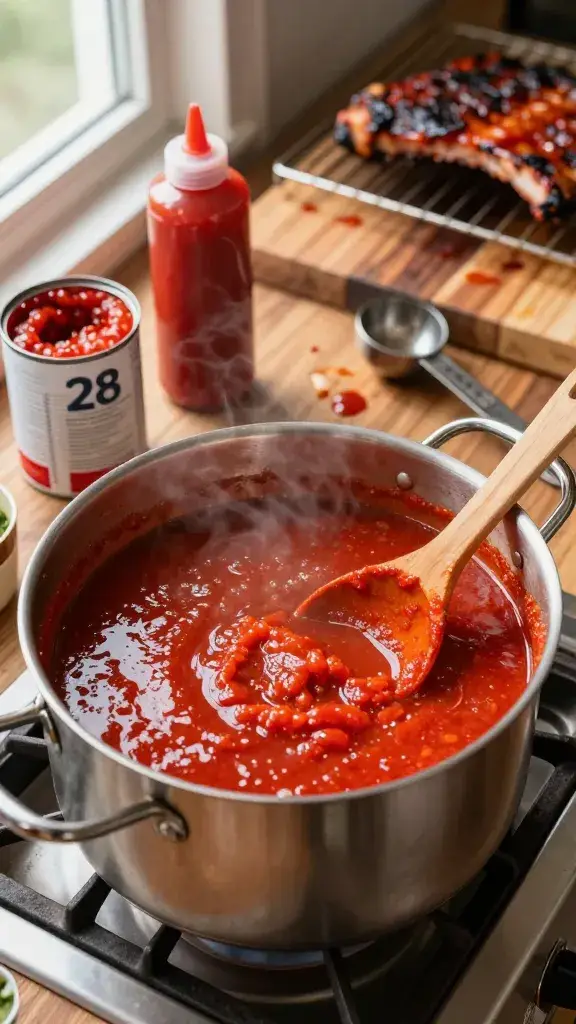
Without a strong tomato base, bulk sauce turns watery and dull by the second day. A thin start forces you to overreduce, burning sugars and muddling spices.
What to Use Instead
- Canned crushed tomatoes (28–56 oz cans) for bright acidity and texture
- Tomato paste to thicken without long boiling — 2–4 tablespoons per quart
- Ketchup for classic sweetness and gloss — reliable for family-friendly sauces
Combine crushed tomatoes with a squeeze of paste and a smaller measure of ketchup for body that doesn’t scorch. That combo lets you simmer gently and still pour easily the next day.
Action today: For each quart of sauce, start with 2 cups crushed tomatoes, 1 cup ketchup, and 2 tablespoons tomato paste.
2. Brown Sugar and Molasses: Controlled Sweetness That Won’t Burn Early
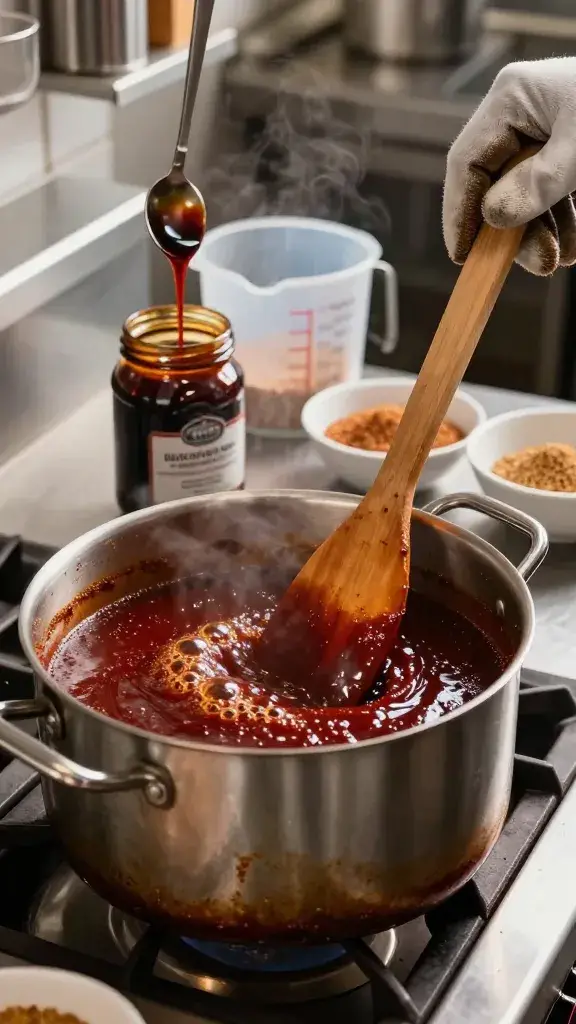
In big pots, direct sugar-to-heat contact causes bitter scorching along the bottom. Once burned, that flavor spreads fast and ruins the batch.
How to Fix It
- Use dark brown sugar for deeper caramel notes with built-in moisture
- Add unsulfured molasses for mineral depth and shine — 1–2 teaspoons per quart
- Stir in sugars after the pot reaches a low simmer, not at the start
Sweeten in stages and taste after 10 minutes of gentle bubbling. The flavor rounds out as it warms — you need less than you think.
Takeaway: Add 2–3 tablespoons dark brown sugar per quart after the sauce is simmering and whisk well to avoid hot spots.
3. Apple Cider Vinegar: Acid That Stays Bright in Big Batches
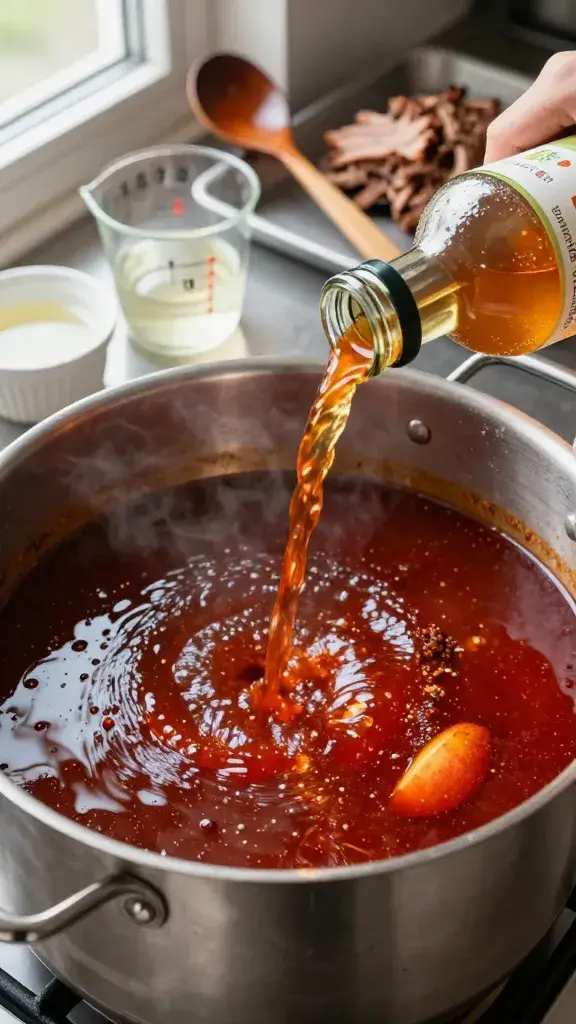
Bulk sauce often finishes cloying because heat dulls acidity faster than sweetness. Without enough acid, meat tastes heavy and one-note.
Signs You Need More Acid
- Sauce sticks to the tongue with a syrupy finish
- Pulled pork tastes flat even with plenty of sauce
- You keep adding salt but still miss “sparkle”
Apple cider vinegar adds a fruity snap that survives long cooks. Balance with a splash of white vinegar if you want a cleaner edge.
Action today: Start with 1/3 cup apple cider vinegar per quart; adjust up by tablespoons at the end until the sauce makes your mouth water.
4. Mustard: Emulsifier, Heat, and Tang in One Spoonful
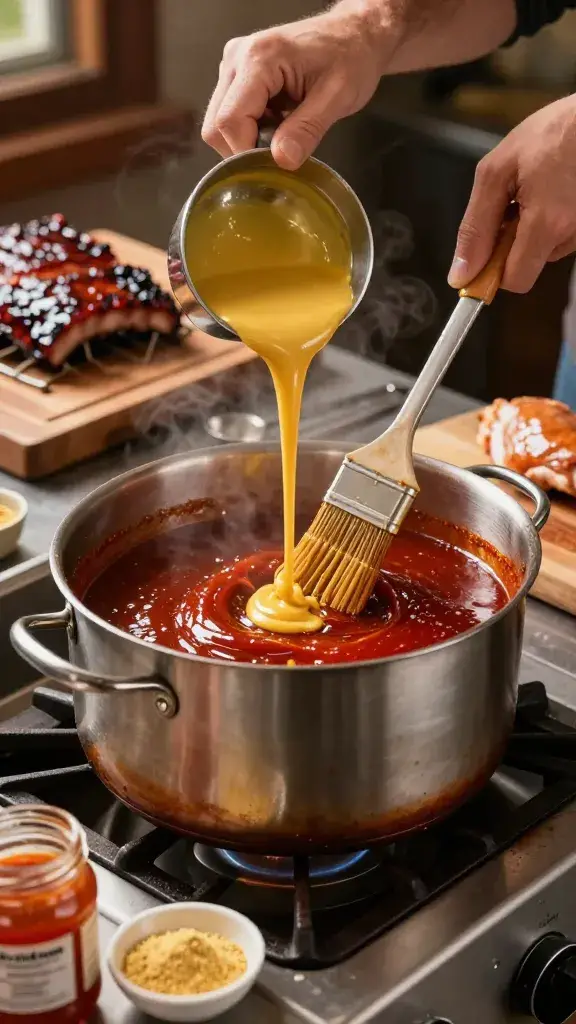
Large-batch sauces split easily — fat and water layers separate during holding and reheating. When that happens, mopping gets messy and flavor won’t cling to meat.
What to Use
- Yellow mustard for classic tang and stable emulsion
- Dijon for sharper bite and smoother body
- Dry mustard powder to boost heat without thinning
Add mustard early so it disperses and stabilizes as the sauce warms. For extra cling on ribs and chicken, whisk in a spoon of dry mustard near the end.
Takeaway: Use 2 tablespoons yellow mustard per quart at the start, then finish with 1 teaspoon dry mustard if you want extra zip.
5. Onion and Garlic: Aromatics That Stand Up to Scaling
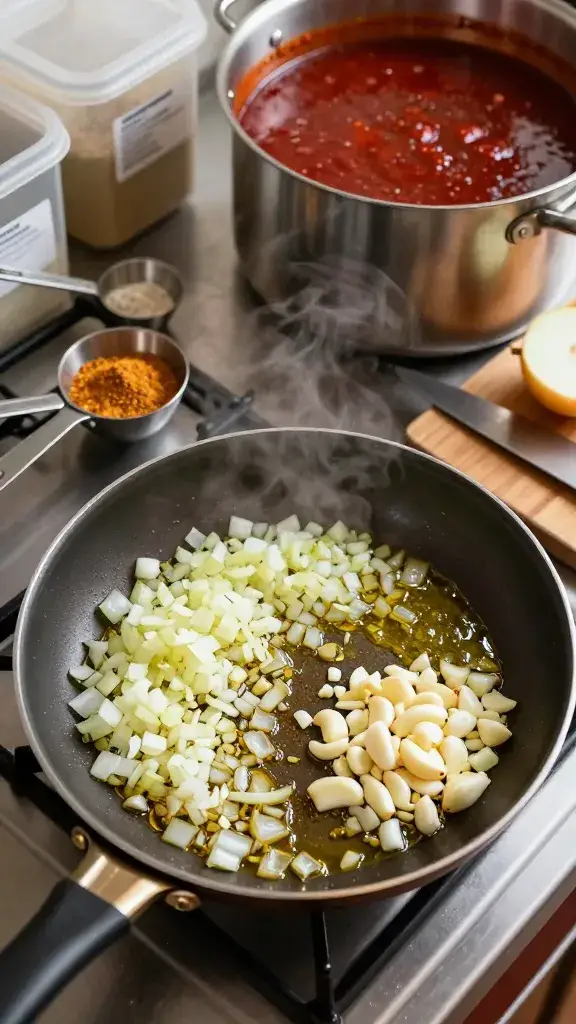
Powder-only sauces taste hollow when multiplied. On the flip side, big chunks of fresh onion scorch and turn bitter before the sauce thickens.
How to Build Flavor Without Burn
- Finely mince 1 small yellow onion per 2 quarts and sweat in a tablespoon of oil until translucent, not browned
- Add 2–3 cloves fresh garlic, minced, for sweetness
- Reinforce with 1/2 teaspoon onion powder and 1/2 teaspoon garlic powder per quart for consistency
This blend gives you the freshness of aromatics and the reliability of pantry powders that hold up in reheats.
Action today: Sweat onion on medium-low for 6–8 minutes before any tomatoes hit the pot; this locks in sweetness and prevents bitterness.
6. Smoked Paprika and Chili Powder: Heat and Smoke Without Oversmoking
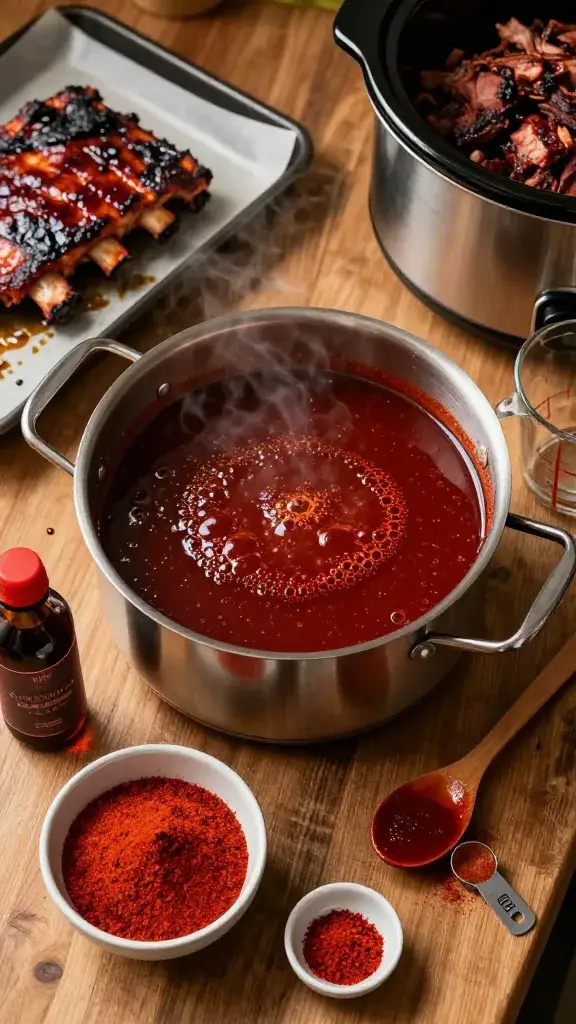
When you rely only on the grill for smoke, bulk sauce tastes plain on oven-baked or slow-cooker meats. Too much liquid smoke becomes harsh and chemical.
What to Use Instead
- Smoked paprika (sweet) for clean smoke flavor — 1–2 teaspoons per quart
- Chili powder for warmth and color — 1 teaspoon per quart
- Cayenne for precise heat control — start with 1/8 teaspoon per quart
Layer these spices and finish with a tiny dash of liquid smoke only if needed. You’ll get a rounded smoke profile that works even when you cook meat indoors.
Takeaway: Add smoked paprika early and cayenne at the end so heat stays bright and controlled.
7. Worcestershire Sauce: The Umami That Makes Meat Taste Meatier
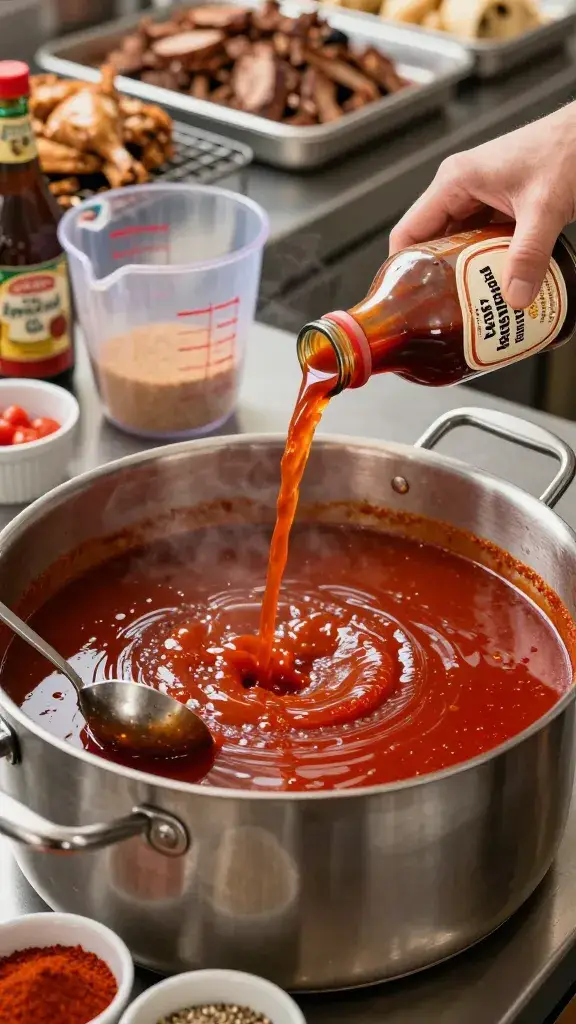
Many bulk sauces lack depth — they taste sweet-sour but not savory. That gap turns pulled chicken into stringy sweetness instead of something rich and satisfying.
How to Use It
- 2 teaspoons Worcestershire per quart at the start for base umami
- Add 1 extra teaspoon at the end if the sauce tastes “thin”
- Choose a standard grocery brand — consistency matters more than price here
Worcestershire fuses tomato, sugar, and acid into a single flavor and makes lean meats taste fuller.
Action today: Stir in 2 teaspoons per quart during the first 5 minutes of simmer — you’ll taste instant roundness.
8. Black Pepper and Freshly Ground Spices: Aroma That Survives Storage
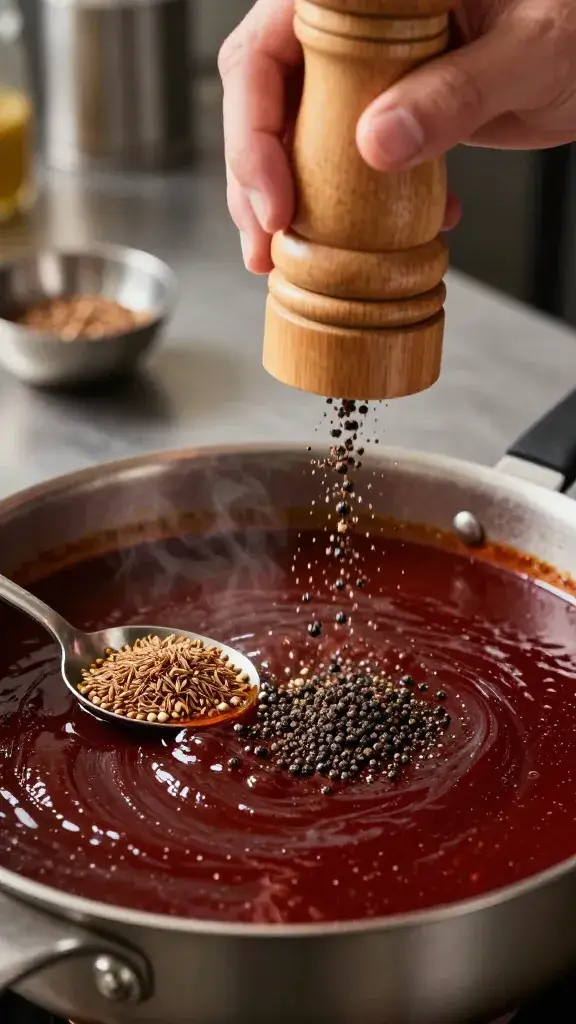
Pre-ground spices fade during long cooks and disappear by day two in the fridge. Your sauce loses its top notes and smells tired on reheating.
How to Fix It
- Use freshly ground black pepper — 1/2 to 1 teaspoon per quart
- Bloom spices in a teaspoon of oil before liquids: cumin (1/4 teaspoon) or coriander (1/4 teaspoon)
- Finish with a few turns of pepper right before cooling
Fresh grind and blooming push aromas into the sauce so they hold through storage.
Takeaway: Grind pepper straight into the pot at the end of cooking — you’ll smell the difference immediately.
9. Stock or Apple Juice: Body and Balance Without Overreducing
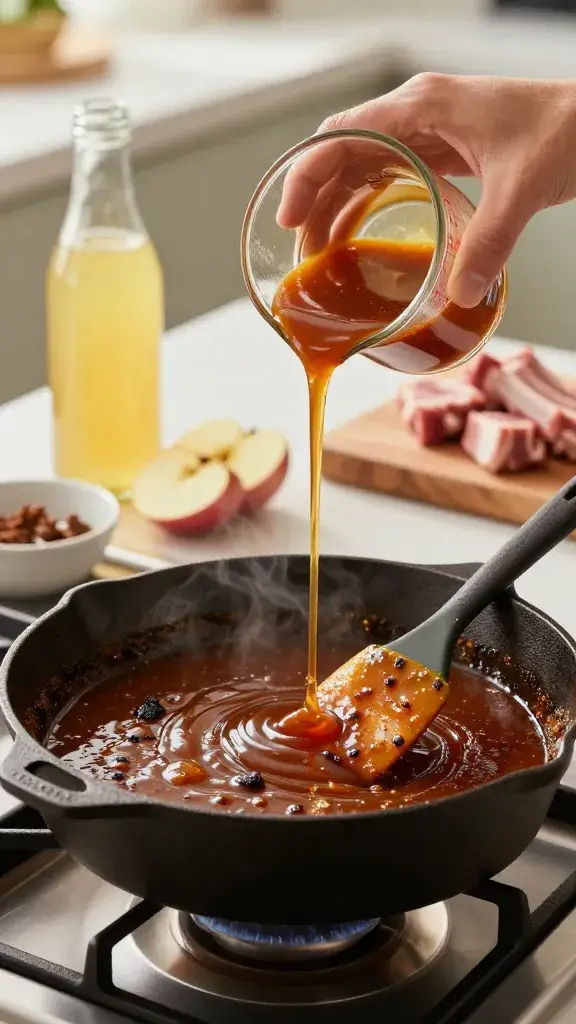
Watering down a thick sauce kills flavor. Overreducing to thicken ruins brightness and darkens sugar.
What to Use
- Low-sodium chicken stock for savory body without salt spikes
- Apple juice for gentle sweetness and fruit notes — great with pork
- Use a 1:1 mix for a balanced, glossy finish
Add liquid in small amounts until the sauce ribbons off a spoon but still coats it. This keeps flavors clear and prevents scorching.
Action today: Stir in 1/4 cup stock or apple juice per quart at a time until you see a slow, even drip from a spoon.
10. Butter or Neutral Oil: Finish for Shine, Cling, and Heat Protection
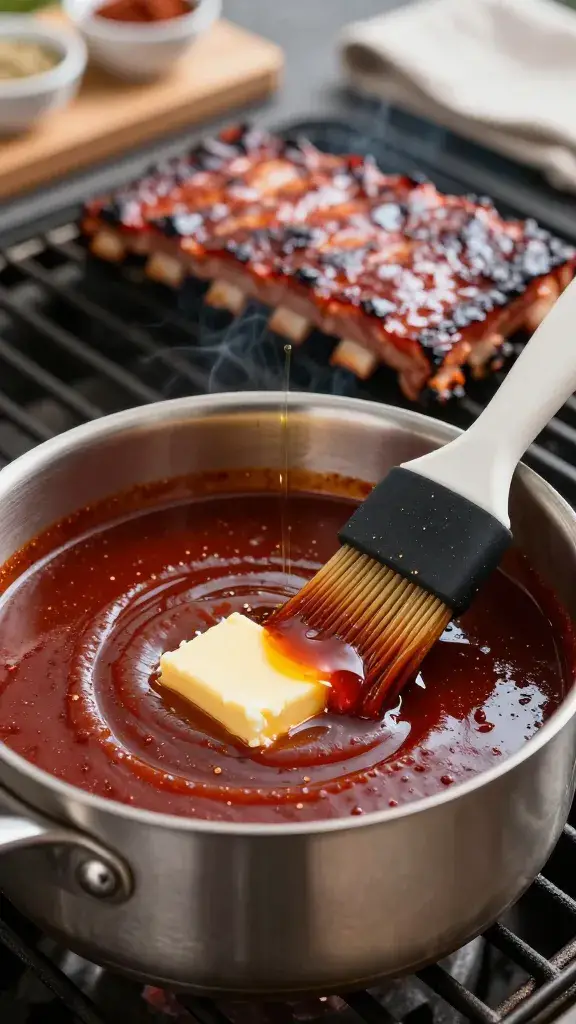
Lean sauces spatter on the grill and dry on the meat. Without a little fat, spices taste dusty and sweetness feels sticky.
How to Use It
- Whisk in 1 tablespoon unsalted butter or neutral oil per quart off the heat
- For dairy-free, choose canola or light olive oil
- Do not boil after adding — you’ll break the finish
Fat carries spice, improves gloss, and cushions sugars so they don’t scorch during mopping.
Takeaway: Off the heat, finish with 1 tablespoon butter per quart for silky cling and better grill behavior.
Frequently Asked Questions
How do I scale this for a party without ruining the balance?
Scale spices and acids conservatively at first. Double the tomato base and liquids, then increase sugars, vinegar, and salt by about 1.5x and taste after 10 minutes of simmering. Heat and vinegar concentrate with time, so finish adjustments in tablespoon and 1/4 teaspoon increments. Keep the pot at a lazy bubble, not a boil.
When should I add liquid smoke, if at all?
Use liquid smoke only after you’ve layered smoked paprika and grilled meat. Add 1/4 teaspoon per quart, stir, and taste after 2 minutes. If the sauce still lacks smoke, add another 1/8 teaspoon. More than that turns acrid on reheating.
How do I prevent sauce from burning on the bottom of a large pot?
Use a heavy pot and medium-low heat — look for one lazy bubble every second, not a rolling boil. Stir the bottom and corners every 3–4 minutes with a flat wooden spatula. Add sugars after the sauce is warm and thin with a splash of stock if you feel drag on the spoon. Keep a lid partially on to reduce splatter without trapping too much steam.
What’s the best way to store bulk BBQ sauce?
Cool to room temperature within 60 minutes, then refrigerate in glass jars or food-safe containers. Leave a finger-width of headspace if you plan to freeze. In the fridge, it stays great for 7–10 days; in the freezer, up to 3 months. Reheat gently on low and whisk to re-emulsify before serving.
Can I make it less sweet without losing body?
Cut brown sugar by a tablespoon per quart and replace that volume with tomato paste and a splash of apple juice. Increase apple cider vinegar by 1–2 teaspoons and add 1/2 teaspoon Worcestershire. Finish with a knob of butter for roundness so it still feels full on the palate.
How thick should my sauce be for mopping vs. finishing?
For mopping during cooks, aim for light cream consistency so it brushes thinly and doesn’t burn — thin with stock if needed. For finishing at the table, go for ketchup-like thickness that clings to ribs and chicken skin. Adjust in the final 5 minutes with a tablespoon of tomato paste for thickening or a splash of stock for thinning. Always taste after each adjustment.
Conclusion
Bulk BBQ sauce shines when you build body with tomatoes, control sweetness, and lock in bright acid. Start with the measurements above, then fine-tune heat and tang at the end — one spoonful at a time. Next step: pick one meat you cook often, make a 2–3 quart batch with these ratios, and take notes so your “house” sauce becomes repeatable every weekend.