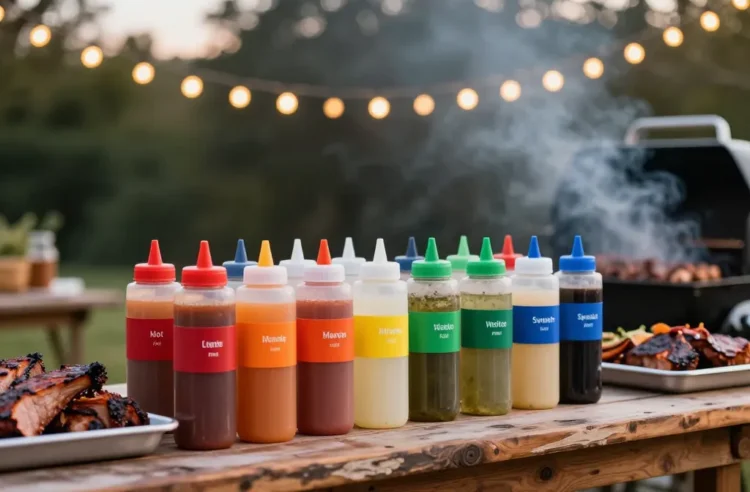
I’ve hosted backyard cooks where guests hovered over unmarked squeeze bottles, guessing which one would torch their taste buds. I’ve also watched great sauces get ignored because the labels smeared off the first time a sticky hand touched them. You’ll learn simple, reliable ways to label sauces for a 50‑person crowd using basic supplies from a garden centre or hardware store. Clear labels mean faster lines, fewer mix-ups, and every guest getting the flavor they love.
1. Color-Coded Squeeze Bottles: Prevent Line Slowdowns And Cross-Contamination
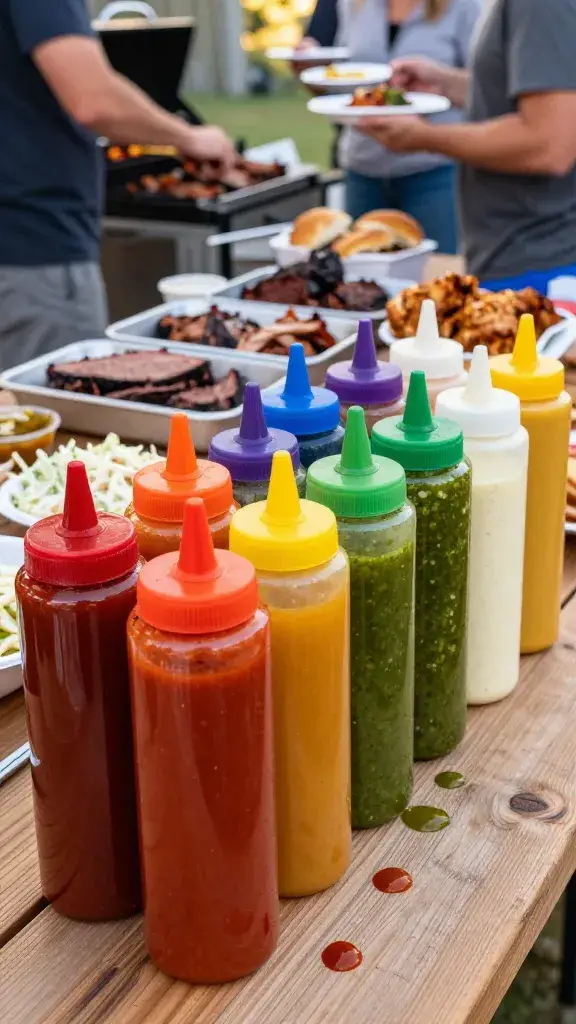
When guests can’t tell mild from spicy, lines slow and plates come back with the wrong sauce. Mixed-up caps also contaminate bottles and ruin delicate flavors like white Alabama sauce or mustard-based blends.
How To Set It Up
- Buy a set of 12–16 food-safe squeeze bottles with different colored caps or silicone bands. If your bottles all have white caps, add colored electrical tape or silicone jar bands around the neck.
- Assign a fixed code: Red = Hot, Orange = Medium, Yellow = Mild, Green = Herb/Vinegar, Blue = Sweet, Black = Special/Diet (sugar-free, gluten-free).
- Post a one-page color key at eye level and a second copy at the start of the line.
Smart Usage Tips
- Use one cap color per heat level across all sauces so people learn the code fast.
- Place bottles in a consistent order from mild to hot, left to right.
- Keep a spare labeled cap of each color in a zip bag. Caps hit the ground.
Action today: Pick six cap colors and print a simple color key on one sheet — that single sheet will cut your serving line time in half.
2. Waterproof Labels That Survive Sauce, Steam, And Ice Buckets
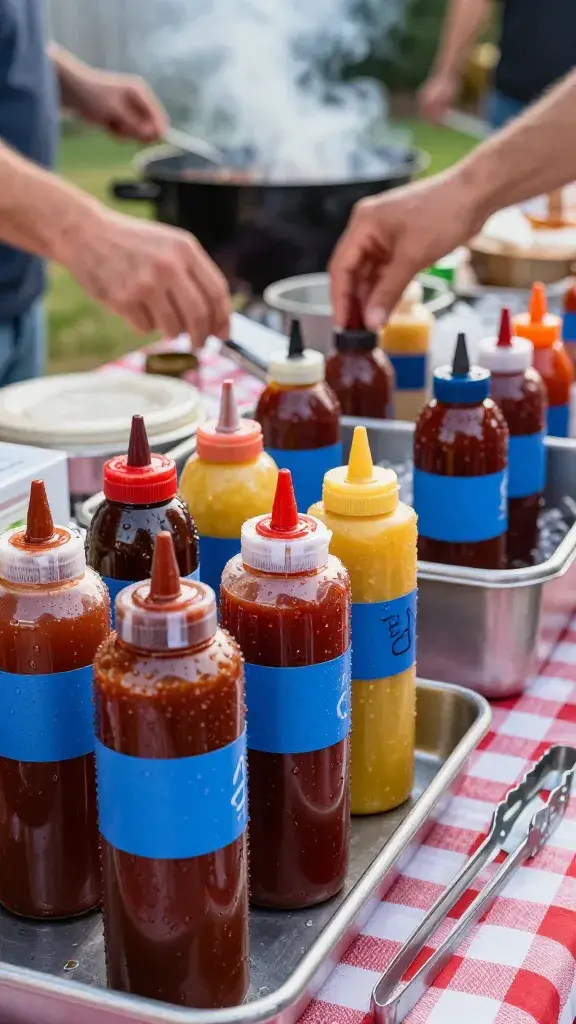
Paper tape and felt-tip pens smear as soon as BBQ sauce, greasy hands, or condensation hit them. By the end of the first wave, “Sweet Heat” turns into an unreadable smudge, and guests stop trying.
What To Use Instead
- Painter’s tape + paint marker: Blue painter’s tape sticks to plastic but removes cleanly. A paint marker or industrial Sharpie won’t smear with oil or water.
- Clear packing tape lamination: Write on normal label paper or index cards, then cover fully with clear packing tape for instant water resistance.
- Vinyl sticker sheets (from a craft aisle): Cut to size, write with a permanent marker, and stick to bottles or caddies.
Label Layout That Reads Fast
- Top line: Flavor Name (e.g., “Kansas City Sweet”).
- Second line: Heat Level using words and symbols: Mild (🌶️0), Medium (🌶️1), Hot (🌶️2+).
- Third line: Diet flags: GF, SF (sugar-free), DF.
Takeaway: Use painter’s tape with a paint marker and seal corners with clear tape — it stays readable through grease, steam, and coolers.
3. Tabletop Sauce Caddies With Big, Overhead Signage So People Decide Before They Reach The Bottles
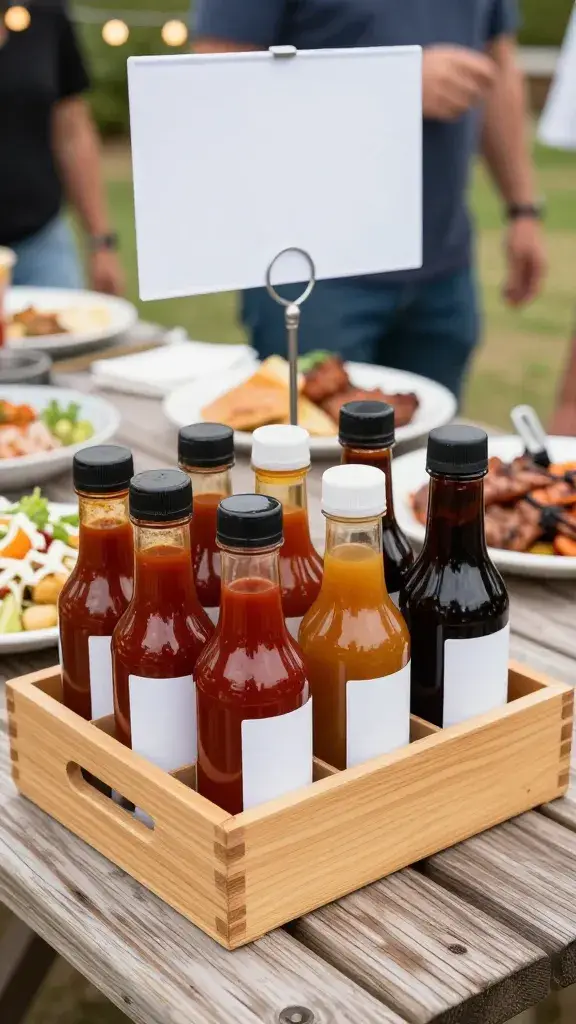
When every bottle sits loose on the table, labels face random directions and people rotate them with messy hands. That means longer decisions at the front and splatters everywhere as bottles get passed around.
Build A Simple Caddy Station
- Use a rectangular tray or a small garden tote to hold 4–6 bottles upright.
- Add divider strips cut from a cardboard box to keep labels facing forward.
- Tape a tent card or clipped index card to the back edge with the group label: “Mild & Sweet,” “Smoky & Medium,” “Vinegar & Mustard,” “Hot & Specialty.”
Overhead Menu Strip
- At the start of the line, hang a single menu strip at eye level listing sauce name + one-sentence description: “Vinegar Pepper — Tangy, no sugar, great on pulled pork.”
- Repeat the color code on the menu for quick scanning.
Placement That Works For 50
- Set two identical caddy stations to split the crowd: one by the meat, one by sides.
- Keep napkins and a damp towel at each station to wipe drips every 15 minutes.
Action today: Group your sauces into two caddies and make one tent card per caddy — guests will pick faster and spill less.
4. Allergen And Diet Tags That Prevent Awkward Guessing At The Table
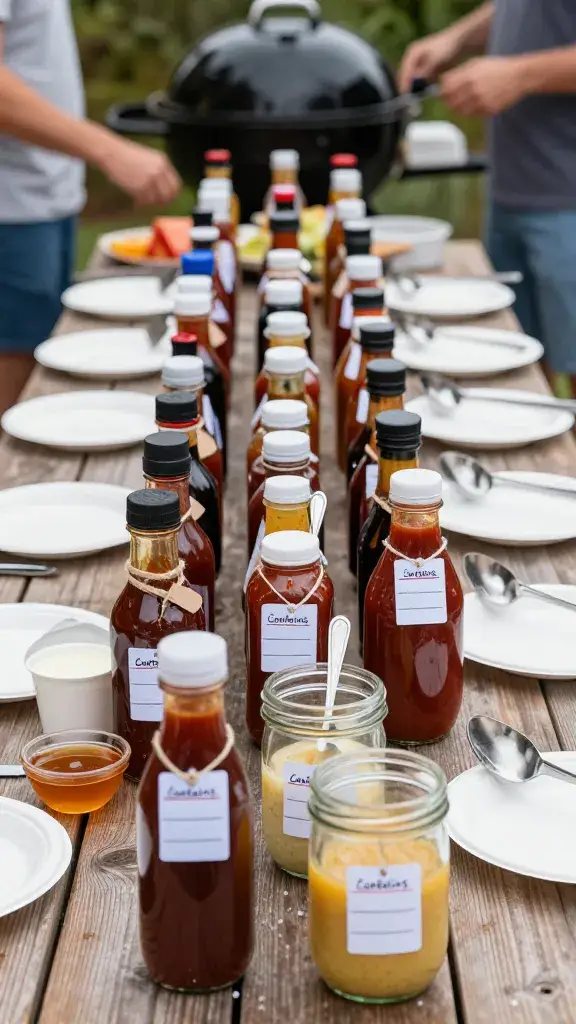
Guests with allergies and dietary needs won’t risk a mystery sauce. If you leave “what’s in it?” to a rushed host, people skip sauce or have to ask in front of everyone.
Make Simple Ingredient Flags
- Use string tags or plant labels (from the garden centre) tied to bottle necks.
- Write three lines only: Contains (soy, dairy, honey), Sweetener (sugar, molasses, honey, none), Diet (GF, DF, SF).
- Underline Contains in red for fast scanning.
Standardize Your Claims
- GF: No wheat, barley, rye, or malt in the sauce or added soy sauce. Use tamari or coconut aminos if needed.
- SF: No added sugar, molasses, or honey. Use tomato, vinegar, and spice for body.
- DF: No butter or dairy in basting mixes.
Where To Display
- Keep the tag on the bottle for the quick check.
- Post a small ingredients card per sauce on the caddy backside for those who want details.
Takeaway: Tie a plant tag to each bottle with “Contains,” “Sweetener,” and “Diet” — it answers 90% of allergy questions without slowing the line.
5. Batch Codes And Refill System So Flavor Stays Consistent All Night
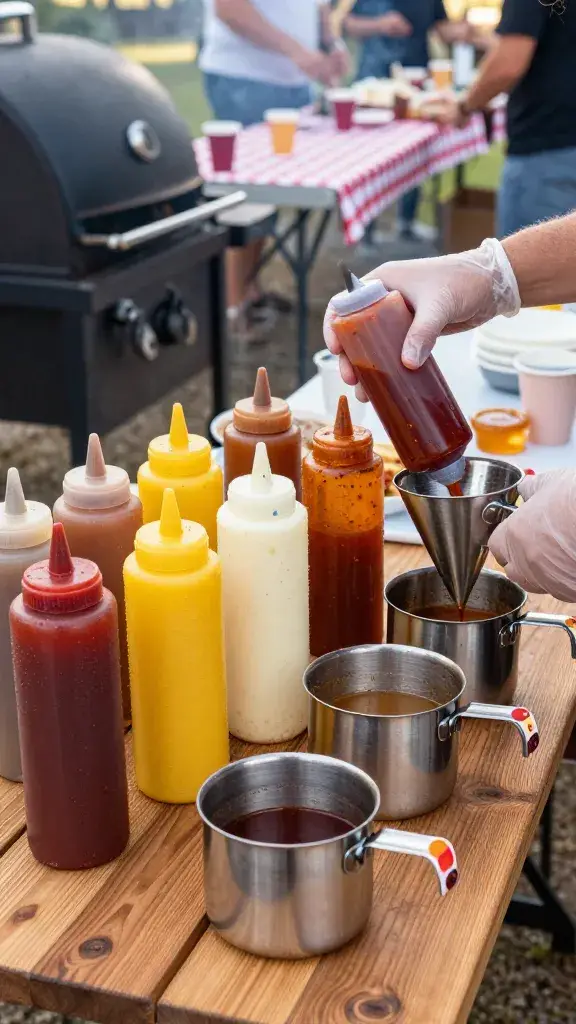
At a 50-person event, you’ll refill bottles at least once. When refills come from different pots or get topped with a different flavor, the taste drifts and labels become lies.
Create A Simple Batch Code
- Assign each sauce a two-letter code (KS = Kansas City Sweet, SC = South Carolina Mustard, VP = Vinegar Pepper, AH = Alabama White, HH = Honey Heat).
- Add a number for the pot or mix: KS-1, KS-2. Write this small on both the bottle and the refill container.
- Refill only KS-1 bottles from KS-1 pot. When it empties, switch all bottles to KS-2 and cross out the -1 with a single line.
Refill Station Setup
- Keep funnels, a damp cloth, and paper towels in a tray behind the line.
- Label the funnels with tape: MILD, HOT, MUSTARD, WHITE. Never mix funnels across categories.
- Top off during lulls and wipe threads before replacing caps to avoid gunked closures.
End-Of-Night Pack Down
- Cap and tape each bottle closed with a short strip of painter’s tape marked with the code.
- Refrigerate sauces that require it: mayonnaise-based or dairy-based (Alabama white) the same night.
Action today: Assign two-letter codes and write them on both bottles and pots — that alone keeps flavors honest through every refill.
Frequently Asked Questions
How many sauce varieties should I put out for 50 people?
Five to six sauces cover almost every palate without clogging the line. I use a mild sweet red, medium smoky red, vinegar pepper, mustard-based, white Alabama, and one hot option. Put out two sets of the same six so guests don’t bottleneck. Plan about 1.5–2 ounces per person per sauce on average, more for the popular sweet and mild.
What’s the best way to label if I only have time for markers and tape?
Use blue painter’s tape and a black paint marker for bold, smear-proof text. Write the sauce name in block capitals, add a heat icon (🌶️ count), and the diet flag (GF, SF). Seal the tape’s leading edge with a small strip of clear packing tape so greasy fingers don’t lift it. Place labels on the shoulder of the bottle where thumbs won’t rub them constantly.
How do I keep kids from grabbing the super-hot sauce by accident?
Use a bright red cap and a large HOT — Adults Only label on the bottle. Place the hot sauce on the far right end with a small mini sign facing forward. If kids are your main crowd, put the hot bottle in a short caddy slightly behind the line so adults can reach it while kids see the milder set first.
Can I print labels at home that won’t smear?
Yes — print on standard paper, then fully laminate each label with clear packing tape before cutting. Stick the laminated label to the bottle and press down the edges firmly. Alternatively, use matte vinyl sticker sheets from a craft aisle with a permanent marker. Always test one label under running water and a greasy thumb before the event.
What if I’m serving from slow cookers instead of bottles?
Clip a binder clip to the cooker rim and slide in a laminated index card with the name, heat level, and diet flags. Add a color-coded ladle that matches your heat map (red for hot, yellow for mild). Keep a drip tray or saucer under the ladle to protect the label card from splashes.
How do I stop labels from peeling off cold bottles in ice?
Condensation loosens most adhesives. Place bottles in a shallow tray with frozen gel packs under a towel rather than directly in ice, so labels stay dry. If you must use ice, put labels on the neck above the chill line and add a clear packing-tape “laminate” over the entire label. Wipe bottles dry before applying any label.
Conclusion
With color coding, waterproof labels, and a simple batch code, your sauce table runs itself and guests get exactly what they want. Set up two mirrored caddies and post one clear menu strip — your line will move, and your best sauces will shine. Next, consider a matching system for rubs and glazes so every bite tells the same flavor story from prep to plate.