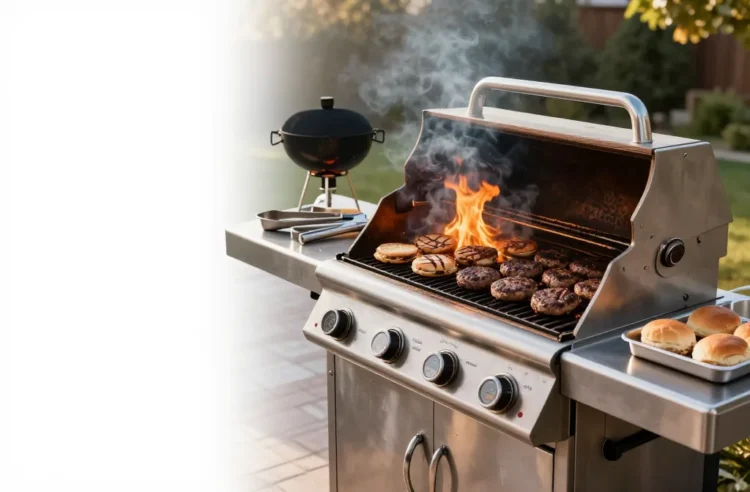
I’ve cooked for block parties where the guest list ballooned from “a few friends” to 50 hungry people by sunset. The difference between calm, happy grilling and a chaotic line of complaints comes down to the right tools. In this guide, I’ll show you the ten BBQ tools that prevent bottlenecks, keep food safe, and help you serve juicy, on-time plates. You’ll learn exactly what to buy at a regular hardware or garden centre and how to use each tool to move fast without sacrificing flavor.
1. Oversized Charcoal or Propane Grill With a Two-Zone Setup
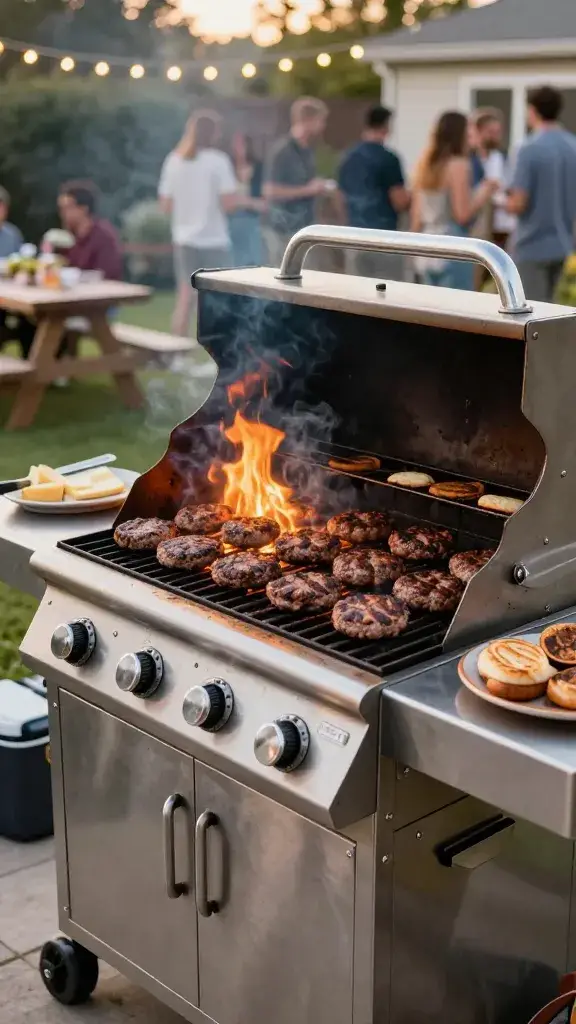
Nothing slows a party like a grill too small for the crowd. If your surface area can’t hold at least 20 burgers at a time, you’ll build a line that wraps around the yard and food will overcook while you rush.
What to Look For
- Wide cooking surface that fits 16–24 burgers at once.
- Two burners (gas) or a large charcoal bed to create two distinct zones: hot and warm.
- A sturdy lid with a built-in thermometer.
How to Use It Fast
- Set one side to high heat for searing and the other to medium-low for finishing and holding.
- Keep the lid closed on the holding side to maintain steady heat while you sear batches.
Takeaway: Choose the biggest reliable grill you can transport and manage, and always run a two-zone setup to prevent burning and bottlenecks.
2. Full-Size Chimney Starter for Rapid Charcoal
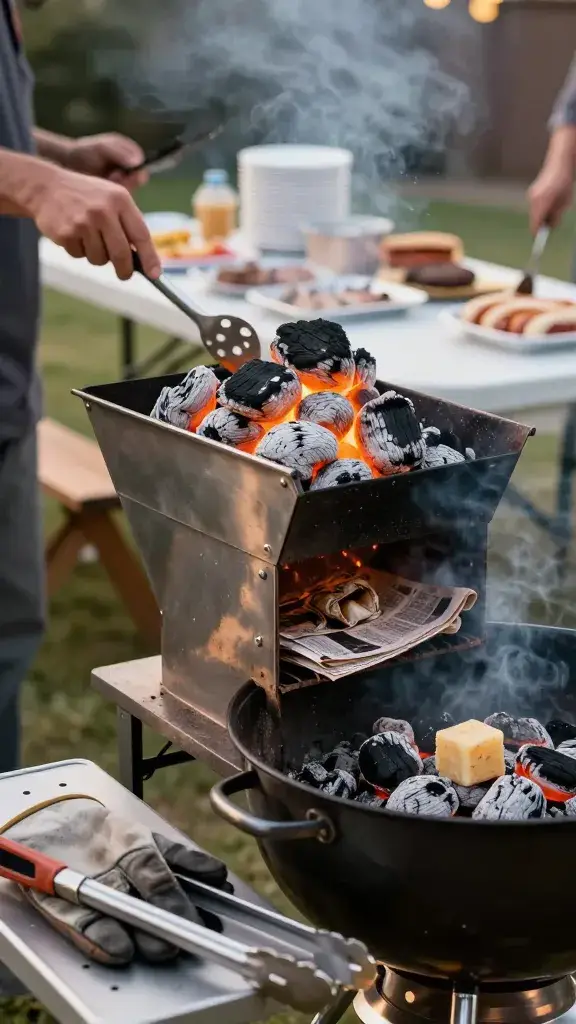
Waiting for charcoal ruins timing and pushes cooks to throw food over under-lit coals, causing flare-ups and scorched exteriors. A full-size chimney starter ignites a deep bed of hot coals in about 20 minutes, every time.
How to Use It
- Fill the chimney to the top with standard briquettes.
- Place two sheets of crumpled newspaper or a paraffin cube underneath.
- Light and wait until the top layer turns grey, then dump and spread into the hot zone.
Action today: Buy the largest chimney at your hardware store and run two back-to-back before guests arrive so you have a reserve for the dinner rush.
3. Instant-Read Thermometer for Fast, Safe Doneness
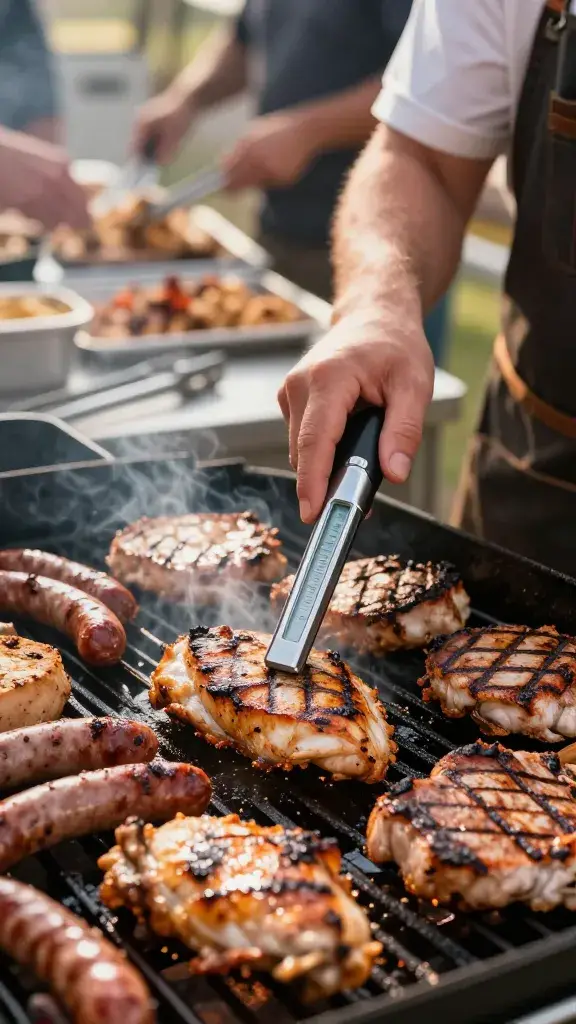
Guessing doneness for 50 portions leads to dry chicken, raw sausages, and panicked cutting into steaks. An instant-read thermometer ends the guesswork and keeps the line moving.
Target Temperatures
- Chicken (breasts/thighs): 74°C/165°F
- Sausages: 71°C/160°F
- Burgers (beef): 63°C/145°F for medium, 71°C/160°F for well
- Pork chops: 63°C/145°F with 3-minute rest
Takeaway: Keep an instant-read in your apron pocket and check the thickest piece in each batch before serving—no cutting required.
4. Extra-Long, Sturdy Tongs and a Wide Spatula
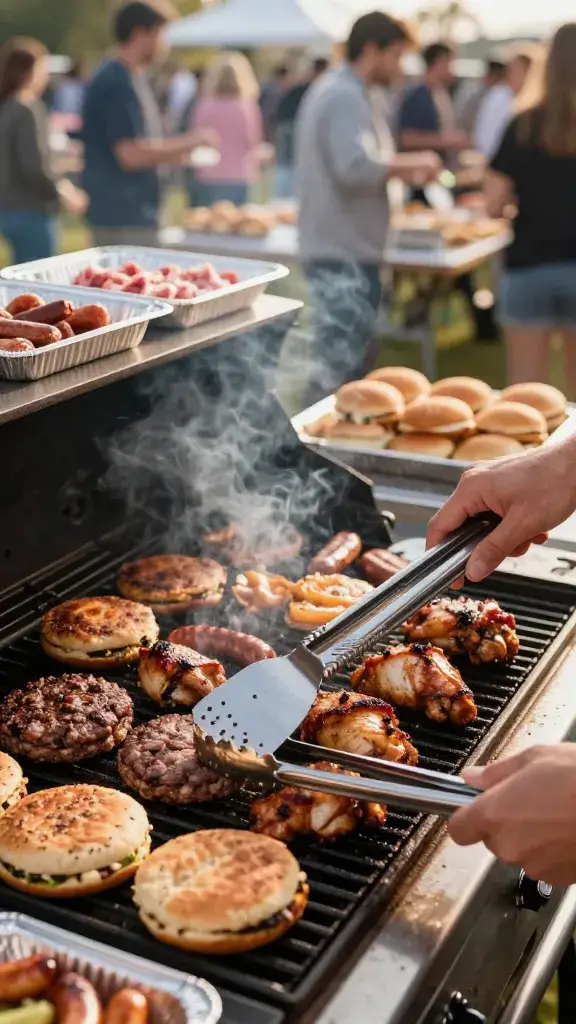
Short or flimsy tools make you hover over heat and drop food, slowing everything and risking burns. Long, sturdy tongs and a wide metal spatula let you flip and move food quickly without fumbling.
Must-Have Specs (In Practical Terms)
- 40–45 cm tongs with a strong spring and scalloped tips for grip.
- Wide metal spatula with a thin leading edge for smash burgers and fish fillets.
- Heat-resistant handles you can hold over a hot grate without discomfort.
Action today: Set one pair of tongs for raw items and one for cooked—label handles with tape to prevent cross-contamination.
5. Half-Size Sheet Pans, Wire Racks, and Foil for Batch Flow
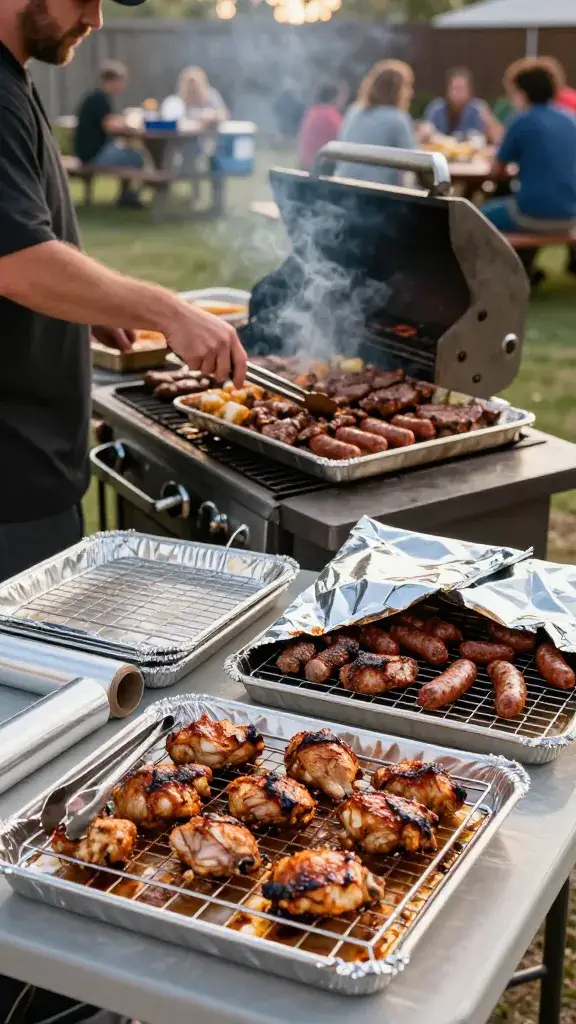
Batches stall when finished food has nowhere clean and warm to land. Without simple staging gear, you’ll stack hot meat on cold plates and lose juices fast.
How to Stage Like a Pro
- Line half-sheet pans with heavy-duty foil for easy cleanup.
- Set a cooling rack inside to keep crusts crisp while resting.
- Cover loosely with foil to hold heat without steaming the crust.
Takeaway: Pre-stack two sheet pans per protein—one for raw, one for cooked—so you can swap trays between grill and table without confusion.
6. Disposable Aluminum Steam Pans and a Cooler for Holding
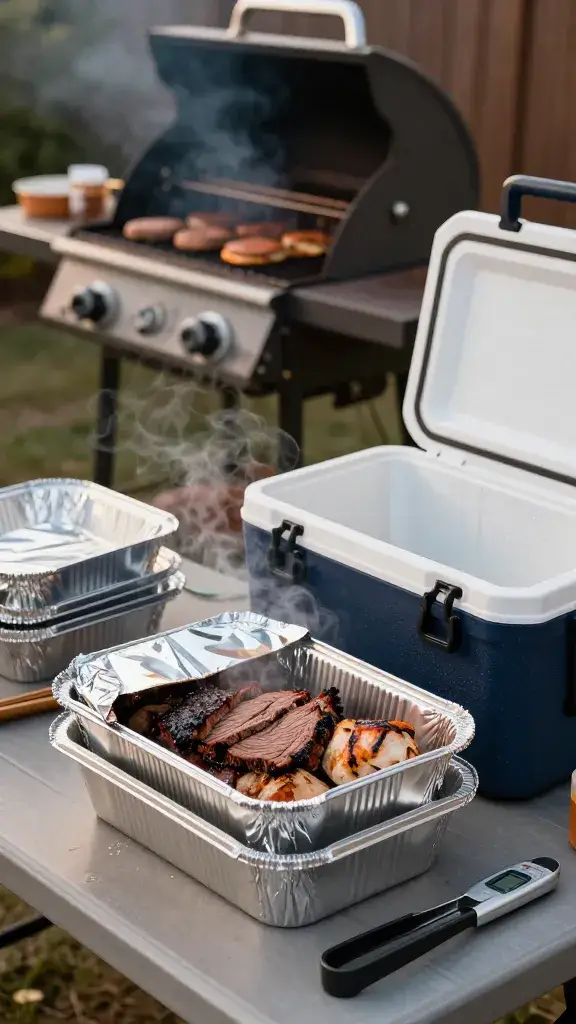
Serving 50 people means food must hold hot and safe while you cook the next wave. If you leave items on the grill to “hold,” they dry out and overcook.
Simple Holding Setup
- Place two aluminum steam pans (one nested in the other) with a small splash of hot water in the bottom pan.
- Cover with foil and keep near the warm zone or in an insulated cooler (no ice) pre-warmed with hot water for 5 minutes.
- Rest meats 5–10 minutes before holding to preserve juices.
Action today: Pre-warm a clean cooler with hot tap water, dry it, then load foil-covered pans of cooked food to hold temperature for up to an hour.
7. Grill-Safe Sheet or Cast-Iron Griddle for Delicate and High-Volume Items
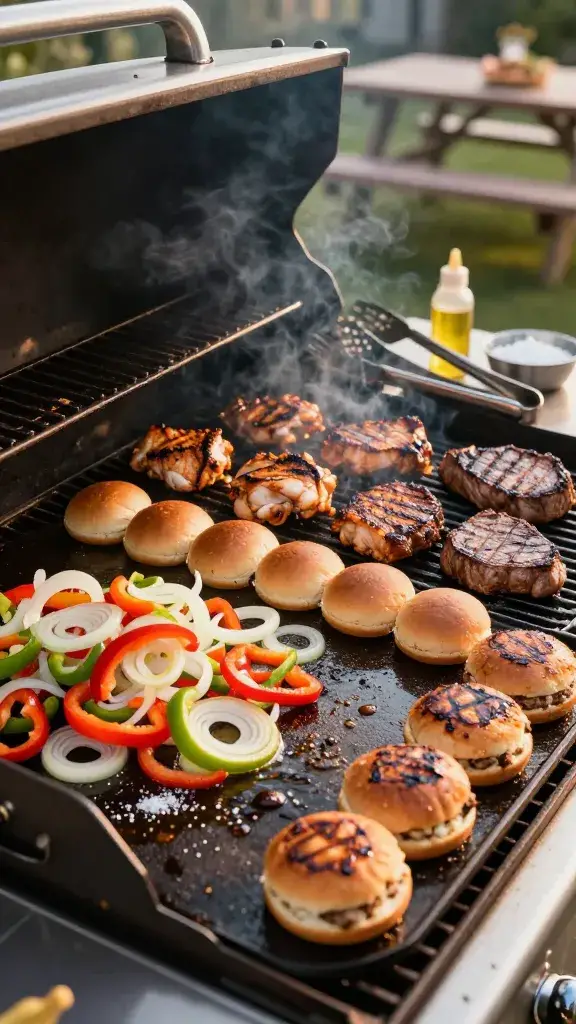
Small foods like sliced onions, peppers, and shrimp fall through grates and waste time. A cast-iron griddle or grill-safe flat plate handles delicate items and toasts buns for 12 at a time.
Best Uses
- Smash burgers for fast sear and even crust.
- Veggie medleys with oil and salt—no skewers required.
- Bun toasting in big batches just before serving.
Takeaway: Preheat a cast-iron griddle for 10 minutes—use it to run buns and veg while the main grate stays devoted to proteins.
8. Heavy-Duty Grill Brush and Scraper for Fast Turnovers
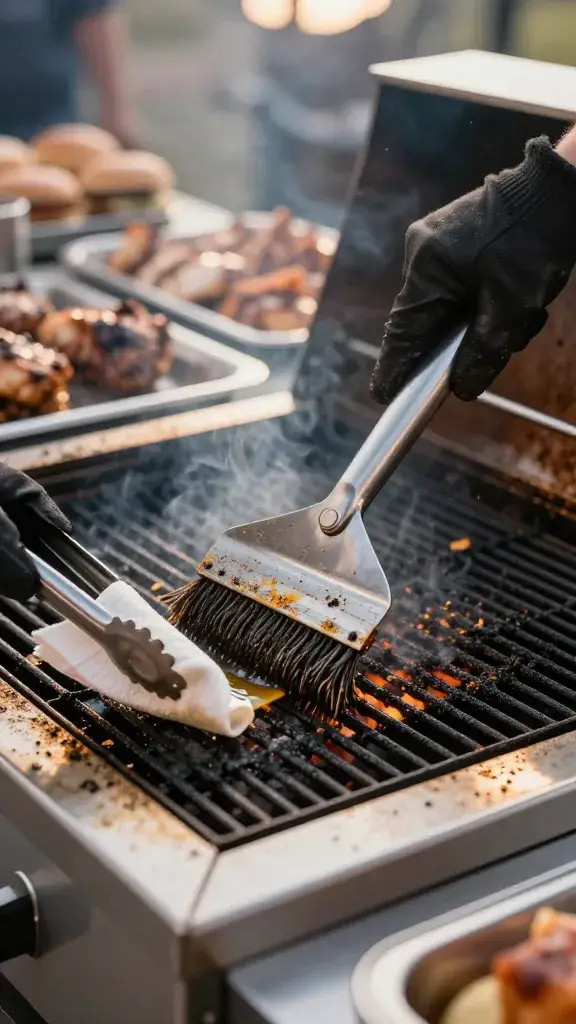
Dirty grates cause sticking, torn skin, and bitter flare-ups that slow service and ruin flavor. A solid brush and scraper reset the surface between batches in under a minute.
Safe Cleaning Routine
- After each batch, scrape while the grate is hot.
- Wipe with an oiled paper towel held by tongs to create a light nonstick layer.
- Avoid loose bristles—choose a coiled or bristle-free brush from a hardware store.
Action today: Clean, then swipe the grates with a teaspoon of neutral oil on a folded paper towel before the next batch to prevent sticking.
9. Heat-Resistant Gloves and Apron for Speed and Safety
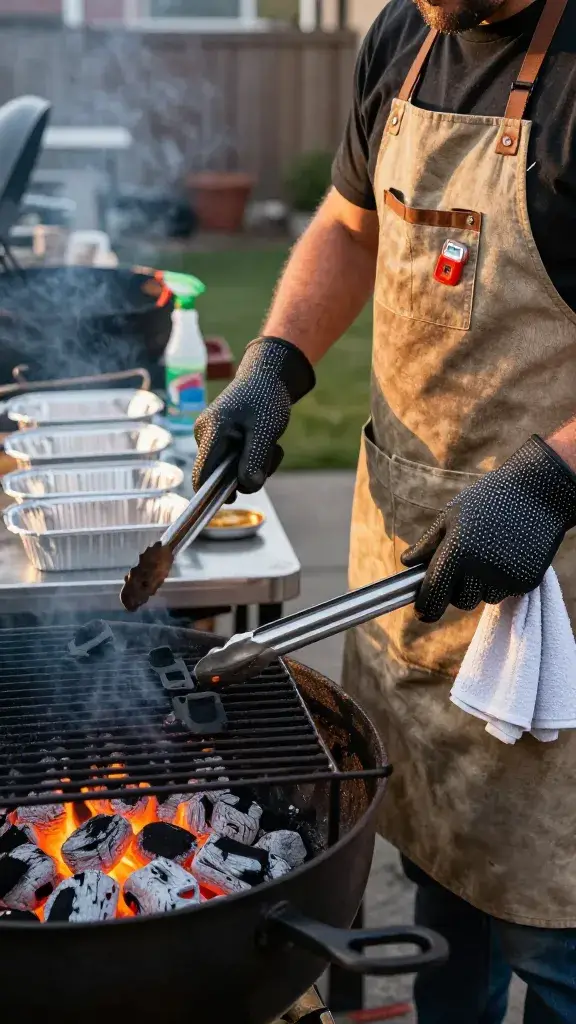
When you’re cooking for a crowd, you’ll lift hot grates, move pans, and shift chimneys. Regular oven mitts slip and can’t grip, and bare hands slow you down from fear of burns.
What Works Best
- Silicone-dotted, heat-resistant gloves that still let you grasp tools and pans.
- A heavy cotton or canvas apron with pockets for thermometer, towels, and tongs.
- Keep a spray bottle of water for minor flare-ups—never for grease fires.
Takeaway: Put on gloves before lighting the chimney and keep them on a hook near the grill so you never hesitate to move hot gear.
10. Squeeze Bottles, Basting Brush, and Seasoning Shakers for Consistency
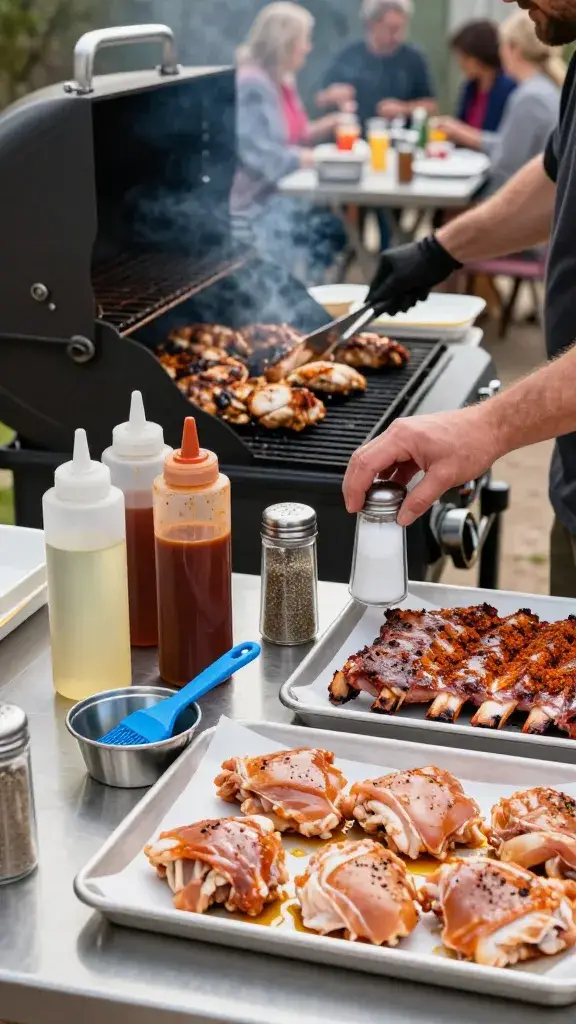
Inconsistent seasoning and dry surfaces cause uneven cooking and dull flavor. With 50 portions, you can’t eyeball everything—simple dispensing tools keep every piece juicy and evenly seasoned.
Set Up a Small Flavor Station
- Fill squeeze bottles with neutral oil and a simple finishing sauce.
- Use a silicone basting brush that won’t scorch.
- Pre-mix two shakers: one with salt and pepper, one with your house rub.
Action today: Season trays before they hit the grill and oil proteins lightly with a squeeze bottle to prevent sticking and speed up browning.
Frequently Asked Questions
How much grill surface do I need to feed 50 people?
Plan for enough space to cook about 20 burgers or equivalents at once. That usually means a large kettle charcoal grill or a 3–4 burner gas grill. With two zones, you can sear on half and finish or hold on the other, turning out 60–80 portions per hour with steady batching.
How much charcoal or propane should I have on hand?
For charcoal, budget one full chimney per 45–60 minutes of active grilling and keep an extra bag in reserve. For propane, start with a full standard tank and have a spare on-site. Running out of fuel kills momentum and forces undercooked food or long delays.
What’s the fastest menu to serve 50 people on a grill?
Choose items that cook in under 15 minutes and handle well in batches: burgers, sausages, chicken thighs, and grilled vegetables on a griddle. Toast buns while meats rest, and set condiments out buffet-style. This keeps the line moving and prevents complex timing issues.
How do I keep cooked food hot without overcooking it?
Rest meat for 5–10 minutes, then transfer to foil-covered aluminum pans placed in a pre-warmed dry cooler. Add a small splash of hot water to a nested lower pan to create gentle steam. Keep vents closed and lid shut to hold temperature for up to an hour.
How do I prevent flare-ups when fat starts dripping?
Keep a cool zone ready and move food over when flames rise. Close the lid to limit oxygen for 10–15 seconds, then reopen and continue. Trim excess fat beforehand and avoid sugary sauces until the last 2–3 minutes to reduce burning.
What should I prep before guests arrive to avoid delays?
Form and season patties, score sausages, and pre-slice vegetables. Light the chimney 25 minutes before go-time and preheat the griddle and grill. Set up labeled raw and cooked trays, place tongs and spatula at the grill, and pre-warm the cooler for holding.
Conclusion
Feeding 50 people on a grill becomes manageable the moment your tools create flow: fast heat, clean grates, safe staging, and consistent seasoning. Pick three upgrades you don’t already own—a full-size chimney, instant-read thermometer, and sheet pans with racks—and you’ll feel the difference at your very next cookout.