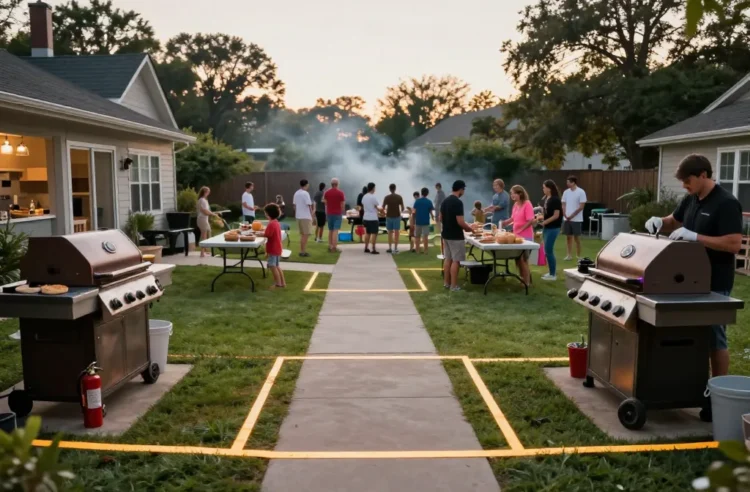
I’ve hosted backyard cookouts that ballooned from a few friends to a small crowd by dinnertime. The difference between a relaxed gathering and a stressful near-miss comes down to planning and a few disciplined safety habits. In this guide, I’ll show you exactly how to set up, cook, and serve safely for 100 people using gear you can grab at a garden centre or hardware store. You’ll avoid flare-ups, undercooked chicken, and foodborne illness — and actually enjoy your own party.
1. Crowd-Safe Layout: Distance, Clear Paths, And Fire Breaks
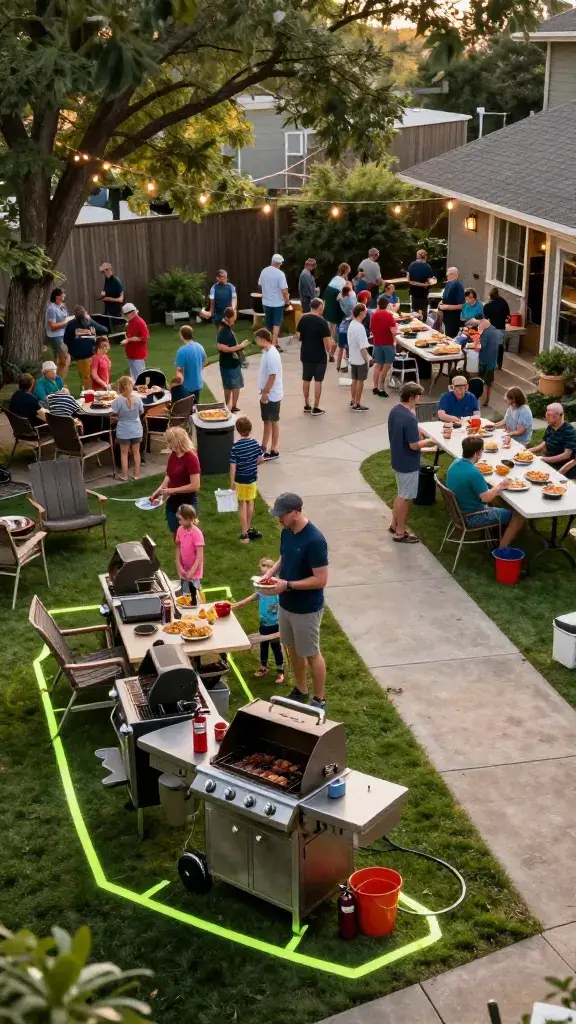
A busy yard crammed with people, grills, and tables turns a minor flare into a dangerous situation fast. Guests naturally cluster where the food is, which blocks exits and puts kids too close to heat.
How to Set Up a Safe BBQ Zone
- Place grills at least 10 feet from the house, fences, sheds, and overhanging branches.
- Keep a 3-foot “no-go” zone around each grill using garden chairs or bright tape on the ground.
- Set one clear path from kitchen to grill to serving tables with no cords or hoses crossing it.
- Position serving tables upwind of the grills so smoke blows away from guests.
Action today: Before lighting anything, walk the space and mark a 3-foot safety ring around each grill with chalk, tape, or planters — then brief one helper to keep it clear.
2. Stable Fuel Management: Charcoal, Propane, And Backup Supplies
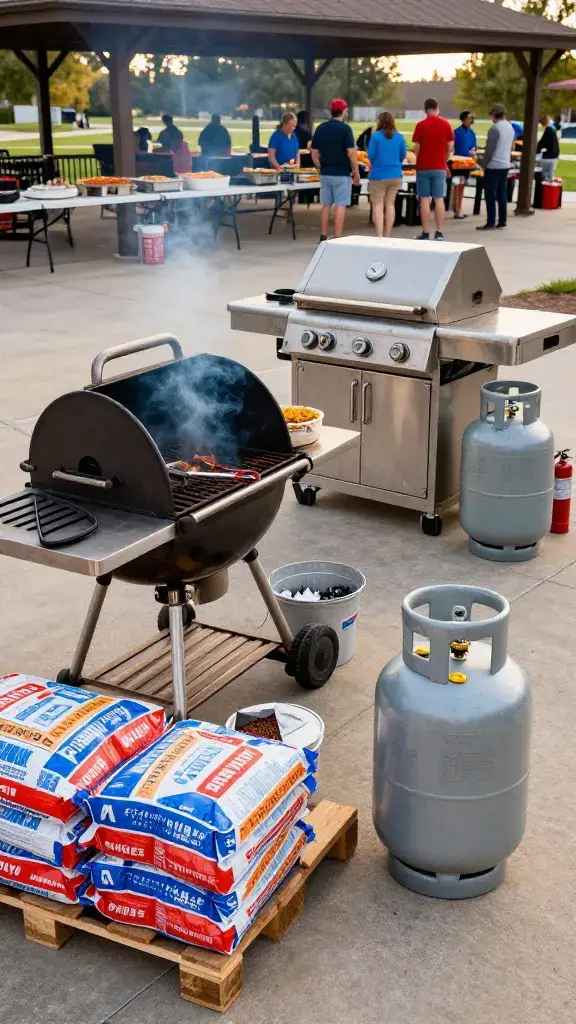
Fuel mishandling causes flare-ups, leaks, and panic refuels while food stacks up and temps plummet. Running out of charcoal or a faulty propane cylinder derails service for a crowd.
What to Use and Store
- Charcoal: Use standard briquettes. For 100 people over 4 hours, plan 30–40 pounds. Store unopened bags dry and off the ground.
- Propane: Have a full backup tank per grill. Check the date stamp on cylinders and keep tanks upright on level ground, 5 feet from heat.
- Starters: Use a chimney starter and newspaper or natural fire starters. Skip lighter fluid to avoid flare risk and off-flavors.
Safe Refueling
- For charcoal, fully ash over the first batch before cooking. Add fresh briquettes 30 minutes before you need them.
- For gas, close the tank valve before swapping. Check the hose with soapy water — bubbles mean a leak, tighten or replace.
Takeaway: Stage fuel now: one active supply, one backup, and a chimney or extra tank ready to swap without rushing.
3. Temperature Control: Keep Meat Safe From Start To Serve
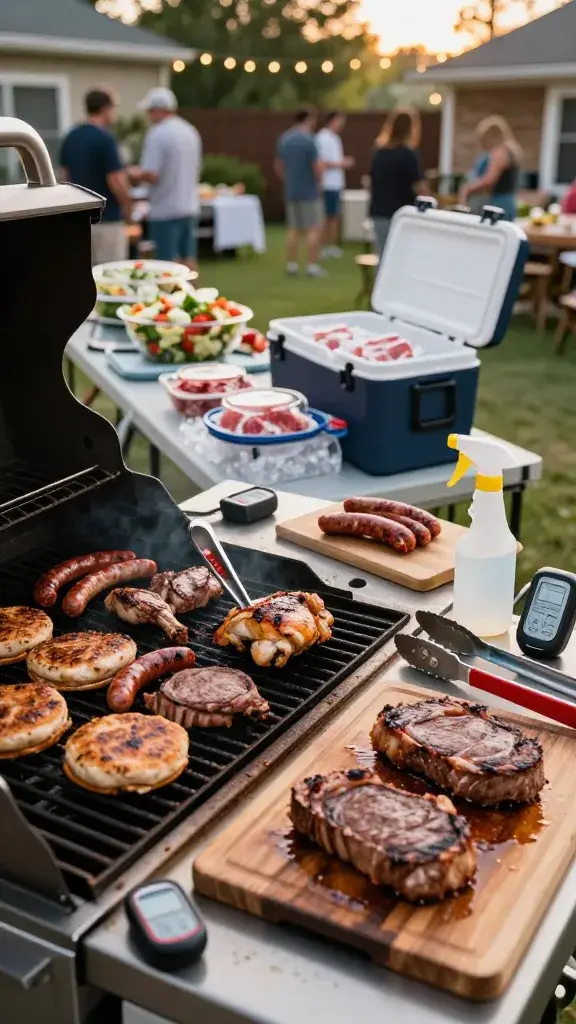
Serving 100 guests multiplies the risk of undercooked poultry and warm salads that breed bacteria. Guessing at doneness or leaving meat out “to rest” for too long invites food poisoning.
Target Cooking Temperatures
- Chicken (whole or pieces): 165°F at the thickest part, no pink juices.
- Burgers and sausages: 160°F in the center.
- Pork chops/loin: 145°F, rest 3 minutes.
- Steaks: 130–145°F depending on preference; rest 3–5 minutes.
Tools From Any Hardware Store
- Instant-read thermometer: Keep two so one stays clean when the other gets greasy.
- Coolers with ice: Use one for raw meats, one for salads and drinks. Keep lids closed.
- Chafing trays or insulated pans: Hold cooked food hot with gel fuel or boiling-water baths.
Action today: Put a thermometer in your apron pocket and use it for every batch — no exceptions.
4. Cross-Contamination Control: Separate Raw, Cooked, And Ready-To-Eat
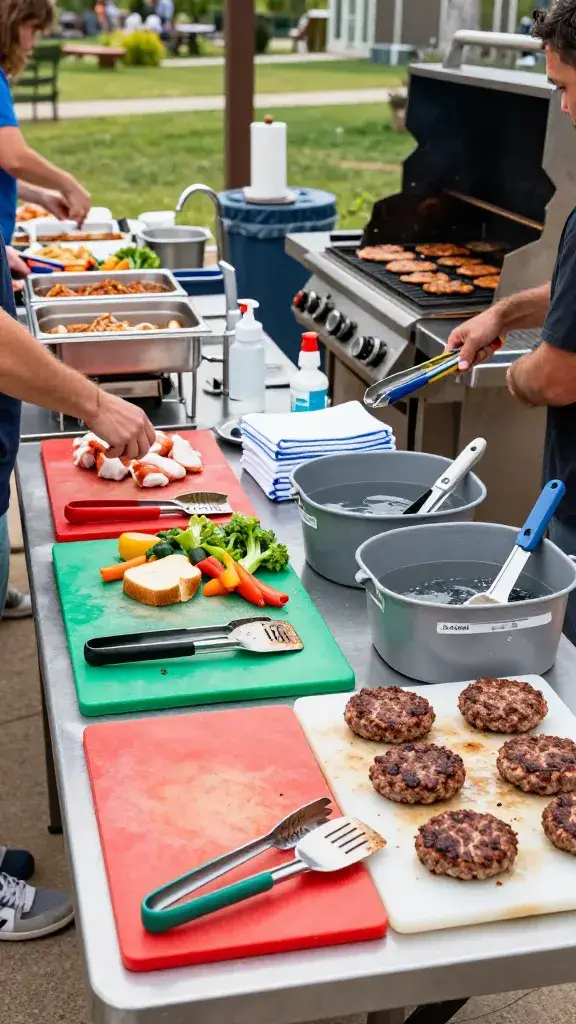
One cutting board or tong shared between raw chicken and cooked burgers is all it takes to sicken dozens. In a rush, helpers grab whatever’s closest.
Color-Code and Label
- Use three boards: Red for raw meats, Green for vegetables/bread, White for cooked meats.
- Pair each board with matching tongs or spatulas and label with tape.
- Have a “clean tools” bucket with warm soapy water and a “dirty tools” tub to swap quickly.
Serving Line Hygiene
- Assign a handwashing station: a garden tap with pump soap, paper towels, and a bin.
- Provide a squeeze bottle of hand sanitizer at the start of the buffet and near condiments.
Takeaway: Set out two sets of tongs per grill zone — one marked RAW, one COOKED — and never cross them.
5. Safe Staging: Cold Below 40°F, Hot Above 140°F
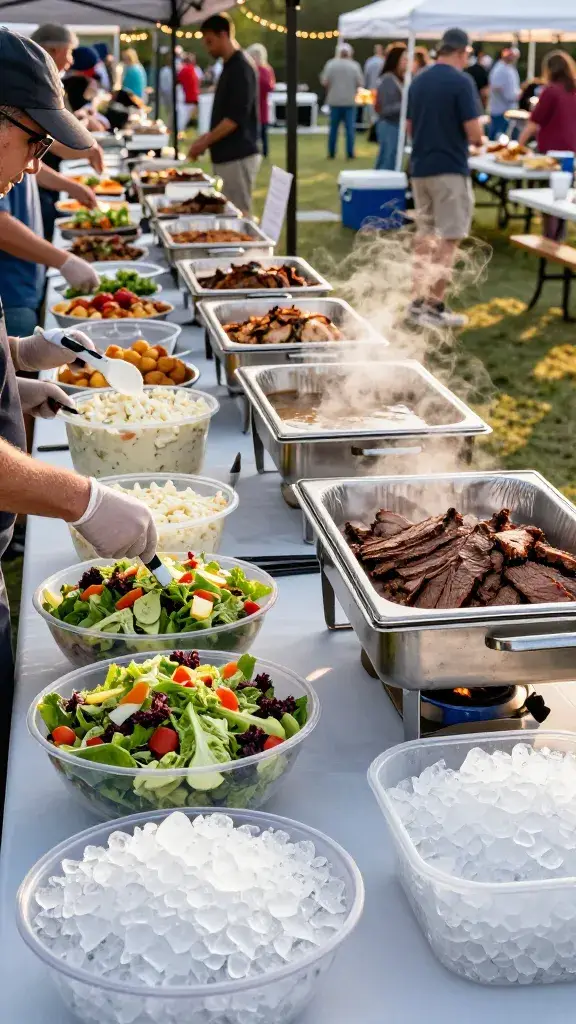
Food left in the “danger zone” between 40°F and 140°F for over 2 hours lets bacteria multiply fast. At a large BBQ, pans sit on tables while you chat and lines form.
Cold-Holding For Salads And Sides
- Nest serving bowls in larger bowls or tubs packed with ice. Refill ice every 45–60 minutes.
- Keep mayonnaise-based salads chilled until the moment of service; put out small batches and refill.
Hot-Holding For Meats
- Use chafing dishes with gel fuel or disposable aluminum pans set in a deep tray with 1 inch of hot water.
- Cover pans with lids or foil to keep steam in. Check temps with a thermometer every 30 minutes.
Action today: Prepare a “rotation rule”: only 30 minutes’ worth of any dish on the table at once — everything else stays chilled or hot-held.
6. Fire Readiness: Extinguishers, Lids, And Safe Ash Disposal
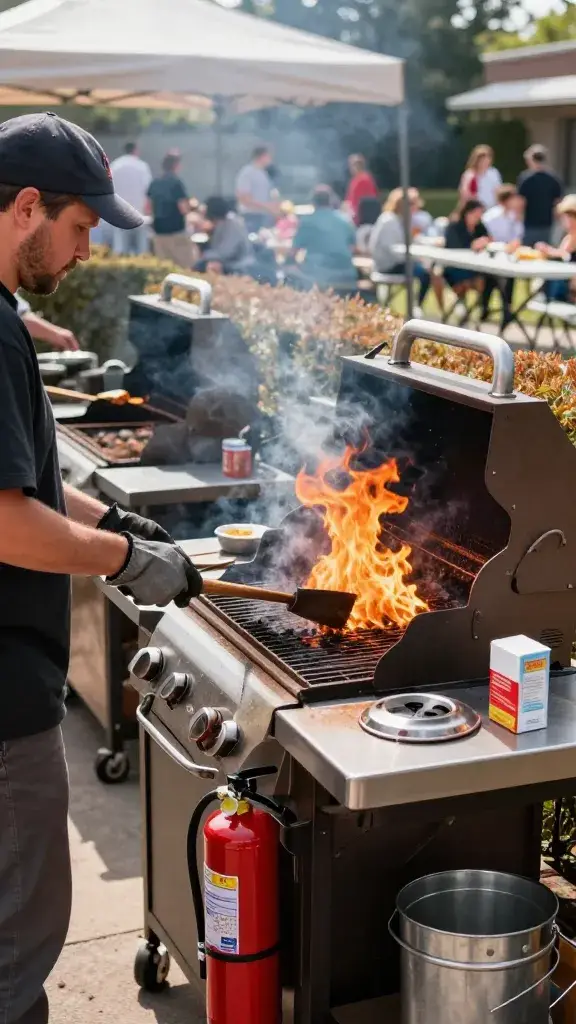
Flare-ups are guaranteed when cooking fatty meats for 100 guests. If you can’t smother flames in seconds, they leap to clothing, canopies, or dry hedges.
Essential Fire Gear
- Class B/C fire extinguisher: One within arm’s reach of each grill.
- Heatproof gloves and a long-handled metal spatula.
- Metal bucket with lid or ash can for coals — no plastic.
- Baking soda for grease flare-ups. Never use water on grease fires.
Flare-Up Control
- Keep a grill lid handy; close it to choke oxygen for 10–15 seconds.
- Move meat to a cooler zone, scrape excess grease, then resume.
- For charcoal, avoid dumping fresh, unlit coals under dripping meat.
Takeaway: Place an extinguisher at hip height, pin pulled and ready — and tell one helper exactly where it is.
7. Traffic And Kids: Assign Roles And Post Clear Boundaries
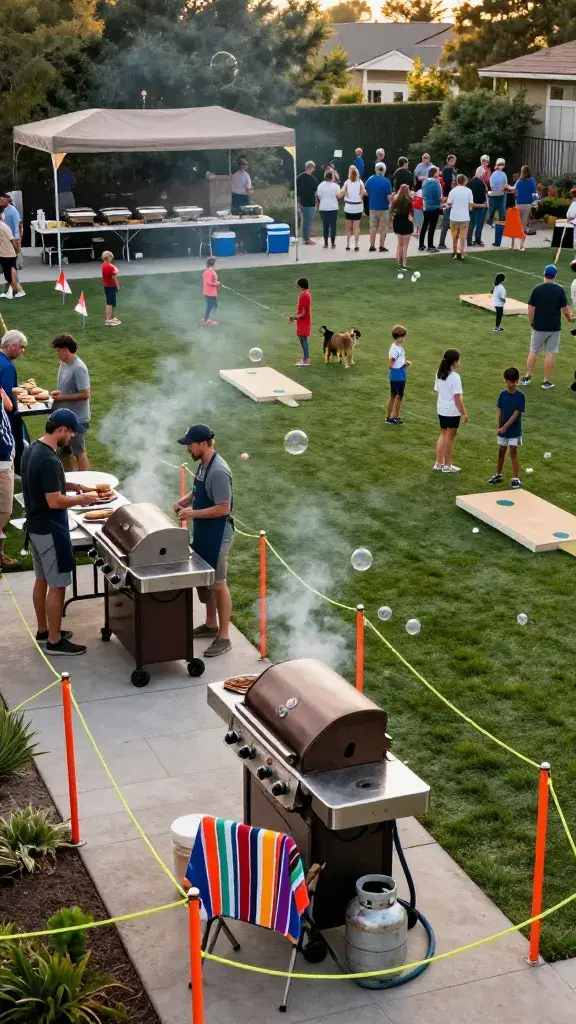
Kids, pets, and curious guests drift toward the action. One bump to a hot grill or trip over a propane hose causes burns and spills.
Simple Controls
- Create a kids’ zone 15 feet from grills with games and shade.
- Use bright garden stakes and rope to mark grill perimeters and gas lines.
- Assign a “grill runner” to fetch trays and a “line manager” to pace serving — fewer people near the heat.
Action today: Put a chair with a bright towel at the entry to your grill zone — it’s a visual “no entry” marker that works.
8. Batch Cooking: Cook Once, Hold Safely, Serve Fast
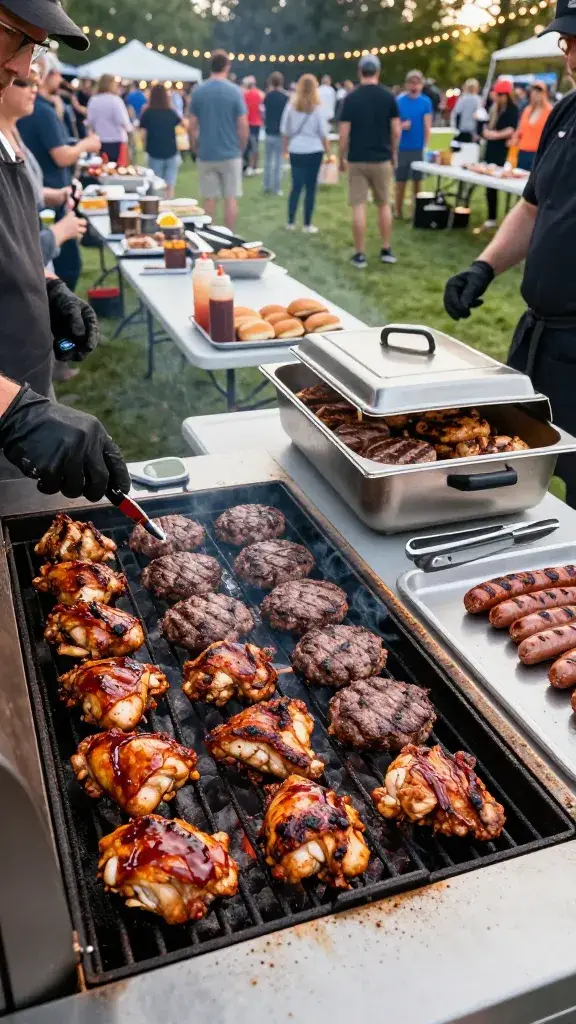
Cooking everything to order for 100 leads to raw centers, angry lines, and distracted mistakes. You lose control of doneness and food temps.
Cook-Then-Finish Method
- Grill chicken to 160–165°F ahead of peak time, rest, then finish with sauce over high heat for 2 minutes to crisp and reheat above 165°F.
- Par-cook sausages until 150–155°F, hold hot, then char to finish before serving.
- Form burgers thin and even. Cook to 160°F, hold covered in a hot pan, then re-sear briefly as buns are ready.
Staging Tips
- Use wire racks over sheet pans to keep crusts from steaming soggy.
- Label pans with “RAW,” “COOKED,” and time stamps using masking tape.
Takeaway: Write a 30-minute timeline on paper: preheat, batch cook, hot-hold, then quick-finish as the line moves.
9. Clean-As-You-Go: Grease, Trash, And Handwashing
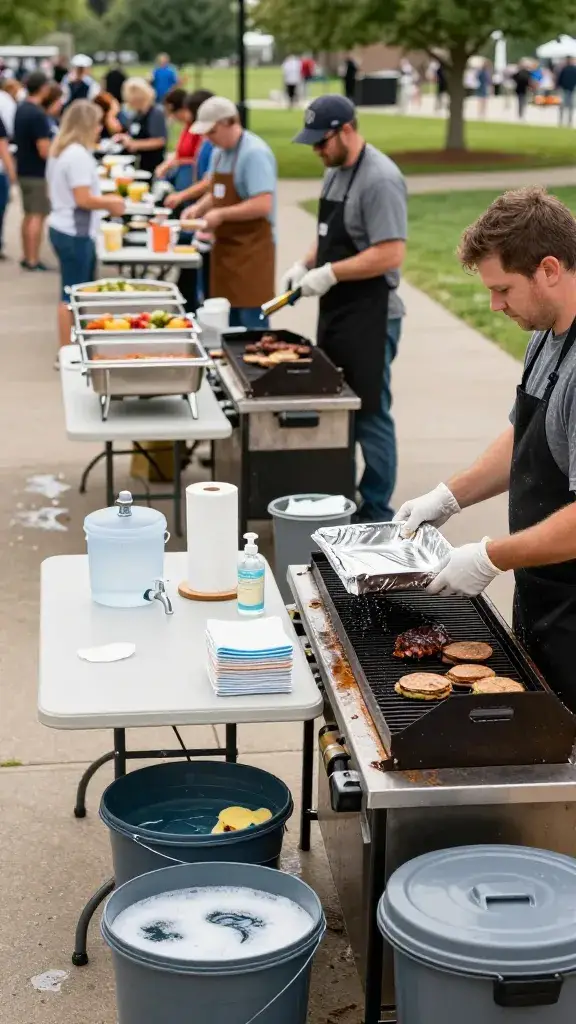
Grease drips, sauce spills, and meat juices build slippery, contaminated surfaces. Waiting to clean until the end spreads bacteria and trip hazards.
Set Up Simple Stations
- Handwash: Outdoor tap or water jug, pump soap, paper towels, small bin.
- Wipe: Two buckets — one with warm soapy water, one with clean water — plus disposable cloths.
- Trash and recycling: Bins with lids near the serving area and one at the grill.
- Grease control: Line drip trays with heavy-duty foil and replace hourly.
Action today: Put a roll of paper towels and spray cleaner on the serving table — visible supplies prompt helpers to wipe spills immediately.
10. End-Of-Event Shutdown: Ashes, Leftovers, And Propane
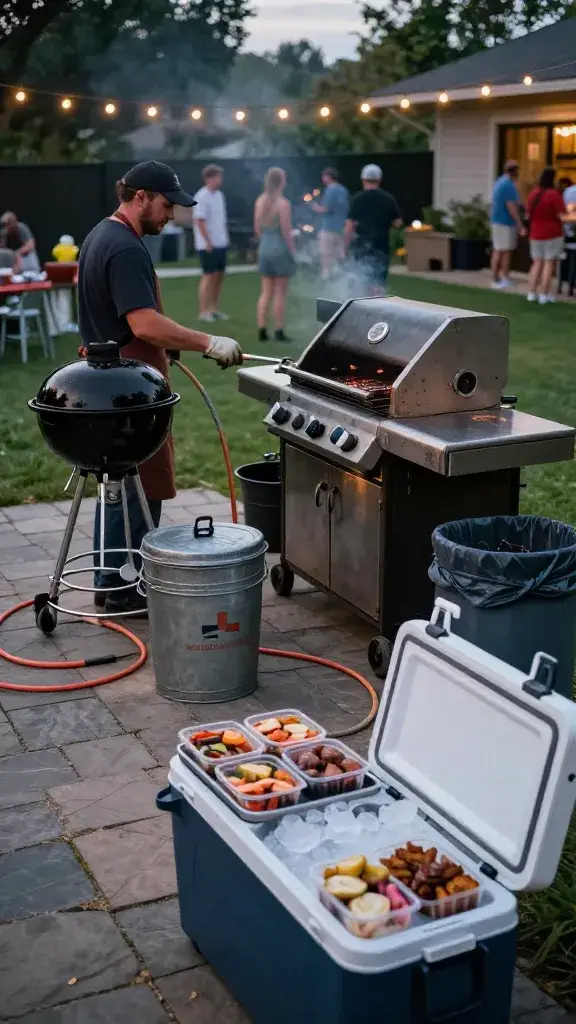
Most accidents happen during cleanup when people are tired and the yard’s dark. Hot coals dumped in plastic bins or leftovers forgotten at room temperature create overnight hazards.
Safe Cooldown And Storage
- Charcoal: Close vents and lid for at least 2 hours. Transfer ashes to a metal bucket with a lid. Leave 24 hours before binning.
- Propane: Turn burners off, then close tank valve. Disconnect hoses once cool, cap or cover, and store tanks outside, upright.
- Leftovers: Chill within 1 hour. Divide into shallow containers no deeper than 2 inches and place in the coldest part of the fridge or an ice-packed cooler.
Takeaway: Set a 60-minute alarm before the party ends to start cooldown: close vents, consolidate food, and prep storage containers.
Frequently Asked Questions
How much meat should I buy to feed 100 people safely?
Plan about 1/3 pound cooked meat per adult when serving multiple options. That means roughly 45–50 pounds raw mixed cuts (chicken, burgers, sausages) to account for shrinkage. Split it into smaller pans so you can keep most safely hot or cold while only a portion sits out. Label each pan with the time it left cold or hot storage.
What’s the easiest way to check doneness fast during a rush?
Use an instant-read thermometer and check the thickest part of one piece from each batch. For chicken, insert near the bone or deepest part of the breast without touching metal. Keep the thermometer in your apron pocket and wipe the probe with a paper towel dipped in soapy water, then clean water, between checks. Train one helper to call out temps so you stay consistent.
How do I keep salads cold outdoors for hours?
Nest each salad bowl in a larger bowl filled with ice to the level of the salad. Stir and rotate bowls every 30 minutes and refill ice as it melts. Only place out what the line will eat in 30–45 minutes and keep back-up portions in a cooler with plenty of ice. If a salad sits above 40°F for over 2 hours, discard it.
What should I do if flames flare up under fatty meats?
Close the grill lid to starve oxygen for 10–15 seconds, then move meat to a cooler zone. Scrape the grates to remove grease and, if using charcoal, shift coals to create a two-zone fire. Sprinkle baking soda directly on persistent flames — never use water on grease fires. Keep an extinguisher within arm’s reach and brief a helper to grab it on your signal.
How can I prevent guests from crowding the grill area?
Set your serving tables and drinks away from the grills so people naturally gather elsewhere. Mark the grill perimeter with bright rope or garden stakes and place a small table as a “barrier” at the entry. Assign one friendly helper to redirect guests and kids, pointing them toward games or the drink station. Clear, visible boundaries work better than repeated warnings.
What’s a simple menu that’s easier to cook safely for 100?
Choose items that cook evenly and hold well: chicken thighs, sausages, and thin burgers. Add buns, slaw, and a bean or potato side you can keep hot. Avoid thick bone-in chicken breasts and giant steaks that are easy to undercook during rush periods. Batch-cook, then finish with a quick sear and sauce as you serve.
Conclusion
Hosting a safe BBQ for 100 people is about disciplined setup, steady temperatures, and clear roles. Pick two helpers now — one for the grill zone and one for the serving line — and walk them through these steps before guests arrive. You’ll serve hot, delicious food on time and end the night with a cool grill, happy guests, and no close calls.