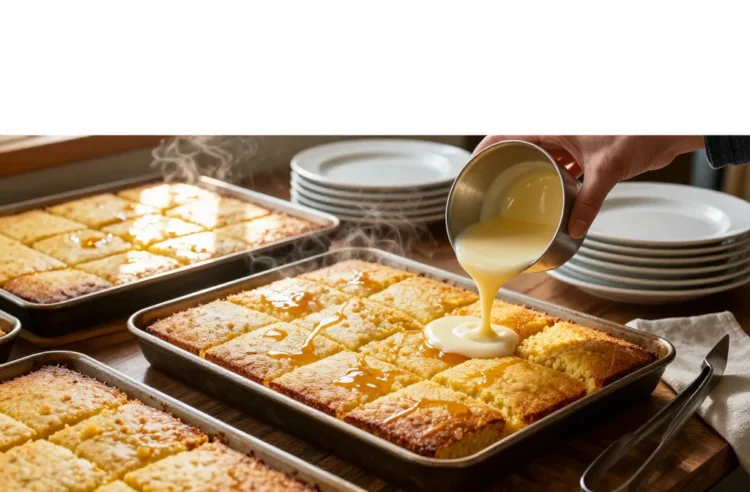
I’ve served cornbread to big crowds in church basements and backyard weddings, and I’ve definitely pulled pans that looked perfect but crumbled like sawdust when cut. When you’re feeding 100 people, you don’t have time for do-overs — you need fast, reliable fixes with what you already have. In this guide, I’ll show you how to rehydrate dry cornbread, turn it into crowd-pleasing sides, and prevent dryness on your next batch. You’ll leave with exact quantities scaled for 100 servings and step-by-step methods that work.
1. Rehydrate With A Butter–Milk Soak In The Oven
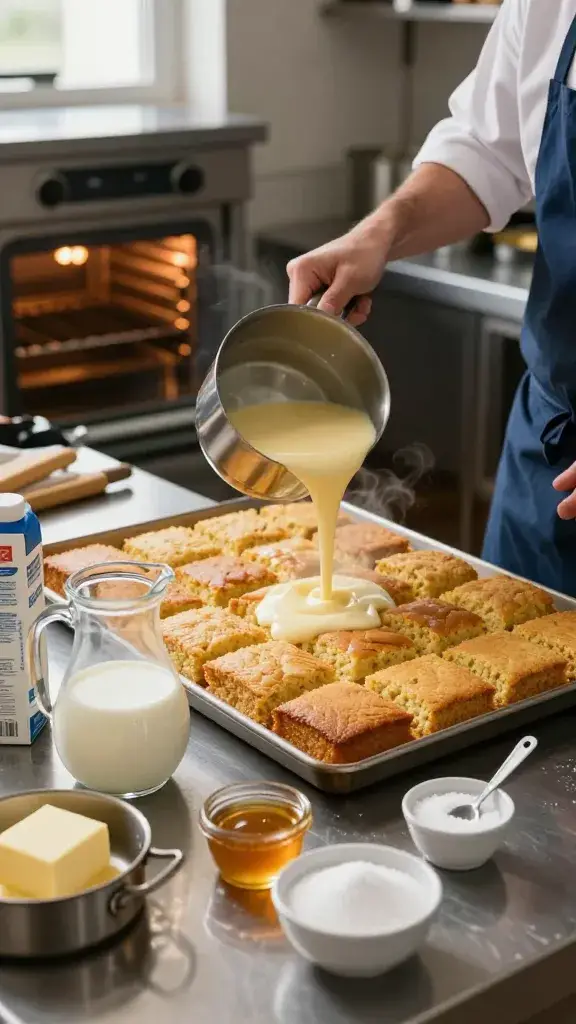
Dry cornbread tastes stale and chalky because the crumb has lost moisture and fat. If you serve it as-is, it will crumble on plates and need oceans of chili to go down. A warm, even soak brings flavor and moisture back into the interior without turning the crust soggy.
How To Fix It
- Gather for 100 servings: 3 cups unsalted butter, 2 quarts whole milk, 1 quart heavy cream (or use 3 quarts whole milk if that’s all you have), 1/2 cup honey or white sugar, 2 tablespoons fine salt.
- Preheat oven to 300°F. Cut each pan of cornbread into serving squares but keep pieces snug in the pan.
- Melt butter in a saucepan, add milk, cream, honey, and salt. Heat until steaming, not boiling.
- Use a ladle to spoon 1–2 tablespoons of the mixture over each square, aiming for edges and cracks. You’re adding about 1/3–1/2 cup per 9×13 pan.
- Cover pans loosely with foil. Warm 12–18 minutes until the tops are glossy and the centers feel springy, not wet.
- Uncover for the last 3–5 minutes to revive the crust.
Signs You Got It Right
- Squares hold together when lifted with a spatula.
- Edges feel tender but not greasy.
- When pressed, the crumb springs back instead of crumbling.
Takeaway: For every 9×13 pan, ladle 1/3–1/2 cup of warm butter–milk mix, cover, and reheat at 300°F for 12–18 minutes to revive moisture evenly.
2. Turn Dry Cornbread Into Moist Stuffing (Dressing) Trays
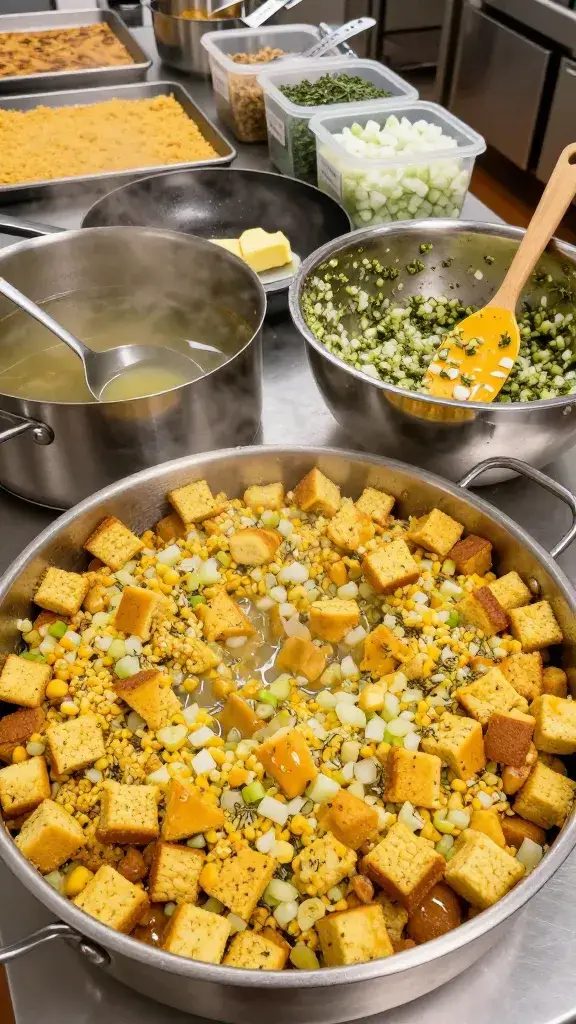
When the crumb is too far gone, forcing it back into slices only highlights the dryness. Stuffing transforms that texture into an asset by letting the bread soak, then bake with flavorful stock and aromatics. It scales cleanly to 100 portions and holds well on a buffet.
What You’ll Need For 100
- 12–14 quarts low-sodium chicken or vegetable stock
- 3 pounds unsalted butter or 2 quarts olive oil
- 8 pounds onions, small dice
- 4 pounds celery, small dice
- 1/2 cup dried thyme + 1/4 cup rubbed sage (or 4 cups chopped fresh parsley + 1/4 cup fresh thyme)
- Salt and black pepper to taste
How To Fix It
- Cube cornbread into 1-inch pieces and spread into deep hotel pans or roasting pans.
- In large skillets, sauté onions and celery in butter until soft and sweet, 12–15 minutes. Season with salt, pepper, and herbs.
- Toss aromatics with cornbread cubes. Warm stock until steaming. Pour over in stages, stirring gently. Aim for a well-damp but not soupy mix — when squeezed, a handful should hold together without dripping. Expect 2–3 quarts stock per full hotel pan.
- Cover with foil and bake at 350°F for 25 minutes, then uncover and bake 10–15 minutes until the top browns.
Serve And Hold
- Keep covered in a 200°F oven or on warm chafers. Stir every 20 minutes and add 1–2 cups warm stock per pan if edges dry out.
Action today: If slices won’t salvage, cube the cornbread and convert to stuffing with 2–3 quarts warm stock per hotel pan, then bake covered and finish uncovered for a browned top.
3. Brush With Syruped Fat And Steam Briefly
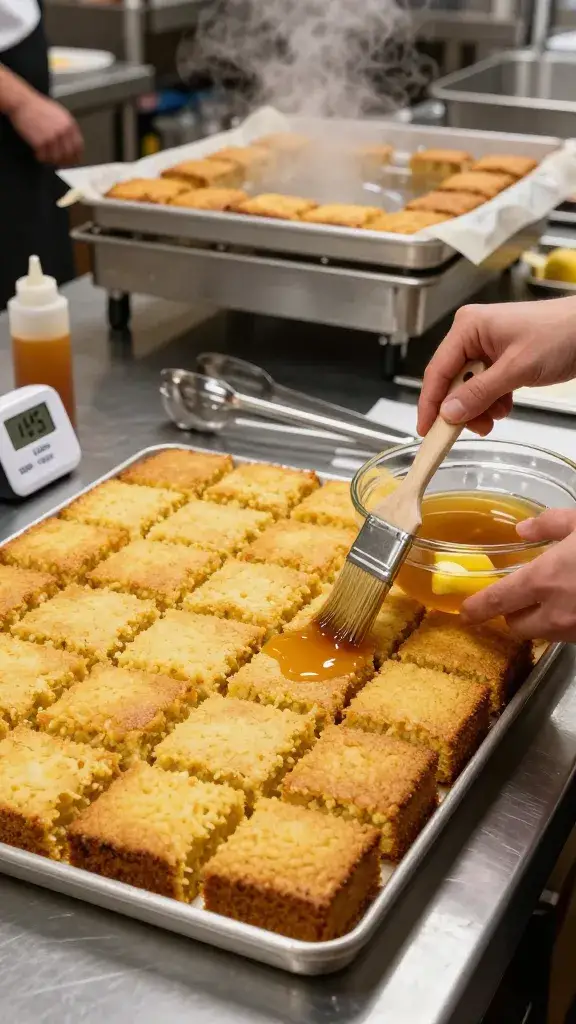
Some pans are dry only on the surface while the center is still decent. A fast brush and steam softens the crust and adds gloss, making pieces feel fresh-baked on a buffet. This works well when guests are already arriving and you have 15 minutes.
Make A Finishing Glaze For 100
- 2 cups melted butter or neutral oil
- 2 cups maple syrup or honey (or 1:1 mix with light corn syrup to reduce stickiness)
- 2 tablespoons lemon juice or apple cider vinegar
- 1 tablespoon fine salt
How To Fix It
- Whisk glaze until smooth. Keep warm so it brushes thinly.
- Arrange cut cornbread on sheet pans with slight gaps between pieces.
- Brush the tops and sides lightly — about 1 teaspoon per piece.
- Tent loosely with foil and place in a 300°F oven for 6–8 minutes, or set pans over a pot of steaming water for 3–4 minutes. Do not let steam drip onto tops; wipe foil if condensation forms.
- Uncover and give a second light brush just before serving.
Why It Works
- Sugar holds moisture at the surface and improves perceived softness.
- Fat lubricates the crumb and carries flavor.
- Brief steam resets starches so the crumb relaxes.
Takeaway: Brush each piece with 1 teaspoon of a 1:1 butter-to-syrup glaze, tent, and warm 6–8 minutes to revive a dry exterior fast.
4. Serve As Loaded Cornbread Bowls With Moist Toppings
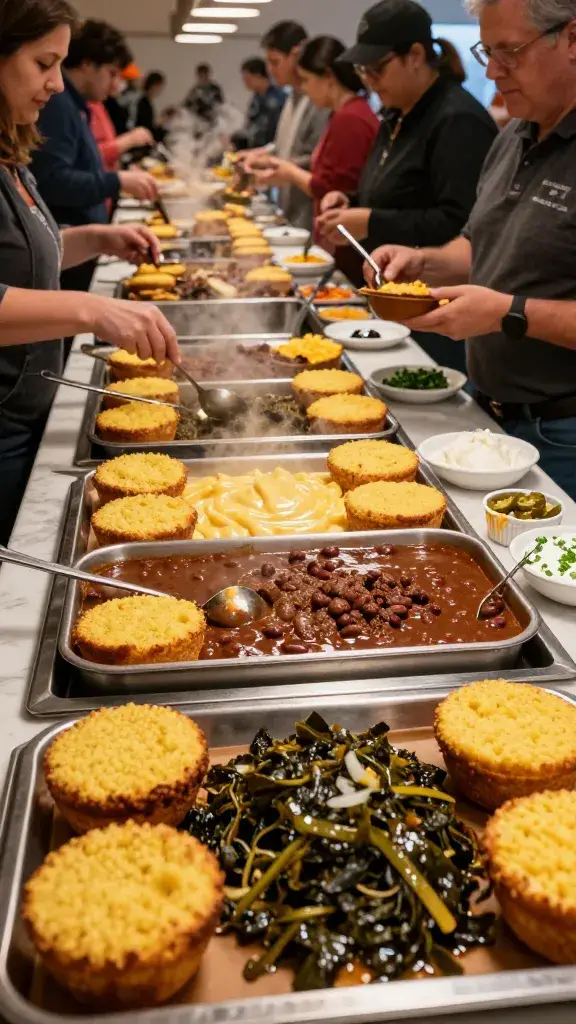
When you can’t change the bread, change the plate. Dry cornbread becomes satisfying when each bite carries moisture from chili, braised greens, or creamed corn. Building a topping bar lets you feed 100 without bottlenecks and disguises uneven dryness across pans.
Set Up A Moisture-First Topping Bar
- Chili or Beans: 6–8 gallons beef, turkey, or three-bean chili; keep loose, not thick.
- Creamed Corn: 3–4 gallons; finish with 2 cups butter and 2 quarts milk for silkiness.
- Braised Greens: 10 pounds collards or kale cooked with onions, broth, and a splash of vinegar — keep the pot likker.
- Sour Cream Or Yogurt: 1–1.5 gallons for tang and moisture.
- Hot Honey Or BBQ Sauce: 2–3 quarts to drizzle.
How To Plate For Moisture In Every Bite
- Split each cornbread square horizontally with a serrated knife to expose the crumb.
- Ladle 2–3 tablespoons of warm chili or creamed corn over the bottom half.
- Cap with the top half and add another spoonful of topping plus a drizzle of sauce.
- Offer a pat of soft butter at the end of the line.
Portioning For 100
- Plan 1 piece per person plus 10% buffer. Each person will take 1/3–1/2 cup total toppings.
- Keep sauces and chilis hot in slow cookers or chafers and stir every 10 minutes to keep fluids even.
Action today: Split each square and load with 2–3 tablespoons of a moist topping before serving so every portion eats tender, not dry.
5. Prevent Dryness On The Next Batch With Simple, Scalable Tweaks
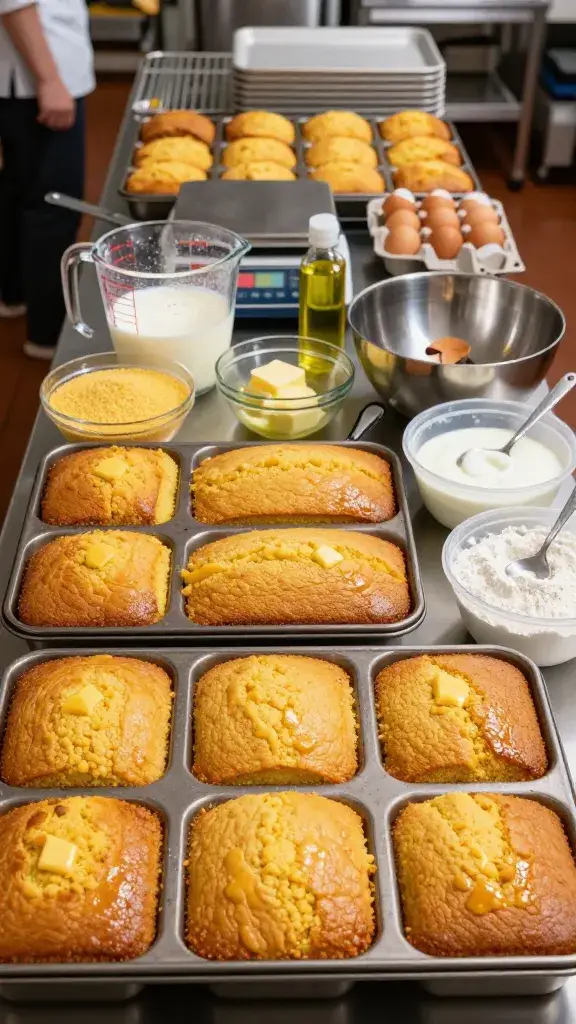
Fixes help today, but the cheapest win is preventing dryness next time. Dry cornbread often comes from too little fat, overbaking, and flour-heavy ratios. With a few pantry-level changes, you can hit moist and tender at scale every time.
Use The Right Ratios For 100 Servings
- Fat: At least 1 cup fat per 9×13 pan (about 20–24 servings). Use melted butter, neutral oil, or a 50/50 mix.
- Dairy: Swap 1/3–1/2 of the liquid with whole buttermilk or add 2 tablespoons plain yogurt per cup of milk.
- Eggs: 1 large egg per cup of liquid for structure and richness.
- Sweetener: 2–4 tablespoons honey or sugar per pan to retain moisture.
Moisture And Mixing
- Hydrate batter 10–15 minutes before baking so cornmeal softens.
- Mix until just combined. Visible small lumps are fine; overmixing toughens the crumb.
Baking And Holding
- Bake at 350°F until a toothpick has a few moist crumbs, 18–24 minutes for 9×13; do not wait for a dry pick.
- Brush hot tops with melted butter (1–2 tablespoons per pan) the moment they come out.
- Cool 10 minutes, then cover loosely with foil to trap gentle steam without sogging the crust.
- For holding, wrap pans in foil and keep at 200°F up to 60 minutes; add a light butter–milk spritz if edges dry.
Takeaway: For every 9×13 pan, aim for 1 cup fat, partial buttermilk, a brief batter rest, and pull when a few moist crumbs cling to the tester.
Frequently Asked Questions
How much liquid should I add to rescue cornbread without making it soggy?
Work in small, even passes. For a standard 9×13 pan, start with 1/3 cup of warm butter–milk mixture, then check absorption after 5 minutes and add up to another 3 tablespoons if still dry. Distribute with a ladle, cover with foil, and reheat at 300°F so the liquid moves into the crumb, not the bottom of the pan.
What if I only have oil and regular milk — no butter or cream?
Use a simple oil–milk soak: 1/4 cup oil, 3/4 cup milk, 1 tablespoon sugar, and 1/2 teaspoon salt per pan. Warm until steaming and ladle lightly over cut pieces. Finish with a quick uncovered bake to perk up the crust. You’ll lose a bit of buttery flavor, so add a drizzle of honey before serving.
My cornbread crumbles apart when sliced. How do I serve it to a crowd?
Switch to bowls and serve as a base for chili, creamed corn, or pulled pork. Use a wide spatula to scoop generous chunks, not precise squares. Moist toppings bind the crumbs and make portions feel intentional. Keep toppings loose with extra broth or milk so every spoonful adds moisture.
How do I keep cornbread moist on a buffet for an hour?
Brush hot pieces with melted butter, tent loosely with foil, and hold in a 200°F oven or covered chafers. Every 20 minutes, quickly brush with a thin butter–syrup glaze or mist with warm milk using a clean spray bottle. Avoid heat lamps alone — they desiccate the tops. Rotate pans front to back so edges don’t over-dry.
Can I fix dry cornbread muffins the same way?
Yes. Split the tops with a knife and brush 1–2 teaspoons of warm butter–milk mix into the cut. Tent with foil and warm 5–7 minutes at 300°F. For service, pair each muffin with 1 tablespoon soft butter and a squeeze bottle of honey so guests add moisture at the table.
Conclusion
Dry cornbread doesn’t doom your event — you can rehydrate, repurpose, or serve smart to keep 100 people happy. Choose one fix now, then adjust your ratios and bake time on the next round so you don’t need a rescue at all. If you want a step-by-step big-batch recipe that bakes up tender every time, your next read is my scalable cornbread formula for 50–150 servings.