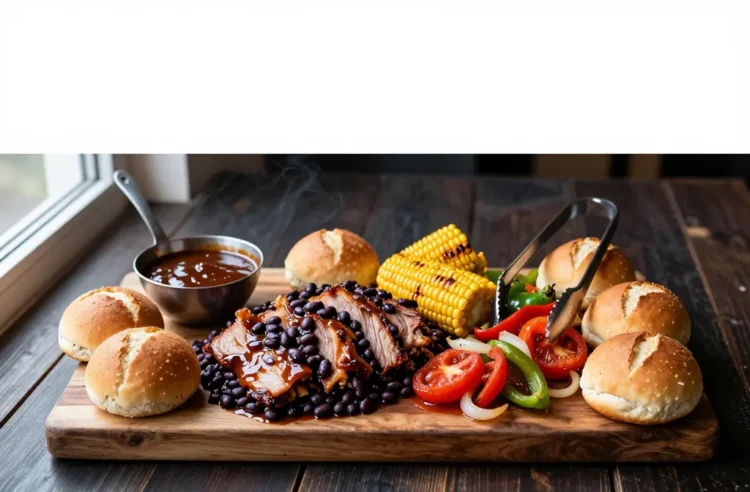
I’ve catered backyard parties where the pulled pork vanished faster than the guests arrived. The first time I ran short, I watched people scrape the pan and wish for seconds. I learned to stretch what I had without diluting flavor or padding it with more meat. In this guide, I’ll show you five reliable methods to feed 50 generously using smart add-ins, sides, and service tactics that taste intentional and keep costs in check.
1. Bulk Up With Flavor-Carrier Beans And Vegetables
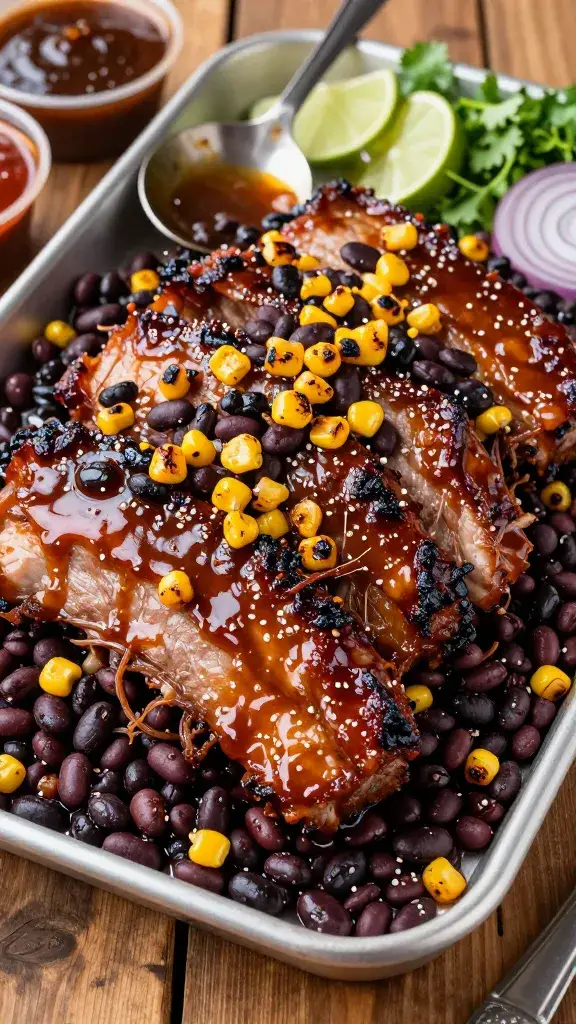
Running out mid-service ruins the flow and frustrates guests. The fix isn’t dumping in random fillers that taste like leftovers — it’s using ingredients that soak up sauce and complement pork. Beans and hearty vegetables hold texture, carry smoke and spice, and boost volume without anyone feeling short-changed.
What To Use Instead
- Black beans or pinto beans: Two large cans per 5 pounds of pork, rinsed and warmed.
- Charred corn: Two 16-ounce bags of frozen corn, pan-charred until sweet and smoky.
- Sautéed peppers and onions: 4 bell peppers and 2 large onions sliced, softened in a skillet.
- Fire-roasted tomatoes: One 14.5-ounce can drained, for moisture and acidity.
How To Fix It
- Warm beans and vegetables separately with a ladle of your barbecue sauce until they taste like the pork.
- Fold them into the pulled pork at a 1:3 ratio (one part mix-ins to three parts pork) so texture stays meaty.
- Adjust seasoning with salt, a splash of apple cider vinegar, and a pinch of brown sugar for balance.
Action today: For every 10 pounds of pulled pork, fold in 4 cups beans and 4 cups sautéed peppers/onions warmed in the same sauce — your pan volume jumps by roughly 30% with full flavor.
2. Serve As Sliders With Crunchy, Moisture-Rich Slaw
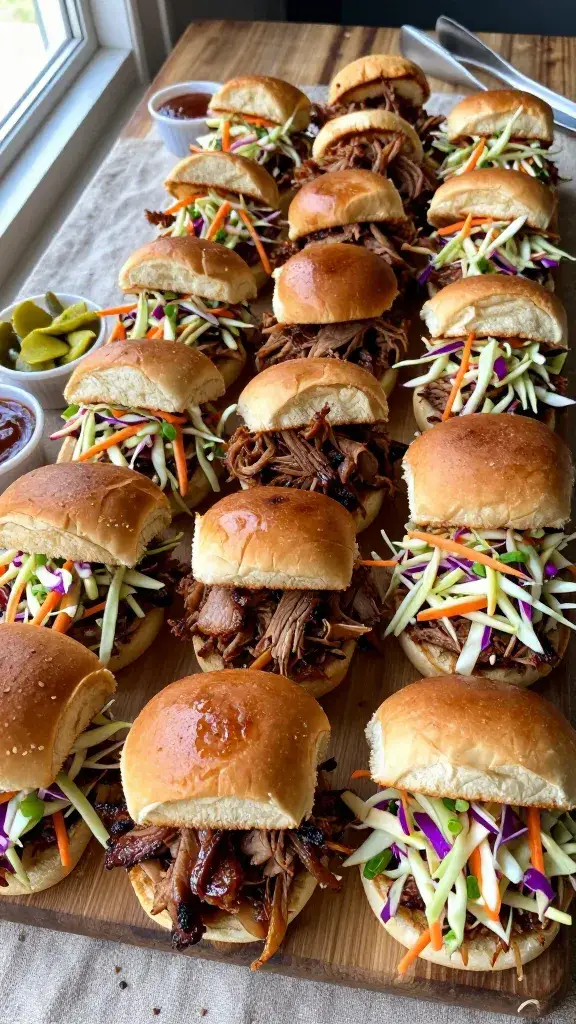
Big buns invite big scoops and drain your pan before the first hour ends. Sliders control portion size and still feel generous because of texture and freshness. A tangy slaw adds height, crunch, and moisture so less meat still eats like a full sandwich.
Portion And Bread Choices
- Slider buns: Plan 2 per person. Each gets 1.5–2 ounces of pork (about 2 heaping tablespoons).
- Sturdier options: Potato slider rolls or small Hawaiian rolls hold sauce without collapsing.
Simple Garden-Centre-Style Slaw (No Fancy Gear)
- 1 medium green cabbage, finely shredded with a knife.
- 2 large carrots, grated on a box grater.
- 1 small red onion, thinly sliced.
- Dressing: 1 cup mayonnaise, 2 tablespoons apple cider vinegar, 1 tablespoon sugar, 1 teaspoon salt, 1 teaspoon black pepper. Thin with 2–3 tablespoons water until pourable.
Toss slaw 1–2 hours before serving so it softens slightly while staying crisp.
Service Flow That Reduces Over-Scooping
- Set buns first, then slaw, then pork, then pickles/sauce.
- Use a #24 disher or 2-tablespoon scoop for consistent portions.
- Keep a helper plating meat so guests don’t self-serve heavy.
Takeaway: Switch to sliders and add a bright slaw — you’ll cut meat per serving by a third while guests still feel satisfied.
3. Build A Loaded Baked Potato Or Rice Bar
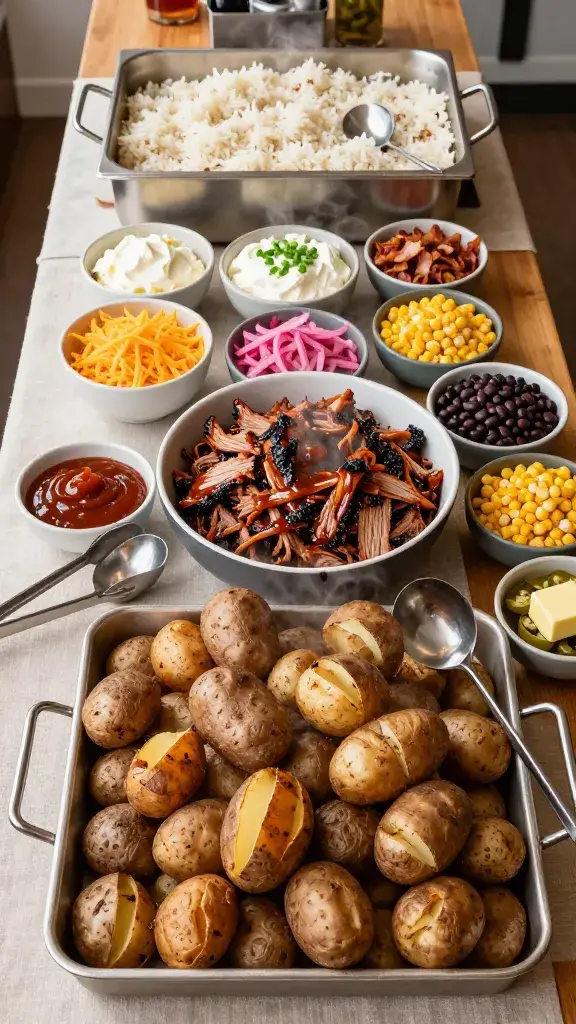
All-meat plates disappear fast and leave light eaters with too much protein and not enough substance. A hearty base like potatoes or rice fills the plate and stretches sauce and toppings. People enjoy customizing, and small amounts of pork go a long way when layered.
Base Options And Quantities
- Baked potatoes: 50 medium russets (8–10 ounces each). Bake at 425°F for 50–60 minutes until tender.
- Rice: 3 standard coffee mugs of raw long-grain rice per 20 people; cook 7–8 mugs for 50. Fluff with salt and a drizzle of oil.
Toppings That Carry Flavor
- Shredded cheddar, chopped green onions, sliced jalapeños.
- Chopped tomatoes, canned corn (drained), black beans (warmed).
- Sour cream or plain yogurt, hot sauce, extra barbecue sauce.
Portion Guide
- Potato: 2 tablespoons pork per potato, then sauce and toppings.
- Rice bowl: 1 cup rice, 1/4 cup beans/corn, 2 tablespoons pork, slaw or pico on top.
Action today: Add a potato or rice bar beside the pork pan — the first scoop becomes the base, not the meat, instantly doubling your effective servings.
4. Thicken And Brighten Your Sauce To Coat More, Use Less
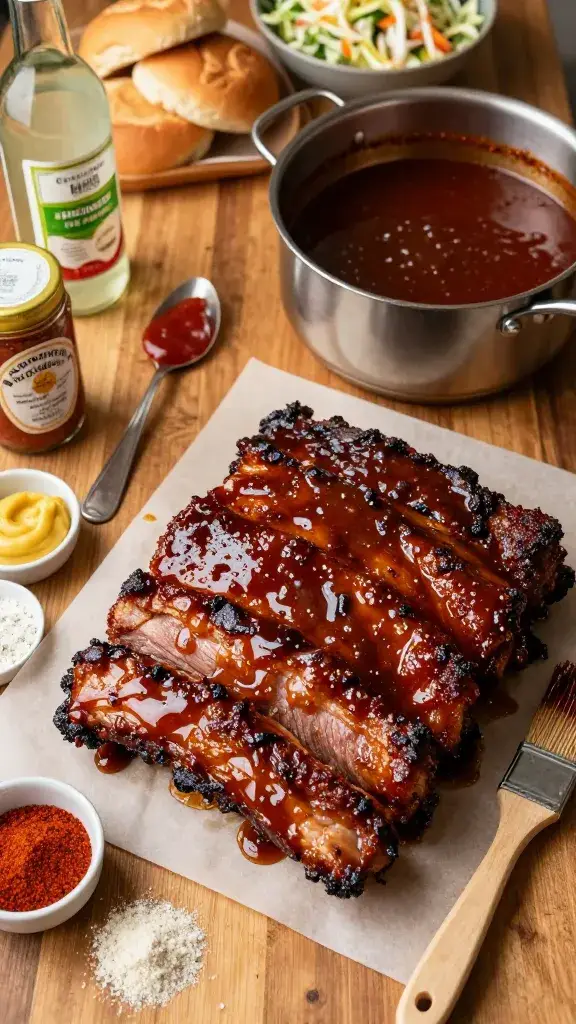
Thin sauce slides off, and guests chase flavor by piling on more meat. A thicker, balanced sauce clings to every strand, so smaller portions still taste rich. When the sauce tastes complete, people stop hunting for extra.
How To Build A Clingy, Balanced Sauce
- Base: 2 cups ketchup + 1/2 cup apple cider vinegar + 1/3 cup brown sugar.
- Depth: 2 tablespoons Worcestershire, 1 tablespoon mustard, 1 teaspoon smoked paprika, 1/2 teaspoon garlic powder.
- Thickener: Simmer 10–12 minutes until it coats the back of a spoon. If needed, whisk 1 teaspoon cornstarch into 1 tablespoon cold water and simmer 1–2 minutes more.
- Finish: Salt to taste and a small squeeze of lemon for brightness.
Application
- Warm pork gently with just enough sauce to glisten — not soupy.
- Hold extra sauce warm in a squeeze bottle for topping, not in the pan.
- Refresh the pan with a drizzle of sauce and a splash of hot water if it tightens during service.
Takeaway: Reduce your sauce to a glossy cling — you’ll make 1.5–2 ounces of pork eat like 3 ounces because every bite carries flavor.
5. Control The Line: Smaller Utensils, Smaller Vessels, Smart Refills
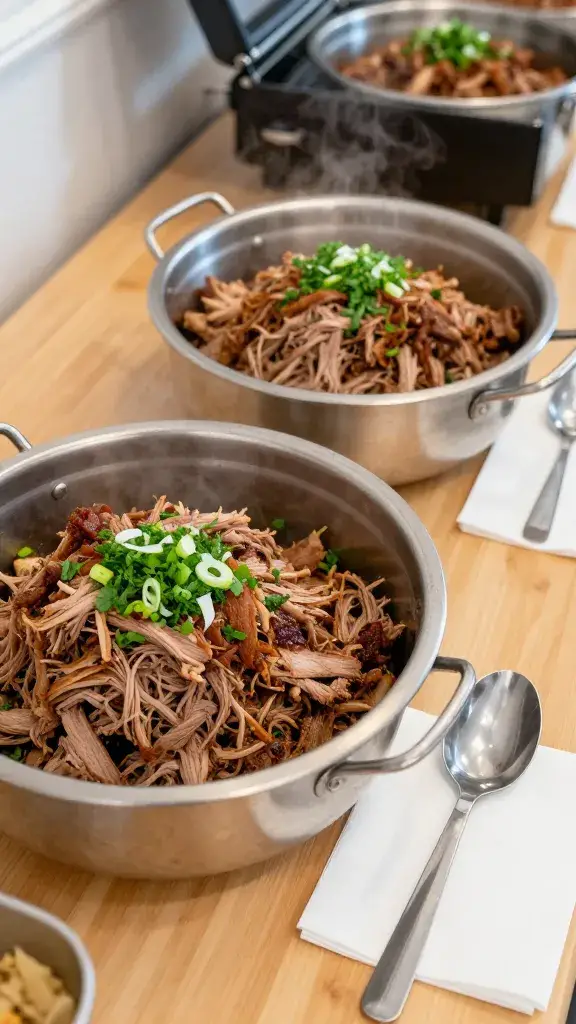
Big pans and big spoons scream “take more,” and they empty fast. Portion control is a service design problem, not a generosity issue. When you shrink utensils and stage refills, guests still feel abundance without draining your supply.
Tools And Setup
- Spoons: Use a 2-tablespoon disher or small serving spoon, not a ladle.
- Pans: Split pork into two or three shallow pans and rotate them; keep extras warm covered in the oven at 200°F.
- Presentation: Garnish the top with chopped parsley or green onions so a thin layer looks full.
Refill Strategy
- Top up with small amounts often rather than dumping the whole reserve.
- Keep sauce bottles, pickles, jalapeños, and slaw prominent; they slow meat scoops naturally.
- Place bread first, toppings second, meat third in the buffet flow.
Action today: Swap to a smaller serving spoon and rotate shallow pans — this alone trims average portions by 25% without anyone noticing.
Frequently Asked Questions
How many pounds of pulled pork do I need for 50 people when using these methods?
Plan on 12–15 pounds of cooked pulled pork if you use sliders, hearty sides, and a loaded toppings bar. That serves about 1.5–2 ounces per person on average with plenty of flavor. If you skip sides and serve only sandwiches, you’ll need closer to 25 pounds cooked.
Can I stretch pork with broth or water in the pan?
Don’t thin with water or broth — it washes out flavor and makes the meat soggy. Instead, thicken and season your sauce so it clings, then fold in flavor-carrying add-ins like beans and sautéed peppers. If the pan dries out, use a tablespoon or two of hot water plus sauce to loosen, not dilute.
What’s the best way to keep everything hot without drying out the pork?
Hold pork covered in a 200°F oven and only set out small pans on the buffet. Stir gently every 15 minutes and refresh with a spoon of warm sauce. Keep sides like rice, potatoes, and beans in separate covered pans so steam from those keeps plates hot and reduces the need for extra meat.
How far in advance can I make the slaw and beans?
Make slaw up to 24 hours ahead; keep it covered in the fridge and toss again before serving. Warm beans and sautéed vegetables 1–2 hours before guests arrive and hold covered on low heat. Always season the add-ins with the same sauce you’re using on the pork so the flavors match.
What if some guests don’t eat bread — how do I keep portions in check?
Offer a “bowl” setup: rice or a baked potato first, then beans or corn, then a small scoop of pork, plus slaw and pickles. Use a small scoop for meat and a larger spoon for the base and veg. This keeps portions consistent and inclusive for gluten-free guests.
How do I estimate sauce quantity so I don’t run out?
Plan 1/3 cup sauce per person when stretching — about 6 quarts for 50. Keep half mixed into the meat and the rest warm in squeeze bottles. If needed, extend with a quick batch using ketchup, vinegar, brown sugar, and spices simmered to a thick consistency.
Conclusion
You don’t need more meat to feed 50 well — you need a plan that makes every bite count. Start with a clingy sauce, switch to sliders, and anchor the table with a hearty base and bright toppings. With those choices locked in, your next step is simple: map your buffet flow and utensil sizes today so service stays generous and controlled.