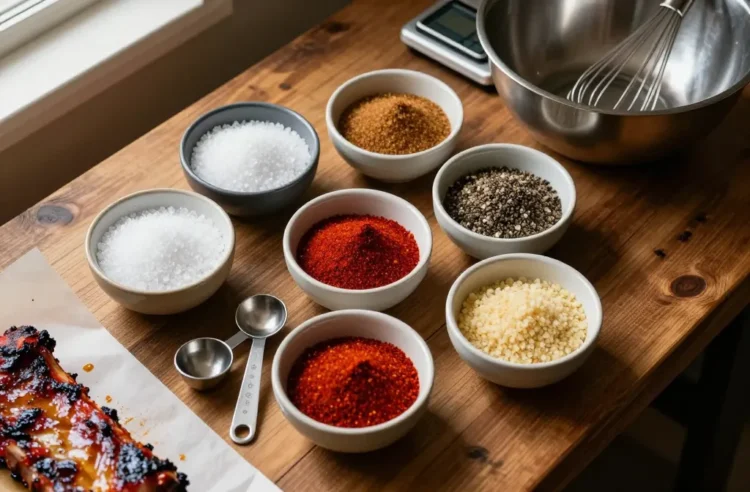
I learned bulk rubs the hard way: my first backyard party tasted different from rack to rack because I eyeballed everything. Once I standardized a few powerhouse ingredients and ratios, every cook came out balanced, no matter the meat or smoker. In this guide, you’ll learn which five bulk-friendly ingredients anchor a reliable rub, the role each one plays, and exactly how to store and mix them at home with basic kitchen tools. You’ll walk away with a repeatable, scalable process that tastes right on the first try and the fiftieth.
1. Kosher Salt: The Foundation That Controls Juiciness and Balance
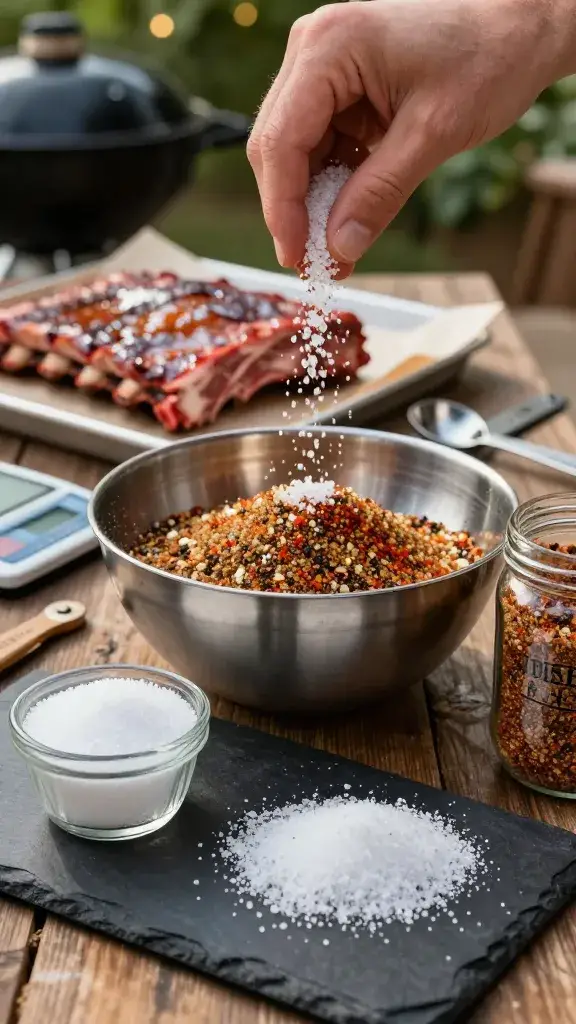
Under-salted meat tastes flat; over-salted meat tastes harsh and dries out. Salt drives flavor into the meat and helps it hold moisture during long cooks, so the wrong type or grind sabotages results before you light the charcoal.
Why Kosher Salt Beats Table Salt for Rubs
- Flake size for even coverage: Medium flakes coat meat without clumping, so you don’t create salty patches.
- Clean flavor: Kosher salt doesn’t have iodine or anti-caking flavors that show up in slow cooks.
- Predictable measuring: You can measure by volume more reliably than with fine table salt.
How to Use It in Bulk
- Choose a brand and stick to it: Diamond Crystal is lighter and flakier; Morton is denser. Switching changes salinity per tablespoon.
- Ratio starting point: 35–40% of your total rub by weight for general BBQ (pork, chicken). For salt-sensitive eaters, drop to 30% and salt the meat lightly before applying the rub.
- Mixing tip: If your salt clumps, bake it on a sheet pan at 200°F (about 95°C) for 10 minutes to dry, cool, then mix.
Action today: Pick one kosher salt brand and label it on your recipe; consistency here locks in the same flavor every batch.
2. Sweet Paprika: Color and Gentle Sweetness Without Burn
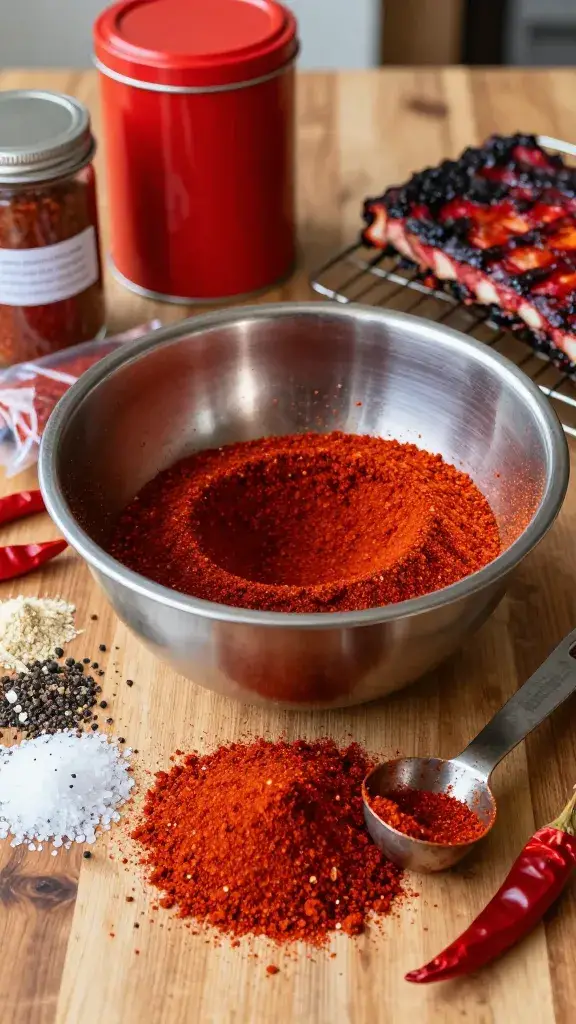
Many rubs look dull or turn bitter because cooks lean on sugar alone for browning. Sweet paprika builds a deep mahogany bark and mild sweetness without tipping into scorched flavors during longer smokes.
Signs You Need Better Paprika
- Brown bark that looks muddy instead of red-mahogany
- Bitter edge on chicken skin or ribs after higher-heat finishes
- Rub color that fades to tan after a few weeks in the pantry
What to Buy and How to Store
- Buy fresh: Choose bright red paprika in a sealed tin or jar from a high-turnover shelf at the supermarket.
- No smoke-on-smoke: Skip smoked paprika for long smokes; it can stack harshness. Use sweet paprika for versatility.
- Storage: Keep in a cool, dark cupboard. If your kitchen runs warm, double-bag in a zip-top bag with most air pressed out.
Working Ratios That Scale
- Pork and chicken baseline: 20–25% of total rub by weight for color and mild sweetness.
- Beef baseline: 10–15% to avoid masking pepper and savory notes.
Takeaway: Use fresh, sweet paprika as your color engine at 10–25% of the mix; it gives you red bark without the bitterness of burned sugar.
3. Brown Sugar: Caramel Notes and Bark Formation Without Grit
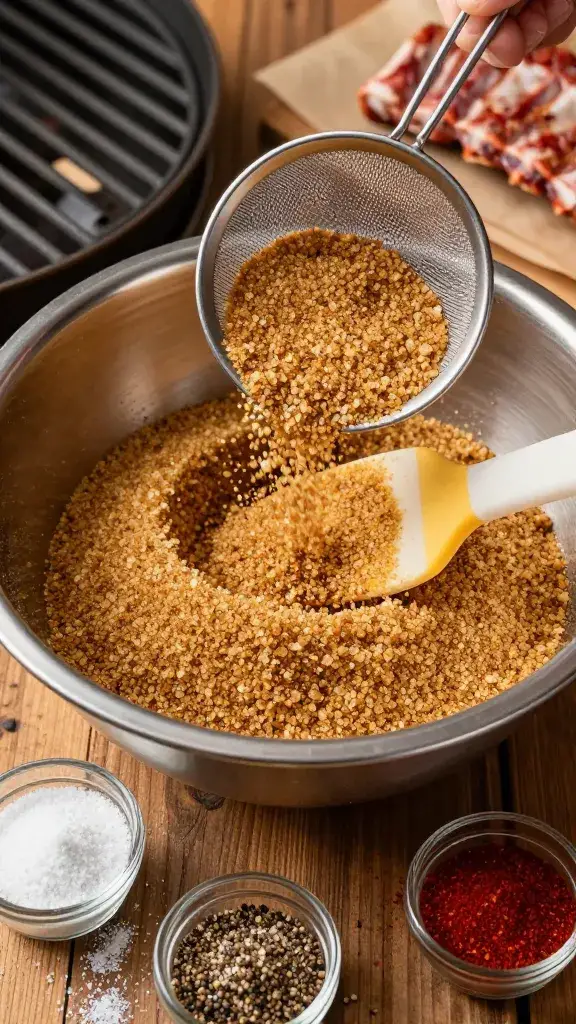
Good bark needs a touch of sugar to caramelize and bind spices to the surface. Too much sugar burns on hot grates and turns ribs candy-sweet instead of balanced.
Choosing and Handling Sugar
- Light brown sugar: Offers gentle molasses notes and burns less readily than dark brown for mixed cooking temperatures.
- De-clump before mixing: Pulse in a food processor or mash through a metal strainer so it blends evenly with salt and spices.
- Anti-clump trick: Add 1 teaspoon of plain cornstarch per cup of sugar when mixing a big batch; it keeps the rub free-flowing in storage.
Ratios by Meat and Heat
- Pork ribs and shoulder: 15–20% of total rub by weight for rich bark.
- Chicken: 8–12% to avoid scorched skin during higher-heat finishes.
- Beef (brisket, chuck): 0–8% if you want a true Central Texas profile; skip sugar entirely for purist pepper-forward brisket.
When to Hold Sugar Back
- If you cook hot and fast (over 325°F / 165°C), dust the meat with a low- or no-sugar base, then finish with a light sprinkle of sugar rub in the last 20 minutes.
Action today: If your current rub cakes in the jar, run your brown sugar through a strainer and add 1 teaspoon cornstarch per cup before remaking the blend.
4. Black Pepper: Heat, Aroma, and That BBQ “Edge”
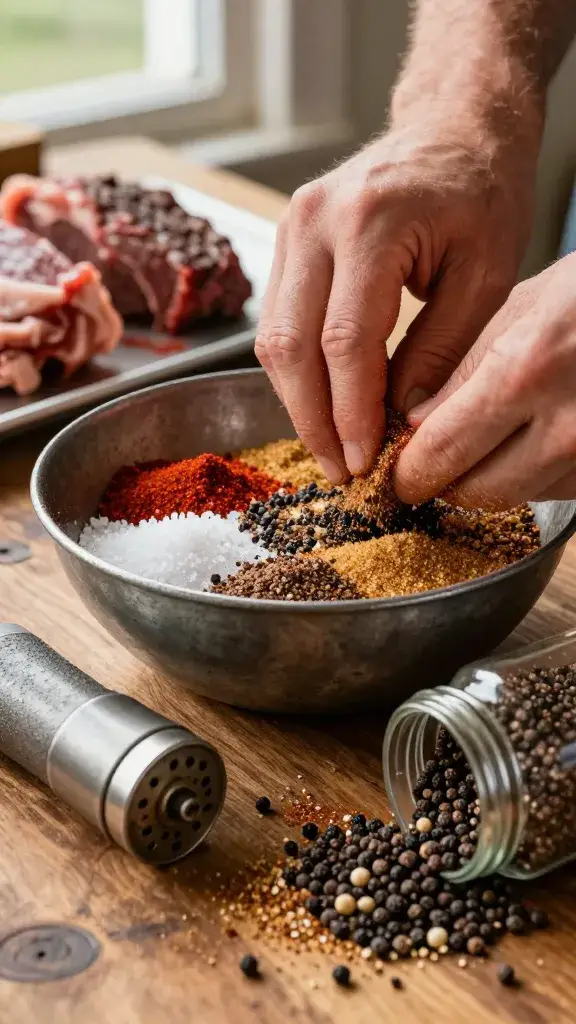
Flat-tasting rubs usually lack pepper’s nose and gentle bite. Pre-ground pepper loses fragrance fast and leaves you with heat but no aroma, especially in bulk mixes that sit for weeks.
Grind Size Matters
- Coarse (restaurant grind or cracked): Best for beef; it survives long cooks and builds a textured bark.
- Medium-fine: Better for chicken and pork to avoid pepper “hot spots.”
Buying and Storing
- Whole peppercorns + grinder: Grind what you need for each batch. A basic hand grinder from the hardware or home store works.
- Short-term bulk: If buying pre-ground, choose “restaurant grind” black pepper in a sealed container and use within 3 months.
Reliable Ratios
- Beef (brisket, short ribs): 25–35% black pepper by weight for a classic profile.
- Pork and chicken: 8–15% to give lift without dominating.
Takeaway: Grind pepper fresh to a consistent size and set it at 10–35% depending on meat; that single step wakes up the whole rub.
5. Garlic and Onion Powder: Savory Backbone That Survives Long Cooks
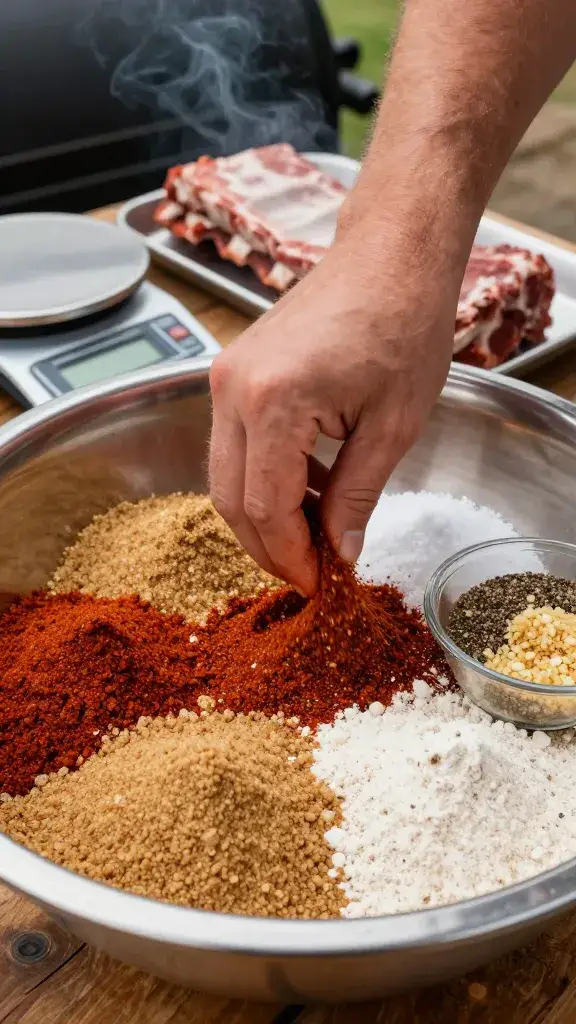
Without a savory base, rubs taste sweet-salty and one-note. Garlic powder and onion powder add depth that stays present after hours of smoke, unlike fresh aromatics that scorch and fall off.
Picking the Right Type
- Powder vs. granulated: Powder integrates better in bulk mixes and clings evenly. Granulated works but can separate in storage.
- Avoid “garlic salt”: It throws off your salt balance and creates salty patches.
Balanced Savory Ratios
- Garlic powder: 6–10% of total rub by weight for most meats.
- Onion powder: 6–10% for sweetness and roundness. Keep the two in roughly equal parts.
- Heat-safe add-ins: For a gentle kick and color, add 2–5% cayenne or chipotle powder depending on your crowd.
Separation Fix in Storage
- If your rub settles into layers, add 1–2 teaspoons of plain cornstarch per cup of rub and shake before use. Store in a wide-mouth jar so you can stir with a spoon.
Action today: Match garlic and onion powder in equal amounts around 6–10% each; it locks in a savory core that reads as “BBQ” on any meat.
Frequently Asked Questions
How do I scale a rub for a big cook without a kitchen scale?
Use measuring cups and keep the same percentages. For example, if salt is 40% of your mix, use 2 cups salt in a 5-cup batch. Write your recipe in “parts” (e.g., 4 parts salt, 2 parts paprika, 1 part sugar, 1 part pepper, 1 part garlic+onion combined). Level each scoop with a butter knife for consistency.
How much rub do I need per pound of meat?
Plan 1 tablespoon per pound for pork and chicken, 1.5 tablespoons per pound for beef with larger surfaces like brisket. If the surface still shows wet patches after coating, add a light second pass. Press the rub in with your hand instead of rubbing hard so you don’t tear the meat surface.
My rub clumps in the jar. How do I prevent that?
Dry your salt in the oven at 200°F for 10 minutes, sift brown sugar, and add 1 teaspoon cornstarch per cup of total rub. Store in an airtight jar with the air pressed out if using a zip-top bag. Keep it in a cool cupboard away from the stove so humidity doesn’t creep in.
Can I make one rub for everything?
Yes, start with a balanced base: 40% kosher salt, 20% sweet paprika, 10% brown sugar, 15% black pepper, 7% garlic powder, 8% onion powder. For beef, halve the sugar and raise pepper to 25%. For chicken, keep sugar around 10% and avoid heavy coarse pepper so the skin doesn’t get pepper-hot spots.
Should I add herbs like thyme or oregano to my bulk rub?
Dried leafy herbs fade and taste dusty after a month in storage. If you want herbal notes, add them fresh to a small “day-of” portion instead of the whole jar. A pinch of dried thyme stirred into a single-meal amount works, but don’t commit your entire bulk batch to it.
How long does a bulk rub stay fresh?
For best flavor and color, use within 3 months when stored in a sealed jar in a cool, dark cupboard. Paprika and pepper lose aroma first, so mix smaller batches if you cook infrequently. Label the jar with the date and the salt brand so you can repeat results.
Conclusion
Pick one salt, buy fresh paprika, control sugar, grind pepper to the right size, and anchor everything with garlic and onion powder. Mix a small test batch today, cook one rack of ribs or a tray of thighs, and adjust percentages once—then lock in your final ratios and scale with confidence for the whole season.