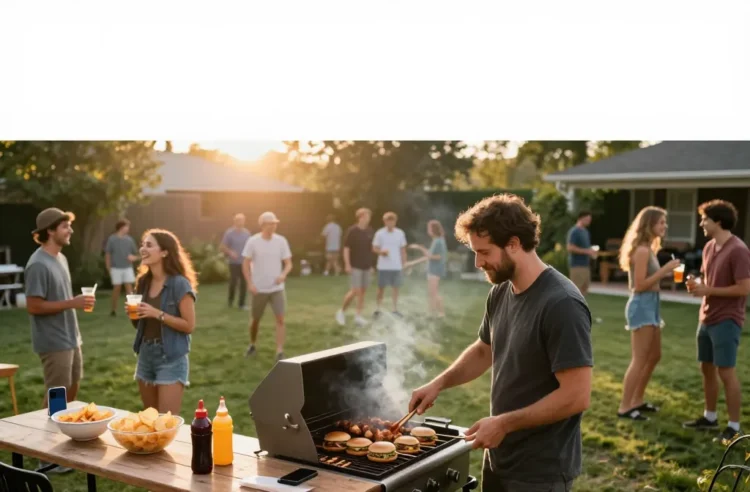
I’ve hosted backyard BBQs where the grill wouldn’t light, the chicken was still cold, and fifty hungry people watched me sweat. If you’re behind schedule right now, you don’t need perfection — you need momentum and smart triage. In the next few minutes, I’ll show you how to feed guests fast, keep food safe, and regain control so the party feels intentional, not chaotic. These are the exact moves I use when everything runs late and the clock won’t stop.
1. Admit The Delay Early And Redirect Attention
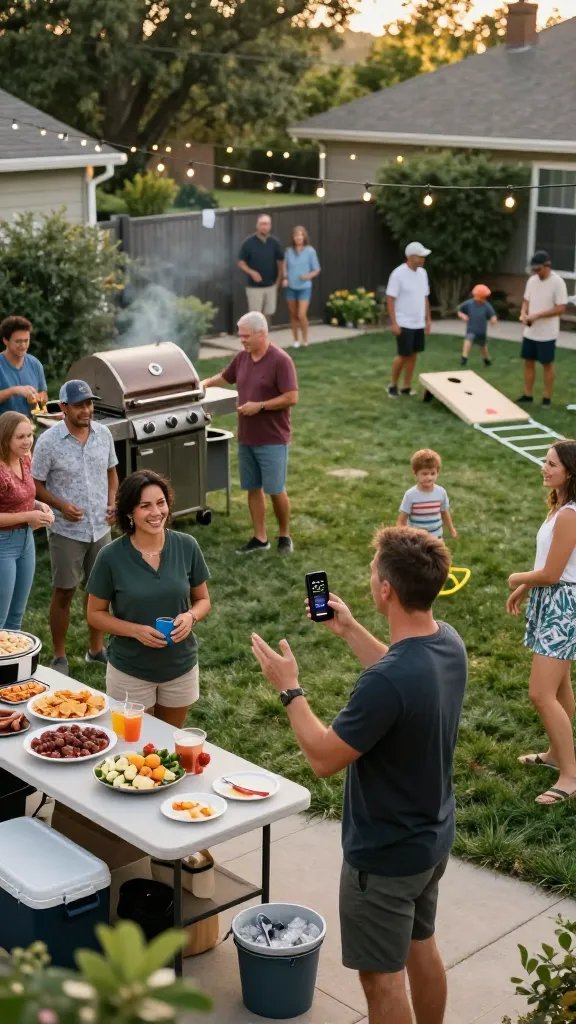
Silence makes people impatient, and impatience makes small problems feel bigger. When you leave guests guessing, they crowd the grill, ask constant questions, and your focus slips.
How To Fix It
- Make a clear, upbeat announcement: “We’re running 20 minutes behind on hot food. Drinks and snacks are open now, and lawn games start in five.”
- Delegate a friendly “host” to greet late arrivals and repeat the message so you’re not interrupted.
- Put a visible timer on your phone for the next milestone and set it on the serving table — it calms the room.
Action today: Tell everyone the new first-plate time and point them to drinks, snacks, and activities while you reset.
2. Switch To Faster-Cooking Proteins And Smaller Portions
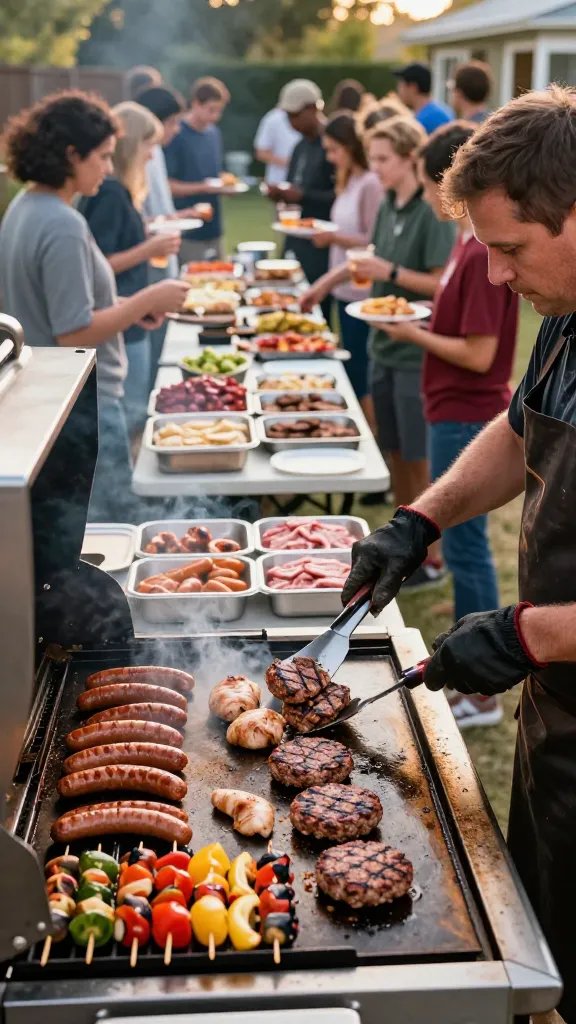
Bone-in chicken thighs and big burgers drag the clock. Guests stay hungry and you burn fuel chasing the center to doneness. Large cuts also raise food safety risks when you rush.
What To Use Instead
- Thin sausages, hot dogs, and pre-cooked sausages: Heat-through in 6–10 minutes.
- Chicken tenderloins or thin-cut boneless thighs: 6–10 minutes total when cut to finger-width.
- Smash burgers (2–3 oz each): Pressed thin, done in 3–4 minutes per side on a flat top or grill pan.
- Veg skewers or halved peppers/zucchini: Cook in 6–10 minutes and satisfy non-meat eaters fast.
Preparation Shortcut
- Butterfly thick cuts with a sharp kitchen knife to half the thickness.
- Form smaller patties and press thin with a spatula on a hot flat surface or a cast-iron pan placed on the grill.
- Use store-bought marinades or a quick mix of oil, salt, pepper, garlic powder, and paprika. No long marinating — toss and cook.
Takeaway: Downsize the protein and you speed up cook times without sacrificing volume — small, thin, and many beats big and slow.
3. Pre-Cook In The Kitchen And Finish On The Grill
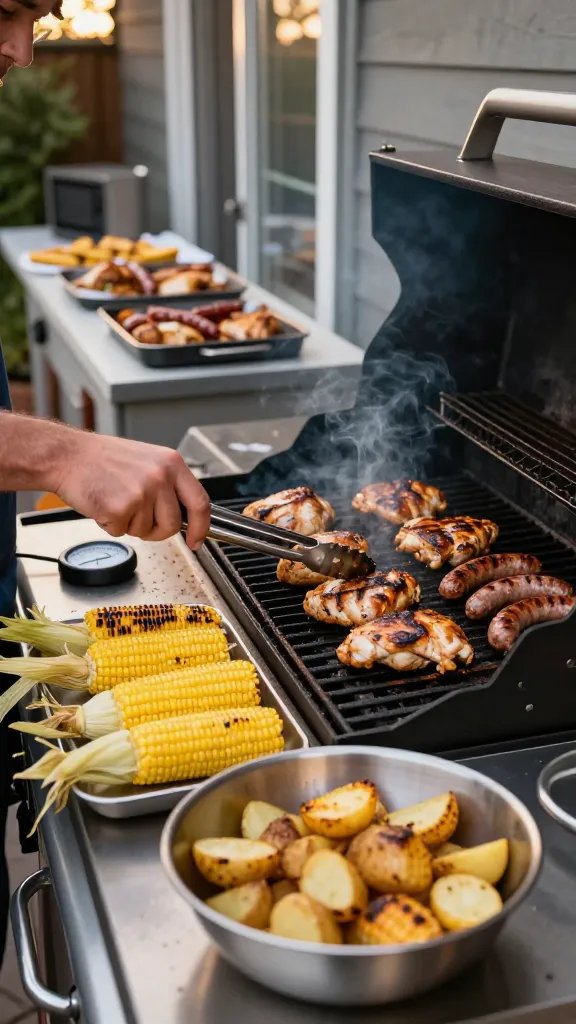
Cooking from raw on a crowded grill is slow and inconsistent. Pre-cooking inside gives you control and turns the grill into a flavor station, not a bottleneck.
How To Fix It
- Oven-bake chicken tenderloins or sausages on sheet pans at 200°C/400°F for 10–15 minutes until near-done, then finish 2–3 minutes on the grill for color.
- Par-cook corn by microwaving ears (in husk) 3–4 minutes each, then char briefly outside.
- Boil or microwave potatoes into fork-tender wedges, then toss with oil and finish on the grill for crisp edges.
Safety Cue
- Keep pre-cooked items on clean trays, separate from raw items. Use separate tongs labeled with masking tape.
- Hold pre-cooked foods hot in the oven at low heat (90–95°C/200–205°F) while you cycle grill batches.
Action today: Load two oven racks with sheet pans now — get proteins to 80–90% doneness, then grill for quick sear and service.
4. Build A “First Wave” Buffet That Feeds Fast
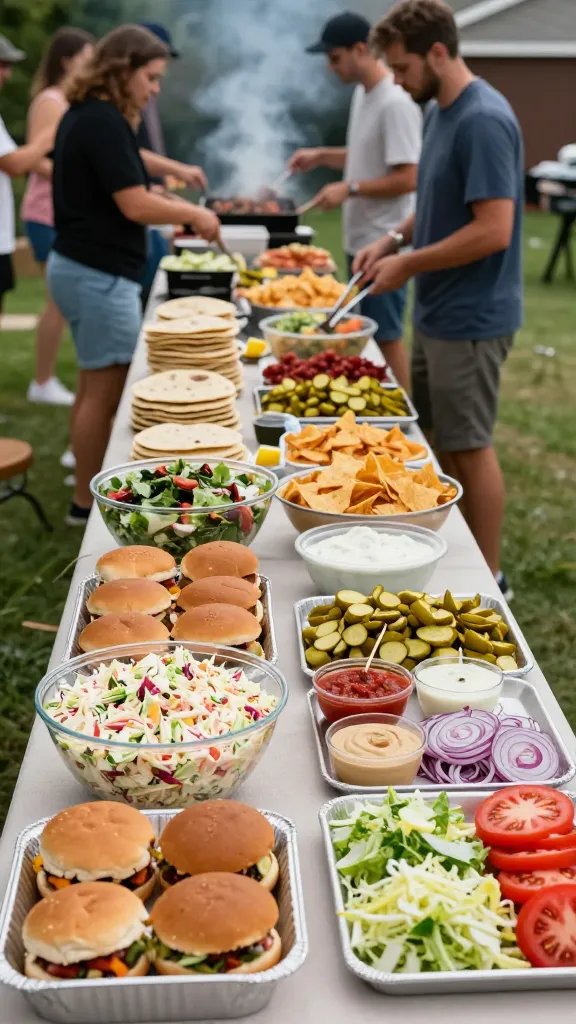
Guests don’t need the full spread to relax; they need something substantial soon. Waiting on every side and sauce stalls the line and makes you late twice.
First Wave Essentials (All Store-Bought Friendly)
- Buns and tortillas set open in trays for speed.
- Two big bowls of salad: bagged coleslaw with jarred dressing; mixed greens with olive oil, lemon, salt.
- Chips and dip: salsa, hummus, and a ranch or yogurt dip.
- Pickles, sliced onions, shredded lettuce, sliced tomatoes laid out on sheet pans.
- Mustard, ketchup, BBQ sauce, hot sauce uncapped and ready with spoons.
Line Flow
- Plates and napkins first, then buns/tortillas.
- Proteins in two stations to split the line.
- Salads and chips last to fill plates.
Takeaway: Open the buffet as soon as the first 20 portions are ready — feed in waves, not all at once.
5. Multiply Heat Sources Instead Of Overloading One Grill
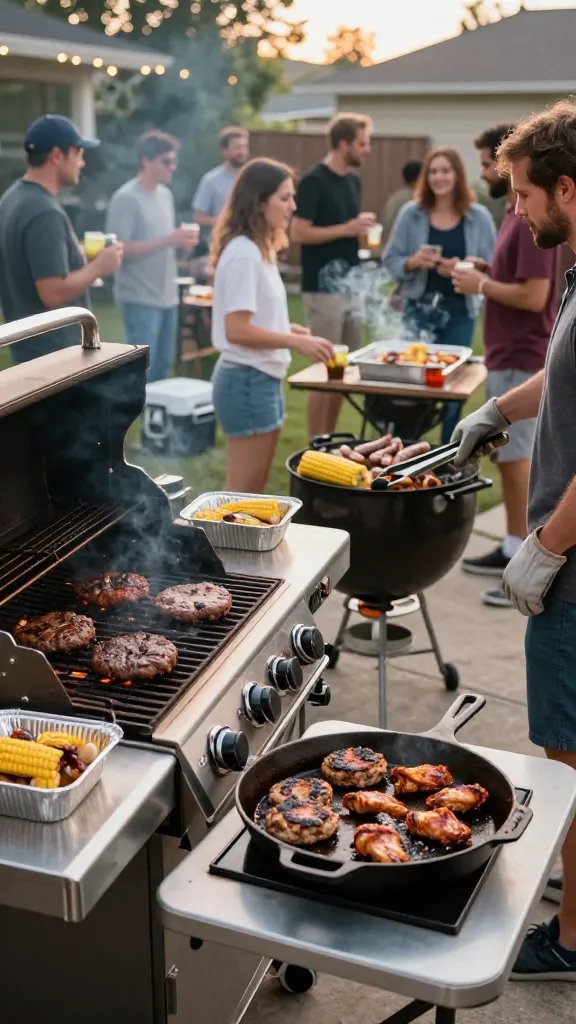
An overpacked grill steams food and slows everything. One heat source for 50 people creates a queue you can’t catch up to.
What To Add From A Standard Home Setup
- Stovetop or portable burner: Sear smash burgers or sausages in a cast-iron pan.
- Oven broiler: Finish or brown items on a sheet pan while the grill handles the next batch.
- Second grill or a neighbor’s grill: Ask a guest to bring theirs — even a small kettle doubles output.
- Disposable aluminum pans: Use as warmers on indirect heat zones to hold cooked items hot and covered.
Heat Zoning On The Grill
- Create a hot zone for searing and a warm zone for holding by leaving one burner lower or banked coals on one side.
- Rotate batches through: sear 3–4 minutes, move to warm zone, serve from the pan.
Action today: Put a cast-iron pan on the grill or stove now to double your cooking surface and start a second protein.
6. Delegate Two Critical Roles: Runner And Assembler
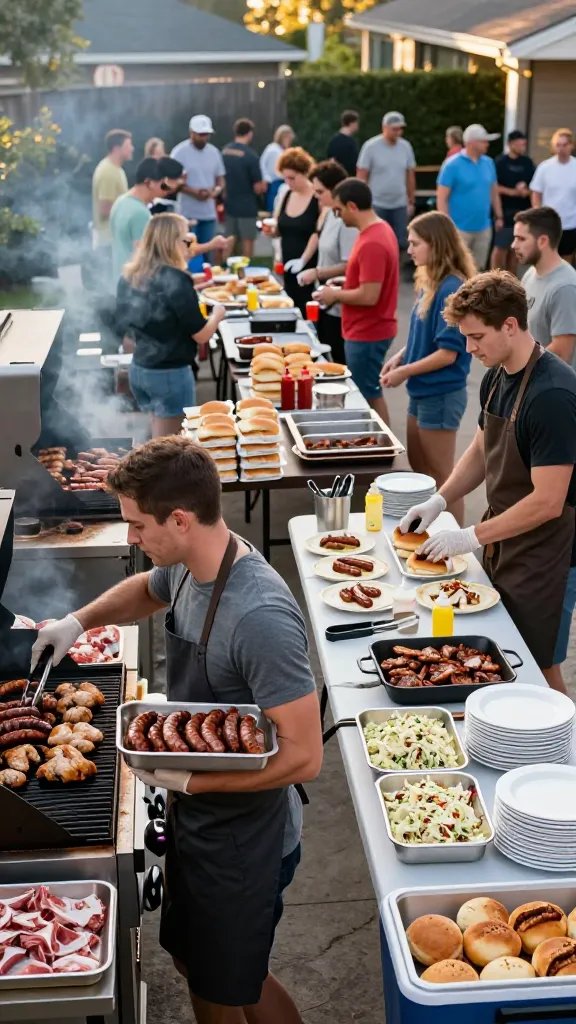
When you try to grill, slice, sauce, and serve, you become the bottleneck. Tasks pile up, and mistakes creep in — undercooked meat, missing buns, empty tongs.
Roles To Assign In One Minute
- Runner: Brings raw trays out, takes cooked trays in, swaps clean tongs, refills buns and sauces.
- Assembler: Stands at the buffet building first portions: bun + sausage, tortilla + chicken, one scoop slaw.
Simple Briefing Script
- “Runner: Only clean trays for cooked food. Raw stays left of the grill, cooked right. Swap tongs each batch.”
- “Assembler: Keep plates moving. One protein, one salad, one chip scoop. Ask non-meat eaters which veg they want.”
Takeaway: Hand off these two jobs now — you keep your eyes on heat and doneness while the line stays smooth.
7. Protect Food Safety While Moving Fast
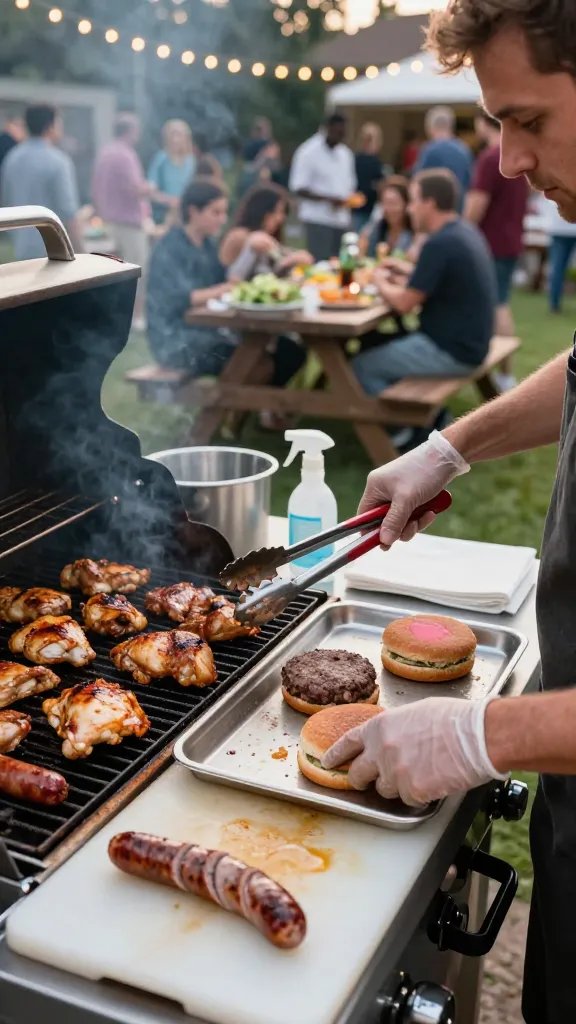
Hurrying tempts you to guess doneness or mix raw and cooked tools — the easiest way to make guests sick. Large groups amplify small lapses.
Safe Minimums Without Gadgets
- Chicken: Cook until juices run clear and the thickest piece is opaque throughout; no glossy or translucent spots.
- Sausages: Slice one open — center should be gray-brown, not pink, and juices clear.
- Burgers: For mixed crowds, cook to no pink at center; press lightly — firm with a little give.
Clean Workflow
- Two sets of tongs and trays labeled with masking tape: RAW and COOKED.
- Wipe station: paper towels and a small bowl of hot, soapy water; wipe handles every batch.
- Hold hot foods covered in warm pans; replace any item that sat at room temp over 2 hours.
Action today: Tape-label your tongs and trays right now and slice-test the first piece of each batch before serving.
Frequently Asked Questions
How much meat do I need for 50 people when I’m behind schedule?
Plan 120–150 grams (4–5 oz) cooked protein per adult when you’re serving buns, salads, and chips. If you add a vegetarian hot option, you can reduce meat to closer to 100–120 grams (3.5–4 oz). Buy mixed items like sausages, chicken tenders, and small burgers to portion easily. Smaller pieces prevent waste and serve faster.
What can I serve fast to vegetarians and vegans without special prep?
Grill thick slices of portobello, zucchini, and bell peppers brushed with oil, salt, and pepper — done in 6–10 minutes. Toss canned chickpeas with oil and spices, then pan-sear on the stovetop for 5–7 minutes as a warm protein. Offer tortillas, pickles, and slaw so they can build a loaded veg wrap. Keep a separate clean tray and tongs for non-meat items.
How do I keep buns from going stale while I catch up?
Keep buns in their bags until you’re five minutes from serving, then transfer to a covered tray. If they’ve dried, wrap a stack in a clean, slightly damp kitchen towel and warm in a low oven for 3–4 minutes. Lightly toast on the grill just before serving to revive texture. Avoid leaving them uncovered in the sun or wind.
What drinks should I push first to keep people happy while food lags?
Open coolers with cold water, seltzer, and a few crowd-pleasing sodas up front. Create a quick self-serve station: cups, ice, sliced lemons, and a pitcher of iced tea or lemonade. Assign someone to circulate with a tray offering refills every 10 minutes. Hydrated guests are patient guests.
How do I manage condiments so they don’t slow the line?
Uncap bottles and place them in the order of use: mustard, ketchup, BBQ sauce, hot sauce. Add spoons to thick sauces and keep napkins within arm’s reach. If possible, pre-sauce a portion of proteins on the serving tray and offer “plain” on a second tray. This splits the line and speeds decisions.
What if rain or wind hits while I’m already late?
Move cooking to the closest sheltered area: garage entrance with the door wide open or under a sturdy patio umbrella, maintaining ventilation. Shift service indoors with a buffet on a kitchen counter, and keep a doormat for traffic. Use the oven broiler and stovetop cast-iron to replace lost grill space. Announce the new plan and set a 15-minute target for first plates.
Conclusion
When a BBQ runs late, momentum beats perfection. Announce the plan, feed in waves, and use every heat source you have to push cooked food to the table fast. Next, build a simple “event kit” — extra tongs, sheet pans, and a cast-iron pan — so the next time you’re behind, you’re still in control.