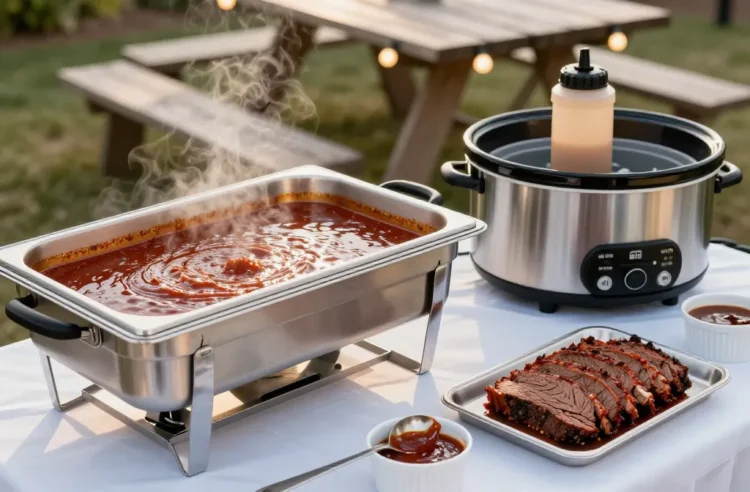
I learned the hard way at a neighborhood cookout: the brisket was perfect, but the sauce turned lukewarm and separated by the time the line reached the end of the table. Since then, I’ve catered backyard parties for friends and kept sauce consistently hot, smooth, and safe for hours using simple tools you can find at a hardware store or big-box store. In this guide, I’ll show you five reliable warming methods sized for 50 people, plus the exact temperatures, quantities, and steps that prevent burning and food-safety risks. You’ll leave knowing which setup to use, how to hold temperature, and what to prep ahead so service runs smoothly.
1. Electric Slow Cooker: Set-And-Forget Holding At Food-Safe Temps
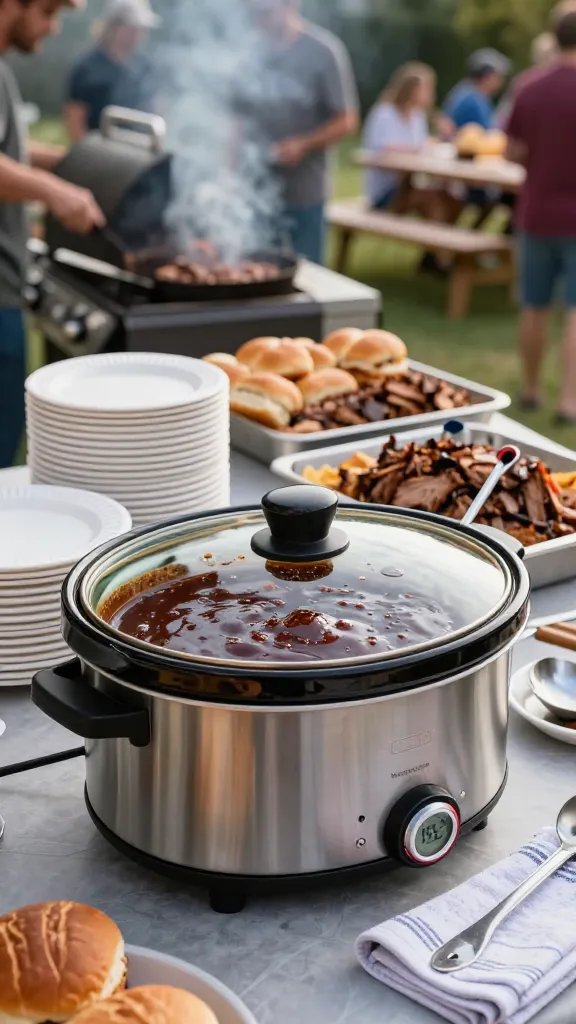
Nothing ruins a great sauce faster than simmering it on the grill until it scorches. That bitter, burnt-sugar taste won’t go away, and guests stop using it. A slow cooker avoids direct heat, holds a steady temperature, and frees you from babysitting a pot while you manage the grill.
Why It Works
- Even, indirect heat from the ceramic crock prevents hot spots that cause sticking.
- Stable “Warm” setting usually holds between 145–165°F, above the food-safety threshold without boiling.
- Lid control reduces evaporation and keeps texture consistent.
How To Set It Up For 50 Guests
- Use a 6–7 quart slow cooker. That holds about 24–28 cups, enough for roughly 50 servings at 1/3–1/2 cup each when refilled once.
- Preheat the empty crock on “Low” for 20 minutes while you heat the sauce on the stove to 170–180°F.
- Transfer hot sauce to the crock, switch to “Warm,” and keep the lid on between servings.
- Stir every 30 minutes with a heatproof spatula to prevent a skin. If thickening, whisk in 1–2 tablespoons of hot water or apple juice.
Food Safety
- Hold above 140°F at all times. If it dips lower for more than 2 hours, discard.
- Use a basic instant-read thermometer from the hardware or grocery store to check every hour.
Takeaway: Preheat the crock, load sauce already hot, and hold on “Warm” with the lid on; check that it stays above 140°F.
2. Chafing Dish With Water Bath: Buffet-Style Warmth Without Scorching
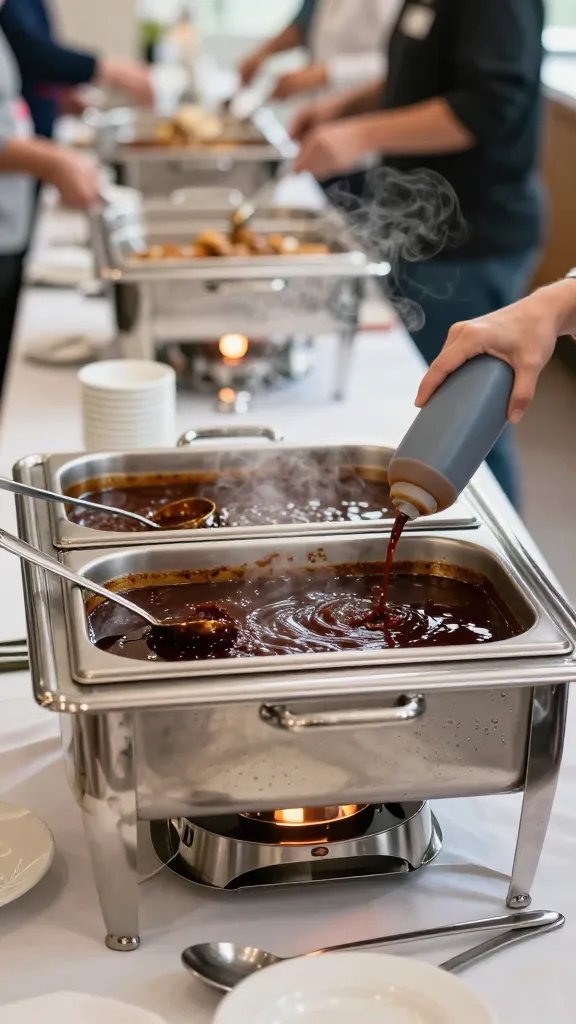
Direct flame under a thin metal pan burns sweet sauces within 10 minutes. A water bath creates a gentle buffer, keeping sauce glossy and pourable through a long service window. If you’ve seen hotel pans at a brunch buffet, you’ve seen this setup in action.
What You Need
- Standard chafing dish frame with water pan and two fuel canisters (gel or wick-style) from a party store or hardware store.
- One or two 2–4 quart insert pans for sauce. Using two lets you refill one while the other stays hot.
- Hot water from the kettle or tap to preheat the water pan.
Setup Steps
- Fill the water pan with hot water to the marked line (about 1 inch deep).
- Light the fuel and let the water reach steaming—not boiling—before adding sauce pans.
- Heat sauce on the stove to 170–180°F, then pour into insert pans and place them in the water bath.
- Stir every 20–30 minutes, scraping the corners. Keep lids on between servings to retain heat.
Control Heat
- If you see bubbling at the pan edges, crack the lid or snuff one fuel can to lower heat.
- Top up the water pan with hot water every hour to maintain even heat.
Action today: Use a water bath chafing dish with one lit fuel can to hold at 150–160°F, and refill water with hot tap water hourly.
3. Insulated Airpot Or Thermal Beverage Dispenser: No-Mess Pouring For Big Lines
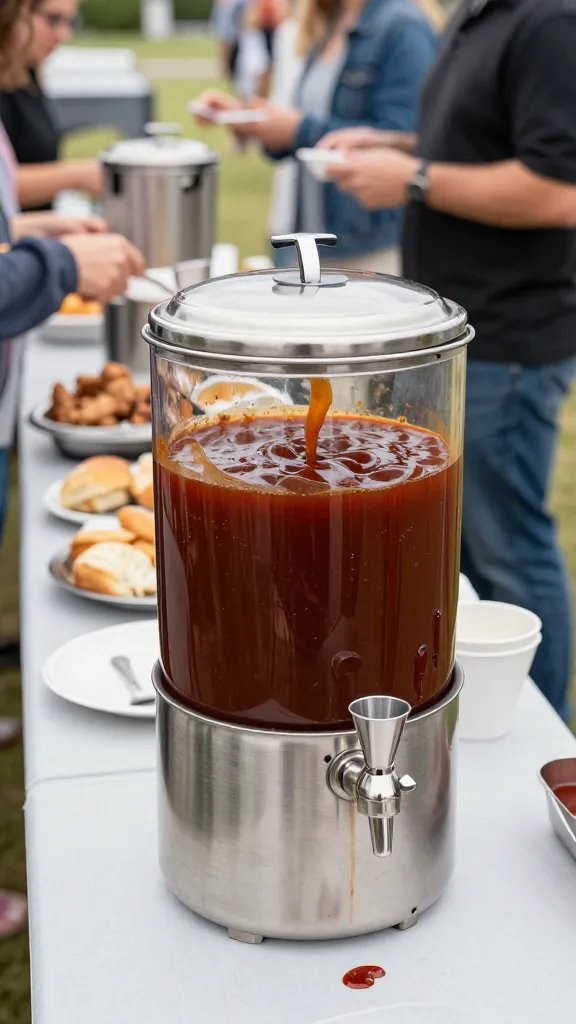
Open pans slow down service and bleed heat each time a guest lifts the lid. An insulated dispenser keeps heat trapped and speeds the line with one-handed pouring. It’s also tidy—no ladles dropping back into the sauce or sticky countertops.
Pick The Right Dispenser
- Look for a stainless steel insulated airpot or thermal beverage dispenser (2–3 liters) from a big-box store or restaurant-supply aisle.
- Choose a wide-mouth model for easy filling and cleaning. Avoid glass-lined if you expect bumps.
Preheat And Fill
- Preheat the dispenser by filling it with boiling water for 5 minutes, then empty.
- Heat sauce on the stove to 180°F, blend until smooth enough to pour, and strain out big chunks if needed to prevent clogs.
- Fill the dispenser, close immediately, and test the first pour for flow.
Service Tips
- Label the dispenser clearly: “BBQ Sauce — Hot.”
- Place a small tray underneath for drips.
- Refill from a covered, hot-holding pot to keep temperatures consistent.
Takeaway: Preheat a thermal dispenser and load 180°F sauce; it will hold near 150°F for 2–3 hours with minimal heat loss.
4. Double Boiler On The Stove Or Grill Side Burner: Gentle Heat With Tight Control
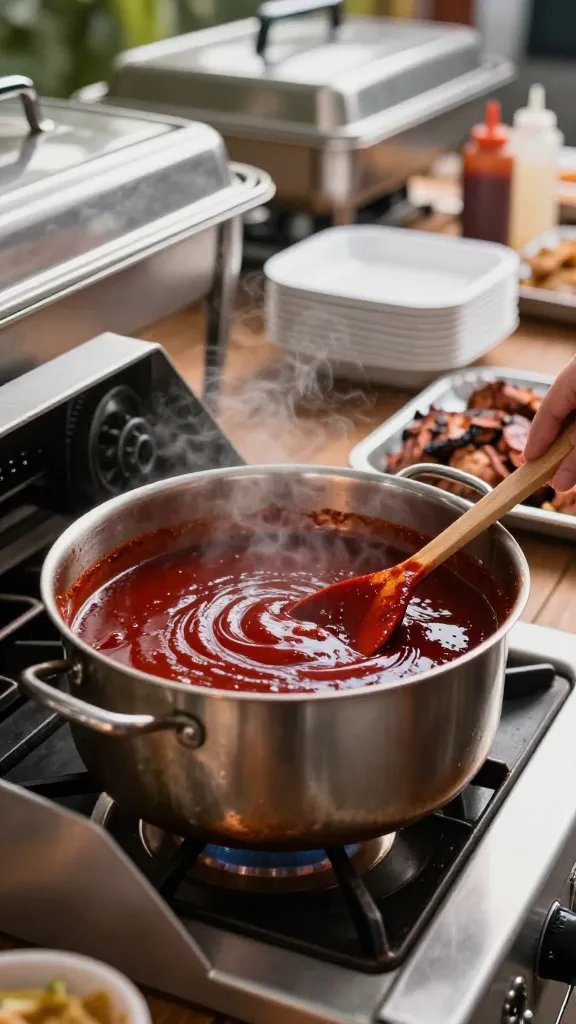
Thick, sugary sauces scorch fast over direct burners. A simple double boiler gives you full control and a silkier texture by eliminating hot spots. It’s ideal when you want to keep a small batch perfect while refilling larger warmers.
Build A Simple Double Boiler
- Use a metal mixing bowl that fits snugly over a pot without touching the water.
- Add 1–2 inches of water to the pot and bring to a simmer—never a rolling boil.
- Set the bowl on top, add sauce, and stir occasionally.
Temperature And Consistency
- Keep water at a light simmer so steam warms the bowl gently.
- Hold the sauce between 150–165°F. Use an instant-read thermometer to verify.
- If sauce thickens, whisk in a splash of hot water, vinegar, or apple juice to loosen without dulling flavor.
Useful For Refills
- Use the double boiler as a staging pot to keep backup sauce hot while guests serve from a slow cooker or dispenser.
Action today: Set a mixing bowl over a simmering pot and hold sauce at 155°F, stirring every 10–15 minutes to keep it glossy.
5. Foil-Wrapped Cooler With Hot Packs: Portable, Power-Free Heat For The Picnic Table
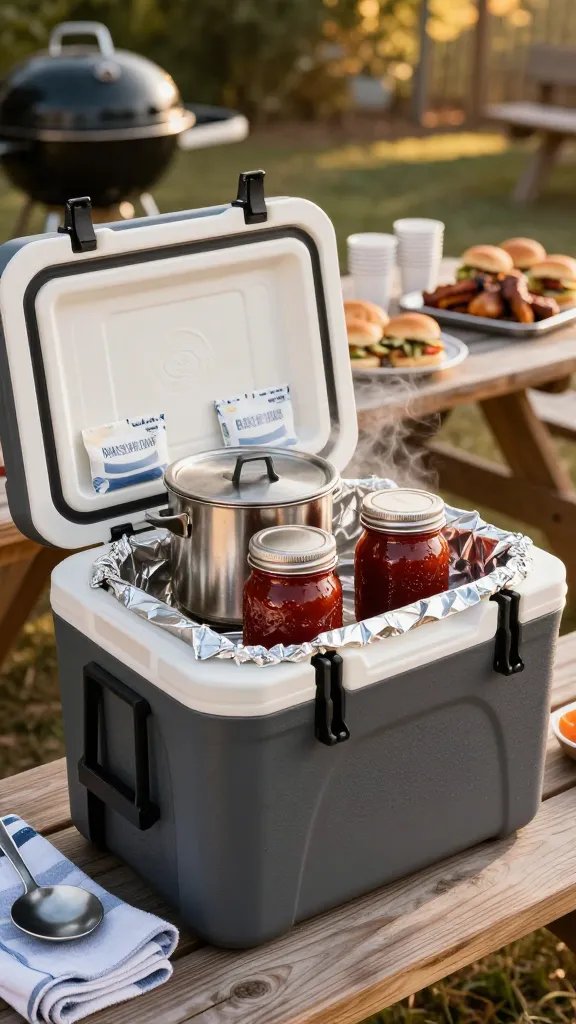
Outdoor parties don’t always have outlets or safe spots for open flame. A well-insulated cooler becomes a makeshift hot box that keeps sauce warm for hours with no electricity. Done right, it preserves texture and temperature during travel and service.
Turn A Cooler Into A Hot Box
- Use a sturdy hard-sided cooler—the same one you use for cold drinks.
- Preheat it: fill with very hot tap water, close the lid for 10 minutes, then drain and dry.
- Wrap a tight-lidded pot or quart canning jars of hot sauce in a towel. Add two microwaved hot packs or a couple of sealed bottles filled with near-boiling water around the pot.
- Line with foil for easy cleanup and to reflect heat, then close the lid firmly.
Safe Holding And Service
- Start sauce at 180°F before loading. Check temp at 60 and 120 minutes—it should stay above 140°F.
- Open the lid as rarely as possible. Decant working portions into a small insulated jug or gravy boat and keep the main stash sealed.
- Swap in fresh hot packs after 2 hours if needed.
Takeaway: Preheat a cooler and pack hot sauce tightly with hot packs; hold the bulk batch closed and decant small amounts for serving.
Frequently Asked Questions
How much BBQ sauce do I need for 50 people?
Plan for 1/3–1/2 cup per person if sauce is a main feature with brisket or pulled pork. That’s 17–25 cups total. I make 1.5 gallons (24 cups) for comfortable coverage with a little extra for seconds. Keep half in the warmer and the rest hot in reserve for quick refills.
What temperature should I hold BBQ sauce at?
Keep it between 145–165°F. Below 140°F is unsafe for hot-held foods, and above 180°F risks scorching and separation. Check hourly with a basic instant-read thermometer. If it drops, reheat quickly on the stove to 170–180°F, then return to your warmer.
How do I prevent sauce from thickening or forming a skin?
Cover whenever possible and stir every 20–30 minutes, scraping the corners. If it tightens, whisk in 1–2 tablespoons of hot water, apple juice, or a splash of vinegar to bring it back. Avoid high heat and never boil once it’s in the warmer. A thin film of neutral oil on a ladle can smooth a crusty edge before stirring.
Can I keep sauce warm on the grill?
Yes, but only with indirect heat. Place the pot on the cool side of a two-zone grill, or use a double boiler setup over a side burner. Keep the lid mostly closed to stabilize temperature, and stir every 10–15 minutes. Aim for 150–160°F and avoid any bubbling.
What container works best for serving to a crowd without mess?
An insulated airpot or thermal beverage dispenser is the cleanest for lines. For tableside, use small squeeze bottles set in a warm water bath pan on a chafing dish to keep them fluid. Label clearly and rotate bottles so one warms while one is in use. Keep caps on between pours to retain heat.
Can I make sauce ahead and reheat without it separating?
Yes. Cool it quickly in shallow containers, refrigerate, and reheat gently on the stove until it reaches 170–180°F, stirring to re-emulsify. If you see separation, blend with an immersion blender for 15–30 seconds and adjust with a splash of water or vinegar. Then transfer to your holding method and keep it above 140°F.
Conclusion
You don’t need restaurant gear to serve hot, silky BBQ sauce to 50 people—just the right gentle heat and a plan for holding and refills. Pick one primary warmer and one backup method, prep your thermometer, and you’ll cruise through service without scorched pans or lukewarm pours.