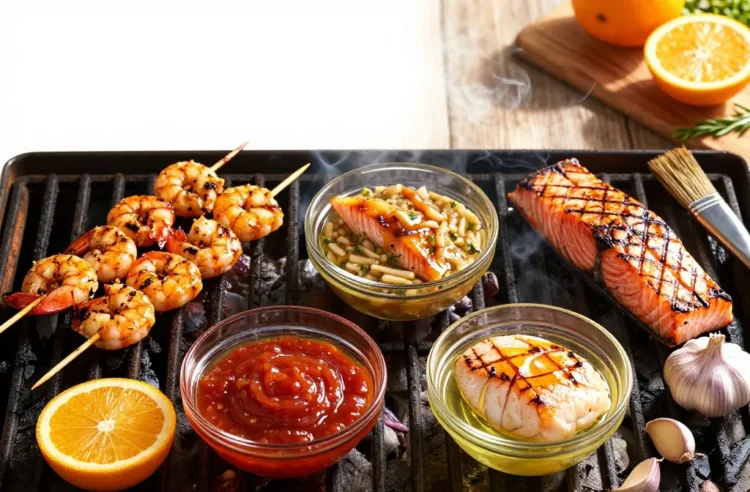
I used to dread grilling seafood because it stuck to the grates and tasted flat no matter how carefully I watched it. Then I started mixing simple marinades the night before, using pantry staples and herbs from a window box, and everything changed. In this guide, you’ll learn six foolproof marinades tailored to shrimp, salmon, tuna, and halibut, plus exactly how long to marinate and how to grill for tender, flavorful results. You’ll cook with confidence and serve seafood that stays juicy, lifts cleanly from the grill, and tastes balanced from the first bite.
1. Citrus-Garlic Mojo: Bright Acid Keeps Shrimp Snappy
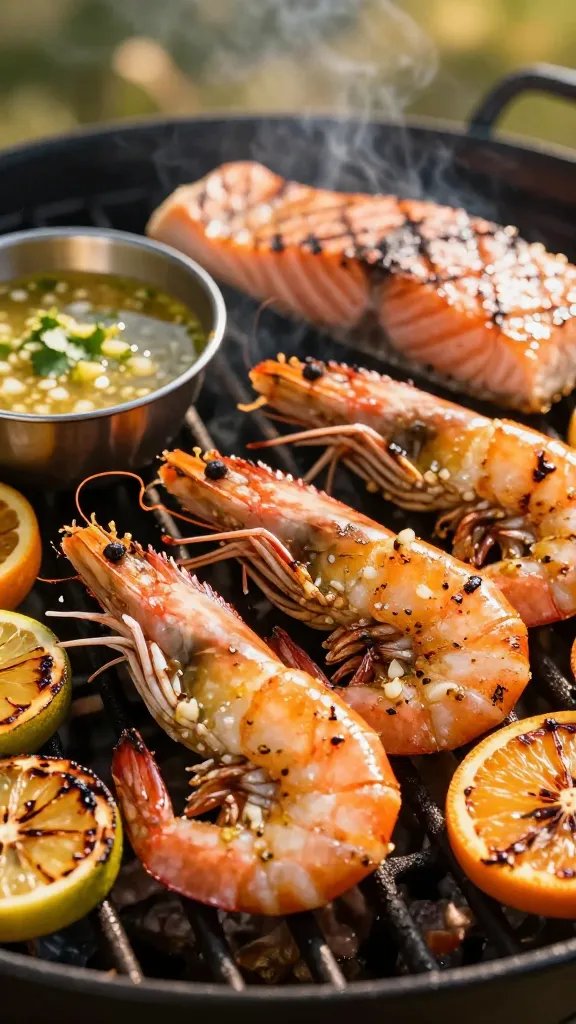
Dry, rubbery shrimp ruin a cookout fast. Long marinades and heavy oils drown out shrimp’s sweetness and make it tough. A sharp, citrus-forward mojo seasons fast, stays light, and locks in that crisp snap.
What You’ll Mix
- 1/3 cup fresh orange juice
- 2 tablespoons fresh lime juice
- 3 tablespoons olive oil
- 3 large garlic cloves, finely minced
- 1 teaspoon ground cumin
- 1/2 teaspoon dried oregano
- 1 teaspoon kosher salt, 1/2 teaspoon black pepper
- Optional: 1 tablespoon chopped cilantro, zest of 1 lime
How to Use It
- Shrimp (peeled, tail-on, 26–30 count): Marinate 15–25 minutes in the fridge. Do not exceed 30 minutes or the acid will turn the surface mealy.
- Thread onto skewers or use a grill basket to prevent drop-through. Grill over medium-high heat 1.5–2 minutes per side until just opaque.
- Oil the grates lightly with a folded paper towel dipped in oil right before cooking to prevent sticking.
Action today: Buy a pound of shrimp and mix the mojo in a jar this morning; marinate while you preheat the grill and you’ll have dinner in 20 minutes.
2. Maple-Soy Glaze: Balanced Sweet-Salty for Rich Salmon
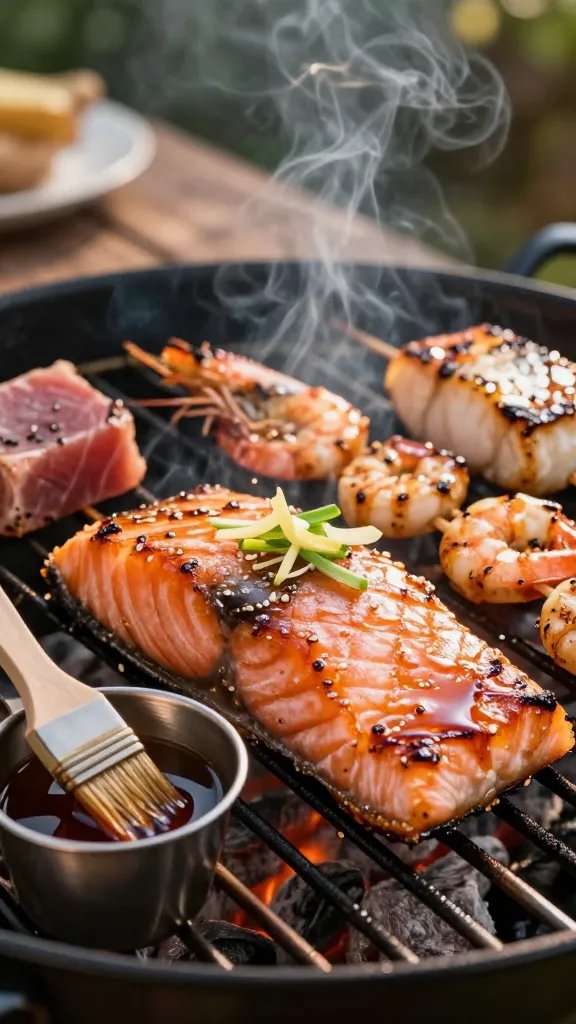
Salmon dries out fast when the heat runs high and the seasoning runs thin. A glaze that is too sweet burns, and one that’s too salty overpowers the fish. This maple-soy blend clings nicely, browns without scorching, and highlights salmon’s richness.
What You’ll Mix
- 3 tablespoons low-sodium soy sauce
- 2 tablespoons pure maple syrup
- 1 tablespoon rice vinegar
- 1 tablespoon Dijon mustard
- 1 tablespoon olive oil
- 1 teaspoon grated fresh ginger (or 1/4 teaspoon ground)
- 1 small garlic clove, grated
- Pinch red pepper flakes
How to Use It
- Salmon fillets (skin-on, 1-inch thick): Marinate 20–30 minutes in a shallow dish; reserve 2 tablespoons marinade before it touches raw fish for brushing during grilling.
- Grill skin-side down over medium heat, lid closed, 6–8 minutes, then brush with reserved glaze and cook 2–3 minutes more until medium (flakes with gentle pressure).
- If flare-ups threaten, slide to a cooler zone rather than dousing with water.
Takeaway: Keep a little glaze aside before marinating so you can brush in the final minutes and get glossy, lacquered salmon without cross-contamination.
3. Lemon-Herb Vinaigrette: Clean, Fresh Lift for Halibut
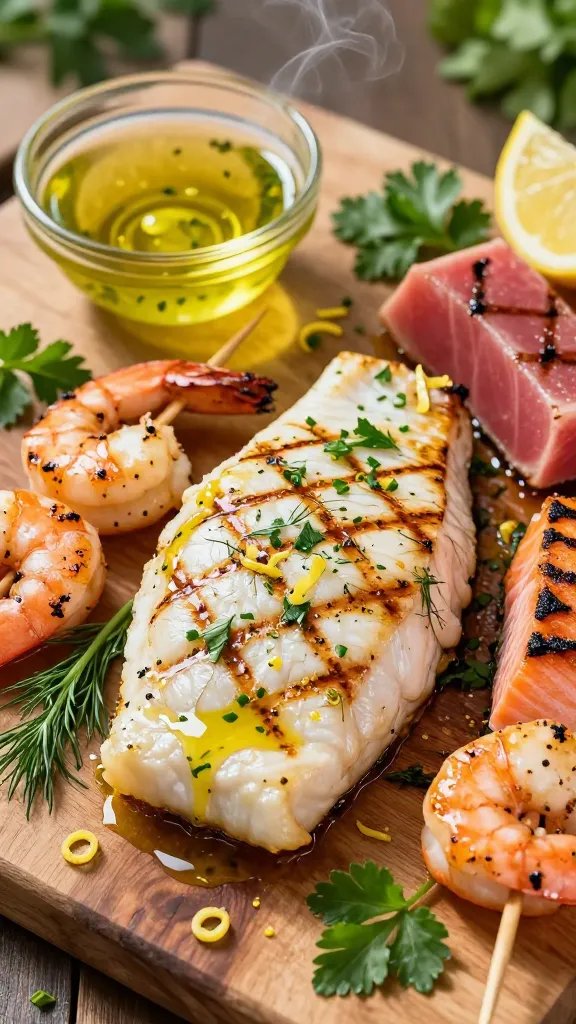
Lean fish like halibut dries and sticks easily, leaving you with torn fillets. Heavy sugar or long acidic soaks tighten the flesh and mute flavor. A light vinaigrette with tender herbs adds moisture and fragrance while staying gentle on delicate meat.
What You’ll Mix
- 2 tablespoons lemon juice + zest of 1 lemon
- 3 tablespoons olive oil
- 1 teaspoon Dijon mustard
- 1 small garlic clove, smashed into a paste with salt
- 1 tablespoon chopped fresh parsley
- 1 tablespoon chopped fresh dill (or chives)
- 3/4 teaspoon kosher salt, 1/4 teaspoon black pepper
How to Use It
- Halibut steaks or fillets (3/4–1 inch): Marinate 15–25 minutes. Pat the presentation side dry just before grilling and oil it lightly for better sear and release.
- Grill over medium-high, 3–4 minutes per side. Do not force the first flip; release happens naturally when a light crust forms.
- Finish with a spoonful of reserved vinaigrette off heat for brightness.
Action today: Mix the vinaigrette while the grill preheats and use half for marinating halibut and half as a finishing sauce for guaranteed moisture.
4. Black Pepper–Lime Marinade: Bold Crust for Meaty Tuna Steaks
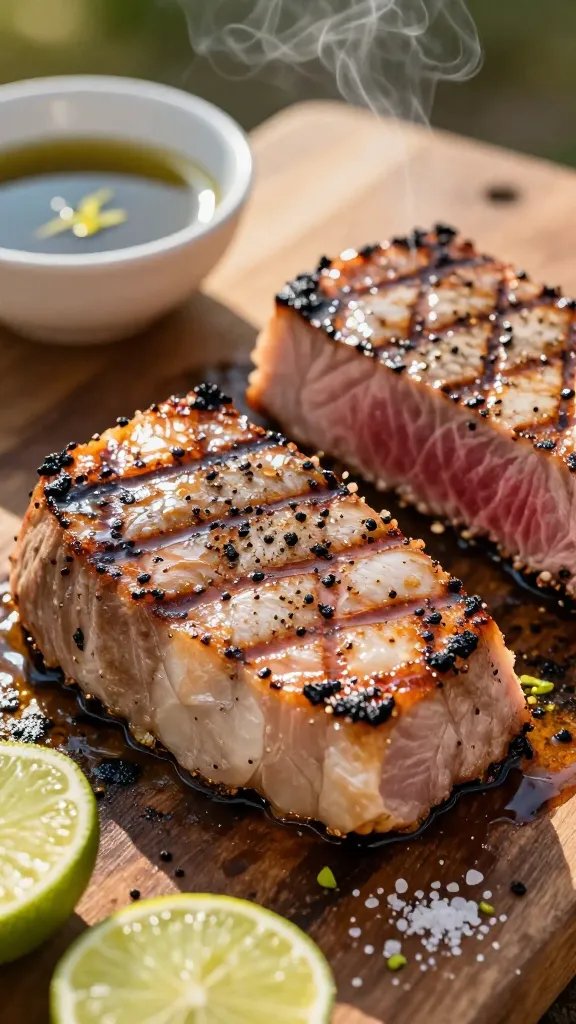
Thick tuna can taste bland if you treat it like white fish. Over-marinating cooks the surface and turns it gray before it hits the grill. A pepper-forward, lime-scented marinade seasons fast and builds a steakhouse crust while keeping the center rosy.
What You’ll Mix
- 2 tablespoons lime juice + zest of 1 lime
- 2 tablespoons olive oil
- 1 tablespoon coarsely cracked black pepper
- 1 teaspoon soy sauce
- 1/2 teaspoon kosher salt
- 1/2 teaspoon honey (just to round the edges)
How to Use It
- Tuna steaks (1–1.5 inches): Marinate 10–15 minutes only. Too long and the acid dulls the surface color and texture.
- Pat dry, then add a final sprinkle of cracked pepper before grilling.
- Grill over high heat, 2 minutes per side for rare to medium-rare. Rest 3 minutes before slicing.
Takeaway: Set a timer for 15 minutes from the moment tuna hits the marinade so you never cross the line from seasoned to surface-cooked.
5. Coconut-Lime Curry Bath: Gentle Heat That Protects Shrimp and Salmon
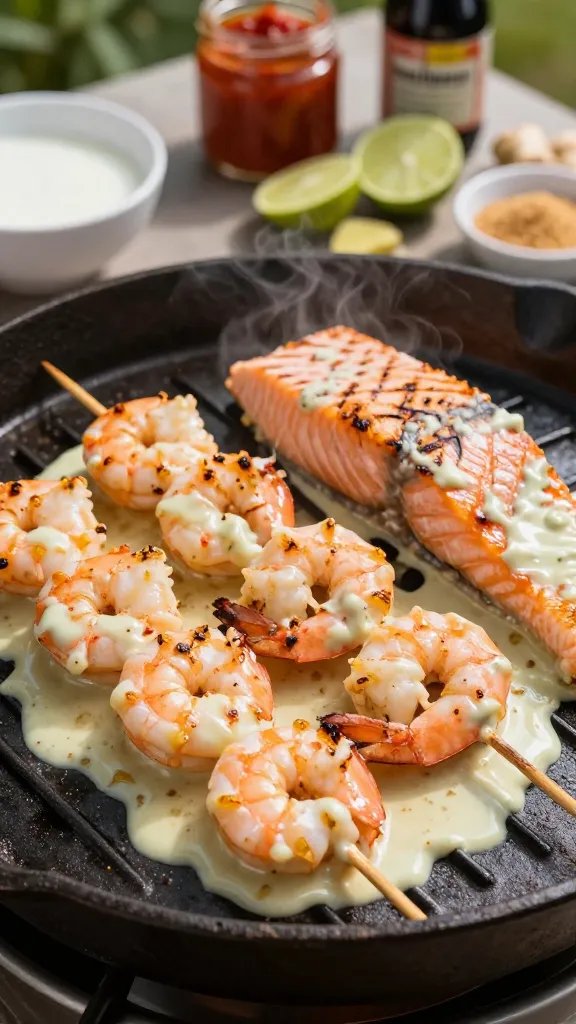
Spicy marinades often scorch, leaving bitter char. Thin liquids slide off and don’t protect the fish from direct heat. Coconut milk carries flavor, buffers heat, and keeps seafood silky, especially on skewers or a grill pan.
What You’ll Mix
- 3/4 cup full-fat coconut milk (well shaken)
- 1 tablespoon red curry paste (or yellow for milder)
- 1 tablespoon lime juice
- 1 teaspoon brown sugar
- 1 teaspoon fish sauce or soy sauce
- 1 teaspoon grated ginger
- Pinch of salt to taste
How to Use It
- Shrimp: Marinate 20–25 minutes; grill 1.5–2 minutes per side over medium-high. The coconut layer reduces sticking and browns gently.
- Salmon: Marinate 30 minutes; grill skin-side down first, then finish flesh-side 2–3 minutes. Brush off excess marinade from the flesh side to avoid flare-ups.
- Warm leftover marinade to a simmer for 2 minutes and use as a drizzle — only if it hasn’t touched raw seafood, or boil it hard for 2 minutes to be safe.
Action today: Keep a can of coconut milk in the pantry; pair it with a spoon of curry paste and lime for a 5-minute marinade that never burns.
6. Smoky Paprika–Herb Rub With Olive Oil: Steak-Style Finish for Halibut and Tuna
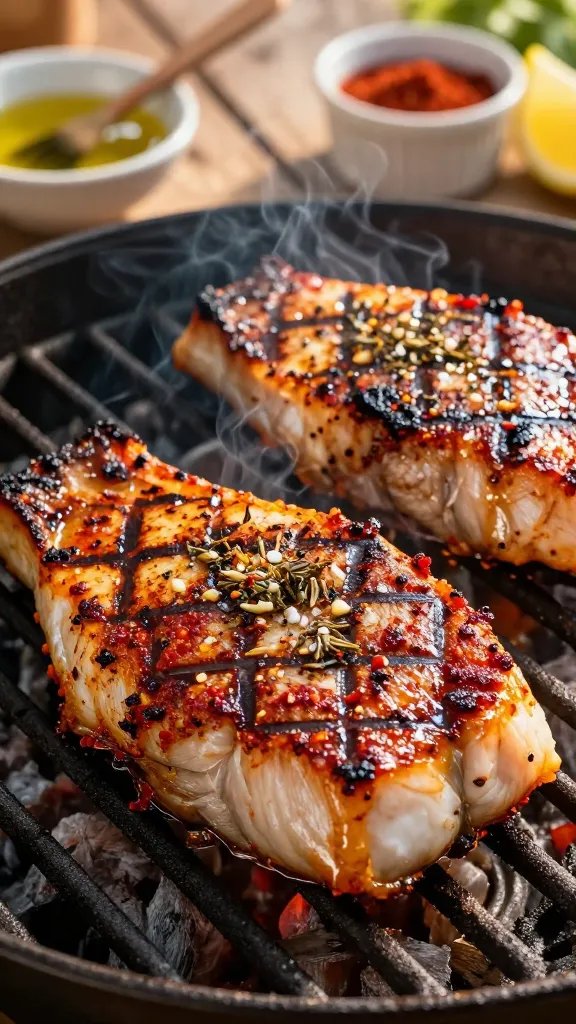
Sometimes you want a drier, grill-marked finish with big aroma. Sugar-laden rubs burn, and delicate herbs alone blow off on the grates. A smoky paprika base with sturdy herbs grips the surface and builds color without sweetness.
What You’ll Mix
- 2 teaspoons smoked paprika
- 1 teaspoon sweet paprika
- 1 teaspoon dried thyme
- 1 teaspoon dried oregano
- 1/2 teaspoon garlic powder
- 3/4 teaspoon kosher salt, 1/2 teaspoon black pepper
- 2 tablespoons olive oil (to make a loose paste)
- Optional: pinch cayenne for heat
How to Use It
- Halibut or tuna: Rub on just 10–15 minutes before grilling — this is more a wet rub than a long marinade, so flavor stays bright and the surface doesn’t get mushy.
- Grill over medium-high, 3–4 minutes per side for halibut; 2–3 per side for tuna depending on doneness preference.
- Finish with a squeeze of lemon and a drizzle of olive oil off the grill to lift the spices.
Takeaway: When you want color and smoke without sweetness, use a wet rub built on smoked paprika and oil and apply shortly before grilling.
Frequently Asked Questions
How long should I marinate seafood before grilling?
Keep it short. Shrimp needs 15–25 minutes; salmon and halibut handle 20–30 minutes; tuna only 10–15 minutes, especially with acidic marinades. Longer times don’t mean more flavor — they mean tougher texture. Set a timer the second the seafood hits the marinade.
How do I stop fish from sticking to the grill?
Start with clean, preheated grates and medium to medium-high heat. Oil the grates using a folded paper towel dipped in neutral oil and held with tongs. Pat the fish dry, oil the surface lightly, and don’t force the first flip — turn only when the fish releases naturally, usually after 3–4 minutes.
Can I reuse or cook down leftover marinade as a sauce?
Only if you reserved some before it touched raw seafood. If not, boil the used marinade at a hard simmer for 2 full minutes to kill pathogens, then taste and adjust salt or acid. When in doubt, mix a fresh quick sauce with the same flavors to be safe.
What’s the best way to grill delicate fillets like halibut without breaking them?
Use skin-on fillets when possible and start skin-side down. A thin fish spatula and a light oiling of both grates and fish help release. A grill basket or a preheated cast-iron skillet on the grill also keeps fillets intact while still giving you that outdoor flavor.
How do I know when seafood is done without a thermometer?
Shrimp turns pink and opaque with a gentle C-shape and firm snap, usually 2–4 minutes total. Salmon and halibut flake with light pressure but still look slightly translucent in the center, 8–12 minutes depending on thickness. Tuna is best seared outside and rosy inside — pull it early for medium-rare.
Can I meal-prep these marinades ahead of time?
Yes. Mix any marinade up to 3 days ahead and refrigerate in a jar. Stir before using and keep acids and salt moderate to avoid “cooking” the fish in advance. Always add seafood to the marinade within the recommended window right before grilling.
Conclusion
Pick one marinade, set a timer, and grill with steady medium to medium-high heat — you’ll taste the difference in a single meal. Next time, try the same base on a new fish and adjust one element — more acid, less sweet, or an herb swap — so you build a personal lineup that works every time on your grill.