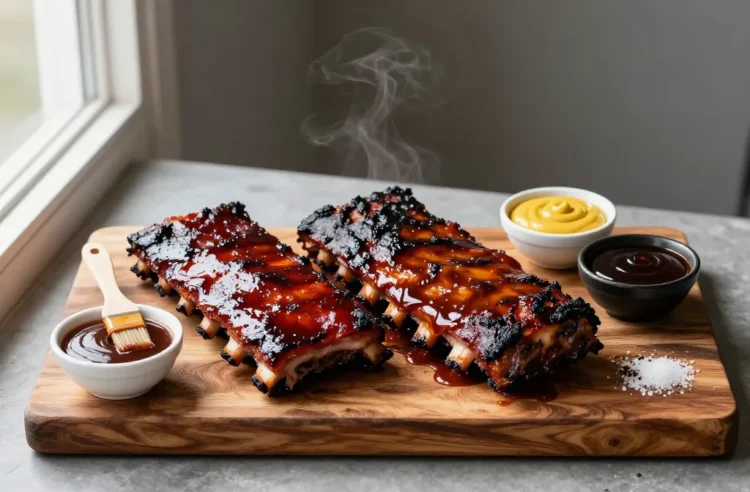
I’ve served ribs from a tiny apartment balcony and a creaky backyard kettle, and the right sauce always turned “pretty good” into “where did you get this?” You’ve probably grabbed a bottle, slathered it on, and hoped for the best. I did too—until I learned which sauces match each rib cut and how to finish them without burning or dulling the bark. In this guide, you’ll learn seven reliable sauces, how to pair them with baby backs, spares, and beef short ribs, and exactly when and how to apply them for glossy, tender, finger-licking ribs.
1. Kansas City Sweet-and-Sticky: Gloss That Pleases a Crowd
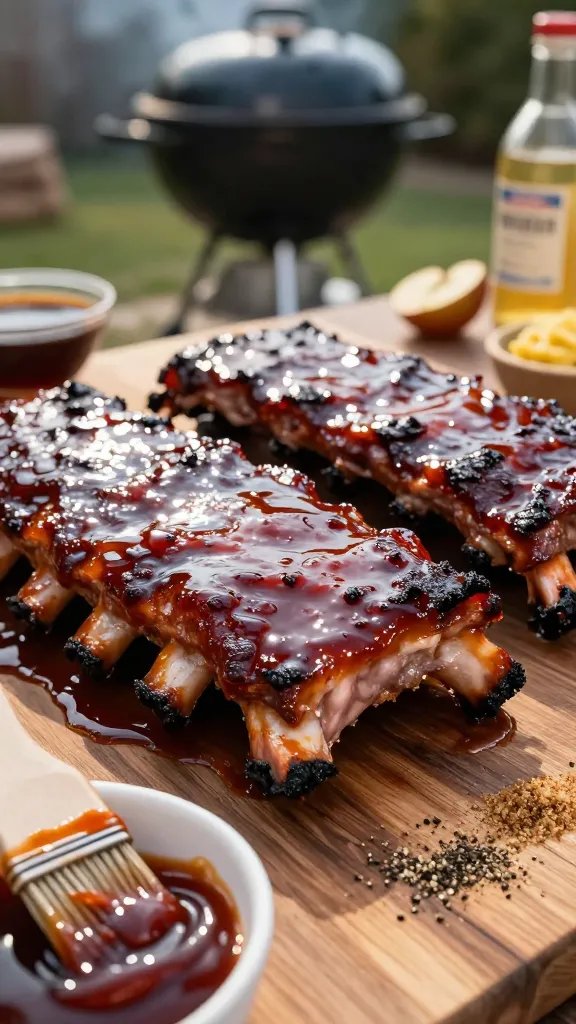
When you want that classic rib profile—deep mahogany color, caramelized edges, and a finger-coating shine—this is the sauce people expect. Used wrong, it burns and turns bitter because the sugars overcook in the final minutes.
Why It Works
- Brown sugar and molasses build body and color.
- Tomato ketchup provides thickness you can brush without dripping everywhere.
- Apple cider vinegar and mustard keep it from tasting cloying.
Simple Formula (Pan-Friendly)
- 1 cup ketchup
- 1/3 cup brown sugar
- 2 tablespoons molasses
- 2 tablespoons apple cider vinegar
- 1 tablespoon yellow mustard
- 1 teaspoon Worcestershire
- 1/2 teaspoon black pepper, 1/2 teaspoon garlic powder, pinch of cayenne
Simmer 8–10 minutes in a small saucepan over low heat, stirring until glossy.
Best On
- Baby backs and spare ribs cooked until tender, then sauced in the last 10 minutes.
Application Timing
- Glaze at 275–300°F for 5 minutes per side, lid closed.
- Move ribs to indirect heat so sugars set without scorching.
Takeaway: Brush this sauce on in two thin coats during the last 10 minutes only—thin coats set, thick coats scorch.
2. Carolina Mustard Gold: Tang That Cuts Fat
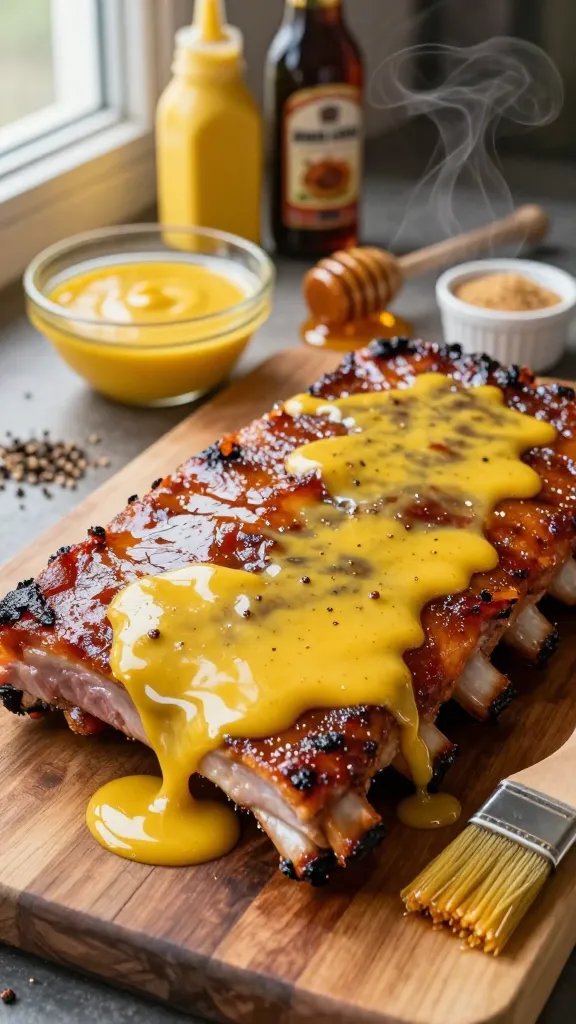
Fatty ribs can feel heavy when the sauce runs sweet. This sharp, peppery mustard sauce brightens each bite, especially on richer cuts, without masking smoke or rub.
Why It Works
- Yellow mustard emulsifies and clings even on juicy bark.
- Vinegar slices through rendered fat and balances salt.
- Honey smooths the edge without creating a sugar bomb.
Simple Formula
- 3/4 cup yellow mustard
- 3 tablespoons apple cider vinegar
- 2 tablespoons honey
- 1 tablespoon brown sugar
- 1 teaspoon Worcestershire
- 1/2 teaspoon black pepper, 1/4 teaspoon cayenne, pinch of paprika
Whisk in a bowl—no simmer needed. Rest 10 minutes to mellow.
Best On
- Pork spare ribs and St. Louis–cut spares, especially if you wrap with a little butter during the cook.
Application Timing
- Light glaze during the final 5 minutes to tack up, then a fresh drizzle at the table.
Takeaway: Use this when your ribs taste rich or borderline greasy—the tang resets your palate and makes the rack disappear faster.
3. Texas Pepper Mop: Savory Heat for Beef Short Ribs
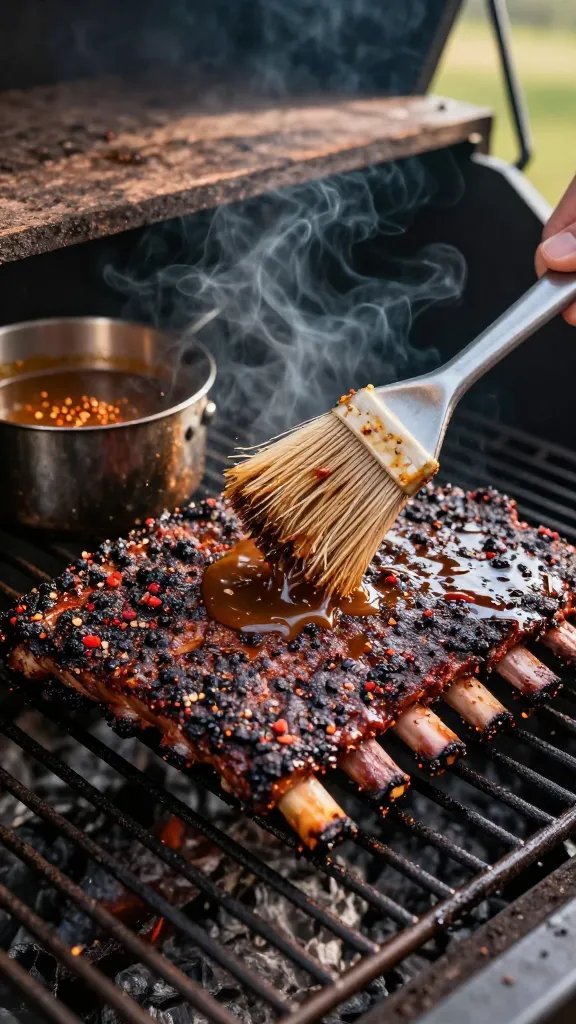
Beef short ribs carry deep, beefy flavor that sweet sauces can flatten. A thin, pepper-forward mop keeps the bark moist, layers savory notes, and avoids sticky sweetness that fights the meat.
Why It Works
- Beef-friendly base with no tomato sugar load.
- Black pepper and chile flake amplify the bark’s bite.
- Vinegar and stock keep the surface from drying during long cooks.
Simple Formula (Warm Mop)
- 1 cup beef broth (from a low-sodium carton)
- 1/3 cup apple cider vinegar
- 1 tablespoon Worcestershire
- 1 teaspoon black pepper (coarsely cracked)
- 1/2 teaspoon red pepper flakes
- 1 clove garlic, smashed
Simmer 5 minutes. Keep warm and mop or spritz every hour after bark forms.
Best On
- Beef short ribs and plate ribs.
Application Timing
- Start mopping after the first 2 hours once bark sets, continue hourly until probe-tender.
Takeaway: If beef ribs look dry or dusty, start a warm pepper mop—one pass every hour preserves bark and builds savory depth without sweetness.
4. Memphis Tangy Tomato: Bright, Balanced, and Not Overly Sweet
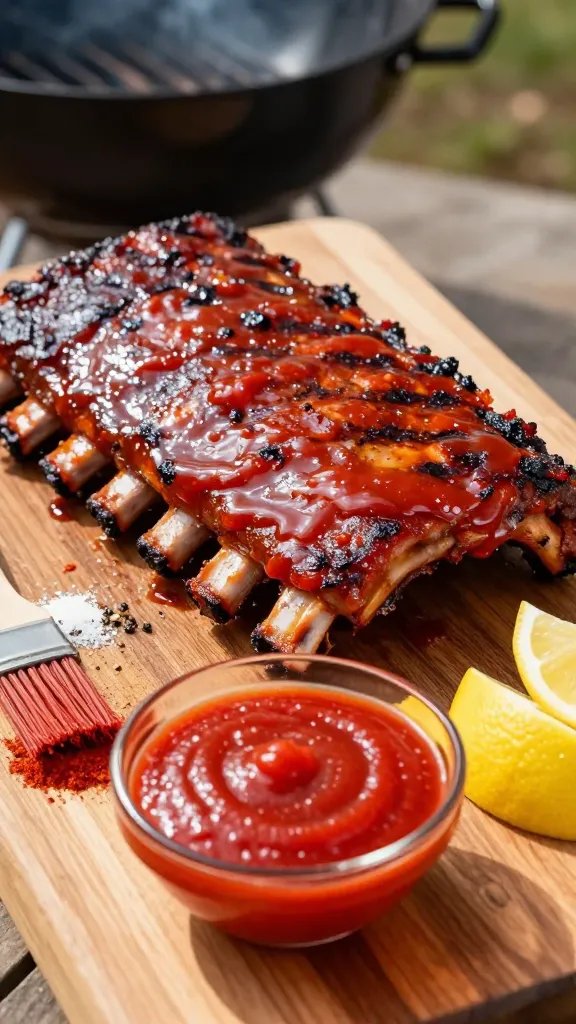
Too-sweet sauces tire the palate and bury smoke. This lighter tomato-vinegar style stays bright, making it easy to eat another rib without palate fatigue.
Why It Works
- Tomato sauce instead of ketchup keeps sugar down.
- Vinegar and lemon provide a crisp finish.
- Celery salt and paprika echo classic dry rubs.
Simple Formula
- 1 cup plain tomato sauce (no sugar)
- 1/4 cup apple cider vinegar
- 1 tablespoon lemon juice
- 1 tablespoon brown sugar
- 1 teaspoon paprika, 1/2 teaspoon celery salt
- 1/2 teaspoon black pepper, 1/2 teaspoon onion powder
Simmer 10 minutes until slightly thickened.
Best On
- Baby back ribs when you want a cleaner finish and visible rub.
Application Timing
- Brush one light coat in the last 8 minutes. Serve warm extra on the side.
Takeaway: Use this when you want sauce that supports the rub instead of replacing it—thin coat on the grill, then pass the warm jar at the table.
5. Alabama White: Creamy Zip for Smoke-Rich Bark
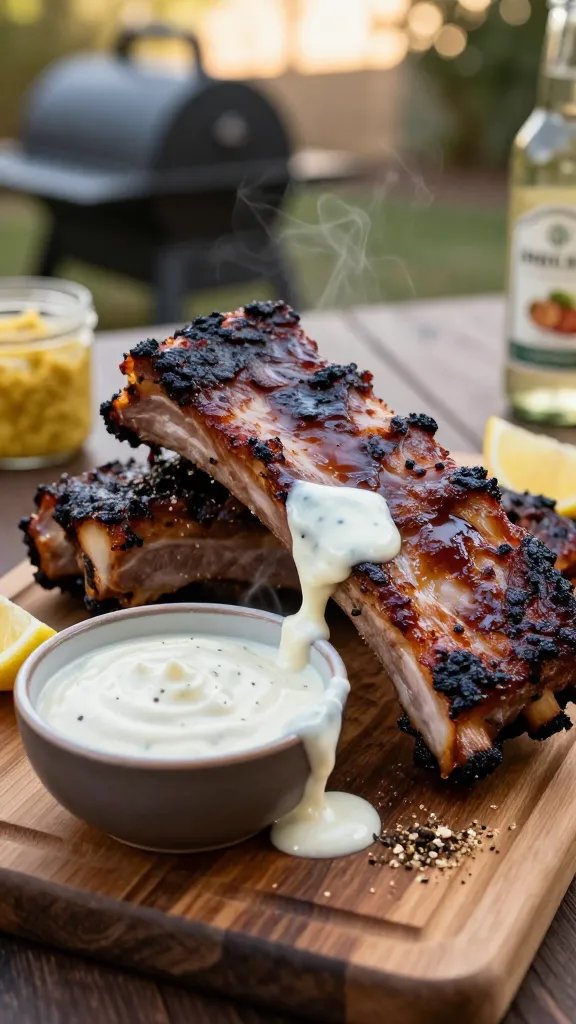
After hours of smoke, ribs can slide toward one-note. This creamy, horseradish-kissed white sauce wakes everything up and cools chile heat at the same time.
Why It Works
- Mayonnaise base clings to bark and resists burning since you apply it after cooking.
- Vinegar and horseradish add snap without sweetness.
- Black pepper ties into smoke and rub.
Simple Formula (No-Cook)
- 3/4 cup mayonnaise
- 3 tablespoons apple cider vinegar
- 1 tablespoon prepared horseradish
- 1 teaspoon lemon juice
- 1/2 teaspoon black pepper, 1/4 teaspoon garlic powder
- Small pinch of sugar to round it out
Whisk until smooth. Thin with a teaspoon of water if too thick.
Best On
- Smoked spare ribs and beef short ribs as a finishing drizzle, not a glaze.
Application Timing
- Apply after slicing, on warm meat, so it loosens and coats lightly.
Takeaway: Keep white sauce off direct heat—use it as a cool finish at the table for a clean, peppery contrast.
6. Chipotle Honey-Lime: Sweet Heat with Citrus Lift
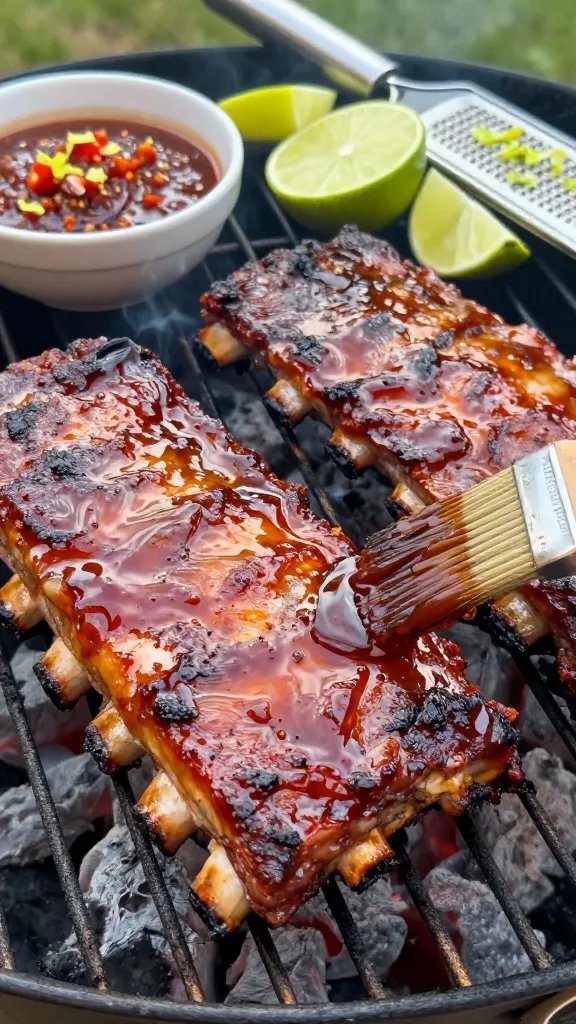
Flat sweetness bores fast, and straight heat exhausts the palate. This smoky-sweet blend lands right in the middle, delivering a pop of lime that makes pork ribs sparkle.
Why It Works
- Chipotle in adobo gives smoke and warmth without raw chile harshness.
- Honey provides sheen that sets into a lacquer.
- Lime juice and zest sharpen flavors so bites don’t blur together.
Simple Formula
- 3/4 cup ketchup
- 2 tablespoons honey
- 1–2 teaspoons minced chipotle in adobo (with a little sauce)
- 1 tablespoon lime juice + 1/2 teaspoon zest
- 1 teaspoon apple cider vinegar
- 1/2 teaspoon cumin, 1/2 teaspoon garlic powder, pinch of salt
Simmer 6–8 minutes until glossy. Taste; add another teaspoon honey if you want a thicker glaze.
Best On
- Baby backs for backyard dinners when you want a little heat without scaring guests.
Application Timing
- Brush thinly for the last 8–10 minutes, then finish with a very light squeeze of lime after slicing.
Takeaway: Balance the honey with lime—if the sauce tastes bright in the pan, it will taste perfect on the rib.
7. Cherry Bourbon Glaze: Fruit-Forward Shine for Special Occasions
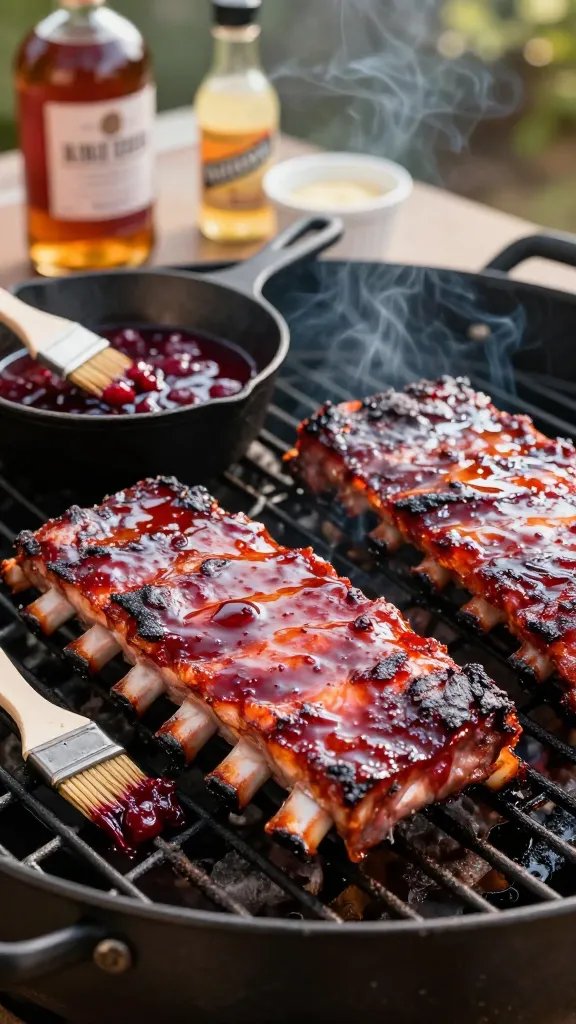
Fruit glazes can turn syrupy and mask smoke if you pour them on thick. Reduced properly, this cherry-bourbon glaze lays a translucent sheen that complements pork without turning dessert-sweet.
Why It Works
- Tart cherry preserves bring acidity along with fruit, so it doesn’t cloy.
- Bourbon adds vanilla and oak notes that echo smoke.
- Vinegar and mustard rein in the fruit.
Simple Formula (Small Pan)
- 3/4 cup tart cherry preserves
- 2 tablespoons bourbon
- 1 tablespoon apple cider vinegar
- 1 teaspoon Dijon mustard
- Pinch of black pepper and a tiny pinch of salt
Simmer 5–7 minutes, stirring, until it coats the back of a spoon. If too thick, add a teaspoon of water.
Best On
- Baby backs and St. Louis spares for holiday or dinner-party flair.
Application Timing
- Last 5 minutes only—high sugar means quick set. Keep indirect heat and close the lid.
Takeaway: Use a silicone brush and apply one whisper-thin coat—fruit glazes should shine, not puddle.
Frequently Asked Questions
When should I sauce ribs during the cook?
Glaze during the final 5–10 minutes of cooking, with the ribs moved to indirect heat. This lets sugars set and shine without burning. For mops like the Texas pepper mop, start after bark formation (around the 2-hour mark) and repeat hourly. Finish creamy or mayo-based sauces at the table after slicing.
How do I keep sweet sauces from burning on the grill?
Cook the ribs almost to done first, then move them away from direct flames before saucing. Apply thin coats and close the lid for 3–5 minutes to set, flipping once if needed. Keep grill temps in the 275–300°F range during glazing and avoid flare-ups by placing a drip pan under the ribs. If using charcoal, vent the grill to tame flames before saucing.
Which sauce pairs best with beef short ribs?
Use savory, lower-sugar sauces that respect the beef, like the Texas pepper mop or Alabama white as a finishing drizzle. Sweet tomato glazes can overtake the beef’s character. If you want a hint of sweetness, add a teaspoon of molasses to the mop rather than switching to a sticky glaze. Always build bark first, then mop to maintain texture.
Can I make these sauces without special ingredients?
Yes—everything here comes from a standard supermarket or garden-variety hardware store food aisle if it carries basics. Ketchup, mustard, vinegar, honey, brown sugar, and common spices carry most formulas. For chipotle, buy the small can of chipotles in adobo; it lasts weeks in the fridge. For broth, choose low-sodium cartons so the sauce doesn’t go salty as it reduces.
How much sauce should I use per rack?
Plan on 1/3 to 1/2 cup of glaze per rack for baby backs, and up to 3/4 cup for meaty spares. Apply in thin layers so you see bark through the sheen. For finishing drizzles like Alabama white, start with 1 tablespoon per rib and add at the table to taste. Extra sauce should be warmed gently and served on the side.
What’s the best way to reheat leftover ribs without drying the sauce?
Wrap ribs loosely in foil with a tablespoon of water or a splash of apple juice, then reheat at 275°F for 20–25 minutes. Unwrap for the last 5 minutes and brush on a fresh teaspoon of sauce to refresh the glaze. Avoid microwaving uncovered—the sugar can pop and the bark goes rubbery. If microwaving, cover and use 50% power in 30-second bursts.
Conclusion
Pick a sauce that matches the cut and your goal—sweet shine for baby backs, tang for spares, savory heat for beef. Start with thin coats at the end, then finish at the table so smoke and bark still speak. Next cook, choose one sauce from this list and master its timing—you’ll feel the difference the moment you slice and the plate comes back empty.