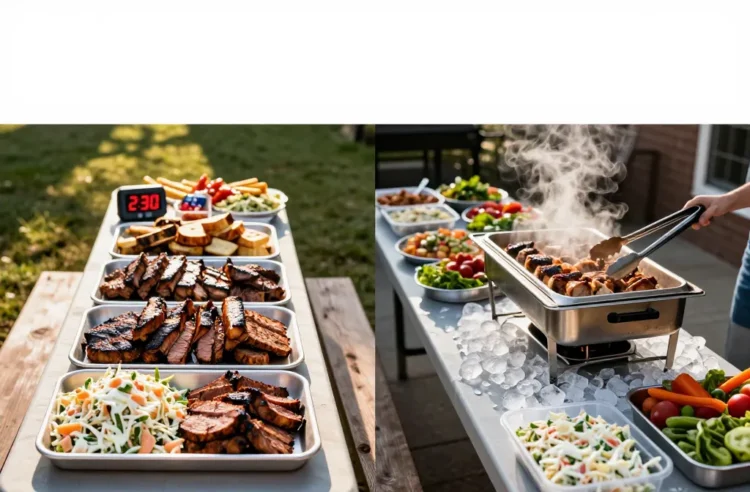
I’ve hosted backyard cookouts where the grill ran hot, the conversations ran long, and the food sat out way past the safe window. I learned the hard way that guessing with food safety backfires — especially when you’re feeding a crowd. In this guide, I’ll show you how to triage what you’ve got, salvage what’s truly safe, and quickly rebuild a satisfying spread for 50 without endangering anyone. You’ll leave knowing exactly what to toss, what to reheat, and how to refill the table fast using normal kitchen tools and a quick run to a garden centre-style hardware or grocery store.
1. Time-Temperature Danger Zone: The Real Reason You Must Toss Some Items
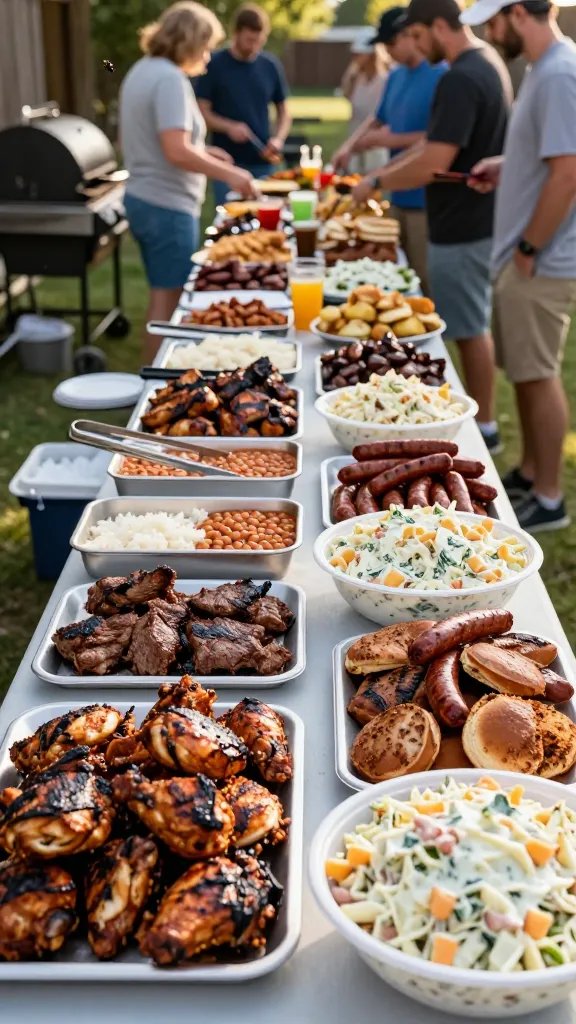
Once hot or cold foods drift into the “room temperature” zone, bacteria multiply fast. After two hours on a mild day — or one hour when it’s 32°C/90°F+ — many BBQ staples become unsafe no matter how they look or smell.
Know the Safe Windows
- Cold foods (salads, slaws, mayo-based sides): Safe up to 2 hours out of the fridge, or 1 hour if it’s 32°C/90°F+.
- Hot foods (grilled meats, beans, rice): Safe up to 2 hours below 60°C/140°F, or 1 hour if it’s 32°C/90°F+.
- Leftovers within the window: Chill to fridge temperature within 2 hours (shallow containers, uncovered until steam stops).
What You Must Discard
- Mayo or dairy-based salads left out beyond the safe window, even if covered.
- Cut fruit and leafy salads warm for over 2 hours.
- Cooked rice and beans left warm over 2 hours (risk of toxins that reheating won’t fix).
- Any meat that never reached safe internal temperatures in the first place.
What Can Be Safely Recovered
- Dry breads and rolls that were covered and out 3–4 hours are typically fine.
- Whole uncut produce like tomatoes, avocados, melons (still uncut) can be washed and used.
- Sealed condiments and chips/crackers are fine.
Action today: Set a timer and walk the table. Anything perishable past 2 hours (or 1 hour on very hot days) goes in the bin. Don’t negotiate with the clock.
2. Reheating Done Right: How To Rescue Meats Without Drying Them Out
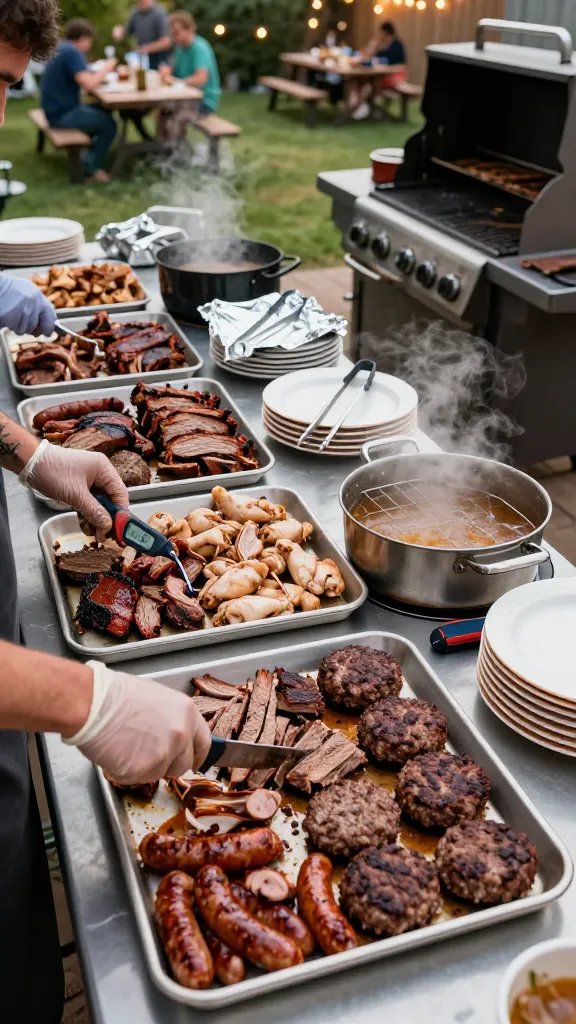
Reheating the wrong way gives you dry brisket, rubbery chicken, and still doesn’t guarantee safety. You need even heat, steam, and a real check for doneness, not guesswork.
Safe Internal Temperatures
- Poultry (chicken, turkey): 74°C/165°F
- Ground meats (burgers, sausages): 71°C/160°F
- Pork and beef (steaks/roasts): 63°C/145°F, then rest 3 minutes
- Leftovers being reheated: Heat to 74°C/165°F throughout
Moist-Heat Reheat Method (Stovetop or Oven)
- Slice or pull larger pieces for even heating. Keep slices 1–2 cm thick.
- Place in a baking dish or large skillet. Add a splash of low-salt stock or water (2–4 tablespoons per 500 g).
- Cover tightly with foil or a lid to trap steam.
- Oven: 160–170°C/320–340°F for 15–25 minutes, stirring or flipping once. Stovetop: low heat, covered, 8–15 minutes, stir once.
- Use a probe thermometer (basic one from a hardware/garden centre aisle) to confirm 74°C/165°F in the thickest area.
- Finish with a quick sear in a hot pan or on the grill for 30–60 seconds for texture.
When Not To Reheat
- If the meat sat in the danger zone beyond the safe window, reheating won’t make it safe.
- If the meat smells sour, feels tacky, or has grey-green patches, discard it.
Takeaway: Reheat only items still within the safe window, and verify 74°C/165°F internal with a simple probe thermometer before serving.
3. Smart Swaps: Rapidly Rebuild the Menu With Safe, Shelf-Stable or Quickly-Chilled Dishes
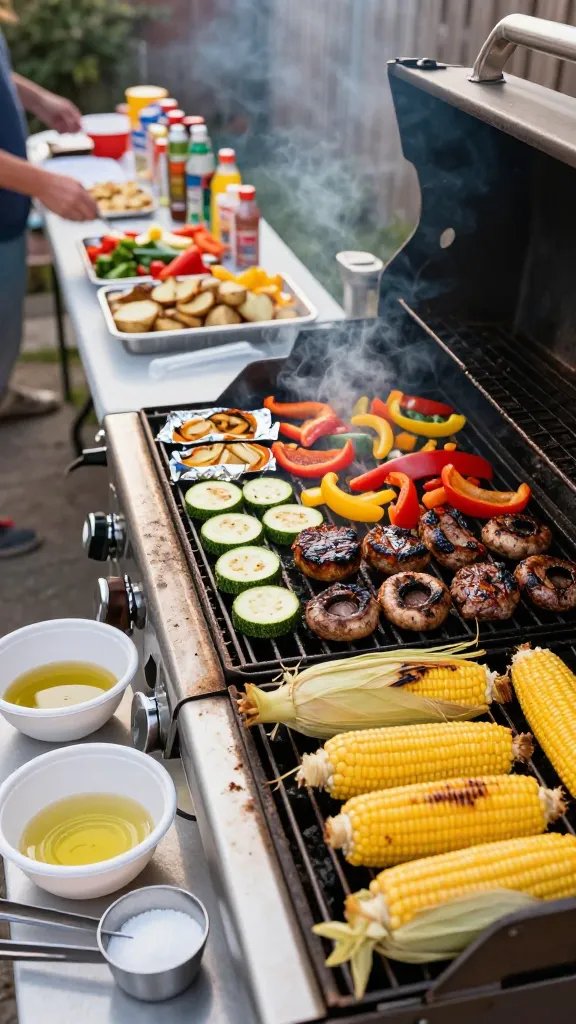
Once you toss unsafe items, the table can look bare — and guests still need feeding. Rebuilding fast means leaning on items that don’t depend on strict temperature control or can be chilled quickly and safely.
No-Fridge or Low-Risk Additions
- Grill-to-serve vegetables: Zucchini, bell peppers, portobellos brushed with oil and salt. Grill and serve hot right away.
- Foil packet potatoes/onions: Thinly sliced, oil, salt, sealed tight. Grill 20–30 minutes until tender, serve hot.
- Corn on the cob: Grill in husks or foil, serve immediately with butter/salt at the table.
- Bread board: Rolls, flatbreads, tortillas, butter, olive oil, salt, and dried herbs.
- Shelf-stable dips and spreads: Hummus in sealed packs, jarred salsa, canned bean dip opened right before serving; keep small portions out and swap fresh bowls every 30 minutes.
Fast-Chill Salads That Stay Safer
- Vinegar-based slaw or potato salad: Skip mayo. Use oil, vinegar, mustard, salt, pepper. Chill in shallow trays. Bring out half-batches and keep the rest on ice.
- Whole-fruit station: Bananas, apples, oranges, grapes washed and served whole or in small clusters.
- Tomato-cucumber salad: No dairy. Dress lightly right before serving and keep over ice.
How To Hold Cold Safely Without Special Gear
- Use two nested trays: bottom filled with ice, top holds the food bowl. Drain melted water and refresh ice as needed.
- Serve in small bowls and rotate fresh ones from the fridge every 30–45 minutes.
- Keep cold items under shade; move the table out of direct sun.
Action today: Build a replacement spread with hot-off-the-grill veg, bread, whole fruit, and vinegar-dressed sides held over ice in nested trays.
4. Portion Planning for 50: Cook Fresh in Waves Instead of Piling It All On the Table
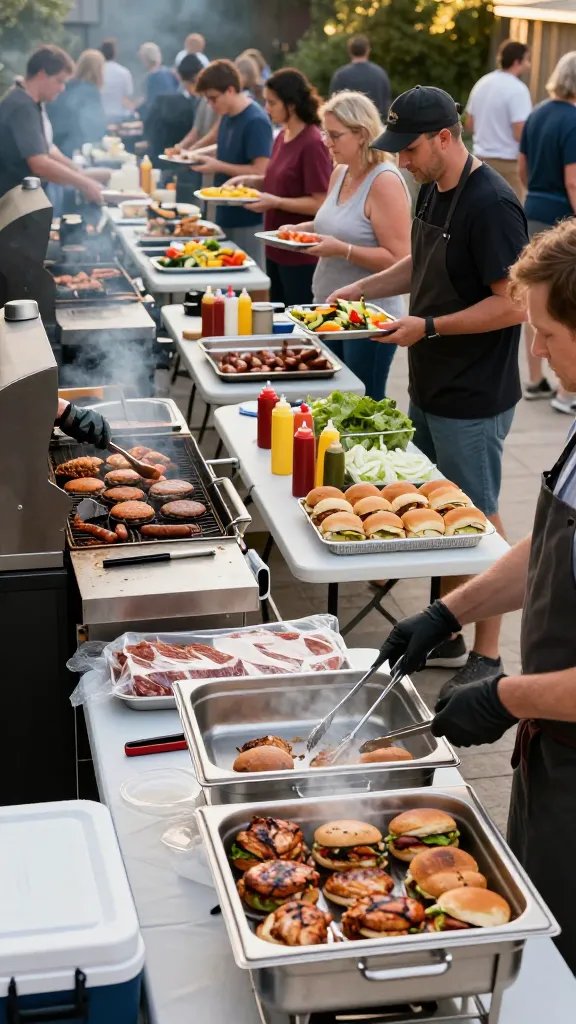
Piling every tray out at once guarantees big losses when time runs out. Cooking and serving in waves keeps food moving from grill to plate while everything stays within safe windows.
Right-Size Batches
- Grilled meats: Cook 10–12 servings at a time. Refill every 15–20 minutes.
- Veg and starches: Keep two trays rotating — one cooking, one serving.
- Condiments and buns: Put out 25 servings, refill as they drop below half.
Simple Serving Flow
- Prep zone: Season and tray raw items near the grill.
- Hot zone: Grill and transfer finished items immediately to a covered tray.
- Service zone: Bring out small covered pans; swap empties with fresh ones every 20 minutes.
- Hold cold: Keep half the salads and cut fruit chilled; rotate small bowls on ice.
Tools You Already Have
- Coolers with ice: For salads, drinks, backup meats.
- Foil and lids: Trap heat and reduce drying.
- Basic probe thermometer: Confirm temps quickly without guessing.
Takeaway: Serve in small, frequent batches and keep backups cold or cooking — never parked at room temperature.
5. Triage Script: Quick Decisions When Food Sat Out Too Long
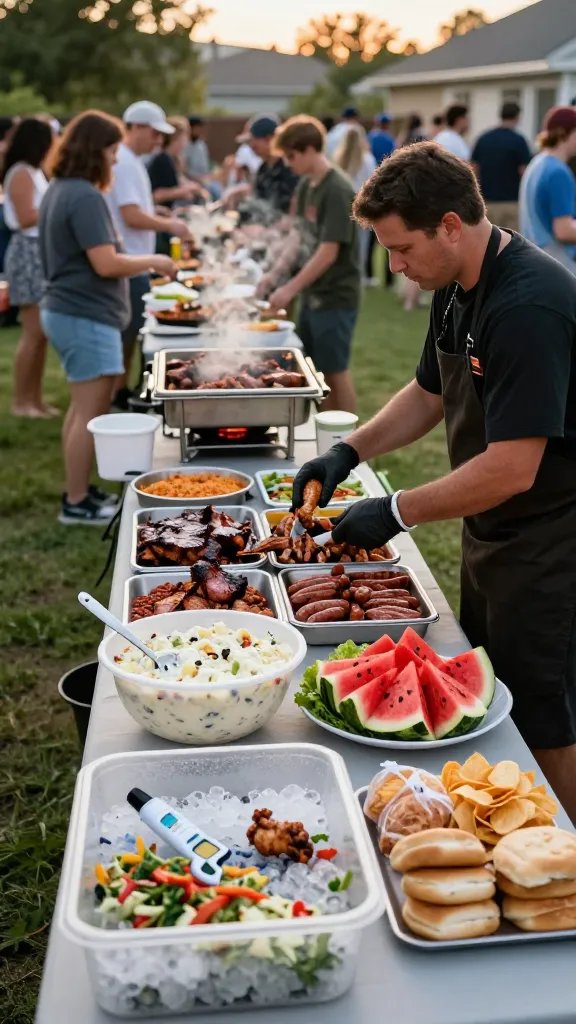
In the middle of a party, you need a fast, no-drama way to judge each dish. A simple triage script removes second-guessing and keeps everyone safe.
60-Second Triage Checklist
- Step 1 — What is it? Meat, dairy/mayo salad, cooked starch (rice/beans), cut produce, dry goods.
- Step 2 — How long out? Under 2 hours (or under 1 hour if 32°C/90°F+): go to Step 3. Over that: discard.
- Step 3 — Was it kept hot or cold? If hot above 60°C/140°F or cold on ice under 5°C/41°F: continue. If not, reheat to 74°C/165°F immediately or discard depending on time.
- Step 4 — Reheat or replace: Safe-window foods get moist-heat reheat. Unsafe get replaced with low-risk options.
- Step 5 — Reset service: Switch to small-batch serving and ice-nesting for cold items.
Common Edge Cases
- Grilled burgers left 90 minutes: Reheat to 74°C/165°F, serve at once.
- Pasta salad with mayo left 2.5 hours: Discard, replace with oil-vinegar pasta salad.
- Cut watermelon out 2 hours on a hot day: Discard. Serve whole fruit instead.
- Buns and chips after 4 hours: Keep if covered and dry.
Action today: Print or save the 5-step triage checklist on your phone and use it the moment you realize food sat out too long.
Frequently Asked Questions
Can I just reheat everything until it’s piping hot and make it safe?
No. Some bacteria produce toxins that survive reheating. Cooked rice, beans, and mayo-based salads past the safe window should be discarded, not reheated. Reheat only items still within the 2-hour (or 1-hour in high heat) window and confirm 74°C/165°F internally with a basic probe thermometer.
How do I keep salads cold without fancy catering gear?
Nest your salad bowl in a larger tray filled with ice. Keep backup portions in the fridge or cooler and swap smaller bowls onto the ice every 30–45 minutes. Keep the table shaded and cover bowls when not being served to reduce warming.
What’s the fastest safe way to cool large batches I want to save?
Spread hot foods in shallow containers no deeper than 5 cm/2 inches. Leave uncovered until steam stops, then cover and refrigerate. Stir once after 20 minutes to release trapped heat, and don’t stack hot containers tightly in the fridge — space them so cold air circulates.
How much food should I put out at once for 50 people?
Set out about 25 portions at a time and refill every 15–20 minutes. Keep backup trays hot on the grill or cold in coolers with ice. Smaller, frequent refills keep everything within safe time limits and reduce waste.
What should I buy last-minute to rebuild a safe spread?
Grab rolls or flatbreads, whole fruit, jarred salsa and hummus, canned beans for quick warm dips, and sturdy veg for grilling like zucchini, peppers, and corn. Pick up vinegar, oil, mustard, and dried herbs for no-mayo salads. Don’t forget extra foil, disposable shallow trays, and bagged ice for cold holding.
How do I discreetly handle discarding unsafe food without alarming guests?
Quietly clear the table and replace with fresh trays in smaller batches. If asked, say you’re refreshing with hot-off-the-grill items and chilled salads. Keep service moving; the best reassurance is a steady flow of fresh, hot and properly chilled food.
Conclusion
You don’t need specialized catering gear to protect 50 guests — just a timer, a thermometer, and a clear plan. Use the triage checklist, rebuild with low-risk dishes, and serve in waves so nothing lingers in the danger zone. Next time, set out smaller portions from the start and hold backups hot or over ice — it’s the simplest way to keep the party safe and stress-free.