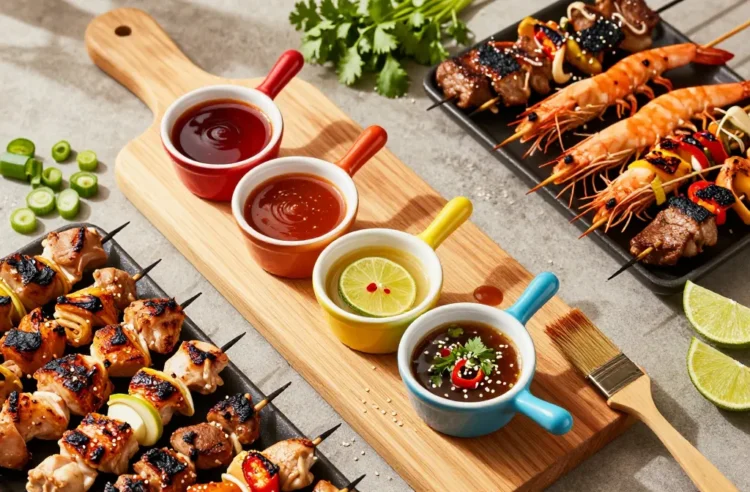
I learned to grill on a tiny apartment balcony with a basic kettle and a stubborn bag of charcoal. Fancy marinades were out of reach, so I leaned on supermarket sauces and a few fresh herbs from my windowsill. These five Asian BBQ sauces turned weeknight chicken thighs and garden veg into something worth inviting neighbors over for. You’ll learn exactly what to buy, what to swap, and how to use each sauce so dinner tastes like you fussed for hours — without special equipment.
1. Korean Gochujang Marinade: Deep Heat, Sticky Glaze, Char-Ready Finish
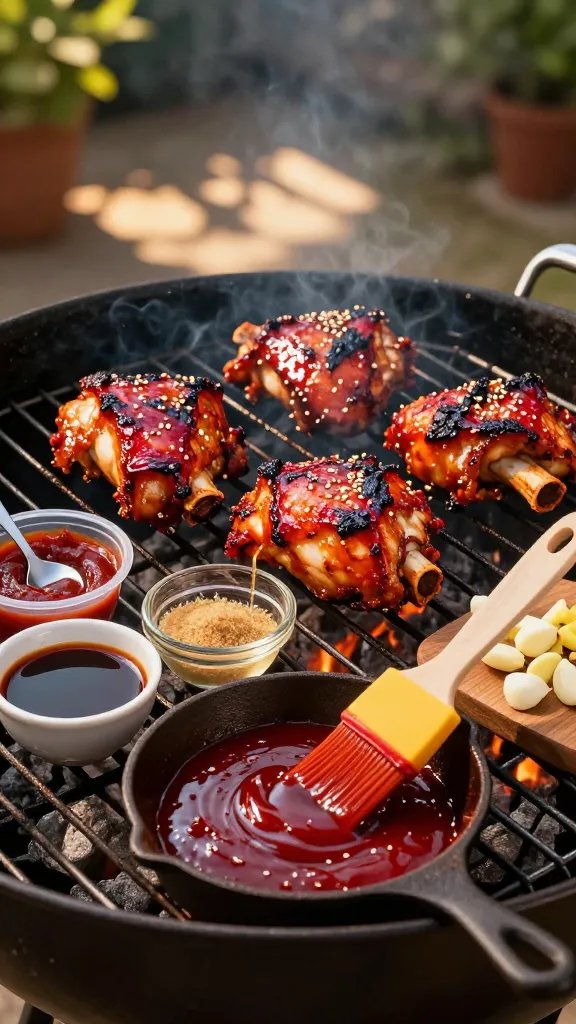
Dry chicken and burnt edges happen when a sugary glaze hits the grill too early. You end up with bitter char outside and underdone meat inside. A proper Korean-style gochujang sauce solves this with a two-stage approach: marinate for flavor, then glaze right at the end for that glossy, lacquered finish.
What You’ll Use
- Gochujang (Korean fermented chili paste) — one small tub from the international aisle
- Soy sauce
- Brown sugar or honey
- Rice vinegar (or apple cider vinegar)
- Garlic and ginger (fresh or from a jar)
- Sesame oil
How to Mix It (Master Ratio)
- 3 tablespoons gochujang
- 2 tablespoons soy sauce
- 1 tablespoon brown sugar or honey
- 1 tablespoon rice vinegar
- 1 tablespoon grated ginger + 1 grated garlic clove
- 1 teaspoon sesame oil
Whisk until smooth. Reserve 3 tablespoons for glazing. Use the rest to marinate 1.5–2 pounds of chicken thighs, pork shoulder slices, or firm tofu for 30–90 minutes in the fridge.
Grill Strategy
- Cook over medium heat — if your hand over the grate becomes uncomfortable at 5 seconds, you’re there.
- Pat excess marinade off before grilling to avoid flare-ups.
- Brush with the reserved sauce during the last 2–3 minutes per side to set the glaze without burning.
Action today: Pick up a small tub of gochujang and soy sauce on your next grocery run; you now have a weeknight marinade and end-of-grill glaze that won’t burn.
2. Japanese Yakitori Tare: Balanced Sweet-Salty Sauce That Shines on Skewers
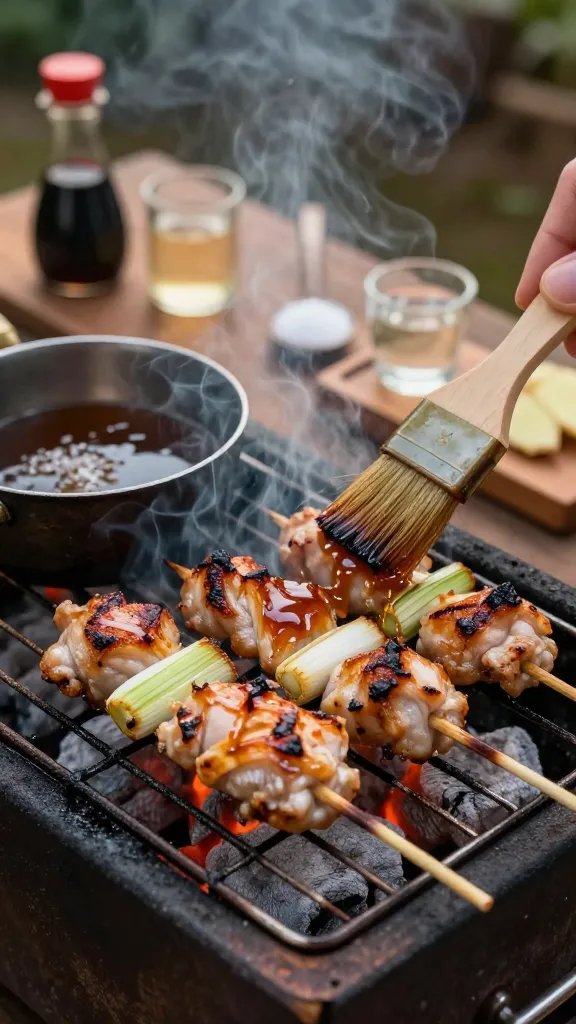
Skewers dry out fast because small pieces overcook while you fight flare-ups. A classic Japanese tare solves this with a glossy, clingy sauce that you baste in thin layers, building flavor while protecting the meat from drying.
What You’ll Use
- Soy sauce
- Mirin (sweet rice wine; sub 50/50 white wine + sugar if needed)
- Sugar
- Optional: a splash of sake (or dry white wine) and a nub of ginger
How to Make It
- In a small saucepan: 1/2 cup soy sauce + 1/2 cup mirin + 2 tablespoons sugar.
- Simmer 8–10 minutes until slightly syrupy; it should lightly coat a spoon.
- Cool. Divide into two bowls: one for basting during cooking, one clean for finishing at the table.
Skewer Strategy
- Thread chicken thighs, scallions, mushrooms, or zucchini. Keep pieces the same size for even cooking.
- Grill over medium heat. Start basting after the first flip, then every 1–2 minutes. Thin coats prevent scorching.
- Finish with a final brush from the clean bowl off the heat for shine.
Takeaway: Make tare once on a weeknight; keep a jar in the fridge for two weeks and baste any skewers lightly and often for juicy results.
3. Thai Sweet Chili-Lime Sauce: Bright Heat That Wakes Up Chicken, Shrimp, and Veg
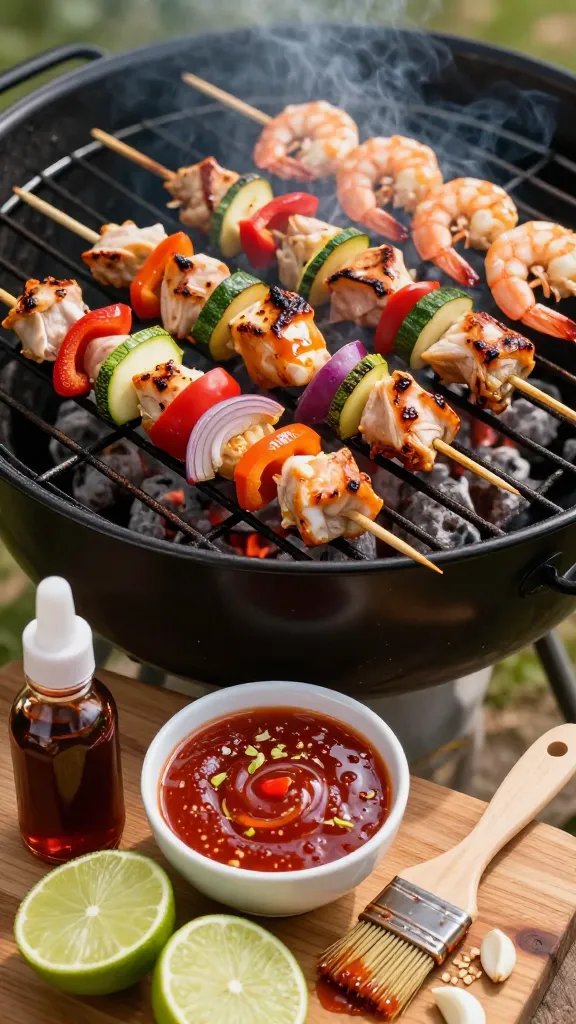
Sweet bottled sauces can taste flat on the grill and slide right off. Adding fresh lime and a pinch of fish sauce gives Thai sweet chili sauce the punch and cling you need, so it caramelizes lightly without turning cloying.
What You’ll Use
- Bottled Thai sweet chili sauce (standard 12-ounce bottle)
- Lime (zest and juice)
- Fish sauce (a small bottle lasts ages; sub soy sauce if needed)
- Garlic (optional)
How to Mix It
- 1/2 cup sweet chili sauce
- 1 tablespoon lime zest + 2 tablespoons lime juice
- 2 teaspoons fish sauce
- 1 small grated garlic clove (optional)
Stir together. The zest adds concentrated citrus oils that hold up to heat.
How to Use It
- Marinate shrimp or chicken cutlets 15–20 minutes; longer will soften shrimp too much.
- Grill over medium-high. Brush with extra sauce in the last minute to set a glossy coat.
- Toss grilled vegetables (bell peppers, green beans, eggplant) with a spoonful off the heat for a bright finish.
Action today: Keep one bottle of Thai sweet chili sauce plus a few limes on hand; you’ll have a fast 3-ingredient glaze that makes even plain grilled veg pop.
4. Chinese Hoisin Five-Spice BBQ: Char-Sweet Ribs and Wings Without a Smoker
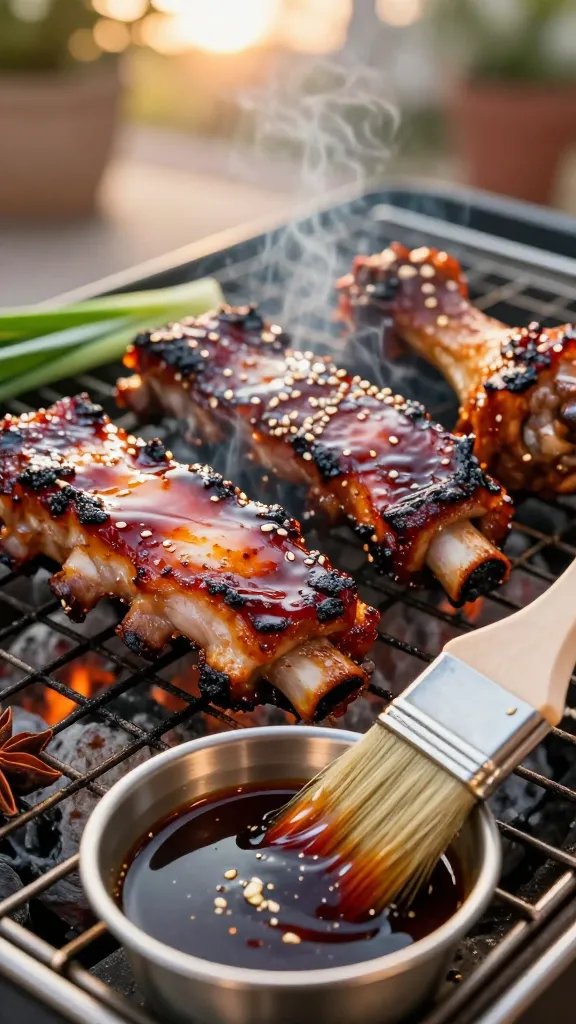
Thick hoisin out of the jar burns if you slap it on early. The fix is a thinner, spiced basting sauce that you layer on during the last third of cooking. You get a lacquered surface with five-spice aromatics instead of a bitter crust.
What You’ll Use
- Hoisin sauce
- Soy sauce
- Rice vinegar
- Honey
- Chinese five-spice powder
- Garlic
Hoisin BBQ Sauce (Brush-On)
- 1/3 cup hoisin + 2 tablespoons soy sauce
- 1 tablespoon rice vinegar + 1 tablespoon honey
- 1/2 teaspoon five-spice + 1 small grated garlic clove
- Thin with 1–2 tablespoons water until pourable but not runny
Grill Strategy for Wings, Thighs, or Ribs
- Cook meat over indirect heat first: coals to one side, food on the other; lid on, vents half-open.
- When meat is nearly done (internal temp around 160°F for chicken, or ribs tender at the bend), move over medium direct heat.
- Brush on sauce in two thin coats, 60–90 seconds apart, flipping once for even lacquer.
Takeaway: Always baste hoisin-based sauces in the last 5–8 minutes; sugar caramelizes, not burns, and the five-spice stays fragrant.
5. Vietnamese Nuoc Cham Grill Sauce: Light, Savory Citrus For Juicy, No-Stick Results
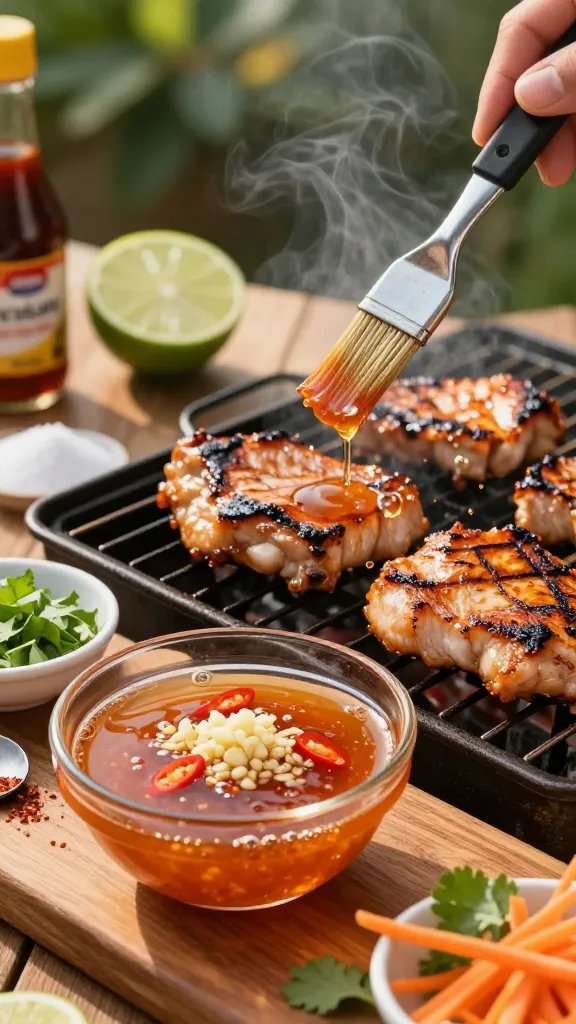
Lean cuts like pork chops or chicken breasts stick and dry out fast. A light Vietnamese nuoc cham doubles as a quick marinade and post-grill dressing, so the meat releases from the grates and stays juicy without a heavy glaze.
What You’ll Use
- Fish sauce
- Lime juice
- Sugar
- Warm water
- Garlic and fresh chili (or red pepper flakes)
- Optional: shredded carrot and chopped cilantro or mint
5-Minute Nuoc Cham
- 3 tablespoons fish sauce + 3 tablespoons lime juice
- 3 tablespoons warm water + 1.5 tablespoons sugar
- 1 small grated garlic clove + sliced chili to taste
Stir until the sugar dissolves. Taste: it should be bright, salty, and slightly sweet. Adjust with a splash more lime or water if intense.
How to Use It
- Marinate thin pork chops, chicken breasts, or firm tofu for 20–30 minutes. Pat dry before grilling.
- Grill over medium-high. Brush with neutral oil on the grates and the protein to prevent sticking.
- Toss grilled meat and vegetables with fresh nuoc cham at the table; add herbs for freshness.
Action today: Mix a small jar of nuoc cham and keep it chilled for up to 5 days; use it to marinate, then as a bright dressing over sliced grilled meats and garden greens.
Frequently Asked Questions
Do I marinate first or just brush sauces on the grill?
Use thicker, flavorful sauces for short marinades (15–90 minutes) to season the interior, then brush clean, reserved sauce in the last few minutes to finish. This avoids burning and gives a glossy coat. Always keep a portion of sauce separate from raw meat for safe basting and serving.
How do I stop sugary sauces from burning?
Cook over medium or indirect heat until the meat is mostly done, then glaze in thin layers. Pat excess marinade off before grilling, and baste only during the last 2–5 minutes per side. If flare-ups start, move food to a cooler zone and close the lid for 30–60 seconds.
What if I can’t find mirin, fish sauce, or gochujang?
Substitutions work: for mirin, use equal parts white wine and a teaspoon of sugar per 1/4 cup. For fish sauce, use soy sauce plus a squeeze of lime to keep brightness. For gochujang, blend tomato paste, a teaspoon of chili flakes, a teaspoon of honey, and a splash of soy; it’s not exact, but it gives sweet heat and color.
Can I make these sauces ahead and store them?
Yes. Yakitori tare and hoisin BBQ keep 2 weeks refrigerated in a clean jar. Nuoc cham lasts 5 days for best flavor. Gochujang and Thai chili-lime sauces keep a week; whisk before using as ingredients settle.
What cuts work best for each sauce?
Gochujang loves chicken thighs, pork shoulder, and tofu. Yakitori tare excels on skewered chicken thighs, scallions, mushrooms, and zucchini. Thai sweet chili-lime shines on shrimp, chicken cutlets, and summer veg. Hoisin five-spice is ideal for wings, thighs, and ribs. Nuoc cham keeps lean pork chops and chicken breasts juicy.
How do I use these sauces on vegetables without sogginess?
Oil and salt your veg first, grill to light char, then toss with a tablespoon of sauce off the heat. For sturdier veg like eggplant or broccoli, brush a thin coat in the last minute to set. Finish with fresh lime or herbs to keep textures crisp.
Conclusion
With one grocery run and a clean jar, you can mix any of these five sauces in minutes and grill with confidence. Start with the Korean gochujang marinade this week, then try yakitori tare on skewers — you’ll build a reliable summer rotation without special gear.