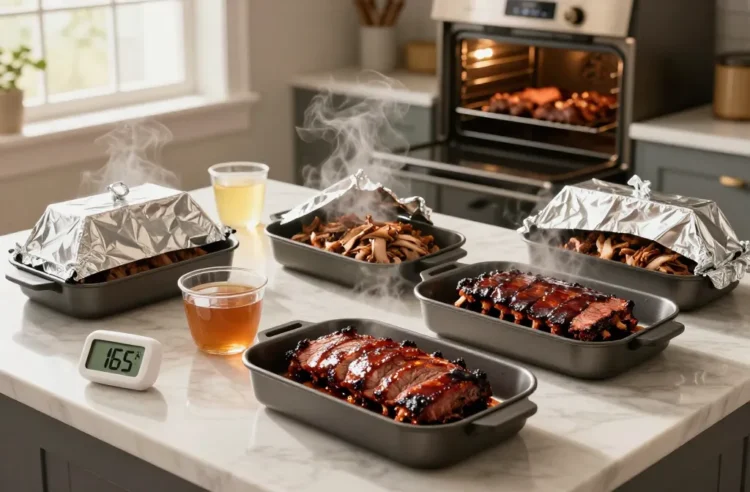
I’ve fed backyard crowds with reheated brisket, pulled pork, and ribs more times than I can count. The first few times, I rushed it and served leathery slices and stringy pork — the kind people drown in sauce to forgive. Then I learned the exact temps, tools, and timing that keep meat tender and glossy, even in big batches. In this guide, you’ll learn seven reliable methods — using standard kitchen and hardware-store gear — to reheat BBQ for 50 without drying it out.
1. Low-Oven Reheat With Moisture Shield: Prevents Dry Edges and Tough Slices
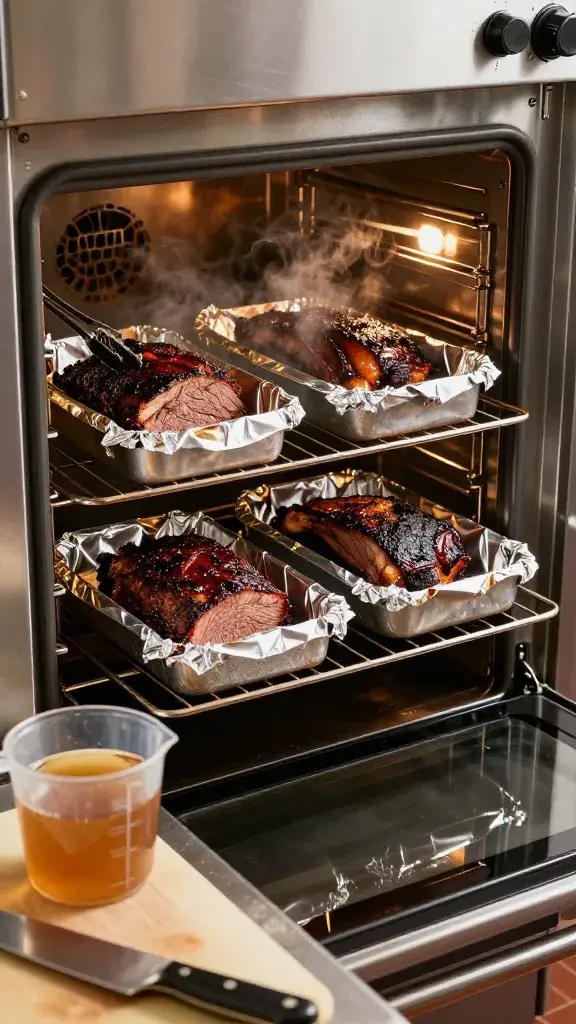
Cranking the oven dries bark and edges first, then the center turns stringy while you wait. For 50 guests, that misery scales up — trays come out uneven, some dry, some cold. Low-and-slow in covered pans evens the heat and protects moisture.
How to Set It Up
- Set oven to 275°F. Use two racks to fit multiple pans without crowding.
- Slice brisket or turkey only after reheating. Keep large cuts whole to retain juices.
- Arrange meat in shallow roasting pans. Add 1/2 cup liquid per 2 pounds: low-sodium beef or chicken broth, or a 50/50 mix of broth and apple juice for pork.
- Cover tightly with heavy-duty foil to trap steam. Leave a small corner vent if you want bark to stay a little firm.
- Heat until the center reaches 165°F. Expect 45–90 minutes depending on thickness and quantity.
What Liquids Work Best
- Beef/Brisket: Low-sodium beef broth + a splash of black coffee for depth.
- Pork: Apple juice + broth, or cider vinegar diluted 1:3 with water for a gentle tang.
- Chicken/Turkey: Chicken broth with a teaspoon of butter per pan.
Takeaway: Reheat covered at 275°F with 1/2 cup liquid per 2 pounds until 165°F, then slice and serve.
2. Water-Bath Warmers (Chafers or Roasting Pans): Hold Moist Heat for Serving Windows
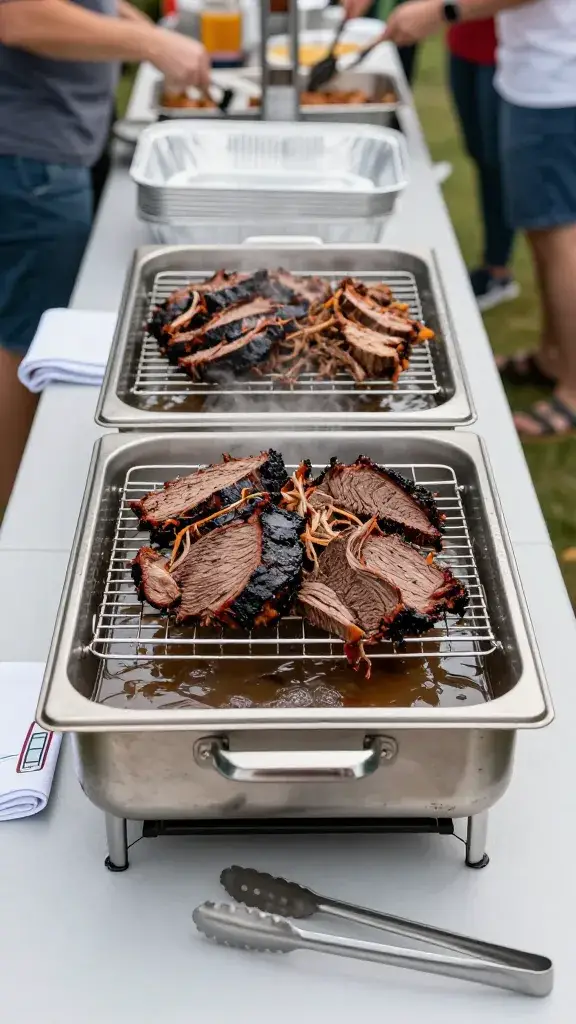
Guests show up late, lines move slowly, and meat sits. Dryness happens during holding more than reheating. A gentle water bath keeps everything at a safe, moist temperature without steaming your bark to mush.
Simple Equipment You Already Have
- Two large roasting pans or disposable aluminum hotel pans
- Sturdy baking racks or an inverted foil ring to keep the food pan above water
- Instant-read thermometer
How to Do It
- Fill the bottom pan with 1–2 inches of hot tap water. Place a rack inside so the food pan sits just above the water line.
- Set the food pan on top with reheated meat. Cover loosely with foil to retain moisture but allow a little airflow.
- Hold at 150–160°F measured in the meat, not the air. Stir pulled meats every 20 minutes, adding 1–2 tablespoons of warm broth if edges dry.
Action today: Build a DIY chafer with nested pans and hot water so your BBQ stays juicy for the entire service window.
3. Steam-Assist on the Stove: Fast Rescue for Pulled Pork and Chicken
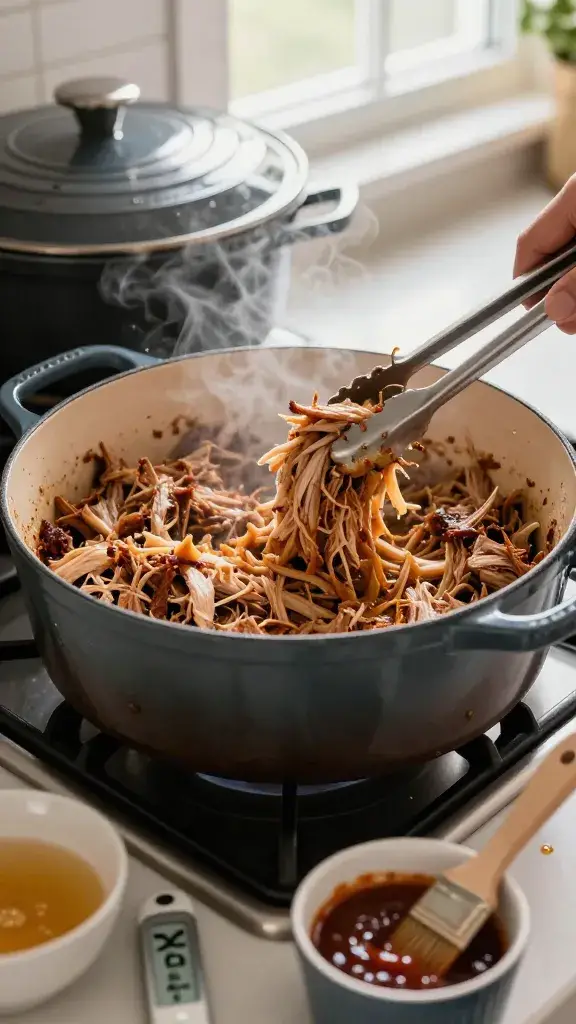
When you rush reheating shredded meats, the top layer dries into brittle strings that taste like leftovers. A light steam brings the whole pan to serving temp fast without boiling away flavor.
How to Fix It
- Use a wide skillet or Dutch oven over medium-low heat.
- Add meat in an even 1–1.5 inch layer. Sprinkle 2–4 tablespoons of broth per pound over the top.
- Cover with a tight lid for 5 minutes to steam. Uncover, stir, and repeat in short bursts until 165°F.
- Finish with your finishing sauce or reserved juices off the heat to coat evenly.
Signs You’re Overdoing It
- Liquid boils hard under the lid — reduce heat to stop flavor loss.
- Meat swims in liquid — drain excess to preserve texture.
Takeaway: Steam in short, covered bursts with 2–4 tablespoons broth per pound, then sauce off-heat.
4. Double-Wrap and Reheat on a Grill or Smoker: Restores Aroma Without Dry-Out
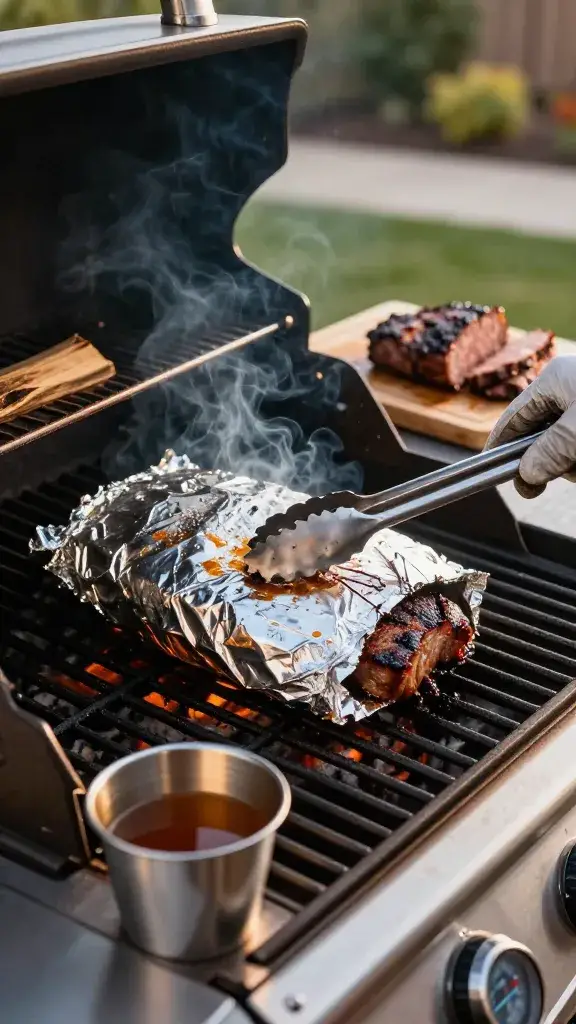
Reheating straight on grates scorches the exterior while the center stays cold. Worse, a hot, dry grill sucks moisture out fast. Double-wrapping with a splash of liquid gives you gentle heat and a whisper of smoke for that just-cooked aroma.
Step-by-Step
- Heat grill or smoker to 275–300°F with a small chunk of mild wood (apple or oak). No roaring flames.
- Wrap meat tightly in two layers of heavy-duty foil with 1/4 cup of appropriate liquid per 2 pounds.
- Set on indirect heat. Flip the packet halfway through for even warming.
- Check internal temperature through the foil with a thermometer. Stop at 165°F.
- Rest 10 minutes in the foil, then open and finish uncovered for 5 minutes to re-set the bark if desired.
Best Meats for This
- Brisket, pork shoulder, whole chickens, racks of ribs — all benefit from steamy wrap, then a brief unwrapped finish.
Action today: Use a double-foil wrap with 1/4 cup liquid per 2 pounds and indirect 275–300°F heat to revive smoke and keep tenderness.
5. Slice-After-Reheat for Brisket and Turkey: Keep Juices Trapped Until the Last Minute
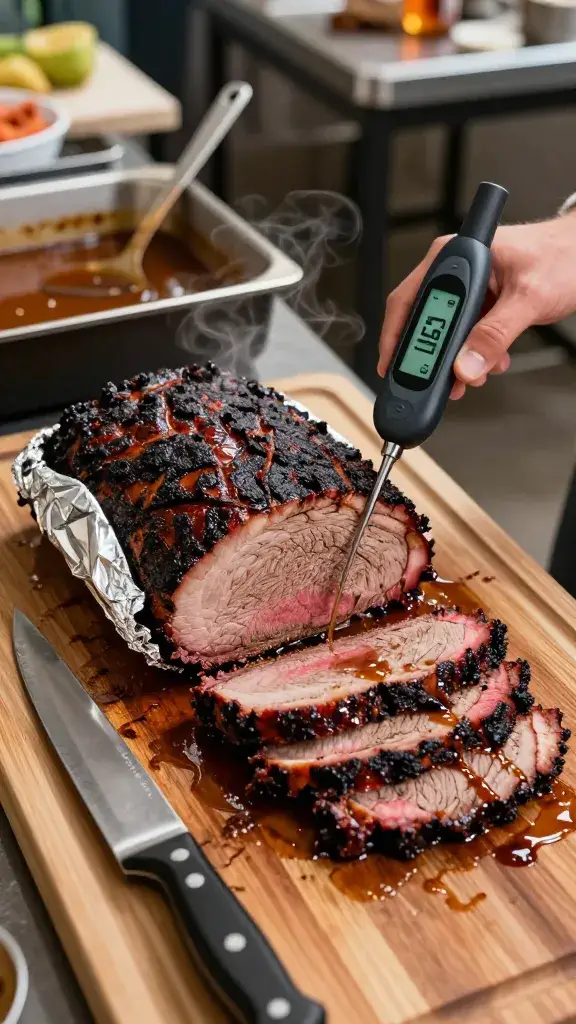
Slicing cold exposes surface area and lets moisture escape during reheating. You end up with faded color and dry edges. Keeping slabs whole preserves internal moisture and reheats more evenly.
How to Handle Brisket
- Reheat the whole flat or large chunks wrapped with 1/2 cup beef broth per pan at 275°F.
- Rest 10 minutes. Slice against the grain into pencil-thick slices only when the internal temp is 150–160°F for serving.
- Brush slices lightly with warmed au jus or defatted drippings.
Turkey or Chicken
- Reheat breasts on the bone or as large halves. Carve just before serving.
- Hold sliced meat in a covered pan with a thin layer of warm broth, not submerged.
Takeaway: Reheat big pieces first, then slice; finish with warm juices to lock in sheen and tenderness.
6. Ribs and Sausages: Glaze-and-Cover, Then Uncover to Set the Shine
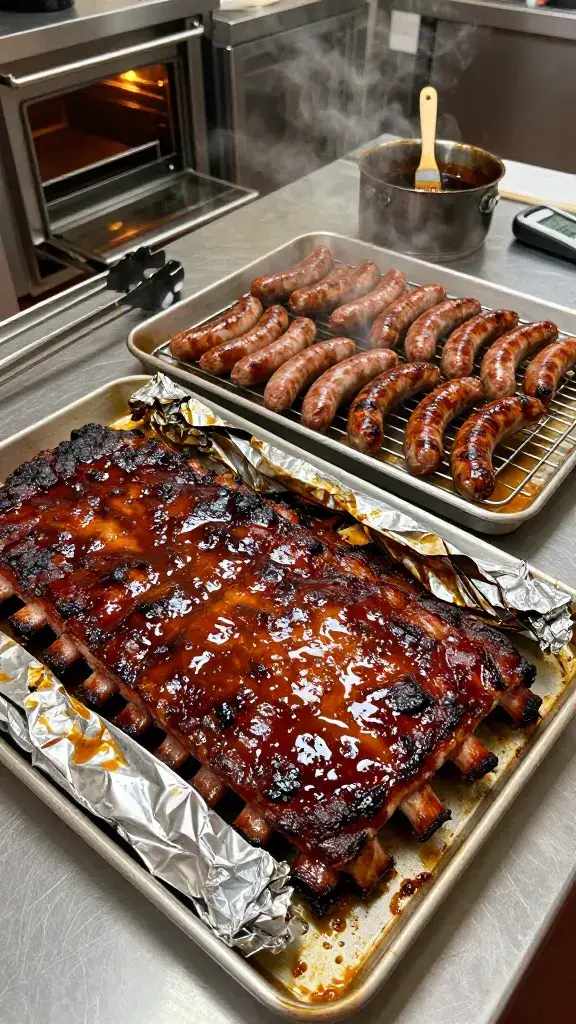
Ribs reheated dry turn chewy and lose that gentle tug. Sausages split when heated too fast. A light glaze and covered warm-up protect moisture, then a quick uncovered finish resets texture.
Ribs, Step-by-Step
- Brush with a thin layer of warmed sauce mixed 1:1 with apple juice or broth.
- Place in a foil-covered pan at 275°F for 25–35 minutes to reach 165°F.
- Uncover and return to heat for 5–8 minutes to set the glaze. Don’t burn sugars.
- Slice ribs after reheating, not before.
Sausages
- Arrange in a single layer with 1/4 cup water in the pan. Cover and warm at 300°F for 15–20 minutes.
- Finish uncovered for 5 minutes or over medium grill heat to re-crisp the casing without bursting.
Action today: Cover to heat through gently, then uncover just long enough to set glaze or casing snap.
7. Batch Timing and Safe Holding: Staggered Batches Beat One Giant Pan
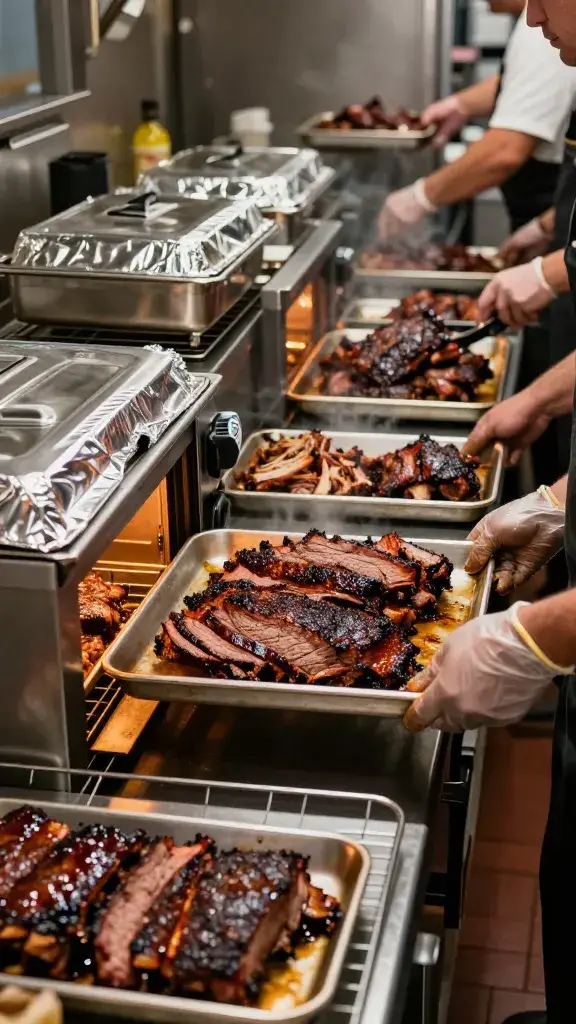
Overloading one oven or one pan creates hot-and-cold zones and dries edges while you wait for the middle to warm. For 50, the clock is your best tool. Staggered batches keep every tray juicy and hot when it hits the table.
Plan Your Schedule
- Estimate portions: 1/3–1/2 pound cooked meat per adult for mixed platters. For “meat-heavy” events, plan 3/4 pound.
- Reheat in 8–10 pound batches. Start the first batch 2 hours before serve time. Start the next batch 30–40 minutes later.
- Move finished trays to water-bath warmers at 150–160°F. Rotate fresh trays in as the line moves.
- Assign one person to monitor temps every 20 minutes. Add 1–2 tablespoons warm broth if you see dry edges.
Food Safety You Must Follow
- 165°F internal for reheated meats before serving or holding.
- 140°F minimum while holding. If it drops below for over 2 hours, discard.
- Cool leftovers fast in shallow pans; refrigerate within 2 hours.
Takeaway: Reheat in smaller batches, hold safely at 150–160°F, and top up moisture as needed for consistently juicy trays.
Frequently Asked Questions
How do I reheat pulled pork without sauce making it soggy?
Warm the pork first using steam-assist on the stove or covered in the oven with 2–4 tablespoons of broth per pound. Once it hits 165°F, fold in a small amount of warmed finishing sauce — just enough to coat, not pool. Keep a separate squeeze bottle of sauce at the buffet so guests add more if they want. This keeps texture intact and prevents a watery pan.
Can I reheat brisket in a slow cooker for a crowd?
Yes, but use it as a warmer after reheating, not as the primary reheater. Reheat brisket wrapped in the oven to 165°F, slice, then transfer to a slow cooker set to Warm with a thin layer of hot au jus at the bottom. Keep the lid on and gently stir layers every 20–30 minutes. Add 1–2 tablespoons au jus if the edges dry.
What’s the best way to keep ribs tender on a buffet line?
Reheat covered at 275°F with a light glaze, then uncover briefly to set. Hold the sliced ribs in a covered pan over a water bath at 150–160°F. Place a folded sheet of damp parchment over the ribs before the foil to trap gentle moisture without steaming the bark soft. Refresh with a warm brush of thinned sauce every 30 minutes.
How much liquid should I add if my meat seems dry after reheating?
Start small: 1–2 tablespoons of hot broth per pound, fold gently, and wait two minutes before adding more. For brisket, use warm au jus; for pork, use apple juice-broth mix; for chicken, use broth plus a teaspoon of melted butter per pan. Excess liquid will wash away seasoning and soften bark. Add in stages until the sheen returns.
Is microwaving OK for large groups if I’m short on time?
Use the microwave only for emergency small portions or to warm sauces and juices. For meat, it heats unevenly and dries edges fast. If you must, work in 1–2 pound batches, cover with a vented lid, add a tablespoon of broth, and heat at 50% power in short intervals, stirring between. Immediately transfer to a covered hot pan to hold.
How far in advance can I reheat before serving?
Finish reheating within 30–60 minutes of the planned serve time, then hold at 150–160°F. For a long service window, stagger batches every 30–40 minutes. Keep sauces and drippings hot on the side to refresh pans as you go. Avoid reheating twice — it degrades texture and increases safety risks.
Conclusion
Reheating BBQ for 50 doesn’t require a restaurant kitchen — just gentle heat, smart moisture, and a solid timeline. Pick two methods that fit your gear — low-oven reheat plus water-bath holding is the easiest combo — and assign one person to watch temps. With that plan, your guests remember the food, not the line.