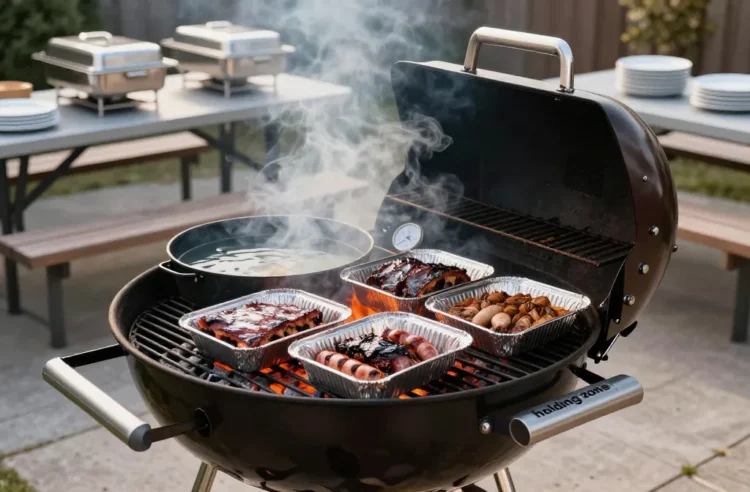
I’ve hosted more backyard feasts than I can count, and the same problem always shows up: the grill turns off before the guests turn up for seconds. I’ve juggled ribs, pulled pork, and trays of sides while watching them slide from perfect to lukewarm. Keeping barbecue hot without a single plug is doable with planning and a few hardware-store staples. Here’s exactly how I keep food safely warm and delicious for a 3–5 hour window when feeding 50.
1. Build a Charcoal-Fueled Holding Zone: Two-Zone Fire Done Right
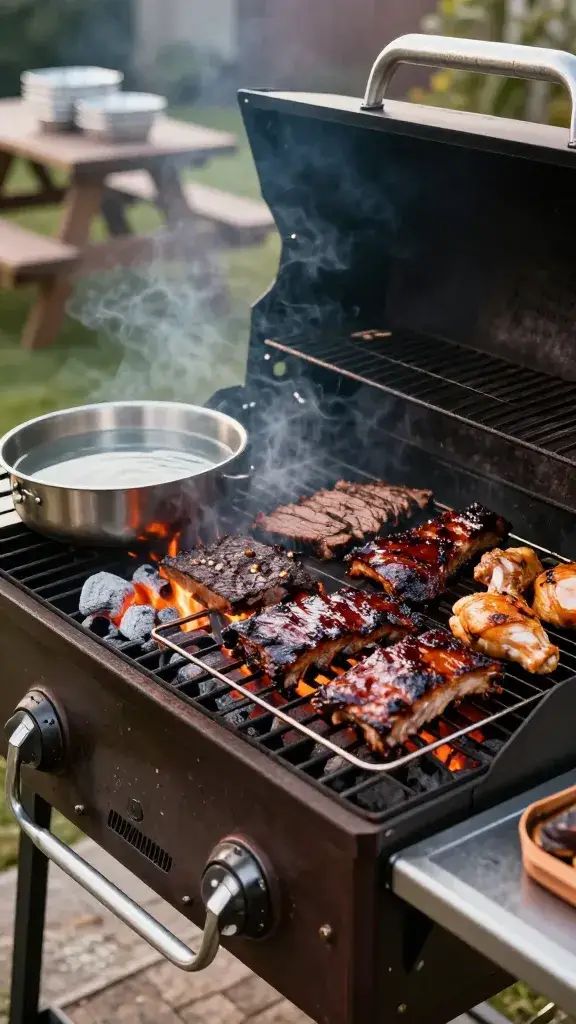
Food that sits over erratic heat dries out or burns on the bottom. A scattered charcoal bed gives you hot spots and cold corners that ruin texture and timing. I solve this by building a focused, low-heat holding zone on the grill using a two-zone fire.
How to Set It Up
- Rake lit charcoal to one side in a tight pile; leave the other side with no coals.
- Close bottom vents halfway and top vent 75% open to settle at a gentle 200–225°F on the cool side.
- Place a shallow pan of hot water over the coal side’s edge to add moisture.
- Hold cooked meats on the indirect side in covered foil pans.
- Use a simple oven thermometer on the grate over the cool side. You want the needle sitting around the “warm” zone, not hot grilling temps.
- Refresh with 4–6 briquettes every 45–60 minutes.
Takeaway: Dedicate one side of your grill as a warm chamber at low, steady heat and park covered pans there, not over active flames.
2. Insulate With Foil Pans, Tight Lids, and Towel Wraps
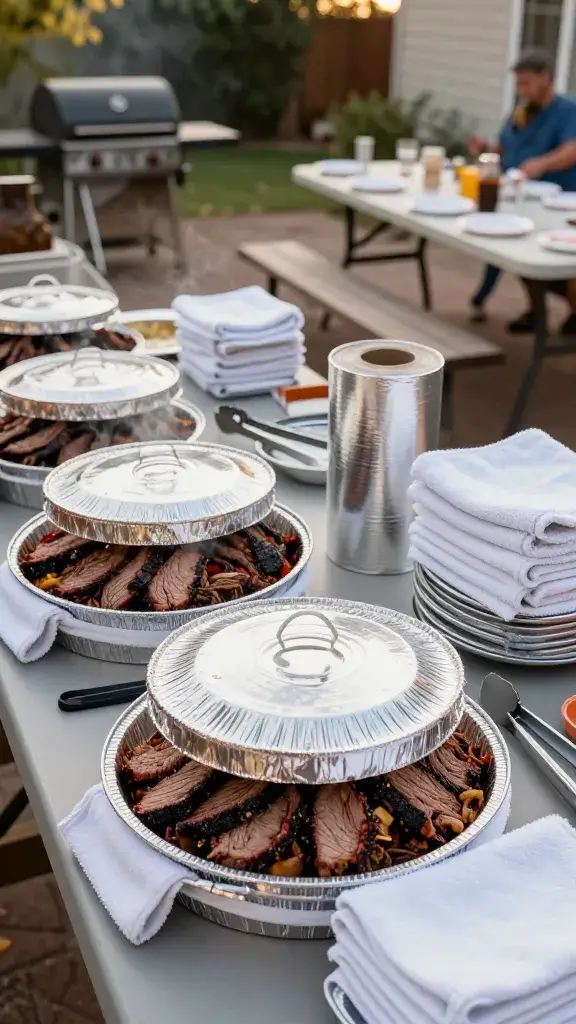
Exposed food bleeds heat fast, and repeated peeking makes it worse. Heat loss also dries out the surface, especially on sliced meats. I lock in warmth by nesting pans and adding simple insulation layers you already own.
What to Use
- Double up foil pans: One pan inside another creates an air gap that slows heat loss.
- Heavy-duty foil + tight lids: Wrap pan rims in heavy-duty foil, then cap with a fitted lid to trap steam.
- Towel wrap: Wrap lidded pans in a clean bath towel if they’re resting off the grill.
- Cardboard underlay: Set pans on a clean, thick cardboard square to avoid cold table surfaces wicking heat.
Action today: Before guests arrive, double-pan your meats, foil the rims, lid them, and stage a few towels for quick wraps between grill and table.
3. Use Water Pans and Moisture Shields to Prevent Dry-Out
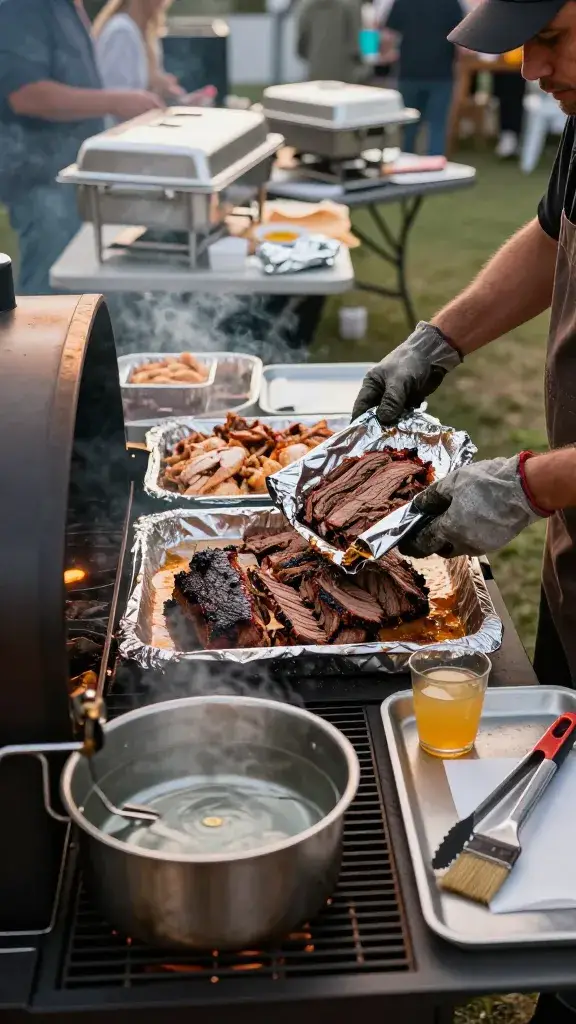
Warm holding turns juicy barbecue leathery if the air is dry. Meat surfaces lose moisture first, especially sliced brisket, pulled pork edges, and chicken breasts. I create a humid microclimate so the food stays supple without getting soggy.
How to Fix It
- Place a shallow pan with hot water (add a splash of apple juice if you like) on the grill’s hot side.
- Tent meats with foil so steam circulates but doesn’t drip directly on the meat.
- Brush or spritz exposed cuts lightly every 30–45 minutes with warm broth, apple juice, or the cooking juices skimmed of fat.
Takeaway: Keep a water pan steaming on the grill and foil-tent meats to hold both heat and tenderness for hours.
4. Hot-Hold in Coolers Turned “Cambros”
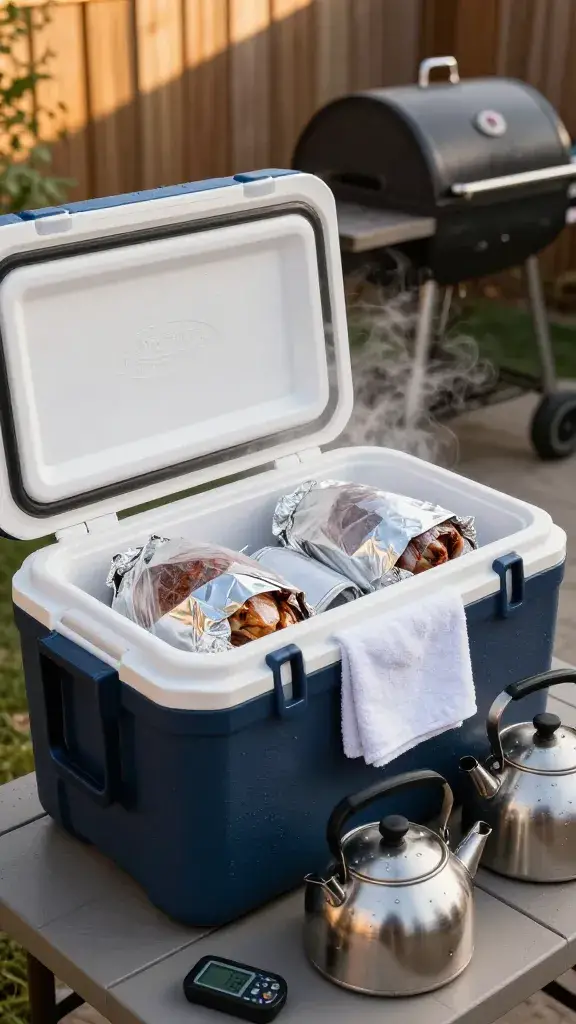
Once off the heat, meat temps tumble fast on a table. That invites food-safety trouble and mushy fat re-solidifying. I convert common coolers into hot boxes that hold safe temperatures without electricity.
Steps to Build a Hot-Hold Cooler
- Preheat the cooler: Fill with 2 kettles of very hot tap water for 10 minutes; pour out and dry.
- Load wrapped pans or whole roasts: Wrap tightly in heavy foil, then a towel, and place in the preheated cooler.
- Fill empty air space with extra towels to reduce heat loss.
- Close the lid and don’t open until service; check one item every 60–90 minutes.
- For pulled pork, hold whole and pull in batches so it stays juicy.
- For brisket, keep it whole or in large chunks; slice only as needed.
Action today: Reserve one sturdy cooler as a dedicated hot-hold box and preheat it before the first meat comes off the cooker.
5. Batch Service: Small Trays Out, Refills From the Hot Hold
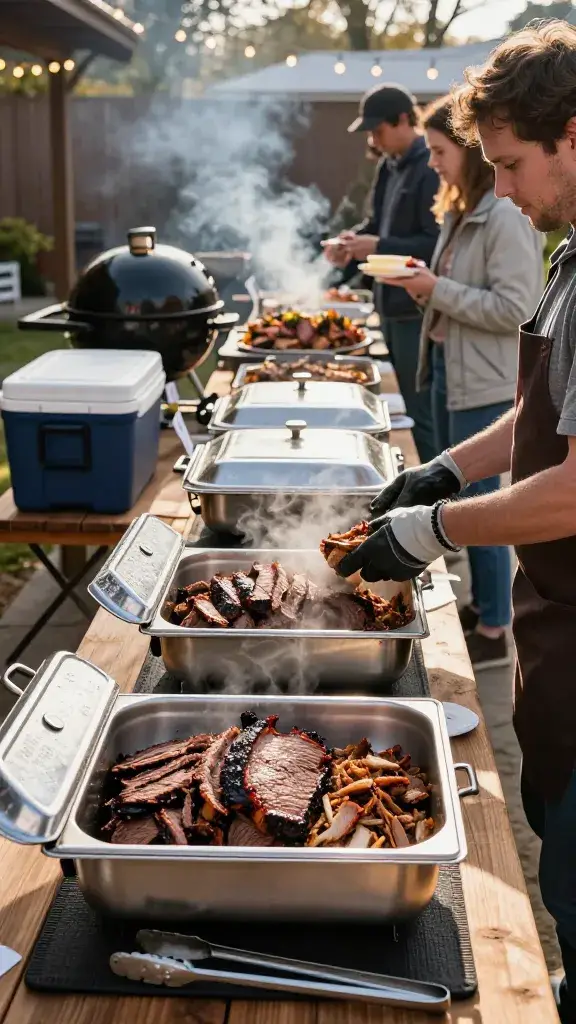
Putting all 50 servings on the table at once almost guarantees the last guests eat cold food. Big pans lose heat faster, and every lid lift dumps warmth. I switch to small service batches so the line always sees fresh, hot top-ups.
How to Run It
- Serve in half-size pans and refill from the cooler or grill every 15–20 minutes.
- Stage duplicates: One pan on the table, one staying covered in the holding zone.
- Rotate proteins: Keep only two meats open at a time; swap as you refill.
- Assign one person to the “hot captain” role to manage lids and refills.
Takeaway: Keep the buffet in small, covered batches and refill on a schedule, not when the pan is empty.
6. Passive Heat Sources: Bricks, Stones, and Boiling-Water Bottles
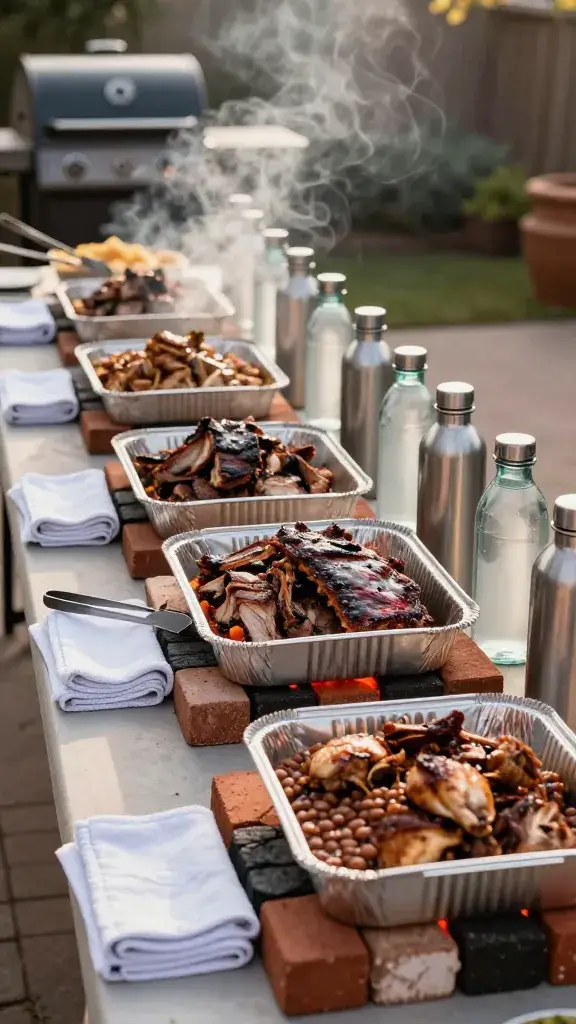
A cold serving table sucks heat from pans the second they land. You don’t need burners to counter this—just thermal mass and boiling water. I use items from any hardware store to create a warm platform under the pans.
What to Use Instead of Electricity
- Fire bricks or clean landscaping pavers: Heat them on the grill for 30–45 minutes. Place on a folded towel, cover with a baking sheet, then set pans on top.
- Boiling-water bottles: Fill sturdy glass bottles or metal water bottles with boiling water. Lay them under a folded towel beneath the serving pan to radiate gentle heat.
- River stones: Heat fist-sized clean stones on the grill; nest them under the tablecloth on a baking sheet for a warm base.
Safety note: Always add a barrier layer (towel or wooden board) between hot mass and plastic tabletops to avoid warping.
Action today: Heat two fire bricks while you cook and slide them under the first two serving pans to stabilize temperature.
7. Fuel-Efficient Reheats: Foil Packets and Shallow Liquids
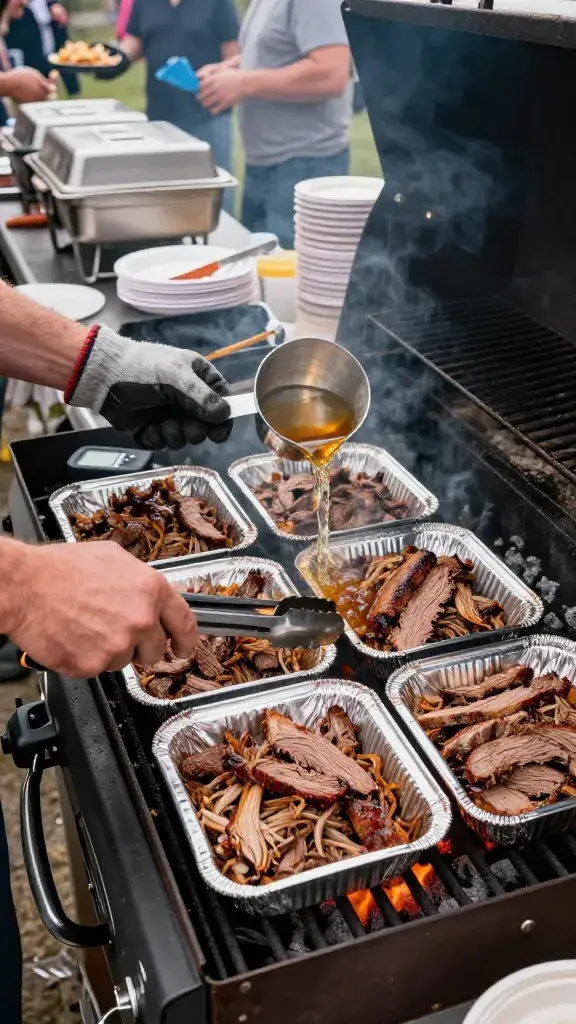
When food does cool, blasting it over high heat scorches edges and leaves the center cold. I reheat gently and evenly using foil packets and a splash of warm liquid so texture and moisture stay intact.
How to Reheat Without Drying Out
- Make loose foil packets with pulled pork, sliced brisket, or chicken. Add 2–4 tablespoons of warm broth or reserved juices per pound.
- Seal the packet and set it on the indirect side for 10–15 minutes; flip once.
- Transfer to a warm pan and cover again immediately.
- For sauced meats, warm the sauce separately in a small pan on the grill’s edge and fold it in after reheating.
Takeaway: Reheat in sealed foil with a little warm liquid over indirect heat for even, fast recovery.
8. Temperature Discipline: Simple Checks and Safe Windows
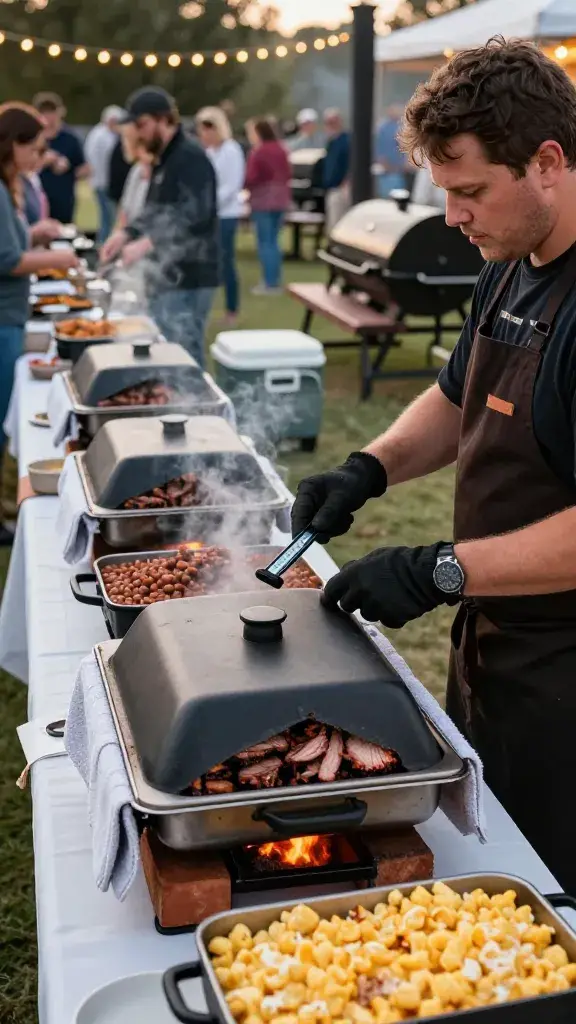
Warm but unsafe food risks illness and ruins a great event. Guessing leads to meat that slips below safe temps and sides that spoil. I keep a simple rhythm of checks and clear service windows to stay safe and tasty.
Practical Targets
- Safe hot-hold: Keep foods at a steady “too hot to keep a finger in for more than 1–2 seconds” level at the pan edge. If that sensation fades, it’s time to reheat or replace.
- Service window: Any single pan should be on the table for 30–45 minutes max before being swapped with a fresh, hotter one.
- Rotation rule: If a pan lid has been off for more than 10 minutes, lid it, swap, or move it back to the holding zone.
Action today: Set a repeating 20-minute timer on your phone to trigger pan checks, lid closes, and refills.
Frequently Asked Questions
How many grills or coolers do I need to keep food hot for 50 people?
One full-size grill with a clean two-zone setup plus two medium coolers covers most BBQ menus for 50. Use the grill’s indirect side as the active holding zone and the coolers as longer-term hot boxes. If you plan three or more meats, add a second small charcoal kettle dedicated to holding and reheats.
What’s the best way to keep buns and sides like mac and cheese warm?
For buns, keep them in a foil-wrapped stack near, not over, the warm side of the grill. For mac and cheese or beans, double-pan them, wrap edges in foil, and place them on a warm brick platform. If they thicken, stir in a little hot milk or hot water, then cover again.
How do I prevent pulled pork and sliced brisket from drying out on the table?
Hold large and slice or pull in small batches. Toss each batch with a few spoonfuls of warm reserved juices or a light apple-cider-and-broth mix before it goes out. Keep lids on between guests and rotate fresh trays every 20–30 minutes.
Is it safe to use hot stones or bricks under serving pans?
Yes, if you heat them gradually on the grill and place a protective layer between the hot mass and any plastic or wood. Use a folded towel and a baking sheet as a barrier. Handle with thick oven mitts and keep them away from edges where guests might touch them.
What can I prep ahead so holding is easier during the event?
Prepare double foil pans with fitted lids, pre-cut cardboard bases, and clean towels. Mix a warm holding liquid (reserved juices, broth, or a 50/50 apple juice–water blend) and keep it in a small kettle on the grill’s edge. Preheat one cooler 20 minutes before the first meat finishes so you can stash it immediately.
How long can I keep BBQ warm without electricity before quality drops?
With insulated pans, a water pan, and hot-hold coolers, you can maintain quality for 3–4 hours. Rotate small batches to the table and keep the rest sealed. After 4 hours, plan gentle reheats in foil packets with warm liquid to refresh texture.
Conclusion
Electric warmers are convenient, but you don’t need them to serve hot, juicy barbecue to a crowd. Set up your holding zones, insulate smartly, and rotate small batches on a timer. Start by converting one cooler into a hot box and building a two-zone fire—your guests will taste the difference all afternoon.