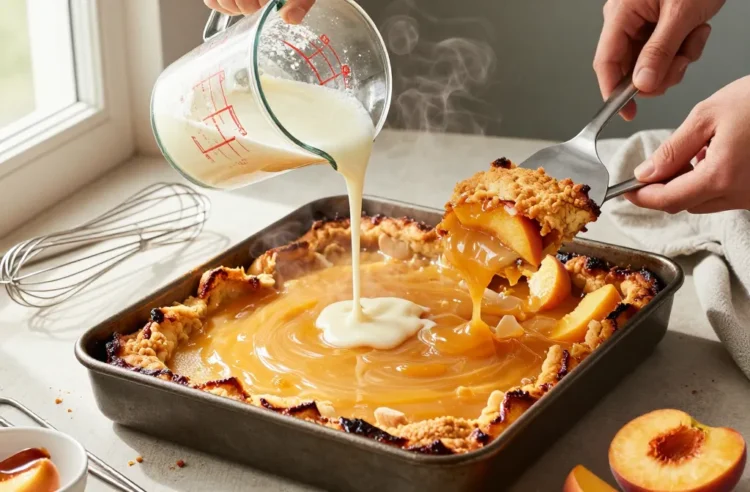
I’ve cooked peach cobbler for school fundraisers and neighborhood block parties, and I’ve seen almost every way it can go wrong at scale. When you multiply a family recipe by five, it doesn’t just get bigger — it behaves differently in the oven and on the table. Here’s exactly how I rescue runny fruit, soggy topping, and underbaked centers when feeding a crowd of 50. You’ll learn practical fixes you can do with standard kitchen gear so your next big-batch cobbler lands soft, set, and scoopable.
1. Runny Filling: Peaches Flood The Pan And Never Set
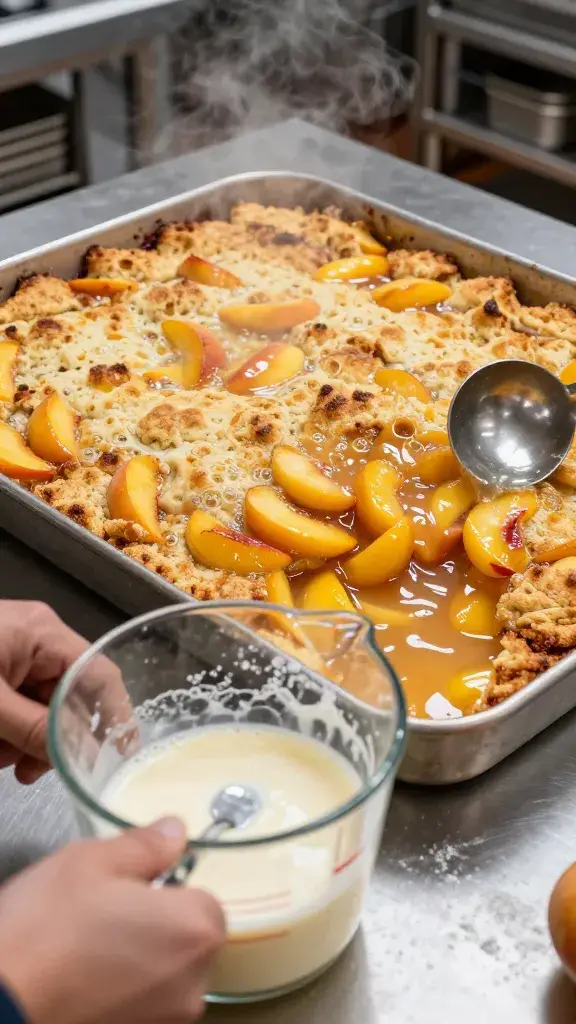
A watery cobbler bleeds across the tray, soaks the topping, and refuses to hold a scoop. Guests end up with peach soup instead of dessert. This happens because large-batch fruit releases more juice and needs more thickener and boil time than a small pan.
Signs To Watch For
- Liquid pools around the edges 10 minutes after baking
- Topping sinks or turns gummy instead of fluffy
- Filling tastes right but won’t mound on a spoon
How To Fix It Now
- Make a quick slurry: whisk 6 tablespoons cornstarch with 1 cup cold water until smooth. Bring 6–8 cups of the runny fruit and juices to a simmer in a wide pot on the stove, whisk in the slurry, and cook 2–3 minutes until glossy and thick. Fold back into the pan.
- Rebake uncovered 10–15 minutes at 375°F until the filling bubbles visibly in the center. Visible center bubbles mean the starch has activated.
- If you have no cornstarch, use 3/4 cup instant tapioca or 1 cup all-purpose flour whisked into the hot juices; simmer 3–4 minutes and rebake.
Prevent It Next Time
- For 50 servings (about two full-size 12×20-inch hotel pans or three 9x13s), use 20–22 pounds of sliced peaches with 1.5 cups sugar and 1 to 1.25 cups cornstarch. Toss, rest 15 minutes, then bring just the fruit and juices to a simmer on the stove before going into the pans.
- Use a wide pot to pre-thicken; surface area cooks off excess liquid fast.
Takeaway: Pre-thicken the fruit on the stove until it bubbles and looks glossy, then bake — don’t count on the oven alone to set a large-batch filling.
2. Soggy Or Slipping Topping: Biscuits Or Batter Sink Into The Fruit
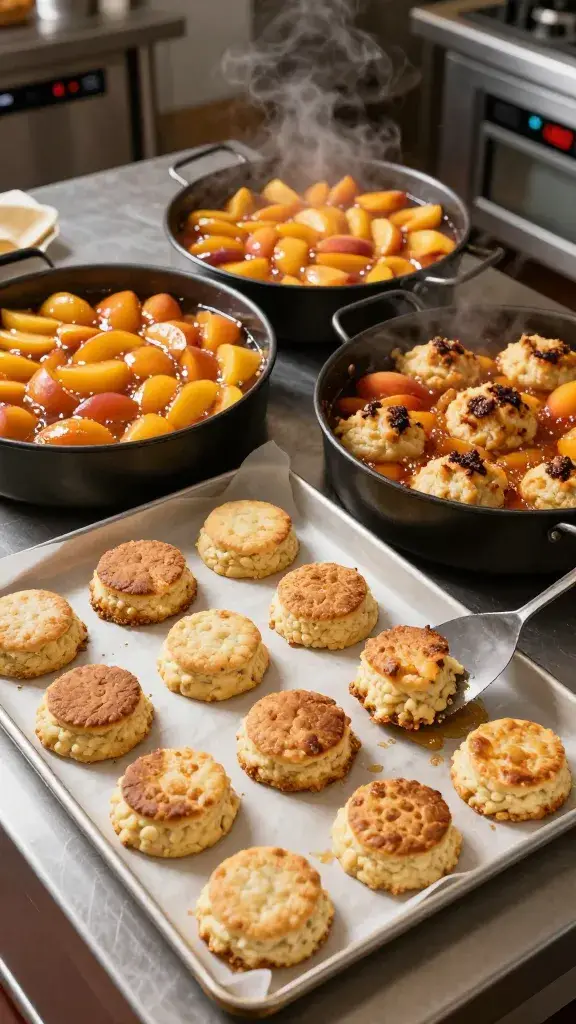
When the topping slides under the fruit or bakes up greasy, every bite feels heavy. In big pans, steam from a deep fruit layer can drown the topping before it sets.
Signs To Watch For
- Topping edges look boiled rather than browned
- Biscuit bottoms are gummy or translucent
- Batter disappeared under the surface within 10 minutes of baking
How To Fix It Now
- Par-bake the topping separately: Spread biscuit dough or dollops of batter on a parchment-lined sheet, bake at 400°F for 10–12 minutes until just set and pale golden, then nestle onto the hot fruit and finish 10–15 minutes.
- If already sunken, spoon the topping back up to the surface with two large spoons, add a light dusting of sugar, and return to a higher rack at 400°F for 8–12 minutes to dry and brown.
Prevent It Next Time
- Keep fruit depth to 1.5–2 inches. Use more pans rather than a deeper layer.
- Chill the topping dough and keep butter cold. Warm dough slumps and sinks.
- Sprinkle 2–3 tablespoons of fine cornmeal over the fruit before topping. It absorbs steam and keeps bottoms crisp.
Action today: If your topping looks pale and wet, move the pan to the top rack, raise the oven to 400°F, and give it 8–12 minutes to re-dry and brown.
3. Underdone Center: Golden Edges, Raw Middle
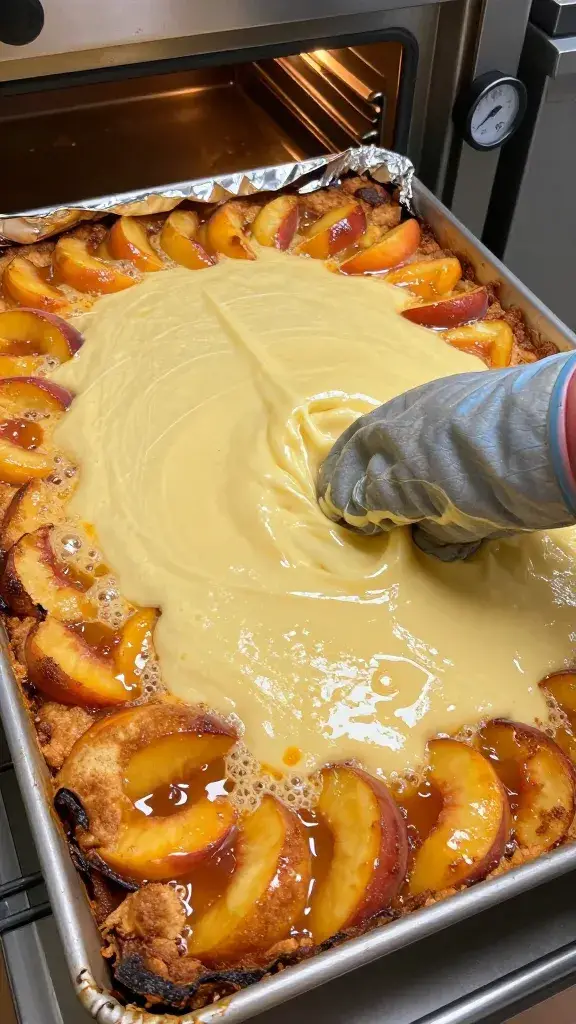
Big pans fool you — edges brown while the center stays raw and cool. If you serve on schedule, you end up with doughy topping and under-thickened fruit.
Signs To Watch For
- Edges bubbling but the center is still flat and quiet
- Topping firm on the rim, sticky in the middle when pressed
- Toothpick slides out with raw batter from the center topping
How To Fix It Now
- Lower heat, extend time: Tent edges with foil, drop oven to 350°F, and bake 15–25 more minutes until you see slow, thick bubbles in the exact center.
- Rotate and swap racks every 10 minutes to even heat.
- Use a thermometer if you have one: aim for 200–205°F in the center of the topping and 190–200°F in the fruit layer.
Prevent It Next Time
- Start hot, finish moderate: Begin at 400°F for 15 minutes to set the top, then drop to 350°F to cook through.
- Don’t overcrowd the oven. Leave at least 2 inches between pans and avoid stacking more than two pans per rack.
- Preheat pans for 5 minutes before adding fruit to kickstart bubbling from below.
Takeaway: Bake until the center actively bubbles; color on the edges alone is not done for crowd-size cobblers.
4. Bland Or Cloying Flavor: Too Little Salt, Flat Spices, Or Syrupy Sweetness
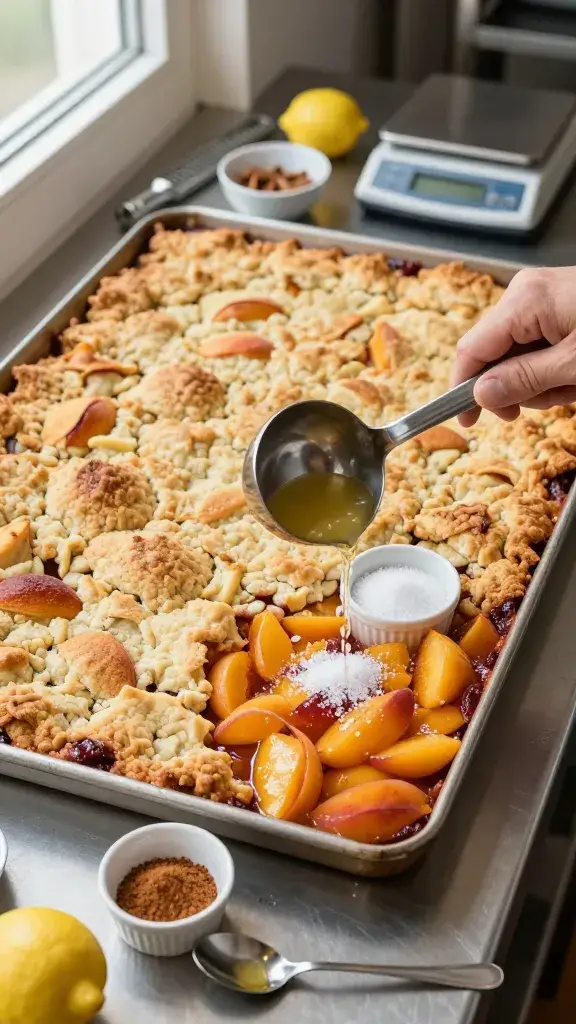
Large batches mute flavor fast. If you match sugar and spice per cup of fruit without tasting, you land on either cloying syrup or dull peaches that disappear under the topping.
Signs To Watch For
- Peach flavor fades after the first bite
- Sugar coats the mouth, but fruit tastes vague
- Guests reach for ice cream to “fix” each serving
How To Fix It Now
- Brighten acidity: Stir 2–4 tablespoons lemon juice into the hot fruit and taste. Add 1–2 more if still flat.
- Balance sweetness with salt: Sprinkle 1–1.5 teaspoons fine salt across the pan and fold gently into the fruit.
- Wake the spices: Mix 1 tablespoon vanilla extract and 1–2 teaspoons cinnamon into 1/2 cup of hot juices, then drizzle back and stir lightly.
Prevent It Next Time
- For 20–22 pounds peaches, aim for 1.25–1.5 cups sugar, 2–3 teaspoons cinnamon, 1–2 teaspoons vanilla, 2–3 teaspoons fine salt, and 3–4 tablespoons lemon juice. Taste a warm spoonful of the mixture before baking.
- Use a mix of yellow and white peaches for roundness; add 1–2 cups diced tart apple if peaches are very sweet and soft.
Action today: Taste a spoon of your hot fruit and add lemon and salt until the peach pops first, not the sugar.
5. Tough, Dry, Or Greasy Topping: Texture Misses The Mark At Scale
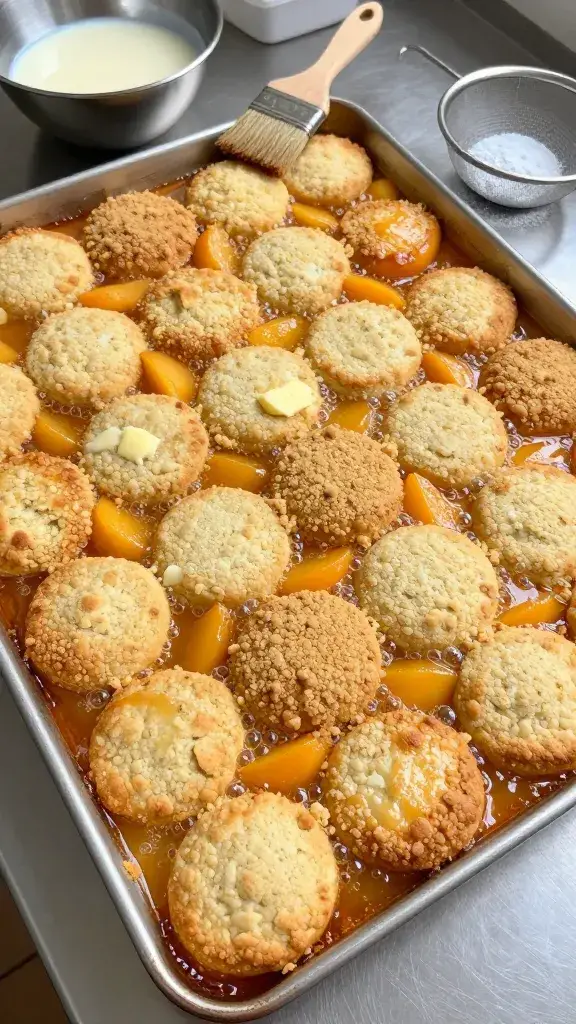
Scaling up the topping without adjusting handling makes it dense, dry, or oily. Overmixing kills lift; too much butter or warm dough turns greasy; skimping on liquid dries it out.
Signs To Watch For
- Flat, hard biscuits or a leathery batter crust
- Grease sheen on the surface and heavy mouthfeel
- Crumbs that don’t hold together or sawdust texture
How To Fix It Now
- Rehydrate dryness: Brush the top with 1/2 cup of milk or cream and return to the oven 5–8 minutes to soften.
- Crisp greasy tops: Dust lightly with 2–3 tablespoons granulated sugar and bake on the top rack 6–10 minutes to create a crisp shell.
- Fluff dense sections: Use a fork to gently lift and separate portions of the topping, creating vents so steam can dry it.
Prevent It Next Time
- Keep flour cold and use a gentle hand. Stop mixing the moment the dough comes together and visible pea-sized butter pieces remain.
- For 50 servings, target a 1:1.2 ratio of flour to fruit by volume for biscuit-style, or 1:1 fruit to batter by weight for batter-style. Don’t overtop; fruit needs to vent.
- Chill formed dough 15 minutes before baking. Warm dough spreads and toughens.
Takeaway: Minimal mixing and cold ingredients keep big-batch toppings tender; fix dryness with a quick milk glaze or crisp greasiness with a sugar finish.
6. Timing Meltdown: Serving Cold, Soupy, Or Overheld Cobbler
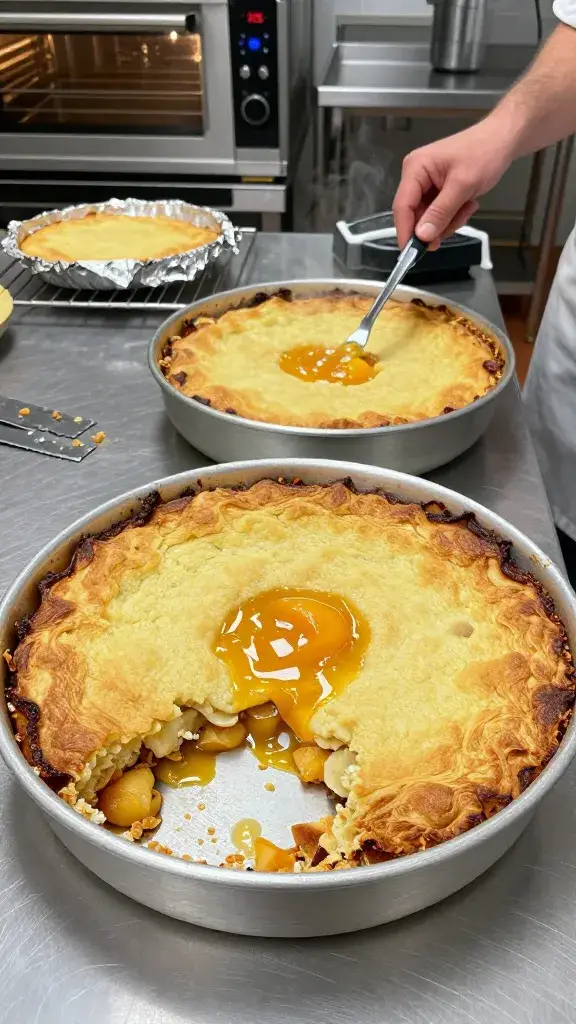
At events, cobbler fails because it’s either rushed out soupy or held so long it collapses. Without a warming plan, you bounce between raw centers and dried-out edges.
Signs To Watch For
- Perfect at 5 p.m., soggy at 6:30 p.m.
- Liquid reappears after slicing early
- Edges toughen under heat lamps while centers cool
How To Fix It Now
- Rest properly: After baking, rest 25–35 minutes before serving. This sets starches so slices hold.
- Hold warm, not hot: Keep at 170–180°F in a standard oven with the door cracked using a wooden spoon. Tent loosely with foil to prevent drying.
- Stagger batches: If you have multiple pans, bake one fully and hold, then rotate the second pan to finish 15 minutes before service.
Prevent It Next Time
- Back-time your finish: Start baking 1 hour and 15 minutes before service for deep pans (includes rest). For shallower pans, start 55–65 minutes before.
- Use a clean bath towel folded under the resting pan to slow heat loss on a counter if the oven is full.
Action today: If your cobbler just came out, set a timer for 30 minutes and do not scoop until it rings — you’ll get neat, set portions.
7. Wrong Pan Choice And Overcrowded Oven: Heat Can’t Do Its Job
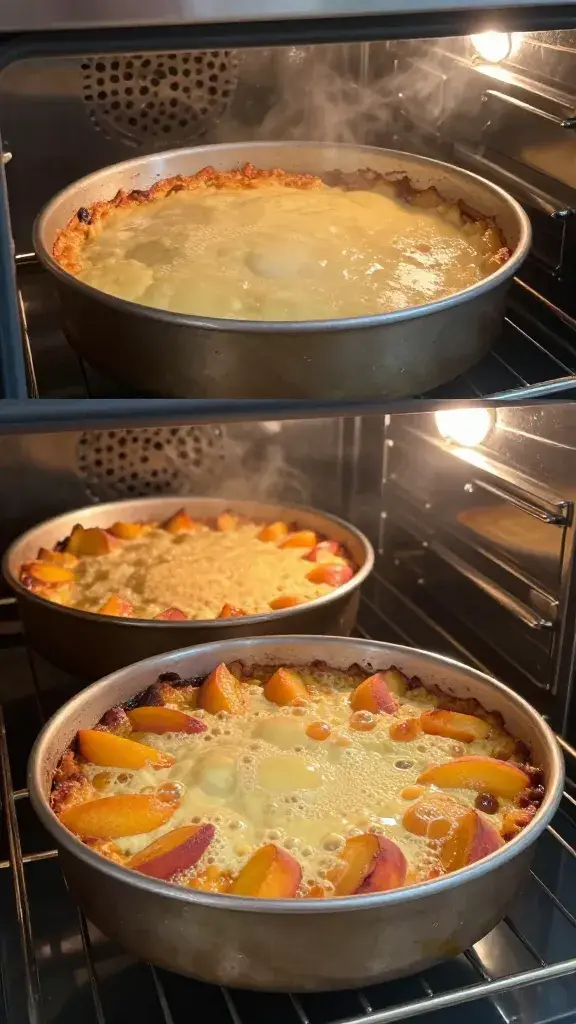
The best recipe fails if the pan is too deep or the oven is crammed. Heat can’t circulate, the middle never boils, and steam wrecks the topping.
Signs To Watch For
- Beautiful browning near the oven walls, pale centers
- Condensation on oven door and soggy tops
- Fruit layer deeper than 2 inches
How To Fix It Now
- Divide and conquer: Split one deep pan into two shallower pans. Reheat at 375°F until both show center bubbles.
- Vent the oven: Crack the door open for 30 seconds to release steam, then continue baking on the top rack.
- Space the pans: Leave at least 2 inches between pans and avoid placing pans directly above each other if you can use staggered spots.
Prevent It Next Time
- Use metal pans for better heat transfer. If using glass or ceramic, reduce fruit depth and extend time.
- Stick to 1.5–2 inches fruit depth and a single layer of topping. Better to bake three 9x13s than one deep monster.
Takeaway: Choose wide, shallow pans and give them breathing room so the center bubbles and the topping crisps.
Frequently Asked Questions
How many peaches do I need to serve 50 people?
Plan 6–7 ounces of prepared fruit per person. That’s about 20–22 pounds of sliced peaches once peeled and pitted, or roughly 28–32 medium peaches. If using frozen, buy 24 pounds to allow for a bit of water loss and trim. Keep fruit depth to 1.5–2 inches across multiple pans.
Can I use frozen peaches without getting a watery cobbler?
Yes — thaw them in a colander over a bowl for 2–3 hours, then measure and boil the collected juices with your sugar and thickener before adding back to the fruit. Use 1 to 1.25 cups cornstarch per 20–22 pounds fruit. Bake until the center bubbles. This pre-thickening step keeps the filling glossy and set.
What’s the best topping for crowds: biscuit or batter?
For ease, a pourable batter is fastest and spreads evenly in big pans. For texture and hold, drop biscuits stay sturdier and reheat better. If you need to transport, par-bake biscuit tops on a sheet tray, set them on warmed fruit at the venue, and finish 10–15 minutes for a fresh-baked feel without sinking.
How do I keep the cobbler warm without overcooking?
After the 25–35 minute rest, hold at 170–180°F in the oven with a loose foil tent. If edges start to dry, brush the topping lightly with milk and re-cover. Avoid chafing dishes unless you can elevate the pan above direct flame; direct heat will scorch the bottom. Rotate the pan every 15 minutes for even warmth.
What if I over-thickened the filling and it’s too stiff?
Warm 1–2 cups apple juice or water until hot, stir in 1 tablespoon lemon juice, and fold into the hot filling a little at a time until it loosens. Rebake 5–8 minutes to integrate. If flavors mute, finish with a pinch of salt and a splash of vanilla to bring the peach forward again.
How far in advance can I make peach cobbler for an event?
You can assemble the fruit base up to 24 hours ahead and refrigerate. Keep the topping separate; add and bake 60–75 minutes before serving so it stays crisp. If fully baking ahead, underbake by 5–8 minutes, cool completely, then reheat uncovered at 350°F for 12–18 minutes until center bubbles.
Conclusion
Big-batch cobbler behaves differently, but every failure has a simple fix once you focus on fruit depth, real center bubbles, and a topping that sets above the steam. Start with shallow pans, pre-thicken on the stove, and control your bake-and-rest window — you’ll plate warm, juicy, and neatly set portions for all 50 guests without panic.