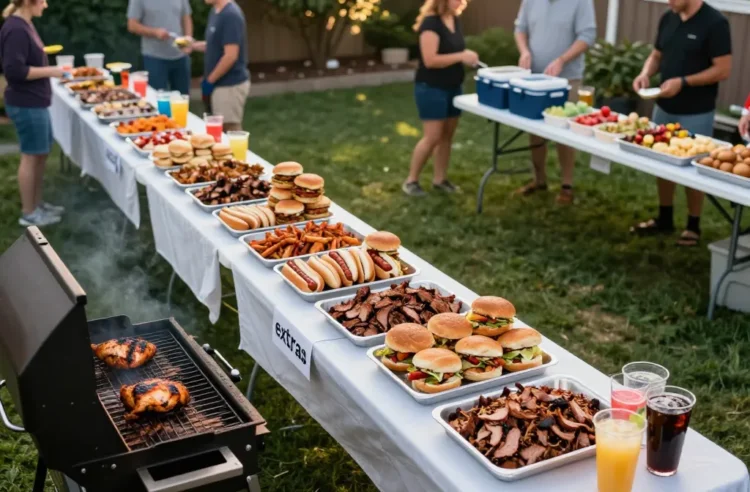
I once prepped a neighborhood BBQ for 60 and thought “more meat, bigger grill, job done.” I served lukewarm chicken, ran out of buns, and spent the last hour flipping in panic while everyone waited. If you’ve hosted a big cookout with standard home gear, you’ve probably felt the same squeeze. Here’s exactly how to avoid the most common bulk-prep mistakes so every guest gets hot food, safe food, and seconds — without you chained to the grill.
1. Underestimating Portions: Running Out Of Crowd Favorites First
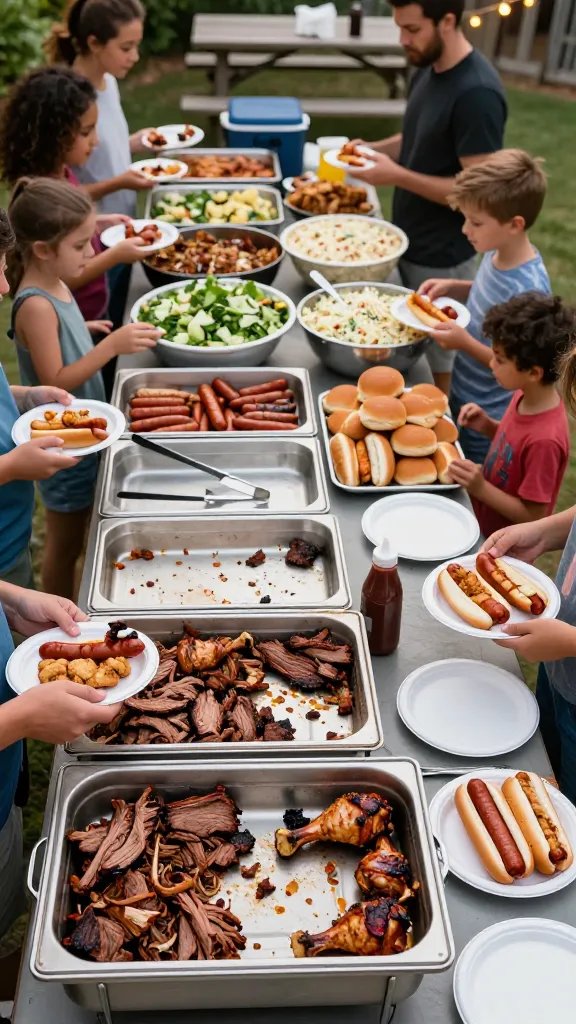
Nothing flattens a party like empty trays of the good stuff by hour one. People eat more at outdoor events, and kids often ignore sides in favor of hot dogs and chicken. If you guess, you’ll run out of the crowd-pleasers and be left with piles of salad.
What To Use Instead
- Protein plan per person: 1/3 lb cooked pulled pork or brisket, 1 bone-in piece chicken, 1 sausage or hot dog, or 1 burger (quarter-pound patty). Assume 1.5 servings per adult when there are multiple options.
- Buns: Match buns to protein count plus 10% buffer.
- Sides: 1 cup per person of two sides (e.g., slaw + potato salad), 1 ear corn per person if serving.
- Drinks: 2 non-alcoholic drinks per person for the first two hours, 1 per hour after.
Action today: Write a simple headcount-based menu: for 50 guests, plan 20 lbs cooked pulled pork or 25 lbs raw bone-in chicken, 60 buns, and 50 ears of corn — then add a 10% buffer.
2. Buying Meat Too Late: No Time For Thawing Or Seasoning
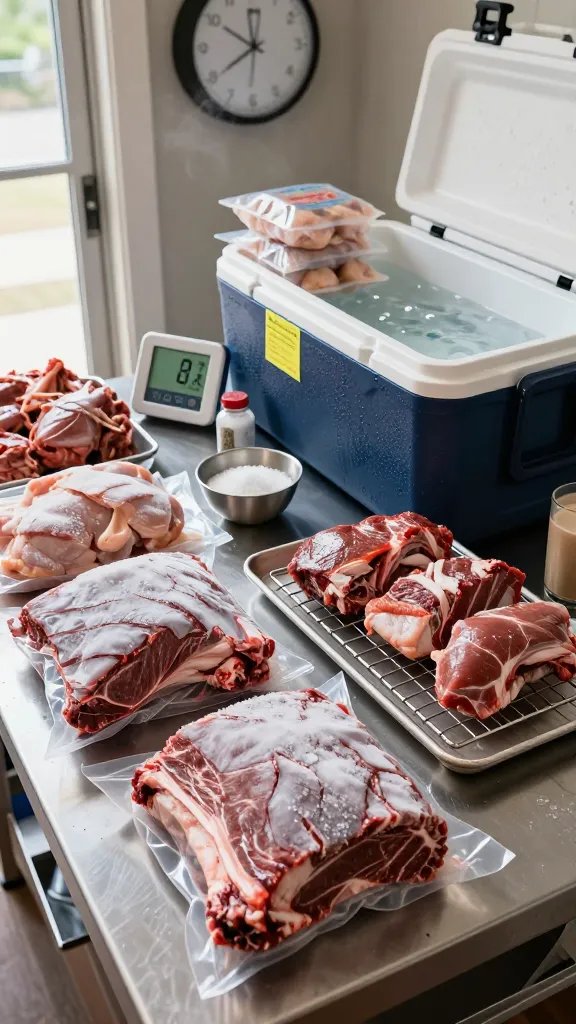
Last-minute shopping forces you to cook partially frozen meat or skip proper seasoning. That means uneven cooking, dry results, and bland flavor. Large cuts and bulk packs need time to thaw and absorb salt evenly.
How To Fix It
- Thaw schedule: Large cuts (brisket, pork shoulder) need 2-3 days in the fridge. Bone-in chicken needs 24 hours per 5 pounds.
- Season early: Salt meat 12-24 hours before cooking; store covered on a sheet pan in the fridge.
- Emergency thaw: Keep meat sealed and submerge in cold water, changing water every 30 minutes. A 5 lb pack of chicken takes about 2 hours.
Takeaway: Shop 3 days ahead for large cuts and 2 days ahead for chicken and sausages so you can thaw safely and salt early.
3. Zero Prep Timeline: Everything Collides An Hour Before Guests Arrive
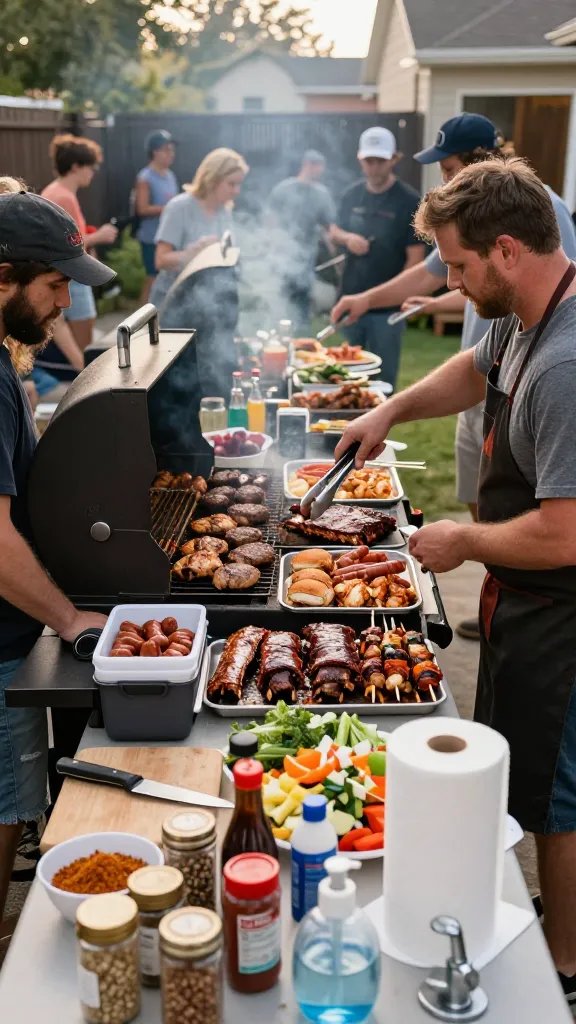
Without a plan, you’ll be chopping, marinating, lighting the grill, and greeting guests all at once. That chaos delays service and overcooks food as you multitask. A simple timeline spreads the work and protects your focus when the grill is hot.
Build A Realistic Timeline
- 48 hours out: Shop, thaw big cuts.
- 24 hours out: Salt meats, mix dry rubs, make slaw and sauces, chill drinks.
- Morning of: Shape patties, skewer kebabs, par-cook sausages, chop veg, set up a handwashing station (soap, paper towels, bucket).
- 2 hours before: Light charcoal for a test run or preheat gas grill, set up two heat zones, lay out trays and foil.
- 1 hour before: Start longer-cook items; hold finished items covered in a low oven or insulated cooler.
Action today: Write your cook-day schedule in 30-minute blocks and tape it to the fridge or grill table.
4. One Heat Zone: Searing Everything And Burning Half Of It
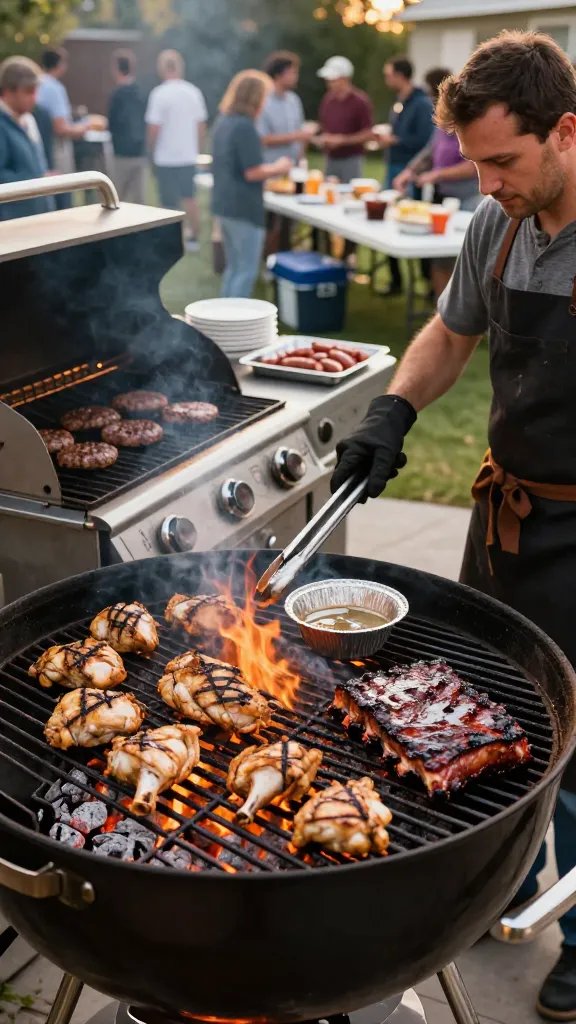
A single blazing-hot grate turns chicken into charcoal outside and raw inside. You need a place to move food once it has color, especially when cooking for 50. Two zones give you control to sear, finish gently, and hold without drying out.
How To Set It Up
- Charcoal: Bank coals to one half for direct heat, leave the other half empty for indirect heat. Add a small foil pan of water on the indirect side to stabilize temps.
- Gas: Set one burner to medium-high, one to low or off to create hot and cool zones. Keep the lid down for indirect cooking.
- Tools: Long tongs, instant-read thermometer, and a spray bottle of water for flare-ups.
Takeaway: Before you cook a single piece, create a hot side for searing and a cool side for finishing and holding.
5. Skipping Par-Cooking: Jamming The Grill With Raw Sausages And Chicken
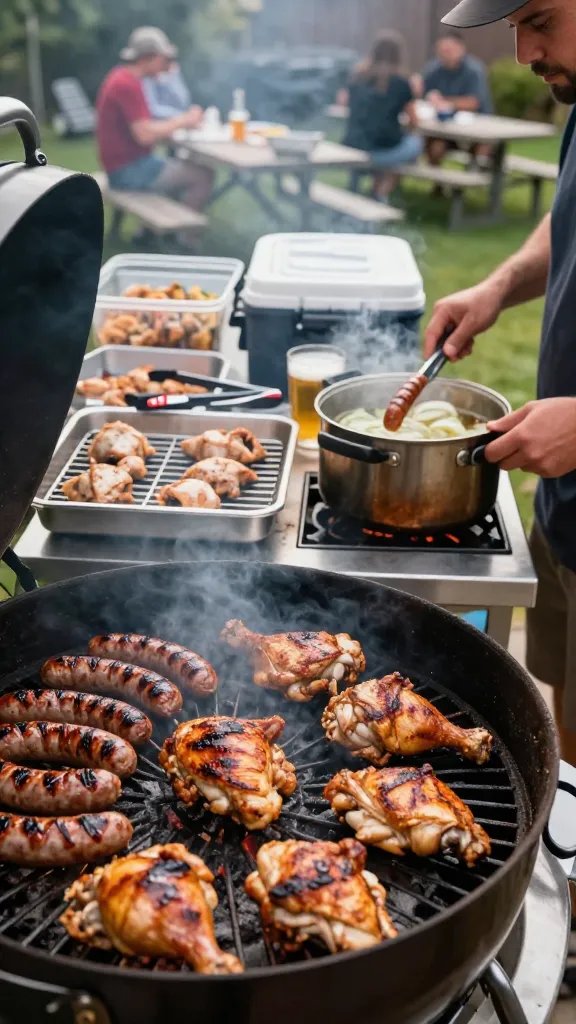
Loading a grill with thick, raw items kills the heat and leads to long waits and undercooked centers. Par-cooking frees up grill space, speeds service, and ensures safe temps. It also reduces flare-ups from dripping fat.
What To Par-Cook And How
- Sausages: Simmer in a pot of water or beer with sliced onions for 10-12 minutes until they hit 150°F, then chill. Finish on the grill for color.
- Bone-in chicken: Roast on a sheet pan at 350°F until 150°F breast/165°F thigh, chill on racks, then crisp and finish on the grill.
- Corn: Microwave in husks 3-4 minutes per ear for quick steaming, then char on the grill.
Action today: Pre-cook at least one major protein to 80-90% doneness in the oven, then finish fast on the grill during service.
6. Treating Food Safety Casually: Warm Potato Salad And Questionable Chicken
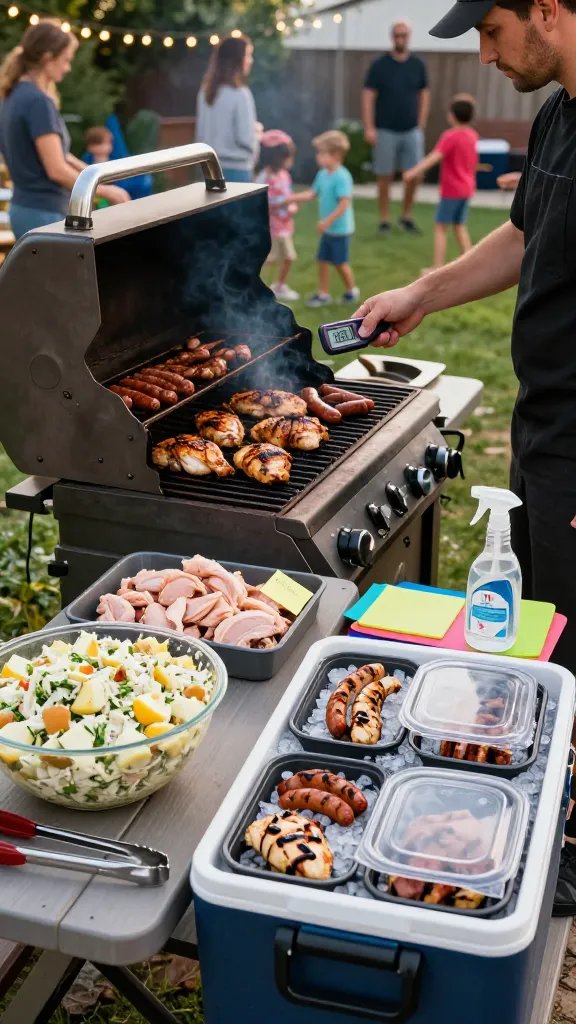
Large parties stretch time and attention, and that’s when people eat food left in the “danger zone.” Warm mayo salads and undercooked poultry are a fast route to sick guests. Clear, simple safety habits prevent it without fancy gear.
Non-Negotiables
- Cook temps: Chicken to 165°F, sausages to 160°F, burgers to 160°F unless you grind the meat yourself.
- Cold hold: Keep salads and cooked meats below 40°F in coolers with ice packs until serving. Use shallow trays to swap small batches often.
- Hot hold: Keep food above 140°F. Use a low oven (170–200°F), chafing dish with Sterno, or an insulated cooler lined with hot towels and foil pans.
- Clean hands: Set up a handwashing station: water jug with spigot, soap, paper towels, and a catch bucket.
Takeaway: Put an instant-read thermometer and extra ice on your shopping list — and use them every hour during service.
7. No Holding Plan: Serving In Waves Of Too-Hot Or Stone-Cold
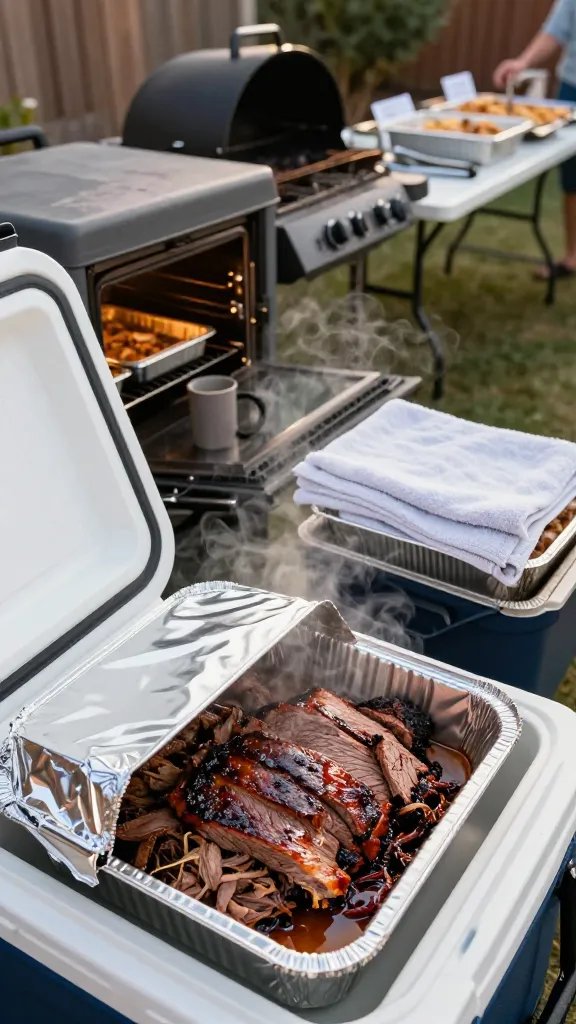
If you can’t hold food hot and juicy, it swings from screaming hot to rubbery to cold. Guests either crowd the grill or eat lukewarm meat. Proper holding buys you a 30–90 minute window to serve calmly.
How To Hold Without Drying
- Foil + pan + towel: Place cooked meat in a disposable foil pan, splash in 1/4 cup warm broth or its own juices, cover tightly with foil, wrap in a towel, and set in an empty cooler.
- Oven staging: Keep trays covered at 170–200°F. Add a small cup of hot water in the oven to maintain humidity.
- Batching: Refill serving trays in small amounts every 15–20 minutes instead of dumping everything at once.
Action today: Dedicate one clean cooler as a hot box with towels and foil pans ready before you light the grill.
8. Ignoring Weather And Fuel: Wind, Rain, And Empty Propane Tanks
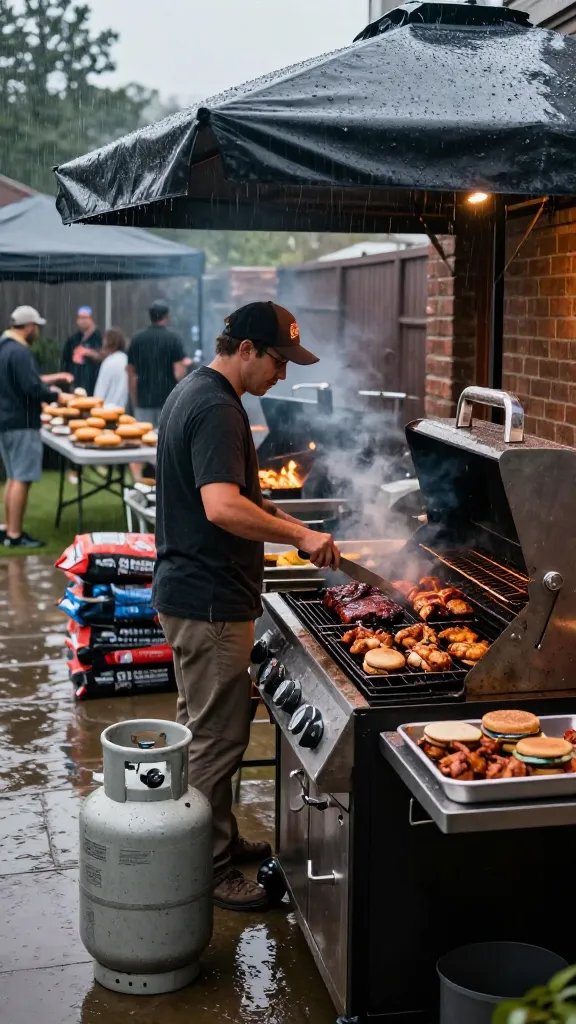
Wind strips heat, rain cools grates, and a dead tank ends dinner. Weather and fuel are predictable problems that wreck timing. Planning for them keeps your grill at cooking temperature and your guests fed on schedule.
Simple Protections
- Fuel: Have one full spare propane tank or an extra 10 lb bag of charcoal per hour of active grilling.
- Wind shield: Position the grill near a wall or use a folding table as a windbreak, keeping safe clearance.
- Rain plan: Pop-up canopy or a large umbrella clamped to a table; keep electrical items off the ground.
- Lighting: Start charcoal 30 minutes earlier than usual in cool or windy conditions.
Takeaway: Check the forecast 48 hours ahead, then set out a spare tank or extra charcoal next to the grill before guests arrive.
9. Last-Minute Sides And Sauces: Bottlenecks At The Prep Board
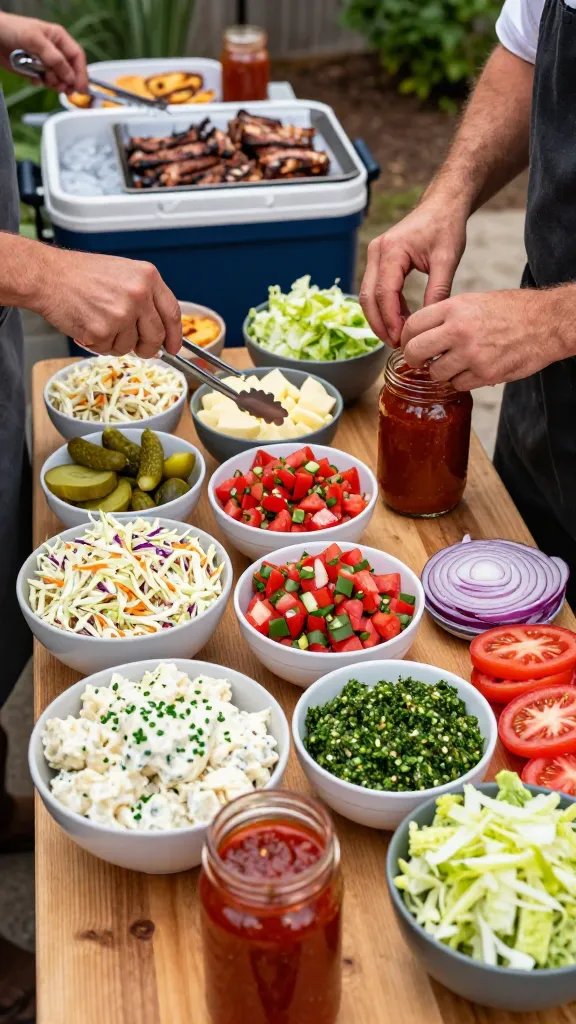
When sides aren’t prepped, you’ll be slicing, dressing, and mixing while meat overcooks. Guests fill up on bread because salads and toppings aren’t ready. Prep sides the day before and keep cold until service.
What To Prep Ahead
- Slaw: Shred cabbage and carrots, toss with dressing a day ahead; it tastes better on day two.
- Potato salad: Boil and cool potatoes, mix with dressing, hold cold.
- Salsas and sauces: Make barbecue sauce, chimichurri, or pico and store in jars; label mild vs hot.
- Toppings station: Slice tomatoes, onions, pickles, and lettuce; store in shallow containers with lids.
Action today: Build a “cold bar” in a deep roasting pan set over ice packs to hold toppings and salads during service.
10. Serving Chaos: No Flow, No Tools, And A Jammed Line
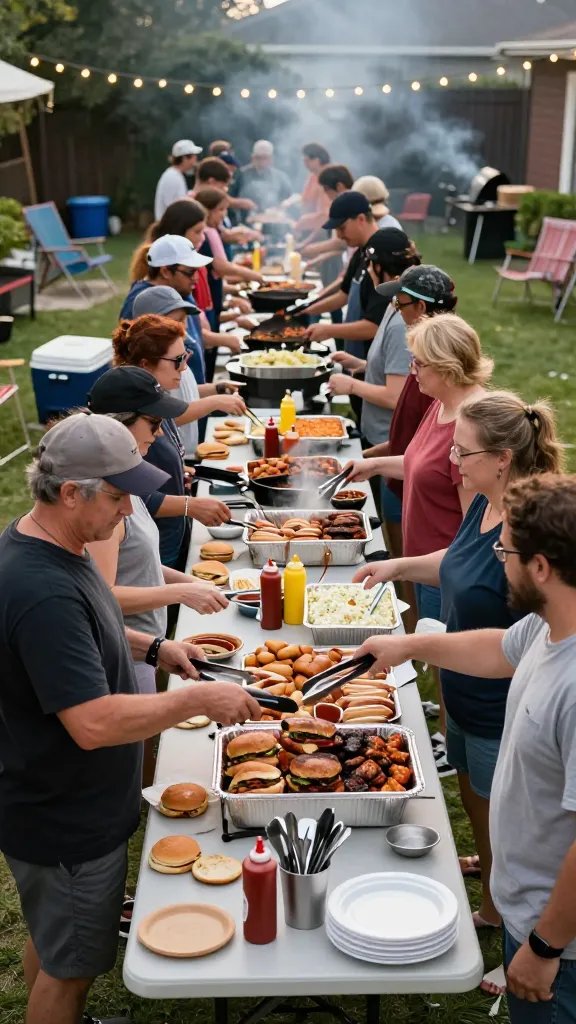
A single crowded table with one pair of tongs slows everything and frustrates guests. People double back for condiments and block the grill. A clear flow with duplicates of key tools keeps the line moving.
Set Up A One-Way Service Line
- Plates and cutlery first (two stacks, two utensil cups).
- Buns next, then proteins with two sets of tongs per tray.
- Hot sides with heat-safe spoons; then cold sides over ice.
- Condiments and toppings at the end; trash and recycling at exit.
- Post small labels: “Burgers,” “Chicken Thighs 165°F,” “Spicy.”
- Assign one helper to refill trays and one to manage trash.
Takeaway: Lay out your table in the order you want guests to move, and put two serving tools at every tray.
Frequently Asked Questions
How much raw meat should I buy for 50 people?
Plan about 1/2 pound raw per person for burgers or boneless cuts, and 3/4 pound raw per person for bone-in chicken to account for bones and shrinkage. If offering multiple proteins, people eat about 1.5 servings total. For 50: 25 pounds of burgers or boneless thighs, or 35–40 pounds of bone-in chicken. Add 10% more to prevent running out of favorites.
How do I keep burgers juicy when cooking large batches?
Use 80/20 ground beef, make 4-ounce patties, and press a shallow dimple in the center. Cook over direct heat to get color, then move to indirect to finish to 160°F. Hold finished patties in a covered foil pan with a splash of warm beef broth in a 170–200°F oven or a towel-lined cooler.
What’s the easiest protein to cook for a crowd with a basic grill?
Bone-in, skin-on chicken thighs are the most forgiving. They render well, stay juicy at 175–185°F, and reheat without drying. Par-roast to 165°F, chill, and finish on the grill over medium heat for crisp skin and smoke flavor, then hold covered in a warm pan.
How can I prevent flare-ups when cooking for so many people?
Set a two-zone fire so you can move food off direct flames quickly. Keep a clean grate, trim excess fat from meats, and avoid oil-heavy marinades on the grill — pat meat dry before cooking. Close the lid to limit oxygen during flare-ups and use a spray bottle on the grates, not on the food.
How do I serve hot food without renting chafing dishes?
Use disposable foil pans with tight foil covers, a small splash of warm broth or cooking juices, and a towel-lined empty cooler as a hot box. Rotate small batches to the table every 15–20 minutes. For sides, a low oven set to 170–200°F keeps trays ready for quick swaps.
Can I cook the day before and still have great flavor?
Yes. Cook pulled pork, brisket, or chicken to doneness, chill in their juices, and reheat covered in the oven with a splash of broth. Sear or glaze on the grill just before serving for fresh texture. Make slaw, sauces, and salads the day before; hold cold until service.
Conclusion
You don’t need restaurant gear to feed 50 — you need a plan, two heat zones, and smart holding. Pick two proteins, prep a day early, and set a one-way service line so you can actually enjoy your own party. Next step: draft your 48-hour timeline and shopping list, then tape it to the fridge so the day runs itself.