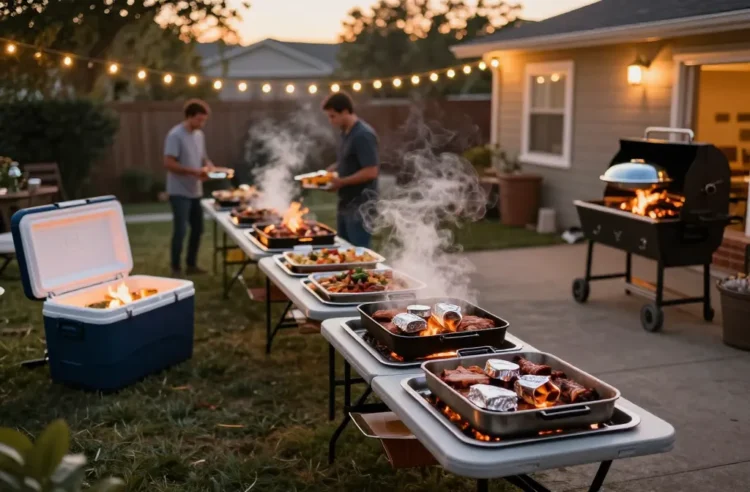
I’ve hosted more backyard spreads than I can count, and nothing drains the mood faster than a line of guests facing lukewarm sausage and stiff buns. I’ve been there: great grill work undone by heat loss between the grill and the table. In this guide, I’ll show you how to keep a buffet hot, safe, and pleasant using gear you can grab at a garden or hardware store. You’ll learn practical setups, timing, and serving methods that protect flavor and food safety for a crowd of 100.
1. Heat Loss During Holding: Food Cools Fast Once It Leaves the Grill
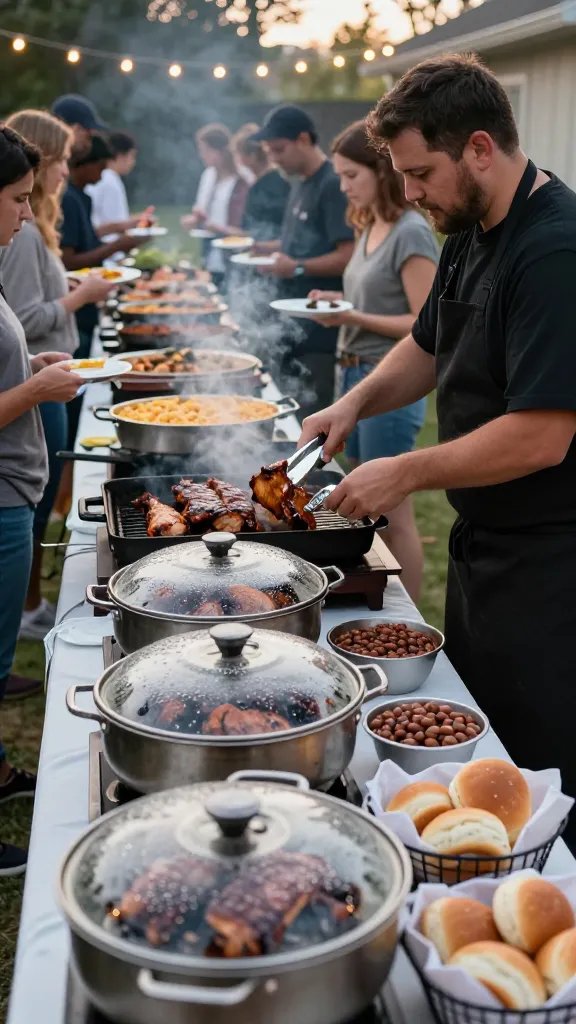
Great BBQ turns mediocre within 15 minutes if you don’t trap heat and moisture. Proteins dry out, buns go tough, and sides grow tepid enough that guests stop piling their plates.
I learned that the walk from grill to table is the danger zone. If the buffet can’t hold steady warmth, everything you cooked with care loses temperature every minute it sits.
How to Fix It
- Use covered pans: Metal roasting pans with foil lids or tight foil seals hold heat far better than open platters.
- Set up water-based warming: Place pans over shallow trays with 1–2 cm of hot water and tealight-style chafing fuel or small gel fuel cans underneath.
- Stage in insulated coolers (as hot boxes): Pre-warm coolers with a kettle of hot water for 10 minutes, drain, dry, then load wrapped meats.
- Keep a “cook-to-table” runner: One person shuttles pans directly from the grill to covered hold, never leaving food uncovered on the table.
Action today: Buy two large insulated coolers and a pack of foil pans with lids; pre-warm the coolers before service and rotate fresh, covered pans in every 15–20 minutes.
2. Uneven Buffet Layout: Cold Air and Slow Lines Drop Temperatures
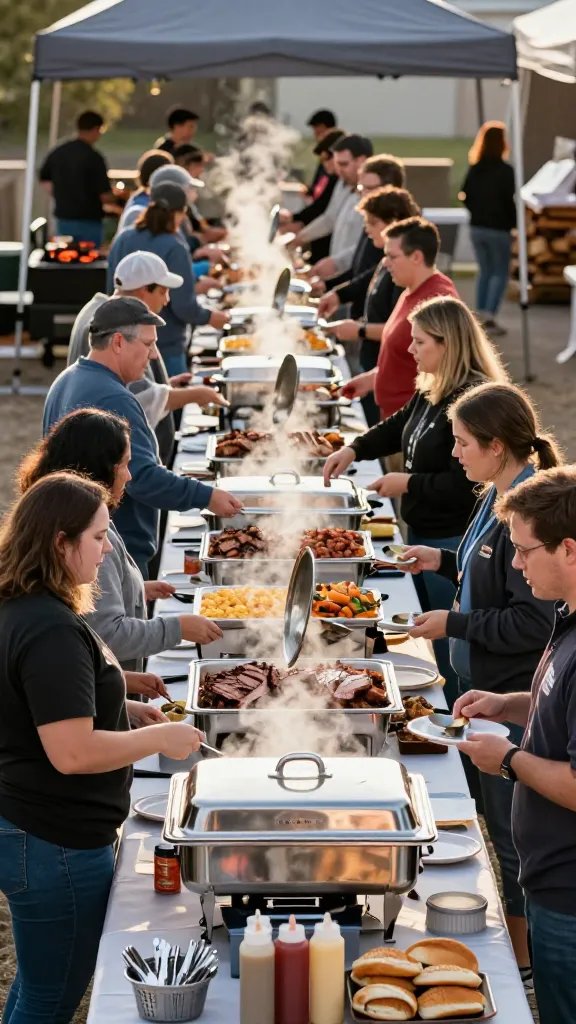
A long, snaking queue chills everything. Lids stay open, guests hover, and steam escapes while people hunt for utensils and sauces. The longer a pan sits open, the colder it gets.
I fixed this by changing the flow. When the line moves quickly and lids stay closed between guests, your food stays hot and moist.
Set Up a Heat-Smart Flow
- Two identical lines rather than one long one. Split the crowd and halve the open-lid time.
- Stations, not one table: Proteins at one station, sides at another, buns/condiments separate. Each station keeps lids closed longer.
- Utensils and plates first: Place plates, cutlery, and napkins where the line starts, not near the hot pans.
- “Lid tender” at proteins: One helper opens and closes lids for guests to minimize heat loss.
Takeaway: Create two identical serving lines with a helper at each protein pan to open/close lids quickly and keep heat trapped.
3. Cold Metal and Ceramic: Serving Gear That Starts Cold Steals Heat
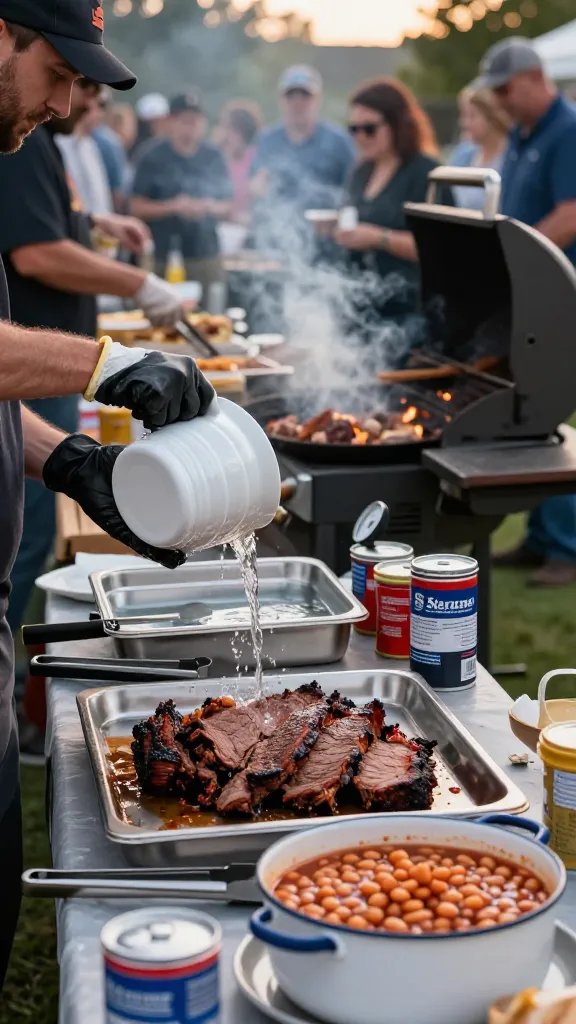
Cold trays and ceramic bowls act like ice packs. The first portion warms the dish, not the guest’s plate, bleeding heat from your food in minutes.
Once I started preheating serving gear, my brisket slices stayed supple and my beans didn’t develop a skin.
What to Preheat and How
- Foil pans and metal trays: Rinse with hot tap water, dry, then stack near the grill to absorb ambient heat.
- Ceramic or enamel bowls for sides: Fill with hot tap water for 5 minutes, empty, wipe dry, and load food immediately.
- Tongs and serving spoons: Dunk in hot water and dry before service to avoid chilling slices on contact.
- Plates: If using reusable plates, stack near a warm area (not over flame). For disposables, choose thicker paper plates with a light wax lining to reduce heat loss.
Action today: Preheat all serving pans and utensils with hot water 10 minutes before the first guests eat.
4. Drying Out Proteins: Heat Without Moisture Turns Tender Cuts Tough
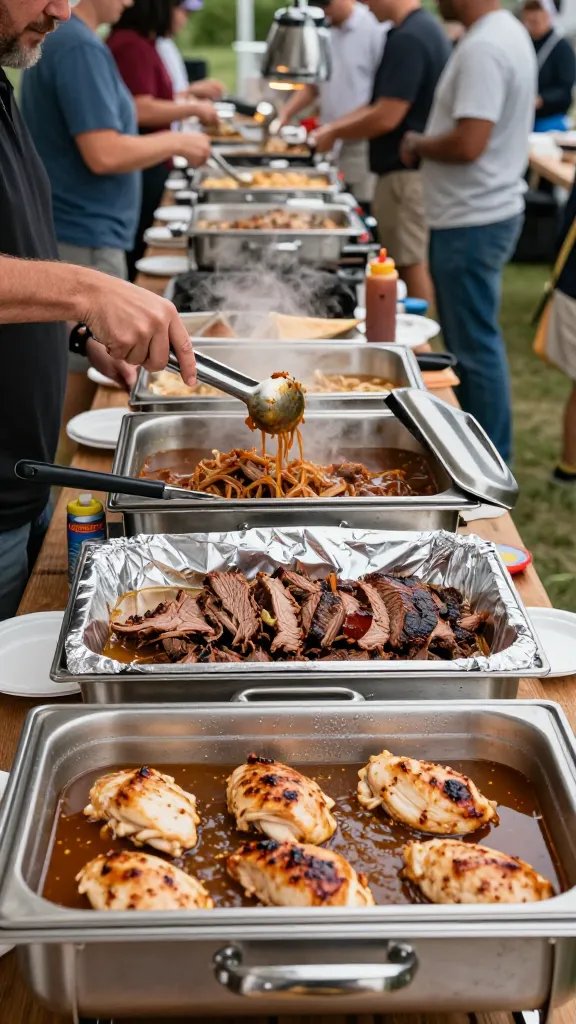
Reheating or holding meat without moisture leads to crusty edges and sawdust textures. Even well-cooked chicken breast and pulled pork will dry if you expose them to constant dry heat.
I now hold proteins with a moisture barrier. A small amount of liquid keeps fibers supple without washing out flavor.
How to Hold Each Protein
- Pulled pork: Toss with a ladle of warm apple juice or a 50/50 mix of BBQ sauce and warm water. Cover tightly with foil.
- Brisket and sliced beef: Add a few tablespoons of warm beef stock per pan. Keep slices thicker to retain heat.
- Chicken: Brush with warm, thinned BBQ sauce (1:1 with warm water) and cover. Hold bone-in pieces on the bottom layer, boneless on top.
- Sausages: Move to a covered pan with a splash of hot water to generate steam, then drain lightly before serving.
Takeaway: Add a few tablespoons of warm liquid to every protein pan and cover tightly; replenish liquid if you see edges drying.
Signs to Watch For
- Edges darkening or curling on slices
- Chicken skin turning leathery instead of crisp
- Pulled pork clumping instead of shredding freely
5. Unsafe Holding Temperatures: The Danger Zone Creeps In Under 60 Minutes
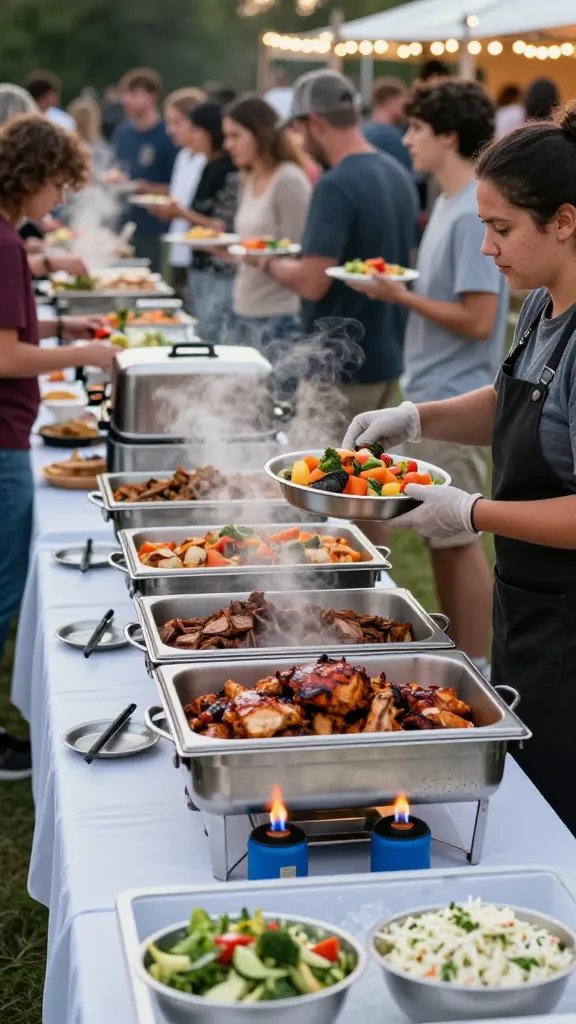
Food sits in the “danger zone” between 5°C and 60°C (41°F–140°F) where bacteria thrive. If your buffet stays lukewarm for over an hour, you raise the risk of foodborne illness.
I don’t gamble with safety. I use simple, reliable steps that don’t require pro gear but keep hot foods hot and cold foods cold.
Keep It Out of the Danger Zone
- Batch service: Put out half-pans, not full pans. Refill from hot storage every 15–20 minutes.
- Fuel under pans: Use two gel fuel cans under wider pans, ensuring a gentle, even heat.
- Insulated storage: Keep backup pans in pre-warmed coolers wrapped in towels to hold heat.
- Cold sides stay cold: For slaw, salads, and desserts, use bowls nested over ice packs or bags of ice in a tray. Keep dairy-based dressings chilled until guests arrive at that station.
Action today: Serve in half-pans and refresh from insulated hot storage every 20 minutes instead of setting everything out at once.
6. Sides and Breads Go Stale: Starch Turns Hard When Exposed to Air
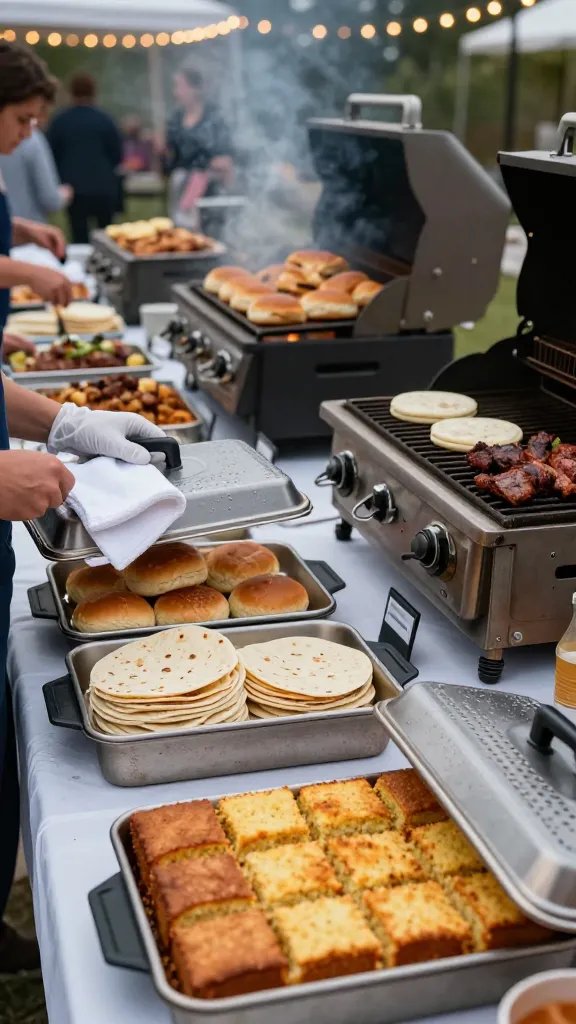
Dry buns, hard tortillas, and lukewarm corn bread kill the joy of a BBQ plate. Starches lose moisture fast and taste stale even while the meat stays decent.
I treat breads and sides like fragile items: short exposure to air and gentle warming with steam or dry heat where appropriate.
How to Keep Starches Pleasant
- Buns: Keep bagged until 10 minutes before serving. Warm briefly on the back of the grill or above a low burner, then store in a lidded bin lined with a clean towel.
- Tortillas: Stack 10–12, wrap in foil, and warm on the grill for 5 minutes. Hold wrapped stacks in a towel-lined cooler.
- Cornbread and rolls: Warm wrapped in foil, then hold in a dry insulated container. Slice only as needed to reduce exposed surface area.
- Mac and cheese, beans, rice: Add a splash of hot water or milk (for mac) to maintain creaminess; stir every 10 minutes and re-cover.
Takeaway: Keep breads covered and warm in towel-lined containers and refresh small batches every 15 minutes.
7. Too Much on the Table: Overfilled Buffets Lose Heat and Create Waste
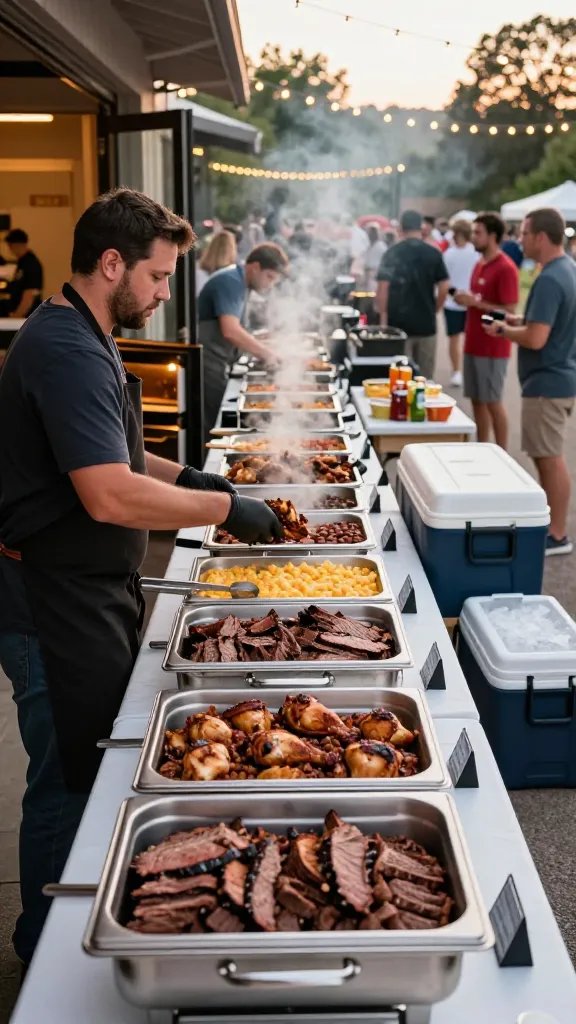
Putting everything out at once feels generous but backfires. Pans sit open longer, heat dissipates, and leftovers suffer from repeated exposure.
When I switched to a rotation plan, guests got fresh, hot food throughout the event and I cut waste in half.
Run a Rotation Like a Pro
- Prep two sets of key items (proteins and hot sides) in half-pans.
- Stage hot backups in pre-warmed coolers or in a low oven if you have indoor access.
- Refill on a schedule: Every 15–20 minutes swap empties for hot backups, never topping up a lukewarm pan.
- Assign roles: One person runs swaps, one manages lids, one fetches from the grill.
Action today: Plan for half-pans and timed swaps rather than topping up; schedule a 15-minute timer on your phone to trigger each rotation.
Frequently Asked Questions
How many chafing fuel cans do I need for 100 people?
Plan on two cans per full-size pan and one per half-pan for 2–3 hours of service. For a 100-person buffet with two protein pans and three hot sides per line, you’ll use about 12–16 cans. Buy extra so you can double up under wider pans and replace spent cans without gaps in heat.
What’s the easiest way to keep meat hot without drying it?
Use foil pans with a small amount of warm stock or diluted sauce, tightly covered. Hold backups in a pre-warmed cooler lined with clean towels, then move to chafers only when serving. Keep lids closed between guests and stir gently every 10 minutes to redistribute heat and moisture.
How do I keep coleslaw and salads crisp at a BBQ buffet?
Use a bowl set inside a larger bowl filled with ice or frozen gel packs. Dress slaw lightly just before service and keep extra dressing chilled for topping at the table. Refill with small batches every 20 minutes so the bulk stays cold and crisp.
Can I safely pre-slice brisket or should I slice to order?
For 100 guests, pre-slice into thick slices and hold in warm stock, covered. Thicker slices retain heat better and resist drying. If you have a helper, slice in small batches every 10–15 minutes and transfer straight to a covered, moistened pan to balance speed and quality.
What’s the best way to warm buns for a crowd?
Keep buns in their bags until 10 minutes before serving. Warm stacks in foil on the grill for 3–5 minutes or in a low oven, then transfer to a towel-lined bin with a lid. Refresh small batches often so guests always get soft, slightly warm buns.
How do I know if my hot foods are staying safe without a thermometer?
Use time and touch cues. Hot food should give off visible steam when opened and feel hot to the touch through the serving utensil handle. Rotate fresh hot pans every 15–20 minutes, keep lids closed between servings, and never mix new hot food into a lukewarm pan—swap the whole pan.
Conclusion
You don’t need commercial gear to serve a hot, safe BBQ buffet for 100—just smart flow, covered pans, timed rotations, and insulated staging. Set up two lines, keep lids closed, and refresh small batches on schedule. With this plan, your guests remember the flavor, not the wait.