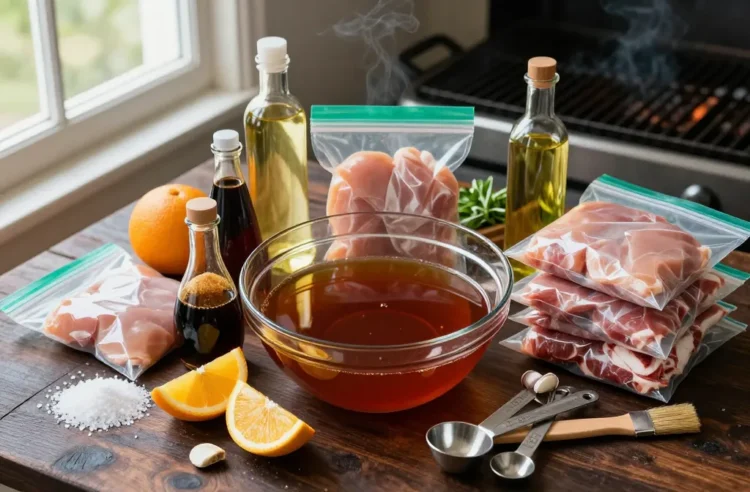
I batch-marinade every long weekend because I’d rather relax than hover over a grill. Early on, I learned the hard way that a full fridge of meat still dries out if the marinade is thin, unbalanced, or short on salt and acids. You’ll learn the seven ingredients that make bulk marinades reliable: what each one does, how to use them with basic tools, and exact amounts that work every time. Use this to prep once, stack labeled zip-top bags in the fridge, and grill on autopilot all week.
1. Kosher Salt: The Hydration Engine That Prevents Dry Meat

Dry chicken, pork, or steak after a long soak means the marinade never penetrated. Without enough salt, flavors cling to the surface, and the meat loses moisture on the grill. Salt solves both problems by drawing seasoning into the muscle and binding water inside.
How It Works
- Salt loosens muscle proteins so they hold onto more water during cooking.
- It pulls marinade flavors inward over several hours, not minutes.
- Kosher salt has larger crystals, making it easier to measure and distribute evenly.
How to Use It
- Use 1 tablespoon of kosher salt per pound of meat, or 1.5 teaspoons if using table salt.
- For a base marinade batch of 2 cups liquid: add 2 tablespoons kosher salt, then taste — it should taste pleasantly seasoned, not briny.
- Whisk salt into the liquid until fully dissolved before adding oil.
Takeaway: Start every bulk marinade by salting to the ratios above — it’s the non-negotiable step that keeps meat juicy after high heat.
2. Acid (Vinegar or Citrus): Tenderizes Gently and Wakes Up Flavor
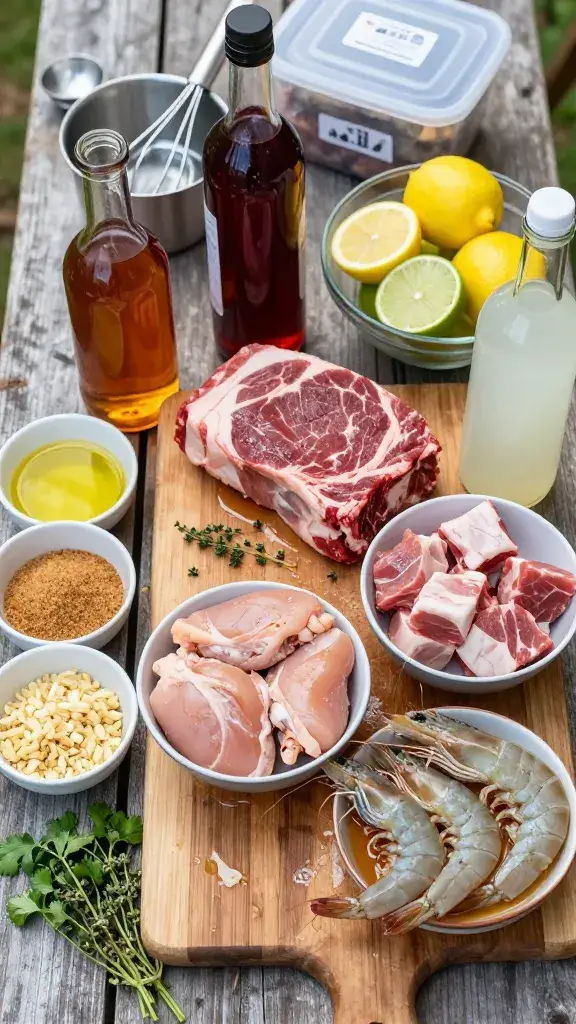
Flat, muddy flavors and tough outer edges happen when you skip acid or drown meat in straight vinegar. The right amount of acid brightens and tenderizes without “cooking” the surface. It also balances oil and sugar so the marinade doesn’t taste heavy or cloying.
Best Options From Any Grocery Aisle
- Apple cider vinegar: Balanced tang, great with pork and chicken.
- Red wine vinegar: Robust, ideal for beef.
- Lemon or lime juice: Fresh lift, excellent for seafood and chicken.
- Rice vinegar: Mild and smooth, good for mixed grills and skewers.
How to Use It
- Target 1 part acid to 3 parts oil for rich cuts; 1:2 for lean cuts like chicken breast.
- For a 2-cup batch: 1/2 cup acid + 1 to 1 1/2 cups oil + seasonings.
- Do not exceed 24 hours for fish or 36 hours for chicken in highly acidic marinades to avoid mushy edges.
Action today: Pick one acid and stick to the 1:3 or 1:2 ratio; measure it before adding anything else so the marinade stays balanced.
3. Neutral Oil: Even Browning and Flavor Delivery Without Flare-Ups
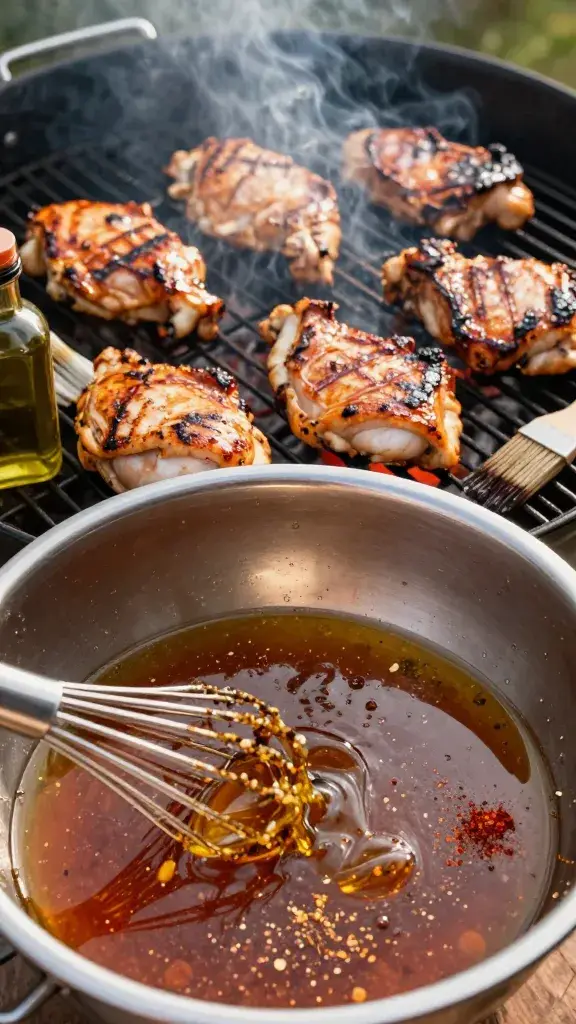
Burnt, patchy sear and dry spots show up when meat hits the grill wet with sugary or watery marinades. Oil acts like a flavor taxi and a buffer, helping spices adhere and creating even browning without sticking. It also prevents watery runoff that douses coals.
What to Buy
- Canola, sunflower, or light olive oil: Clean taste and higher smoke point.
- Avoid extra-virgin for high heat: It smokes and tastes bitter when scorched.
How to Use It
- Use 1–1 1/2 cups oil per 2 cups marinade base.
- Whisk oil in slowly after dissolving salt and sugar in the acidic component first.
- Before grilling, wipe off excess marinade and lightly oil grates with a folded paper towel dipped in oil.
Takeaway: Choose a neutral oil and build the marinade around it — it’s your insurance for even sear and clean grill marks.
4. Sugar or Honey: Browning Fuel With Built-In Timing
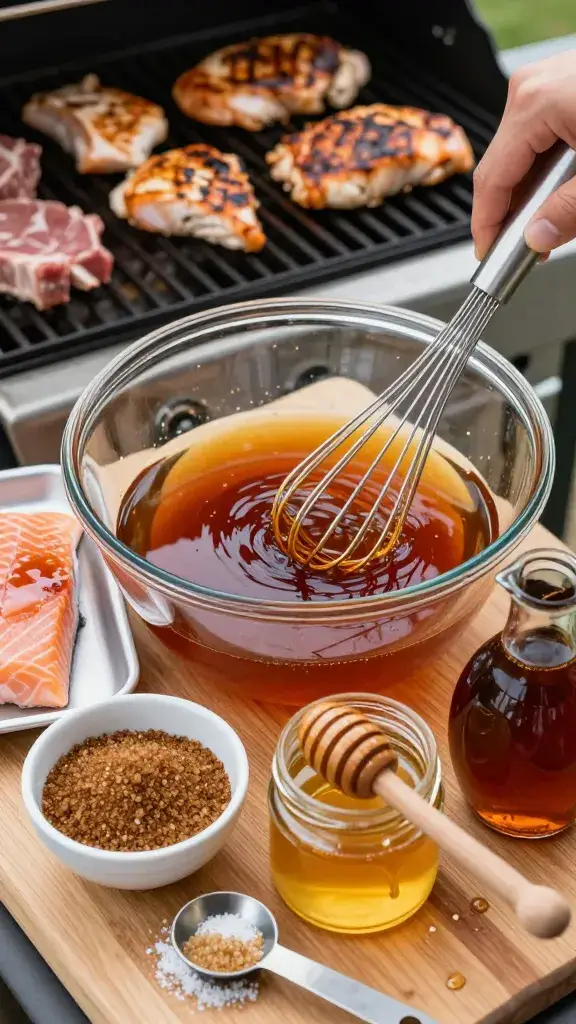
Pale meat after 20 minutes on the grill means no caramelization. On the flip side, blackened crust with bitter notes means too much direct sugar exposure. A touch of sugar controls browning and rounds out acids and salt.
Smart Sweeteners
- Brown sugar: Adds molasses notes, great with pork and beef.
- Honey: Glossier finish; thin with warm water first for even mixing.
- Maple syrup: Distinct flavor; best for chicken and salmon.
How to Use It
- Start with 1 tablespoon sweetener per cup of marinade; go up to 2 tablespoons for richer caramelization.
- For high-heat grilling, reserve 1–2 tablespoons of the marinade, simmer 3 minutes to thicken, and brush on during the last 2–3 minutes.
- If your grill runs hot, choose brown sugar over honey; it burns less quickly.
Action today: Add 1 tablespoon brown sugar per cup of marinade and save a small portion to glaze in the final minutes — color without scorch.
5. Allium Backbone (Garlic, Onion, or Shallot): Depth That Survives the Grill
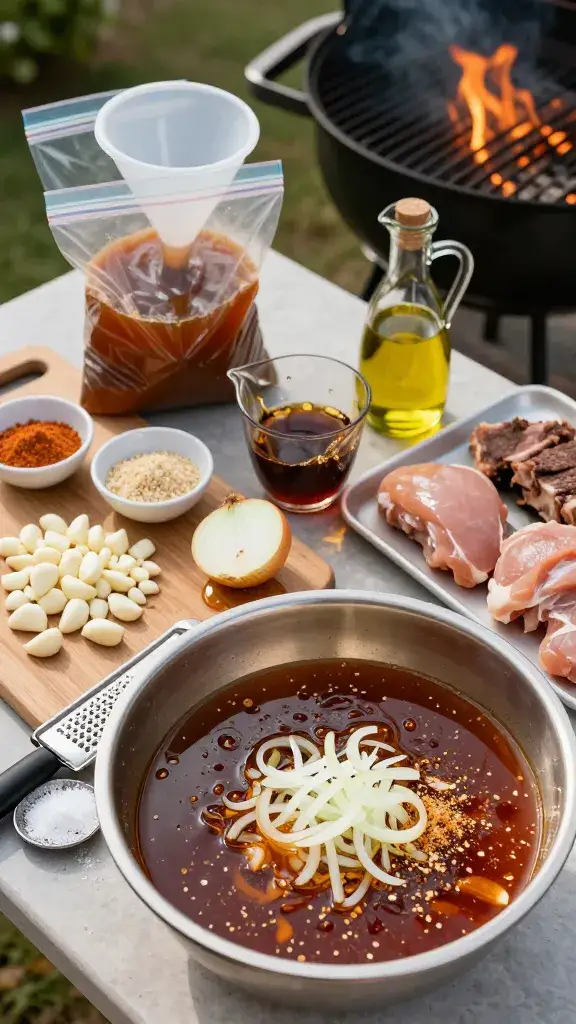
Many marinades smell fantastic raw and vanish on the grill. That’s often because delicate aromatics cook off instantly. Alliums like garlic and onion supply a sturdy flavor base that sticks around after high heat.
Best Forms for Bulk Prep
- Fresh garlic, chopped fine: Most intense; mix with oil to protect from burning.
- Onion powder or granulated garlic: Even distribution; ideal for large batches and freezer marinades.
- Grated onion with its juice: Adds moisture and natural enzymes for tenderness.
How to Use It
- Per 2 cups marinade: 3–4 cloves garlic (or 1 teaspoon garlic powder) + 1 tablespoon onion powder or 1/2 cup grated onion with juices.
- If using fresh, mince finely and let it sit in acid for 5 minutes to mellow harshness.
- For skewers or thin cuts, favor powders to avoid burnt garlic bits.
Takeaway: Always include an allium layer — powders for bulk reliability, fresh for weekend batches where you’ll watch the heat.
6. Umami Boosters (Soy Sauce, Worcestershire, Fish Sauce, or Miso): Steakhouse-Level Savory
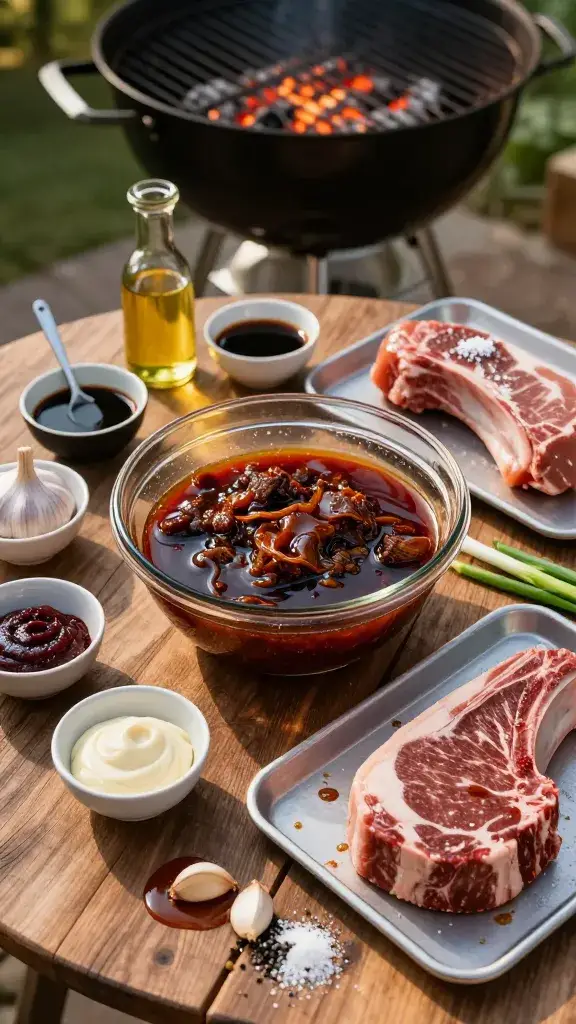
Flat-tasting grilled meat often lacks umami, the savory note that makes bites feel meaty and satisfying. Salt alone won’t deliver it. A small dose of fermentation-based ingredients builds depth and keeps flavors from washing out after searing.
Choose Your Style
- Soy sauce: Salty-savory with a touch of sweetness; great all-rounder.
- Worcestershire: Tangy, spiced, and slightly sweet; classic for beef.
- Fish sauce: Potent umami; use a light hand for chicken and pork.
- White or red miso: Thicker body and gentle salt; fantastic for salmon and thighs.
How to Use It
- Add 1–2 tablespoons soy or Worcestershire per cup of marinade.
- If using fish sauce, start at 1 teaspoon per cup, taste, and adjust to 2 teaspoons if needed.
- For miso, whisk 1 tablespoon per cup into the acidic component first to dissolve, then add oil.
Action today: Pick one umami booster and add it to your standard salt-acid-oil base — it’s the difference between “fine” and “I want another piece.”
7. Dry Spices and Fresh Herbs: Aroma That Scales Without Overpowering
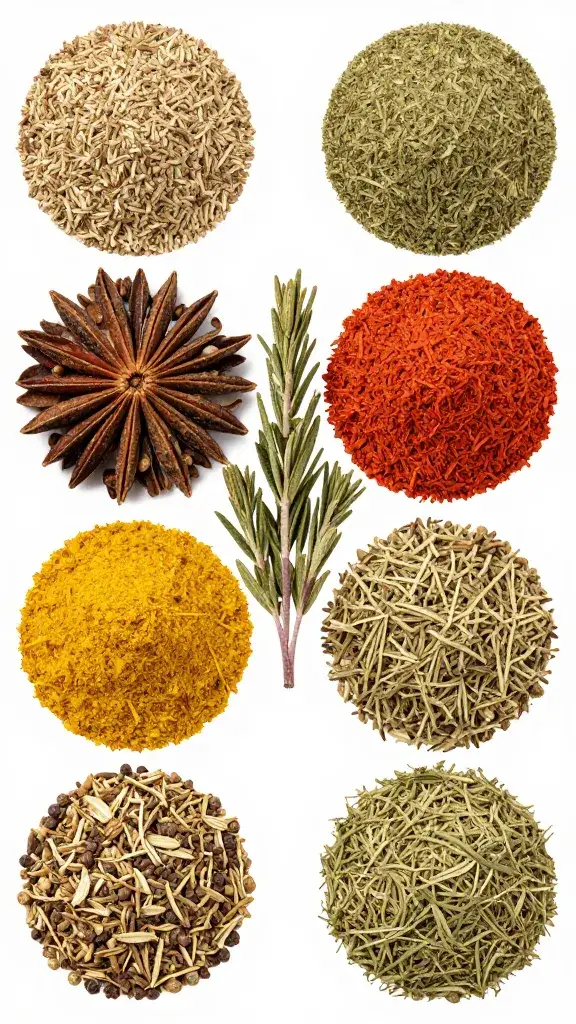
Throwing in a handful of every herb you own gives murky, indistinct results, especially in large batches. Blending 2–3 core spices with one fresh herb keeps flavors focused and repeatable. Dry spices bloom in oil and heat; fresh herbs bring lift at the end.
Reliable Core Blends
- Smoky chicken and pork: 2 teaspoons smoked paprika, 1 teaspoon cumin, 1 teaspoon black pepper.
- Beef-friendly: 2 teaspoons cracked black pepper, 1 teaspoon mustard powder, 1 teaspoon coriander.
- Mediterranean: 2 teaspoons dried oregano, 1 teaspoon thyme, 1 teaspoon paprika.
How to Use Them
- Per 2 cups marinade: 1 tablespoon total dry spices + 1 loosely packed 1/4 cup chopped fresh herb (parsley, cilantro, dill) added just before sealing.
- Bloom dry spices by whisking them into oil for 30 seconds before adding to the rest.
- For freezer bags, use dried herbs only; add fresh herbs when you thaw.
Takeaway: Limit yourself to 2–3 dry spices and one fresh herb per batch — your flavors will be clear, and scaling up stays easy.
Frequently Asked Questions
How long should I marinate different meats when I’m bulk prepping?
Chicken thighs and drumsticks: 12–24 hours. Chicken breasts: 4–12 hours to avoid mushy texture. Pork chops or tenderloin: 8–24 hours. Steak: 8–24 hours depending on thickness. Fish and shrimp: 30 minutes to 2 hours — any longer and the acid starts to break them down too much.
What’s the easiest way to portion and store big batches without special containers?
Use gallon zip-top bags set inside mixing bowls for support, fill with 1–2 pounds of meat and enough marinade to coat, then press out excess air and seal. Label each bag with the cut, marinade, and date using a permanent marker. Lay the bags flat on a baking sheet so they stack neatly and marinate evenly. For freezing, keep bags flat; they thaw faster and save space.
Can I reuse leftover marinade for basting?
Yes, but boil it first. Pour the used marinade into a small saucepan and simmer at a steady bubble for 3 minutes to kill any bacteria. Let it thicken slightly, then brush it on during the last 2–3 minutes of grilling. If you want a fresh basting sauce with brighter flavor, reserve some clean marinade before it touches raw meat.
How do I prevent flare-ups and burnt edges when marinades contain sugar?
Wipe excess marinade off the surface and pat meat lightly with paper towels before grilling. Start over a medium zone, then finish over high heat for color. Keep a “cool zone” on one side of the grill and move pieces if dripping causes flames. Brush any sweet glaze during the last 2–3 minutes only to avoid scorching.
What’s a reliable base recipe I can scale for different meats?
For 2 cups of marinade: 1/2 cup acid (apple cider vinegar or lemon juice), 1–1 1/4 cups neutral oil, 2 tablespoons kosher salt, 1 tablespoon brown sugar, 3 cloves minced garlic (or 1 teaspoon garlic powder), 1 tablespoon onion powder, and 1–2 tablespoons soy or 1 tablespoon Worcestershire. Add 1 tablespoon of your chosen spice blend. This covers about 3–4 pounds of meat; scale up directly and keep the same ratios.
Do I need to poke or score meat to help the marinade work?
No need for heavy scoring, which can dry meat out. For thick cuts like flank or chicken thighs, a few shallow pricks with a fork on each side help the marinade cling and season the surface better. Focus on time and salt balance for true penetration. Always flip bags once or twice during marination to keep coverage even.
Conclusion
When you lock in salt, acid, oil, a touch of sugar, alliums, umami, and a focused spice plan, bulk marinading stops being guesswork. Pick one base, label your bags, and load the fridge for the week — the grill becomes the easy part. Next step: choose a cut you cook often and build a “house marinade” using these ratios so you never start from zero again.