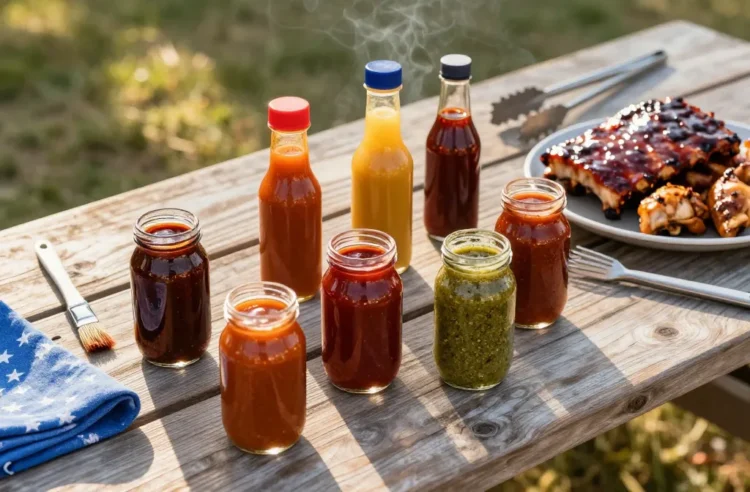
I host a backyard cookout every 4th, and I learned the hard way that saucing meat at the grill while guests hover leads to overcooked ribs and underseasoned chicken. When I started making my sauces a week ahead, everything tasted better and the day felt calm. Here’s exactly how I prep seven distinct, fridge-stable sauces that hold for 3 weeks, using pantry staples and basic tools. You’ll get clear steps, precise quantities, and smart storage so flavor peaks right when the fireworks start.
1. Kansas City Sweet & Sticky: Thick Glaze That Clings to Ribs
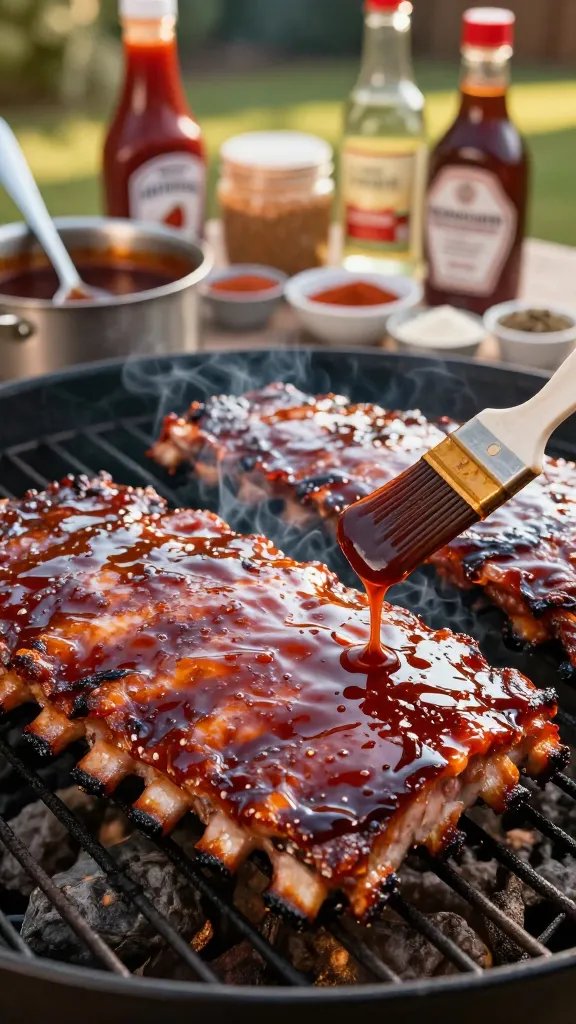
Dry, bland ribs happen when your glaze slides off or burns before it sets. This sauce is thick enough to stick and sweet enough to lacquer without scorching at medium heat. It delivers that familiar backyard flavor people expect from a classic American barbecue.
What You’ll Need
- 2 cups ketchup
- 1/2 cup packed brown sugar
- 1/3 cup apple cider vinegar
- 1/4 cup molasses
- 2 tablespoons Worcestershire sauce
- 2 teaspoons smoked paprika
- 1 teaspoon garlic powder
- 1 teaspoon onion powder
- 1/2 teaspoon ground black pepper
- 1/2 teaspoon kosher salt
- 1/4 teaspoon cayenne (optional for mild heat)
How to Make It
- Whisk all ingredients in a medium saucepan.
- Simmer uncovered on low for 15 minutes, stirring every 3 minutes, until glossy and slightly thickened.
- Cool 20 minutes, then transfer to a clean glass jar.
Storage & Use
- Fridge-stable 3 weeks thanks to acidity from ketchup and vinegar plus sugar.
- Brush on ribs or chicken in the last 10 minutes of grilling to avoid burning.
- Warm gently before using for smoother glazing.
Takeaway: Make this sauce a week ahead, then glaze ribs during the final 10 minutes to get a deep lacquer without flare-ups.
2. Tangy Carolina Mustard: Sharp Bite That Cuts Through Fat
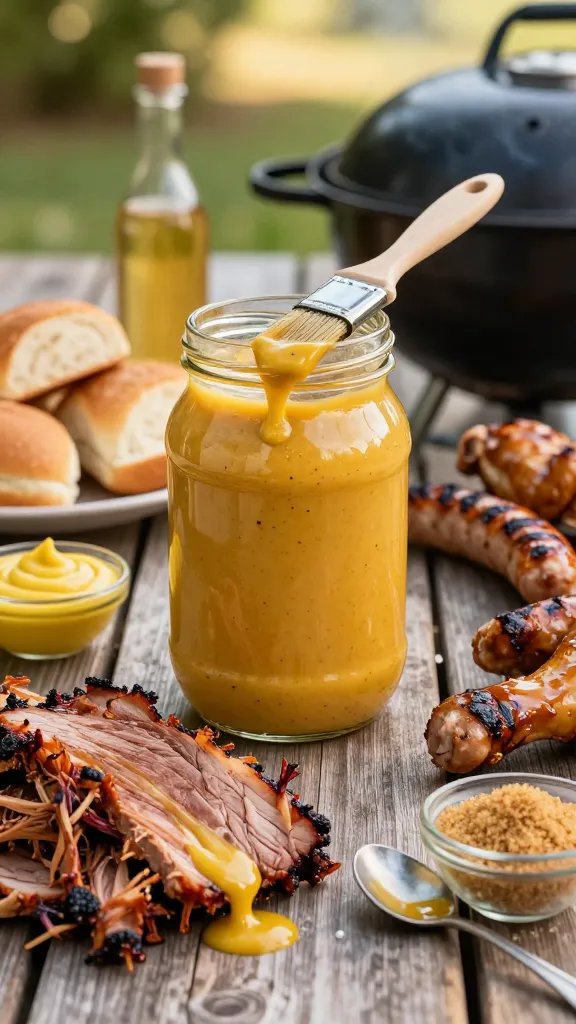
Pulled pork tastes flat when the sauce is only sweet. This mustard-based Carolina style balances fatty pork shoulder with acid and heat so every bite pops. It also doubles as a quick marinade for brats and drumsticks.
What You’ll Need
- 1 cup yellow mustard
- 1/3 cup apple cider vinegar
- 1/4 cup honey
- 2 tablespoons brown sugar
- 1 tablespoon Worcestershire
- 1 teaspoon garlic powder
- 1/2 teaspoon black pepper
- 1/2 teaspoon kosher salt
- 1/4 teaspoon cayenne or hot sauce to taste
How to Make It
- Whisk everything in a bowl until smooth.
- Transfer to a jar; no simmer needed.
Storage & Use
- Fridge-stable 3 weeks because mustard and vinegar are naturally acidic.
- Toss 1 cup sauce with 2 pounds pulled pork right before serving.
- As a marinade: coat chicken 2 hours before grilling; pat dry, then grill and serve extra sauce on the side.
Action today: Make a batch in 5 minutes and set aside 1/2 cup to splash onto chopped pork right as it comes off the smoker.
3. Texas-Style Black Pepper Mop: Savory Drizzle That Keeps Brisket Juicy
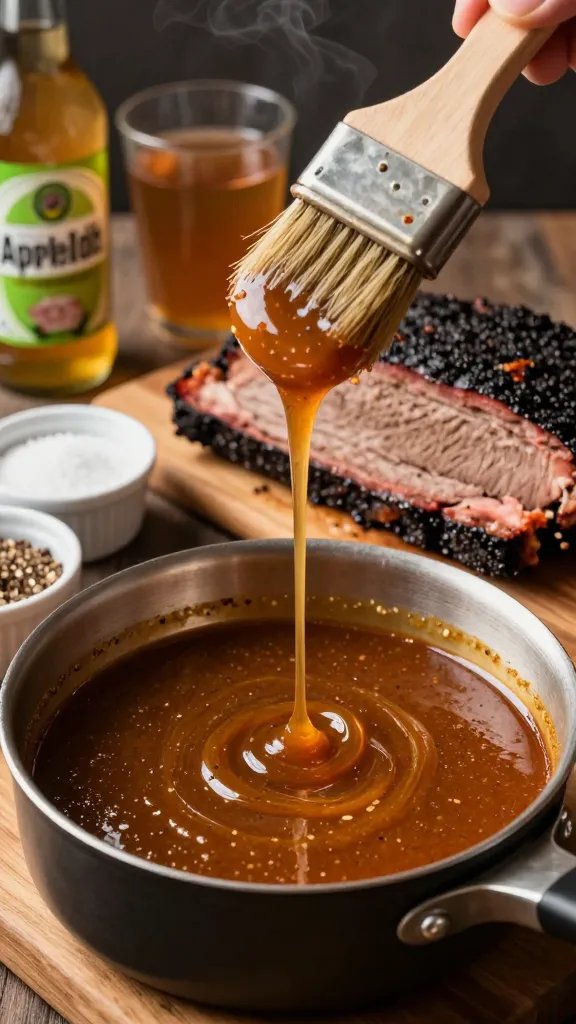
Brisket dries out when you don’t manage surface moisture and seasoning during the cook. A thin, peppery mop adds salt, tang, and a hint of fat that protects bark while brightening slices. It also rescues leftover beef the next day.
What You’ll Need
- 1 cup low-sodium beef broth
- 1/2 cup apple cider vinegar
- 2 tablespoons Worcestershire
- 1 tablespoon neutral oil (canola)
- 2 teaspoons coarse black pepper (freshly cracked)
- 1 teaspoon kosher salt
- 1 teaspoon garlic powder
How to Make It
- Combine in a small saucepan; bring just to a simmer.
- Cool and pour into a squeeze bottle or jar.
Storage & Use
- Fridge-stable up to 2 weeks as written; to reach 3 weeks, add 2 teaspoons vinegar more and keep refrigerated in a clean glass bottle. Always reheat only what you’ll use.
- Mop or spray brisket every 60–90 minutes during the cook after bark sets.
- Warm and drizzle over sliced beef right before serving.
Takeaway: Mix it the night before, chill, and decant into a clean spray bottle for consistent mopping without washing off the bark.
4. Alabama White: Creamy, Zesty Sauce That Loves Smoke
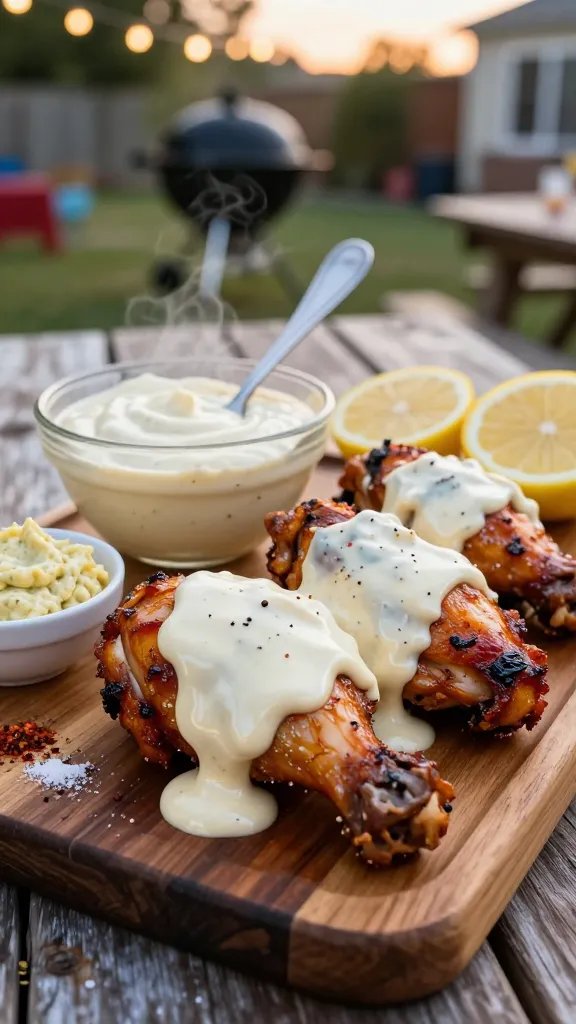
Smoked chicken can taste smoky but dry on the tongue. This mayo-and-vinegar sauce adds tang, moisture, and peppery heat that wakes up lean meat. Unlike dairy-based sauces, it stays stable when kept cold and clean.
What You’ll Need
- 1 cup mayonnaise
- 1/3 cup apple cider vinegar
- 1 tablespoon lemon juice
- 1 tablespoon prepared horseradish
- 2 teaspoons Dijon mustard
- 1 teaspoon black pepper
- 1/2 teaspoon garlic powder
- 1/2 teaspoon kosher salt
- 1/4 teaspoon cayenne
How to Make It
- Whisk until smooth and pourable. If too thick, add 1 tablespoon water.
- Jar and refrigerate.
Storage & Use
- Fridge-stable 3 weeks due to high acidity. Keep covered and use clean spoons.
- Dunk smoked or grilled chicken pieces right off the grill, or serve as a side sauce.
- Also great as a dip for grilled veggies.
Action today: Make a double batch and label one jar “dipping only” to avoid cross-contamination from brushing on raw poultry.
5. North Carolina Vinegar Finisher: Bright, Spicy Splash for Pork and Crispy Skin
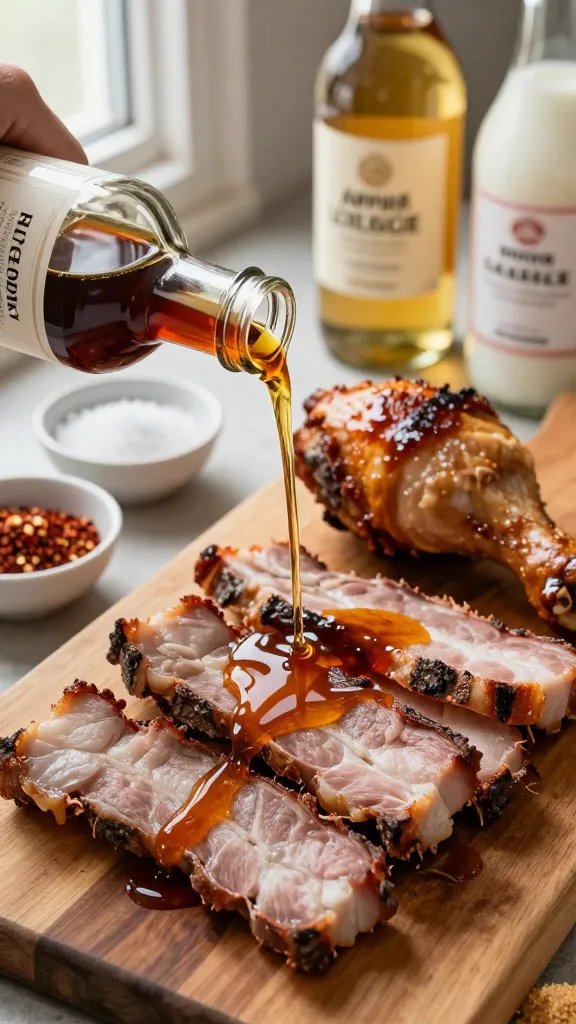
Pulled pork turns heavy when sauce is thick and sugary. This ultra-thin vinegar sauce cuts richness, boosts smoke flavor, and soaks into meat without masking bark. A few spoonfuls can fix bland store-bought rotisserie chicken too.
What You’ll Need
- 1 cup apple cider vinegar
- 1/2 cup white vinegar
- 1 tablespoon brown sugar
- 2 teaspoons red pepper flakes
- 1 teaspoon kosher salt
- 1 teaspoon black pepper
How to Make It
- Whisk until sugar dissolves. No cooking.
- Transfer to a bottle with a small spout for easy drizzling.
Storage & Use
- Fridge-stable 3 weeks+ because it’s almost pure vinegar. Flavor improves after 24 hours.
- Drizzle 2–3 tablespoons per pound of pulled pork, toss, then add more to taste.
- Brush on chicken skin in the last 5 minutes for extra snap.
Takeaway: Mix it tonight, let it sit a day to meld, then bring it to the table in a squeeze bottle so guests can season to their taste.
6. Memphis Dry-Rub Paste (Wet Rub): Spice-Forward Crust Without the Sugar Bomb
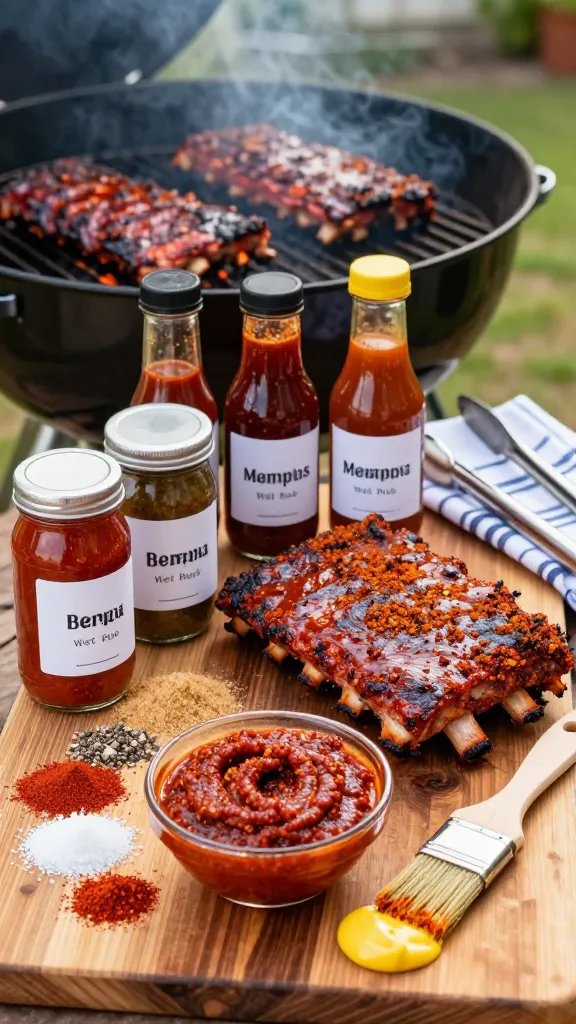
When you want bark without a syrupy glaze, a wet rub locks seasoning onto meat and builds a savory crust. This paste works on ribs and chops, and it won’t burn the way high-sugar sauces do. It also pre-seasons meat evenly, so you don’t scramble at the grill.
What You’ll Need
- 3 tablespoons paprika
- 2 tablespoons brown sugar
- 1 tablespoon kosher salt
- 1 tablespoon black pepper
- 2 teaspoons garlic powder
- 2 teaspoons onion powder
- 1 teaspoon cumin
- 1/2 teaspoon cayenne
- 2 tablespoons yellow mustard
- 1 tablespoon apple cider vinegar
- 1 tablespoon neutral oil
How to Make It
- Mix dry spices. Stir in mustard, vinegar, and oil to make a spreadable paste.
- Store in a jar; it will thicken slightly in the fridge.
Storage & Use
- Fridge-stable 3 weeks thanks to acid and low water activity.
- Spread a thin layer on ribs or pork chops 1–12 hours before cooking. Do not contaminate the jar; spoon out what you need.
- Finish with a light sprinkle of the same dry rub after grilling to refresh aroma.
Action today: Portion the paste into two small jars — one for raw prep, one clean for basting cooked meat at the end.
7. Smoky Chipotle-Lime: Balanced Heat for Burgers, Corn, and Shrimp
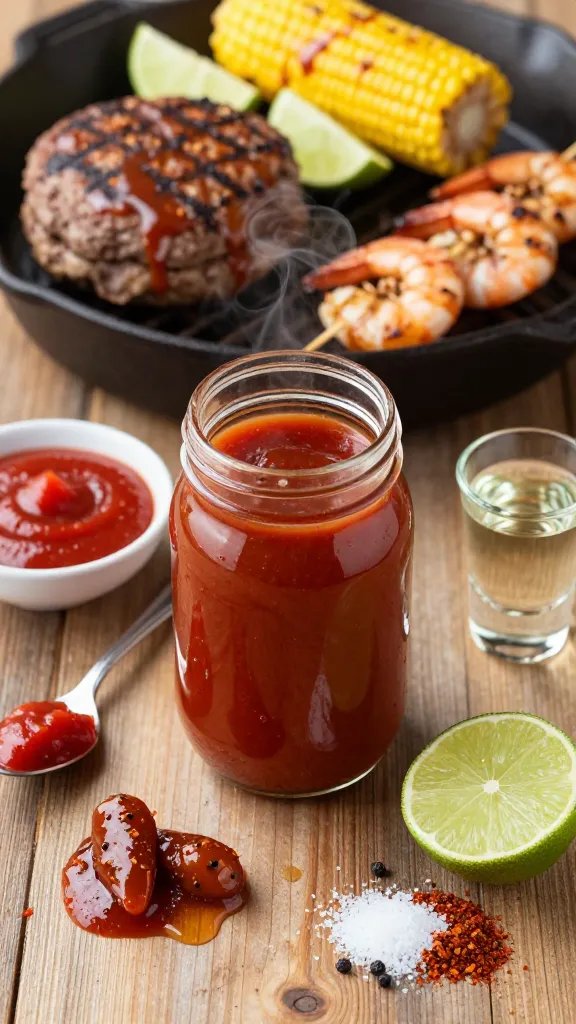
Spicy sauces often blow out palates or turn bitter on the grill. This chipotle blend keeps the smoke and heat balanced with citrus and a touch of honey, so it caramelizes without going harsh. It’s a crowd-pleaser on burgers and a perfect brush-on for grilled corn.
What You’ll Need
- 1 cup tomato sauce (plain)
- 2 tablespoons tomato paste
- 2 chipotles in adobo, minced, plus 2 teaspoons adobo sauce
- 1/4 cup apple cider vinegar
- 2 tablespoons honey
- 1 tablespoon lime juice
- 1 teaspoon smoked paprika
- 1 teaspoon garlic powder
- 1/2 teaspoon kosher salt
- 1/2 teaspoon black pepper
How to Make It
- Simmer all ingredients on low for 10 minutes, stirring until slightly thick.
- Cool and jar. Adjust salt to taste.
Storage & Use
- Fridge-stable 3 weeks due to acidity and low pH ingredients.
- Brush on burgers during the last 2 minutes; spoon onto grilled corn and finish with crumbled cotija.
- Toss with grilled shrimp off the heat to avoid overcooking.
Takeaway: Make it mild by using 1 chipotle; go bold with 3. Test heat on a cracker before committing at the grill.
Frequently Asked Questions
How do I make sure these sauces actually last 3 weeks in the fridge?
Use clean, dry glass jars with tight lids, and label with the date. Keep sauces cold at all times — don’t leave them on a picnic table in the sun. For brushing on raw meat, pour a small portion into a separate bowl so you don’t contaminate the main jar. If a sauce looks separated, whisk it cold; if it smells off or grows mold, discard immediately.
Can I freeze these sauces instead of refrigerating?
Yes, most of these freeze well for up to 3 months, especially the Kansas City and chipotle sauces. Avoid freezing the Alabama White; mayo can split when thawed. Freeze in small portions in freezer-safe containers, leaving 1/2 inch headspace. Thaw overnight in the fridge and whisk before use.
What if I don’t have smoked paprika or chipotles?
Use regular paprika plus a few drops of liquid smoke for a gentle smoky note. For chipotle, substitute 1/4 teaspoon ground cayenne and 1/2 teaspoon smoked paprika to mimic heat and smoke together. Add heat in small pinches, taste, and adjust before simmering. Avoid harsh smoke by adding liquid smoke drop by drop and tasting as you go.
How do I stop sauces from burning on the grill?
Apply sugary sauces like Kansas City and chipotle in the last 5–10 minutes of cooking. Keep grill heat at medium to medium-low when glazing, and use indirect heat for ribs and chicken. If flare-ups happen, move meat to a cooler zone and close the lid to smother flames. Oil the grates lightly and preheat fully so the sauce sets quickly without sticking.
Can I reduce sugar without losing flavor?
Yes. Cut brown sugar by a third and add 1 teaspoon blackstrap molasses for depth. Increase vinegar by 1–2 teaspoons to keep brightness, and lean on spices like cumin, smoked paprika, and black pepper for body. For heat perception without extra sugar, finish with a squeeze of citrus right before serving.
How do I scale these recipes for a big crowd?
Double or triple all ingredients by weight or volume and simmer a few minutes longer for thicker styles. Use wider pots for faster reduction, and taste for salt and acid at the end — large batches often need an extra teaspoon of salt or a tablespoon of vinegar. Cool in shallow pans before jarring to move through the food safety “danger zone” quickly. Store in multiple smaller jars so you only open what you need on the day.
Conclusion
Prep these seven sauces this weekend and you’ll cruise through the 4th with bold flavor and zero last-minute scrambling. Start with one sweet, one tangy, and one spicy, and label the jars so guests can steer their own plates. Next step: plan your cook times and finishing order — ribs, chicken, then burgers — and let the sauces do the heavy lifting.