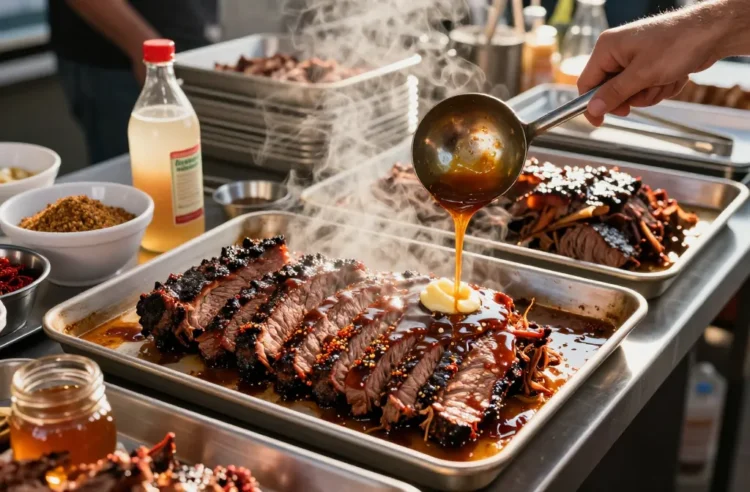
I’ve cooked for big charity picnics and neighborhood block parties where the meat came off the smoker juicy but flat-tasting. When 100 hungry guests are lining up, you don’t have time for a do-over — you need fast, reliable ways to build flavor on cooked meat. In this guide, I’ll show you five battle-tested fixes that turn bland BBQ into crowd-pleasing plates using standard pantry items and tools. You’ll learn exactly what to mix, when to apply it, and how to scale it so every guest gets a flavorful bite.
1. Hot Butter Baste: Add Fat, Salt, And Aromatics After Cooking
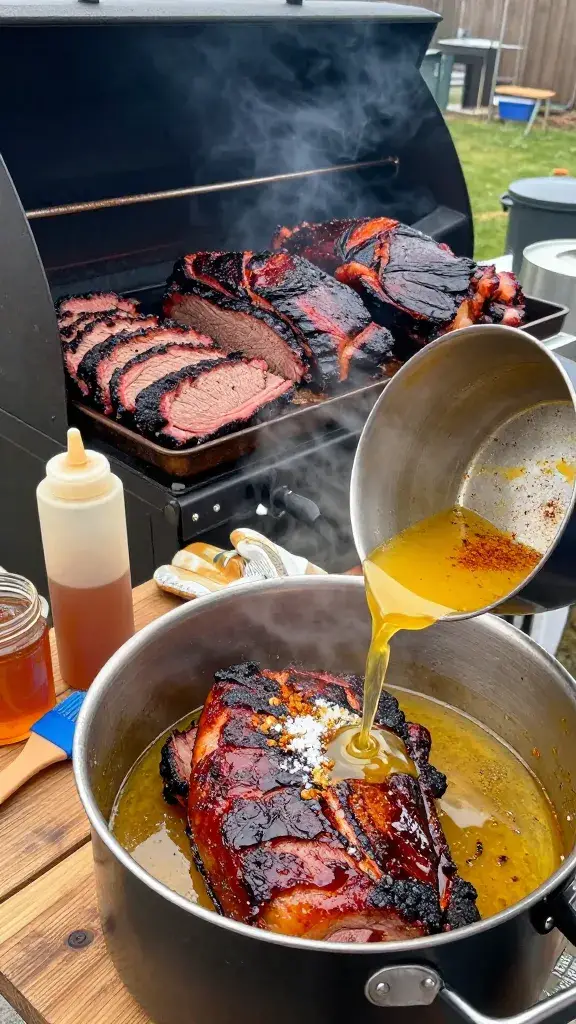
Under-seasoned meat tastes dry and one-note because it lacks salt and flavorful fat on the surface. A hot, seasoned butter baste bonds salt and aromatics to the crust in minutes without drying the meat further.
How to Fix It
- Melt 4 cups unsalted butter in a large saucepan on low. Stir in 1/2 cup kosher salt, 1/4 cup black pepper, 1/4 cup smoked paprika, 2 tablespoons garlic powder, and 2 tablespoons onion powder.
- Add 1 cup apple cider vinegar and 1/2 cup honey to brighten and balance. Keep warm — not simmering.
- For sliced brisket or pork: lay slices in a deep pan in overlapping shingles. Ladle the hot baste over the top, cover with foil for 5 minutes, then gently turn with tongs to coat both sides.
- For pulled pork or shredded chicken: drizzle 1 cup baste per 5 pounds and toss until glossy.
What to Use Instead
- If butter is short, swap half for neutral oil and add a splash more honey for roundness.
- No apple cider vinegar? Use white vinegar and 1 tablespoon brown sugar per cup to soften the edge.
Takeaway: Keep a warm, seasoned butter baste on the side and coat meat right before serving — fat plus salt fixes flat flavor fast.
2. Finishing Dust: A Fine, Flavor-Forward Rub Applied At The End
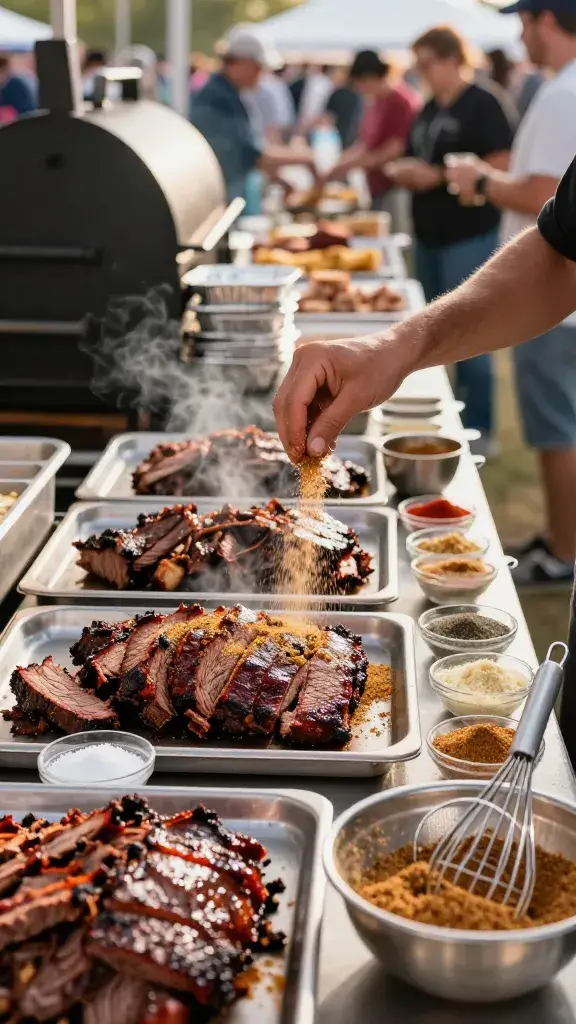
Rub flavors fade during long cooks, especially on sliced trays or pulled pans. A fine “finishing dust” sticks to moist meat and wakes up each bite with salt, sweet, and smoke.
How to Mix It (For 100 Servings)
- 1 cup fine kosher salt
- 1 cup light brown sugar
- 1/2 cup smoked paprika
- 1/3 cup granulated garlic
- 1/4 cup onion powder
- 2 tablespoons fine black pepper
- 2 tablespoons mustard powder
- Optional heat: 1 tablespoon cayenne
Whisk until uniform. Pass through a wire strainer if clumpy so it sprinkles evenly.
How to Use It
- Brisket and pork slices: sprinkle a light, even dusting from 12 inches above for coverage without clumps. Rest 2 minutes so the surface moisture dissolves it.
- Pulled meats: sprinkle 2 tablespoons per pound, toss, taste, and add 1 tablespoon more if needed.
- Chicken: dust lightly to avoid oversalting thinner cuts.
Signs You’ve Added Enough
- The surface looks slightly glossy as salt pulls a bit of moisture.
- One bite tastes balanced without needing sauce.
Action today: Mix a big batch of finishing dust now and keep it in a shaker — correct seasoning per tray in under a minute.
3. Warm Pan Sauces: Thin, Tangy Glazes That Don’t Smother Bark
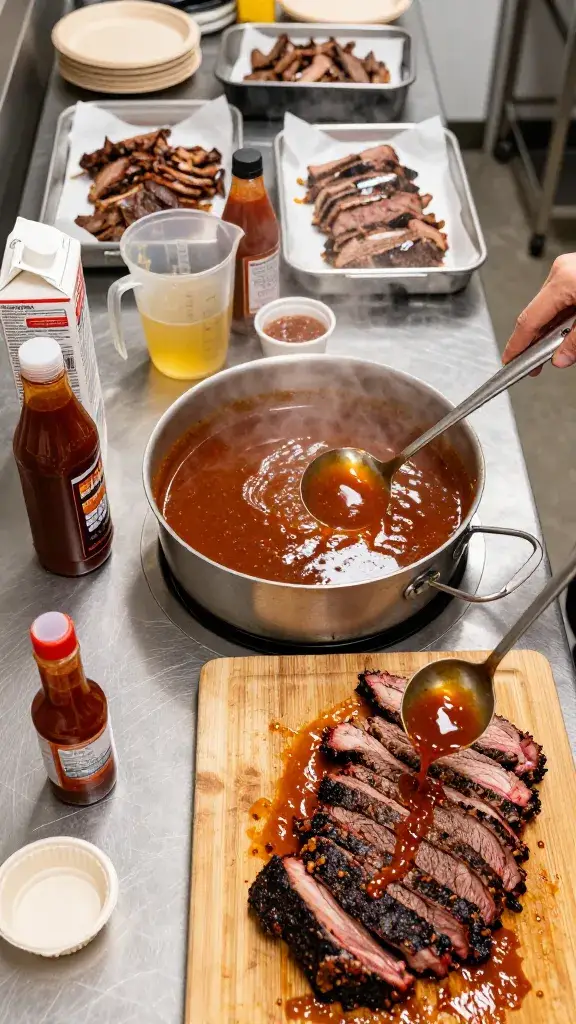
Dumping thick sauce hides smoke and turns bark soggy. A warm, thinned pan sauce seeps into slices, brightens the flavor, and preserves texture so 100 plates taste like BBQ, not candy.
How to Build a Balanced Finishing Sauce (1 Gallon)
- Base: 2 quarts store-bought BBQ sauce (choose a medium sweetness)
- Thin: 2 quarts low-sodium beef or chicken broth (from cartons)
- Acid: 1.5 cups apple cider vinegar
- Depth: 1/2 cup Worcestershire sauce
- Heat: 2 tablespoons hot sauce (adjust to crowd)
- Optional smoke: 1 teaspoon liquid smoke — do not overdo
Warm gently. You want it pourable, not sticky.
Application
- For slices: ladle 1-2 tablespoons over each portion on the tray, not a drench. Toss the tray once to coat edges.
- For pulled: 1 cup per 5 pounds, fold in, rest 5 minutes, then taste before adding more.
- Serve extra sauce on the side so guests control sweetness.
What to Use Instead
- No broth? Use water plus 1 teaspoon kosher salt per quart and a splash of vinegar.
- Prefer Carolina style: 2 quarts apple cider vinegar, 1 cup ketchup, 1/3 cup brown sugar, 2 tablespoons black pepper, 1 tablespoon red pepper flakes, warmed.
Takeaway: Keep your sauce thin and warm, then glaze lightly — you’ll lift flavor without drowning your hard-earned bark.
4. Drip Tray Reclaim: Use Meat Juices To Season From Within
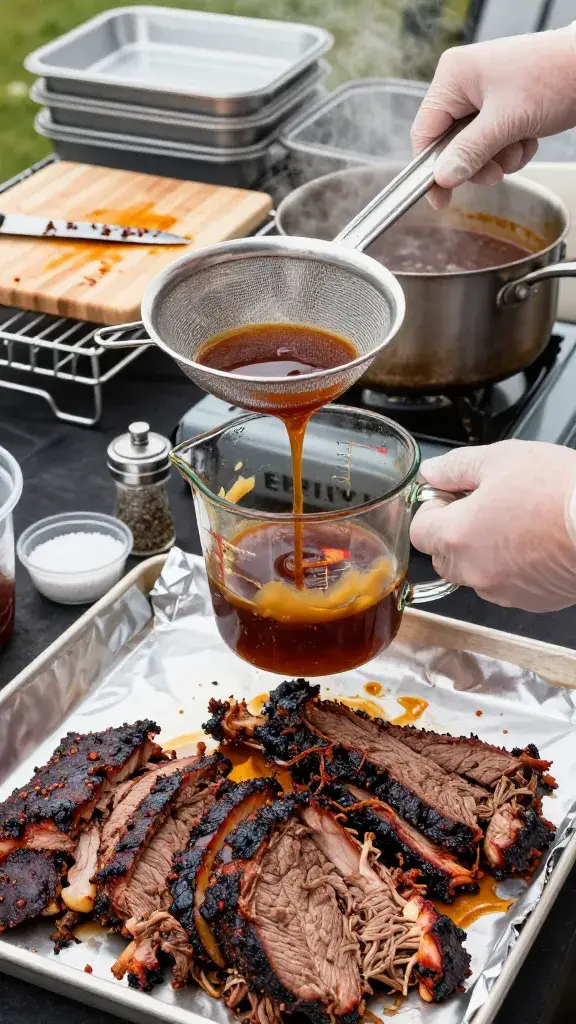
When meat is under-seasoned, the richest flavor you own is often sitting in the pans — the drippings. Clarifying and seasoning those juices makes a powerful, natural booster that soaks back into the meat.
How to Fix It
- Collect drippings from foil, cutting boards, and holding pans. Strain through a mesh sieve to remove bits.
- Let the liquid sit 5 minutes. Skim fat into one container and reserve the jus in another.
- Season the jus: add 1 teaspoon kosher salt per cup and a few shakes of black pepper. Warm gently.
- Taste. If dull, add 1 tablespoon apple cider vinegar per cup to brighten.
- For slices: brush warm jus onto meat right before service. For pulled: pour 1/2 cup per 5 pounds and toss.
Why It Works
- The jus carries gelatin and browned flavors that bond to the meat surface.
- The fat you skimmed can go into your butter baste from Section 1 for even more richness.
Action today: Don’t toss the pan juices — strain, salt, and brush them back onto the meat for an instant flavor upgrade.
5. Salted Hold: Season In The Steam Zone While You Serve
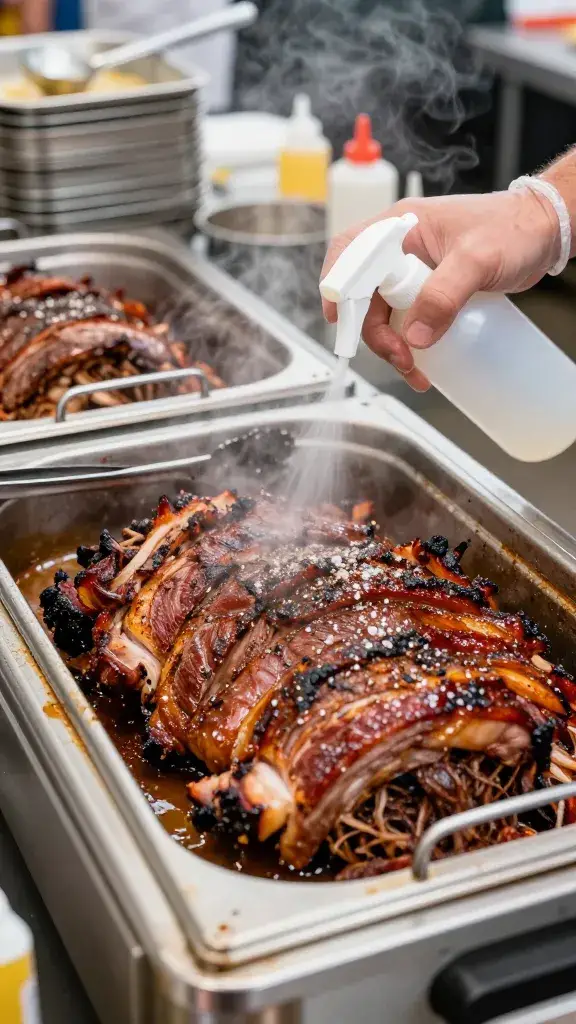
Trays in warmers or covered pans lose punch as steam dilutes the surface. A targeted “salted hold” restores seasoning gradually so each scoop stays lively through service for a large crowd.
How to Set It Up
- Make a light brine sprinkle: 1/2 cup fine kosher salt + 2 tablespoons sugar + 1 tablespoon black pepper per 2 cups warm water. Stir until dissolved.
- For pulled meats: mist lightly with the brine using a clean food-safe spray bottle, then cover the pan. Toss every 15 minutes and re-mist if flavor fades.
- For sliced meats: stack in shingled layers, brush edges with the brine using a pastry brush, cover loosely with foil, and vent one corner so steam escapes.
Guardrails
- Do not soak. You are seasoning the surface, not making soup.
- Taste every 15 minutes. If salt reaches balance, switch to plain warm broth or water to maintain moisture without more salt.
Takeaway: Keep a mild brine in a spray bottle and re-season during the hold — you’ll maintain flavor across the entire service window.
Frequently Asked Questions
How do I fix under-seasoned ribs without ruining the bark?
Warm a thin glaze using equal parts BBQ sauce and apple cider vinegar, plus a splash of broth. Brush lightly and return the ribs to a 275°F grill or oven for 5–8 minutes to set the glaze without overcooking. Finish with a light dusting of the finishing dust right before slicing. Serve sauce on the side so guests can adjust without softening the crust.
What if my crowd hates spicy food — how do I add flavor without heat?
Lean on salt, acid, and aromatics. Use the butter baste with garlic, onion, smoked paprika, and a tablespoon of mustard powder, skipping cayenne or hot sauce. Add brightness with apple cider vinegar or lemon juice in the pan sauce. Taste for balance: you want savory, tangy, and slightly sweet — no burn needed.
My pulled pork tastes bland even after sauce. What now?
Layer flavor in this order: finishing dust (2 tablespoons per pound), warm jus from drippings (1/2 cup per 5 pounds), and then a thin sauce (1 cup per 5 pounds). Toss thoroughly after each addition and rest covered for 5 minutes to let seasoning absorb. If it still reads flat, add 1 teaspoon kosher salt per 2 pounds and a splash of vinegar, then retaste. Avoid adding more thick sauce, which muddies flavor and texture.
Can I rescue under-seasoned chicken without drying it out?
Yes — use a warm, thin pan sauce or butter baste rather than a dry rub. For sliced or pulled chicken, add 1/2 cup warm broth per 5 pounds, then 1/2 cup butter baste and 1–2 tablespoons finishing dust. Cover and rest 5 minutes to rehydrate and season. Keep trays at a gentle holding temp (150–160°F) and re-baste lightly every 15 minutes.
How much finishing dust should I plan per person?
For 100 people, mix at least 3 cups of finishing dust. You’ll use about 1–2 teaspoons per serving, depending on the meat and whether you’re also glazing. It stores well in an airtight container, so extra won’t go to waste. Keep it in a shaker for fast, even application over trays.
What’s the fastest fix when guests are already in line?
Use the finishing dust and a warm thin sauce at the serving station. Lightly dust the sliced or pulled meat on the tray, toss once, and ladle a small amount of warm sauce to gloss. This takes under two minutes per tray and delivers the biggest jump in perceived flavor. Keep a tasting spoon and adjust every new tray for consistency.
Conclusion
You don’t need a restart to save under-seasoned BBQ for a crowd — you need layered, controlled additions that respect the bark and the meat’s moisture. Set up a finishing station with a butter baste, thin sauce, finishing dust, and a spray brine, and you’ll serve confident, flavorful plates to all 100 guests. Next time, pre-mix these components before the cook so rescue becomes routine, not a scramble.