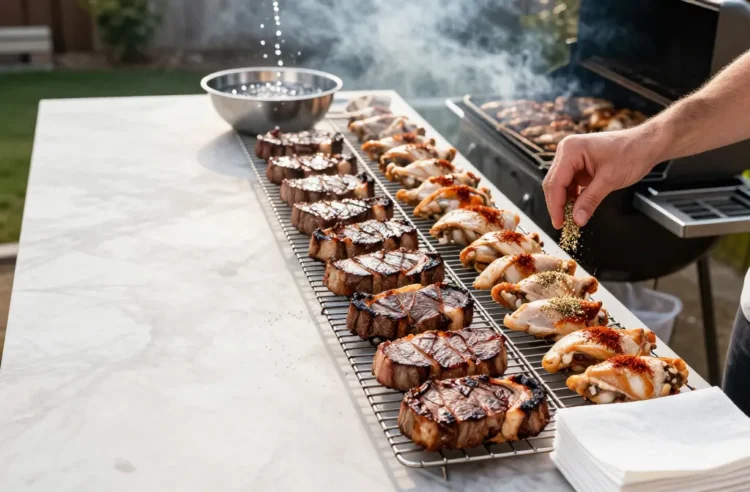
I’ve ruined more than one cookout by drowning good meat in a salty, acidic bath. When you’re feeding a crowd, that mistake tastes even bigger — sharp, mushy, and way too salty. I learned how to rescue over-marinated meat fast, using only what I can grab from a supermarket and a hardware-store grill. In this guide, I’ll show you seven fixes that protect texture, balance flavors, and keep 50 plates happy.
1. Salt Overload: Dilute and Displace Before You Cook
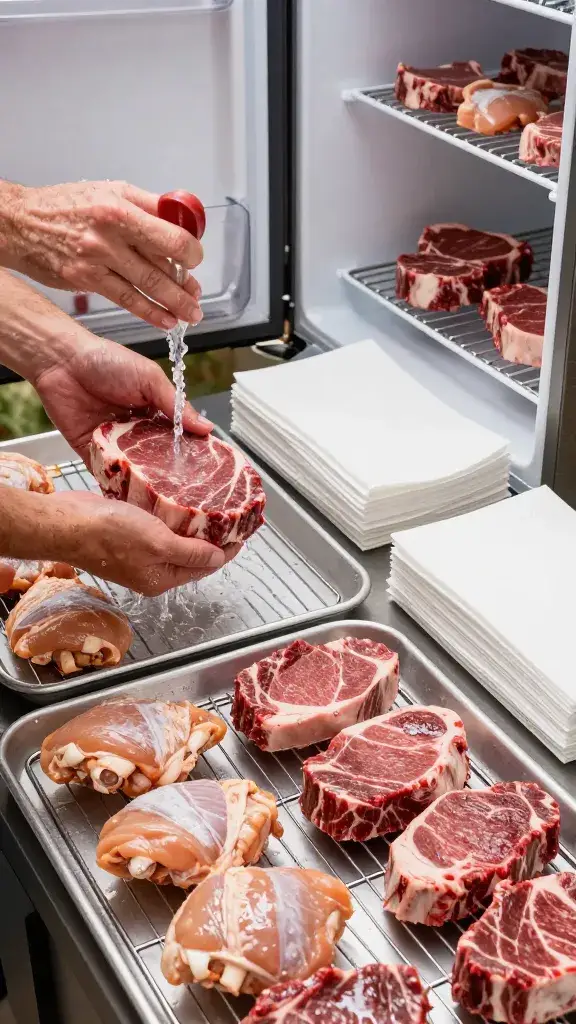
Over-marinated meat usually tastes too salty first, then too sour. If you throw it straight on the grill, heat concentrates salt at the surface and makes the first bite harsh.
How to Fix It
- Rinse each portion under cool running water for 5-10 seconds per side. You’re removing surface brine, not washing away dinner.
- Pat very dry with plenty of paper towels. Wet meat steams and won’t brown.
- Rest uncovered on wire racks or sheet pans in the fridge for 30-60 minutes to let salt equalize slightly and the surface dry more.
What to Use Instead
- Skip salty rubs or glazes. Use a no-salt seasoning (garlic powder, black pepper, paprika, dry herbs) after drying.
- Finish with a low-salt, fresh topping like chopped parsley, lemon zest, and olive oil instead of a soy- or salt-heavy sauce.
Takeaway: Give over-marinated meat a quick rinse, a thorough dry, and a short fridge dry-down to drop salt and set up better browning.
2. Acid Burn: Counter Harsh Sourness With Fat and Sweet

Too much vinegar, citrus, or yogurt turns meat tangy to the point of puckering. On the grill, that sourness sharpens and can taste metallic.
How to Fix It
- Brush with neutral oil (canola or light olive oil) right before grilling to buffer the surface from heat and acid.
- Finish with a low-acid glaze: 2 parts honey or maple syrup, 1 part unsalted butter, and a pinch of black pepper, warmed until glossy. Brush in the last 2-3 minutes.
- Serve with starchy sides (buttered rice, potato salad, grilled bread) to balance the plate and calm acidity.
Signs to Watch For
- Raw meat smells sharply vinegary or lemony.
- Cooked test piece tastes thin and sour even when salted sides taste fine.
Action today: Mix a quick honey-butter glaze and plan to brush it on in the final minutes of grilling to round off aggressive acidity.
3. Mushy Texture: Firm Up the Surface Before It Hits the Grill

Acid and enzymes break down proteins. Leave meat in that bath too long and the surface turns mealy, especially on chicken breasts, fish, or thin pork chops. If you cook it wet, it will shred and stick.
How to Fix It
- Air-dry on racks in the fridge for 60-90 minutes. The surface dehydrates slightly and firms up.
- Dust lightly with cornstarch or rice flour right before cooking. Shake off excess. This creates a delicate crust and protects soft fibers.
- Use medium heat, not screaming hot. Let the crust set 2-3 minutes before flipping to prevent tearing.
What to Use Instead
- For severely soft pieces, pivot to skewers. Smaller cubes cook faster and hold shape better than a large, tenderized slab.
Takeaway: Chill-dry and a light cornstarch dusting restore bite to softened meat and reduce sticking.
4. Flavor Is Flat: Layer Fresh, Low-Salt Seasoning at the End

Heavy marinades bulldoze nuance. Even if you fix salt and acid, the meat can still taste muddy and one-note. Cooking won’t magically bring back brightness.
How to Fix It
- Make a fresh finishing oil: chopped parsley or cilantro, lemon zest, minced garlic, black pepper, and olive oil. No added salt.
- Grill the meat to just shy of done, rest 5 minutes, then toss or brush with the finishing oil to add aroma and lift.
- Use citrus zest instead of juice for aroma without more acid.
Signs to Watch For
- Cooked sample smells dull, tastes “brown” but not savory or fresh.
Action today: Prepare a big bowl of herb-lemon zest oil and finish trays of sliced meat right before serving.
5. Uneven Seasoning: Slice, Then Sauce to Rebalance Every Bite
Some pieces will be saltier or more sour than others, especially if they sat deeper in the marinade. Serving them whole locks that imbalance into each plate.
How to Fix It
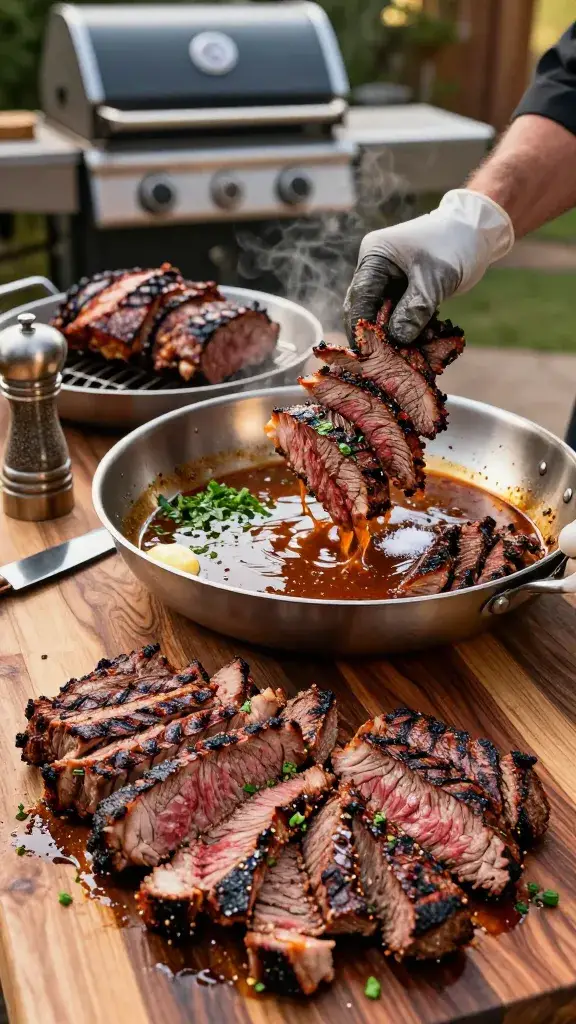
- Grill to doneness, rest, then slice across the grain into thin pieces. Mixing slices evens out strong and mild bits.
- Toss the sliced meat with a low-salt, low-acid pan sauce: melted unsalted butter, a splash of water, a pinch of sugar, and fresh herbs. Taste and adjust pepper.
- Hold sliced meat in a warm, covered pan to keep moisture even across the batch.
What to Use Instead
- Offer table salt separately rather than building it into the sauce. Guests can season to taste without risking the whole tray.
Takeaway: Slice and mix before serving, then bind with a gentle, unsalted finishing sauce to normalize seasoning across 50 portions.
6. Sticky, Burn-Prone Sugars: Control Heat and Glaze Late

Many marinades include sugar, ketchup, honey, or fruit. After a long soak, those sugars cling to the surface and scorch fast, leaving bitter, black patches.
How to Fix It
- Set up a two-zone grill: one hot side for searing, one cooler side for finishing. On a gas grill, leave one burner low or off.
- Scrape the grates clean, then oil the grates lightly with a folded paper towel and tongs.
- Cook the meat mostly on the cooler side; move briefly to the hot side for color. Apply any sweet glaze in the final 2-3 minutes only.
- Keep a spray bottle of water nearby for flare-ups, and a clean tray for finished meat to avoid re-coating with burnt sugars.
Signs to Watch For
- Surface darkens too fast while the interior is undercooked.
Action today: Use a two-zone fire and reserve sweet finishes for the last minutes to prevent bitterness.
7. Crowd Logistics: Stretch, Balance, and Serve Smart

An over-marinated batch can still feed 50 well if you portion wisely. If you serve big, whole cuts as-is, guests get the full brunt of salt and acid and you run short.
How to Fix It
- Build bowls or platters: sliced meat plus neutral bases like buttered rice, grilled vegetables, or tortillas. This dilutes intense flavors per bite.
- Add cooling sides: plain yogurt with chopped cucumber and dill, coleslaw with a creamy dressing, or avocado. Keep these unsalted or lightly salted.
- Portion by weight after slicing: 120-150 g (4-5 oz) cooked meat per person for mixed plates. You’ll hit 50 servings without overload.
- Offer a no-acid, no-salt condiment like chimichurri made without added salt, or a simple herb oil, so guests add freshness, not intensity.
Takeaway: Serve sliced meat with neutral bases and cooling sides to balance flavors and guarantee consistent portions for 50.
Frequently Asked Questions
How long should I rinse over-marinated meat without losing all flavor?
Rinse each piece for 5-10 seconds per side under cool water to remove surface salt and sugars. You’re not trying to strip the interior, just the outer layer where harshness concentrates. Pat very dry afterward so you still get browning. Then use a no-salt seasoning or finishing oil to add fresh flavor back.
What if the meat already tastes mushy before cooking?
Air-dry it on racks in the fridge for up to 90 minutes to firm the surface. Right before cooking, dust lightly with cornstarch or rice flour and shake off the excess. Cook over medium heat and avoid flipping early so a crust can set. If it’s very soft, cut into skewers to help pieces hold shape.
Can I fix over-marinated chicken with a rub?
Use a no-salt rub only. Focus on black pepper, garlic powder, smoked paprika, cumin, and dry herbs. Oil the chicken first so the rub adheres, then grill with a two-zone fire to prevent sugary bits from burning. Finish with a small amount of honey-butter glaze to round sharpness without adding salt.
What’s the best way to balance sour meat without making it too sweet?
Use fat first, then a touch of sweetness. Brush with oil before grilling, then glaze at the end with a 2:1 honey-to-butter mix, applied lightly. Serve alongside starchy sides like rice or potatoes to dilute the sourness. Avoid adding more acid (no extra vinegar or lemon juice) at the finish.
How do I keep sugary marinades from burning on a charcoal grill?
Bank coals to one side for two zones. Start meat on the cool side with the lid on to cook through, then kiss the hot side briefly for color. Apply any sweet glaze only in the last 2-3 minutes. Clean and oil grates before you start to reduce sticking and scorching.
What if I don’t have time to rest or air-dry the meat?
At minimum, rinse and pat very dry, then dust very lightly with cornstarch and get it on a medium fire. Keep pieces moving and flip only after a crust forms. Finish with a fresh herb oil off the grill to mask minor flaws. Serve with neutral sides to balance the plate quickly.
Conclusion
Over-marinated meat isn’t a lost cause — you just need to pull salt off the surface, protect the texture, and finish with fresh, low-salt flavor. Rinse, dry, control heat, and slice before serving, and you’ll keep 50 plates satisfied without remaking a single batch. Next cookout, set a timer on your marinades — and keep these rescue moves in your back pocket.