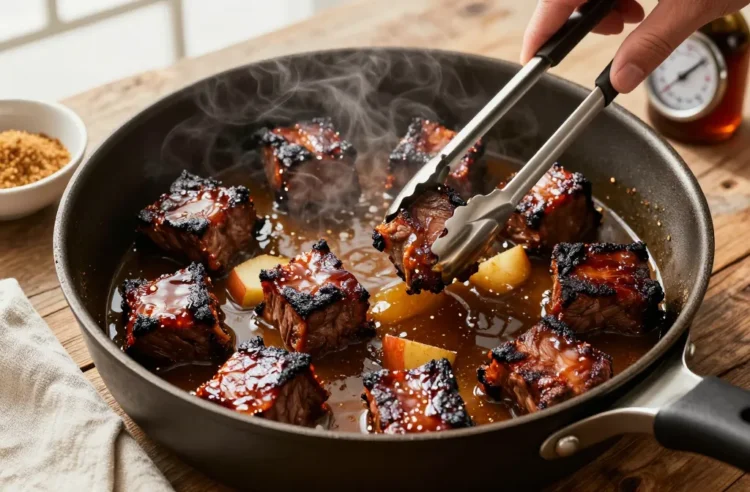
I’ve served brisket to big groups for years, and I’ve scorched my share of burnt ends along the way. If you’re staring at a pan of overdone cubes and a hungry crowd, I’ve been there — and I’ve saved the meal more than once with simple, reliable fixes. In this guide I’ll show you how to rehydrate, rebalance, and rebuild flavor using only what you can grab at a supermarket or hardware store. You’ll learn exactly how to rescue texture, restore moisture, and plate confidently for 30 people.
1. Dry, Tough Cubes: Rehydrate With a Balanced Braise
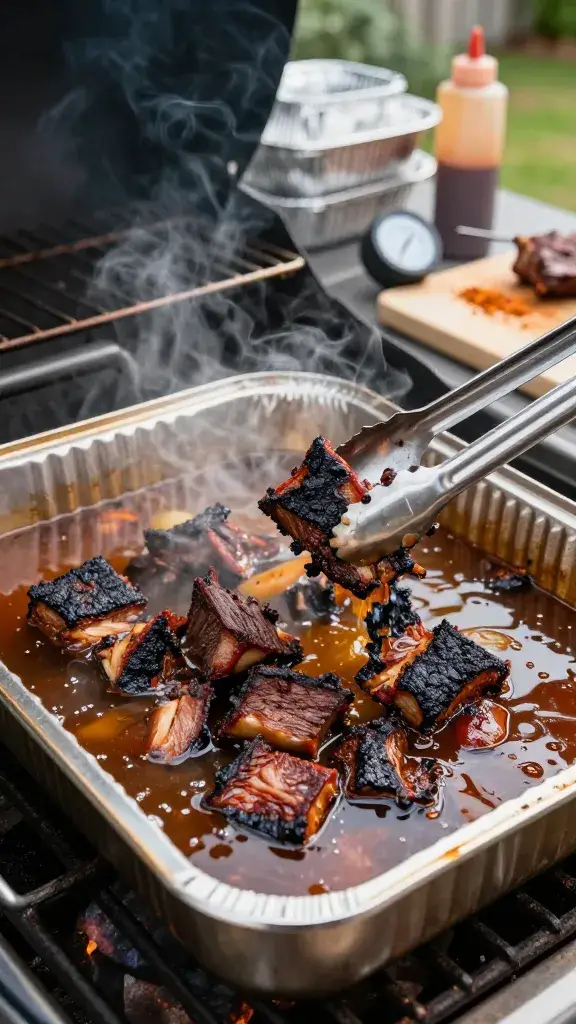
Burnt ends turn leathery when the surface dries out and the fat renders away too far. Serve them like that and people chew more than they enjoy, no matter how good your rub was.
How to Fix It
- Make a quick braising liquid in a roasting pan: 2 cups low-sodium beef stock, 1 cup apple juice, 2 tablespoons brown sugar, 2 tablespoons cider vinegar, and 1 tablespoon Worcestershire.
- Warm the liquid to a gentle simmer on the stove or grill side-burner. You want steam, not a rolling boil.
- Add the burnt ends in a single layer so most pieces touch the liquid. Cover tightly with foil.
- Braise at 275–300°F for 20–30 minutes, stirring once. Pull a test cube — it should press easily with a spoon and glisten.
- Finish uncovered for 5–10 minutes to set the surface if it looks soggy.
What to Use Instead of Specialty Gear
- A standard roasting pan or disposable aluminum pan
- Heavy-duty foil for a tight seal
- Oven or covered grill holding a steady medium heat
Takeaway: A light, sweet-sour braise for 20–30 minutes puts moisture back into dry burnt ends without turning them mushy — keep the heat moderate and the pan covered.
2. Bitter, Over-Charred Bark: Dilute and Balance the Burn
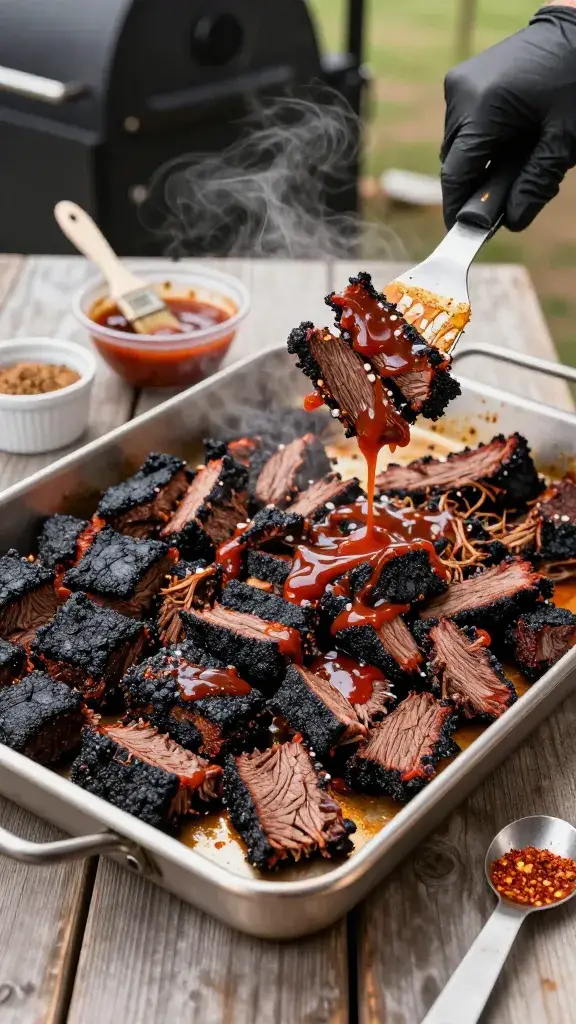
Overdeveloped bark tastes sharp and bitter, especially on smaller cubes where the ratio of crust to meat is high. If you plate that as-is, people taste ash before beef.
Signs to Watch For
- Jet-black edges that crumble into soot when pressed
- A sharp, lingering bitterness on the tongue, not just smoky intensity
- Thin cubes where bark makes up more than half the bite
How to Fix It
- Toss with a “rescue glaze”: 1 cup ketchup, 1/2 cup beef stock, 2 tablespoons honey, 1 tablespoon cider vinegar, 1 teaspoon soy sauce. Simmer 5 minutes until glossy.
- Fold in a 1:1 mix of the bitter ends with fresh, neutral protein if available: unseasoned smoked chuck, rotisserie chicken thigh, or even sautéed mushrooms for a portion of the pan. This dilutes bitterness while preserving texture.
- Finish with acidity and freshness: a light drizzle of cider vinegar and a sprinkle of chopped scallions or parsley right before serving.
What Not to Do
- Don’t drown them in sauce. Heavy sauce traps bitterness; thin, shiny glaze corrects it.
- Don’t add more smoke. Extra smoke piles on harshness when bitterness is already the issue.
Action today: Make the rescue glaze on the stovetop, toss hot burnt ends to thinly coat, then finish with a teaspoon of cider vinegar and chopped scallions per pound before serving.
3. Overly Sweet, Sticky Cubes: Cut Sugar and Add Savory Depth
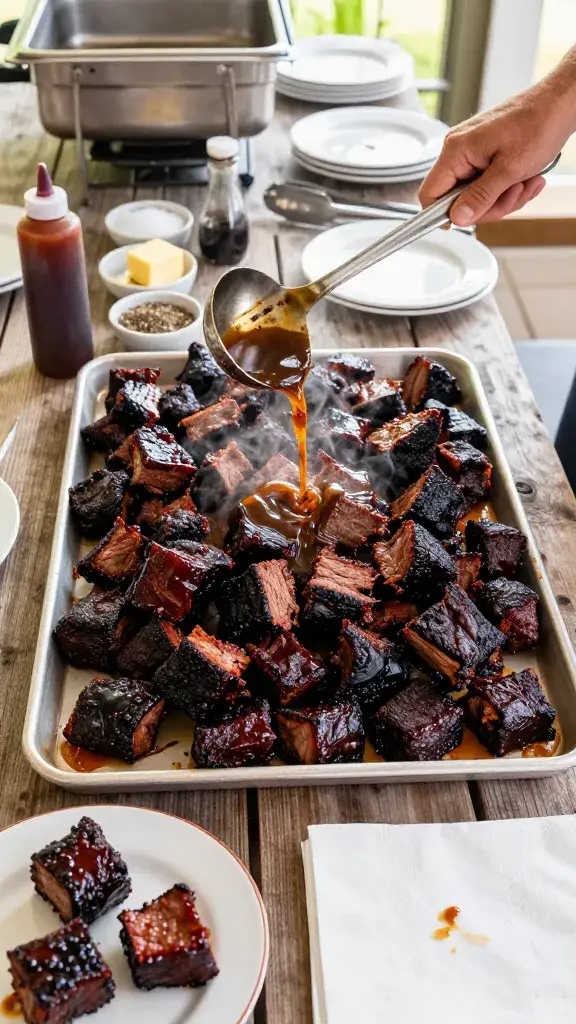
When burnt ends spend too long sauced in a hot pan, sugars caramelize into a sticky shell that tastes cloying. Thirty plates of dessert-like beef will wear people out after two bites.
Signs to Watch For
- Deep mahogany shine that stays tacky at room temperature
- One-note sweetness that drowns out smoke and beefiness
- Gummy fingers and napkins after the first piece
How to Fix It
- Deglaze the pan: Add 1/2 cup hot water or unsalted beef stock to the pan and scrape up sticky bits.
- Re-season with umami/savory:
- 1 teaspoon soy sauce per pound
- 1 teaspoon Worcestershire per pound
- 1/2 teaspoon instant espresso or finely ground coffee per 2 pounds (optional, for depth)
- Add gentle heat to reset balance: a pinch of cayenne or a few shakes of hot sauce per pound.
- Finish with acidity: stir in 1–2 teaspoons cider vinegar per pound to brighten.
Plating That Helps
- Serve with unsauced, lightly salted sides like plain potato rolls or rice to balance each bite.
- Offer pickles or a crunchy slaw dressed with vinegar, not mayo-heavy sweetness.
Takeaway: Thin sticky sauce with stock, layer in soy and Worcestershire for savoriness, then add a small hit of heat and vinegar to reset sweetness without masking smoke.
4. Unevenly Cooked Pan: Blend, Sort, and Finish in Zones
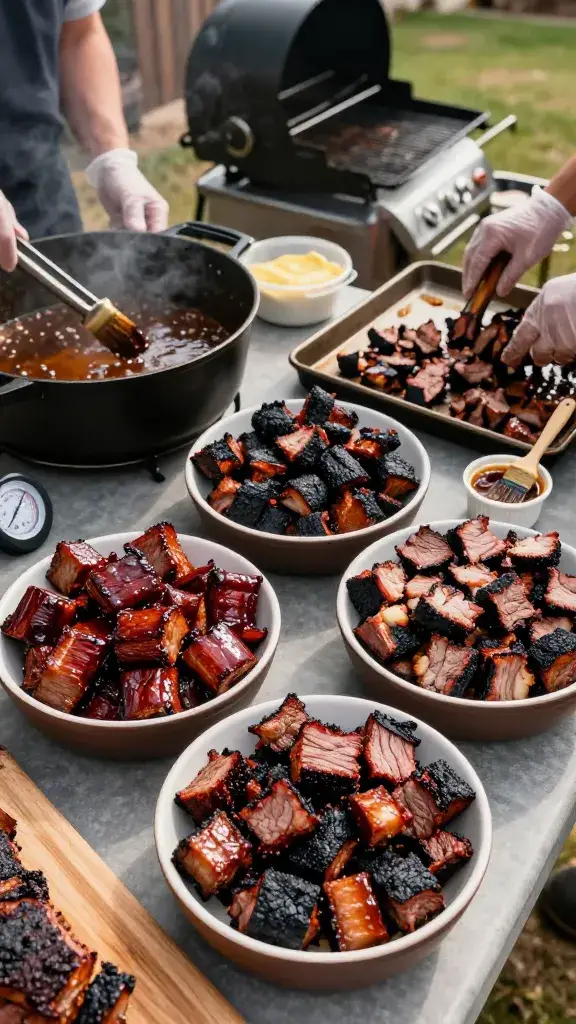
Large batches often include a mix of perfect cubes, dry edges, and under-rendered fatty pieces. If you reheat everything the same way, you fix nothing and risk ruining the good bits.
Sort First, Then Fix
- Divide into three bowls:
- Good: tender, juicy, balanced bark
- Dry: tough, shrunken, dark edges
- Fatty: soft, pale centers with chewy fat
- Dry batch: Braise as in Section 1 for 15–20 minutes.
- Fatty batch: Return to a 300–325°F oven or covered grill in a single layer for 10–15 minutes to finish rendering. No extra sauce yet.
- Good batch: Hold warm at 150–170°F, covered, with a splash of stock to prevent drying.
- Combine gently in a large pan with a light glaze right before service to even out moisture and flavor.
What to Use
- Two baking sheets and a roasting pan
- Foil and a small wire rack (optional) for the fatty batch
- Oven set to warm for holding
Action today: Sort the pan in five minutes, fix each group separately for 15–20 minutes, then recombine for a uniform tray that tastes intentionally cooked, not rescued.
5. Running Short for 30: Stretch With Smart Add-Ins and Serving Strategy
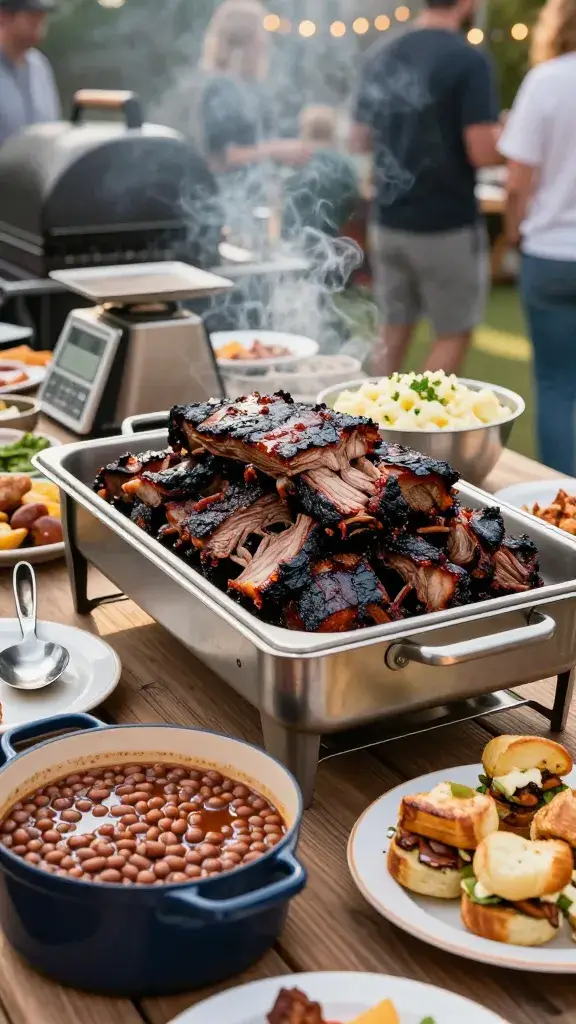
Burnt ends shrink fast when overdone, and you can end up a few pounds short for a crowd. If you portion the meat alone, the last guests get scraps and frustration.
Portion Planning and Stretchers
- Target 1/3–1/2 pound cooked meat per adult when sides are hearty. For 30 people, that’s 10–15 pounds cooked.
- Add bulk with texture:
- Smoked beans warmed with a ladle of the deglazed pan juices
- Buttered rice or garlic mashed potatoes as a base under the burnt ends
- Toasted potato rolls for sliders — meat stretches further in a bun
- Make a tray sauce: 2 cups beef stock, 1/2 cup ketchup, 2 tablespoons brown sugar, 1 tablespoon Worcestershire, 1 teaspoon soy sauce. Simmer to slightly thicken and toss lightly with the ends to create a glossy, satisfying bite without heavy pooling.
Service That Controls Portions
- Build stations: rice or rolls first, then burnt ends, then slaw/pickles. This keeps meat as the feature, not the whole plate.
- Use a #16 scoop or 1/4-cup measure for consistent serving — roughly 2 ounces of meat per scoop.
Takeaway: Stretch rescued burnt ends by serving over starch with bright sides, using a light tray sauce and controlled scoops so every guest gets a juicy, balanced portion.
Frequently Asked Questions
How many burnt ends do I need for 30 people?
Plan 10–15 pounds of cooked burnt ends for 30 adults, assuming hearty sides. If your pan looks short, serve over rice or in slider rolls and add a vinegar slaw and pickles to make every plate feel complete. Use a 1/4-cup scoop to keep portions even. Hold a small reserve pan in the oven so the buffet always looks full.
My burnt ends taste bitter. Is there a fast fix without making them too saucy?
Yes. Warm a thin glaze of ketchup, beef stock, honey, cider vinegar, and a dash of soy, then toss lightly to coat — you want sheen, not a thick layer. Finish with a teaspoon of vinegar and fresh chopped scallions per pound. This softens bitterness and brightens flavor without hiding the smoke.
What if the burnt ends are falling apart and mushy?
Skip braising — they already have too much moisture. Chill the pan uncovered for 10–15 minutes to firm the surface, then reheat briefly at 350°F for 5–8 minutes to set the edges. Toss gently with a tablespoon of oil per pound to add gloss and prevent shredding. Serve on sliders where soft texture feels intentional.
Can I rescue flavor if I forgot to salt enough early on?
Yes. Make a warm finishing blend: 1 teaspoon kosher salt, 1 teaspoon soy sauce, and 1 tablespoon beef stock per pound. Toss hot burnt ends with this mix and taste a piece after 60 seconds. Add a pinch more salt only if needed — it takes less than you think once the glaze warms through.
How do I keep the rescued batch hot and moist for a buffet?
Set the oven to 170°F or use a covered chafing dish with a splash of beef stock in the pan. Stir every 15 minutes and mist with water from a spray bottle if the surface dulls. Keep a foil cover on between serves, and only put out one smaller tray at a time to reduce drying.
What sides help balance rescued burnt ends for a crowd?
Choose bright, crunchy, and not-too-sweet sides: vinegar slaw, dill pickles, sliced raw onions, and baked beans seasoned with mustard rather than extra sugar. Starches like rice, cornbread, or small rolls help stretch portions and cushion strong flavors. Keep sauces simple: one tangy and one mildly spicy.
Conclusion
You don’t need specialty tools or a restart to turn overdone burnt ends into a crowd-pleaser. Rehydrate gently, rebalance bitterness and sweetness, sort and finish in zones, and serve with smart sides and controlled portions. If you want to go deeper next time, plan a separate point cut for burnt ends and cube larger — you’ll start closer to perfect before any rescue is needed.