- Best for: Catering, tailgates, church picnics, or pop-up events
- Make ahead: Yes — fix and hold up to 3 days chilled
- Serves: About 100 people (2–3 ounces per person)
- Key tip: Re-emulsify with a whisk and a controlled fat trickle — not more heat
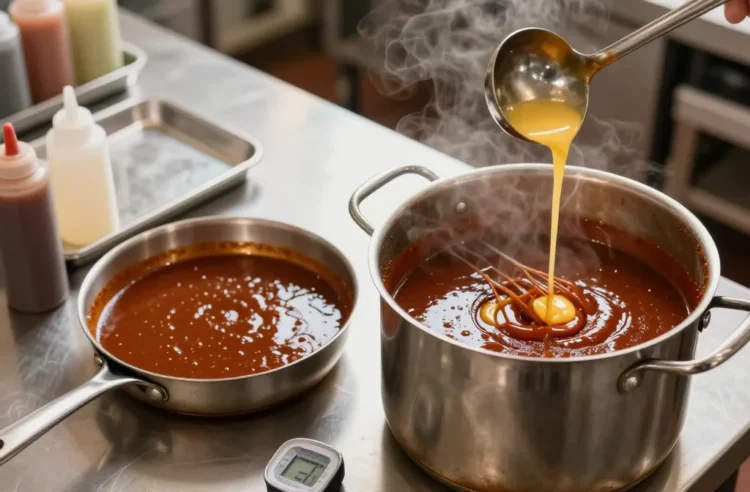
If you’re staring at a split, greasy pot and wondering how to fix a broken BBQ sauce emulsion for 100 people, you’re in the right place. When a vinegar-tomato-butter mash goes slick and streaky, panic follows fast — especially with guests arriving. The fix is methodical and quick once you know why it broke. In this guide, you’ll learn exactly how to diagnose, re-emulsify, and hold a large-batch BBQ sauce so it stays glossy and stable through service.
Why BBQ Sauces Break (and How to Spot It)
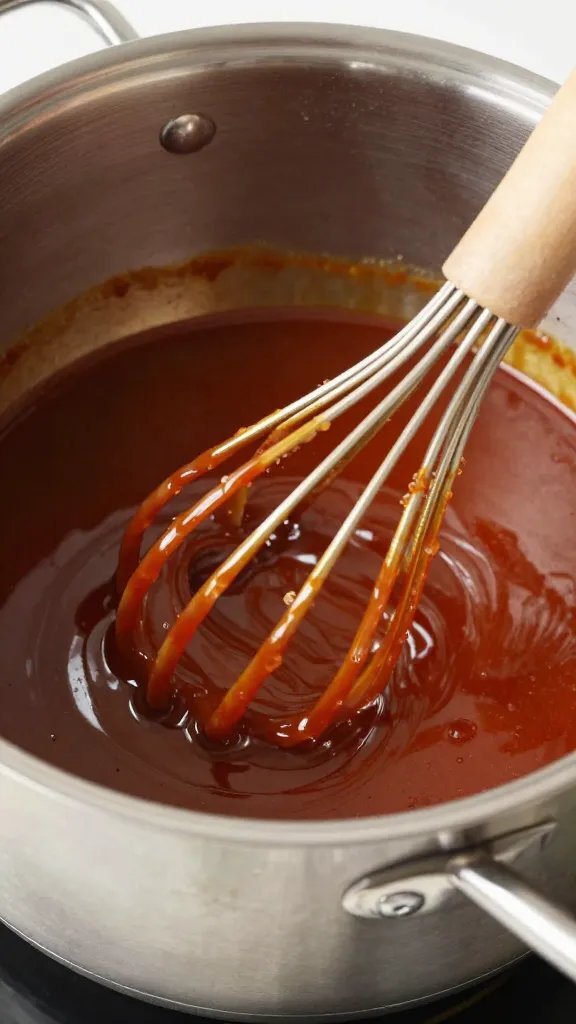
Emulsions break when fat and water phases separate. In BBQ sauce, that’s usually melted butter or rendered fat floating over a thin, sour base.
Common culprits:
- Overheating: Boiling after adding butter or oil makes droplets coalesce and separate.
- Wrong order: Dumping fat in too fast without shear (whisk/blender) overwhelms the emulsion.
- Acid shock: Heavy vinegar added late can destabilize the structure.
- Scaling up poorly: Multiplying fat linearly for a crowd without adding emulsifiers or shear.
Immediate Triage: How to Fix It Fast
For Tomato-Based, Butter- or Oil-Finished Sauces
- Kill the heat. Stop boiling immediately — heat is your enemy now.
- Transfer 2–3 cups of the thin, watery phase to a clean pot. Bring just to steaming (not boiling).
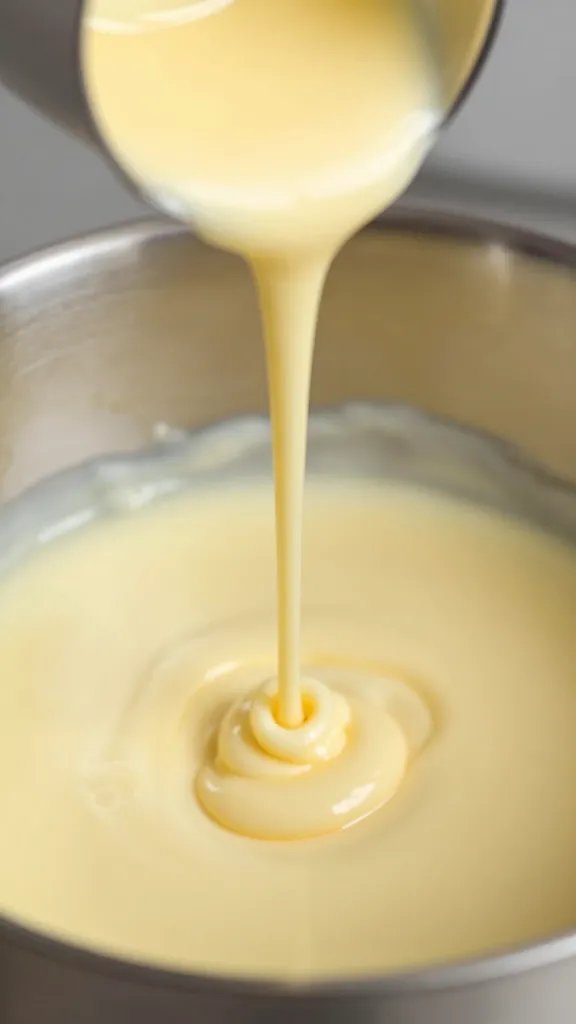
- Whisk like you mean it, then drizzle in the separated fat slowly (a teaspoon at a time). Keep the stream thin; keep whisking.
- Once it tightens and turns glossy, add another ladle of the broken sauce. Repeat until the pot re-emulsifies.
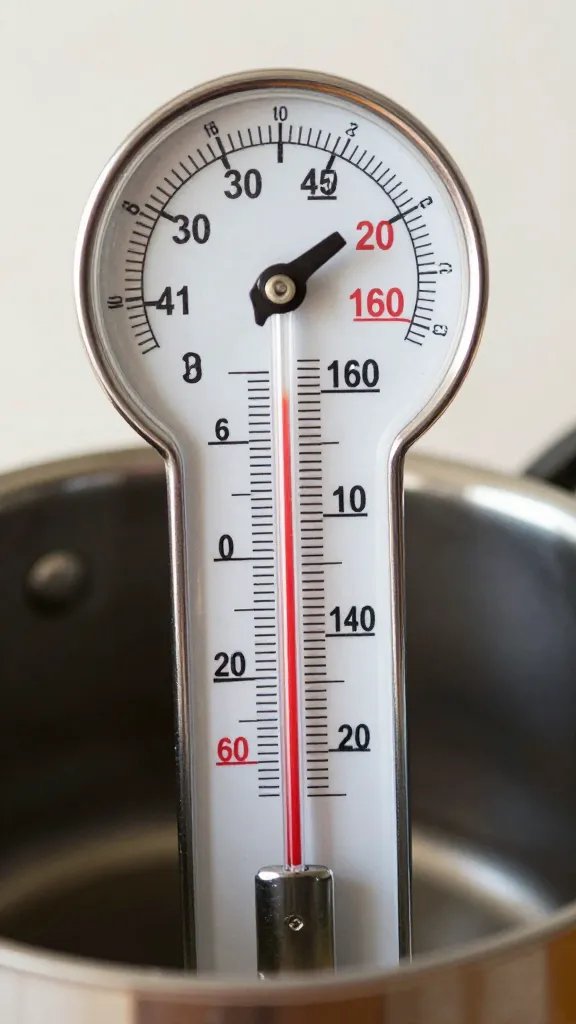
- Season-check and hold warm at 150–160°F. Do not simmer.
For Mustard- or Mayo-Style BBQ Sauces
- Whisk 2 tablespoons of the “continuous phase” (the thinner, non-oily part) with 1 egg yolk or 2 teaspoons prepared mustard in a bowl.
- Slowly drizzle in the broken sauce while whisking continuously until it reforms. The yolk or mustard adds lecithin and emulsifying power.
- Return to the pot and warm gently, never past 170°F.
Key principle: Start a small, stable base, then gradually incorporate the broken batch. Think of it as building a new emulsion that swallows the old one.
Stabilizers That Save Large Batches
Serving 100 means more variables. A few pantry stabilizers keep your sauce aligned during service.
- Tomato paste: 2–4 tablespoons per gallon adds viscosity and emulsifying fiber.
- Mustard (prepared or dry): 1–2 tablespoons per gallon strengthens emulsions without changing flavor much.
- Honey or molasses: 2–3 tablespoons per gallon increases body and reduces separation.
- Xanthan gum: Pinch-level power. Whisk in 1/8–1/4 teaspoon per gallon while blending; prevents weeping and splitting.
- Cornstarch slurry: 1 tablespoon cornstarch + 1 tablespoon water per gallon; simmer 1–2 minutes before adding fats.
Add emulsifiers before the fat and you’ll reduce the odds of splitting when you scale up.
Scaling the Fix for 100 People
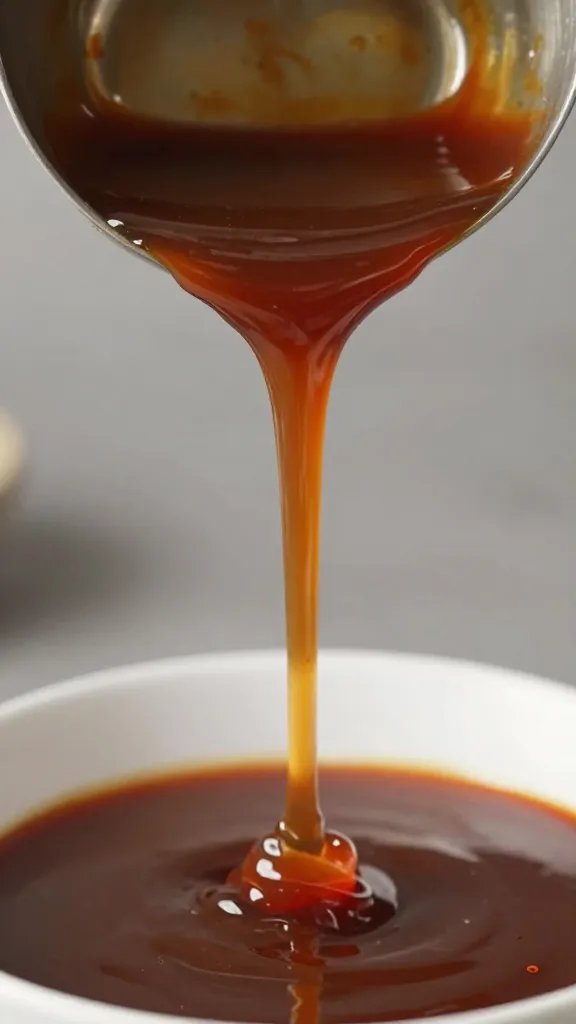
Plan on 1.5 gallons of sauce for 100 people at 2 ounces each (or 2 gallons at 3 ounces for heavy saucing).
Batch Strategy
- Work in halves: If 2 gallons break, fix 1 gallon at a time. It’s faster and safer.
- Blend with care: Immersion blenders add shear. Keep the head fully submerged to avoid air.
- Fat control: Hold back 10–15% of your finishing fat during the cook. Add it at the very end while blending in a thin stream.
Temperature Targets
- Cook phase: 185–200°F to dissolve sugars and bloom spices.
- Emulsion phase: 140–160°F for adding butter/oil.
- Hold phase: 150–160°F; above food-safe minimum, below breakage risk.
Step-by-Step: Re-Emulsify a Broken Pot
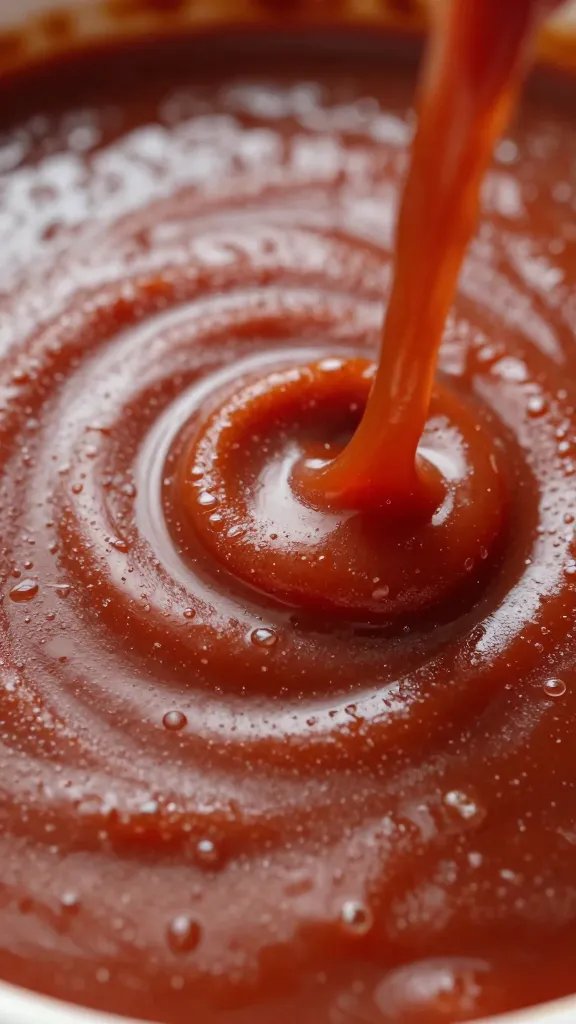
- Kill heat and skim off obvious surface fat into a measuring cup. Keep it warm.
- Blend 2 cups of the watery base with 1 tablespoon tomato paste and 1 teaspoon mustard until smooth.
- With the blender running low, drizzle in the reserved fat slowly. Stop when glossy and slightly thick.
- Start folding in the rest of the broken sauce, 1–2 cups at a time, blending between additions.
- Taste: add 1–2 teaspoons vinegar or lemon juice if flat; 1–2 teaspoons brown sugar if harsh. Salt to balance.
- Hold warm (150–160°F). Stir every 10–15 minutes to prevent hot spots.
Preventing a Repeat During Service
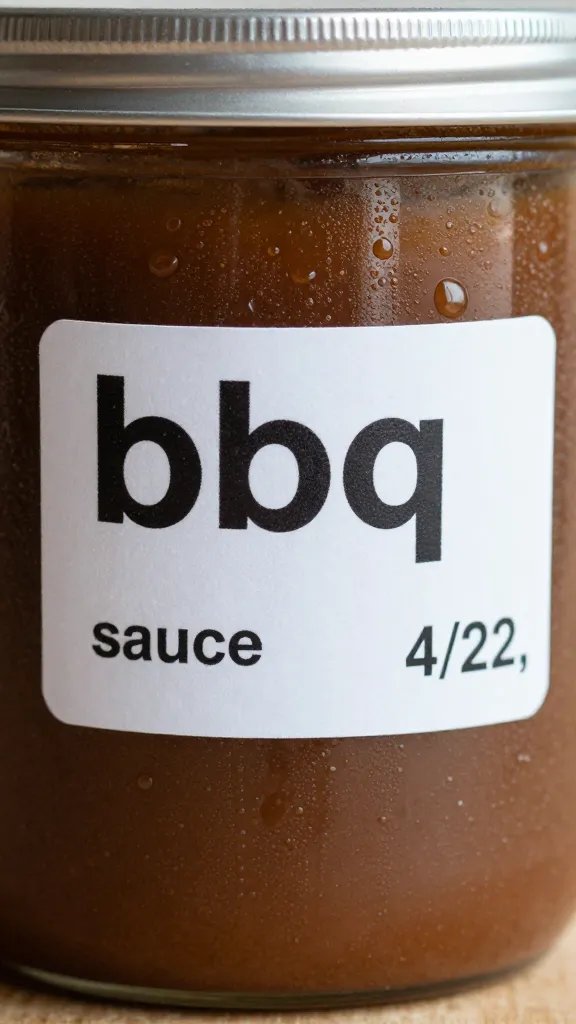
- Use warm holding, not simmering. Sterno and steam tables can creep hot; place a folded towel under the hotel pan to buffer heat.
- Stir gently from the bottom every 10 minutes. Don’t whisk air in on the line.
- Add fat last-minute. Keep a small reserve of sauce to refresh texture if it thickens too much.
- Serve in smaller pans and refill often. Large surface area cools and breaks sauce faster.
Need a bright, no-emulsion backup? Keep this chimichurri recipe on hand — it’s heat-free and crowd-friendly.
Troubleshooting Flavor After the Fix
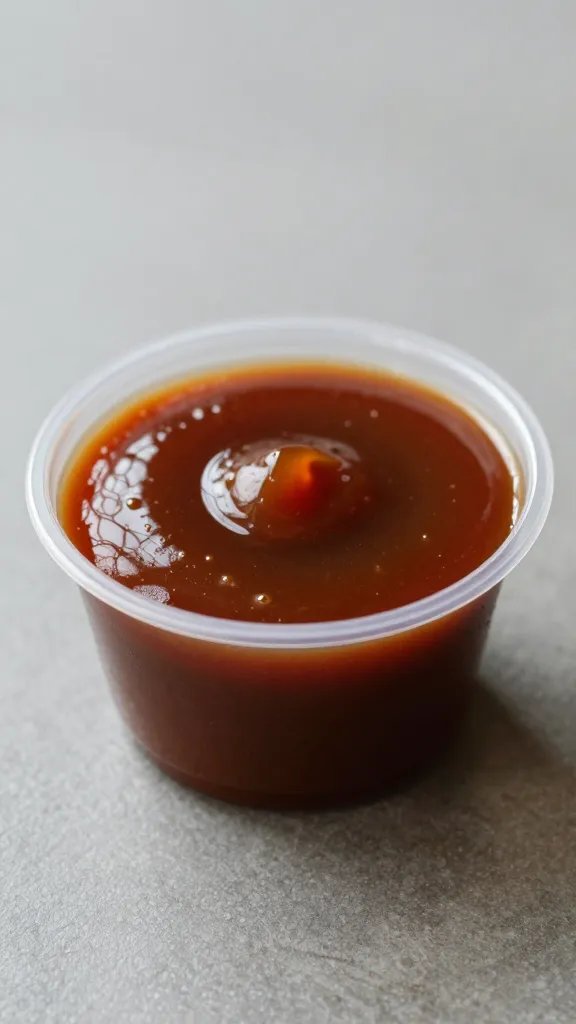
- Too tangy: Whisk in a spoon of brown sugar or honey per quart; simmer 60 seconds to melt, then cool to emulsion temp.
- Too sweet: Add 1–2 teaspoons cider vinegar per quart, plus a pinch of salt to sharpen.
- Too thin: Blend in 1 teaspoon tomato paste per quart, or a tiny pinch of xanthan. Avoid boiling.
- Greasy mouthfeel: Whisk in 1 teaspoon mustard per quart and blend 30 seconds.
If you want a sauce that holds beautifully on smoked meats without separating, try this Kansas City–style BBQ base as your starting point.
From My Kitchen: What Actually Works
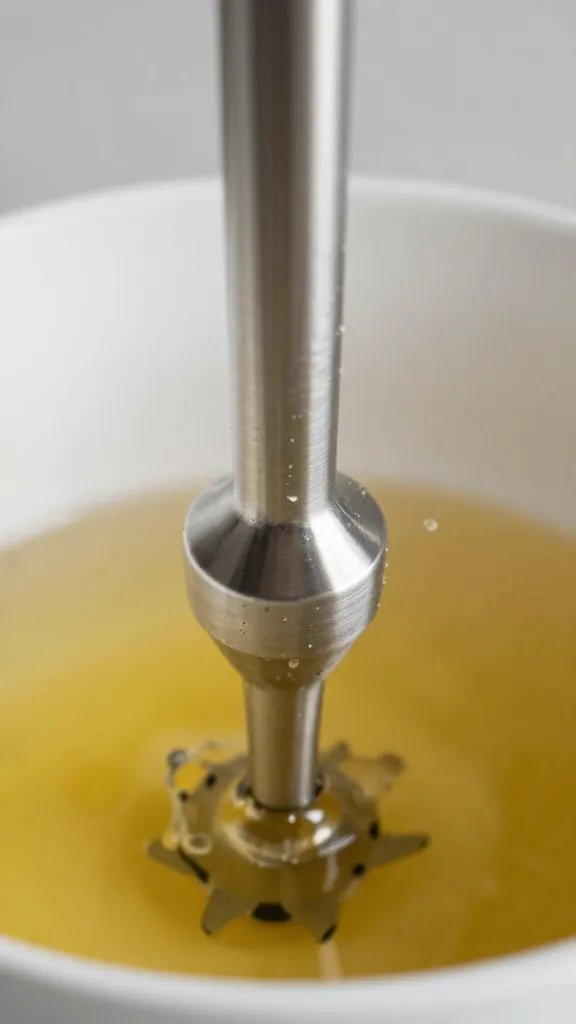
The fastest save I’ve tested is building a small, thick base with tomato paste and mustard, then blending in the broken batch slowly — it beats trying to fix the whole pot at once by at least 10 minutes. I also scale fat conservatively for crowds: I multiply everything, but I start with only 75% of the oil or butter and add the rest while blending if the texture needs it. On steam tables, a digital thermometer is non-negotiable; once a pan creeps past 170°F, I’ve watched emulsions fail within 5 minutes. One more note: xanthan at 0.1% by weight is invisible in flavor but dramatically stabilizes holding texture.
Frequently Asked Questions
How do I fix a broken BBQ sauce emulsion without a blender?
Use a heavy whisk and a small saucepan. Warm a cup or two of the watery phase, then drizzle in fat a teaspoon at a time while whisking hard. Once stable, whisk in the rest gradually.
Can I make a large-batch BBQ sauce ahead without it breaking?
Yes. Cook fully, cool to room temp, then refrigerate up to 3 days. Reheat gently to 150–160°F and blend in any reserved fat at the end. Avoid boiling during reheat.
How long does a fixed BBQ sauce keep in the fridge?
3–5 days covered and chilled. Reheat gently and whisk before serving. High-sugar, high-acid sauces skew to the longer end; mayo-based ones should be used sooner.
What’s the best way to serve BBQ sauce for a crowd?
Use 1/3-size hotel pans on low steam or insulated squeeze bottles in a warm water bath. Keep temps at 150–160°F and stir occasionally to maintain emulsion.
Can I freeze a re-emulsified BBQ sauce?
Most tomato-based sauces freeze well for 2–3 months. Cool completely, portion, and freeze. Thaw in the fridge and re-emulsify with a quick blend as needed. Avoid freezing mayo-based sauces.
The Bottom Line
A broken BBQ sauce emulsion looks scary, but the cure is simple: stop the heat, build a small stable base, and whisk or blend fat back in slowly. Stabilize smartly, hold gently, and your crowd of 100 will never know there was a hiccup.
Planning to try this? Save this post so you can find it when you need it — and tag us when you make it.