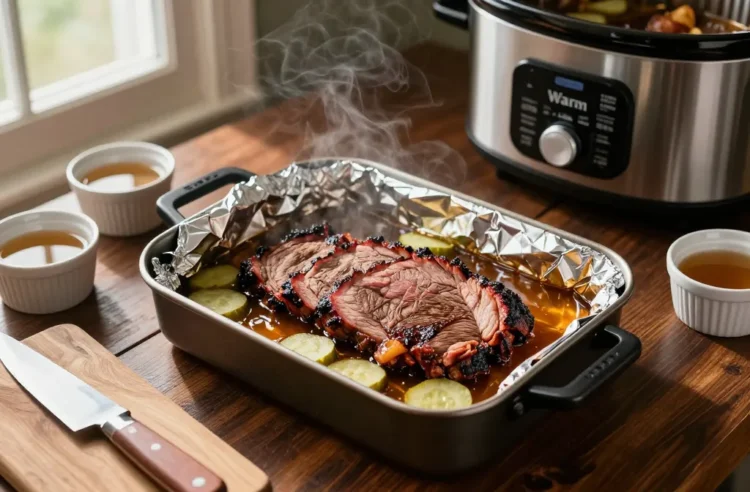
I’ve catered backyard cooks where someone sliced the brisket like deli meat and the crowd was due in 20 minutes. I’ve also shaved pork shoulders too close when I was rushing a carve. Thin slices dry out fast, cool even faster, and never feel satisfying on a plate — especially for 50 people. Here’s exactly how I salvage thin-cut BBQ so it stays juicy, tastes bold, and still feeds the whole group without panic.
1. Moisture Rescue: Rewarm Thin Slices In A Gentle Broth Bath
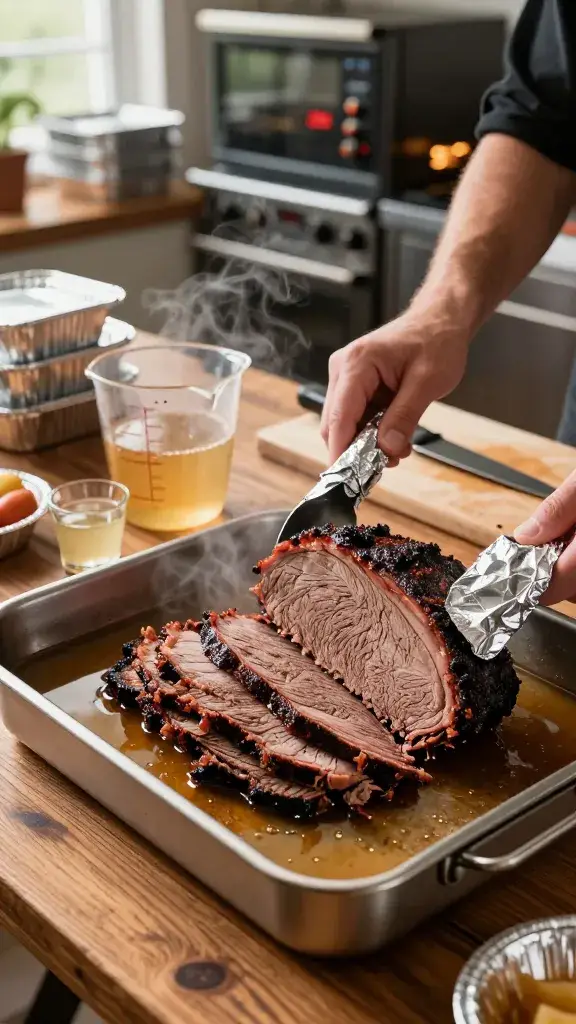
Thin slices lose moisture in minutes, turning leathery and bland. If you throw them back on high heat, they’ll seize and dry out even more. The fix is low heat and added moisture so the meat plumps without overcooking.
How to Fix It
- Combine low-sodium beef or chicken broth with a splash of apple cider vinegar or pickle juice (about 2 cups broth + 2 tablespoons acid per pan).
- Spread slices in a deep roasting pan, cover tightly with foil, and warm at 250–275°F for 15–25 minutes until steamy, not simmering.
- Hold at serving in a slow cooker on “Warm” with a ladle of the same liquid to keep edges supple.
What to Use Instead
- Use store-bought broth, a splash of juice from your pickle jar, and regular aluminum foil.
- No thermometer? Stop when a wisp of steam escapes as you lift a corner of foil and the slices bend without cracking.
Takeaway: Reheat thin slices covered at low heat in a light broth bath — never dry or hot.
2. Flavor Shield: Brush With A Finishing Glaze To Add Body And Shine
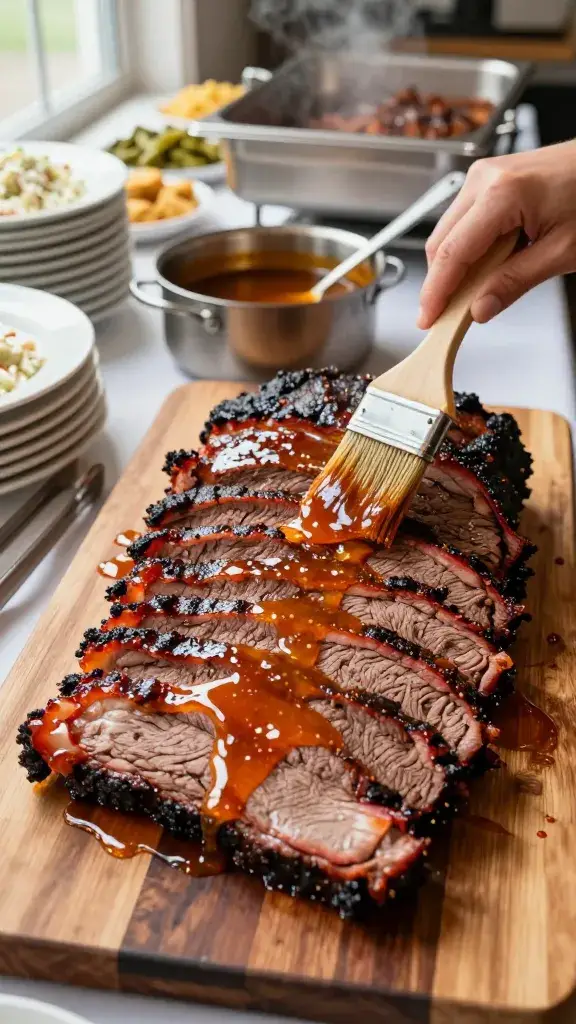
Thin meat tastes weaker because there’s less interior to carry seasoning. It also looks dull on a platter, which makes portions feel skimpy. A quick glaze adds salt, sweet, acid, and fat that cling to the surface and make every bite pop.
How to Fix It
- Mix 1 cup bottled BBQ sauce with 2 tablespoons apple jelly or honey and 1 tablespoon cider vinegar.
- Warm gently and brush thinly over rewarmed slices right before serving.
- For brisket, whisk 2 tablespoons rendered fat or melted butter into the glaze to boost richness.
Signs You Nailed It
- Slices look glossy, not gummy.
- Drips form slow beads, not a thick coat.
Action today: Make a quick sweet-tangy glaze and brush a thin coat over warm slices just before service.
3. Strategic Serving: Stack, Shingle, And Sauce To Retain Heat And Juiciness
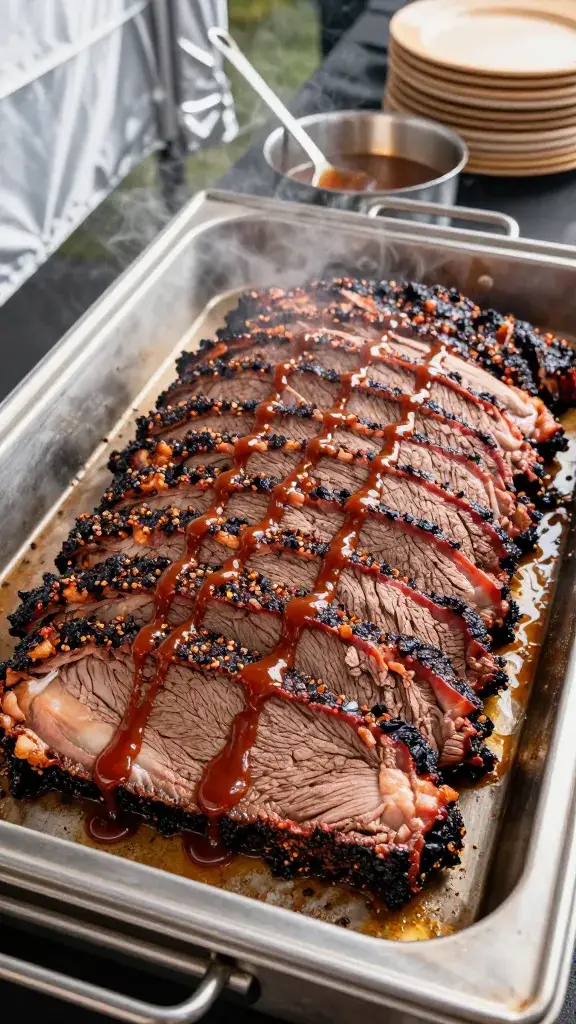
Spread-out meat cools and dries faster than you can plate it. Guests see gaps and assume small portions. Strategic stacking traps steam and makes a generous-looking platter with the same amount of meat.
How to Plate It
- Shingle slices in overlapping rows on a warm platter or sheet pan covered with foil for 10 minutes beforehand.
- Drizzle a light zigzag of warmed thinned sauce (1:1 sauce to broth) across the top row only.
- Refresh the exposed edge every 10–15 minutes with a spoonful of the warm pan juices.
Tools From Home
- Preheat platters in a 200°F oven or run under hot tap water, then dry well.
- Use standard aluminum trays set over a dry towel to reduce heat loss from the table.
Takeaway: Keep slices overlapped on a warm platter with a light sauce drizzle to slow drying and look abundant.
4. Portion Control With Purpose: Build Sliders, Not Plates
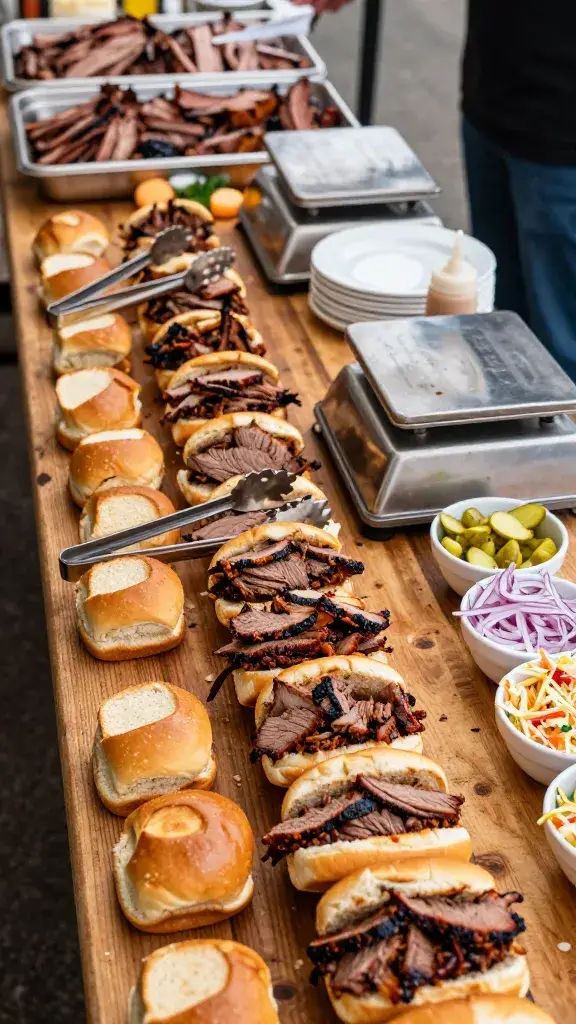
Thin slices feel meager on a big plate, and guests load up more to compensate. That drains your supply for a crowd of 50. Sliders reset expectations and let you control meat-to-bread-to-topping ratios without shortchanging anyone.
How to Fix It
- Use slider buns, small dinner rolls, or soft sandwich rolls split into thirds.
- Target 1.5–2 ounces cooked meat per slider (2–3 thin slices), plus a spoon of slaw or pickles.
- Offer two sliders per person at first pass; announce seconds after everyone is served.
Toppings That Stretch Flavor
- Vinegar slaw (bagged slaw + cider vinegar + sugar + salt).
- Pickled onions (red onion + vinegar + pinch sugar + salt; 20-minute quick pickle).
- Dill pickle chips and thin-sliced jalapeños.
Action today: Switch to sliders with bright toppings — set the “two-per-person” rule at the front of the line.
5. Smart Sides: Add Hearty, High-Contrast Dishes That Satisfy Quickly
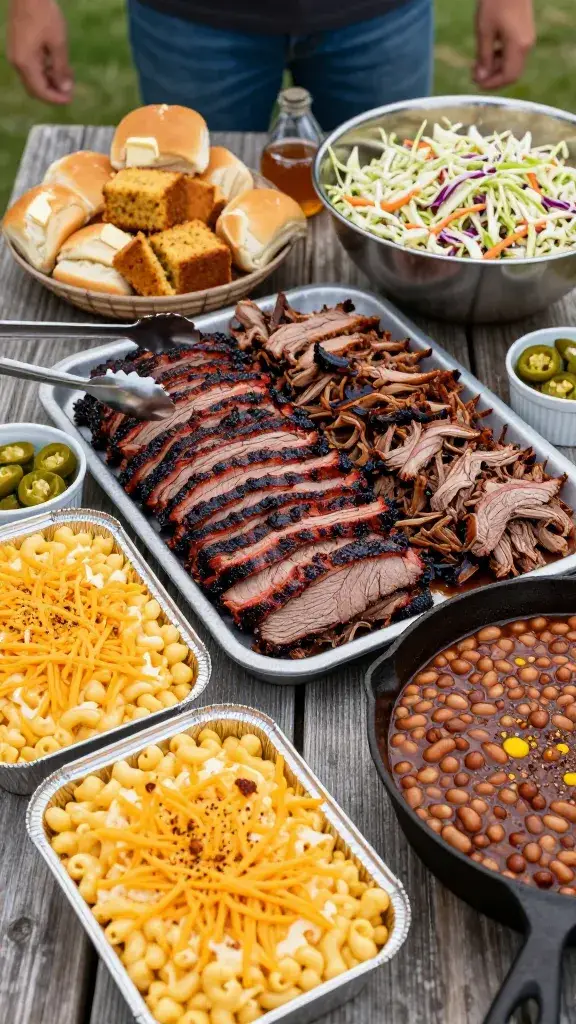
If the meat feels light, guests compensate with second helpings. Filling, punchy sides satisfy early and protect your supply. Contrast in texture and acidity also makes thin meat taste richer.
What To Serve From A Grocery Run
- Cheesy mac in foil pans (buy prepared or use boxed; finish with shredded cheddar under the broiler).
- Tangy beans (canned baked beans + a splash of cider vinegar + mustard + black pepper).
- Cornbread or soft rolls brushed with melted butter and honey.
- Crisp slaw with extra vinegar and cracked pepper.
Portion Guidance
- Mac: 4–5 pounds dry pasta total for 50 as a side.
- Beans: 2 large #10 cans.
- Slaw: 3–4 bags (14–16 oz each) plus dressing.
Takeaway: Pad the table with one creamy, one tangy, and one bready side so guests feel full with normal portions.
6. Texture Play: Crisp The Edges Quickly For Burnt-End Energy
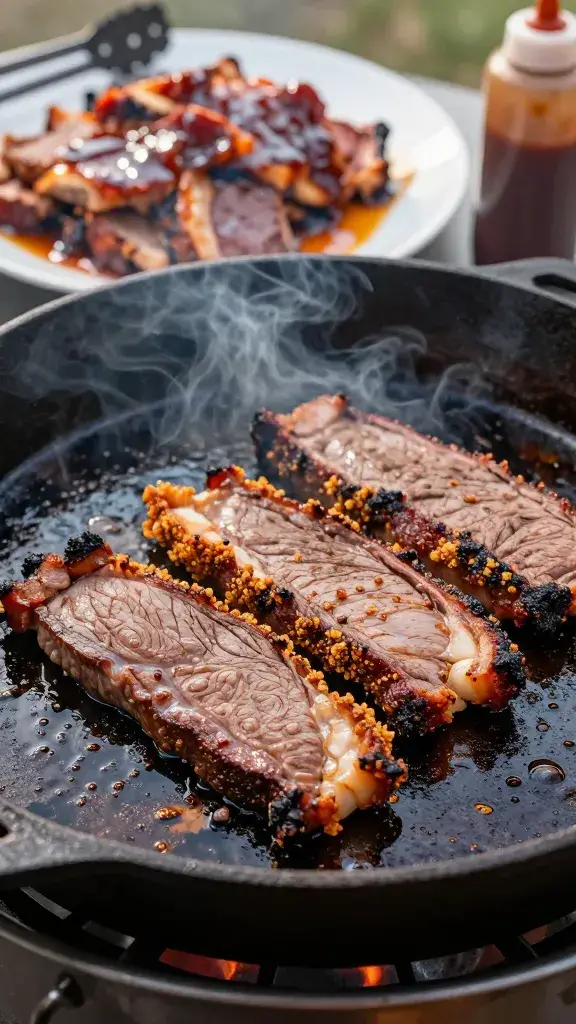
Thin meat lacks chew and crust, so the experience feels flat. Quick edge crisping adds contrast and concentrates flavor, tricking the palate into perceiving richness. Done fast, it won’t dry the slice.
How to Do It Without Drying
- Heat a lightly oiled cast-iron pan until it just smokes.
- Lay 3–4 slices at a time, 10–15 seconds per side — you want a kiss of browning, not a fry.
- Return to your warm, sauced platter immediately.
When To Use This
- Best on brisket, tri-tip, and pork shoulder slices with any surface fat.
- Avoid on chicken breast — it dries fast; use glaze and broth bath instead.
Action today: Add a fast sear to the outer 10–20% of your batch to boost texture without sacrificing moisture.
7. Recut With Purpose: Turn Strips Into Chopped Or Pulled For Even Coverage
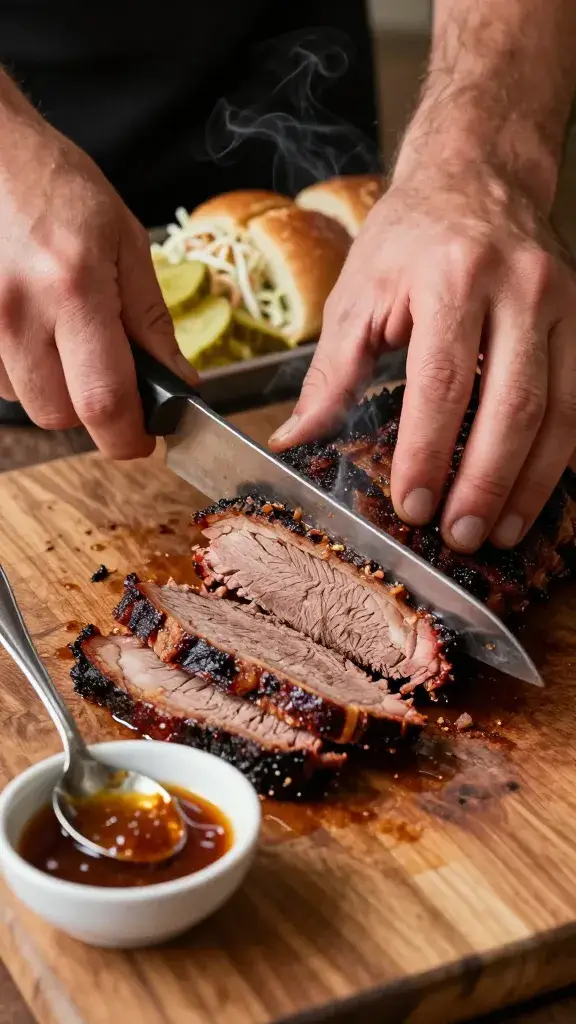
Paper-thin slices collapse on a bun and slide off a fork. Chopping or rough-pulling gives you bite-sized pieces that hold sauce and toppings, making smaller portions feel generous. It also lets you blend drier edges with juicier bits.
How to Fix It
- Stack 3–4 thin slices; cut crosswise into 1/2-inch pieces with a chef’s knife or kitchen shears.
- Toss gently with warm pan juices and a spoon of glaze until coated, not soupy.
- Serve as “chopped” brisket or pork on rolls with slaw and pickles.
Signs You Got It Right
- Pieces hold together when scooped but aren’t sticky clumps.
- Shiny surface with no dry corners.
Takeaway: Convert fragile slices into chopped or pulled portions so each scoop feels meaty and well-sauced.
8. Line Management: Control Heat, Flow, And Expectations For 50 People
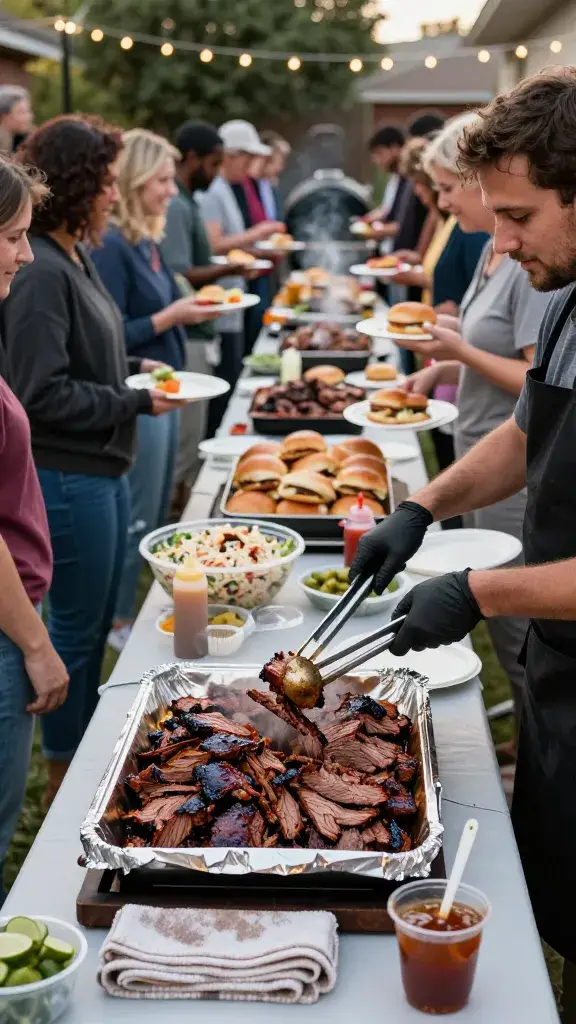
Great meat can still feel disappointing if it’s cold or unevenly portioned. A chaotic line drains trays and creates frustration. A simple serving station plan keeps food hot and portions fair.
Set Up A Two-Stop Meat Station
- Station A: Meat in a foil-covered pan over a dry towel with a ladle of warm broth; one server gloved, using tongs.
- Station B: Buns, slaw, pickles, sauces; a second server builds plates or hands out slider buns.
- Post a small sign: “Two Sliders + Sides — Seconds After First Round.”
Keep Heat And Quality
- Rotate smaller pans frequently instead of exposing one big pan.
- Refresh with warm broth bath liquid every 10 minutes — 1–2 spoonfuls across the top layer.
Action today: Assign two servers, post the “two sliders first” rule, and rotate smaller covered pans to keep everything hot and consistent.
Frequently Asked Questions
How much meat do I need for 50 if it’s sliced thin?
Plan 1/3 to 1/2 pound cooked meat per person when serving with hearty sides and buns. Thin slices can feel light, so lean toward 1/2 pound if it’s the main feature. If you switch to sliders with robust sides, 1/3 pound holds up because bread and toppings add substance. Always hold back a reserve pan for seconds after the first pass.
What if the meat is already cold and dry?
Lay slices in a roasting pan with low-sodium broth and a splash of cider vinegar, cover tightly, and warm at 250–275°F for 20 minutes. Brush with a light glaze as you serve to restore sheen and flavor. Keep the platter warm and overlapped to trap steam. Don’t boil or microwave uncovered — that toughens the meat.
Which store-bought sauces work best for thin meat?
Choose a thinner vinegar-forward sauce for pork and chicken, and a balanced sweet-smoky sauce for beef. If your sauce is thick, cut it 1:1 with broth so it coats without masking the meat. Stir in a tablespoon of melted butter or rendered fat for beef to add depth. Warm the sauce gently so it spreads evenly.
How do I keep slices hot on a picnic table without chafers?
Preheat aluminum trays in a 200°F oven, line the table with a folded towel, and set the trays on top to reduce heat loss. Keep meat covered with foil and only expose one short shingled row at a time. Refresh with a spoon of warm broth every 10–15 minutes. Rotate smaller backup pans from the oven set to “Warm.”
Can I turn thin slices into tacos instead?
Yes — tacos are an excellent save. Chop the slices into small pieces, toss with warm pan juices, and serve on warmed small tortillas with a bright salsa, onions, and cilantro. The tortilla size controls portions, and fresh toppings add moisture and acidity. Offer two tacos per person, then open for seconds.
What if I oversalted the glaze while trying to boost flavor?
Thin it with unsalted broth and a teaspoon of honey or apple jelly to balance salt. Add a splash of cider vinegar to wake up the palate without more sodium. Brush lightly and taste a slice before glazing the whole tray. Serve with a tangy slaw to balance the overall plate.
Conclusion
You don’t need more meat or special gear — you need moisture, smart plating, and clear flow. Pick two fixes you can do right now: a gentle broth rewarm and a switch to sliders with punchy sides. You’ll serve confidently, keep the line moving, and send 50 people back for seconds because they want to, not because they’re still hungry.