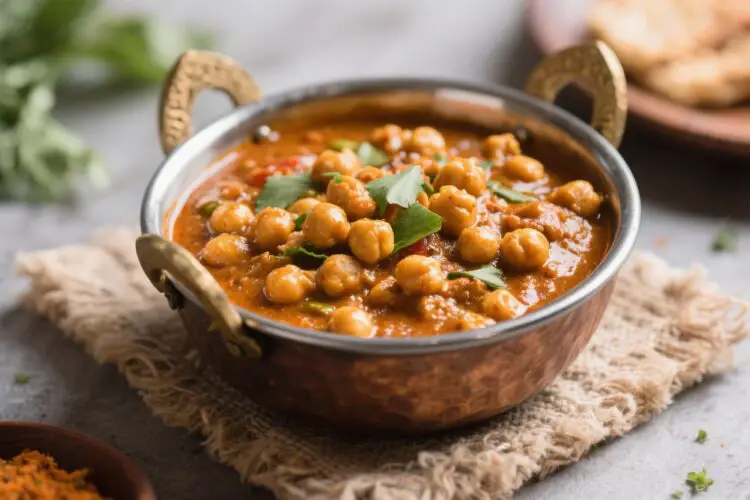
Chana Masala is one of those dishes that always hits the spot: warm, tangy, and deeply satisfying. It’s a Punjabi staple, made with chickpeas simmered in a spiced tomato-onion gravy. The flavors are bold but balanced, with a gentle heat and a bright finish from citrus or amchur.
It’s also budget-friendly, naturally vegan, and full of protein. Whether you serve it with rice, naan, or a quick salad, this is a weeknight star that feels special enough for company.
Why This Recipe Works

- Layered flavors: Blooming spices in hot oil builds a base that’s rich and aromatic without being heavy.
- Balanced tang: Tomato, amchur (dried mango powder), or lemon juice adds brightness that cuts through the warmth of the spices.
- Creamy texture without cream: Simmering chickpeas in a thick masala lets the starches release, creating a naturally silky sauce.
- Everyday ingredients: Pantry staples like canned tomatoes, onions, and chickpeas make this accessible and quick.
- Customizable heat: Adjust fresh chilies, red chili powder, or garam masala to suit your spice comfort level.
Ingredients
- 2 cans (15 oz/425 g each) chickpeas, drained and rinsed (or 3 cups cooked chickpeas)
- 2 tbsp neutral oil (sunflower, canola, or ghee for a richer taste)
- 1 large onion, finely chopped
- 1½ tsp grated fresh ginger
- 3 cloves garlic, minced
- 1–2 green chilies (like serrano), slit or finely chopped (optional, adjust to taste)
- 1 can (14 oz/400 g) crushed tomatoes (or 3 medium ripe tomatoes, blended)
- 2 tsp ground coriander
- 1½ tsp ground cumin
- 1 tsp turmeric powder
- 1–1½ tsp Kashmiri red chili powder (or paprika for color + cayenne for heat)
- 1 tsp garam masala, plus more to finish
- 1 bay leaf
- 1 black cardamom pod (optional, for smoky depth)
- ½ tsp amchur (dried mango powder) or 1–2 tsp lemon juice
- ½–1 tsp salt, or to taste
- ¾–1 cup water (adjust for desired consistency)
- Fresh cilantro, chopped, for garnish
- Optional: 1 tsp kasuri methi (dried fenugreek leaves), crushed
Step-by-Step Instructions
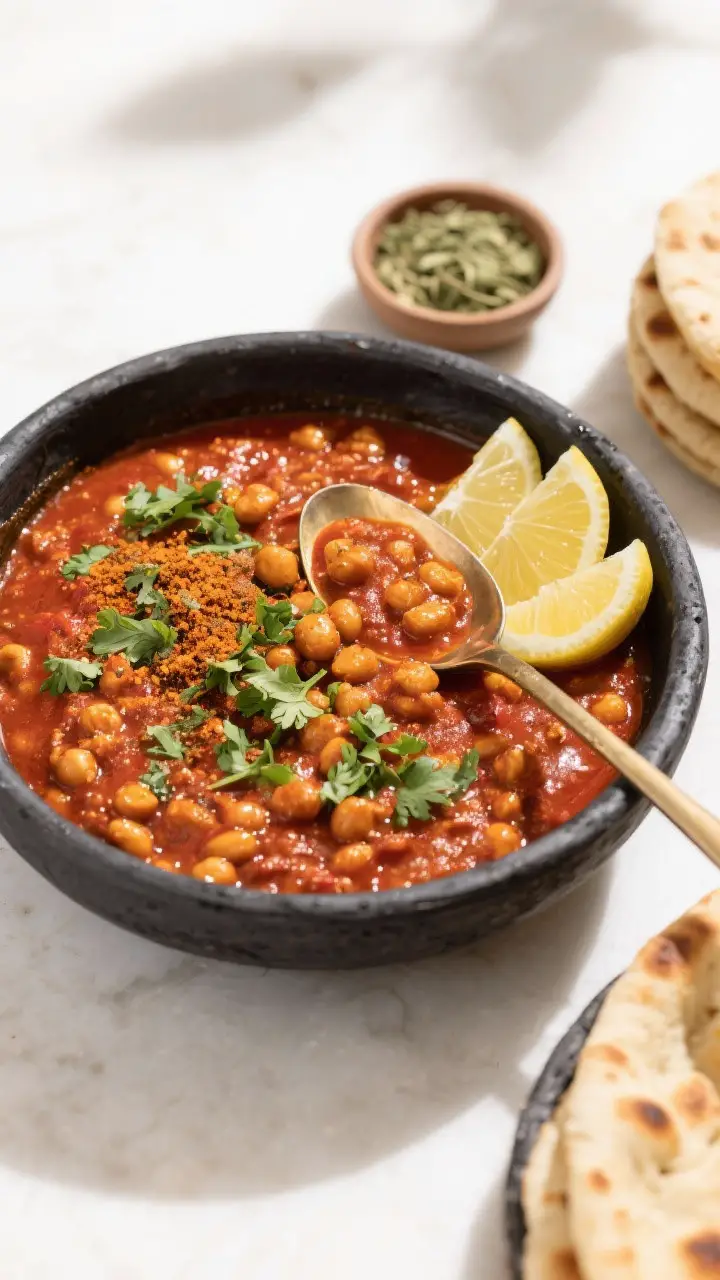
- Prep the aromatics: Chop the onion, mince the garlic, grate the ginger, and slit or chop the chilies. Rinse and drain the chickpeas.
- Warm the oil: Heat oil in a heavy pot over medium heat.
Add the bay leaf and black cardamom (if using). Let them sizzle for 30 seconds to perfume the oil.
- Cook the onion: Add onions with a pinch of salt. Cook, stirring occasionally, until golden and slightly caramelized, about 8–10 minutes.
Don’t rush this step; it builds flavor.
- Add ginger, garlic, and chili: Stir for 1 minute until fragrant. If it sticks, lower the heat slightly.
- Toast the spices: Add coriander, cumin, turmeric, and red chili powder. Stir for 30 seconds to bloom the spices.
If it looks dry, add a splash of water to prevent burning.
- Add tomatoes: Pour in crushed tomatoes. Cook, stirring, until the oil starts to separate and the sauce thickens, 6–8 minutes. This cooks out the raw tomato flavor.
- Simmer with chickpeas: Add chickpeas, ¾ cup water, and salt.
Stir well. Bring to a gentle simmer, cover, and cook for 12–15 minutes so the chickpeas absorb the masala.
- Adjust texture: Use a spoon or potato masher to lightly mash a small portion of chickpeas in the pot. This makes the sauce creamier.
Add more water if you prefer it looser.
- Finish the flavor: Stir in garam masala, amchur or lemon juice, and kasuri methi (if using). Simmer for 2 more minutes. Taste and adjust salt, tang, and heat.
- Garnish and serve: Scatter chopped cilantro.
Serve hot with basmati rice, jeera rice, roti, or naan. A side of sliced onions and lemon wedges is classic.
Keeping It Fresh
- Storage: Cool completely, then refrigerate in an airtight container for up to 4 days.
- Freezing: Freezes well for up to 2 months. Thaw overnight in the fridge and reheat gently with a splash of water.
- Make-ahead: The flavor improves on day two.
You can also make the onion-tomato masala in advance and add chickpeas later.
- Reheating: Warm over low heat on the stove. If it thickens too much, stir in water and re-balance salt and lemon.

Health Benefits
- Plant protein: Chickpeas are rich in protein and fiber, helping you feel full and energized.
- Heart-friendly: Low in saturated fat and high in soluble fiber, chickpeas can support healthy cholesterol levels.
- Micronutrient boost: Turmeric, coriander, and cumin bring antioxidants and anti-inflammatory compounds.
- Balanced meal: Pair with whole grains like brown basmati or whole wheat roti for complete protein and steady energy.
What Not to Do
- Don’t skip blooming the spices: Adding spices to cold or barely warm oil won’t unlock their aroma and depth.
- Don’t rush the onions: Pale onions lead to a flat sauce. Aim for golden brown for sweetness and complexity.
- Don’t drown it: Too much water gives a watery curry.
Start with less and add gradually to reach a saucy, spoon-coating consistency.
- Don’t overdo garam masala: It’s a finishing spice. Too much can make the dish bitter or overwhelming.
- Don’t forget acidity: A touch of amchur or lemon at the end brightens everything. Without it, the flavors feel muted.
Alternatives
- Dry chana masala: Cook as directed, then reduce to a thicker consistency with minimal gravy.
Great with puri or bhatura.
- No amchur: Use lemon or lime juice, or 1–2 tsp tamarind pulp for a tangy twist.
- Spice swaps: If you can’t find Kashmiri chili powder, use paprika for color and a pinch of cayenne for heat.
- From dried chickpeas: Soak 1½ cups dried chickpeas overnight with ½ tsp baking soda, rinse, then pressure cook until tender. Save some cooking liquid to enrich the gravy.
- Add-ons: Stir in spinach, roasted cauliflower, or diced potatoes for more texture and variety.
- Oil-free option: Sauté onions with a splash of water or broth, then add spices and proceed. The flavor will be lighter but still tasty.
FAQ
Can I make chana masala in an Instant Pot?
Yes.
Sauté the onions, aromatics, and spices on Sauté mode, add tomatoes and cook until thick, then add chickpeas and ½–¾ cup water. Pressure cook on High for 6 minutes (for canned chickpeas) with a quick release. Finish with garam masala and lemon.
What’s the difference between Punjabi chana masala and chole?
They’re closely related.
Chole often uses a darker, richer gravy and may include whole spices like tea-soaked chickpeas for color and deeper flavor. Chana masala typically has a brighter, tangier profile.
How do I fix a curry that turned too spicy?
Add more chickpeas, a splash of coconut milk (not traditional but effective), or a knob of butter/ghee. You can also balance heat with acidity (lemon) and a bit of sweetness (a pinch of sugar).
Can I use fresh tomatoes instead of canned?
Absolutely.
Blend 3 ripe tomatoes for a smooth sauce or finely chop for a chunkier texture. Cook them longer to evaporate water and deepen the flavor before adding chickpeas.
My curry tastes flat. What should I add?
Try a pinch of salt, a squeeze of lemon, or a little more garam masala at the end.
Often it’s the acidity or finishing spices that bring the dish to life.
How thick should the sauce be?
Aim for a gravy that clings to the chickpeas without pooling excessively on the plate. It should coat a spoon and leave a light trail when you run your finger across the back.
Is chana masala gluten-free?
Yes, the curry itself is naturally gluten-free. Just pair it with rice or gluten-free flatbreads if needed.
Final Thoughts
Chana Masala is proof that simple ingredients can deliver big flavor.
With a few pantry spices, a good simmer, and a bright finish, you get a dish that’s cozy, nourishing, and crowd-pleasing. Keep this recipe on rotation for easy weeknights and relaxed weekends alike. It’s dependable, adaptable, and always delicious.