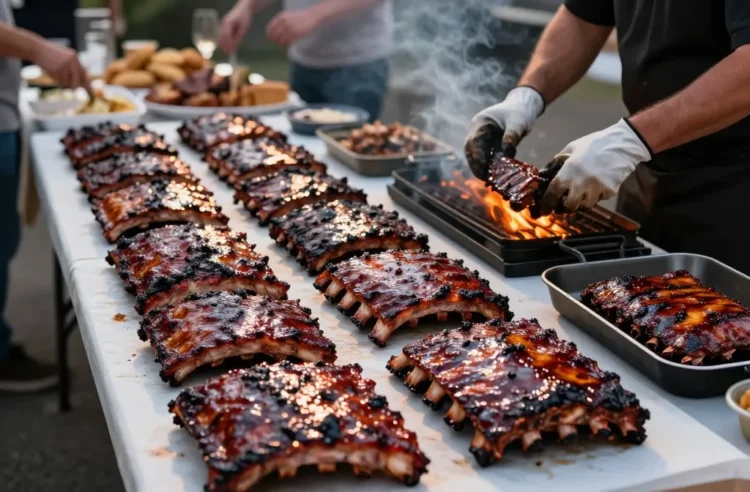
- Best for: Backyard parties, tailgates, or church cookouts
- Make ahead: Yes — up to 2 days; reheat gently before serving
- Serves: 50 people (about 25 racks of baby backs or 18–20 racks of spares)
- Key tip: Stop the cook early and finish hot to set the bark and tighten texture
Got a pan of How to Fix BBQ Ribs That Are Falling Apart Too Much for 50 People? You’re not alone. When ribs go beyond tender and head into mushy, you lose that satisfying bite and everything shreds on the platter. The good news: you can rescue them — even at scale — with smart heat, glaze, and timing. In this guide, you’ll get step-by-step fixes, batching strategies, and pro tips to serve juicy ribs with a proper tug for a crowd.
Diagnose the Problem Fast
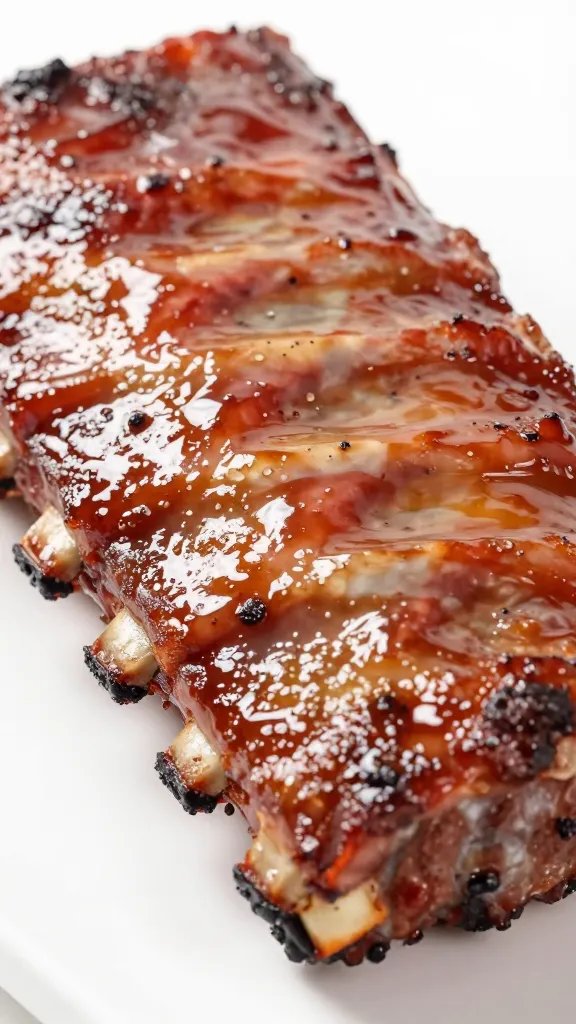
Figure out why the ribs fell apart before you fix them. Overcooking during a long braise or wrapped stage is the usual culprit.
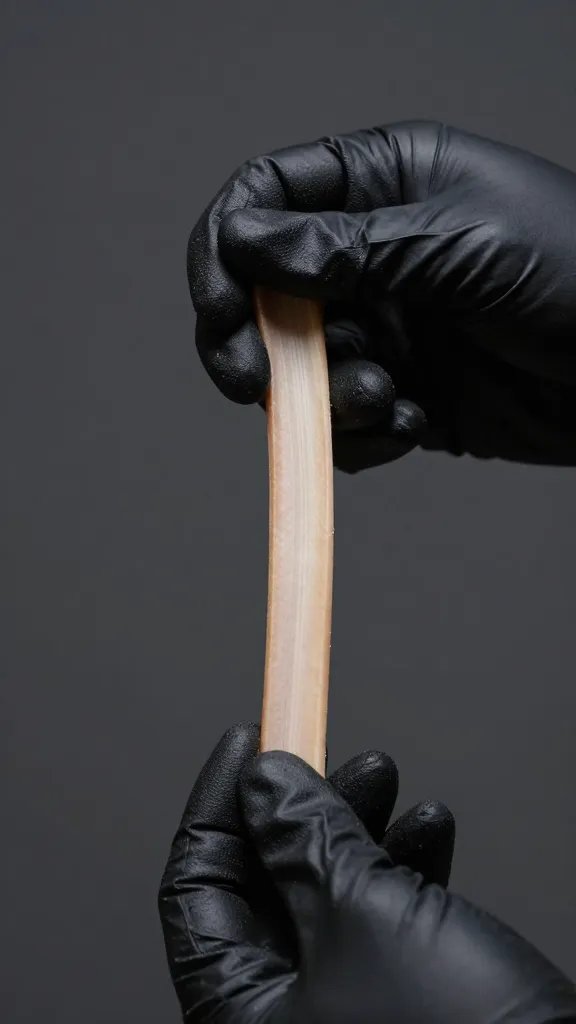
- Texture test: Pick up a rack from the middle with tongs. If it sags 90 degrees and tears, it’s overdone. You want a bend, not a break.
- Moisture check: If bones are poking out more than 1/2 inch and the meat looks waterlogged, you likely steamed them too long or held them hot in closed pans.
- Bark status: Soft, wet bark won’t support slicing. You’ll need dry heat to reset it.
Immediate Rescue: Tighten Texture and Set the Bark
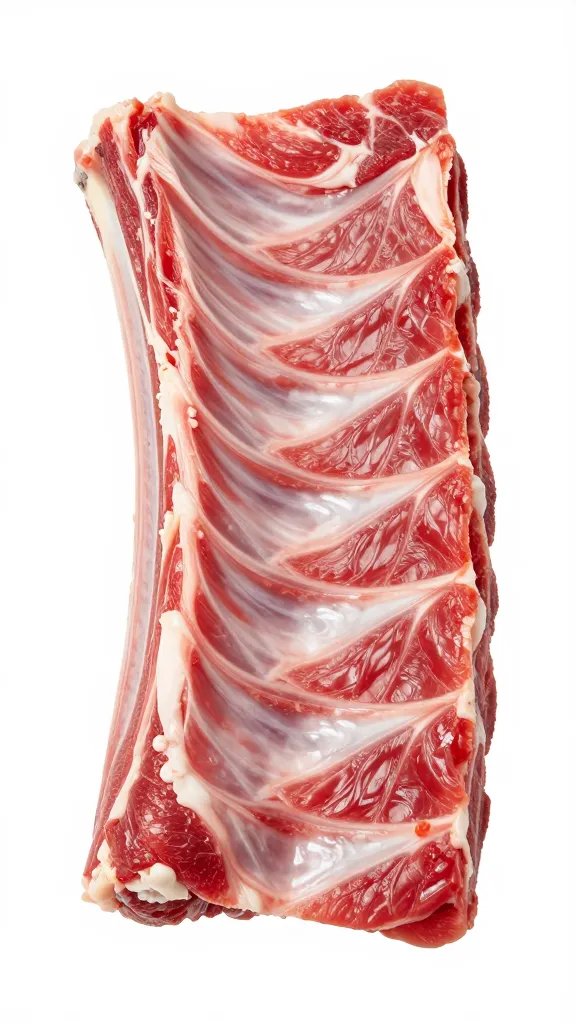
When ribs are too soft, your goal is to evaporate surface moisture and firm up collagen without cooking them to jerky. Use higher, drier heat for a short burst.
- Unwrap and vent: Remove all foil or butcher paper. Place ribs meat-side up on racks so air can circulate.
- High, dry heat: Put them in a 400–425°F oven or a hot grill (two-zone, indirect side about 400°F) for 8–15 minutes. You’re drying, not roasting.
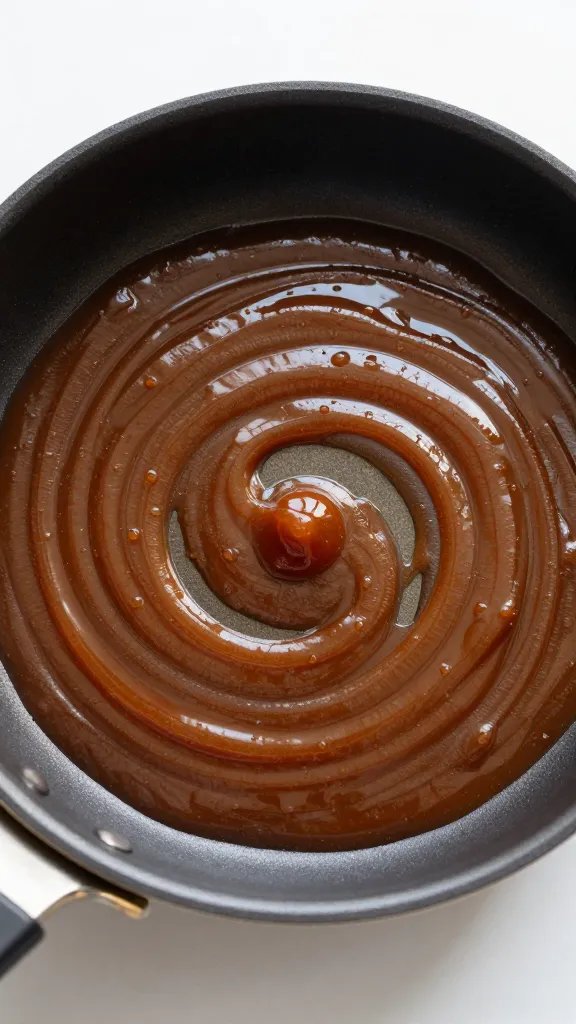
- Glaze to lacquer: Brush a thin coat of sauce or a 50/50 mix of sauce and apple cider vinegar. Return for 5–7 minutes to tack up. Thin layers build bark; thick layers re-mush the surface.
- Rest uncovered: Give them 10 minutes on wire racks. Resting uncovered keeps the exterior from steaming soft again.
Why it works: Short, hot, dry heat evaporates excess moisture and tightens proteins. A thin glaze caramelizes into a light shell — the structure you need for clean slicing.
Batch Strategy for 50 People
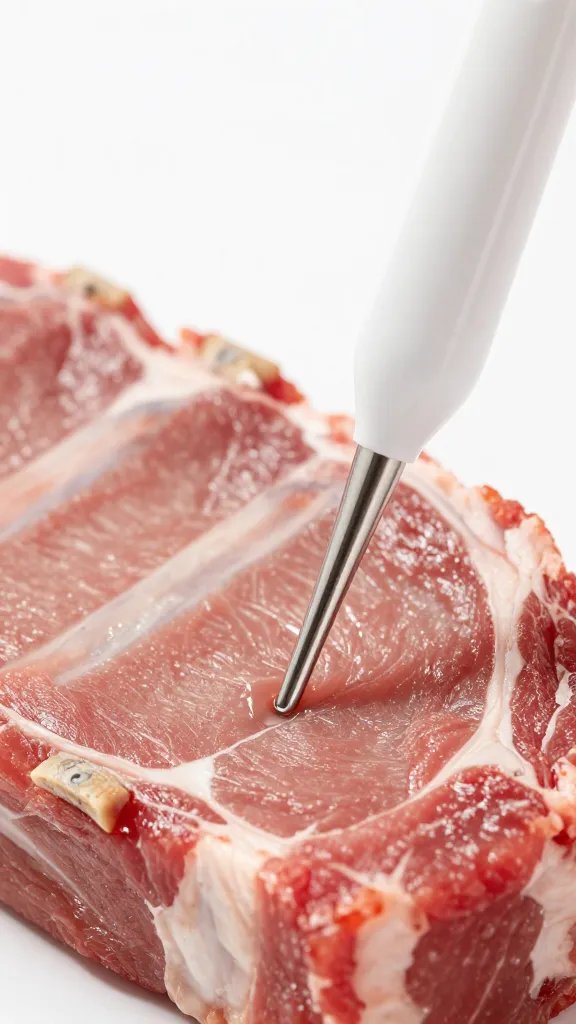
You can’t rescue 20 racks at once without planning airflow and timing. Work in waves so texture stays consistent.
- Stage in thirds: Divide racks into 3 batches. While batch one is drying, the next is unwrapped and ready to go.
- Use multiple zones: Ovens at 400°F and grills/smokers set to hot indirect give you two workhorses. Rotate to keep heat steady.
- Rack everything: Sheet pans with wire racks prevent soggy bottoms. If you only have pans, flip ribs halfway through the dry step.
- Holding temp: After rescue, hold at 150–165°F, uncovered or tented very loosely. Tight lids make them mushy again.
Preventative Tweaks: Ribs That Don’t Fall Apart
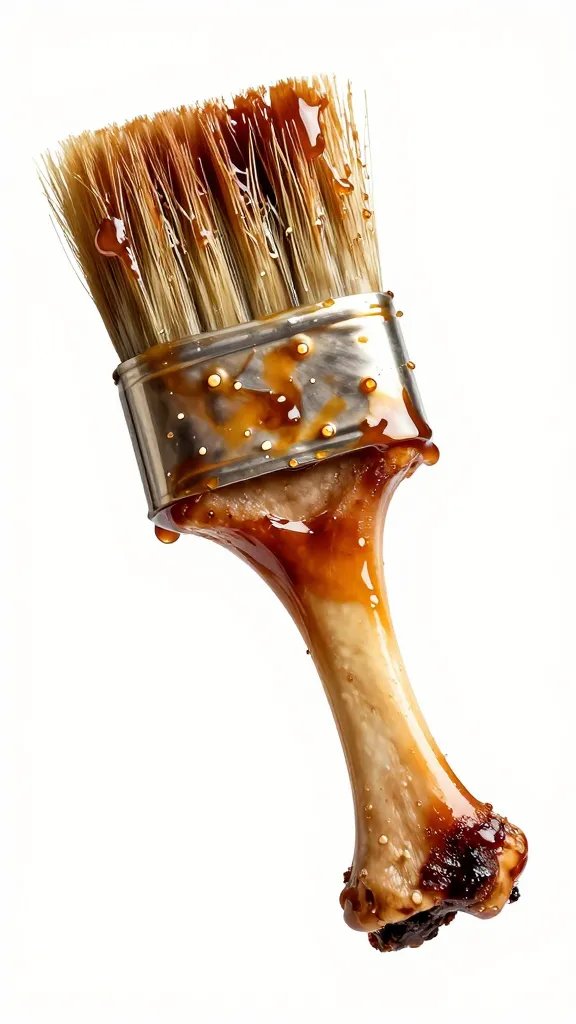
If you still have a second wave to cook, adjust your method now so they finish with a proper bite.
- Skip long braises: Reduce the “2” in the 3-2-1 method. Try 3-1-.5 for spares, 2-1-.5 for baby backs. Shorter wrapped time, shorter sauce time.
- Lower wrap liquid: Use 2–3 tablespoons per rack, not a cup. Excess liquid steams the meat and washes off bark.
- Cook to bite, not time: Target 195–200°F internal in the thickest meat between bones, then bend test. Pull when it bends cleanly without cracking apart.
- Dry the finish: Last 15–20 minutes unwrapped at 275–300°F to set the bark before saucing.
Smart Slicing and Serving for Soft Ribs
Even after rescue, handle them gently. Technique matters more than knives here.
- Flip to bone-side up to see the bones and cut between them. Less tearing, cleaner portions.
- Use a long slicing knife with light pressure. Sawing shreds soft meat.
- Portion strategy: 2–3 bones per person for mixed-menu events; 4 bones for rib-focused meals. For 50, plan 120–160 bones, roughly 15–20 racks of spares or 20–25 baby backs.
- Serve sauce on the side to protect the bark you just built.
Flavor Fixes If They Taste Washed Out
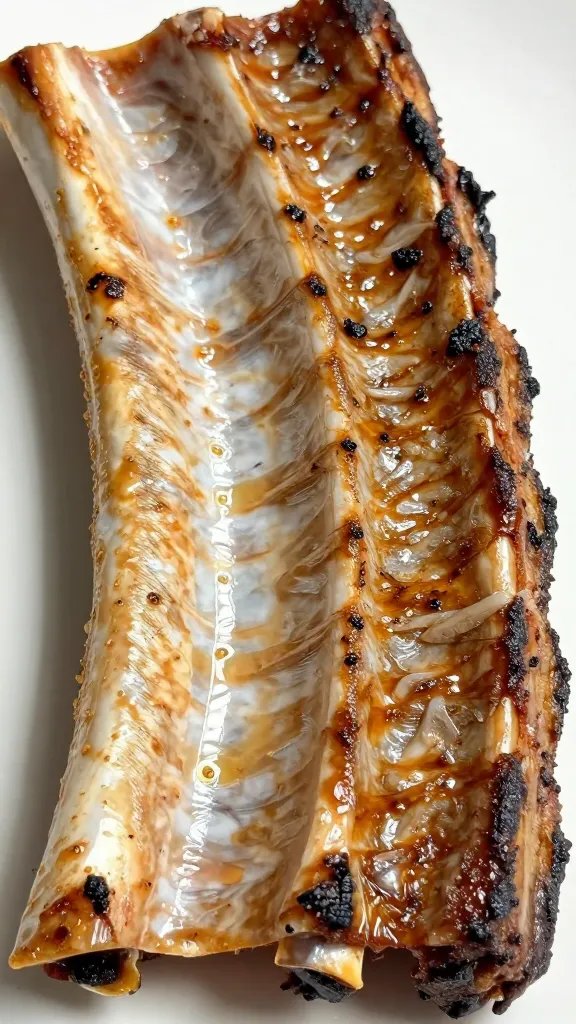
Over-braised ribs can taste flat. Add layered, concentrated flavor without more moisture.
- Dust with finishing rub: A light sprinkle of your dry rub mixed 1:1 with turbinado sugar just before the glaze step.
- Brush a thin “mop glaze”: 2 parts BBQ sauce, 1 part cider vinegar, 1 part warmed honey, splash of hot sauce. Thin layers, 2 passes max.
- Acid and heat at the table: Serve with pickled onions, jalapeños, or a bright herb sauce like this chimichurri recipe for contrast.
Make-Ahead and Reheat Without Ruining Texture
Cooking ahead is smart for crowds, but reheat with intention or you’ll undo your work.
- Cook to 90% done: Stop when ribs hit about 190°F and pass a gentle bend test.
- Chill fast: Cool uncovered 20 minutes, then refrigerate on racks. Don’t stack warm — it steams the bark.
- Reheat dry: 300°F oven or indirect grill, meat-side up on racks, 15–25 minutes until hot. Glaze in two thin coats and set each for 5 minutes.
- Hold properly: 150–165°F, uncovered or lightly tented. Add a small pan of hot water in the holding oven for ambient moisture without direct steaming.
Need sides that scale? Try pairing with these make-ahead baked beans so you can focus on the rib rescue timing.
From My Kitchen: What Actually Works
The fastest fix I rely on is a 10-minute blast at 425°F, then two whisper-thin glaze coats, five minutes apart. Thick sauce just makes them slump again. I also cut the wrapped stage by one-third when cooking more than 10 racks — the mass of meat traps more steam than a home batch. When holding for service, I keep lids cracked with a wooden spoon so condensation drips onto the pan, not the ribs. Finally, I always flip bone-side up to slice; I’ve timed it and it’s 30% faster with far fewer torn portions.
Frequently Asked Questions
How do I fix BBQ ribs that are falling apart without drying them out?
Use high, dry heat briefly: 400–425°F for 8–15 minutes unwrapped to evaporate surface moisture. Then apply a thin glaze and set it 5–7 minutes. Rest uncovered 10 minutes to keep the bark intact without overcooking the interior.
Can I make BBQ ribs for 50 people ahead of time?
Yes. Cook to about 90% doneness, chill fast on racks, and reheat at 300°F until hot. Finish with two thin glaze coats. Hold at 150–165°F with lids cracked so you don’t steam the bark.
What’s the ideal internal temperature for ribs with a proper bite?
Aim for 195–200°F in the thick meat between bones, then confirm with the bend test. The rack should bend without tearing. Pull earlier if you prefer a firmer tug, later if you like it more tender.
How many racks of ribs do I need to serve 50 people?
Plan on 2–3 bones per person if ribs aren’t the only main, 4 if they are. That’s roughly 15–20 racks of spare ribs or 20–25 racks of baby backs, depending on size and appetite.
Why did my ribs turn mushy after wrapping?
Too much time or liquid in the wrap steams the meat and breaks down collagen past tender. Reduce wrapped time by 30–50% and limit liquid to 2–3 tablespoons per rack. Always finish unwrapped to reset the bark.
The Bottom Line
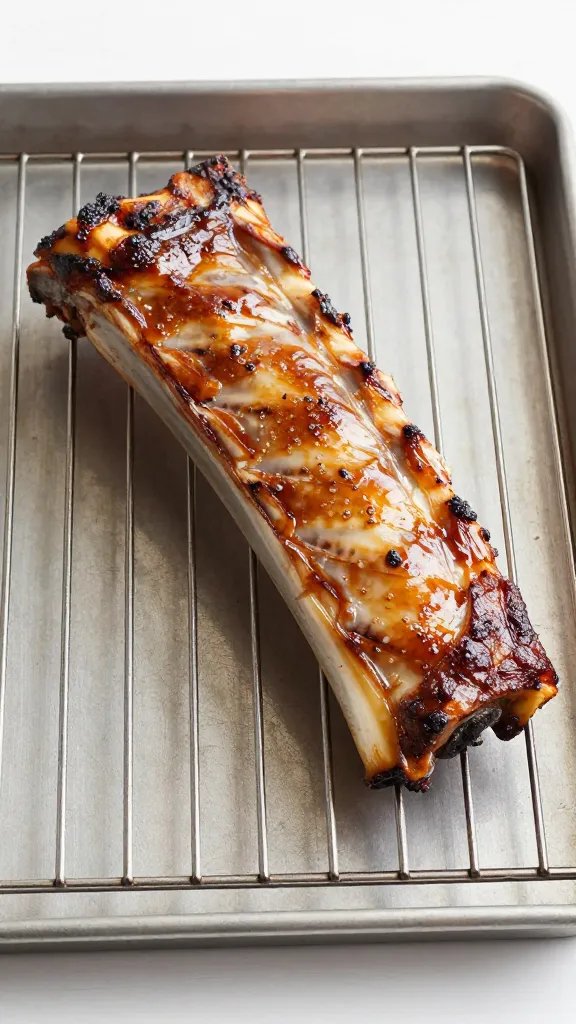
Soft, falling-apart ribs aren’t a lost cause — dry heat, thin glaze, and smart holding bring them back fast, even for a crowd. Adjust your wrap and finish on the next batch, and you’ll serve ribs with a clean bite and glossy bark every time.
Planning to try this? Save this post so you can find it when you need it — and tag us when you make it.