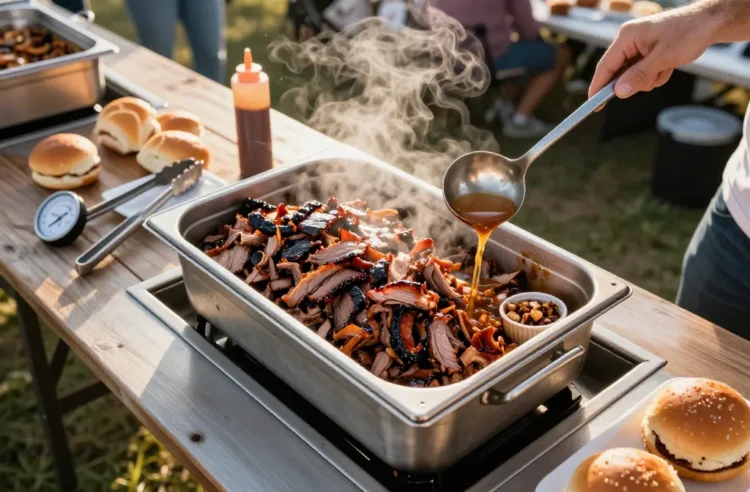
- Best for: Last-minute saves at tailgates, potlucks, or church suppers
- Make ahead: Yes — stabilize and sauce up to 1 day ahead
- Serves: 40–60 people, depending on sides and buns
- Key tip: Rehydrate with hot stock and fat, then serve sauced and chopped
How to Fix BBQ Meat That Was Reheated Too Many Times for 50 People isn’t a recipe — it’s triage. Over-reheating drives out moisture and tightens proteins, leaving your brisket, pulled pork, or chicken dry and flat. The good news? You can revive texture and flavor enough to satisfy a hungry crowd. Here’s the fast path to salvage, what to skip, and how to serve it so everyone goes back for seconds.
First: Safety Check Before You Salvage
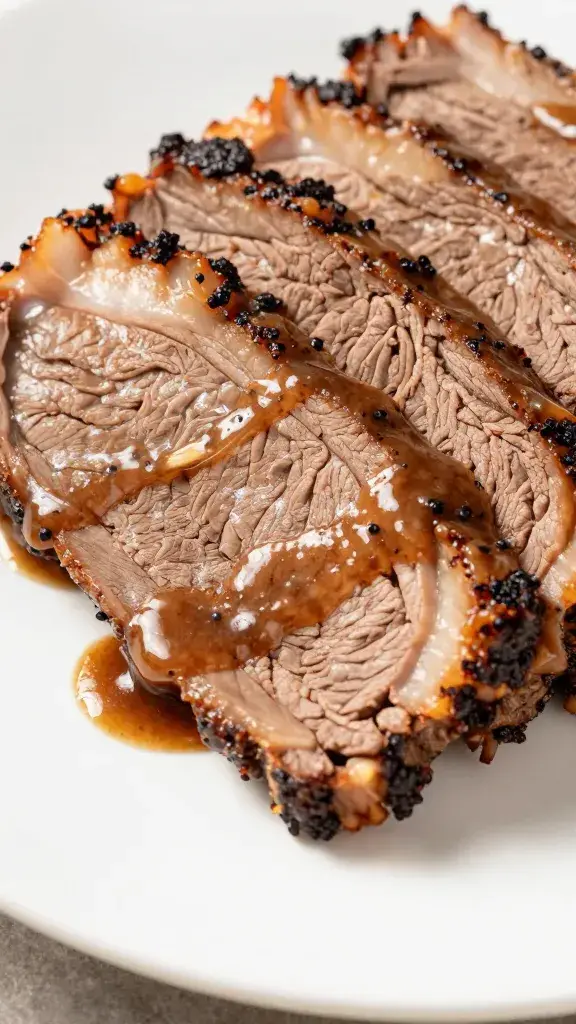
Before fixing texture, make sure it’s safe. Reheating multiple times increases the risk of bacterial growth if the food lingered in the danger zone.
- Temperature history: If the meat sat between 40°F–140°F for over 2 hours cumulatively, don’t serve it.
- Reheat target: Bring all meat to 165°F quickly (within 2 hours) before holding.
- Holding range: Keep hot at 140°F–160°F in covered pans or chafers. Stir every 20–30 minutes.
- One last time: This should be the final reheat. From here, hold hot and serve — no more cool/reheat cycles.
Rehydrate and Re-Fat: The Core Fix
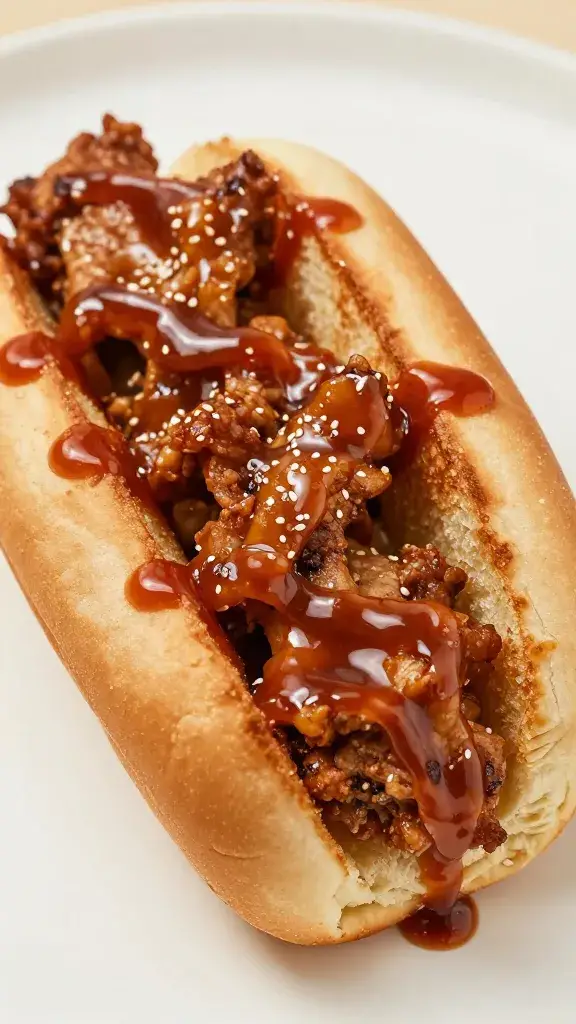
Over-reheated BBQ loses both water and fat. Put them back with flavorful liquid and a little richness.
- Make a rescue broth: Simmer 2 cups low-sodium beef or chicken stock with 1–2 tbsp apple cider vinegar, 1 tbsp brown sugar or honey, 1 tsp Worcestershire, and a pinch of salt. For pork, add 1–2 tbsp apple juice. For chicken, add lemon zest.
- Add fat: Whisk in 2–4 tbsp melted beef tallow, pork lard, or butter. Fat restores mouthfeel you can’t get from water alone.
- Heat gently: Place meat in a covered pan. Pour in just enough hot broth to moisten — don’t drown it. Cover and warm at 300°F until it hits 165°F, 15–30 minutes depending on volume.
- Taste and balance: Add a splash more vinegar or a pinch of sugar if it tastes flat. Salt last.
Cut It Right: Change the Texture to Hide the Dryness
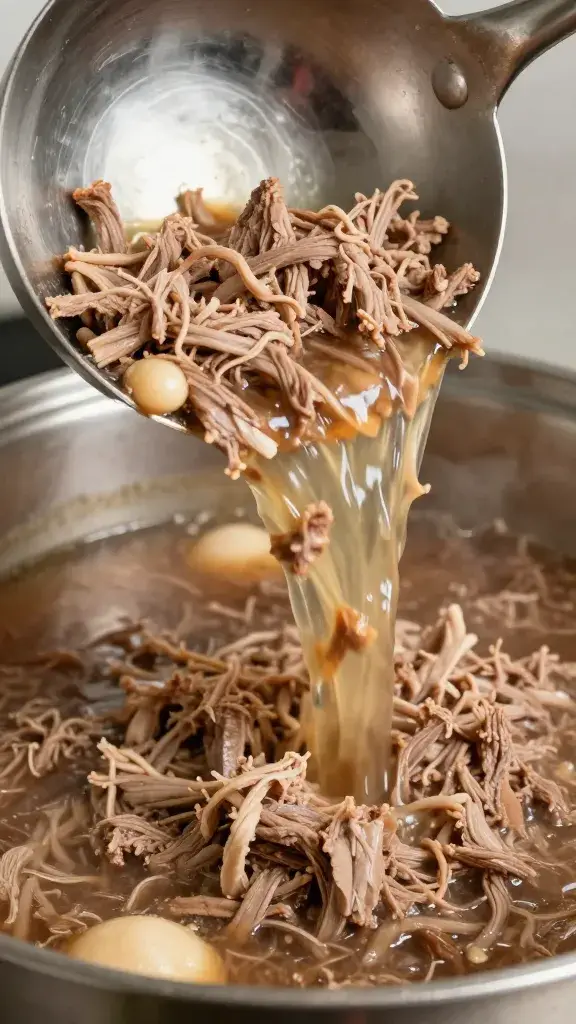
If slices feel tough or dry, change the cut. Structure matters as much as moisture.
- Brisket or tri-tip: Switch from slices to chopped. Chop across the grain into 1/4-inch bits. Toss with hot rescue broth and a small amount of sauce.
- Pulled pork: Shred finer than usual and mix bark with interior for even texture. Fold in a little fat and broth.
- Chicken: Shred, then chop to reduce stringiness. Dark meat rescues better than breast — blend them if you can.
Sauce Smart: Layer, Don’t Smother

Sauce fixes perception and adds lubrication — but go in stages so it doesn’t taste cloying.
- Season base: After rehydrating, season the meat lightly with salt, pepper, and a touch of your dry rub to wake up the bark flavors.
- Moisture glaze: Toss meat with 2–4 tbsp thin sauce per pan (think vinegar or light tomato). Warm covered 10 minutes.
- Final pass: Right before serving, add a touch more sauce if needed. Keep extra sauces on the side: sweet, tangy, and spicy. Control the baseline; let guests customize.
Batch Strategy for 50: Pans, Heat, and Timing
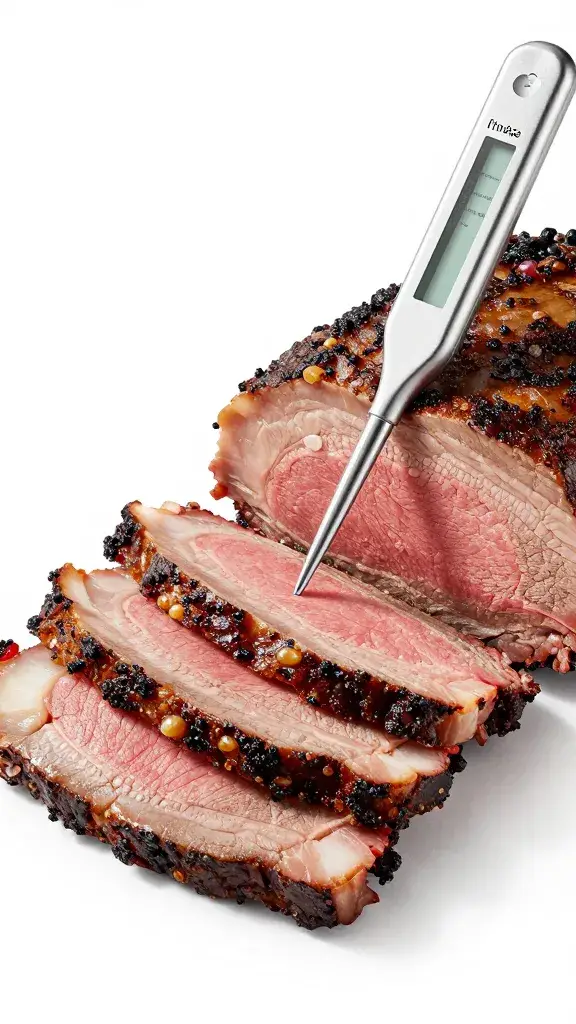
Big groups succeed or fail on logistics. Set up like a caterer, not a home kitchen.
- Divide and conquer: Use 2–3 hotel pans instead of one giant one. Smaller volumes reheat evenly and hold better.
- Steam insurance: Add 1/4 cup hot water to the chafer water pan. Keep pans covered with foil to trap humidity.
- Stagger service: Hold one pan on deck in a 170°F oven, covered. Refill the buffet pan in thirds to keep it fresh and juicy.
- Mix-ins for volume: Fold in sautéed onions and peppers for brisket or chicken; add a pan of smoky beans or slaw to stretch servings without skimping.
When Meat Is Beyond Dry: Transform It
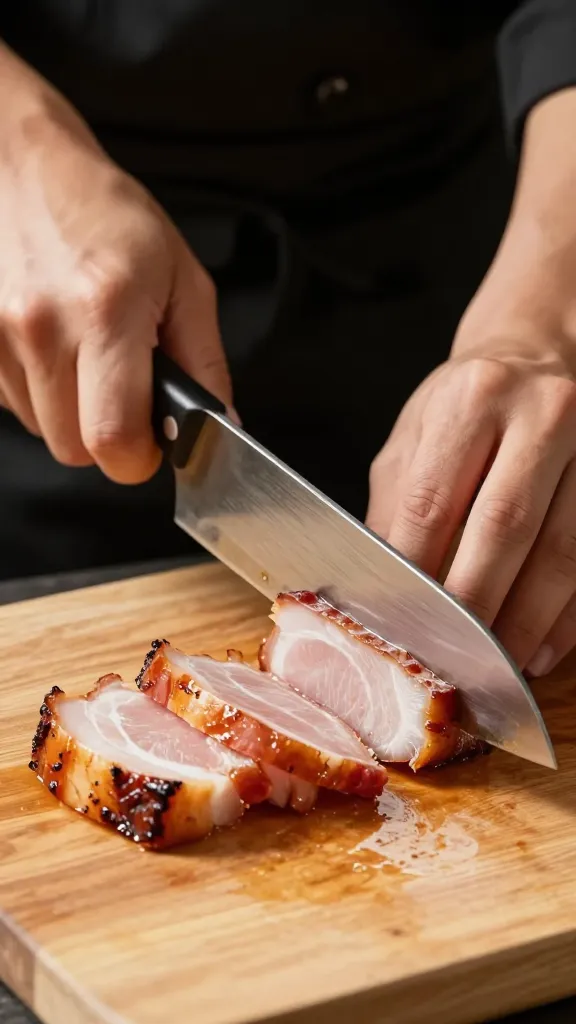
Sometimes salvage means repurposing. Lean into dishes that want soft, saucy textures.
- BBQ sliders: Chopped meat + thin sauce + pickles + soft buns. Toast buns to add crunch.
- Loaded BBQ baked potatoes: Buttered potatoes topped with meat, cheese, green onions, and a drizzle of sauce.
- Smoky tacos: Chop finely, toss with a splash of stock and lime. Serve with cabbage slaw and crema.
- Brunswick stew or chili: Cube or chop, simmer 20 minutes in tomato base with corn/beans. Texture becomes an asset.
- Mac-and-cheese fold-in: Stir chopped meat into creamy mac just before serving; add hot sauce or jalapeños for punch.
Flavor Boosters That Don’t Taste “Reheated”
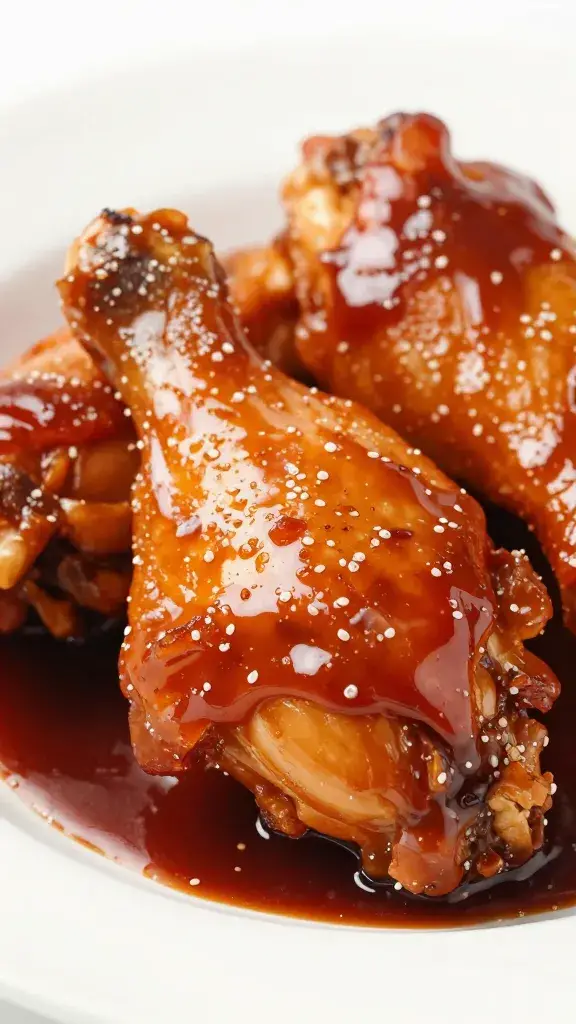
A few finishing touches add freshness you can’t get from a microwave.
- Acid: A squeeze of lemon for chicken, cider vinegar splash for pork, or pickled onions for brisket.
- Freshness: Chopped parsley, thin-sliced scallions, or cilantro right before serving.
- Texture: Crunchy slaw, fried shallots, or toasted sesame seeds keep bites interesting.
- Smoke note: A pinch of smoked salt or a drop of liquid smoke into the sauce (not the meat) if smoke faded. Go light.
From My Kitchen: What Actually Works
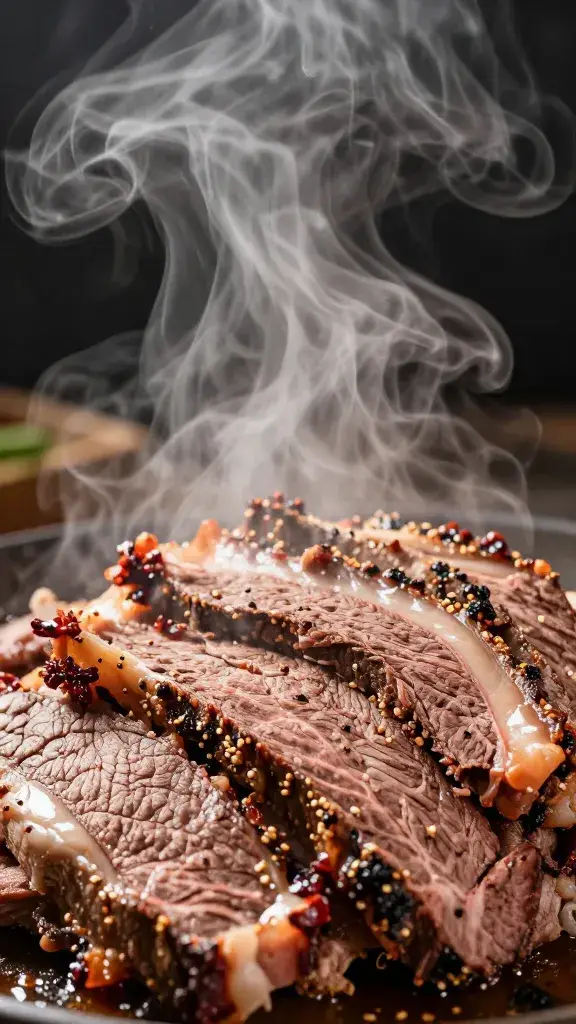
I’ve salvaged more than a few dry pans on event days. The biggest difference comes from adding fat to hot stock — straight stock rehydrates, but 2–3% fat by weight brings the silk back. For brisket, I chop and fold in 2 tablespoons tallow per full pan; guests comment on “tenderness,” even when it started rough. I also re-season with half the original rub at the end; full strength tastes stale on reheated meat. Finally, I keep a vinegar sauce in a squeeze bottle and hit only the top layer on the buffet every 15 minutes — it stays glossy without turning soupy.
Build a Crowd-Friendly Serving Plan
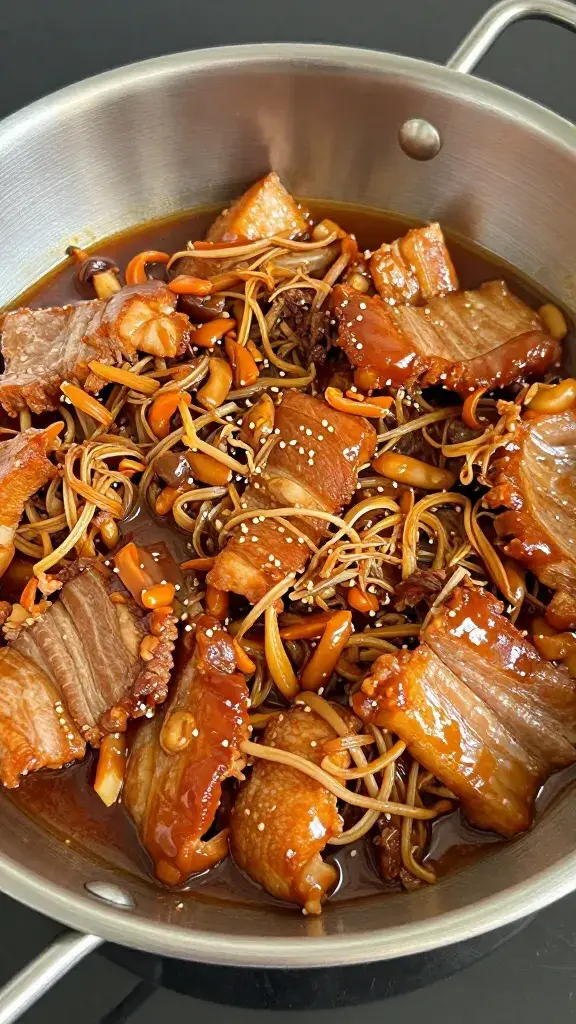
Presentation masks imperfections and keeps lines moving.
- Two-line setup: Meat station plus a condiment station avoids bottlenecks.
- Side heroes: Offer a bright slaw and a tangy sauce to balance richness. If you need a sauce template, try this chimichurri recipe as a fresh, herby counterpoint for beef or chicken.
- Bread matters: Soft potato rolls or tortillas hide dryness better than crusty bread.
- Portion control: Pre-load a few buns with 3–4 oz meat to set the pace and reduce over-serving early guests.
Want a reliable base for Brunswick stew or a bean side that stretches servings? Use this slow-cooker BBQ beans method to add smoke and sweetness while you rescue the meat.
Frequently Asked Questions

How do I fix BBQ meat that was reheated too many times without making it mushy?
Use hot stock plus a little fat, then reheat covered at 300°F just until 165°F. Avoid boiling or microwaving on high, which breaks down muscle fibers. Finish with a thin sauce layer and serve chopped or shredded for better texture.
What’s the best way to serve How to Fix BBQ Meat That Was Reheated Too Many Times for 50 People?
Serve as chopped sandwiches, tacos, or loaded potatoes. Keep meat in covered pans at 140°F–160°F and refresh the top with a touch of sauce every 15 minutes. Offer crunchy slaw and pickles to balance richness and add texture.
Can I make How to Fix BBQ Meat That Was Reheated Too Many Times for 50 People ahead of time?
Yes. After rehydrating and re-seasoning, cool rapidly, then reheat once to 165°F right before service. Hold hot and avoid additional cycles. For best results, keep sauces separate until just before serving.
Is it safe to reheat BBQ meat multiple times for a crowd?
It’s safe only if the meat was cooled quickly, stored under 40°F, and reheated rapidly to 165°F each time. However, quality drops with each cycle. Plan this as your final reheat and hold hot at 140°F–160°F.
How much liquid should I add to dry pulled pork or brisket?
Add just enough hot stock to lightly coat the meat — usually 1/3 to 1/2 cup per pound when very dry. Include 1–2 teaspoons fat per pound to restore mouthfeel. Mix, rest covered 10 minutes, then reassess before adding more.
The Bottom Line
Dry, over-reheated BBQ isn’t the end of your event. Rehydrate with hot stock and fat, change the cut, sauce in layers, and serve in crowd-friendly formats that highlight flavor over perfect slices. With smart holding and fresh accents, you’ll feed 50 happily.
Planning to try this? Save this post so you can find it when you need it — and tag us when you make it.