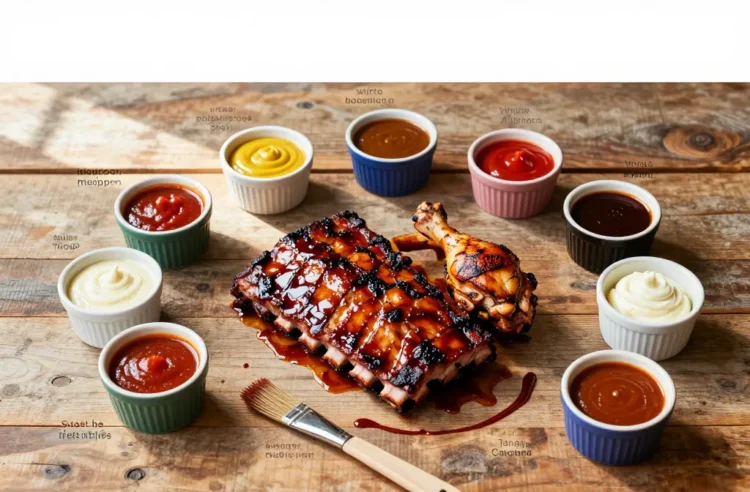
I grew up swapping sauce jars at backyard cookouts, convinced one bottle fit every grill job. Then I spent a summer tasting my way across the South and Midwest and learned what every pitmaster knows: sauce choice makes or breaks your meat. In this guide, you’ll learn the flavor profiles, where each sauce shines, and exactly how to make or buy them with supermarket ingredients. You’ll walk away knowing which sauce to brush, which to mop, and which to finish with for reliable, repeatable results.
1. Kansas City Tomato-Molasses: Thick, Sweet, And Built For Glaze
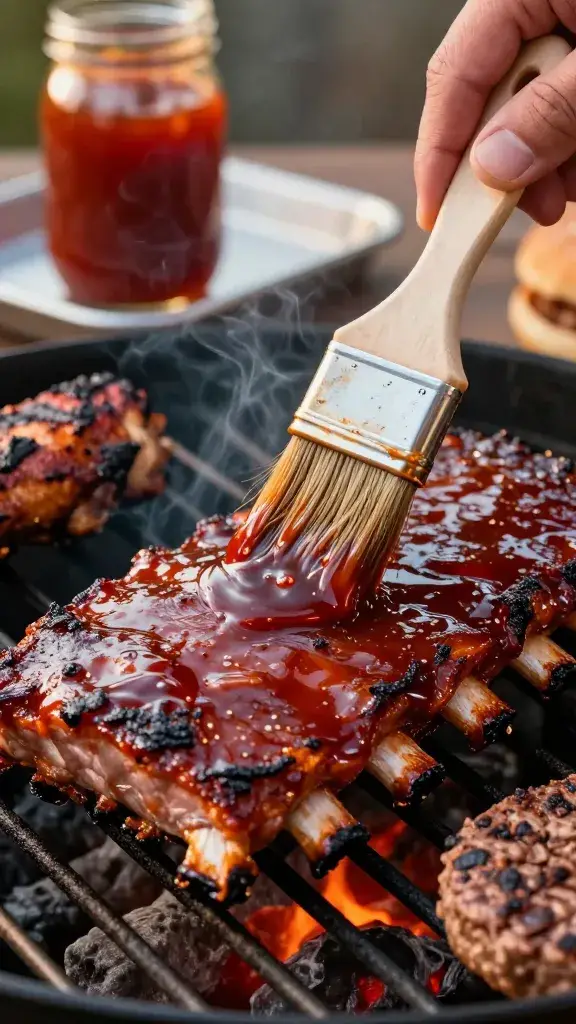
Brush this on too early and you’ll scorch the sugars, leaving bitter patches on ribs and chicken. Used correctly, it gives you that glossy mahogany bark everyone reaches for first. It’s the classic “BBQ sauce” most people picture — sweet, smoky, and clingy.
Core Profile And Uses
- Flavor: Sweet first, then smoke, gentle tang
- Texture: Thick, ketchup-forward; clings and caramelizes
- Best On: Pork ribs, chicken thighs, burgers, meatloaf glaze
How To Use Without Burning
- Smoke or grill meat until 10-15 minutes from done.
- Brush a thin coat, close the lid for 5 minutes, repeat once for shine.
- Keep heat at a steady medium (about “you can hold your hand 5 inches above the grate for 4 seconds”).
Simple Pantry Build
- 1 cup ketchup, 1/3 cup unsulphured molasses, 2 tbsp brown sugar
- 2 tbsp apple cider vinegar, 1 tbsp yellow mustard
- 1 tsp smoked paprika, 1/2 tsp garlic powder, 1/4 tsp black pepper
Simmer 10 minutes until glossy. Thin with a splash of water if it’s too heavy.
Takeaway: Apply KC sauce only in the final 10-15 minutes to avoid scorch and get a lacquered finish.
2. Carolina Vinegar-Pepper (Eastern NC): Tangy Mop That Cuts Fat
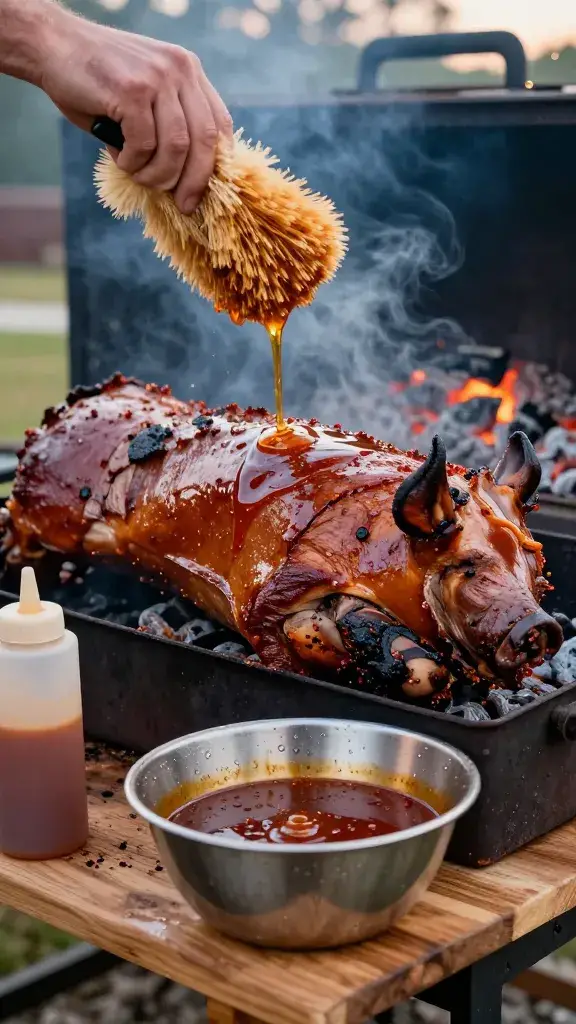
If your pulled pork tastes rich but flat, you’re missing acid. This thin, sharp sauce wakes up pork shoulder and chopped whole hog without adding sweetness, letting smoke and pork shine.
Core Profile And Uses
- Flavor: Bright, peppery, salty-tangy; no tomato
- Texture: Thin, soaks into meat instead of coating
- Best On: Pulled pork, chopped pork, crispy skin chicken
Real-World Mop Method
- Keep a heatproof bowl of sauce near the grill, not on it.
- Every 45-60 minutes on a low cook, dab or spritz a light coat to keep the surface lively.
- Toss pulled pork with 1-2 tablespoons per cup of meat, then taste and add more as needed.
Simple Pantry Build
- 1 cup apple cider vinegar, 1/4 cup white vinegar
- 1 tsp kosher salt, 1 tsp black pepper, 1 tsp red pepper flakes
- 1 tsp white sugar (optional, balances edge)
Shake in a jar. Let sit 30 minutes to soften the heat.
Action today: Mix a jar of vinegar-pepper sauce and keep it by your tongs; finish pulled pork with a spoonful before serving.
3. South Carolina Mustard (Carolina Gold): Sharp-Sweet For Pork And Sausages
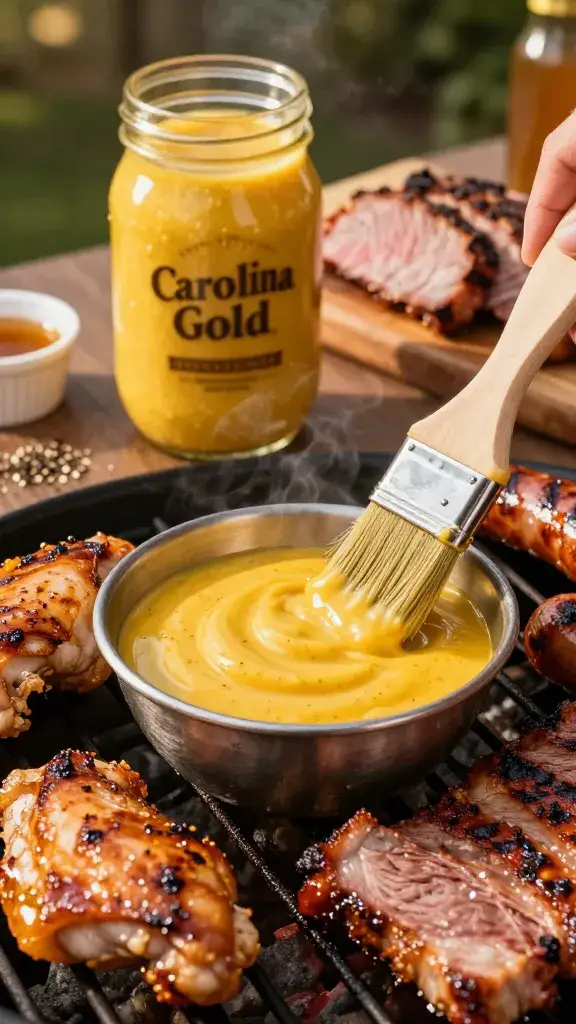
Pork can taste heavy under sweet red sauces. Mustard’s bite slices through fat while a hint of honey keeps it friendly. It also sticks well without the molasses burn risk.
Core Profile And Uses
- Flavor: Tangy mustard up front, gentle sweet, mild heat
- Texture: Medium body; smooth and brushable
- Best On: Pork shoulder, sausage, grilled pork chops, chicken quarters
Timing And Pairing
- Use as a finishing brush for the last 10 minutes, or serve as a side dip.
- Excellent mixed 50/50 with vinegar-pepper for pulled pork that needs both bite and moisture.
Simple Pantry Build
- 3/4 cup yellow mustard, 3 tbsp honey, 2 tbsp apple cider vinegar
- 1 tbsp ketchup, 1 tsp Worcestershire, 1/2 tsp garlic powder
- Pinch cayenne or hot sauce to taste
Whisk and rest 15 minutes. Thin with water to a light paint consistency if needed.
Takeaway: Keep mustard sauce as your pork “balance beam” — brush at the end or serve on the side to brighten fatty bites.
4. Alabama White: Creamy Tang For Smoked Or Grilled Chicken
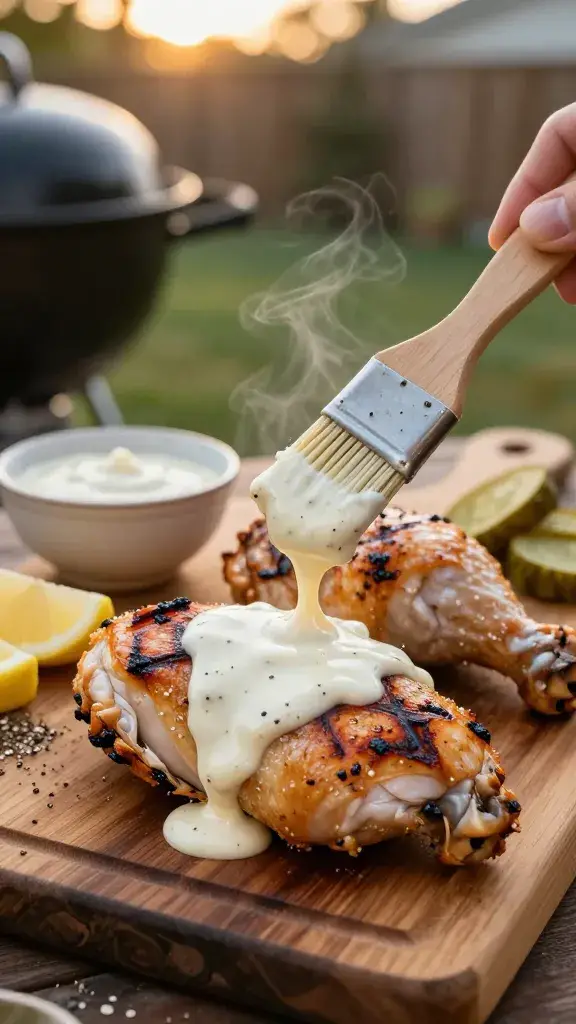
Chicken breast dries out fast and tastes bland when overcooked. This mayo-vinegar sauce adds moisture, tang, and mild heat without sweetness, turning plain grilled chicken into something worth a second piece.
Core Profile And Uses
- Flavor: Tangy, peppery, creamy
- Texture: Pourable but creamy; clings without gumming up
- Best On: Smoked or grilled chicken, turkey, and as a coleslaw dressing
How To Use
- Dunk or brush hot chicken right off the grill for a thin coat.
- Serve more on the side for dipping; it shines with charred skin.
Simple Pantry Build
- 1 cup mayonnaise, 1/4 cup apple cider vinegar, 1 tbsp lemon juice
- 1 tsp prepared horseradish, 1 tsp black pepper, 1/2 tsp salt
- 1/2 tsp garlic powder, 1/2 tsp sugar
Whisk until smooth. Rest 20 minutes so pepper blooms.
Action today: Grill bone-in chicken to done, then toss in a bowl with a half-cup of Alabama white before serving.
5. Texas Mop (Thin Tomato-Chile): Savory Heat That Loves Beef
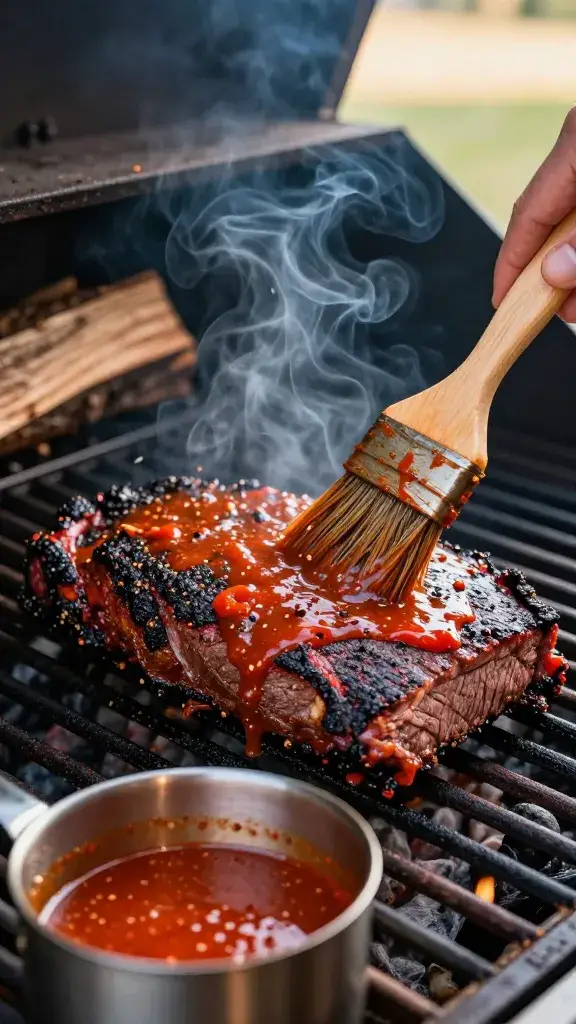
Beef brisket and chuck can drown under sugary sauces. A thin, savory, chile-forward mop keeps bark supple during long cooks and adds layers of umami without masking smoke.
Core Profile And Uses
- Flavor: Savory tomato, chile warmth, black pepper
- Texture: Broth-like; designed for mopping or spritzing
- Best On: Brisket, beef ribs, smoked chuck roast
Mop Without Softening The Bark
- Start mopping only after bark sets — when the surface looks dry and firm (usually 2-3 hours in).
- Light coats every 60-90 minutes; think “sheen,” not “soak.”
Simple Pantry Build
- 1 cup low-sodium beef broth, 1/2 cup tomato sauce
- 2 tbsp apple cider vinegar, 1 tbsp Worcestershire
- 1 tsp chili powder, 1 tsp black pepper, 1/2 tsp garlic powder
Warm on the stove. Keep in a metal pan near the grill so it stays fluid.
Takeaway: For beef, swap sweet glaze for a light, savory mop to deepen bark without candying it.
6. Memphis Dry With a Light Tomato Dip: Spice-First Ribs With Optional Sauce
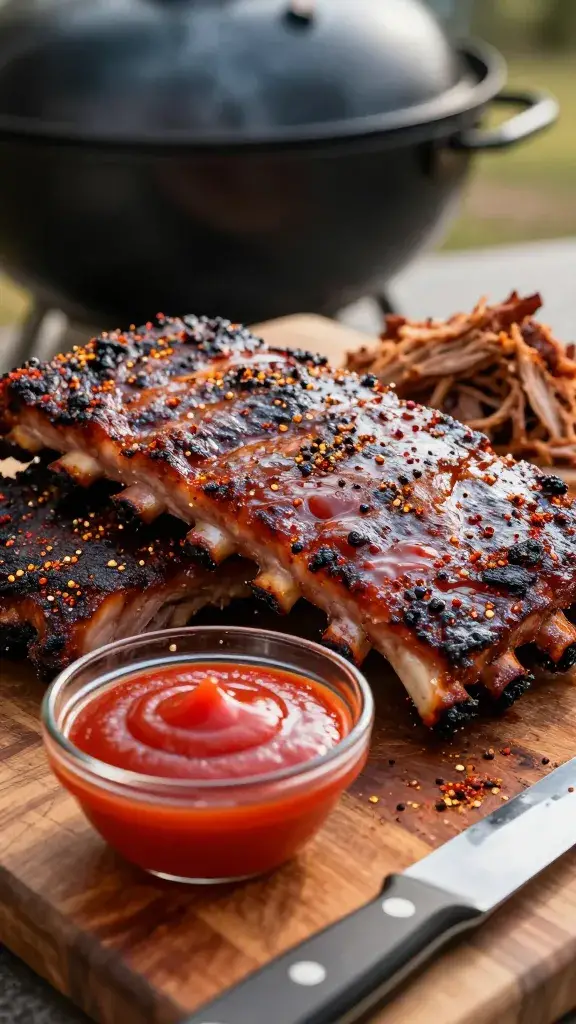
If your ribs feel sticky-sweet with no spice definition, you’re missing the Memphis approach. The rub does the heavy lifting, and the sauce — if used — stays light and tangy, more of a dip than a glaze.
Core Profile And Uses
- Flavor: Spice-forward rub; optional thin, tangy tomato dip
- Texture: Dry rib surface with a gentle sheen if sauced at the table
- Best On: Pork ribs, pulled pork sandwiches needing a lighter touch
Optional Dip Sauce
- 1/2 cup ketchup, 1/3 cup apple cider vinegar
- 1 tbsp brown sugar, 1 tsp yellow mustard, pinch cayenne
Simmer 5 minutes to combine. Serve warm in a small bowl — don’t glaze the ribs.
Rub Reminder
- Use a balanced rub: 2 parts brown sugar to 2 parts paprika, 1 part salt, 1 part black pepper, plus pinches of garlic and onion powder.
Action today: Serve your ribs dry and put a warm, thin tomato dip on the table so guests control the tang.
7. Lexington (Western North Carolina) Red Dip: Vinegar With A Touch Of Tomato
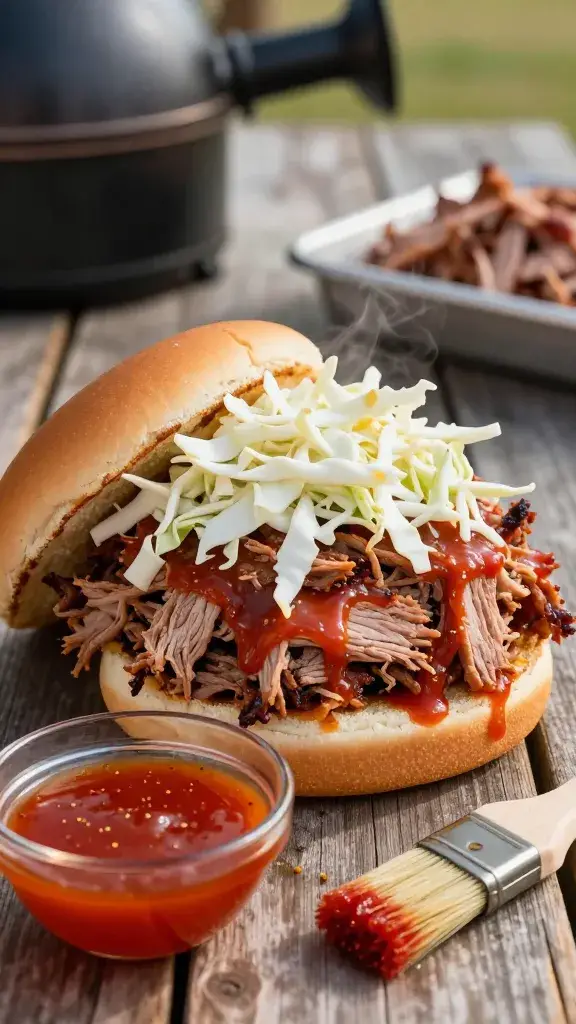
Some folks find straight vinegar-pepper too sharp. Lexington-style tempers the bite with a little ketchup, perfect for pulled pork sandwiches and slaw without turning into a sticky glaze.
Core Profile And Uses
- Flavor: Vinegar-tang first, light tomato sweetness, pepper warmth
- Texture: Thin; ideal for tossing meat and spooning on buns
- Best On: Chopped or pulled pork, especially with a white slaw
How To Balance Sandwiches
- Toss pork with 1-2 tablespoons per cup of meat.
- Add a spoon of sauce to the bun, then top with crunchy slaw to lock in moisture.
Simple Pantry Build
- 3/4 cup apple cider vinegar, 1/4 cup ketchup
- 1 tsp sugar, 1/2 tsp salt, 1/2 tsp black pepper, 1/2 tsp red pepper flakes
Shake and let sit 30 minutes for the peppers to soften.
Takeaway: Use Lexington dip when you want vinegar brightness with a friendlier edge for family sandwiches.
Frequently Asked Questions
When should I sauce meat on the grill to avoid burning?
Apply sugary sauces like Kansas City or sweet mustard in the last 10-15 minutes of cooking. Keep the heat at a steady medium so sugars caramelize, not char. For thin vinegar or mop sauces, you can use them earlier and more often because they don’t scorch.
Can I make these sauces ahead and how long do they keep?
Yes. Vinegar-based and tomato-based sauces keep 2-3 weeks refrigerated in a sealed jar. Alabama white lasts 5-7 days because of mayo. Always label the jar and give it a quick sniff and stir before using.
What’s the easiest starter sauce if I only buy one bottle?
Pick a balanced Kansas City-style sauce for ribs and burgers, then cut it with apple cider vinegar 1:1 to make a quick dip for pulled pork. That two-in-one approach covers most backyard cooks. Add black pepper and a splash of hot sauce to taste if you want more bite.
How do I adjust heat without ruining the sauce balance?
Use controlled additions: red pepper flakes for slow-build heat in vinegar sauces, cayenne for quick heat in tomato or mustard sauces, and prepared horseradish for Alabama white. Add 1/8 teaspoon at a time, stir, and rest 10 minutes before tasting again. Heat blooms as sauces sit, so go slow.
What if my sauce is too thick to brush?
Thin with small splashes of apple cider vinegar or water until it falls in a steady ribbon off a spoon. Aim for “light paint” thickness for brushing during the last minutes of cooking. If you over-thin, simmer 3-5 minutes to tighten it back up.
How do I keep ribs from getting too sweet?
Use a rub with more paprika and pepper than sugar, and finish with a thin glaze or serve sauce on the side. Alternatively, mix your sweet sauce 2:1 with vinegar-pepper to cut sweetness while keeping shine. Taste a rib without sauce first, then add only what it needs.
Conclusion
Great barbecue isn’t one sauce fits all — it’s matching flavor, texture, and timing to the meat. Pick one new regional sauce this week, make a small batch from pantry staples, and practice the timing notes above. Next cook, you’ll know exactly when to mop, when to glaze, and when to dip for reliable, rave-worthy plates.