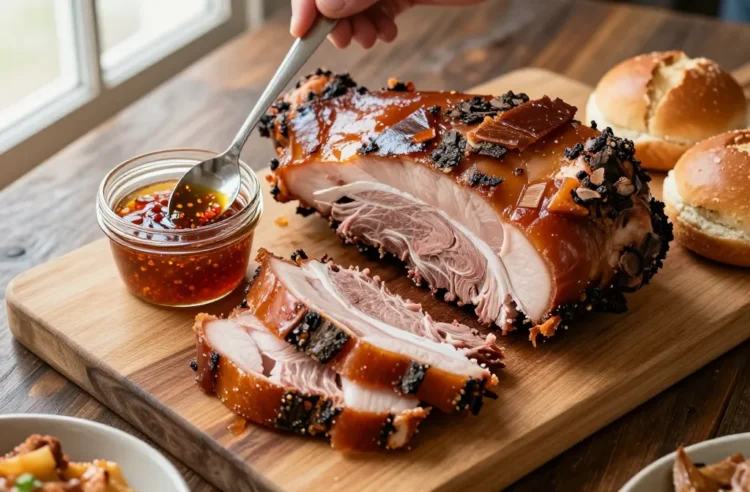
- Best for: Backyard weddings, tailgates, and fundraiser cookouts
- Make ahead: Yes — sauce 5 days ahead, pork 1 day ahead
- Serves: 100 people with classic sides
- Key tip: Keep the vinegar sauce thin and bright — it re-seasons every tray
Pulling off North Carolina Whole Hog for 100 People — The Vinegar Sauce Fix isn’t about fancy gear. It’s about crisp skin, tender mixed meats, and a tangy, peppery mop that ties it all together. You need a plan that scales and a sauce that keeps the pork juicy, not soggy. In this guide, you’ll get timelines, quantities, the exact vinegar sauce formula, and serving strategies that work for a crowd.
What “Whole Hog” Means (And Why It Tastes Different)
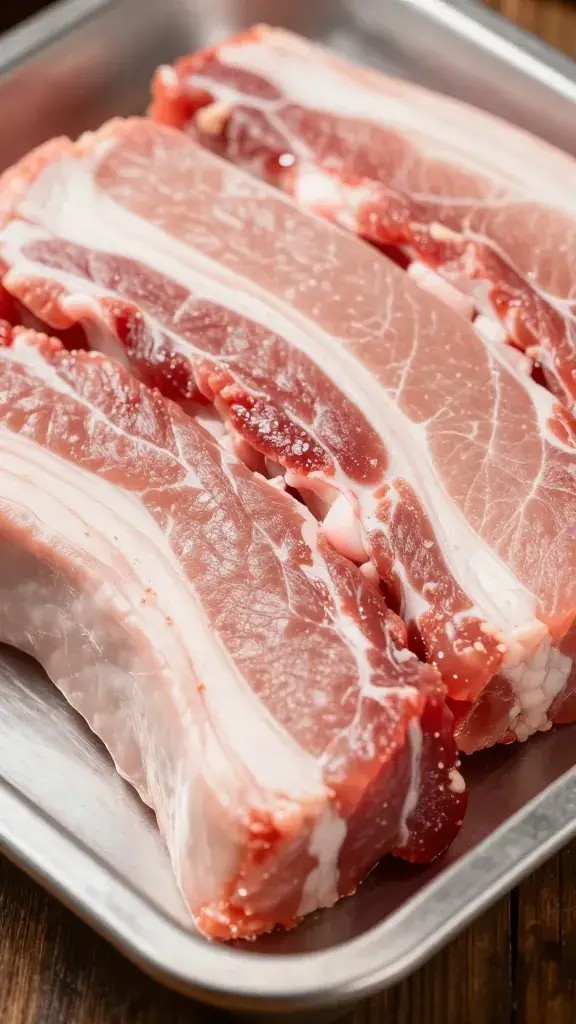
Whole hog barbecue blends shoulder, ham, belly, and loin, so every bite balances fat and lean. That’s why the meat tastes rich even before sauce.
Eastern North Carolina tradition keeps it simple: salt, smoke, chop, and vinegar-pepper sauce. No heavy tomato, no sugary glaze — just clean smoke and bright acid.
Planning for 100: Meat, Buns, and Sides
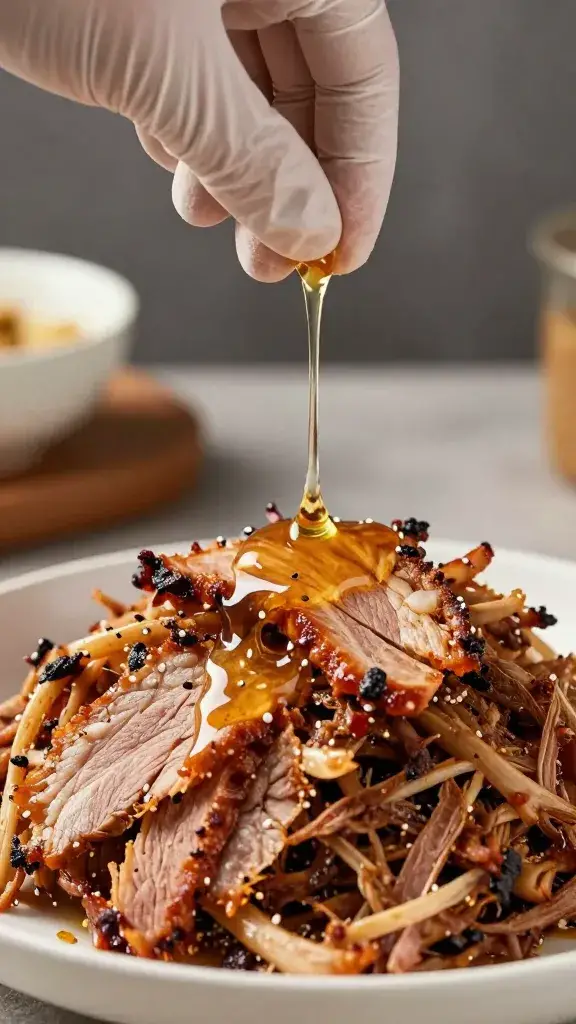
How Much Pork
- Whole hog option: 1 hog at 140–160 lb on the hoof (95–115 lb dressed) yields roughly 45–55% cooked, chopped meat — about 45–60 lb. For 100 portions at 5–6 oz each, you want 35–38 lb net. One mid-size hog plus a small shoulder “insurance” is smart.
- Shoulder-only workaround: 65–70 lb bone-in pork shoulder/Boston butts yields ~50% — net ~33–35 lb. Add 15 lb picnic/extra butt to hit the mark and get fat/lean balance.
Rolls and Sides
- Buns: 120–140 soft potato or classic hamburger buns (allow seconds and “overflow”).
- Slaw: 1.5–2 gallons (vinegar slaw plays nicest with the sauce).
- Beans: 2 full steam-table pans (18–22 quarts total).
- Pickles + Chips: 2–3 gallons dill chips; 10–12 lb kettle chips.
The Vinegar Sauce Fix (Scaled for a Crowd)
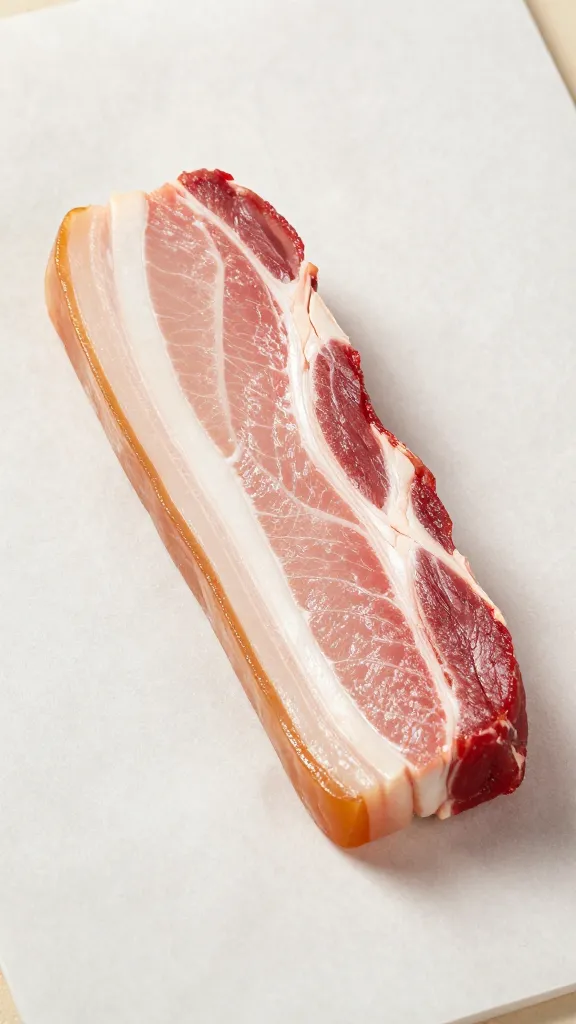
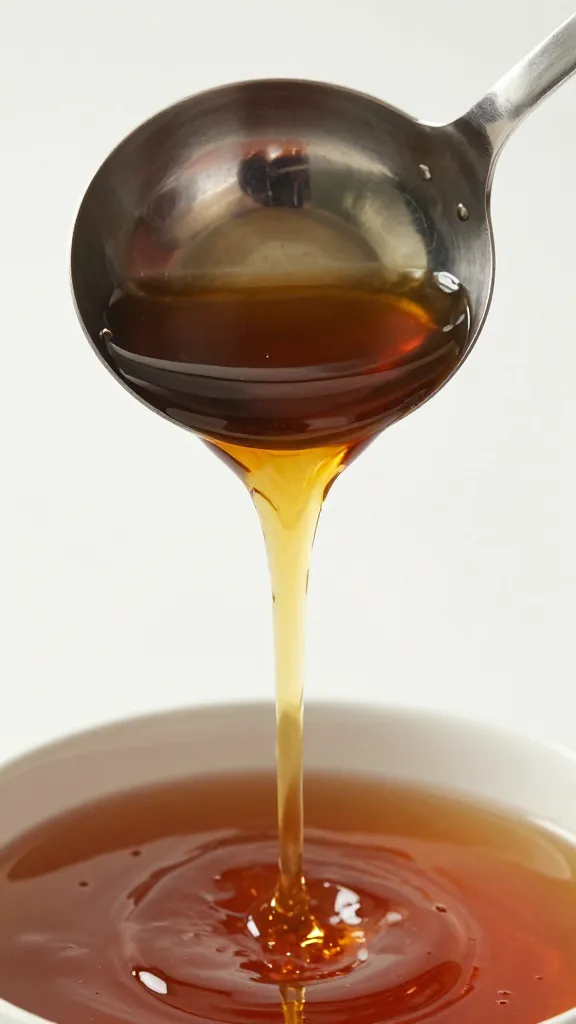
This is a classic Eastern NC profile: sharp vinegar, a touch of sweetness, salt, and a two-pepper bite. It’s thin on purpose — it seasons without masking smoke.
Base Batch (Makes ~1.25 Gallons)
- 1 gallon apple cider vinegar
- 2 cups distilled white vinegar (sharpens the edge)
- 1/2 cup kosher salt (Diamond Crystal; if Morton, use 6 tbsp)
- 1/2 cup light brown sugar
- 1/3 cup crushed red pepper flakes
- 2 tbsp ground black pepper
- 2 tbsp smoked paprika (optional but rounds the smoke)
- 1 tbsp garlic powder (optional; not traditional but crowd-friendly)
Method
- Whisk everything in a non-reactive pot. Bring just to a bare simmer.
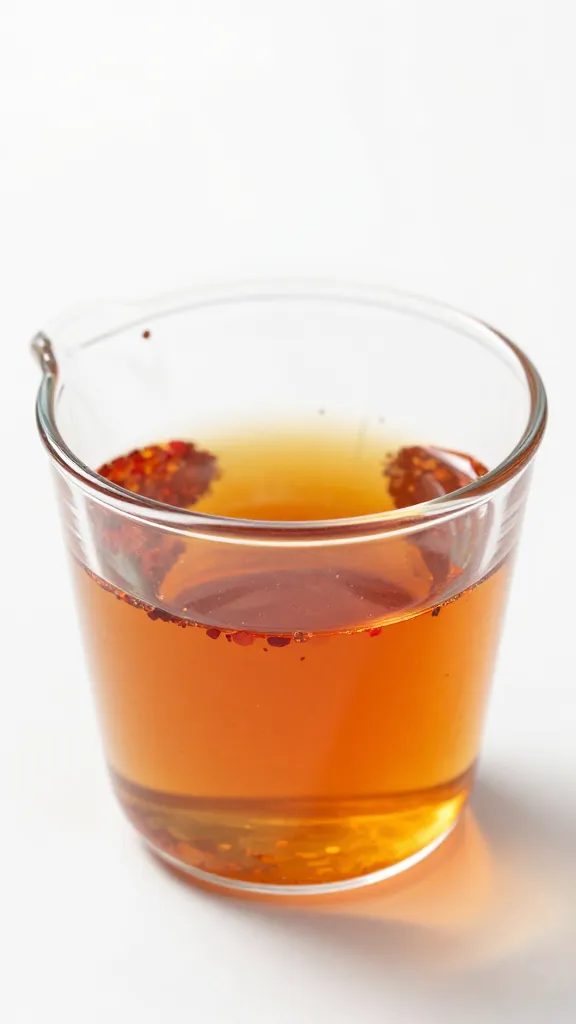
- Simmer 5 minutes to bloom peppers and dissolve sugar. Cool fully.
- Bottle and refrigerate at least 24 hours. It gets brighter and more integrated overnight.
Yield math: For 100 people, 1.25 gallons covers on-board seasoning plus table bottles. If your group likes it saucy, make 1.75 gallons.
Cooking Day: Fire, Temps, and Timing
If You’re Doing True Whole Hog
- Cooker: Cinderblock pit, direct embers, or a steel offset with a grate big enough for the carcass butterflied skin-side down.
- Fuel: Oak base with hickory for flavor. Keep a clean fire and pit temp 225–250°F.
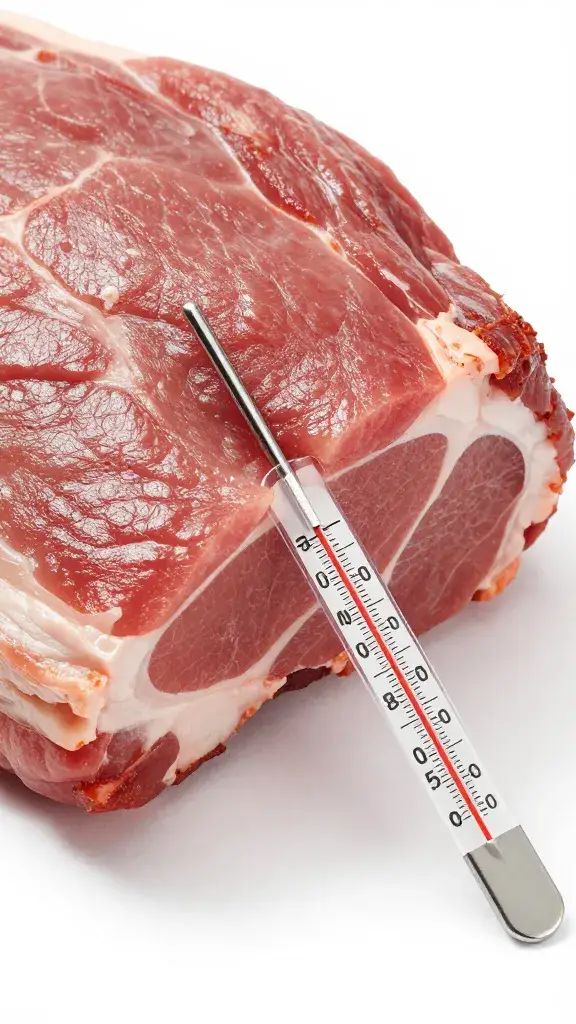
- Time: 12–16 hours depending on size and pit. You’re done when shoulders/ham hit 195–203°F and the loin is 155–160°F, skin blistered.
- Mop: Lightly mop with diluted sauce (50/50 water) every 60–90 minutes after hour 4 to keep edges from drying. Don’t drown it.
Shoulder Route (More Accessible)
- Rub: Just salt and a dust of black pepper the night before. Simpler is better with vinegar sauce.
- Cook: 225–250°F for 10–14 hours to 198–203°F internal. Rest 45–60 minutes, then pull and chop.
- Wood: Oak/hickory or pecan. Skip mesquite — too aggressive for Eastern style.
Key fact: Resting is not optional. It redistributes juices so the pork takes seasoning better.
Chopping, Seasoning, and Holding for Service
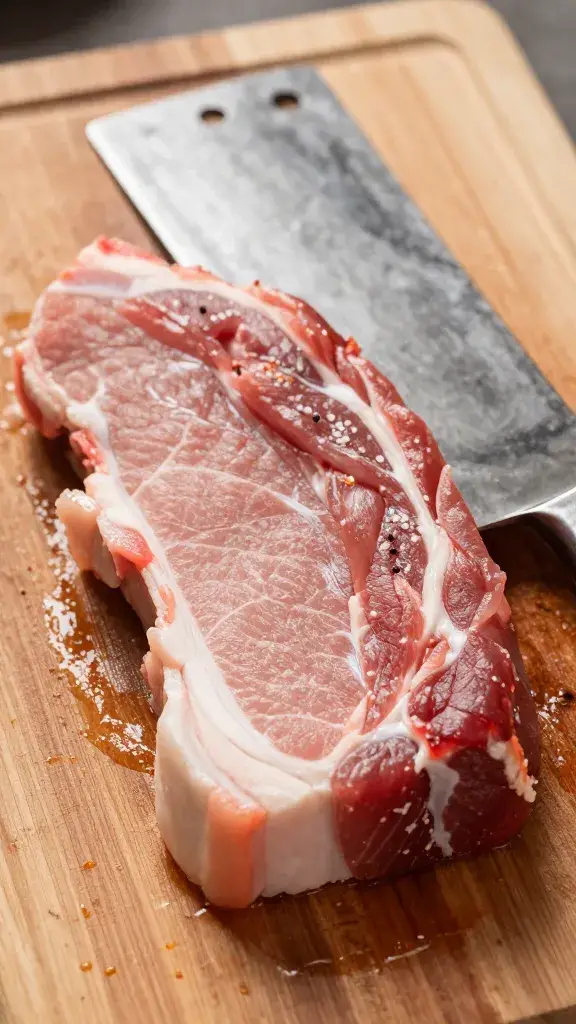
Chop Like They Do in ENC
- Pull off skin and set aside for cracklin’ garnish.
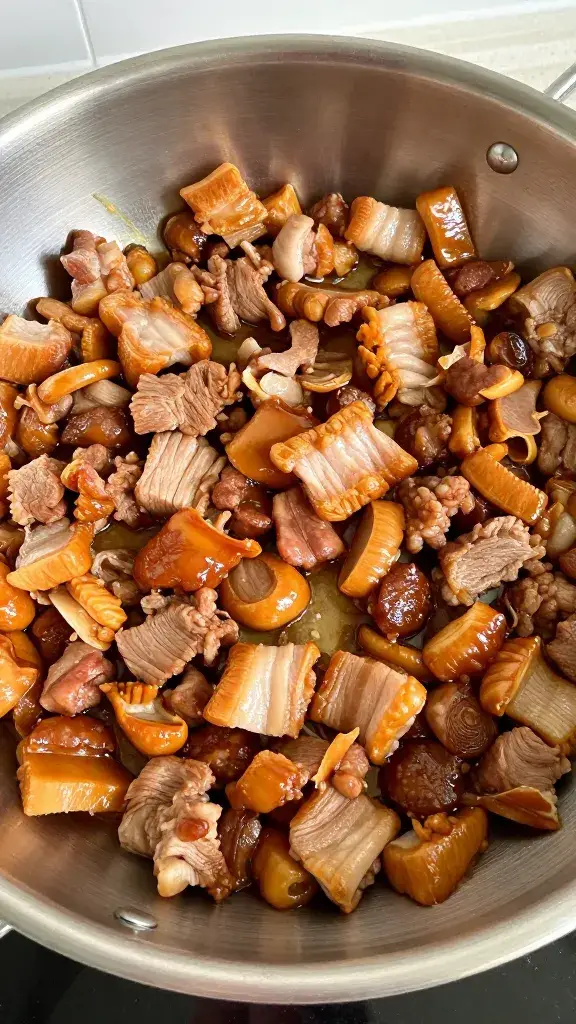
- Combine shoulder, ham, belly/bark, and a little loin for balance.
- Chop medium-fine with a cleaver, mixing fat and lean as you go.
Season in Layers
- Sprinkle kosher salt lightly over the chopped meat.
- Drizzle the vinegar sauce — about 1 to 1.5 cups per 10 lb meat — and toss.
- Taste. Add more sauce gradually. The goal is glistening and tangy, not soggy.
Hold Without Drying
- Pan the pork in hotel pans. Cover tightly.
- Hold in a 150–165°F warmer. Splash 2–3 tbsp sauce per pan every 30–45 minutes and toss.
- Stir in chopped cracklin’ right before service for crunch.
Serving Line Setup That Actually Flows
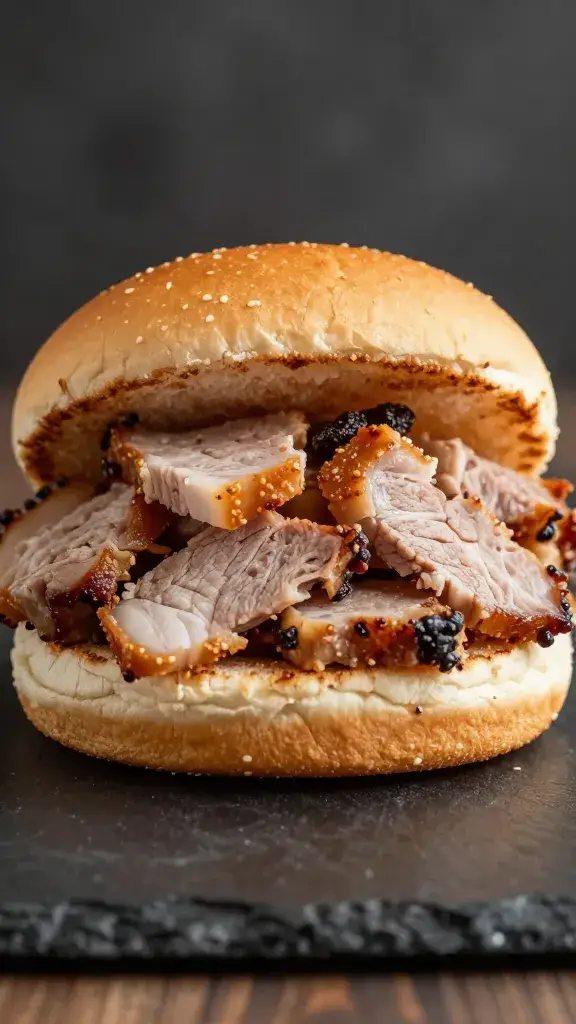
- Station 1: Buns and warmed chopped pork, pre-seasoned.
- Station 2: Squeeze bottles of vinegar sauce, vinegar slaw, dill pickles.
- Station 3: Beans and chips. Keep plates at the end to prevent pileups.
- Pro move: A tiny “heat” bottle with extra chili flake infused in hot vinegar for the spice lovers.
Want a green, herby option for grilled sides on the same menu? Add a quick fresh sauce like this chimichurri recipe — it’s great on grilled corn or veggies without stealing the BBQ’s spotlight.
Make-Ahead Timeline for Sanity
- 5 days out: Make and bottle vinegar sauce; refrigerate.
- 2 days out: Shop and prep sides; cube wood; check fuel.
- 1 day out: Salt pork and refrigerate. Make slaw base; chill.
- Overnight: Cook whole hog or shoulders.
- Event day: Chop, season, pan, and hold. Set stations. Garnish with cracklin’ at service.
Planning a second protein for non-pork eaters? Consider grilled chicken thighs with these marinade ideas — they cook fast and hold well next to the hog.
From My Kitchen: What Actually Works
The sauce tastes best after a full overnight rest; the red pepper flake hydrates and gives a cleaner heat. When chopping, I fold in the loin sparingly — about 10–15% — to keep the mix juicy; too much loin dries the tray by the second hour. I’ve tested holding pans with water versus sauce: water mutes flavor, while 2–3 tbsp sauce per pan every 30–45 minutes keeps both moisture and brightness. For salt, I season lightly before saucing and again right before service — the acid makes salt read louder, so a little late salt wakes it up without oversalting the hold.
Frequently Asked Questions
How much meat do I need for North Carolina whole hog for 100 people?
Plan 5–6 ounces cooked meat per person, or about 35–38 lb net. A 140–160 lb live-weight hog (95–115 lb dressed) usually yields 45–60 lb cooked, chopped meat. If unsure, add one extra shoulder for insurance.
Can I make the North Carolina vinegar sauce ahead of time?
Yes. Make it up to 5 days ahead and refrigerate. It actually improves after 24 hours as the peppers bloom and the vinegar mellows slightly.
What’s the best way to serve North Carolina whole hog to a crowd?
Pre-season the chopped pork lightly with sauce, then set squeeze bottles on the line for people to add more. Keep pans covered in a 150–165°F warmer and refresh with small splashes of sauce as you go.
How long does chopped pork with vinegar sauce keep in the fridge?
Up to 4 days tightly covered. Reheat gently with a splash of sauce over low heat or in a 250°F oven to avoid drying it out.
Can I freeze leftover pork and sauce?
Yes. Freeze pork in quart bags with 2–3 tbsp sauce pressed in to prevent freezer burn for up to 3 months. The sauce itself keeps in the fridge for weeks, but its heat slowly softens after 10–14 days.
The Bottom Line
Great North Carolina whole hog for 100 comes down to balanced chop, a bright vinegar sauce, and smart holding. Keep the flavors clean, the line moving, and refresh each pan with a light splash of sauce — that’s the fix that makes every bite pop.
Planning to try this? Save this post so you can find it when you need it — and tag us when you make it.