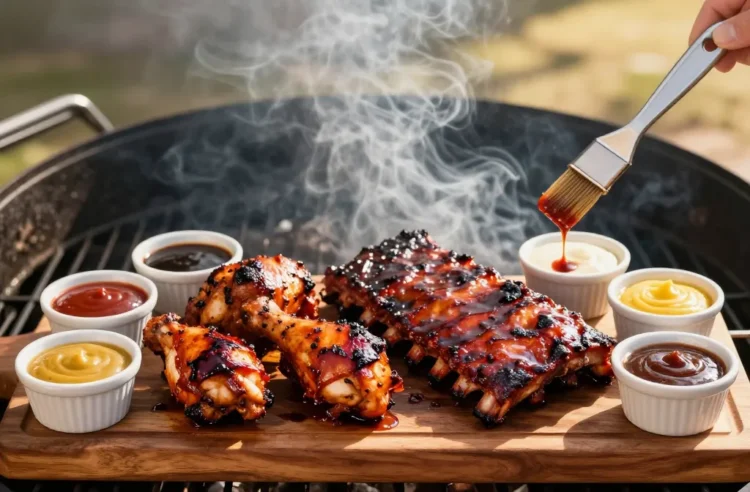
I learned backyard BBQ on a tiny apartment balcony with a wobbly kettle grill and a single charcoal chimney. When friends came over, I didn’t have time (or space) to make one sauce for chicken and another for ribs. After years of trial, I settled on five reliable sauces that nail both: they stick without burning, taste balanced, and need no specialty gear.
In this guide, you’ll learn which flavors and textures actually perform on chicken and ribs, how to avoid burnt sugar crusts, and how to tweak store-bought bottles with pantry staples. You’ll walk away with five sauces you can make or buy, plus exact timing for when to brush them on so both meats finish glossy and tender.
1. Kansas City-Style Sweet and Smoky: Crowd-Pleasing and Glossy
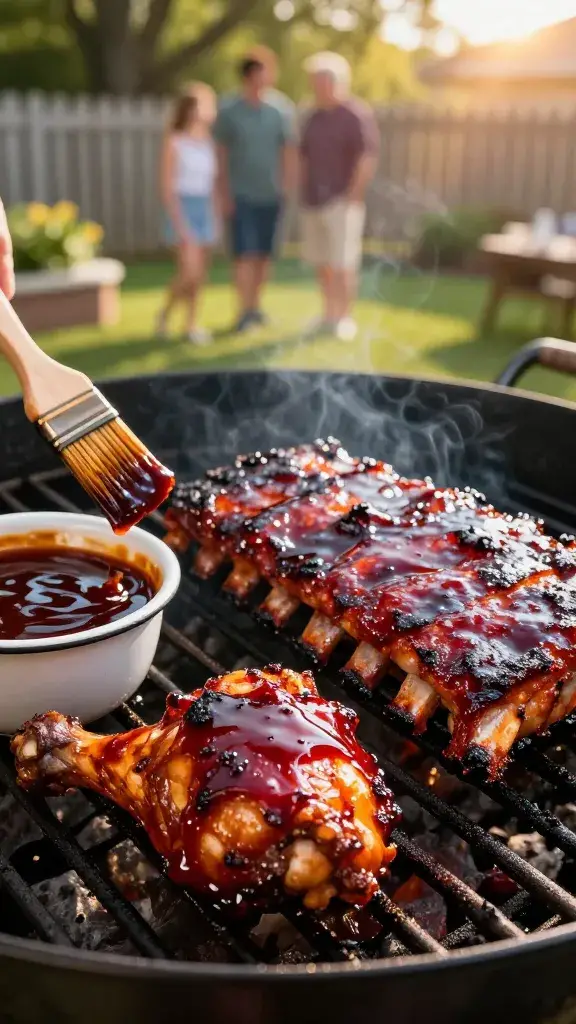
When you want that classic backyard shine, Kansas City-style is the sauce most people picture. It’s thick, sweet, and tangy, and it forms a lacquer on both ribs and chicken that makes neighbors wander over. The risk is burning if you slap it on too early — sugar plus high heat turns bitter fast.
Why It Works on Both Chicken and Ribs
- Thick body clings to rib bark and chicken skin without sliding off.
- Balanced sweet-acid profile flatters pork’s richness and chicken’s milder flavor.
- Common ingredients: ketchup, brown sugar, molasses, apple cider vinegar, Worcestershire, mustard powder, garlic, onion powder, black pepper.
Store-Bought Picks and Simple Upgrades
- Look for labels like “KC,” “Sweet & Smoky,” or “Original.” Brands at most supermarkets work well.
- Upgrade a bottle with 1 teaspoon apple cider vinegar and a pinch of cayenne per cup to brighten and control sweetness.
When to Sauce
- Ribs: Brush on during the last 20–30 minutes of cooking at moderate heat (275–300°F). Add 2–3 light layers, 7–10 minutes apart.
- Chicken: Brush on during the last 10–15 minutes. For thighs/drums, finish at 175–185°F internal; for breasts, stop at 160–165°F.
Takeaway: Use a sweet-and-smoky sauce for easy wins, but apply it late in thin coats to avoid burnt sugar.
2. Carolina Red Vinegar-Tomato: Tangy Lift That Cuts Fat
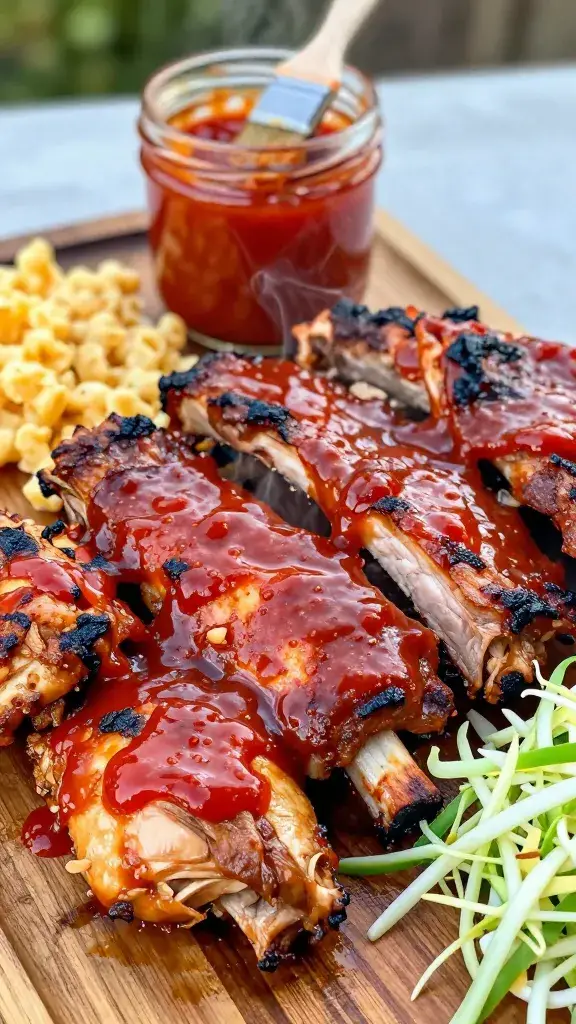
Heavy, sugary sauces can drown ribs and make chicken cloying. A Carolina red — vinegar forward with a light tomato base — wakes up both meats. The payoff is clean, bright bites that don’t taste sticky or stodgy, even if you’re serving a rich slaw or mac and cheese on the side.
Why It Works on Both Chicken and Ribs
- Vinegar tang slices through pork fat and keeps chicken lively.
- Thinner texture penetrates rib bark and soaks into pulled chicken or rib tips.
- Simple pantry build: ketchup, apple cider vinegar, brown sugar (just a little), hot sauce, black pepper, red pepper flakes.
Make It at Home (No Specialty Gear)
- In a saucepan, whisk 1 cup ketchup, 3/4 cup apple cider vinegar, 2 tablespoons brown sugar, 1 tablespoon Worcestershire, 1 teaspoon hot sauce, 1 teaspoon black pepper, 1/2 teaspoon red pepper flakes, 1/2 teaspoon salt.
- Simmer 8–10 minutes to meld. Cool before using.
When to Sauce
- Ribs: Mop lightly during the final 45 minutes — every 15 minutes — to layer tang without washing off bark.
- Chicken: Brush in the last 10 minutes; reserve some for the table to drizzle at serving.
Action today: Stir a quick Carolina red on the stovetop and use it as both a finisher and table sauce to sharpen flavors without extra sweetness.
3. Alabama White: Creamy Heat That Loves Smoke
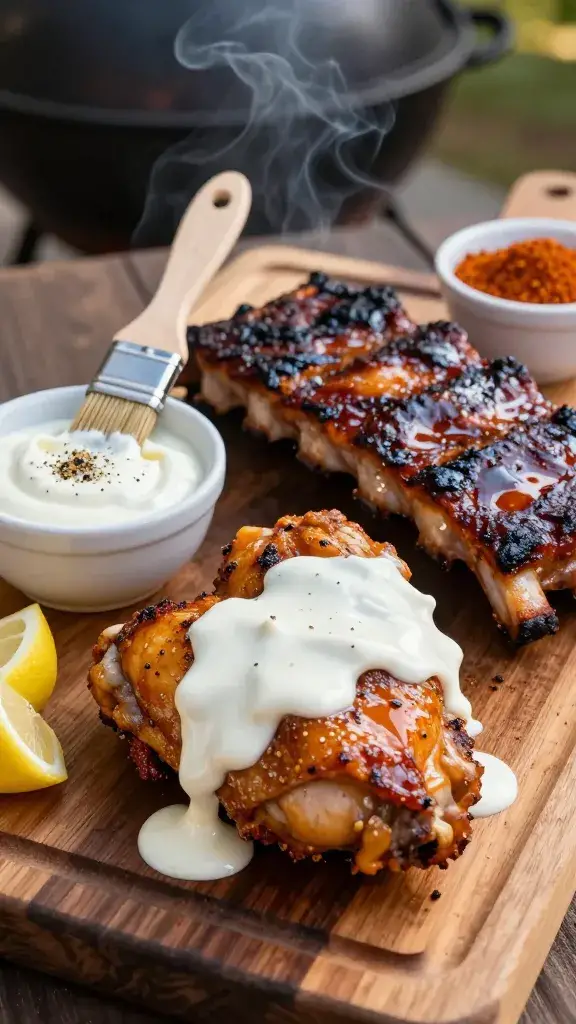
Chicken sings with Alabama white sauce — a peppery mayo-and-vinegar blend — but ribs love it too when used smartly. Its creamy body cools spice rubs and pairs with smoke like ranch pairs with wings. The pitfall is over-saucing; heavy coats mask bark texture.
Why It Works on Both Chicken and Ribs
- Acid + cream bring contrast: tang brightens, mayo rounds edges.
- Cracked pepper and horseradish add heat without burning.
- Great as a finish or dipping sauce to preserve crust.
Quick Mix from Pantry Staples
- 1 cup mayonnaise, 1/3 cup apple cider vinegar, 1 tablespoon lemon juice, 2 teaspoons prepared horseradish, 1 teaspoon Dijon, 1 teaspoon black pepper, 1/2 teaspoon garlic powder, 1/2 teaspoon salt, pinch of sugar.
- Whisk and rest 15 minutes. Thin with water 1 teaspoon at a time if too thick.
How to Use It
- Chicken: Toss grilled thighs or drums in a light coat right off the grill. For breasts, spoon a thin stripe instead of coating the whole piece.
- Ribs: Brush a whisper-thin layer in the last 5 minutes or serve on the side for dipping individual bites.
Takeaway: Keep coats thin and treat Alabama white as a finisher or dip to complement, not smother, bark and skin.
4. Memphis-Style Tomato-Light with Dry Rub Support
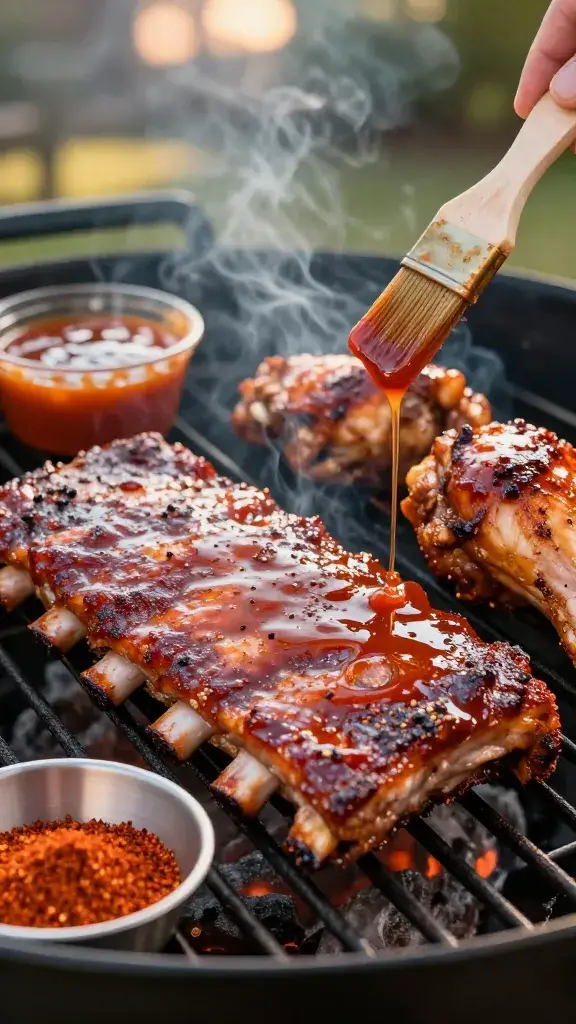
If you like ribs finished with a kiss of sauce, not a paint job, Memphis is your lane. This style leans on a solid dry rub and a thinner, less sugary glaze, which also keeps chicken skin from turning gummy. The danger is ending up bland if your rub is weak or your sauce lacks salt and heat.
Core Flavor and Texture
- Light tomato base, noticeable vinegar, modest sweetness.
- Spice from paprika, black pepper, and a touch of cayenne.
- Brushable consistency — think maple syrup that’s sat out for 10 minutes.
Rub + Sauce Combo from the Hardware-Store Pantry
- Rub: 2 tablespoons paprika, 1 tablespoon brown sugar, 2 teaspoons kosher salt, 1 teaspoon black pepper, 1 teaspoon garlic powder, 1 teaspoon onion powder, 1/2 teaspoon cayenne.
- Sauce: 3/4 cup tomato sauce, 1/2 cup apple cider vinegar, 2 tablespoons brown sugar, 1 tablespoon Worcestershire, 1 teaspoon Dijon, 1 teaspoon paprika, 1/2 teaspoon black pepper, 1/2 teaspoon salt. Simmer 10 minutes.
Application Timing
- Ribs: Glaze once, 15–20 minutes before pulling, then dust lightly with rub after slicing for aroma.
- Chicken: Brush in the final 8–10 minutes; finish with a small pinch of rub after resting 5 minutes.
Action today: Mix a small batch of Memphis rub and keep it in a jar; use it to tune store-bought “Original” sauces into a thinner, spicier glaze.
5. Honey-Chipotle with Citrus: Sweet Heat That Doesn’t Burn Out
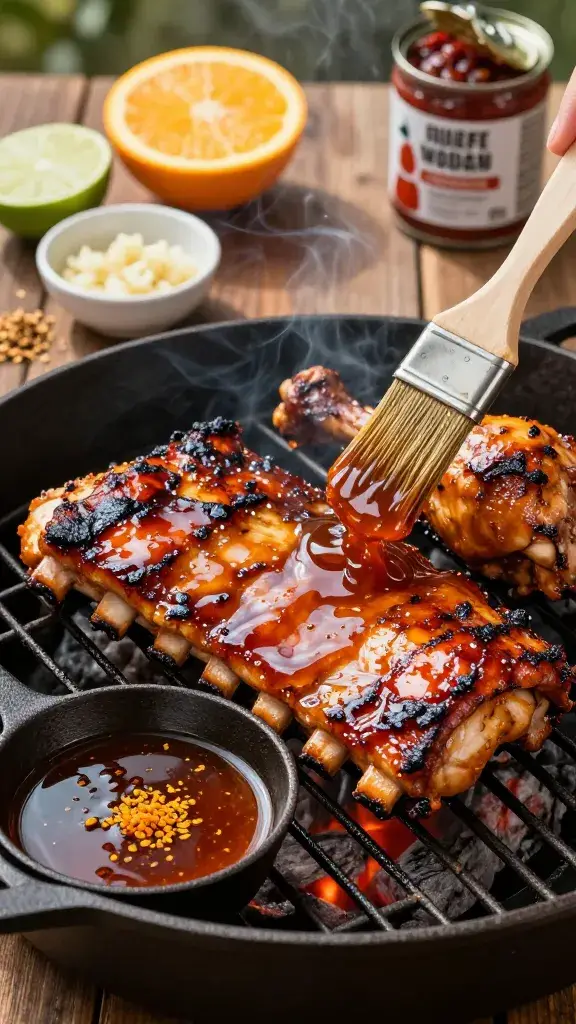
Many “spicy” sauces punish the cook with flare-ups and scorched edges. A honey-chipotle blend, thinned with orange juice and sharpened with lime, brings controlled heat and a glossy finish without turning bitter. The key is balancing sugars with acid and brushing in layers over moderate heat.
Flavor Blueprint
- Honey for sheen and cling; chipotle in adobo for smoke and gentle heat.
- Orange juice to thin and add fruit notes; lime for a clean finish.
- Garlic and cumin for savory backbone.
Simple Home Recipe
- Blend: 1/2 cup honey, 1/2 cup ketchup, 2 tablespoons adobo sauce (plus 1 minced chipotle for more heat), 1/4 cup orange juice, 1 tablespoon lime juice, 1 teaspoon cumin, 1 teaspoon garlic powder, 1 teaspoon salt.
- Simmer 6–8 minutes until glossy. If too thick, add 1–2 tablespoons water.
How to Use It
- Ribs: Brush 2–3 light coats over the last 30 minutes at 275–300°F. If grilling direct, keep flames low and lid closed between coats.
- Chicken: Great on thighs and wings; glaze during the final 10 minutes, then add a squeeze of lime before serving.
Takeaway: Balance honey’s sweetness with citrus and apply over moderate heat to keep the glaze bright, not burnt.
Frequently Asked Questions
When exactly should I add sauce so it doesn’t burn?
Finish with sauce once the meat is almost done. On ribs, start glazing in the last 20–30 minutes at 275–300°F; add thin layers every 7–10 minutes. On chicken, brush during the last 10–15 minutes and pull when the internal temp hits safe doneness. Keep direct flames low and close the lid to prevent scorching.
How do I thin a thick store-bought sauce for better brushing?
Whisk in 1–2 tablespoons apple cider vinegar and 1–3 tablespoons water per cup until it flows like warm syrup. Taste and add a pinch of salt if the flavor dulls. For heat, stir in 1/4 teaspoon cayenne or a few dashes of hot sauce. Warm it gently on the stovetop so it spreads evenly.
What’s the best sauce if I have both sweet-tooth and spice-loving guests?
Run a base glaze that’s balanced and mild, like Memphis or light Kansas City, then offer table-side finishers. Put out a small bowl of Carolina red for tang and a honey-chipotle for heat. Let guests brush or dip their portions after slicing so you don’t commit the whole rack or batch of chicken to one profile.
Can I use the same sauce as a marinade and a finisher?
Yes, but keep raw-meat contact separate. Reserve at least half the sauce in a clean container before marinating. Pat meat dry before cooking so sugars don’t burn early, and use fresh, uncontaminated sauce for the final glazing. If you accidentally mix them, boil the sauce for 3 minutes before finishing.
How do I get sauce to stick to chicken skin without going rubbery?
Render the skin first at moderate heat until it looks golden and tight, then glaze late. Apply thin coats 2–3 times over the final 10–15 minutes, letting each set before adding the next. Rest the chicken 5 minutes off heat to let the glaze settle. Avoid heavy, cold sauce straight from the fridge — warm it slightly so it brushes smoothly.
What if my ribs’ bark turns mushy after saucing?
You used too much sauce or applied it too early. Next time, set the bark first — ribs should pass the bend test or show 1/4-inch bone pullback before glazing. Brush on thinly in the final 20–30 minutes and avoid wrapping after saucing. If it happens again, finish the last 5 minutes uncovered over gentle heat to re-set the glaze.
Conclusion
Great BBQ sauce doesn’t care whether it’s on chicken or ribs — it’s about balance, texture, and timing. Pick one of these five, apply it late in thin coats, and you’ll serve glossy, flavorful meat with zero scorch and plenty of snap. Ready to level up? Next cook, run a mild base glaze and set out a tangy and a spicy finisher so every plate lands perfect.