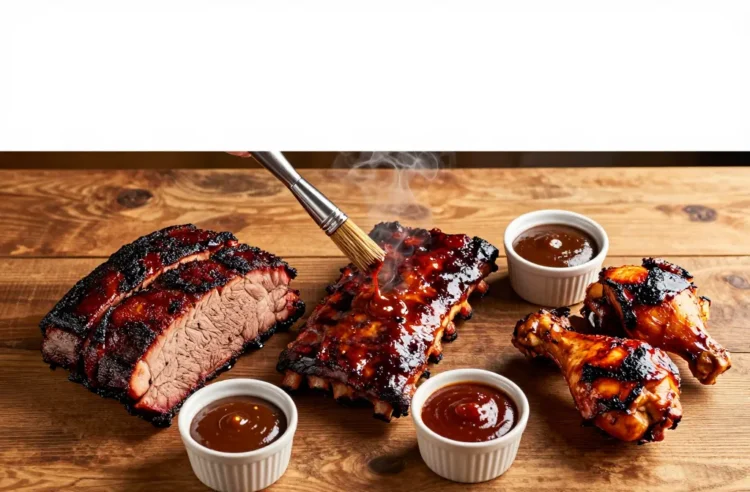
I’ve grilled on apartment balconies with a small kettle and in tiny backyards with a wobbly folding table. I know the feeling of standing over chicken, ribs, and brisket wondering which sauce won’t burn, go cloying, or drown the smoke you worked for. In this guide, I’ll show you five proven sauces that stay balanced across all three meats, plus exactly when and how to use them with only basic tools. You’ll finish with repeatable timing, simple store-bought ingredients, and sauce strategies that make weeknight chicken and weekend brisket both shine.
1. Kansas City–Style Sweet & Sticky: Caramelizes Without Turning Candy-Hard
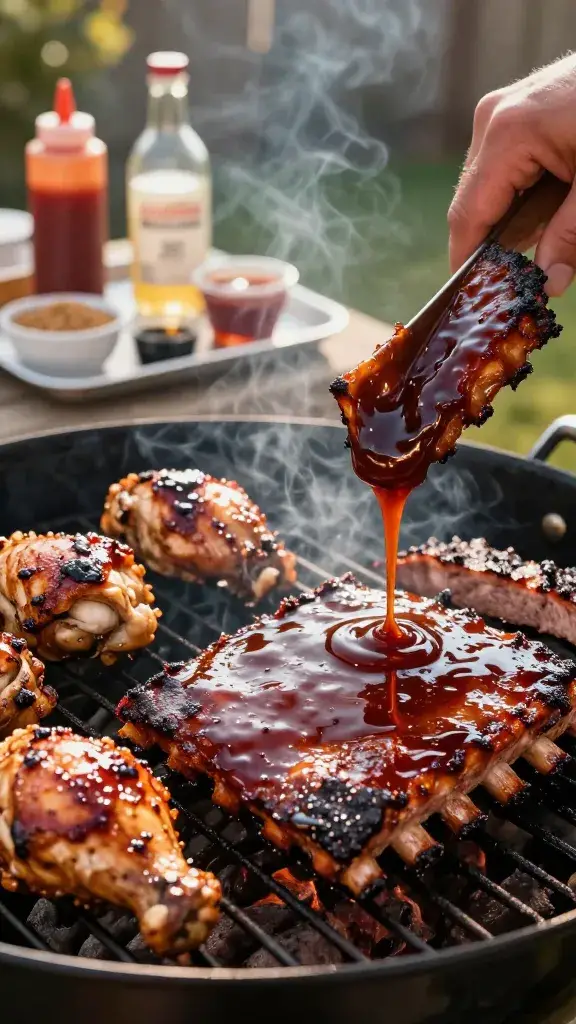
Thick, sweet sauces scorch when you brush them on too early. You end up with bitter, blackened sugar and underdeveloped bark. The right Kansas City–style sauce leans sweet but balances with tang and savory depth so it lacquers chicken skin, hugs rib bark, and glosses sliced brisket without clumping.
Flavor Profile & Why It Works
- Sweet-tangy base: ketchup and brown sugar for body
- Acid: apple cider vinegar to cut richness
- Umami: Worcestershire and a touch of soy for depth
- Heat (optional): a pinch of cayenne to keep it from tasting flat
Simple Pantry Formula
- 1 cup ketchup
- 1/3 cup brown sugar (packed)
- 1/4 cup apple cider vinegar
- 1 tablespoon Worcestershire sauce
- 1 teaspoon yellow mustard
- 1/2 teaspoon garlic powder
- 1/4 teaspoon cayenne (optional)
- Pinch of salt and black pepper
Simmer in a small saucepan over low heat for 8–10 minutes until glossy and slightly thickened. Stir every minute to prevent sticking.
How to Use on Each Meat
- Chicken: Brush on during the last 8–10 minutes over medium heat. Flip once and re-brush right before pulling to rest.
- Ribs: Sauce in the final 20–30 minutes at 275–300°F. Apply 2 light coats 10 minutes apart so it sets, not puddles.
- Brisket: Warm the sauce and thin 1:1 with brisket drippings or water. Brush lightly on slices or serve on the side.
Action today: Make a half-batch on the stove and store in a clean jar. Use it late in the cook only — never earlier than the final 30 minutes.
2. Carolina Vinegar & Pepper: Cuts Fat and Wakes Up Smoke
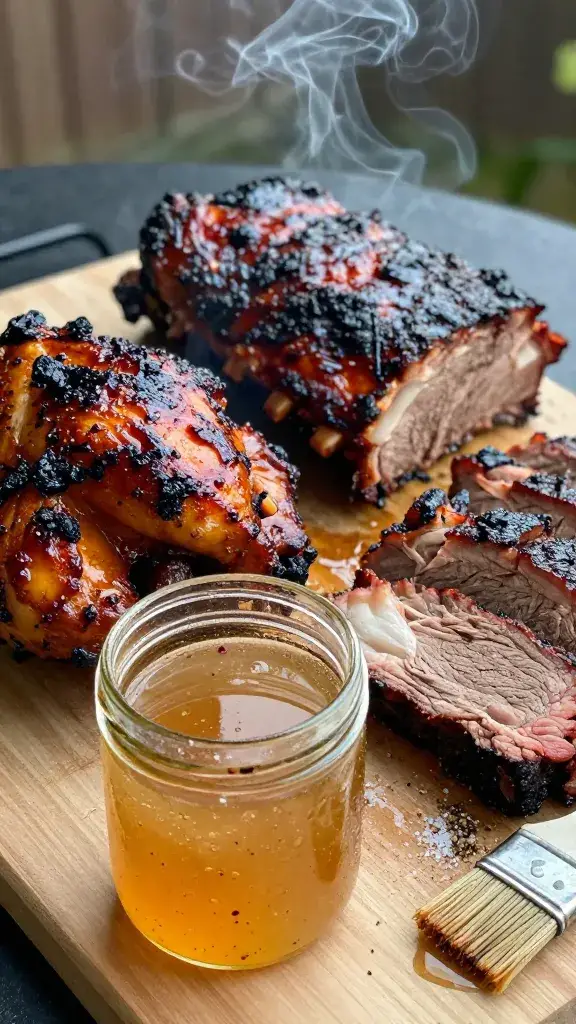
Heavy, sweet sauces can smother the smoky crust you worked to build, especially on rich cuts. A sharp vinegar sauce brightens fatty bites and keeps pulled chicken, rib ends, and brisket point from tasting greasy. It also won’t burn because there’s almost no sugar.
Flavor Profile & Why It Works
- High acid: apple cider vinegar to slice through fat
- Salt and pepper: seasons deeply without adding weight
- Light heat: red pepper flakes for a clean finish
Simple Pantry Formula
- 1 cup apple cider vinegar
- 1 tablespoon brown sugar
- 1 teaspoon kosher salt
- 1 teaspoon black pepper (freshly ground)
- 1/2 teaspoon red pepper flakes
Shake in a jar until the sugar dissolves. Rest 15 minutes so the pepper softens.
How to Use on Each Meat
- Chicken: Spoon 1–2 tablespoons over chopped or pulled chicken thighs. Toss quickly and serve.
- Ribs: Spritz ribs during the cook every 45–60 minutes after the first 2 hours. Post-cook, brush a thin film to wake the bark.
- Brisket: Dot a few teaspoons on chopped burnt ends or mix a tablespoon into warmed drippings for a bright finishing jus.
Takeaway: Keep this in a squeeze bottle and use it as a spritz and finisher to balance any cut without fear of burning.
3. Alabama White: Tangy Mayo Mop That Won’t Burn and Loves Poultry
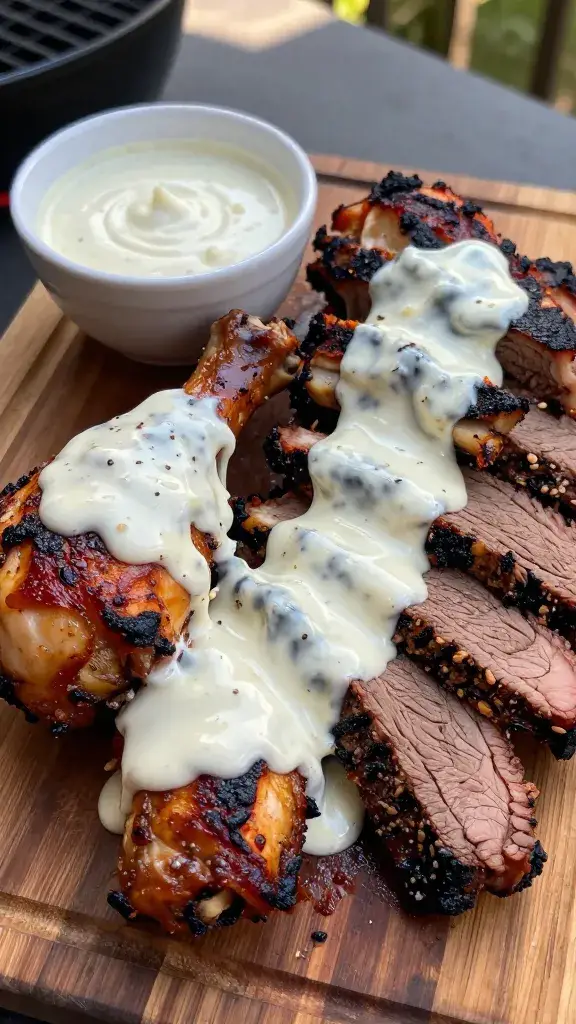
Direct heat turns sugary glazes bitter, but a mayo-based sauce holds up and clings without scorching. It’s famous with chicken, yet the tangy backbone makes rib tips and brisket crust taste livelier. Because it’s not sweet, it plays well with smoke and black pepper rubs.
Flavor Profile & Why It Works
- Creamy-tangy: mayo and vinegar balance smoke and pepper
- Sharp mustard: keeps richness in check
- Black pepper + horseradish: a clean, nasal heat that doesn’t linger
Simple Pantry Formula
- 1 cup mayonnaise
- 1/4 cup apple cider vinegar
- 1 tablespoon lemon juice
- 1 tablespoon prepared horseradish
- 2 teaspoons yellow mustard
- 1 teaspoon black pepper
- 1/2 teaspoon garlic powder
- 1/2 teaspoon salt
Whisk until smooth. Thin with 1–2 tablespoons water for a pourable consistency.
How to Use on Each Meat
- Chicken: Dunk grilled chicken pieces in a bowl of sauce right off the grill, then brush a thin coat before serving.
- Ribs: Brush a light coat after slicing for a cool-hot contrast. Great on dry-rubbed ribs without a sweet glaze.
- Brisket: Serve on the side as a dipping sauce for the lean flat; it replaces the moisture that lean slices lack.
Signs You Nailed the Consistency
- Clings to a spoon but drips in a steady stream
- Coats chicken without leaving thick clumps
Action today: Make this 1 hour ahead and chill — the flavors meld and the texture tightens for cleaner brushing.
4. Texas Mop Sauce: Thin, Savory Baste That Builds Bark Instead of Burning
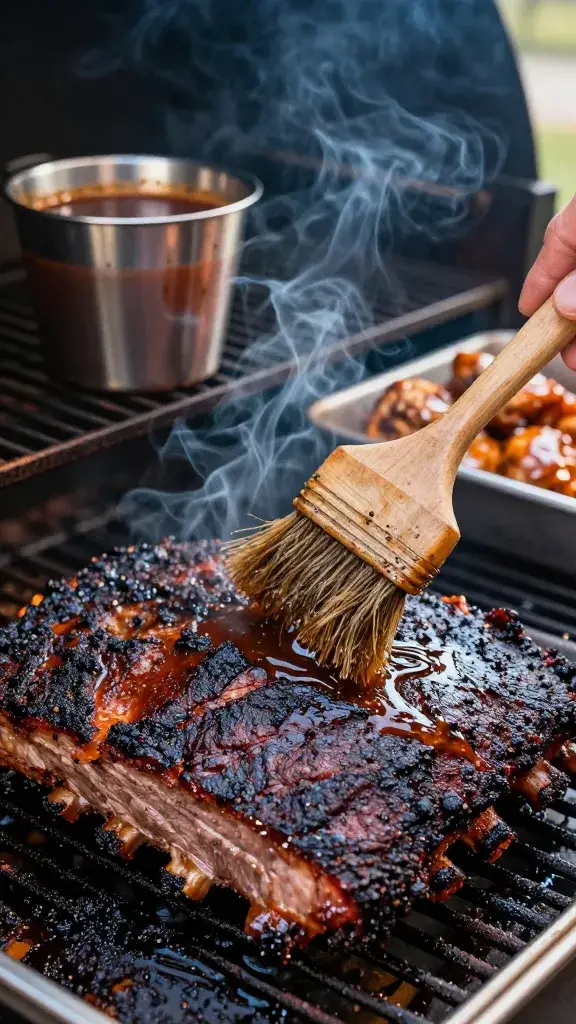
Brisket and ribs dry out when you run a grill hot or open the lid too often. A thin mop keeps the surface tacky so smoke sticks and bark forms, without adding caramelizing sugars. It works for chicken too when you want more peppery savor than sweetness.
Flavor Profile & Why It Works
- Beefy-savory: broth and Worcestershire ride with smoke
- Acid and heat: cider vinegar and hot sauce sharpen the edges
- Pepper-forward: black pepper complements bark
Simple Pantry Formula
- 1 cup low-sodium beef or chicken broth
- 1/4 cup apple cider vinegar
- 1 tablespoon Worcestershire sauce
- 1 teaspoon hot sauce
- 1 teaspoon black pepper
- 1/2 teaspoon garlic powder
- Pinch of salt
Warm in a saucepan. Keep in a heat-safe bowl or a clean spray bottle.
How to Use on Each Meat
- Chicken: Mop lightly every 15–20 minutes during indirect cooking. Finish with a quick sear and one last mop off heat.
- Ribs: After the first 90 minutes, mop every 30–40 minutes at 250–300°F to encourage bark and keep edges supple.
- Brisket: Mop every hour after bark sets (about 3 hours in) to prevent dry patches without washing off rub.
Warning Signs You’re Overdoing It
- Pooling liquid on the grate or meat surface
- Rub streaks washing off
Takeaway: Mop lightly — think sheen, not shine — so you build bark and preserve seasoning.
5. Honey-Mustard Glaze: Fast Finish That Adds Shine Without Overpowering Smoke
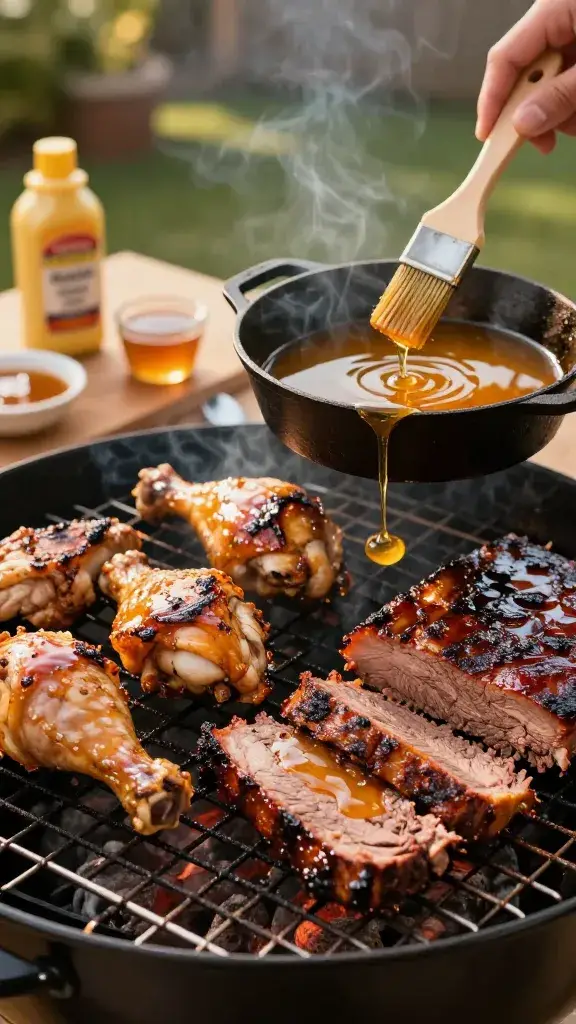
Busy weeknights tempt you to drown grilled chicken or ribs in bottled sweetness. A balanced honey-mustard glaze goes on in minutes, sets fast, and adds gentle sweetness that works for all three meats. Because it’s thinner and more acidic than a thick sweet sauce, it burns less and tastes cleaner.
Flavor Profile & Why It Works
- Sweet-savory: honey for shine and mild sweetness
- Tang: Dijon or yellow mustard tightens the finish
- Depth: a touch of soy or Worcestershire keeps it from tasting one-note
Simple Pantry Formula
- 1/3 cup honey
- 2 tablespoons Dijon or yellow mustard
- 1 tablespoon apple cider vinegar
- 1 teaspoon soy sauce or Worcestershire
- 1/4 teaspoon black pepper
Warm gently and whisk until smooth. Do not boil; you want it fluid.
How to Use on Each Meat
- Chicken: Brush on during the last 5–7 minutes over medium heat. Flip once and brush again off heat.
- Ribs: After unwrapping or in the final stretch, brush a thin coat and set for 10 minutes at 275–300°F.
- Brisket: Use sparingly on burnt ends or as a drizzle on the point; keep it off the lean flat to avoid masking smoke.
Make It Balcony-Friendly
- Use a silicone brush and a small heatproof bowl you can set on the cool side of the grill.
- If flare-ups start, move meat to indirect heat and close the lid for 2 minutes to set the glaze.
Action today: Mix the glaze before you light the grill and keep it warm near the indirect zone so it brushes on smoothly.
Frequently Asked Questions
When should I put sauce on ribs so it doesn’t burn?
Add sauce in the last 20–30 minutes at 275–300°F. Apply two thin coats 10 minutes apart so it sets without pooling. If your grill runs hotter, wait until the final 10–15 minutes and close the lid after brushing to set the glaze gently.
How do I keep chicken skin from getting rubbery when using sauce?
Cook the chicken over indirect heat until it reaches 150°F in the breast or 170°F in the thigh, then move to medium direct heat to crisp the skin. Apply sauce only in the final 5–10 minutes and finish over indirect heat with the lid closed to set. Rest 5 minutes before serving to keep the skin intact.
What’s the easiest sauce to make if I only have ketchup and vinegar?
Make a quick Kansas City–style base: 1 cup ketchup, 1/4 cup cider vinegar, 3 tablespoons brown sugar, 1 tablespoon Worcestershire (or soy), 1 teaspoon mustard, garlic powder, salt, and pepper. Simmer 8–10 minutes. Brush on late in the cook to prevent scorching.
Can I sauce brisket, or should I always serve it dry?
You can sauce brisket, but keep it light. Warm and thin any sauce with equal parts drippings or water so it doesn’t hide the smoke ring and bark. Brush on slices right before serving or offer on the side so guests can control the balance.
How do I avoid washing off the rub when mopping?
Wait until the bark sets — about 2–3 hours for ribs and brisket at 250–275°F. Use a soft brush or spritz bottle and apply a light sheen, not a soak. Close the lid immediately after mopping to rebuild heat and smoke.
What’s a safe internal temperature for sauced chicken so it stays juicy?
Pull boneless chicken breasts at 160°F and thighs and drumsticks at 175–185°F. Saucing in the last 5–10 minutes helps retain moisture while you set the glaze. Rest 5–7 minutes; carryover will finish the cook and keep juices in.
Conclusion
With these five sauces, you can match flavor to cut and finish strong without guessing. Start by picking one sweet finish and one tangy finisher, then practice brushing late and light. Next cook, time your first sauce pass and you’ll lock in repeatable, crowd-pleasing results on chicken, ribs, and brisket.