
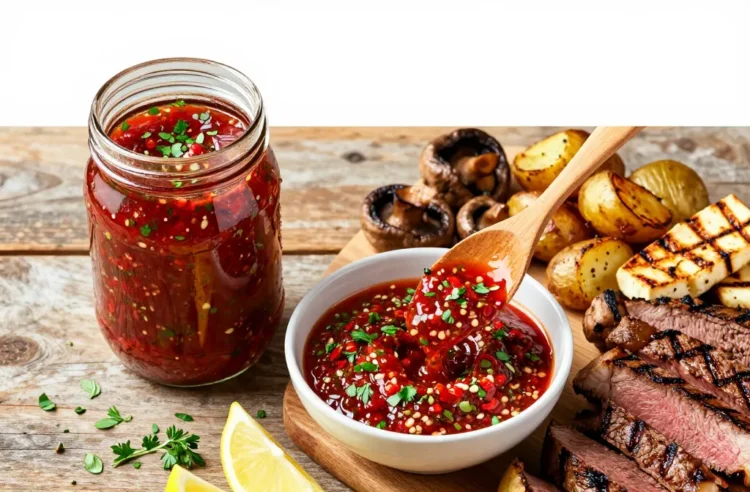
You want a bold, smoky red chimichurri that can handle a hungry crowd and make grilled anything taste like a mic-drop moment? Great. We’re going to blitz a vibrant sauce that leans garlicky, herby, and a little spicy, with just enough smoke to make people ask, “What’s in this?” Then we’ll map out scaling, prep timing, and exactly how to serve it so you look like you planned this weeks ago. Spoiler: you didn’t need to.
Why Red Chimichurri and Why Now
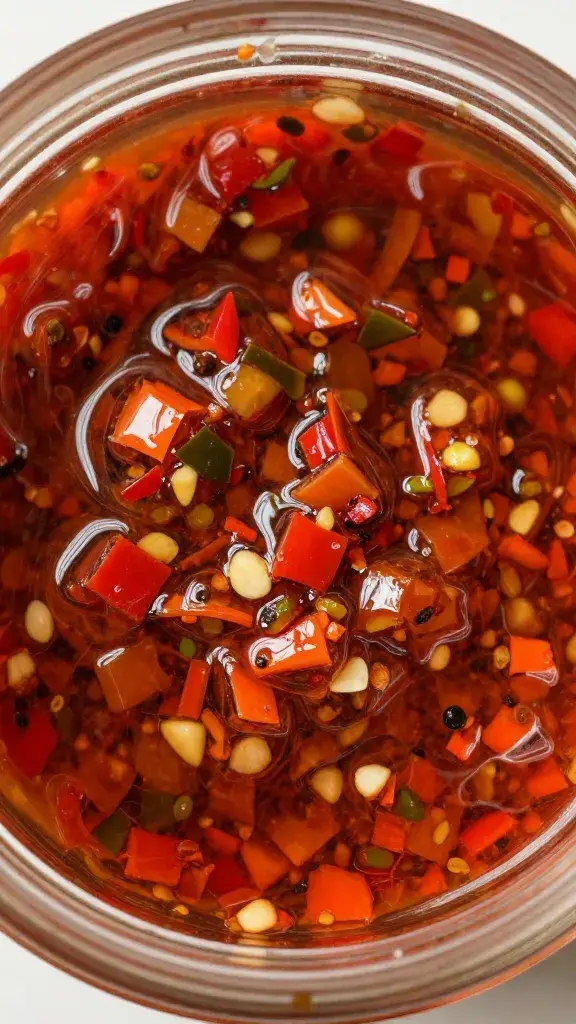
Red chimichurri sits in that perfect zone between a sauce and a marinade. It hits savory, tangy, and spicy all at once. And the red version brings roasted peppers and smoked paprika into the chat—FYI, that’s where the “dang, that’s good” lives.
You can spoon this over steak, chicken, mushrooms, grilled halloumi, roasted potatoes, and even scrambled eggs the next morning. Make a big batch, stash it in jars, and accept your role as Sauce Person for the rest of the month. Worth it.
Ingredients and Exact Amounts for a Crowd
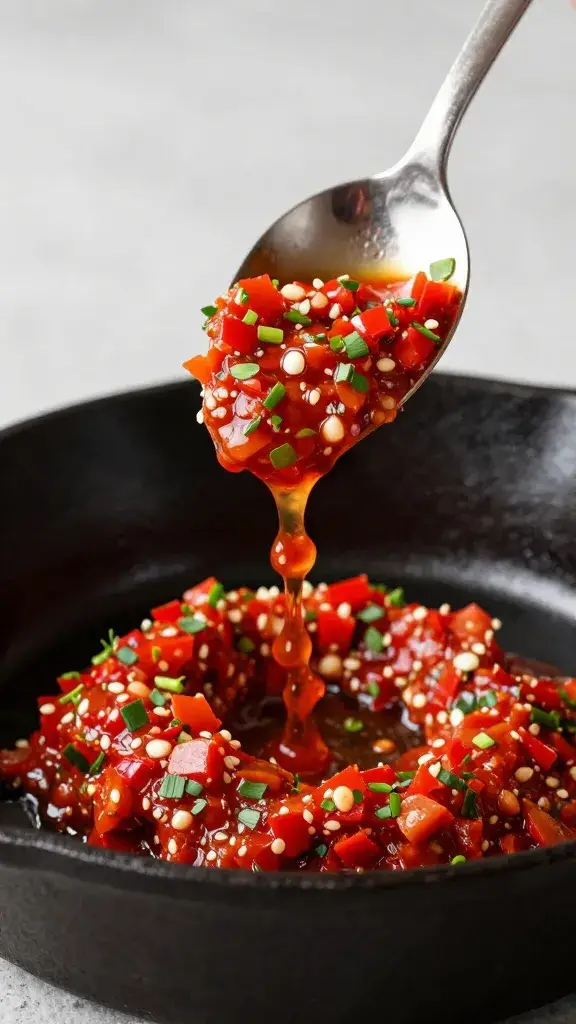
This makes about 6 cups—enough for 18–24 people as a sauce or 10–12 if everyone goes hard and uses it like soup (no judgment).
Core Ingredients
- 2 large red bell peppers, roasted and peeled (or 2 cups jarred roasted red peppers, drained)
- 2 cups packed flat-leaf parsley, finely chopped
- 1 cup packed fresh oregano leaves (or 1/3 cup dried oregano, high quality)
- 10–12 cloves garlic, minced
- 2–3 fresh red chiles, minced (Fresno or red jalapeño), seeds in for heat
- 1/4 cup tomato paste
- 2 tablespoons smoked paprika (pimentón)
- 1 tablespoon sweet paprika (optional but nice)
- 2 teaspoons ground cumin
- 1 tablespoon kosher salt, plus more to taste
- 1 teaspoon black pepper
- 1 1/2 cups extra-virgin olive oil
- 1 cup red wine vinegar
- Zest and juice of 2 lemons
Optional Boosters (choose 1–2)
- 2 tablespoons Calabrian chile paste for fruity heat
- 1–2 tablespoons sherry vinegar to sharpen
- 1/2 teaspoon crushed red pepper if your chiles are mild
Scaling Up or Down
- Half batch (3 cups): divide everything by 2.
- Double batch (12 cups): multiply everything by 2 and use a food processor in two rounds to avoid a puree.
Flavor Goal and Texture: What You’re Aiming For
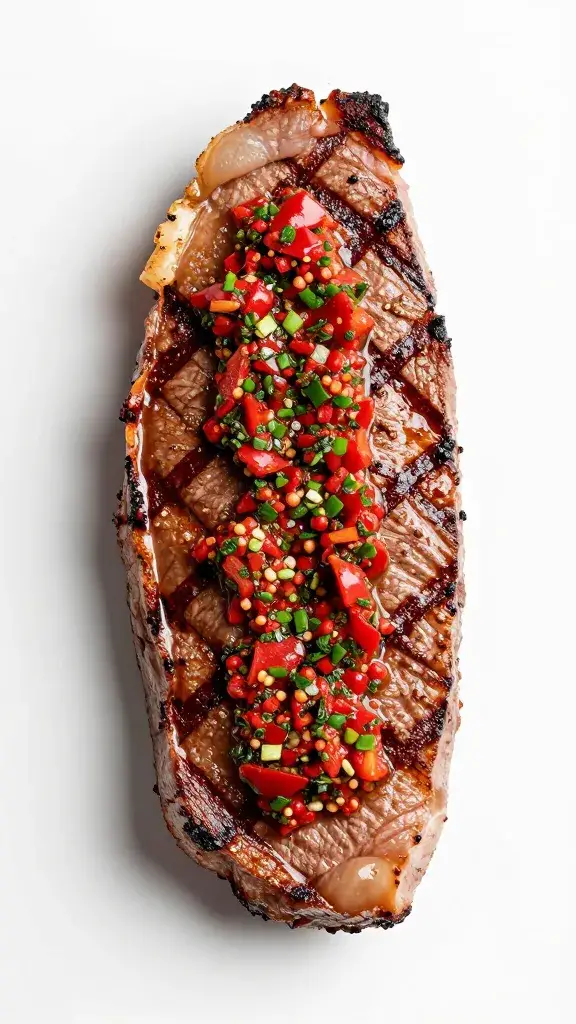
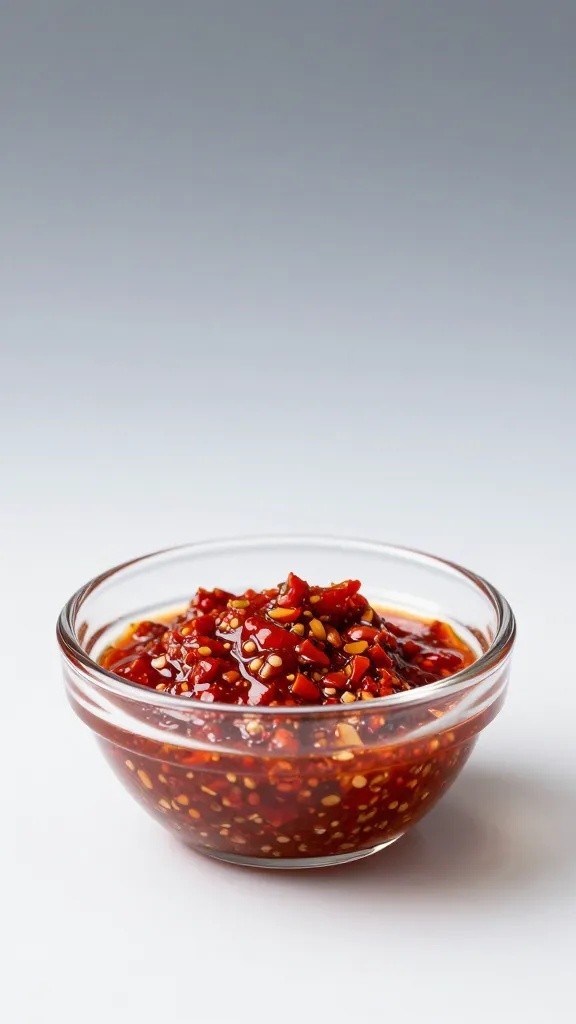
We want a spoonable sauce that still shows texture—herbs you can see, pepper bits that catch the light, and a glossy finish. It should taste bright from the vinegar and lemon, rich from the oil, and deeply smoky from the paprika.
Key checkpoints
- Acid-forward but balanced: the sauce should wake up your tongue, not strip paint.
- Salted like a condiment: slightly saltier than you think, because you’ll use it on bland-ish foods.
- Heat with restraint: a warm finish, not a dare.
How to Make It (15 Minutes Active, Zero Drama)
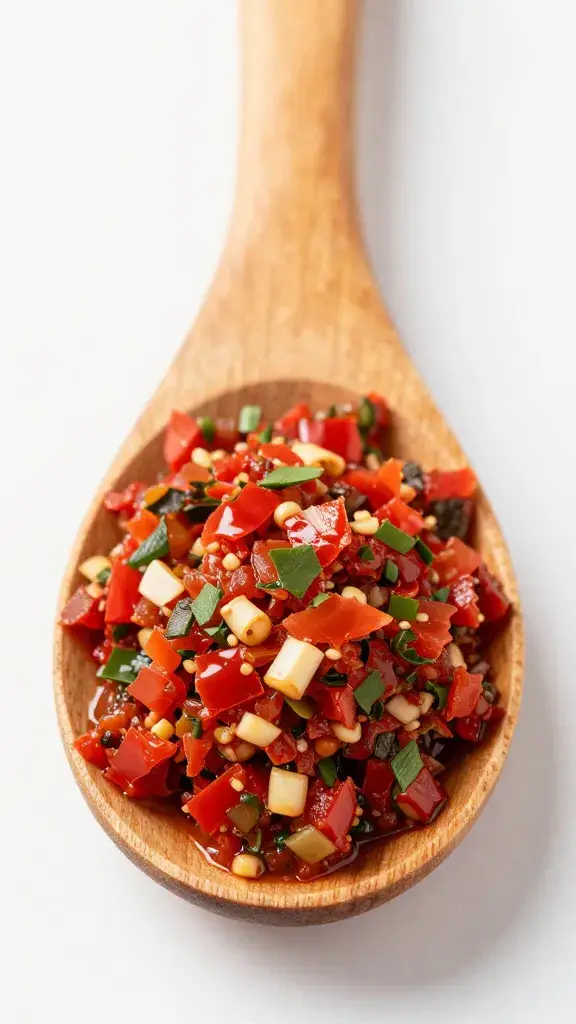
Step-by-step
- Roast peppers if using fresh: broil or grill until charred, steam in a covered bowl 10 minutes, peel and seed. Roughly chop.
- Chop parsley and oregano finely. You can pulse in a food processor, but stop before it turns into paste.
- In a large bowl, combine roasted peppers, herbs, garlic, and minced chiles.
- Stir in tomato paste, smoked paprika, sweet paprika, cumin, salt, and pepper.
- Whisk in olive oil, red wine vinegar, lemon zest, and lemon juice until glossy and cohesive.
- Taste and adjust: more salt for pop, more vinegar for brightness, more smoked paprika for depth. IMO, a splash of sherry vinegar at the end makes it sing.
Food Processor Method (Quick + Controlled)
- Add roasted peppers, garlic, chiles, tomato paste, and dry spices. Pulse 4–6 times.
- Add herbs and pulse in short bursts until coarse.
- Stream in oil and acids while pulsing once or twice to combine. Do not puree. You want texture.
Make-Ahead Timeline for Parties
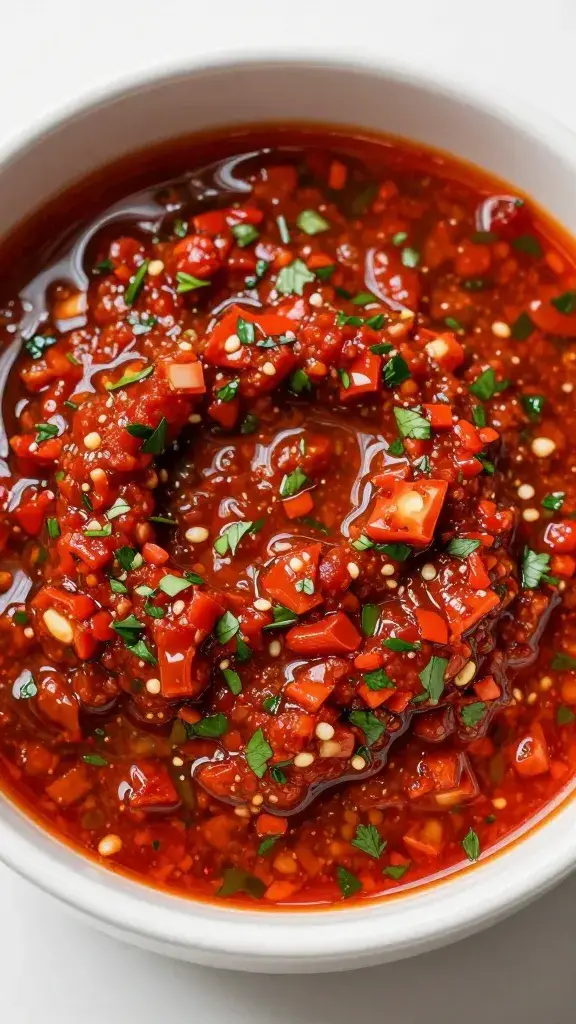
Two Days Before
- Shop and roast peppers. Chill them.
- Wash and dry herbs very well (water dulls the sauce). Roll in paper towels and refrigerate.
One Day Before
- Make the chimichurri completely. Taste, then let it sit 30 minutes and taste again. Adjust acid and salt.
- Transfer to jars or deli containers. Press plastic wrap directly on the surface, then lid. Refrigerate.
Day Of
- Pull sauce from the fridge 45–60 minutes before serving so the oil loosens.
- Stir. If it thickened up, add 1–2 tablespoons olive oil and a splash of vinegar to re-bloom the flavor.
Storage and Shelf Life
- Fridge: 7–10 days in a sealed jar, oil covering the top layer.
- Freezer: 2–3 months in small containers. Thaw overnight in the fridge and whisk.
Serving Plan: Make It Look Effortless
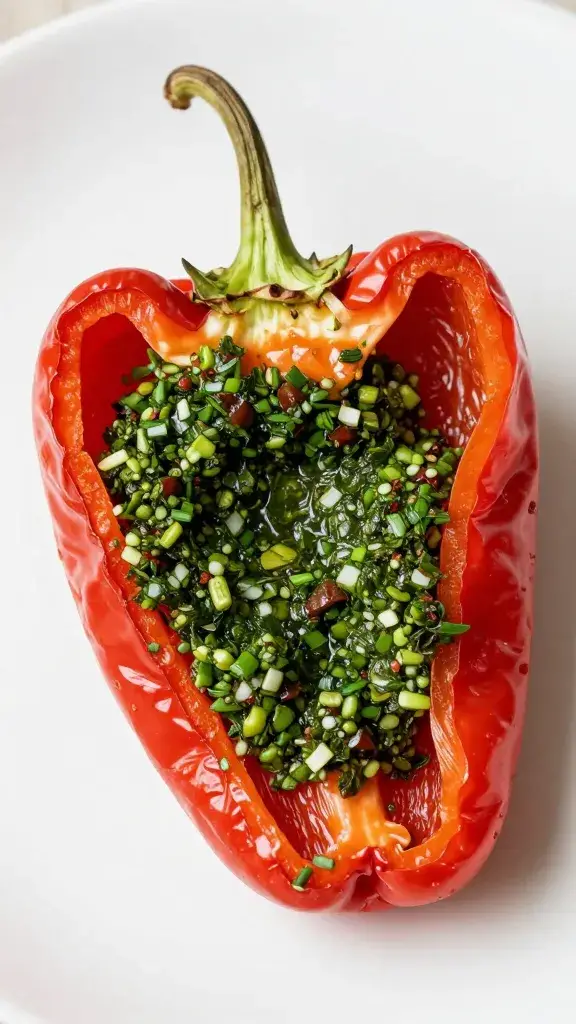
For 18–24 people
- Serve in 3–4 medium bowls with spoons, refreshed every 30 minutes.
- Keep extra chilled and swap in fresh bowls so the display stays vibrant.
- Offer a “mild” and a “spicy” bowl by stirring a little extra chile paste into one portion. Label them.
What to Pair It With
- Grilled meats: flank steak, chicken thighs, lamb chops, pork tenderloin
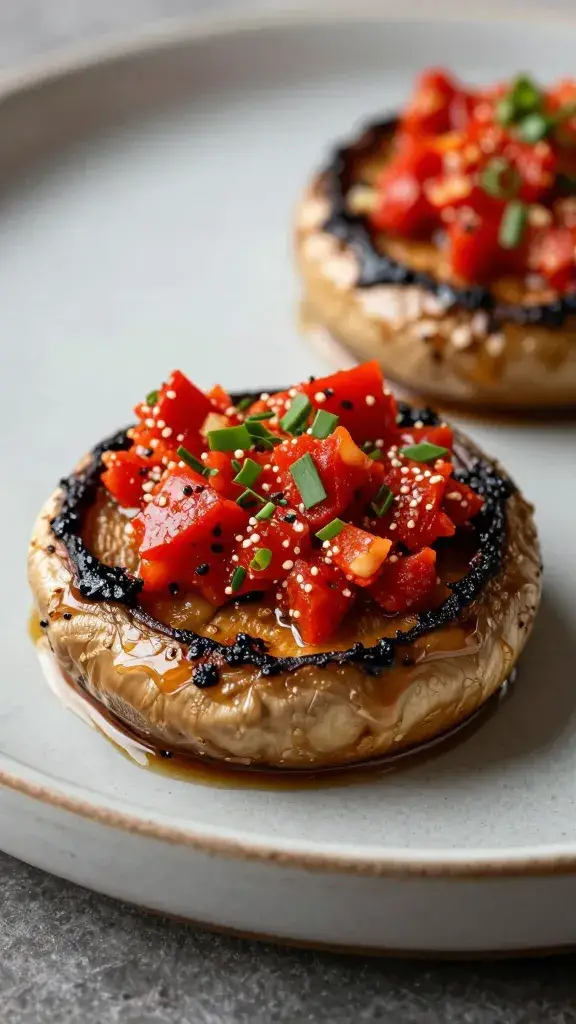
- Veg power: grilled portobellos, charred broccolini, roasted sweet potatoes, blistered tomatoes
- Carby friends: smashed potatoes, garlic bread, herby couscous, rice pilaf
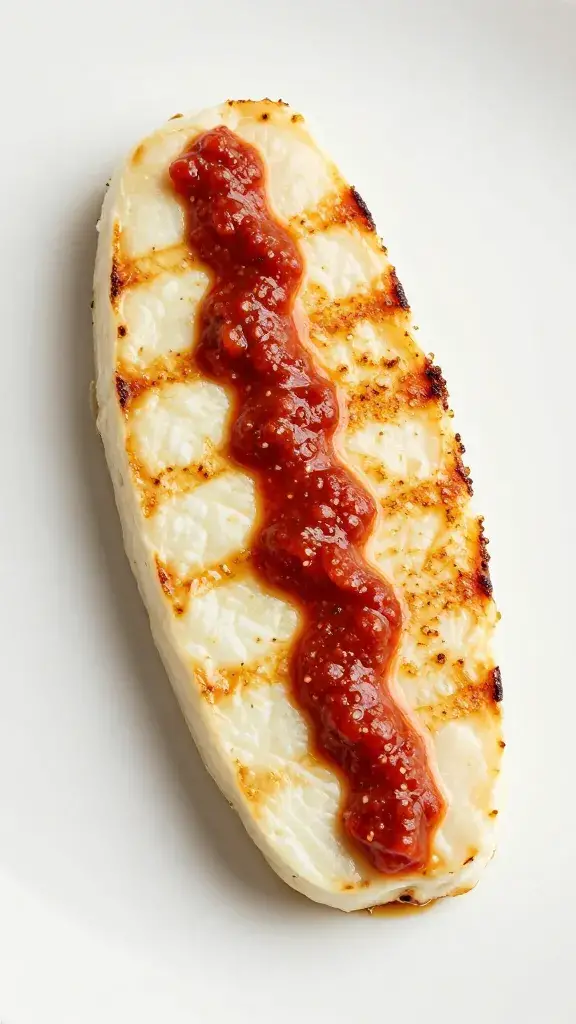
- Cheese + extras: grilled halloumi, burrata, feta crumbles, marinated olives
Platter Game Plan
- Slice proteins and pile on a board. Drizzle a little sauce over the top so people get the hint.
- Keep most of the sauce on the side so guests control their destiny.
- Add lemon wedges, flaky salt, and a small bowl of extra vinegar to spark last-minute brightness.
Adjusting Heat, Smoke, and Tang
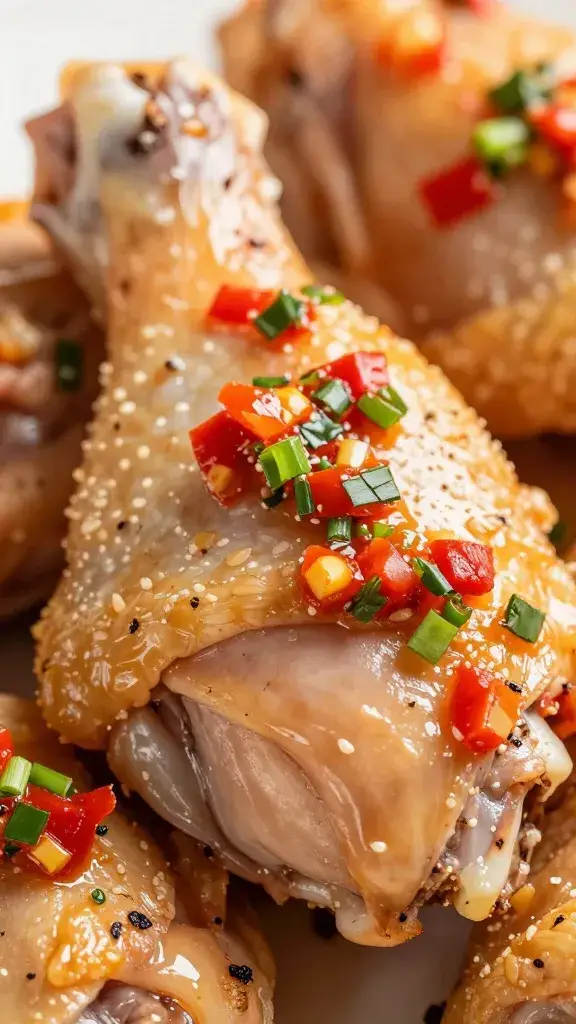
Too mild? Add 1 teaspoon crushed red pepper or another minced chile.
Not smoky enough? Add 1/2–1 teaspoon more smoked paprika, or swap 2–3 tablespoons of the olive oil for good-quality chili oil for depth.
Needs more tang? Add 1–2 tablespoons red wine or sherry vinegar and a pinch of salt to keep it in balance.
Common Pitfalls (And Easy Fixes)
- It tastes flat: Add salt, then acid. Then a tiny bit of cumin for warmth.
- It’s too sharp: Whisk in 1–2 tablespoons olive oil and a pinch of sugar or honey. Rest 10 minutes.
- It’s too thick: Loosen with oil and a splash of water (yes, water). Recheck salt.
- It’s too spicy: Add more chopped roasted pepper and herbs to dilute the heat.
FAQ
Can I use dried herbs instead of fresh?
You can, but use them smartly. Go with 1/3 the amount for oregano and skip dried parsley entirely (dried parsley tastes like paper, IMO). If you lack fresh parsley, sub half cilantro and half fresh mint for a bright twist.
What if I don’t have smoked paprika?
Use regular sweet paprika plus a dash of liquid smoke (like 1/8 teaspoon to start). Or char your bell peppers extra hard to sneak in the smoky notes. Taste as you go—liquid smoke gets bossy fast.
Is this the same as salsa or harissa?
Nope. Chimichurri is an herby, oil-and-vinegar sauce with punchy acidity. Salsa leans tomato-forward and juicy. Harissa is a North African chile paste that’s thicker, deeper, and more concentrated. They’re cousins at best, not twins.
How do I make it vegan and gluten-free?
Great news: it’s already both. Just check labels on smoked paprika and tomato paste, and ensure no sneaky additives in jarred peppers. Serve with grilled veggies, tofu, and crusty GF bread if needed.
Can I marinate meat with this?
Yes, but tweak it. For marinade duty, reduce the oil by half and add an extra tablespoon of vinegar. Marinate chicken 2–6 hours, steak 1–2 hours, and veggies 30–60 minutes. Reserve a clean portion of the full-fat sauce for serving.
Why is my chimichurri bitter?
Over-processing herbs can bruise them and pull out bitterness. Pulse gently and chop by hand if needed. Also check your olive oil—some oils taste peppery or bitter; blend with a neutral oil if yours screams a little too loudly.
Conclusion
You just scored a big-batch, smoky red chimichurri that turns basic grilled stuff into a headliner. Make it a day ahead, keep it bright and textured, and put out more than you think you need—people always come back for a second spoon. Big flavor, low stress, major payoff. That’s the move, FYI.