
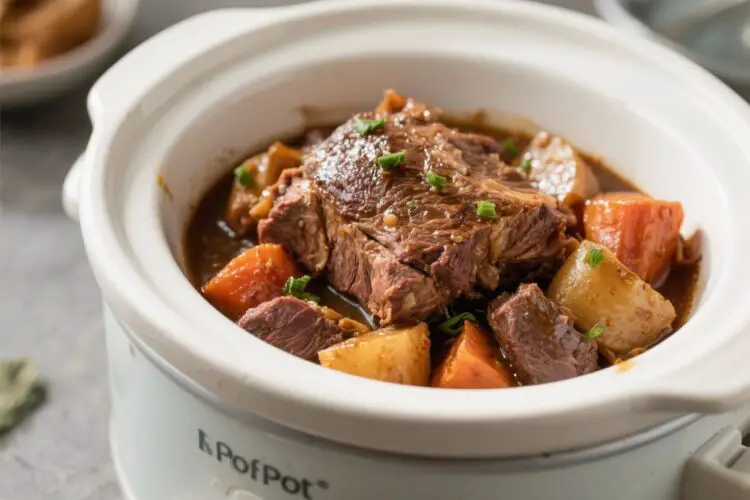
There’s something satisfying about a pot roast that cooks low and slow all day and practically falls apart when you touch it. This crockpot version gives you that tender, juicy meat with rich gravy and hearty vegetables—without standing over the stove. It’s a set-it-and-forget-it meal that makes your home smell amazing and brings everyone to the table.
Whether you’re feeding a family or planning leftovers, this is a reliable, crowd-pleasing recipe. Simple ingredients, straightforward steps, and a big payoff—what’s not to love?
Why This Recipe Works
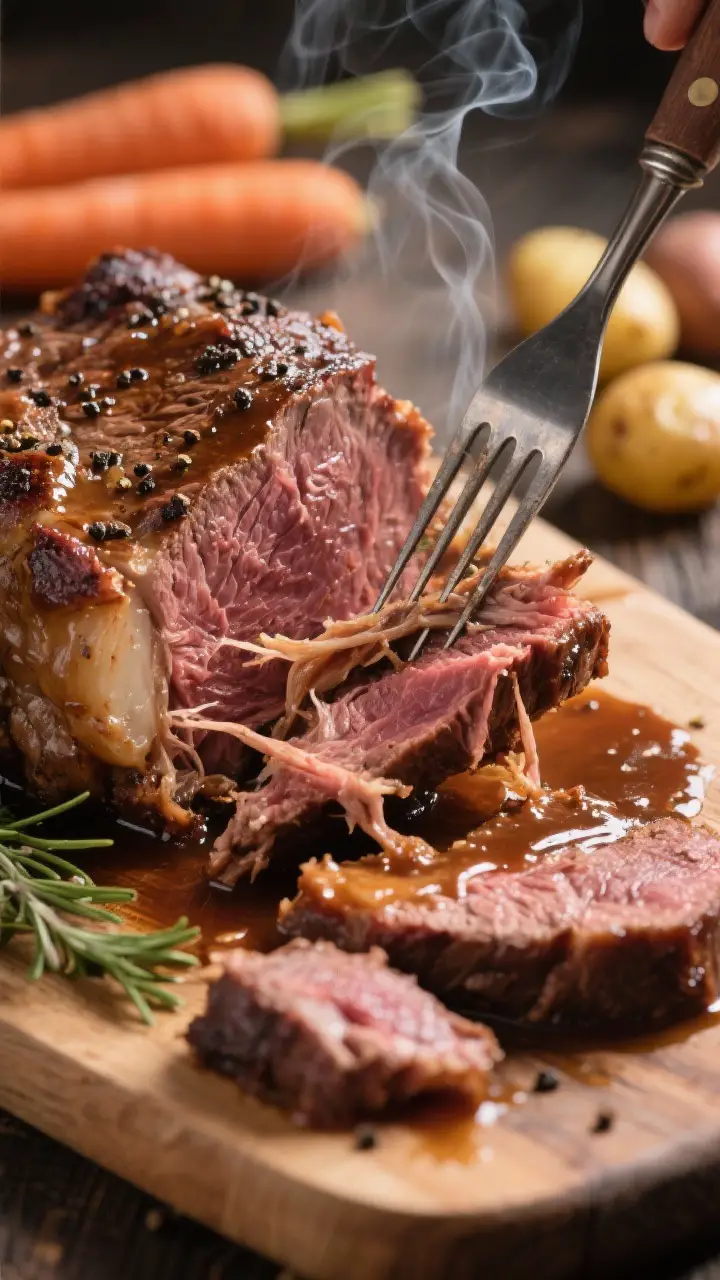
This recipe focuses on a well-marbled cut of beef, steady heat, and plenty of moisture. Slow cooking breaks down tough connective tissue, turning a budget-friendly roast into tender, flavorful meat.
A quick sear adds depth, while onions, garlic, and herbs build a savory base. The vegetables cook in the same pot, soaking up all those juices. Finally, a simple slurry turns the cooking liquid into a silky, beefy gravy.
What You’ll Need
- 3–4 pounds beef chuck roast (well-marbled is best)
- 1 tablespoon kosher salt (plus more to taste)
- 1 teaspoon black pepper
- 2 tablespoons olive oil (or neutral oil)
- 1 large yellow onion, sliced
- 4 cloves garlic, minced
- 4 carrots, cut into 2-inch pieces
- 1.5 pounds baby potatoes (or halved Yukon Golds)
- 2 cups beef broth (low-sodium preferred)
- 2 tablespoons tomato paste
- 1 tablespoon Worcestershire sauce
- 1 teaspoon dried thyme (or 3 sprigs fresh)
- 1 teaspoon dried rosemary (or 2 sprigs fresh)
- 1 bay leaf
- 2 tablespoons cornstarch mixed with 2 tablespoons cold water (for slurry)
- Fresh parsley, chopped (optional, for garnish)
Instructions
- Season the roast: Pat the chuck roast dry with paper towels.
Sprinkle all sides with salt and pepper. Press the seasoning in so it sticks.
- Sear the meat: Heat the olive oil in a large skillet over medium-high heat. Sear the roast for 3–4 minutes per side until deeply browned.
This step builds flavor, but you can skip it if you’re short on time.
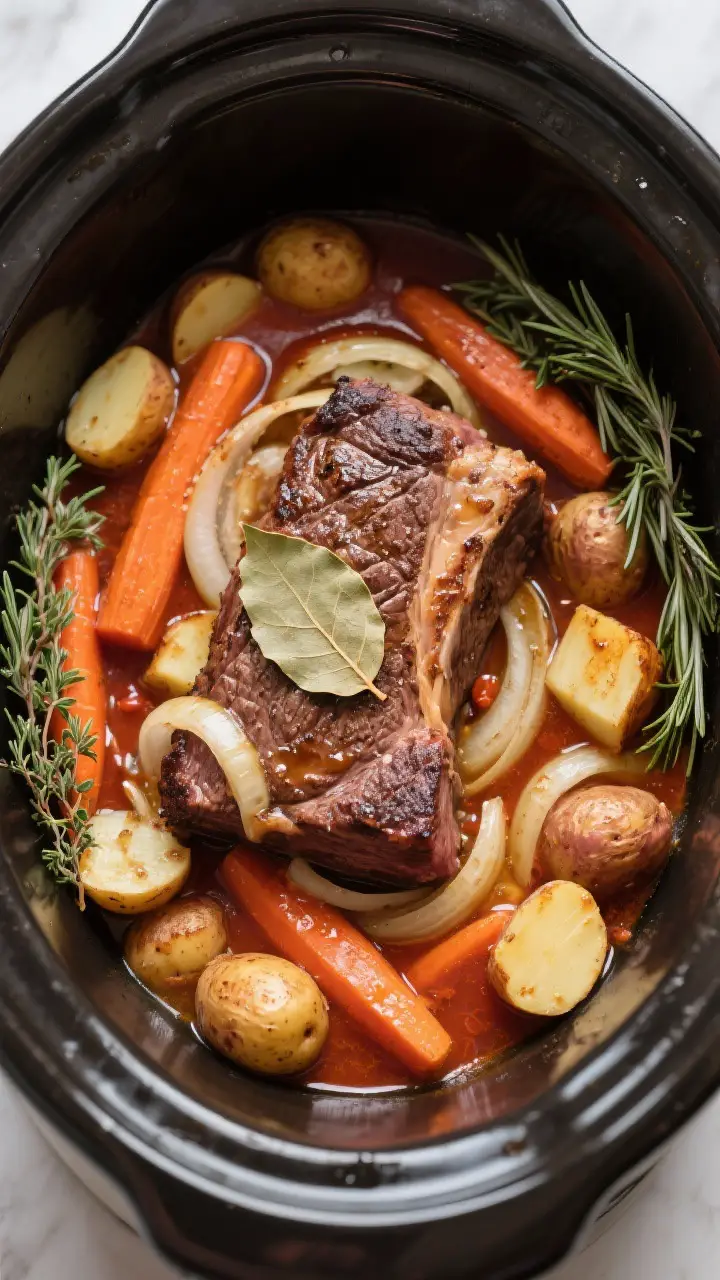
- Layer the crockpot: Add the sliced onion, garlic, carrots, and potatoes to the bottom of the slow cooker. Place the seared roast on top.
- Mix the braising liquid: In a bowl, whisk together beef broth, tomato paste, Worcestershire sauce, thyme, rosemary, and the bay leaf. Pour it around the roast.
- Cook low and slow: Cover and cook on Low for 8–10 hours or on High for 4–5 hours.
Low is best for tenderness.
- Check for doneness: The roast is done when it shreds easily with a fork and the veggies are tender. If it feels tough, cook another 45–60 minutes and check again.
- Make the gravy: Remove the roast and vegetables to a platter and tent with foil. Skim excess fat from the cooking liquid.
Turn the slow cooker to High. Stir in the cornstarch slurry and cook 5–10 minutes until thickened, stirring occasionally. Season with salt and pepper to taste.
- Serve: Shred or slice the roast.
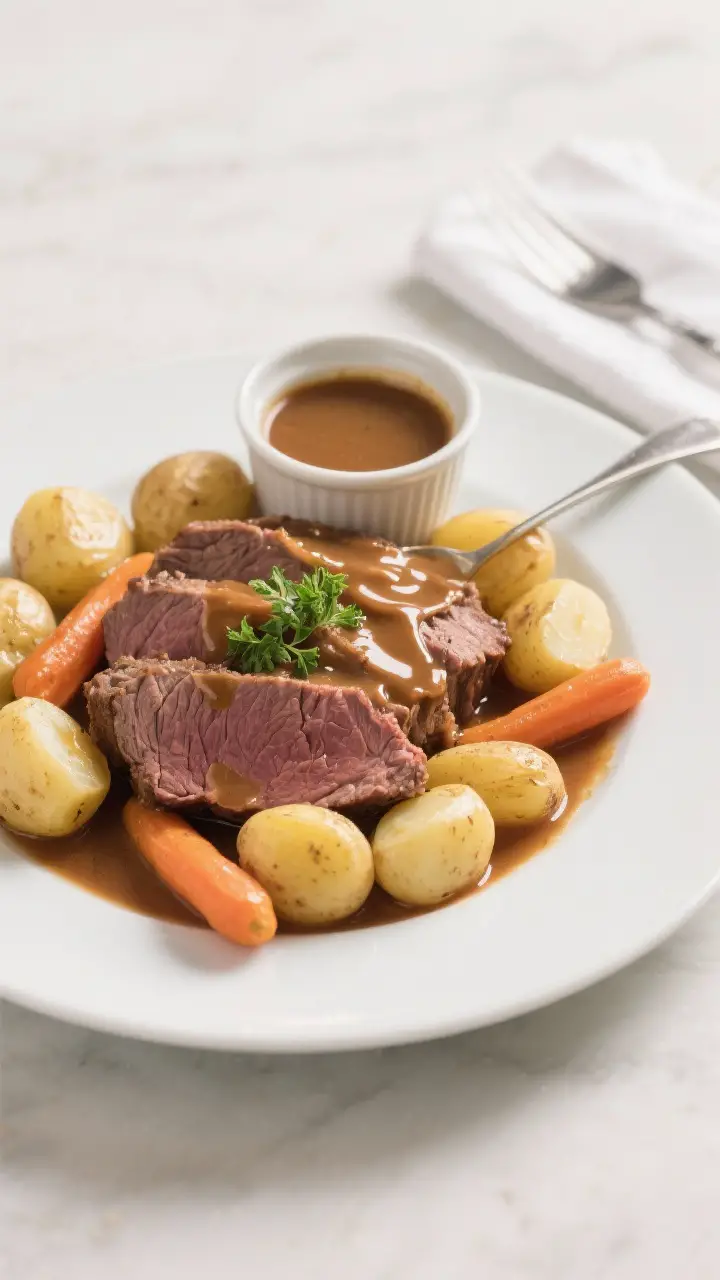
Spoon gravy over the meat and vegetables. Garnish with chopped parsley if you like.
Keeping It Fresh
Leftovers store well, so make the most of them. Let the roast cool slightly, then transfer meat, vegetables, and gravy to airtight containers.
Refrigerate for up to 4 days, or freeze for up to 3 months. Reheat gently in a saucepan or in the microwave with a splash of broth to keep it moist. For a fresh twist, serve leftovers on toast, in a baked potato, or as a pot roast sandwich with melted provolone.
Health Benefits
Pot roast pairs protein with fiber-rich vegetables for a balanced meal.
Chuck roast provides iron, zinc, and B vitamins that support energy and muscle health. Carrots and potatoes add potassium, vitamin A, and complex carbs for steady fuel. Using low-sodium broth and controlling added salt helps keep sodium in check.
Skimming excess fat and serving with a generous helping of vegetables keeps the dish satisfying without feeling heavy.
Pitfalls to Watch Out For
- Choosing the wrong cut: Lean roasts like sirloin tip can turn dry. Go for chuck, shoulder, or blade for best results.
- Cooking too fast: High heat can leave the meat tough. If you can, choose Low for that melt-in-your-mouth texture.
- Skipping the sear: You’ll still get a good roast, but searing adds a noticeable layer of flavor.
Do it when you can.
- Overloading vegetables: Too many veggies crowd the pot and can affect cooking. Stick to the amounts listed or use a larger slow cooker.
- Thin gravy: If your gravy isn’t thick enough, add a bit more slurry, a teaspoon at a time, and simmer until it coats a spoon.
Variations You Can Try
- Red wine twist: Replace 1 cup of beef broth with dry red wine. Deglaze the searing pan with the wine and add it to the slow cooker.
- French onion style: Use two large onions and add 1 teaspoon of Dijon mustard.
Finish with a sprinkle of Gruyère on the sliced roast.
- Italian herb: Add 1 teaspoon dried oregano and 1 tablespoon balsamic vinegar. Serve with polenta.
- Mushroom gravy: Add 8 ounces of sliced cremini mushrooms in with the onions. They boost umami and make the gravy richer.
- Low-carb swap: Replace potatoes with chunks of turnip or cauliflower added halfway through cooking.
- Gluten-free and dairy-free: This recipe already fits both if you confirm the Worcestershire and broth are certified gluten-free.
FAQ
Can I use a different cut of beef?
Yes.
Chuck roast is ideal, but shoulder roast, blade roast, or even brisket will work. Just know that leaner cuts won’t get as tender.
Do I have to sear the meat first?
No, but it makes a difference. Searing builds flavor through browning and helps the roast taste deeper and richer.
When should I add the vegetables?
Add them at the start.
Carrots and potatoes can handle long cooking times. If you prefer firmer veggies, add potatoes halfway through.
How do I prevent the roast from drying out?
Use a well-marbled cut, keep the lid on, and cook on Low if possible. Make sure there’s enough liquid—about halfway up the roast is perfect.
Can I make this ahead?
Absolutely.
Cook it a day ahead, chill, and reheat gently. The flavors meld and the gravy sets up nicely for next-day serving.
What if I don’t have cornstarch?
Use 2 tablespoons flour whisked into 2 tablespoons cold water. Simmer in the cooking liquid until thickened, stirring to avoid lumps.
Can I add celery or parsnips?
Yes.
Both work well. Add 2–3 chopped celery stalks or 2 parsnips cut into chunks at the start with the other vegetables.
How big should the slow cooker be?
A 6-quart slow cooker fits a 3–4 pound roast with vegetables comfortably. If yours is smaller, reduce the vegetables slightly.
Can I use frozen roast?
It’s better to thaw first for even cooking and proper searing.
If cooking from frozen, skip the sear and add extra time, but results may vary.
What can I serve with pot roast?
It’s great as-is, but a side of green beans, a crisp salad, or buttered egg noodles rounds out the meal. Warm rolls are a nice touch, too.
Final Thoughts
A good pot roast feels like a win on any night—minimal prep, big flavor, and leftovers you’ll look forward to. This crockpot recipe keeps things simple and reliable while leaving room for your personal touches.
Choose the right cut, give it time, and let the slow cooker do the heavy lifting. By dinner, you’ll have tender beef, cozy vegetables, and a gravy that ties it all together. It’s the kind of meal that makes home feel extra homey.
Printable Recipe Card
Want just the essential recipe details without scrolling through the article? Get our printable recipe card with just the ingredients and instructions.