
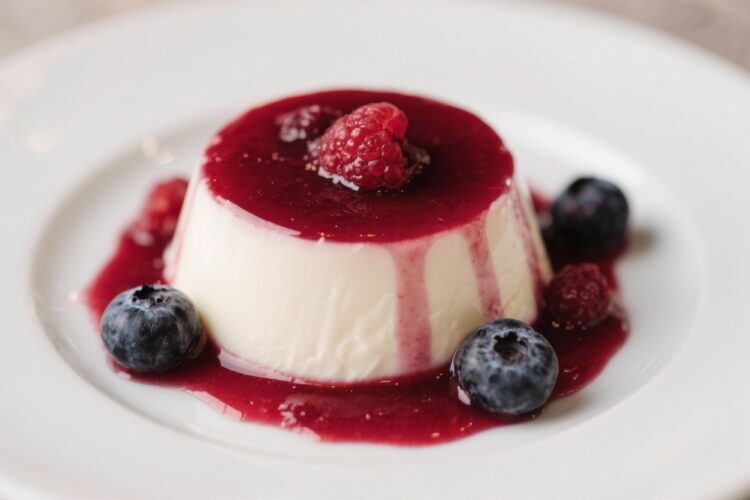
Panna cotta is one of those desserts that looks fancy but takes very little effort. It’s smooth, lightly sweet, and delicate, with a gentle wobble that feels luxurious. The bright berry coulis on top adds a tart, fruity contrast that makes every spoonful special.
This version is reliable and easy to follow, with simple ingredients you probably already have. Whether it’s for a dinner party or a quiet night in, this panna cotta makes a classy finish.
What Makes This Recipe So Good
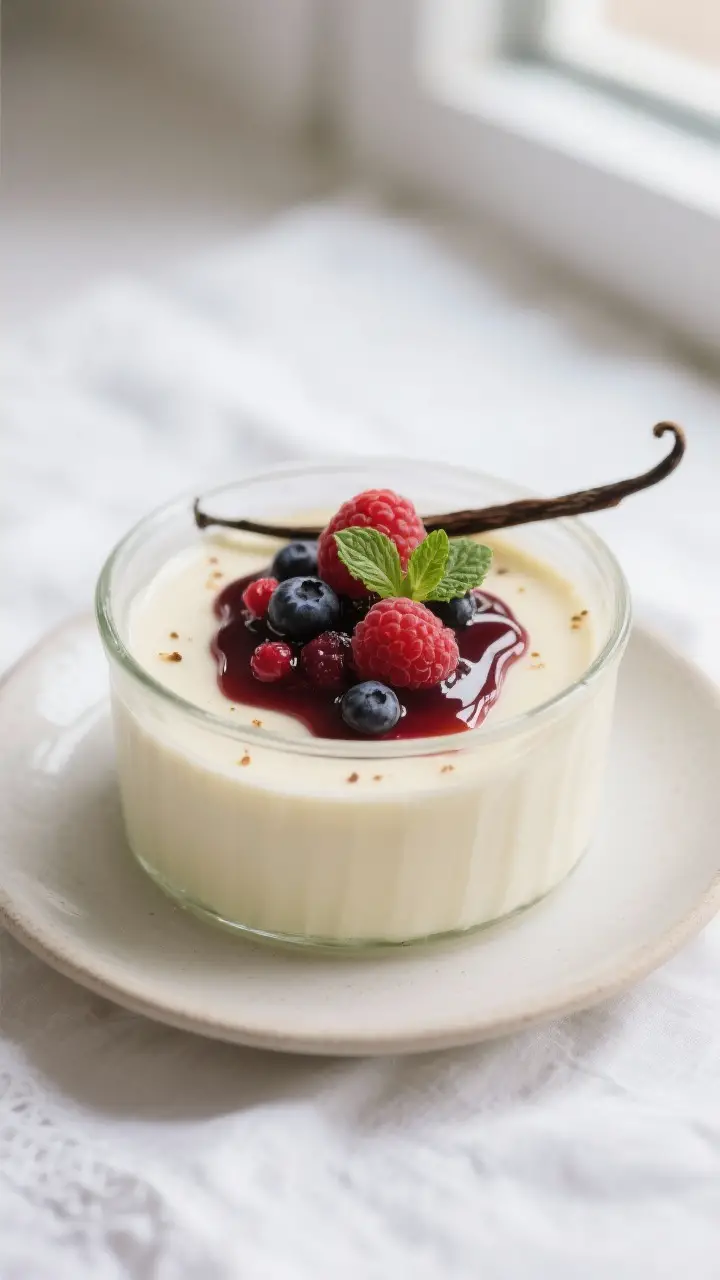
- Foolproof texture: Balanced cream and gelatin give that famous silky wobble—no guesswork.
- Light yet satisfying: It’s creamy without being heavy, especially with the fresh berry topping.
- Make-ahead friendly: Sets in the fridge and keeps well, so you can prep it a day or two in advance.
- Restaurant-quality results: The coulis adds color and acidity, making it look and taste impressive.
- Customizable: Swap the berries, infuse the cream, or adjust sweetness to your preference.
Shopping List
- For the panna cotta:
- 2 cups heavy cream
- 1 cup whole milk
- 1/2 cup granulated sugar
- 2 teaspoons vanilla extract (or 1 vanilla bean, split and scraped)
- 2 1/4 teaspoons powdered gelatin (one standard packet)
- Pinch of fine salt
- For the berry coulis:
- 2 cups mixed berries (fresh or frozen; strawberries, raspberries, blueberries, or blackberries)
- 1/4 to 1/3 cup granulated sugar (to taste)
- 1 tablespoon lemon juice
- Optional: 1–2 tablespoons water if needed for consistency
- To serve (optional):
- Fresh berries for garnish
- Mint leaves
Instructions
- Bloom the gelatin: Pour 1/4 cup of the cold milk into a small bowl. Sprinkle the gelatin evenly over the surface and let it sit for 5–10 minutes until it softens and looks spongy.
- Warm the cream mixture: In a saucepan, combine heavy cream, remaining milk, sugar, salt, and vanilla.
If using a vanilla bean, add the seeds and the pod. Heat over medium, stirring, until the sugar dissolves and steam rises. Do not let it boil.
- Melt in the gelatin: Remove from heat.
Add the bloomed gelatin to the warm cream and whisk until completely dissolved. If you used a vanilla pod, remove it now.
- Strain for silkiness: Pour the mixture through a fine mesh strainer into a large measuring cup or bowl with a spout. This step removes any undissolved bits and ensures a smooth texture.
- Portion and chill: Divide the mixture into 6 small ramekins, glasses, or molds.
Let them cool to room temperature for 10–15 minutes, then cover lightly and refrigerate for at least 4 hours, preferably overnight, until set.
- Make the coulis: In a small saucepan, combine berries, sugar, and lemon juice. Cook over medium heat for 5–7 minutes, stirring occasionally, until the berries break down and the mixture is syrupy. Add a splash of water if it looks too thick.
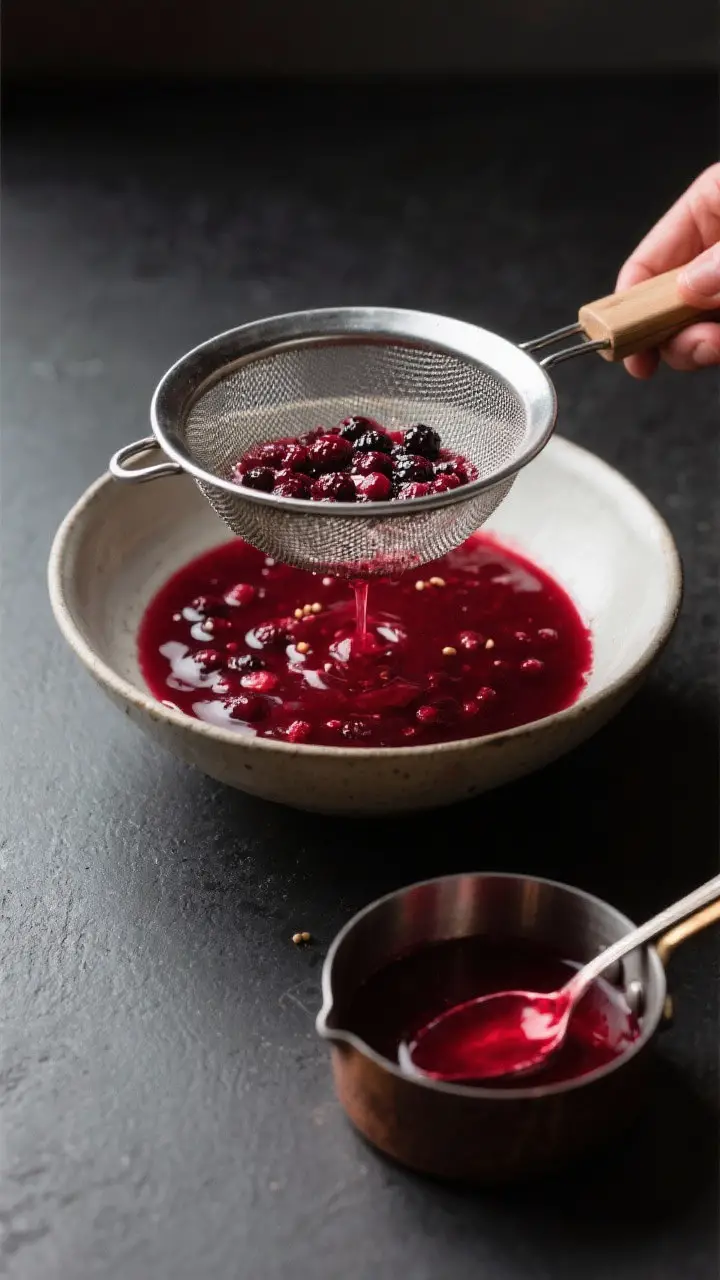
- Blend and strain: Purée the berry mixture with an immersion blender or regular blender.
Strain through a fine sieve to remove seeds for a smooth coulis. Taste and adjust sugar or lemon as needed. Chill until serving.
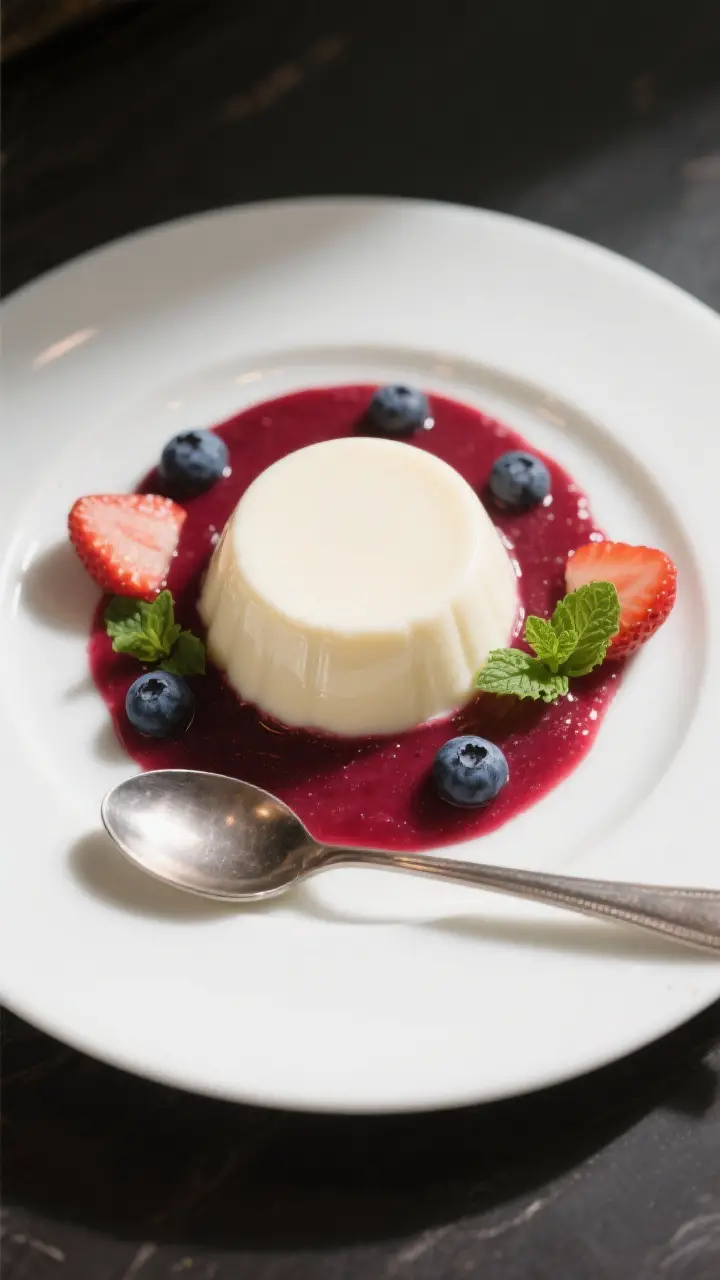
- Serve: Spoon cooled berry coulis over each panna cotta.
Garnish with fresh berries or mint if you like. If unmolding, run a thin knife around the edge, dip the mold briefly in warm water, and invert onto a plate, then top with coulis.
Keeping It Fresh
- Refrigeration: Store panna cotta covered in the fridge for up to 3 days. Keep coulis in a separate airtight container for the best texture.
- No freezing: Freezing can change the creamy texture and cause separation when thawed.
- Prevent odors: Cover tightly so the cream doesn’t absorb fridge smells.
- Refreshing the coulis: If it thickens in the fridge, whisk in a teaspoon of water or lemon juice before serving.
Benefits of This Recipe
- Minimal hands-on time: A few simple steps, then the fridge does the rest.
- Scales easily: Double it for a crowd or halve it for a small gathering with no fuss.
- Flexible ingredients: Works with fresh or frozen berries, and pantry staples.
- Elegant presentation: Individual servings look polished with a bright, glossy sauce.
- Balanced flavors: Sweet cream meets tangy fruit for a satisfying, not-too-sweet dessert.
Common Mistakes to Avoid
- Skipping the bloom: Adding dry gelatin to hot liquid leads to clumps and poor setting.
Always bloom first.
- Overheating the cream: Boiling can dull flavors and affect texture. Warm gently until just steaming.
- Using too much gelatin: More is not better. Too much creates a rubbery finish.
Stick to the measured amount.
- Pouring while hot: If you pour very hot liquid into cold glasses, condensation forms and affects layers. Let it cool slightly first.
- Skipping the strain: Tiny bits or undissolved gelatin can ruin the smoothness. Strain for a flawless result.
Variations You Can Try
- Citrus panna cotta: Add 1 teaspoon finely grated lemon or orange zest to the cream.
Strain before chilling.
- Yogurt twist: Replace 1/2 cup of the cream with whole-milk Greek yogurt for a tangier, lighter feel. Whisk it in off heat.
- Coconut version: Use 1 1/2 cups heavy cream and 1 1/2 cups full-fat coconut milk. Vanilla pairs beautifully with coconut.
- Herbal notes: Infuse the cream with a sprig of basil, mint, or thyme while warming.
Remove before adding gelatin.
- Different toppings: Try mango purée, passion fruit pulp, cherry compote, or a drizzle of salted caramel.
- Layered look: Chill the panna cotta halfway, then add a thin layer of coulis and finish setting for a two-tone effect.
FAQ
How do I know my panna cotta has set?
It should jiggle gently when you nudge the glass but hold its shape. A full set typically takes at least 4 hours, but overnight is ideal for the best texture.
Can I make this without dairy?
Yes. Use full-fat coconut milk and a plant-based cream alternative, and keep the same gelatin amount.
For a fully vegetarian version, use agar-agar, but note it sets firmer; start with 1 teaspoon agar powder and simmer it to activate.
Why is my panna cotta grainy?
Likely the gelatin didn’t fully dissolve or the cream overheated. Make sure to bloom the gelatin, melt it off heat in warm cream, and strain the mixture before chilling.
Can I reduce the sugar?
You can. Reduce by a tablespoon or two in the panna cotta, and sweeten the coulis to taste.
Keep some sweetness to balance the tart berries.
What’s the best way to unmold?
Run a thin knife around the edge, then dip the mold in warm water for 5–10 seconds. Invert onto a plate and give a gentle shake. If it resists, warm it a few seconds more.
Can I use only milk instead of cream?
You can, but the texture will be less silky.
If you cut the cream, increase gelatin slightly (by 1/4 to 1/2 teaspoon) to help it set, and expect a lighter mouthfeel.
How far in advance can I make it?
Panna cotta is best within 48 hours but can hold up to 3 days. Make the coulis up to 3 days ahead as well and keep it refrigerated in a sealed container.
Wrapping Up
Panna cotta with berry coulis delivers maximum elegance with minimal effort. It’s smooth, bright, and endlessly adaptable, making it a dependable favorite for any occasion.
Keep the steps simple, respect the gelatin, and strain for that perfect finish. Then relax—your fridge will do the rest, and dessert will feel like a small celebration.
Printable Recipe Card
Want just the essential recipe details without scrolling through the article? Get our printable recipe card with just the ingredients and instructions.