
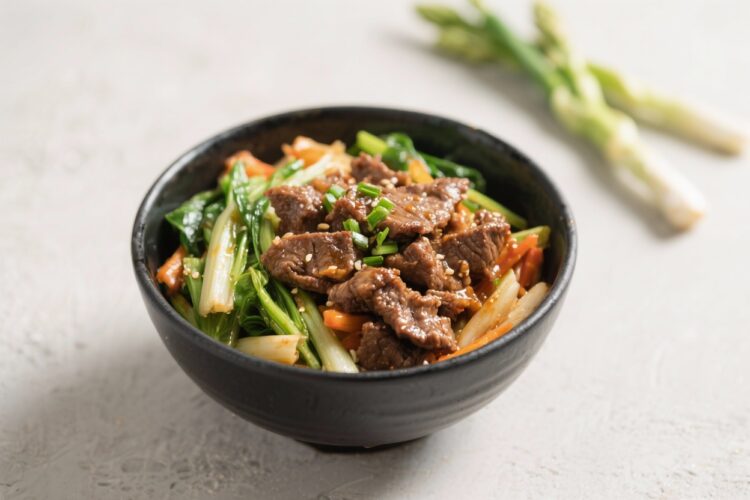
This Korean beef bowl brings sweet-savory soy, ginger, and garlic together with crisp spring vegetables for a weeknight dinner that tastes like it came from your favorite spot. It’s quick to make, light without feeling skimpy, and easy to tweak based on what’s in your fridge. You get juicy beef, tender rice, and bright, just-cooked veggies in every bite.
The sauce is simple but bold, and it clings to everything in the bowl. If you love balance—sweet, salty, spicy, crunchy—this one checks all the boxes.
What Makes This Recipe So Good
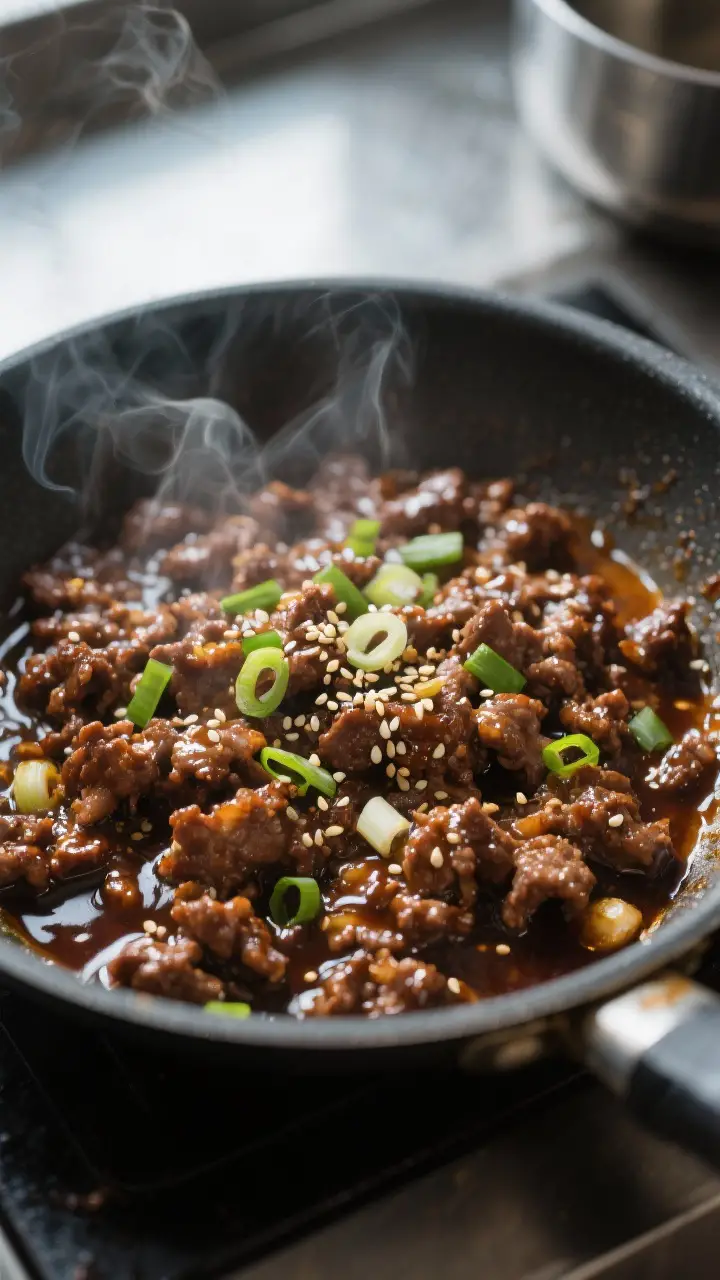
- Big flavor, minimal effort: The sauce comes together in minutes with pantry staples like soy sauce, brown sugar, and sesame oil.
- Perfect for spring: Snap peas, asparagus, and radishes keep things bright and crunchy without extra work.
- Speedy dinner: Ground beef cooks fast, so the whole dish is ready in about 25–30 minutes.
- Flexible: Swap veggies, adjust heat, or use cauliflower rice to make it your own.
- Balanced bowl: Protein, veggies, grains, and fresh herbs come together in a satisfying way.
Shopping List
- Ground beef: 1 pound (85–90% lean works well)
- Rice: 3–4 cups cooked jasmine or short-grain rice (or cauliflower rice)
- Spring vegetables: 1 cup sugar snap peas (trimmed), 1 cup asparagus (1-inch pieces), 1 small bunch radishes (thinly sliced), 2 scallions (sliced), 1 small carrot (matchsticks)
- Aromatics: 3 cloves garlic (minced), 1 tablespoon fresh ginger (grated)
- Sauce: 1/4 cup low-sodium soy sauce, 2 tablespoons brown sugar (or honey), 1 tablespoon rice vinegar, 1 tablespoon toasted sesame oil, 1–2 teaspoons gochujang or sriracha (to taste), 1/4 teaspoon black pepper
- Cooking oil: Neutral oil like avocado or canola
- Optional toppings: Sesame seeds, kimchi, fresh cilantro, lime wedges, fried or jammy egg, sliced cucumber
- Optional add-ins: Mushrooms, baby spinach, or bok choy
Step-by-Step Instructions
- Cook the rice: If you haven’t already, start your rice so it’s hot and ready when the beef and veggies are done. Keep it covered and warm.
- Make the sauce: In a small bowl, whisk soy sauce, brown sugar, rice vinegar, sesame oil, gochujang, and black pepper until the sugar dissolves.
Taste and adjust heat or sweetness.
- Prep the produce: Trim and slice the snap peas on a diagonal, cut asparagus into 1-inch pieces, thinly slice radishes, and slice scallions. Grate the ginger and mince the garlic.
- Sear the beef: Heat a large skillet over medium-high. Add a drizzle of oil.
Add ground beef and break it up with a spatula. Cook until browned and slightly crisp at the edges, about 5–7 minutes. Spoon off excess fat if needed.
- Add aromatics: Reduce heat to medium.
Stir in garlic and ginger. Cook 30–60 seconds until fragrant. Don’t let the garlic burn.
- Sauce it up: Pour in the sauce and stir to coat the beef.
Simmer 1–2 minutes until slightly glossy and thickened. Turn heat to low.
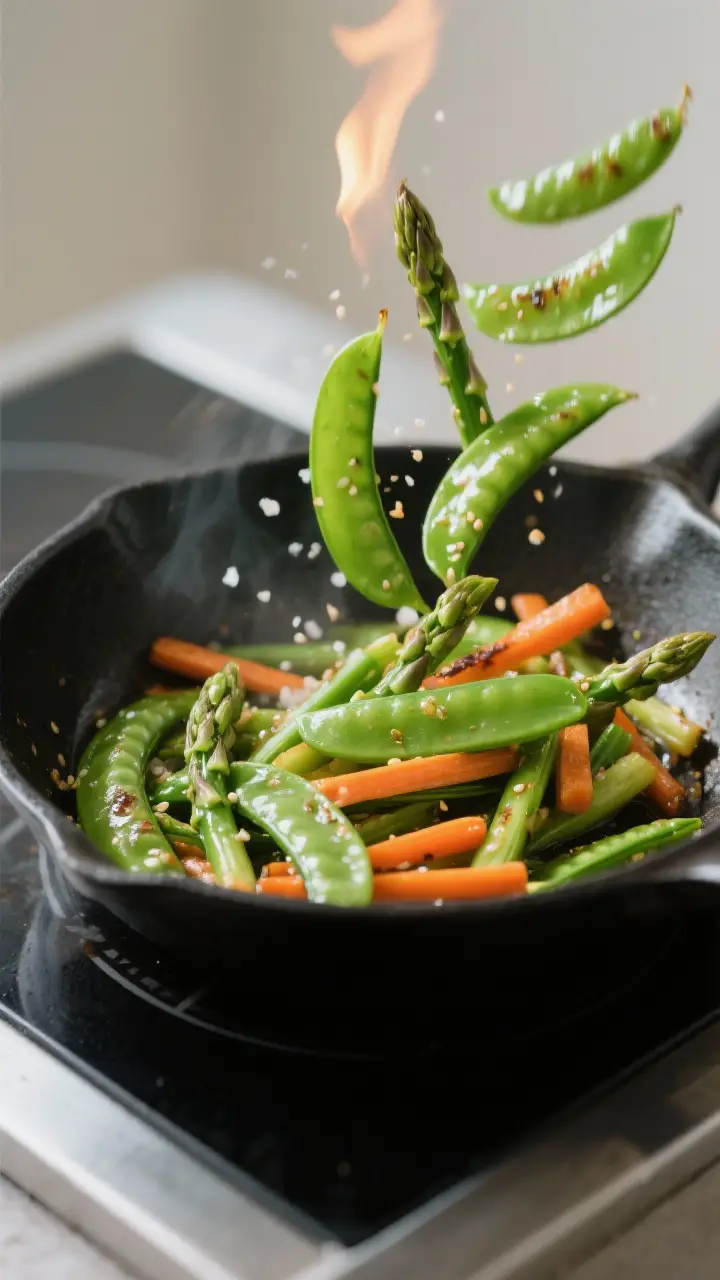
- Quick-cook the veg: In a separate skillet, heat a teaspoon of oil over medium-high. Add asparagus and snap peas with a pinch of salt.
Stir-fry 2–3 minutes until bright green and just crisp-tender. Toss in carrots for the last minute. You want crunch.
- Combine or layer: You can fold the veggies into the beef for a mixed bowl, or keep them separate for a clean, layered look.
Either way, sprinkle in half the scallions.
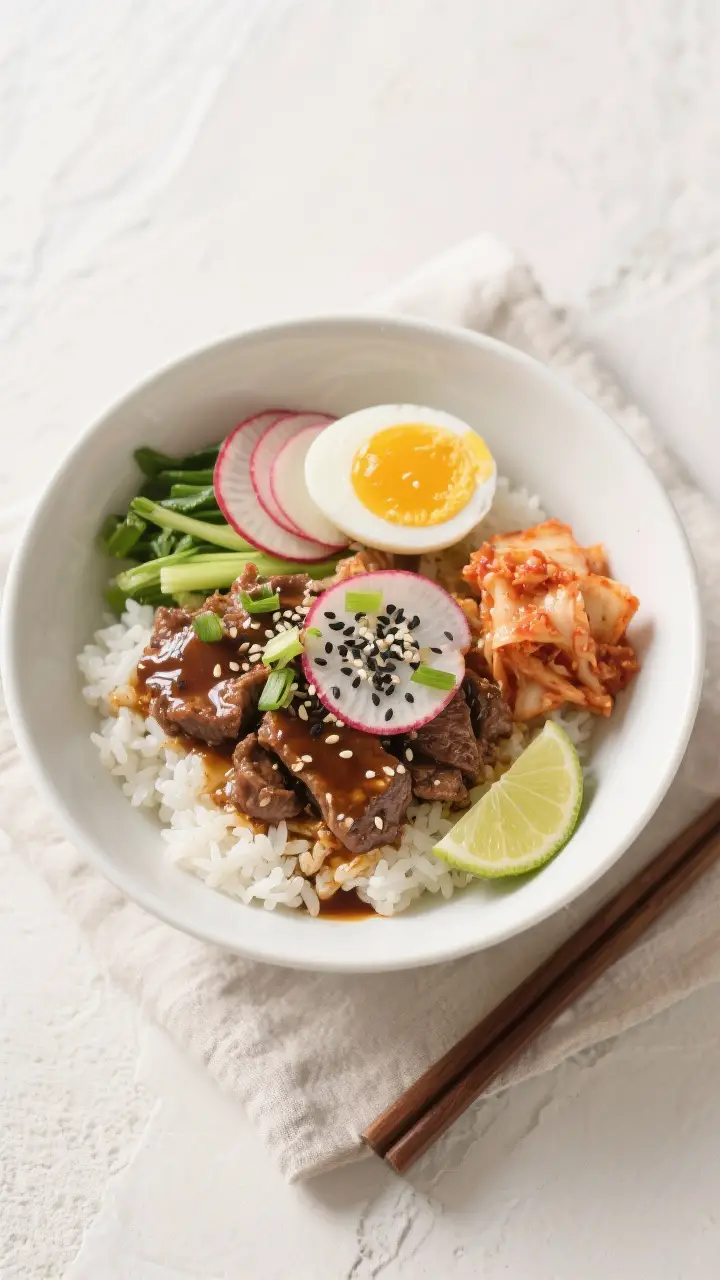
- Assemble bowls: Add rice to bowls. Top with beef and veggies. Finish with radish slices, remaining scallions, and sesame seeds.
Add kimchi, a fried egg, or lime if using.
- Serve: Spoon any extra sauce from the pan over the top. Eat right away while everything is hot and crisp.
Keeping It Fresh
- Cook veggies last: Stir-fry them right before serving so they stay crisp and green.
- Don’t over-sauce: The beef should be glossy, not swimming. Too much liquid makes the bowl soggy.
- Store smart: Keep rice, beef, and veggies in separate containers if you’re meal prepping.
This keeps textures better for 3–4 days.
- Reheat gently: Warm rice with a splash of water in the microwave, then add beef. Flash-heat veggies in a skillet for 30–60 seconds to revive crunch.
Why This is Good for You
- Protein-rich: Ground beef brings iron, B vitamins, and steady energy. You can also swap in leaner meats if you like.
- Veg-forward: Spring vegetables add fiber, vitamin C, folate, and antioxidants.
The quick cook preserves nutrients and color.
- Balanced macros: You get a satisfying mix of protein, complex carbs from rice, and healthy fats from sesame oil.
- Customizable sodium and sugar: Using low-sodium soy and adjusting the sweetener helps you control overall intake.
What Not to Do
- Don’t crowd the pan: Overcrowding prevents browning. Cook beef in a wide skillet for flavorful, caramelized bits.
- Don’t overcook the vegetables: Limp greens and dull colors mean you went too far. Aim for crisp-tender.
- Don’t skip the vinegar: A splash of acidity keeps the sauce from tasting flat or overly sweet.
- Don’t burn the garlic: Add it after the beef browns and keep heat moderate.
Bitter garlic can overpower the dish.
Variations You Can Try
- Lean swap: Use ground turkey, chicken, or bison. Add a bit of oil if the meat is very lean to prevent dryness.
- Extra veg: Toss in mushrooms, baby spinach, or bok choy. Spinach wilts in under a minute for a quick nutrient boost.
- No-rice base: Serve over brown rice, quinoa, cauliflower rice, or soba noodles for a different texture.
- Spicy kick: Add more gochujang, drizzle with chili crisp, or top with sliced fresh chilies.
- Citrus pop: Finish with a squeeze of lime or a little orange zest to brighten the sauce.
- Egg on top: A jammy six-minute egg or a runny fried egg adds richness and makes the bowl feel restaurant-level.
FAQ
Can I make this gluten-free?
Yes.
Use tamari or a certified gluten-free soy sauce, and check your gochujang or hot sauce label to ensure it’s gluten-free. Serve over rice or quinoa.
What else can I use if I don’t have gochujang?
Sriracha or a mix of chili flakes and a touch more brown sugar works. Gochujang has a deeper, fermented flavor, but these swaps still give heat and balance.
How do I keep the beef from turning gray?
Use a hot pan, don’t overcrowd, and let the beef sit undisturbed for a minute or two before stirring so it sears and browns.
Can I meal prep this?
Absolutely.
Portion rice, beef, and veggies separately, then combine when reheating. Add fresh toppings like radishes and scallions right before eating.
Is there a vegetarian option?
Try crumbled firm tofu, tempeh, or finely chopped mushrooms. Press tofu well, then brown it to get texture before adding the sauce.
What kind of rice is best?
Jasmine or short-grain white rice gives a soft, sticky base that holds the beef and sauce well.
Brown rice or cauliflower rice are good lighter options.
How can I make it less sweet?
Cut the brown sugar to 1 tablespoon and add an extra teaspoon of vinegar. Taste and adjust; the goal is balanced, not sugary.
Final Thoughts
This Korean Beef Bowl with Spring Vegetables is the kind of recipe you keep on repeat: fast, flexible, and full of bright flavor. It turns simple ingredients into a colorful, satisfying meal that works for busy weeknights or a relaxed lunch.
Once you’ve made it once, you’ll start mixing in your favorite veggies, adjusting the heat, and topping it your way. Keep the sauce balanced, don’t overcook the greens, and you’ll have a reliable bowl that tastes fresh every time. Happy cooking—and enjoy that first crunchy, saucy bite.
Printable Recipe Card
Want just the essential recipe details without scrolling through the article? Get our printable recipe card with just the ingredients and instructions.