
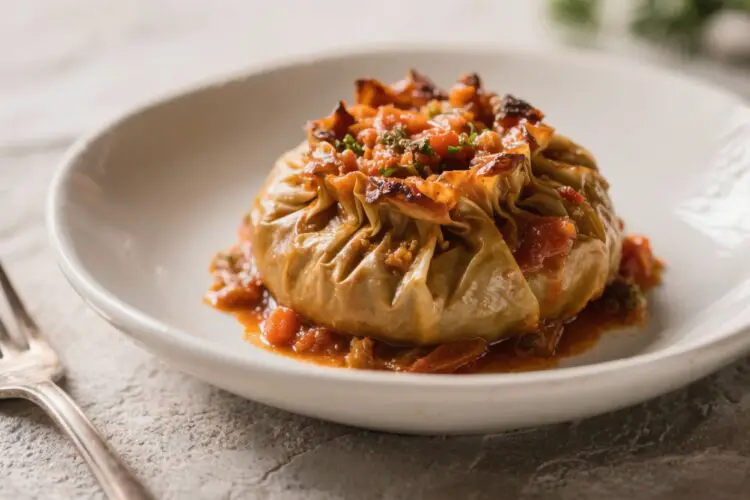
Golumpki is one of those homey dishes that feels like a warm hug. Think tender cabbage leaves wrapped around a savory mix of meat, rice, onions, and spices, all simmered in a tangy tomato sauce. It’s humble, satisfying, and perfect for feeding a family or a table full of friends.
If you grew up in a Polish household, this may bring back memories; if not, it’s a delicious tradition worth adopting. The best part? It tastes even better the next day.
What Makes This Special
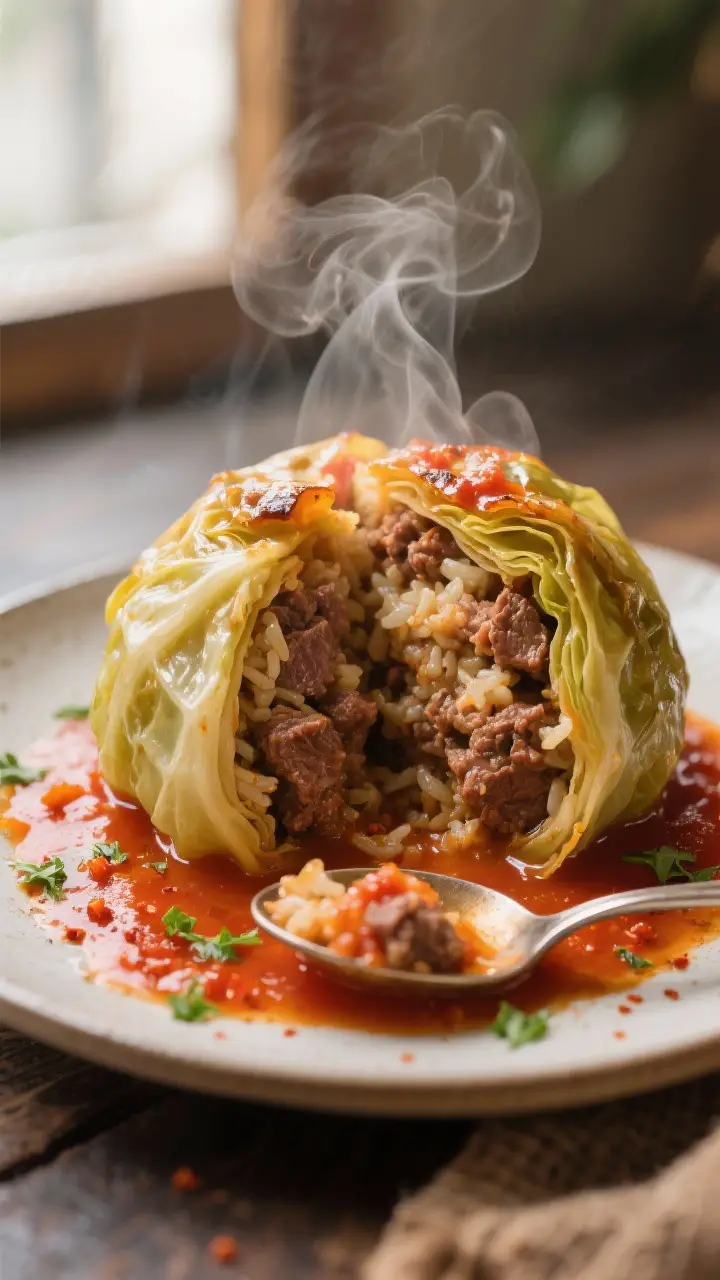
Golumpki is simple, but rich with character.
The cabbage softens into silky layers, holding a filling that’s both hearty and balanced. The tomato sauce ties everything together, adding brightness to the savory meat and rice. It’s also a budget-friendly recipe that stretches a pound or two of meat into a generous meal.
And because it reheats beautifully, it’s a dream for make-ahead dinners and freezing.
Ingredients
- 1 large green cabbage (about 2.5–3 pounds)
- 1 pound ground beef
- 1/2 pound ground pork (or use all beef if preferred)
- 1 cup cooked white rice (slightly undercooked is ideal)
- 1 large onion, finely chopped
- 2 cloves garlic, minced
- 1 large egg, lightly beaten
- 1/4 cup fresh parsley, chopped (plus extra for garnish)
- 1 teaspoon dried marjoram (or dried oregano if you can’t find marjoram)
- 1 teaspoon paprika
- 1–1.5 teaspoons kosher salt, divided
- 1/2 teaspoon black pepper
- 1 tablespoon olive oil or butter (for sautéing)
- For the sauce: 1 (28-ounce) can crushed tomatoes
- 1 cup tomato sauce or passata
- 1 cup low-sodium beef or chicken broth
- 2 teaspoons sugar (to balance acidity)
- 1 tablespoon red wine vinegar or lemon juice
- 1 bay leaf
Step-by-Step Instructions
- Prep the cabbage. Use a sharp knife to remove the tough core. Bring a large pot of salted water to a boil. Lower the whole cabbage into the water and blanch for 5–7 minutes, peeling away leaves as they soften.
Set the leaves on a towel to cool. Trim the thick vein at the base of each leaf so it folds easily.
- Cook the aromatics. In a skillet, warm olive oil or butter over medium heat. Sauté the onion with a pinch of salt for 5–7 minutes until soft and translucent.
Add garlic and cook 30 seconds more. Let cool slightly.
- Mix the filling. In a large bowl, combine ground beef, ground pork, cooked rice, sautéed onion and garlic, egg, parsley, marjoram, paprika, 1 teaspoon salt, and pepper. Mix gently with your hands until just combined. Do not overwork or the filling can become dense.
- Make the sauce. In a bowl or saucepan, stir together crushed tomatoes, tomato sauce, broth, sugar, vinegar, bay leaf, and a pinch of salt.
Taste and adjust seasoning. You want a bright, slightly tangy sauce.
- Assemble the rolls. Lay a cabbage leaf flat. Place 1/4–1/3 cup of filling near the base.
Fold the bottom over the filling, tuck in the sides, and roll up snugly. Repeat with remaining leaves and filling. If a leaf is torn, double it up or patch with a small piece.
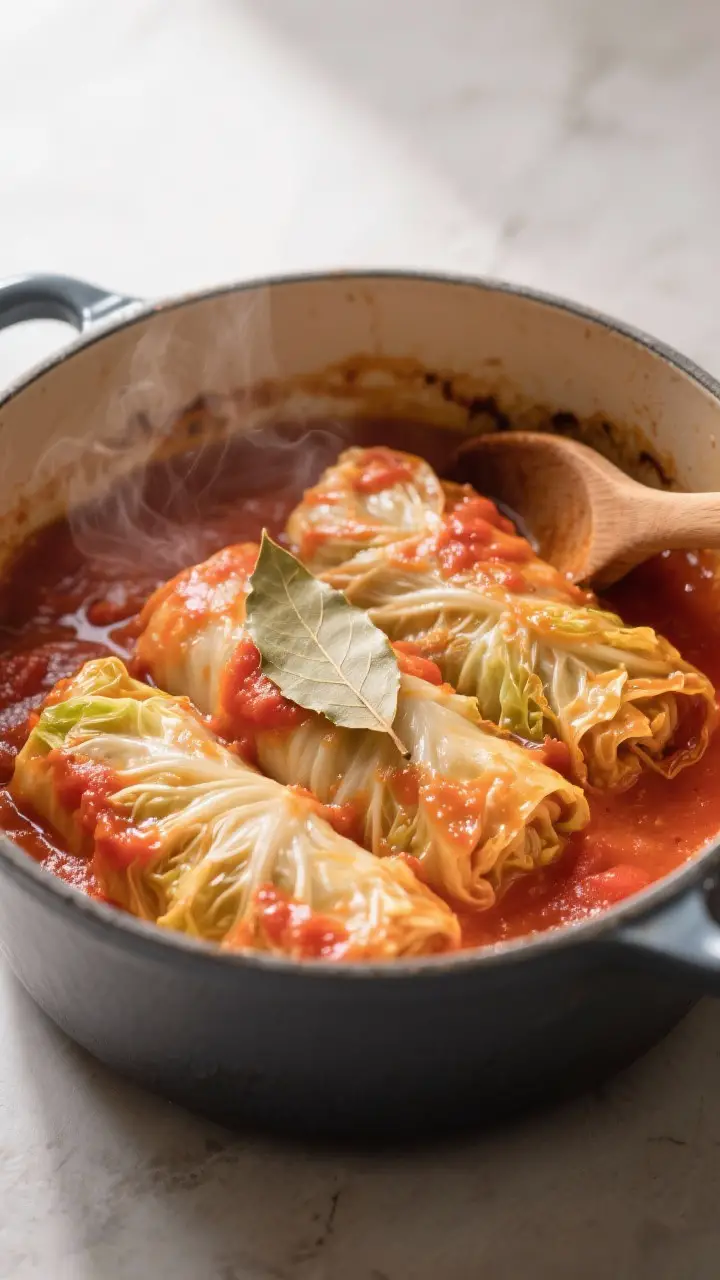
- Layer in the pot. Spread a thin layer of sauce on the bottom of a Dutch oven or deep baking dish.
Arrange rolls seam-side down in a single layer. Spoon sauce over them, then add a second layer if needed. Pour remaining sauce over the top.
The rolls should be mostly covered.
- Cook low and slow. Cover with a lid or tightly with foil. Simmer on the stovetop over low heat for 60–75 minutes, or bake at 350°F (175°C) for 75–90 minutes, until the cabbage is tender and the filling is cooked through. Remove the bay leaf.
- Rest and serve. Let the golumpki rest for 10–15 minutes so the juices settle.
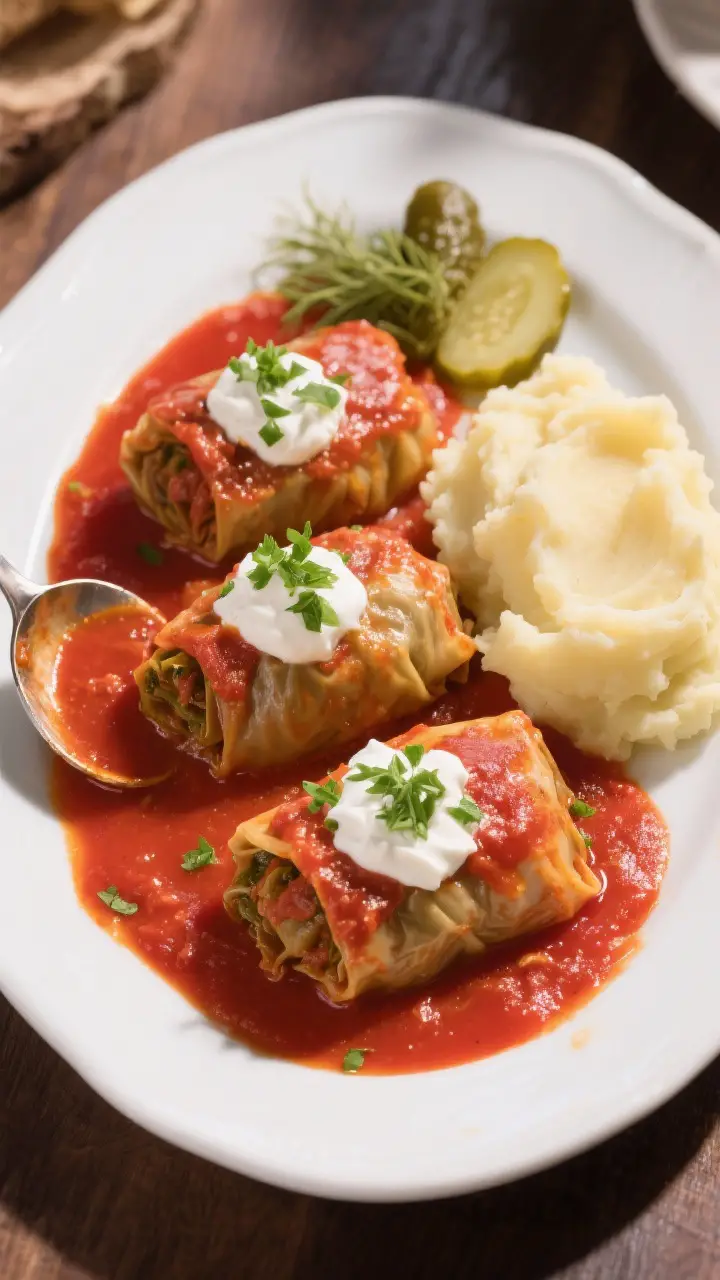
Garnish with parsley. Serve with extra sauce and a dollop of sour cream if you like.
Storage Instructions
- Refrigerator: Cool completely. Store in an airtight container with sauce for up to 4 days.
- Freezer: Freeze individual rolls in sauce for up to 3 months.
Wrap tightly or use freezer-safe containers. Thaw overnight in the fridge.
- Reheating: Warm gently in a covered skillet or in the oven at 325°F (165°C) with a splash of broth or sauce until heated through. Microwave in short bursts to avoid drying.
Benefits of This Recipe
- Comfort food done right: Savory, saucy, and deeply satisfying without being heavy.
- Great for make-ahead: Flavors improve after a day, making it perfect for meal prep.
- Flexible: Easy to adapt with different meats, grains, or seasonings.
- Budget-friendly: Turns simple ingredients into a generous, shareable meal.
What Not to Do
- Don’t skip trimming the leaf vein. It makes rolling difficult and can result in tough bites.
- Don’t overcook the rice beforehand. Slightly undercooked rice holds up better and won’t turn mushy.
- Don’t pack the filling too tightly. Gentle mixing keeps the texture tender.
- Don’t skimp on sauce. The rolls need enough liquid to braise and stay moist.
- Don’t rush the cook time. Low and slow is key for tender cabbage and full flavor.
Alternatives
- Meat swaps: Use all beef, all pork, or a mix with ground turkey or chicken.
If using lean poultry, add a tablespoon of olive oil for moisture.
- Grain options: Try cooked barley, brown rice, or quinoa. For low-carb, use finely riced cauliflower (sautéed briefly to soften).
- Sauce twists: Add a splash of Worcestershire, a pinch of smoked paprika, or a little sour cream stirred into the sauce after cooking for richness.
- Spice variations: Swap marjoram for thyme or dill. Add a pinch of allspice for a classic Central European note.
- Lazy cabbage rolls: Layer chopped cabbage, meat mixture, and sauce in a casserole dish.
Bake covered until tender for an easier, deconstructed version.
FAQ
Can I use savoy cabbage instead of green cabbage?
Yes. Savoy cabbage has softer, crinkly leaves that roll easily and cook quickly. It’s a great substitute and can reduce cooking time slightly.
Do I have to pre-cook the rice?
It’s best to use cooked or par-cooked rice to ensure even texture.
Raw rice can soak up too much sauce and cook unevenly inside the rolls.
What if my cabbage leaves tear?
Use two smaller leaves overlapped, or patch with a leaf scrap. Once rolled and nestled in sauce, small tears won’t matter.
Can I make this in a slow cooker?
Absolutely. Layer the rolls and sauce in the crock, cover, and cook on Low for 6–7 hours or on High for about 3–4 hours, until tender and fully cooked.
How do I know the filling is cooked?
The rolls should be firm, not squishy, and the juices should run clear.
If you want to be precise, check an internal temperature of 165°F (74°C).
What should I serve with golumpki?
Mashed potatoes, buttered noodles, or rye bread are classic sides. A simple cucumber salad or dill pickles add a refreshing contrast.
Can I make it gluten-free?
Yes. This recipe is naturally gluten-free if your broth and canned tomatoes are certified gluten-free.
Use rice or quinoa as the grain and double-check all labels.
Why is there sugar in the sauce?
Just a small amount balances the acidity of tomatoes. You can skip it or replace it with a splash more broth if you prefer.
Can I assemble the rolls a day ahead?
Yes. Assemble, cover, and refrigerate overnight.
Add 10–15 minutes to the cooking time since they’ll start cold.
How do I keep the rolls from unraveling?
Place them seam-side down, pack them snugly in the pot, and cover with sauce. The weight and moisture help the rolls hold together as they cook.
Final Thoughts
Golumpki is the kind of recipe that turns simple ingredients into something comforting and memorable. It’s forgiving, flexible, and rewarding, whether you’re cooking for a cozy weeknight or a family get-together.
Once you make it, you’ll see why it’s a beloved staple in so many homes. Keep a batch in the freezer, and you’re always a gentle reheat away from a truly satisfying meal.
Printable Recipe Card
Want just the essential recipe details without scrolling through the article? Get our printable recipe card with just the ingredients and instructions.