- Serves: 12 to 16 as an appetizer
- Active time: 15 minutes, plus chilling
- Make ahead: Shape 2 days ahead; coat within a few hours of serving
- The one thing that matters: Chill it hard before AND after shaping — and coat it only just before serving
What you’ll need
- Food processor or mixer. For blending the cheese and seasonings
- Medium mixing bowl. For combining ingredients
- Rubber spatula. For scraping and shaping
- Plastic wrap. For shaping and chilling the cheese ball
- Serving plate. For presenting with crackers
What you’ll need
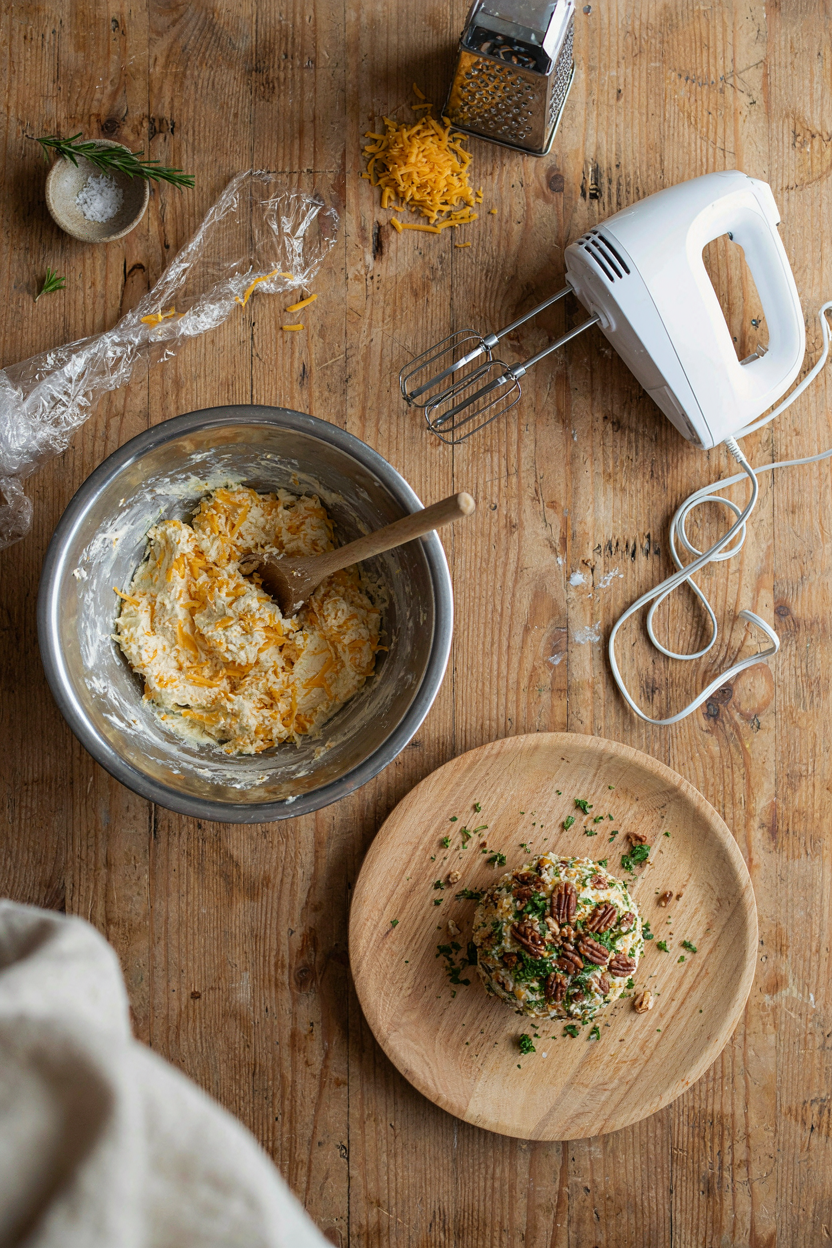
- Large mixing bowl. For beating the cream cheese and cheddar together. Glass or ceramic works best.
- Hand mixer or stand mixer. A hand mixer is easier for this amount. You want the mixture smooth and lump-free.
- Box grater. For grating the cheddar yourself. Pre-shredded cheese has anti-caking powder that makes the mixture grainy.
- Plastic wrap. For shaping the ball and wrapping it tight. You need enough to gather and twist into a bundle.
- Small skillet. For toasting the pecans. A dry skillet over medium heat takes about 5 minutes.
- Serving board or platter. A rustic wooden board or a flat platter for presenting the cheese ball.
- Sharp knife. For slicing the cheese ball when serving. A cheese knife or a small paring knife works.
- Measuring cups and spoons. For accurate measurements of the cream cheese, cheddar, and seasonings.
A cheese ball is a retro appetizer that keeps showing up because it is cheap, it is made two days ahead, and it disappears. The two failure points are a mixture too soft to hold a shape and a coating that has gone soggy by the time anyone eats it.
Why this works
Full-fat block cream cheese firms up hard in the fridge; the tub kind, whipped and full of water, never will. Chilling the mixture before you shape it makes it possible to roll into a ball at all, and chilling the shaped ball again sets it firm enough to slice and spread. The coating — nuts, herbs, bacon — goes on within a few hours of serving, because anything crunchy pressed into a moist ball and left overnight turns soft.
And the cheese matters. Freshly grated cheddar melts into the mixture smoothly; pre-shredded is coated in anti-caking powder and makes the filling grainy. It is a small thing, and you can taste the difference.
What you need
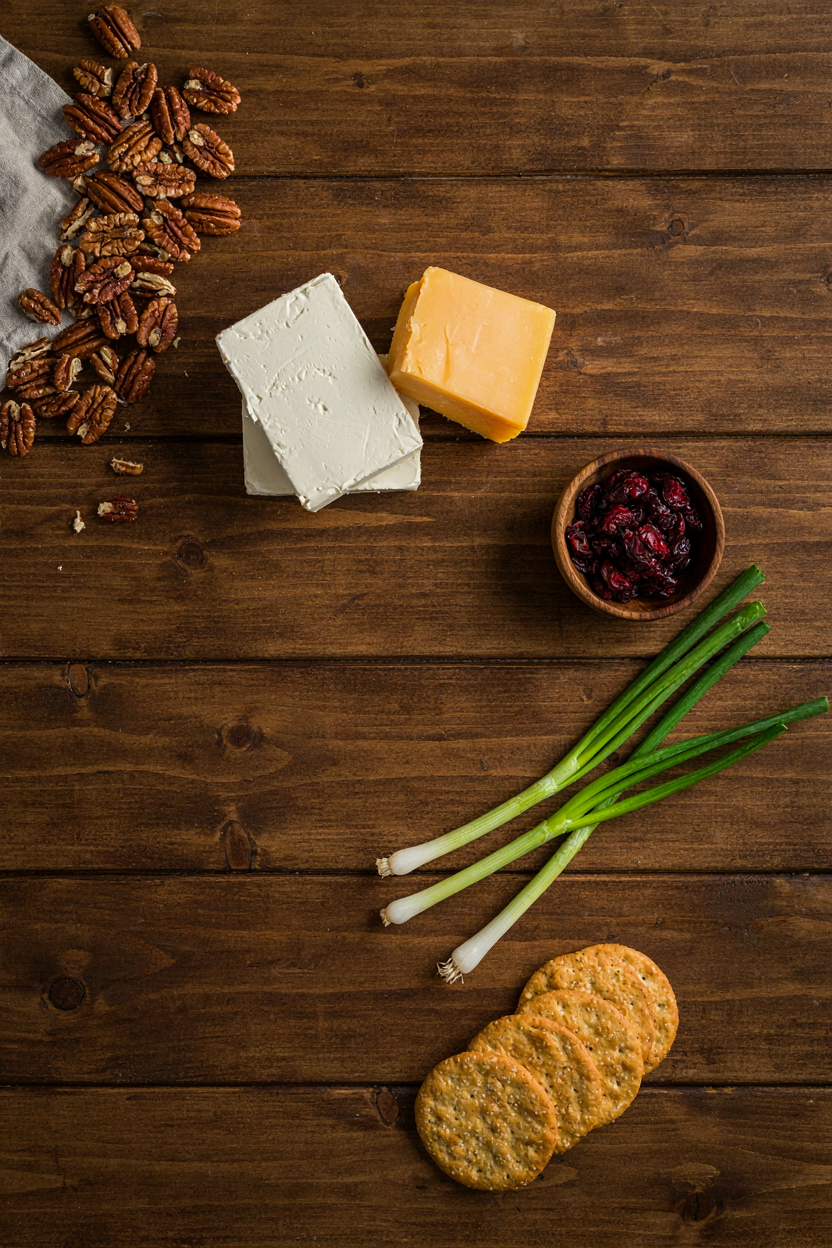
- 16 oz (450g) full-fat block cream cheese, softened
- 1½ cups (170g) sharp cheddar, freshly grated
- 2 tablespoons mayonnaise
- 1 teaspoon Worcestershire sauce
- ½ teaspoon garlic powder, ¼ teaspoon onion powder
- 2 green onions, finely chopped
- Salt and black pepper
Coating
- 1 cup chopped toasted pecans
- ¼ cup dried cranberries (optional)
- 2 tablespoons chopped fresh parsley
How to make it
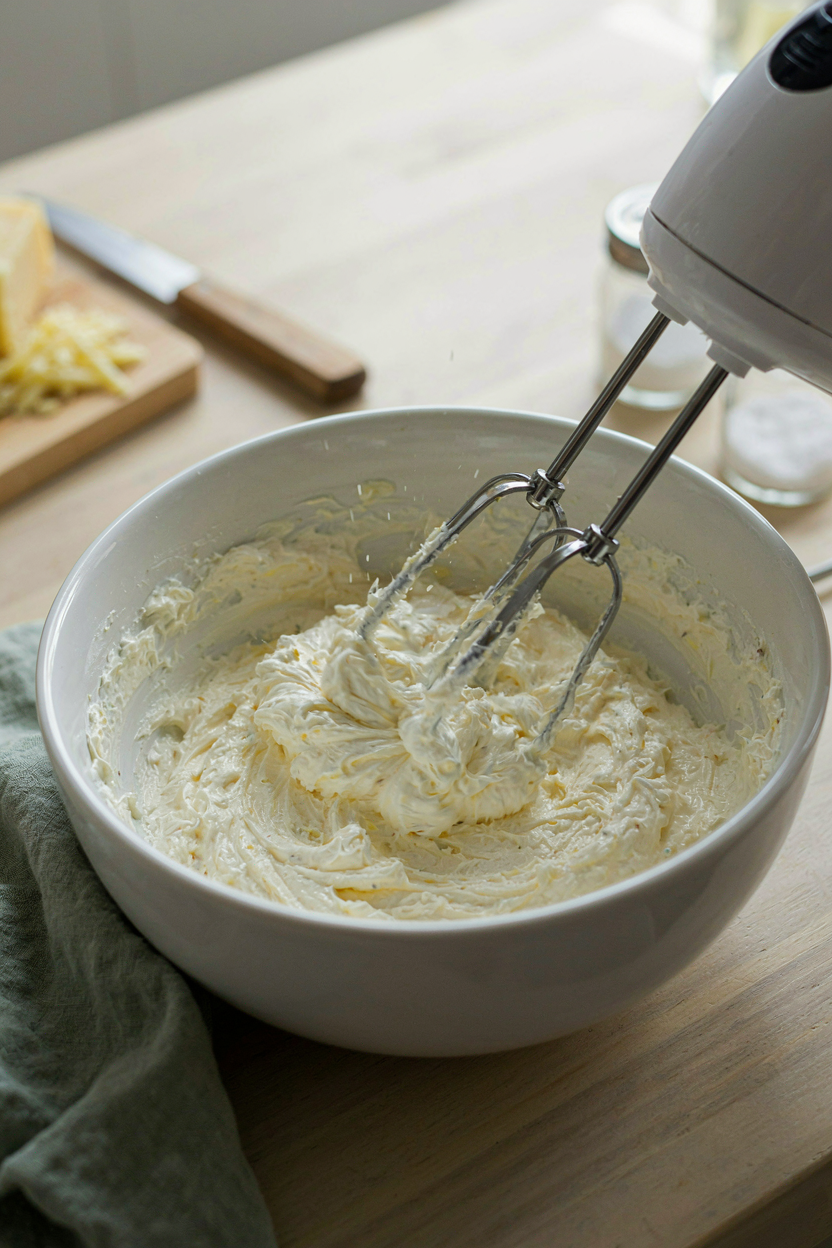
- Mix. Beat the cream cheese smooth. Beat in the cheddar, mayo, Worcestershire, garlic and onion powder, green onions, salt and pepper until combined. Go easy on the beating; you want it smooth but not airy.
- First chill. Chill the mixture 1 hour, until firm enough to handle. This is the step that makes shaping possible.
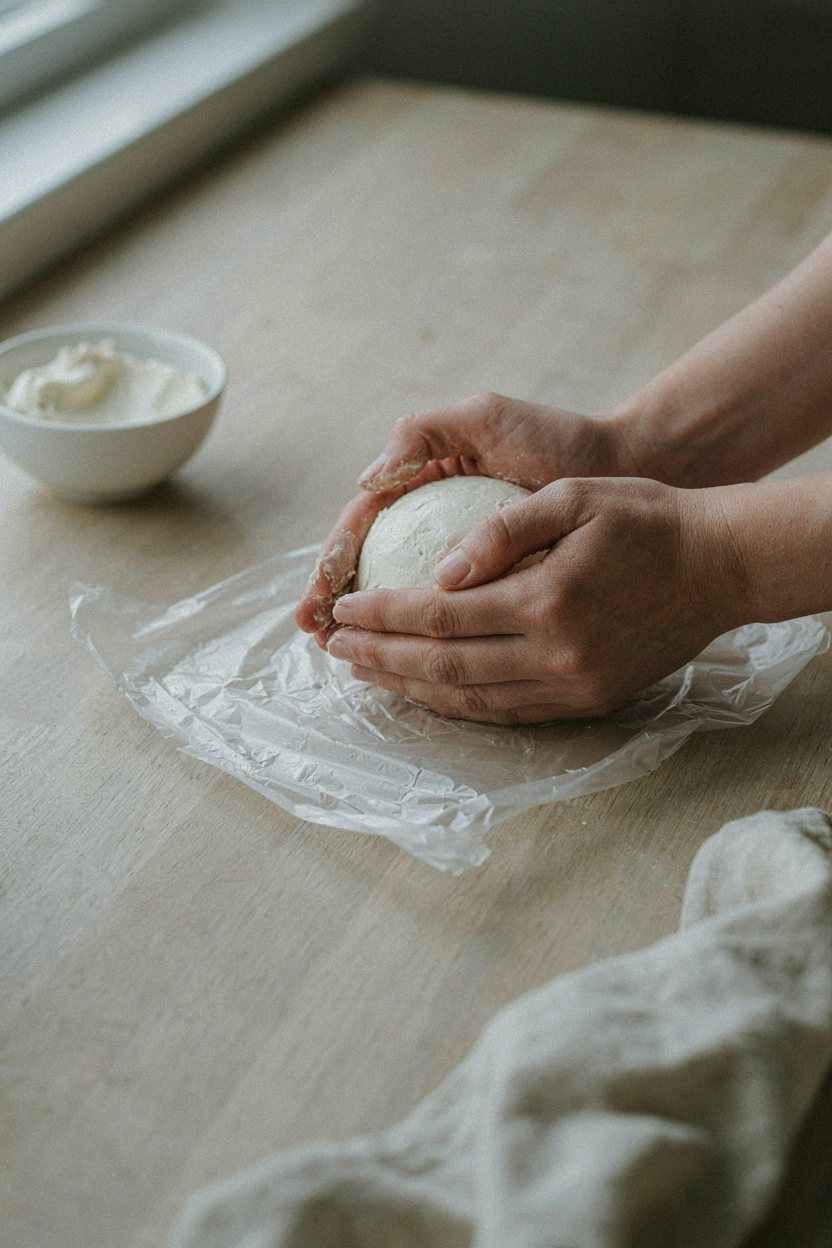
- Shape. Scrape onto a sheet of plastic wrap, gather it into a ball, and twist the wrap tight. Chill again, at least 2 hours or up to 2 days.
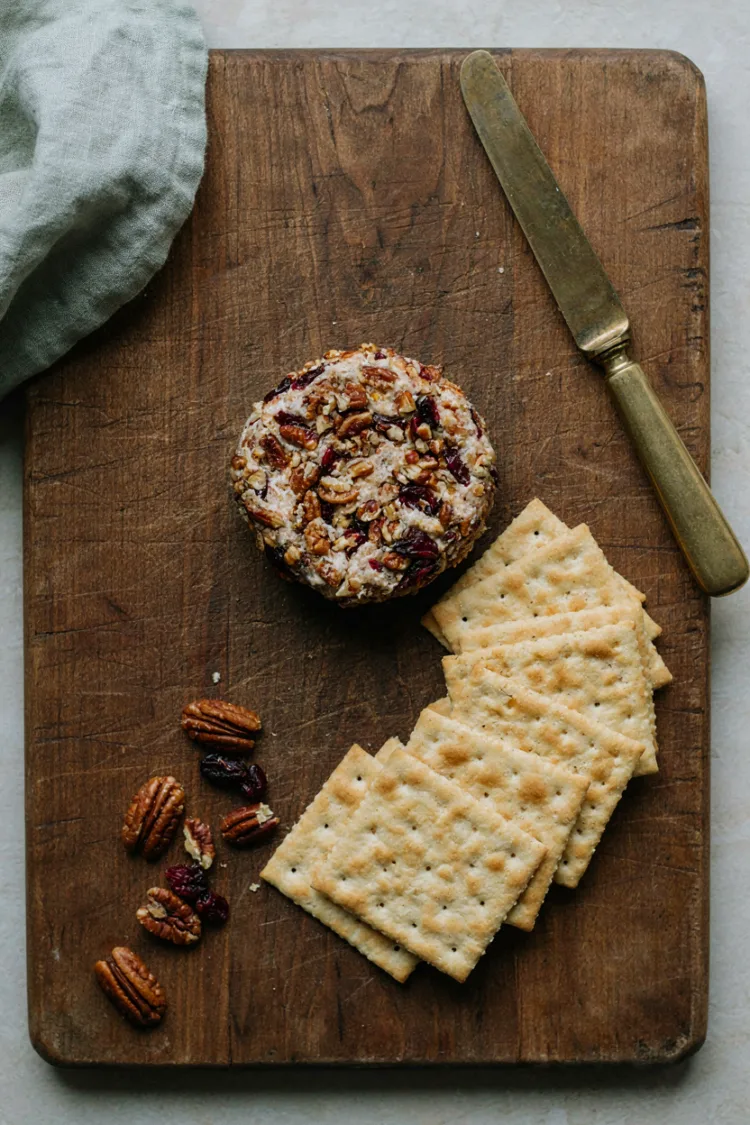
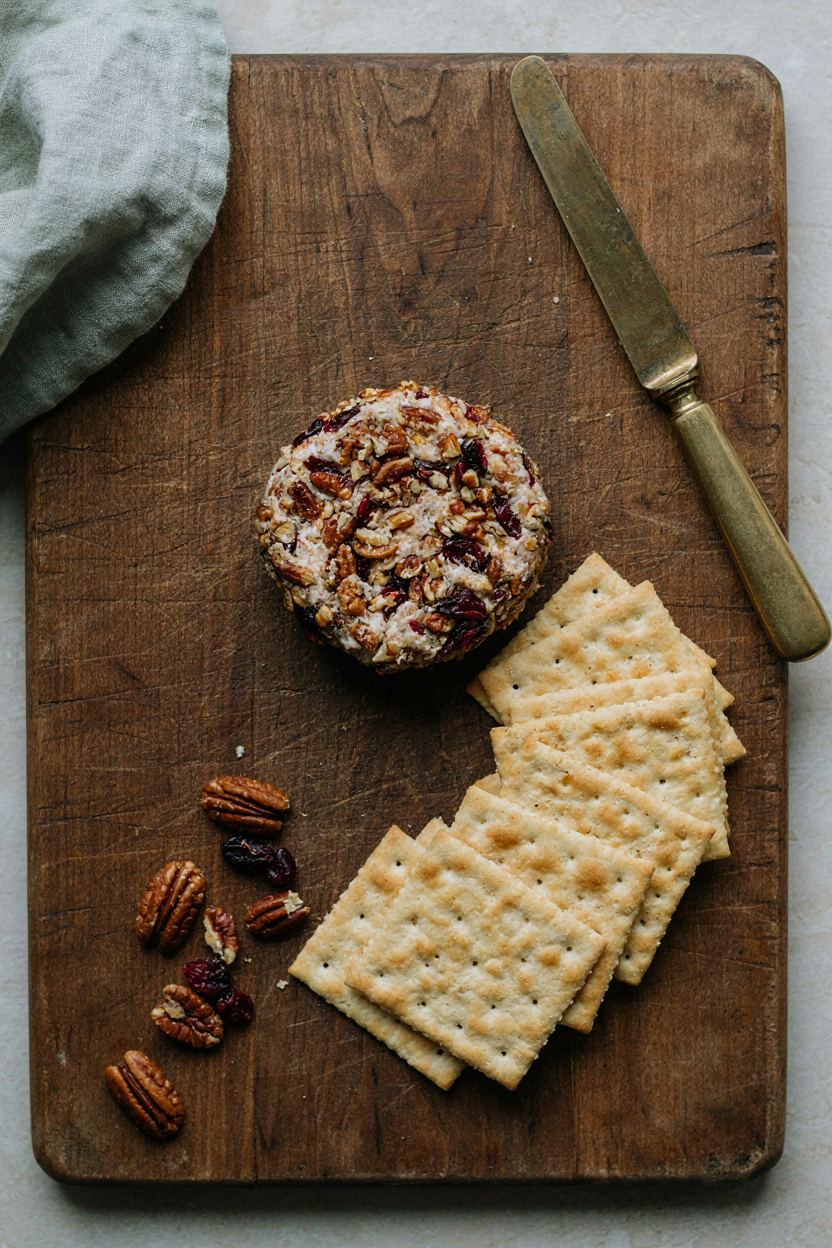
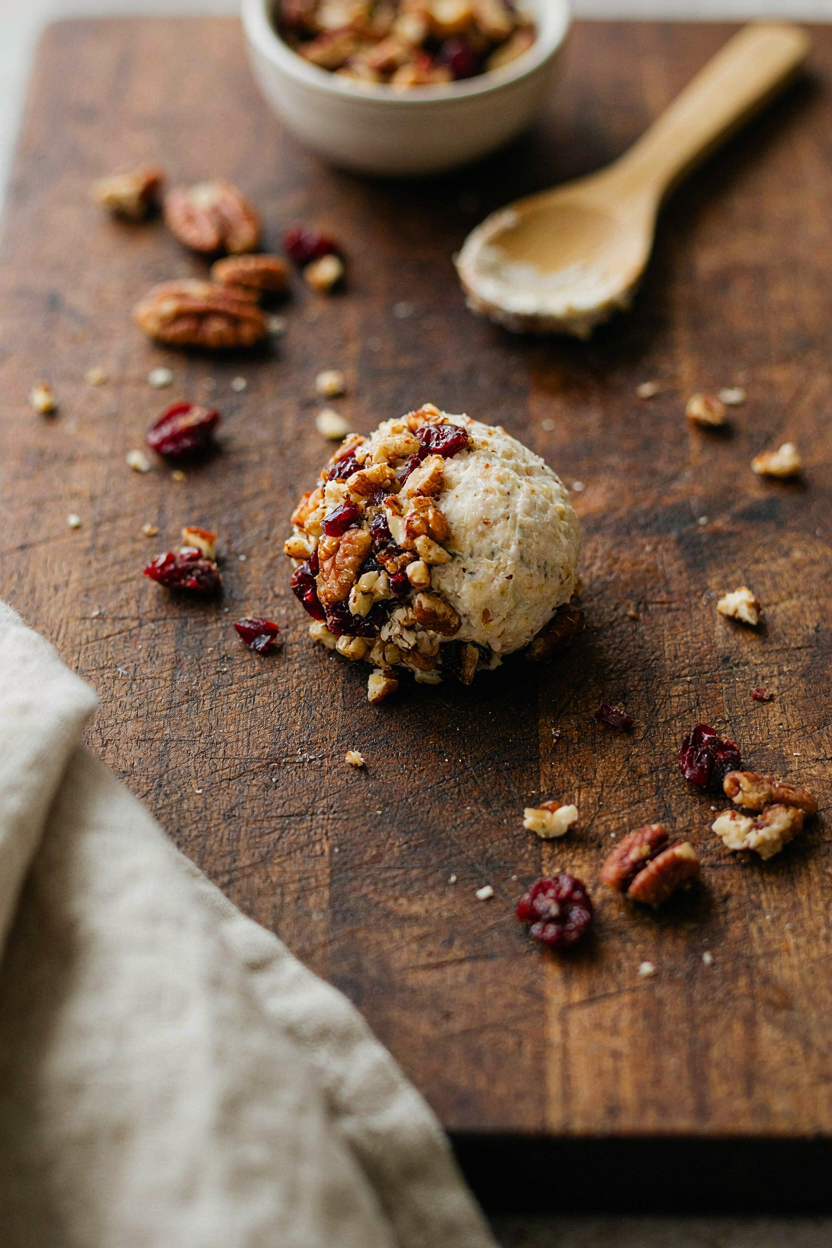
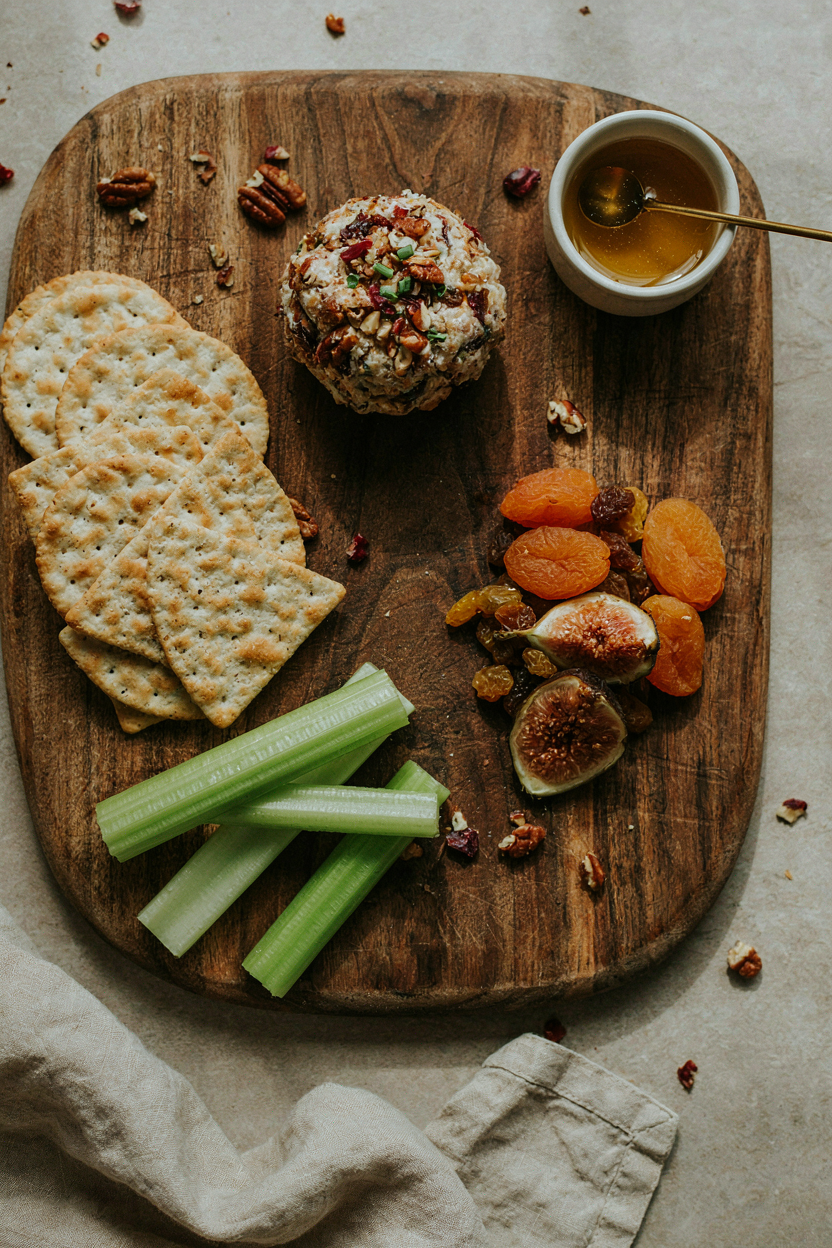
- Coat. Within a few hours of serving, roll the ball in the coating, pressing it on all over. Spread the remaining nuts and cranberries on the board around the ball for a finished look.
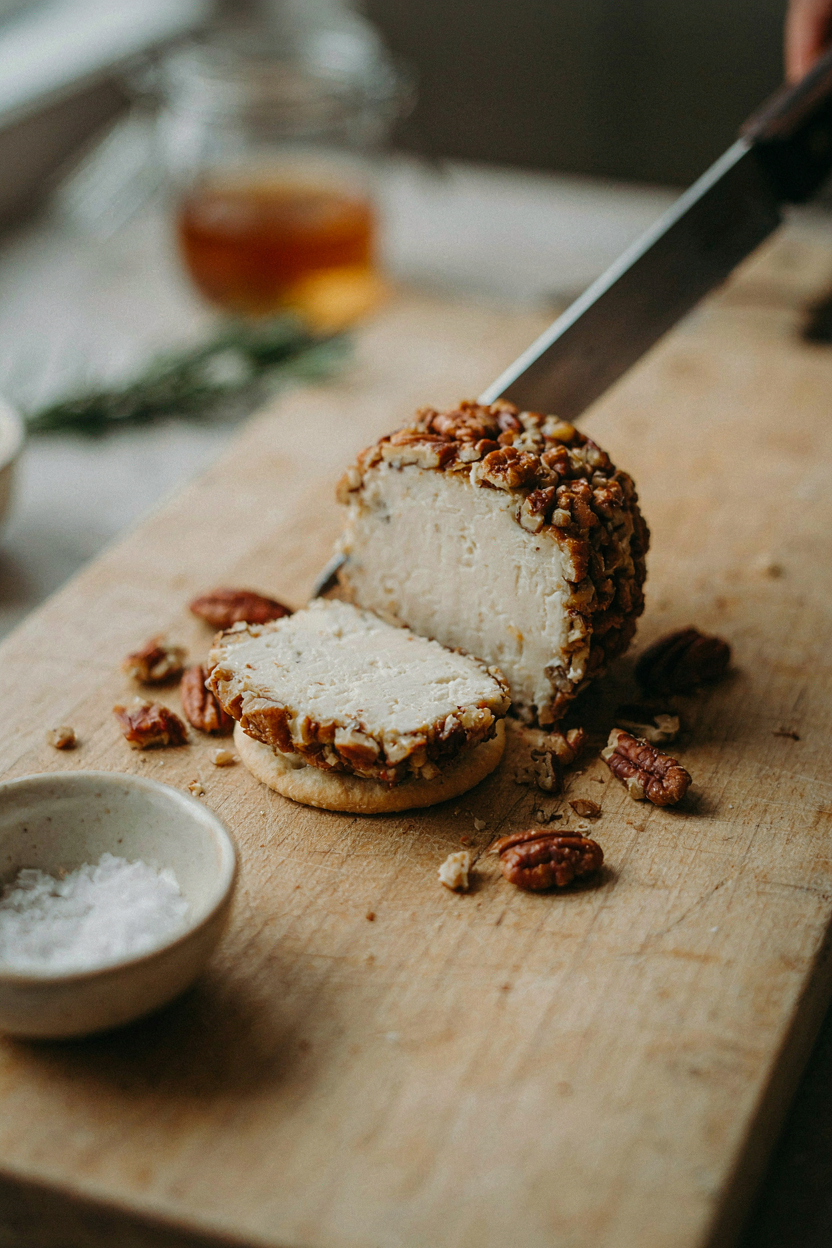
- Serve. With crackers, pretzels, apple slices and celery. Take it out of the fridge 20 minutes before serving so it is spreadable, not fridge-hard.
The details that decide it
- Block cream cheese, grated cheese. Tub cream cheese and pre-shredded cheddar are both too wet and will not hold. The block kind firms up; the tub kind stays soft no matter how long you chill it.
- Two chills. One to make it shapeable, one to set the shape. Skipping the first chill makes shaping difficult; skipping the second means it won’t hold when you cut it.
- Coat late. Nuts and bacon go soft on a moist ball overnight. The coating is a last-minute thing, and that is what keeps it crunchy.
- Take it out 20 minutes before serving. So it is spreadable, not fridge-hard. A cheese ball straight from the fridge tears the cracker when you try to spread it; one that has sat 20 minutes spreads clean.
- Toast the nuts. Five minutes in a dry skillet over medium heat, stirring constantly, until they smell nutty. Raw pecans are bland; toasted pecans bring out the nutty flavor that makes the coating worth eating.
- Taste before the first chill. This is your last chance to adjust. A little more Worcestershire, a little more garlic powder, a little more salt. Once it is chilled, you cannot fix it without breaking it apart.
What to serve with cheese ball
A cheese ball is the centerpiece of an appetizer spread, and it wants company. Crackers are the obvious partner, but the right crackers matter.
- Water crackers. Neutral, crisp, and they let the cheese be the star. The default choice.
- Wheat Thins or Triscuits. A little whole-grain flavor that stands up to sharp cheddar. Good for people who want more than a water cracker.
- Pretzels. The salt is a feature, and the shape makes them easy to dip. Mini pretzels are the best size for a cheese ball.
- Apple slices and celery. Something fresh and crisp to cut the richness. Granny Smith apples, cut thin, are the best match for sharp cheddar.
- Dried fruit. Dried apricots, dried cherries, figs. The sweetness against the savory cheese is a classic combination.
For a spread, put the cheese ball in the center of a board, arrange the crackers in arcs around it, scatter the nuts and cranberries in the gaps, and tuck the fruit and celery in the corners. It should look abundant, not arranged.
Variations
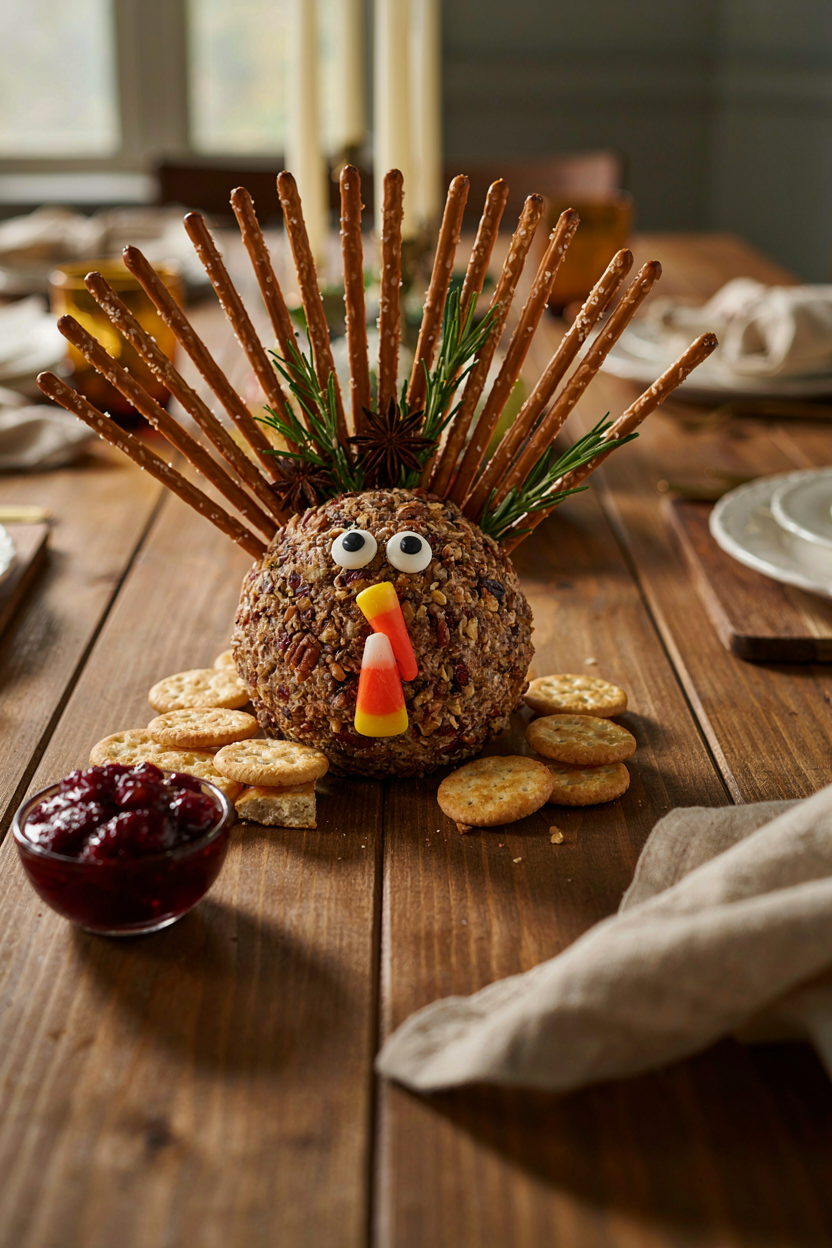
- Turkey-shaped. Shape the mixture into a turkey body, use a slice of the ball or a small ball for the head, and press pretzel sticks, Bugles or crackers into the back as a fan of tail feathers. Candy eyes and a candy-corn beak. The version that gets shared.
- Mini cheese balls. Roll the mixture into 1-inch balls, chill, coat, and stick a pretzel stick or a toothpick in each. Individual, no-knife appetizer format. These are easier for a standing crowd.
- Bacon and chive. Add 6 slices of cooked, crumbled bacon and 3 tablespoons of fresh chives to the mixture. Coat with more bacon and chives instead of pecans. This is the savory version, and it is very good.
- Blue cheese and walnut. Substitute 4 oz of the cheddar with blue cheese, and coat with toasted walnuts instead of pecans. This is the grown-up version, and it pairs well with dried figs and a bold red wine.
- Spicy jalapeño. Add 2 diced jalapeños (seeds removed) and ½ teaspoon cayenne to the mixture. Coat with crushed tortilla chips. This is the version my nephew asks for every year.
- Sweet dessert version. Cream cheese beaten with powdered sugar, a little butter, vanilla and cinnamon, rolled in graham crumbs and toffee bits, served with apple slices and vanilla wafers. Closer to our pumpkin dip.
Scaling and make-ahead
Shape the ball up to 2 days ahead. For a bigger crowd, make two medium balls rather than one large one, easier to reach and to coat evenly. Per the board’s research, “Thanksgiving cheese ball” is searched more than “Thanksgiving stuffing,” which tells you people want it. It fits into our Thanksgiving appetizers as a make-ahead cold item.
If you are making two, divide the mixture in half before the first chill, shape each into a ball separately, and wrap them individually. You can coat them differently — one in pecans, one in bacon — for variety on the board.
Common problems
- The mixture is too soft to shape. It may not have chilled long enough, or you may have used tub cream cheese instead of block. Put it back in the fridge for another 30 minutes. If it still will not hold, the cream cheese is the problem; next time, use the block kind.
- The coating falls off. The ball may have been too cold when you coated it, or the nuts may not have been pressed in firmly enough. Let it sit 5 minutes at room temperature, then roll it again, pressing firmly.
- It is too bland. Not enough salt, or not enough Worcestershire, or the cheddar was mild. Taste the mixture before the first chill; it should taste almost too strong on its own, because the crackers will dilute it.
- The crackers are soggy. They sat too long on the board. Refresh them in a 350°F oven for 3 to 5 minutes, or put out smaller batches and keep the rest in the container.
From my kitchen
The first Thanksgiving I made a cheese ball, I used pre-shredded cheddar because I was in a hurry. The mixture was grainy and soft, and it would not hold a shape no matter how long I chilled it. I ended up serving it in a bowl with a spoon, which is not a cheese ball; that is a dip. Nobody said anything, but I knew.
The second year I used block cream cheese and grated the cheddar myself. The difference was not small. The mixture was smooth and firm, and it rolled into a ball that held its shape. I coated it in toasted pecans and dried cranberries, and I put it on the board with crackers fanned around it, and it looked like something from a magazine. My sister-in-law said “oh, a cheese ball” in the tone she uses when she is genuinely pleased, not just being polite.
I make it every year now, and I always make it two days ahead, because that is the point of a cheese ball. It is the appetizer you make when you want something that is already done when the guests arrive. And I always make it look like a turkey, because it is Thanksgiving and that is what we do.
Frequently asked questions
Why won’t my cheese ball hold its shape?
Tub-style cream cheese or pre-shredded cheese, both of which are too wet. Use full-fat block cream cheese and grate the cheddar yourself, and chill the mixture before shaping. The block kind firms up; the tub kind stays soft no matter how long you chill it.
Can I make a cheese ball ahead of time?
Yes, up to 2 days. Shape it and keep it wrapped in the fridge, and add the nut or bacon coating only within a few hours of serving so it stays crunchy. This is the whole point of a cheese ball; it is the appetizer you make ahead.
How do I make a turkey-shaped cheese ball?
Shape the mixture into a body, add a small ball for the head, and press pretzel sticks or crackers into the back in a fan for tail feathers, with candy eyes and a candy-corn beak. It is a visual trick, and it is the version that gets photographed.
How far in advance should I coat it?
Within a few hours of serving. Coated too early, the nuts and any bacon soften against the moist cheese. The coating is a last-minute thing, and that is what keeps it crunchy.
Can I freeze a cheese ball?
You can, but the texture changes. Freeze it uncoated, wrapped tightly in plastic and then foil, for up to 2 months. Thaw in the fridge overnight, then coat and serve. It is not as good as fresh, but it is acceptable in a pinch.
What crackers are best with cheese ball?
Water crackers are the default; they are neutral and let the cheese be the star. Wheat Thins or Triscuits add a little whole-grain flavor. Pretzels add salt. Mini pretzels are the best size for a cheese ball. Put out a mix.
The bottom line
Block cream cheese and grated cheddar, two chills to set the shape, and the coating pressed on just before serving. Make it two days ahead; shape it like a turkey if you want the photo. It is cheap, it is retro, and it is always the first thing gone on the table.
Save it, retro, cheap, made ahead, and always finished.
Thanksgiving Cheese Ball
Ingredients
Equipment
Method
- Beat the cream cheese smooth. Beat in the cheddar, mayo, Worcestershire, garlic powder, onion powder, green onions, salt and pepper until combined.
- Chill the mixture 1 hour, until firm enough to handle.
- Scrape onto a sheet of plastic wrap, gather it into a ball, and twist the wrap tight. Chill again, at least 2 hours or up to 2 days.
- Within a few hours of serving, roll the ball in the coating, pressing it on all over.
- Serve with crackers, pretzels, apple slices and celery. Take it out of the fridge 20 minutes before serving so it is spreadable, not fridge-hard.