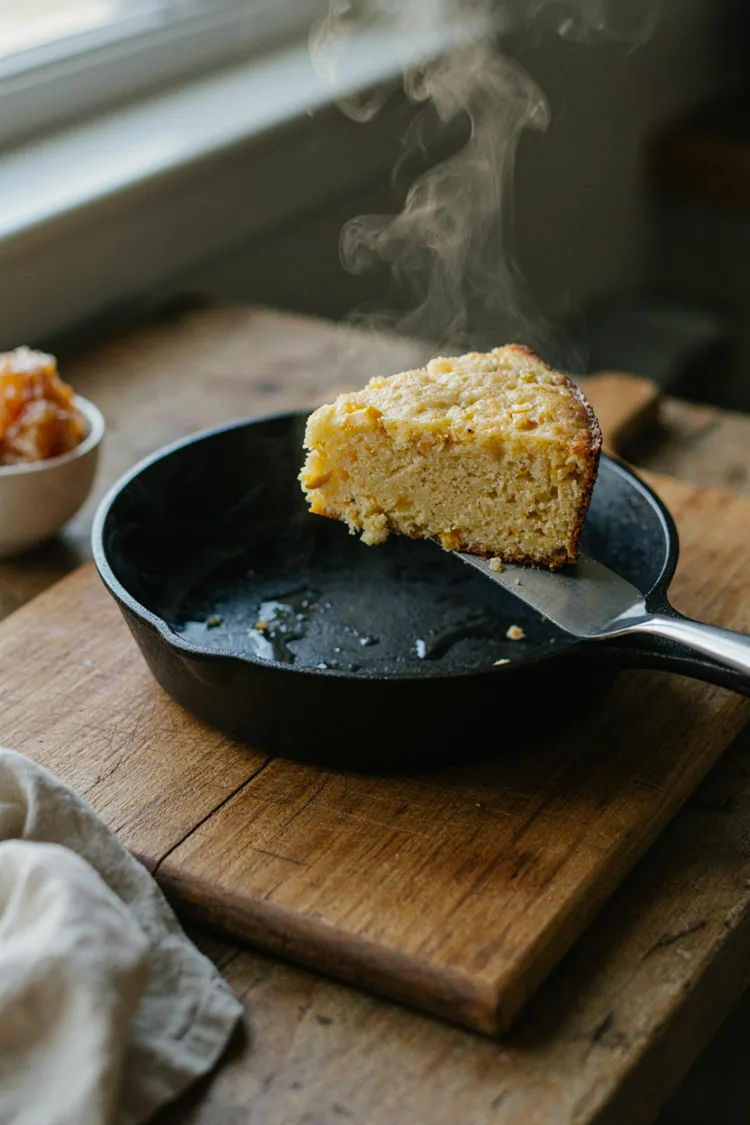
- Makes: One 10-inch skillet, serves 8 to 10
- Active time: 10 minutes
- Make ahead: Best warm the day of; bake plain and a day early if it is destined for dressing
- The one thing that matters: Preheat the buttered skillet so the batter hits hot metal and the edges fry crisp
What you’ll need
- 10-inch cast-iron skillet. For baking the cornbread in the oven
- Large mixing bowl. For combining the batter
- Measuring cups and spoons. For accurate ingredients
- Wooden spoon. For mixing the batter
What you’ll need
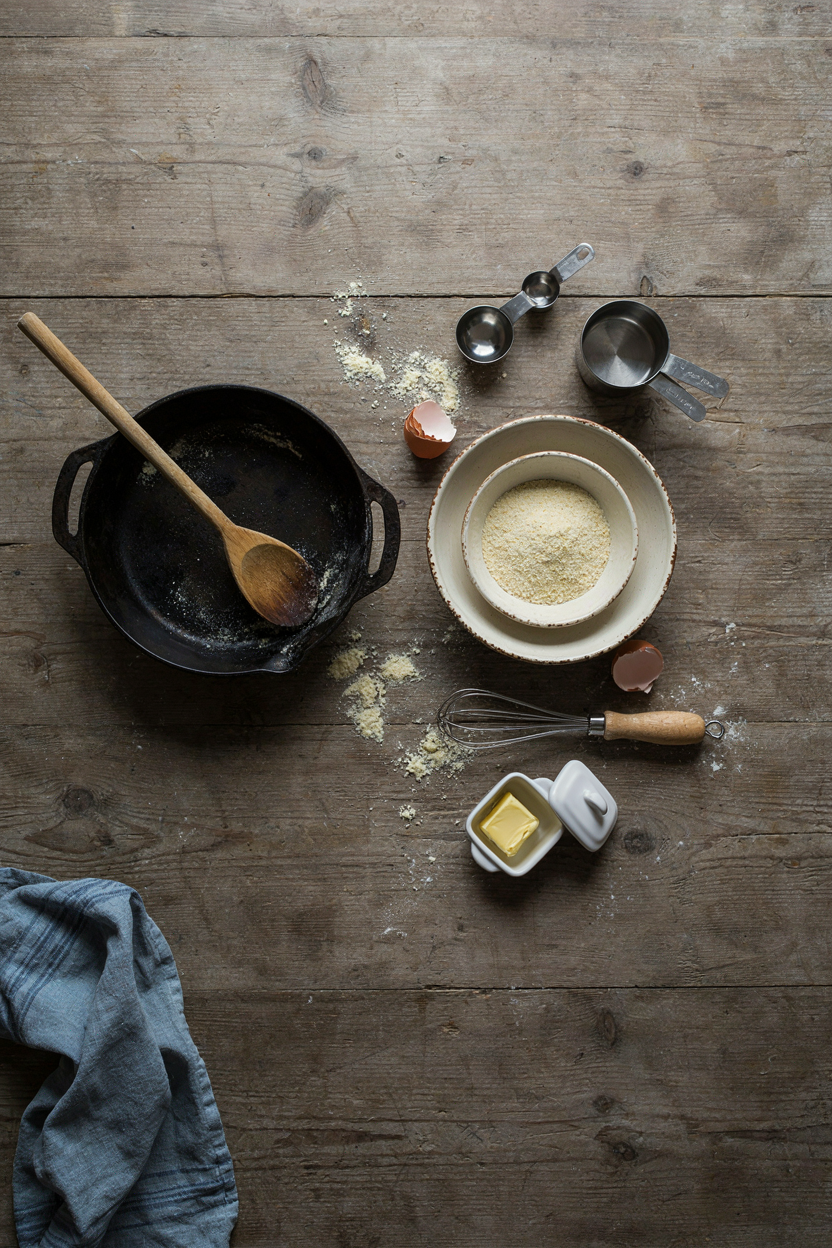
- 10-inch cast-iron skillet. The hot skillet is what gives you crispy edges. A baking pan won’t quite get you there.
- Large mixing bowl. For combining the dry and wet ingredients. Glass or ceramic works best.
- Whisk. For mixing the dry ingredients and whisking the wet ingredients separately.
- Measuring cups and spoons. Accuracy matters in baking. Use proper measuring tools, not dinnerware.
- Rubber spatula or wooden spoon. For folding the wet and dry ingredients together. Stir gently.
- Oven mitts. The skillet will be screaming hot. Protect your hands.
- Wire cooling rack. Optional, but it helps the cornbread cool evenly and prevents a soggy bottom.
This is cornbread to eat as a side — crisp brown edges, a tender crumb, butter and honey at the table — not the plain, dry stuff you cube for dressing (though there is a note on that below). The whole thing comes down to baking it in a screaming-hot buttered skillet.
Why this works
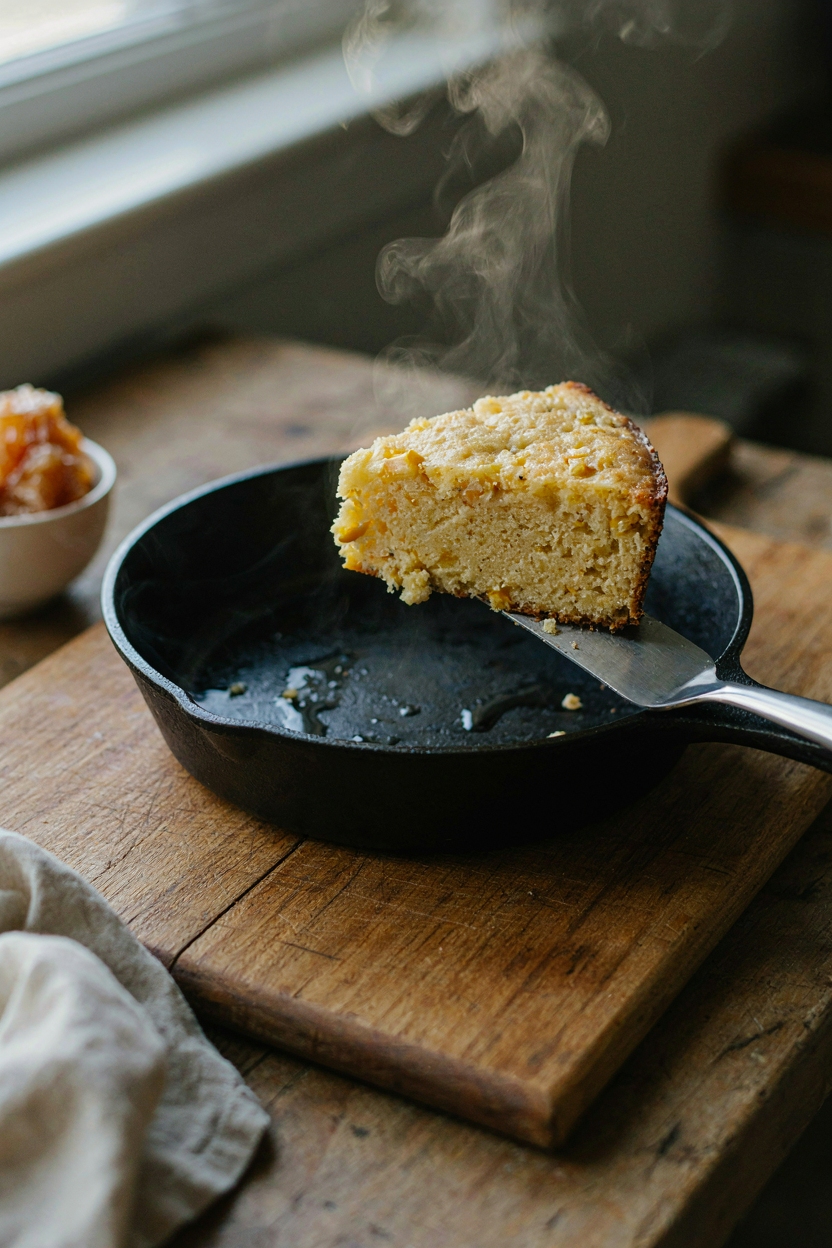
Pouring the batter into a preheated, buttered cast-iron skillet does two things: it sets the crust instantly against the hot metal so the edges fry rather than steam, and it gives the whole thing a head start on rising. A cold pan gives you a pale, soft-edged cornbread. Buttermilk and baking soda provide lift and a slight tang. And a mix of cornmeal and flour, not all cornmeal, keeps the crumb tender instead of gritty and crumbly, because the flour adds a little structure.
What you need
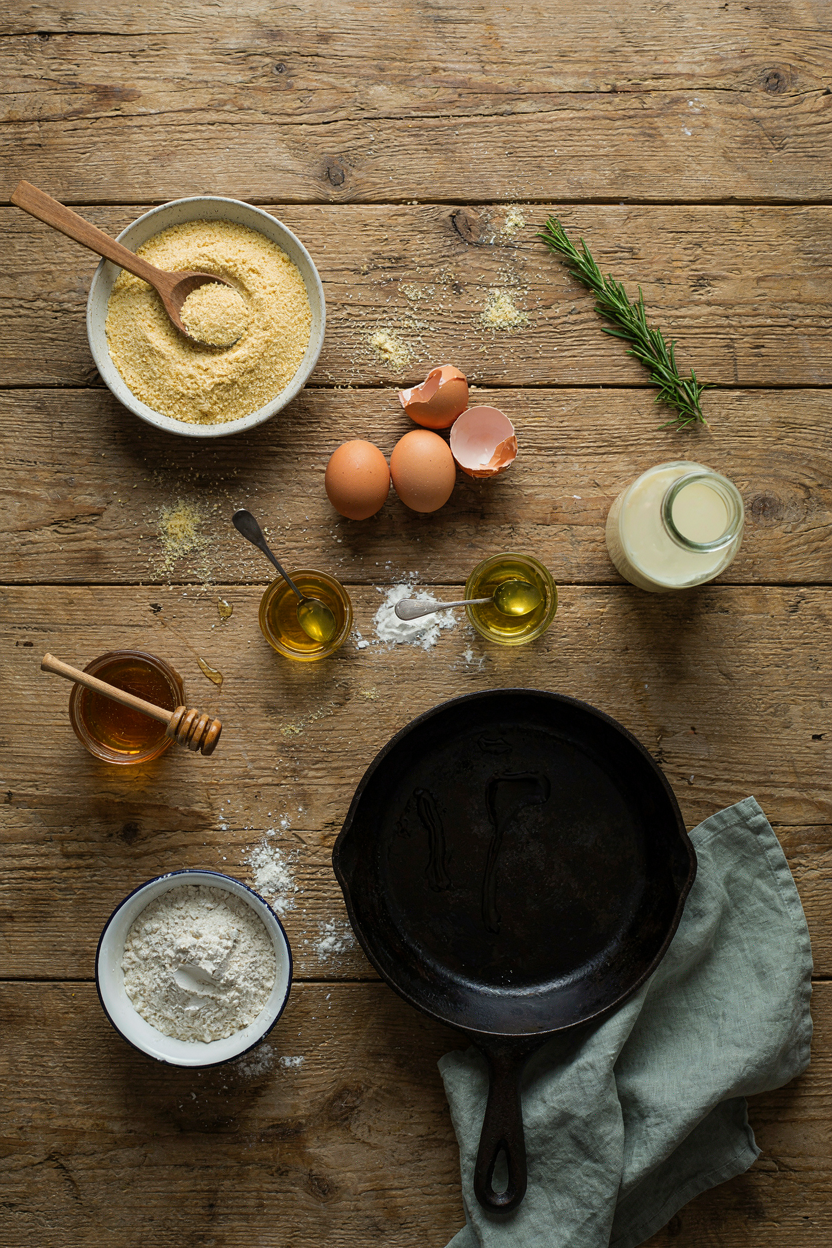
- 1¼ cups (175g) medium or fine cornmeal
- 1 cup (125g) all-purpose flour
- 2 to 4 tablespoons sugar (2 for Southern-leaning, 4 for a sweeter Northern style)
- 1 tablespoon baking powder
- ½ teaspoon baking soda
- 1 teaspoon fine salt
- 1¼ cups (300ml) buttermilk
- ⅓ cup (75g) butter, melted, plus 1 tablespoon for the pan
- 2 large eggs
- 2 tablespoons honey or maple syrup
How to make it
- Preheat the skillet. Put a 10-inch cast-iron skillet in the oven and heat to 400°F (200°C). Let it heat for at least 10 minutes while you mix the batter. This matters more than anything else.
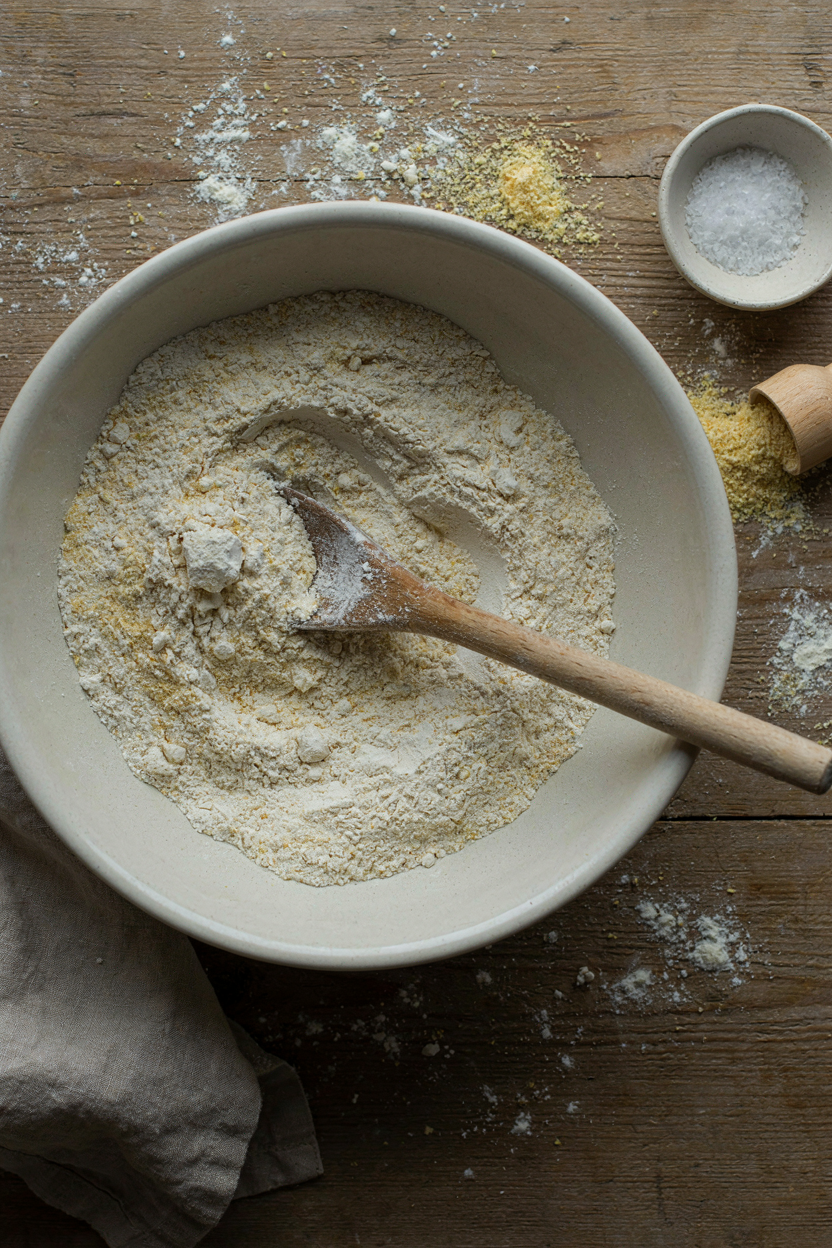
- Mix dry. Whisk the cornmeal, flour, sugar, baking powder, baking soda and salt in a large bowl.

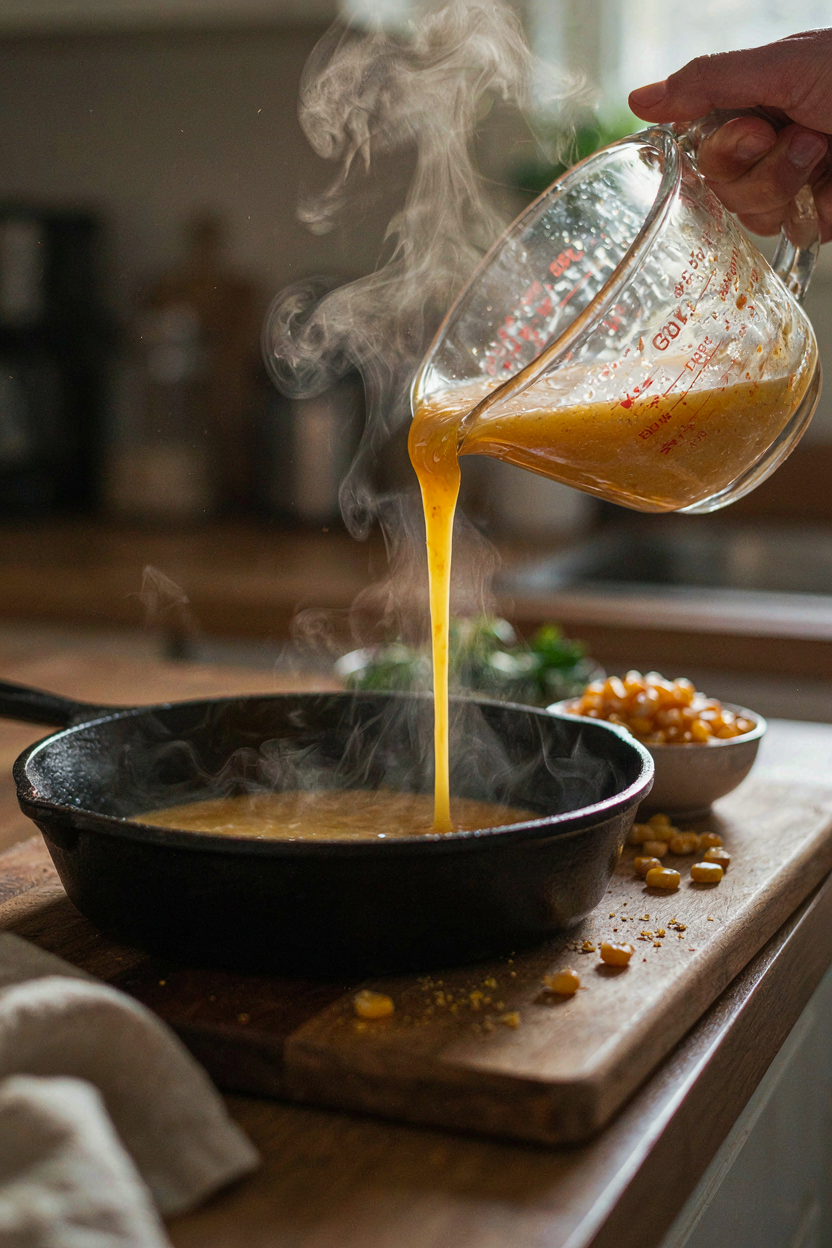
- Mix wet. Whisk the buttermilk, melted butter, eggs and honey in a separate container until smooth.
- Combine. Pour the wet into the dry and stir until just combined. A few lumps are fine. Stir gently until just combined. Overmixing makes the cornbread tough, so a few lumps are better than too much stirring.
- Bake. Pull the hot skillet out, add the tablespoon of butter and swirl to coat, then pour in the batter — it should sizzle immediately. If it does not sizzle, the pan is not hot enough; put it back in the oven for 5 more minutes. Bake 20 to 25 minutes, until the top is golden and a skewer comes out clean.
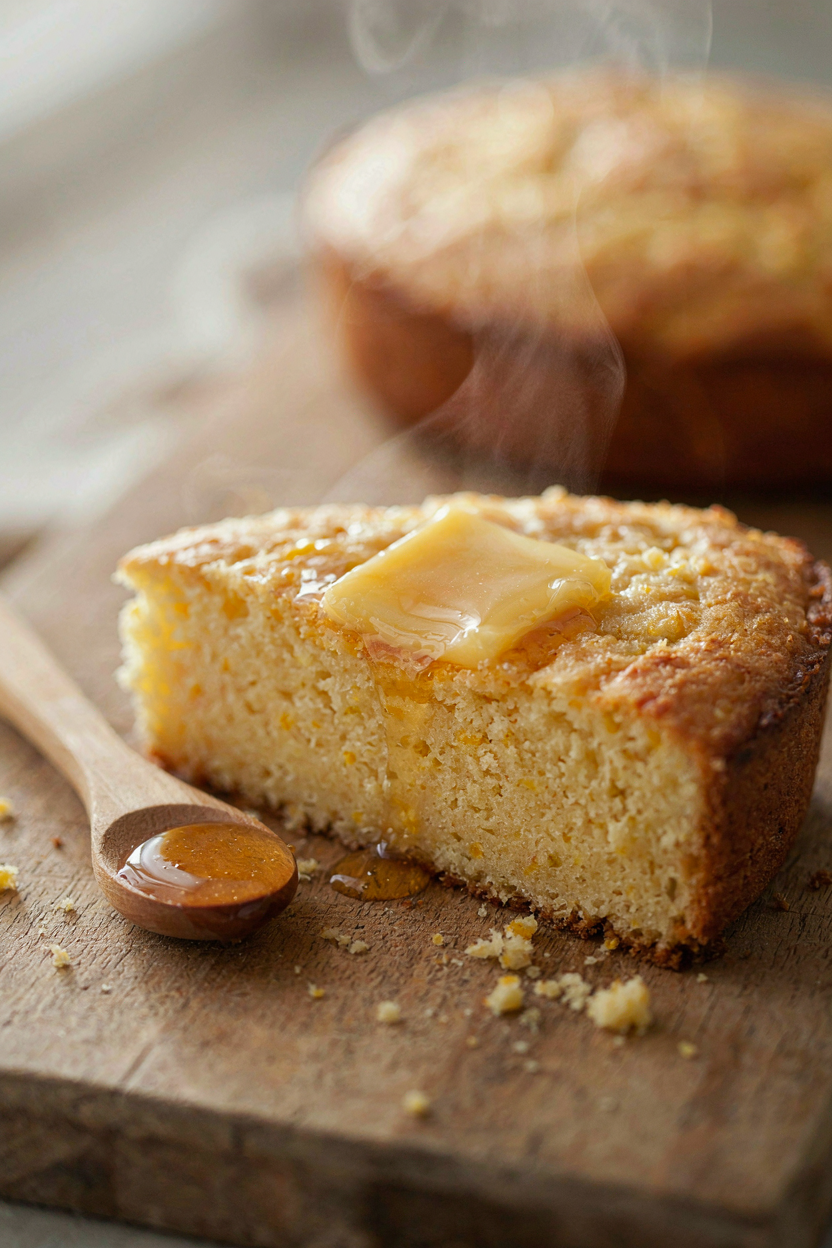
- Serve warm. Cool 10 minutes, then turn out or cut in the pan. Serve warm with butter and honey.
The details that decide it
- Hot pan, hot butter. The batter should sizzle when it hits. This is where the crispy edge comes from. A cold pan gives you soft, pale edges and a steamed texture instead of that crispy contrast.
- Stir gently. Mix until the dry is just moistened. Lumps are fine. Overmixed batter gives you tough, dense cornbread.
- Cornmeal plus flour. All cornmeal is dry and crumbly; the flour holds it together. A 1.25-to-1 ratio of cornmeal to flour is the sweet spot.
- Serve it warm. Cornbread stales fast and is best within a couple of hours of baking. If you must make it ahead, wrap it tight and reheat in a 350°F oven for 10 minutes.
- Buttermilk matters. The acidity reacts with the baking soda for lift, and it adds a slight tang that balances the sweetness. If you do not have buttermilk, add 1 tablespoon of lemon juice or vinegar to 1¼ cups of milk and let it sit 5 minutes.
What to serve with cornbread
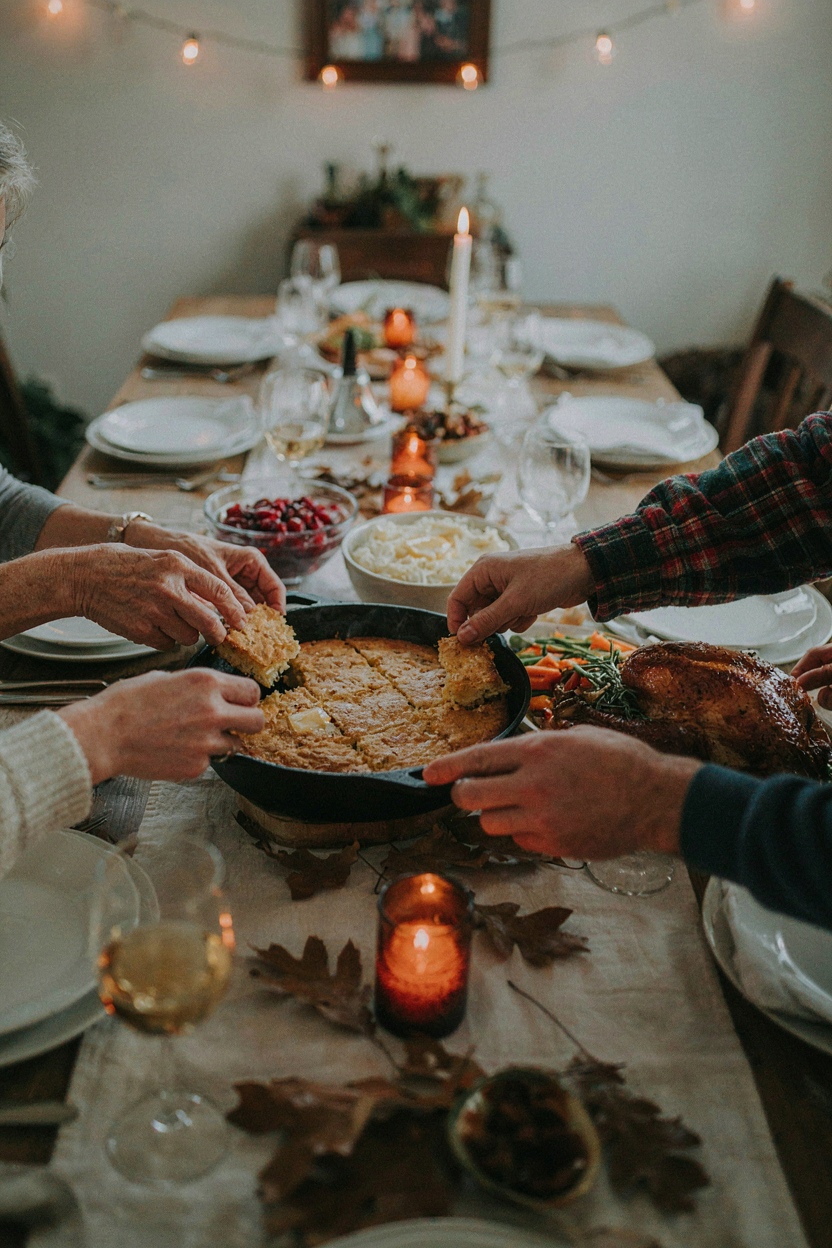
Cornbread is a side dish, and it goes with almost everything on a Thanksgiving table. But it also stands on its own as a bread course, and it is the thing people reach for first when it comes out of the oven.
- With turkey and gravy. The classic. A wedge of warm cornbread sop up gravy is as good as a dinner roll, and it has more flavor.
- Alongside chili or soup. Cornbread and chili is a November dinner that does not need a second thought. The sweetness against the spice works.
- With barbecue. Pulled pork, smoked brisket, baked beans — cornbread is the bread course for barbecue the way white bread is for sandwiches.
- With honey butter. Softened butter mixed with honey and a pinch of salt, spread on a warm wedge. This is the version my grandchildren fight over.
- As the bread basket. If you are serving rolls too, cut the cornbread into small squares and put it in the basket alongside them. Let people choose.
Sweet or savory
How much sugar is a regional argument, and I have opinions. A traditional Southern cornbread is barely sweet, 2 tablespoons or less, and often skips the flour entirely — it is more like a corn cake, dense and savory. A Northern-style cornbread is cakier and sweeter, almost like a quick bread. I use 3 tablespoons, which is a compromise that makes both sides slightly unhappy and everyone else happy.
Add-ins change the conversation entirely: diced jalapeño and sharp cheddar for a savory kick; crisp crumbled bacon; fresh corn kernels for sweetness; a spoon of browned butter and chopped sage for something fancy. These are all good, and they turn cornbread from a side into a statement.
Variations
- Jalapeño cheddar. Fold 1 cup shredded sharp cheddar and 2 diced jalapeños (seeds removed for less heat) into the batter before baking. This is the version I make when we have barbecue guests.
- Bacon and scallion. 6 slices of cooked, crumbled bacon and 3 sliced scallions. The bacon fat can replace some of the butter for extra flavor.
- Sweet corn. 1 cup fresh or thawed frozen corn kernels folded in. It adds pops of sweetness and a little texture.
- Browned butter and sage. Brown the 1/3 cup of butter before melting it, and stir in 1 tablespoon chopped fresh sage. This is the fancy version, and it smells like autumn.
- Blueberry (for breakfast). Fold in 1 cup fresh blueberries and reduce the sugar to 2 tablespoons. This is not Thanksgiving cornbread; this is Saturday morning cornbread, and it is a different thing entirely.
If it is going into dressing
For cornbread dressing, bake the cornbread plain — less sugar, no add-ins, no honey — a day or two ahead and leave it uncovered on the counter to go stale. Stale, plain cornbread absorbs the stock without turning to mush. Do not use this warm, buttery, honeyed version for dressing; save that for the bread basket. Two separate batches, two separate purposes.
Scaling and make-ahead
For a crowd, bake two skillets or use a 9×13 pan (add 5 minutes to the bake time). It is best served warm within a couple of hours, so time it for while the turkey rests. Leftovers make good croutons, or split and toast them with butter for breakfast the next day. It sits in our best Thanksgiving side dishes as the bread option alongside dinner rolls.
To reheat, wrap in foil and warm in a 350°F oven for 10 to 15 minutes. Avoid the microwave it; the microwave makes it rubbery.
From my kitchen
The first time I made cornbread for Thanksgiving, I used a box mix because I thought it was not important. Del’s mother, Vera, had always made it from scratch in her cast-iron skillet, and I figured a box would be close enough. It was not close. It was pale, soft-edged, and tasted like cardboard. Nobody said anything, but I saw them look at it and then reach for a roll instead.
The second year I used Vera’s skillet — she left it to Del, and Del left it to me when he decided the kitchen was my job entirely — and I made it from scratch. The difference was not small. The edges fried crisp in the hot butter, the crumb was tender and golden, and when I set it on the table warm with a dish of honey, it disappeared before the turkey came out. That was the year I understood that the small things are not small. A box mix is not cornbread. A hot skillet and ten minutes of stirring is cornbread, and it matters.
I make it every year now, and I make it in Vera’s skillet. The handle is worn smooth from forty years of her hands and then mine. When the batter hits that hot pan and sizzles, I think about her every time.
Frequently asked questions
How do I get crispy edges on cornbread?
Preheat a buttered cast-iron skillet in the oven for at least 10 minutes, and pour the batter into the hot pan so it sizzles on contact. This fries the crust instead of letting it steam. A cold pan is the reason your cornbread has soft, pale edges.
Should Thanksgiving cornbread be sweet or savory?
It is regional, and people have strong opinions. A Southern cornbread is barely sweet; a Northern one is cakier and sweeter. For a mixed table, use about 3 tablespoons of sugar, a middle ground that makes most people happy.
Can I use this cornbread for dressing?
Not this version. For dressing, bake a plain version with less sugar, no butter or honey topping, no add-ins, a day or two ahead and let it go stale on the counter. The rich, sweet skillet version is for eating fresh at the table. Two separate batches.
Why is my cornbread dry and crumbly?
Too much cornmeal relative to flour, or it was overbaked. Use a cornmeal-to-flour ratio of about 1.25 to 1, and pull it as soon as a skewer comes out clean. Overmixing also makes it tough.
Can I make cornbread without buttermilk?
Yes. Add 1 tablespoon of lemon juice or white vinegar to 1¼ cups of regular milk and let it sit for 5 minutes. It will sour slightly and react with the baking soda the same way buttermilk does.
How do I reheat cornbread?
Wrap it in foil and warm in a 350°F oven for 10 to 15 minutes. Avoid the microwave if you can; it makes the texture rubbery.
The bottom line
Start with a hot buttered skillet, a cornmeal-and-flour batter barely stirred, and 20 minutes at 400°F. Serve it warm with butter and honey. Bake a plain, staled version separately if you need it for dressing. The whole thing takes 30 minutes, and it is worth every one of them.
Pin it for the hot-skillet trick — that is where the crispy edge comes from.
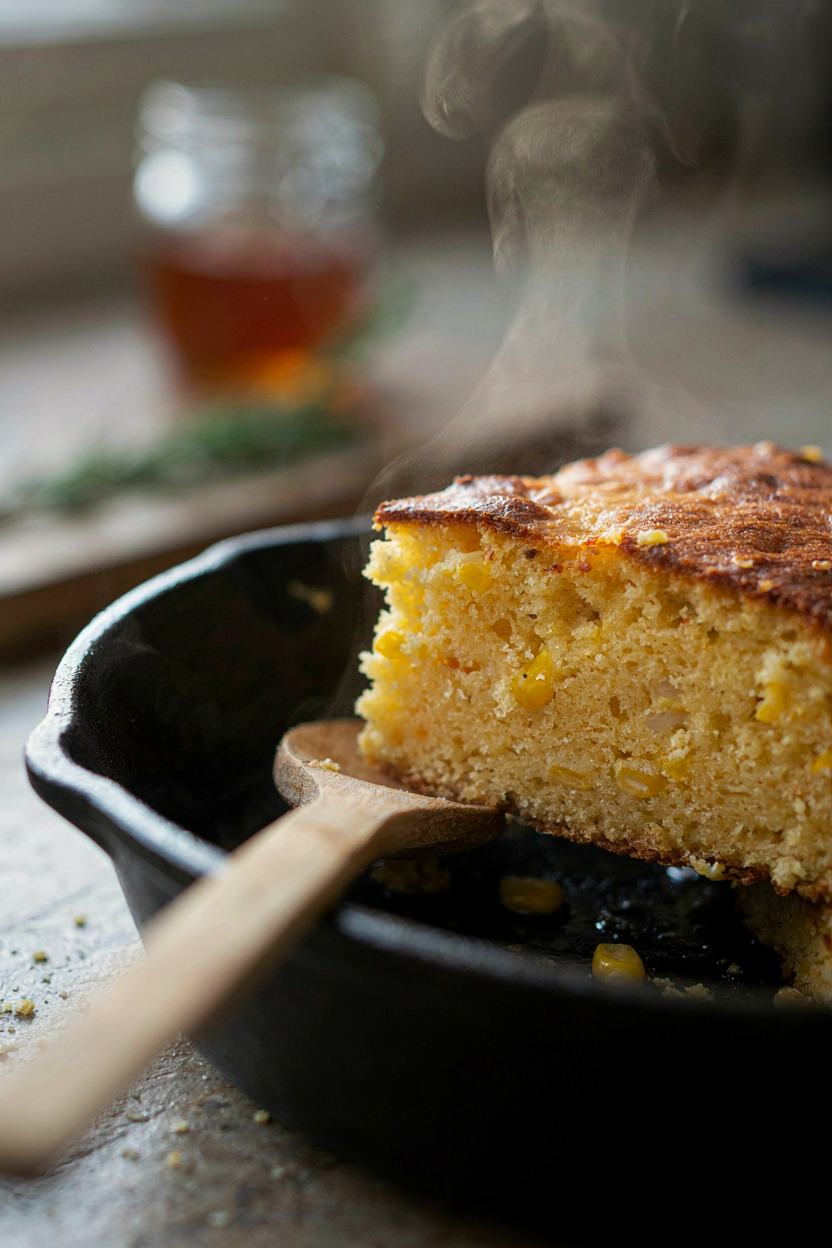
Thanksgiving Cornbread
Ingredients
Equipment
Method
- Put a 10-inch cast-iron skillet in the oven and heat to 400F (200C). Let it heat for at least 10 minutes.
- Whisk the cornmeal, flour, sugar, baking powder, baking soda and salt in a large bowl.
- Whisk the buttermilk, melted butter, eggs and honey in a separate container.
- Pour the wet into the dry and stir until just combined. A few lumps are fine; do not overmix.
- Pull the hot skillet out, add the tablespoon of butter and swirl to coat. Pour in the batter — it should sizzle. Bake 20 to 25 minutes until golden and a skewer comes out clean.
- Cool 10 minutes, then turn out or cut in the pan. Serve warm with butter and honey.