
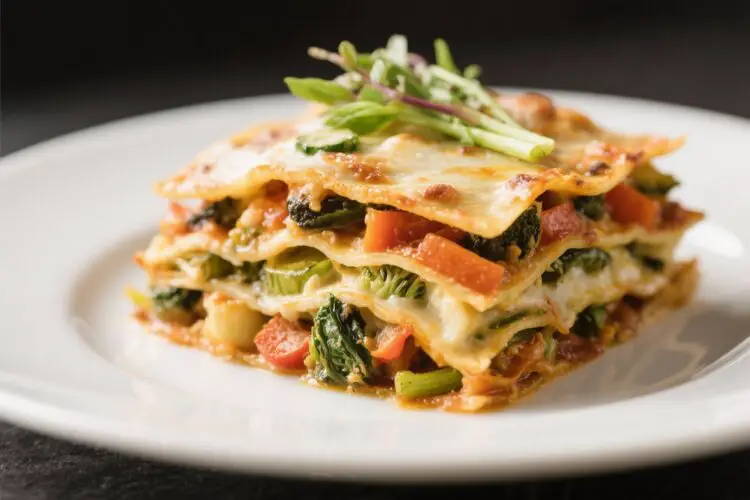
Spring brings a burst of color to the kitchen, and this vegetable lasagna makes the most of it. It’s creamy, layered, and deeply satisfying without feeling heavy. Tender asparagus, peas, and spinach get tucked between ribbons of pasta, creamy ricotta, and a light, garlicky sauce.
The result tastes bright and cozy at the same time. If you’re craving comfort food that still feels fresh, this is your dish.
What Makes This Recipe So Good
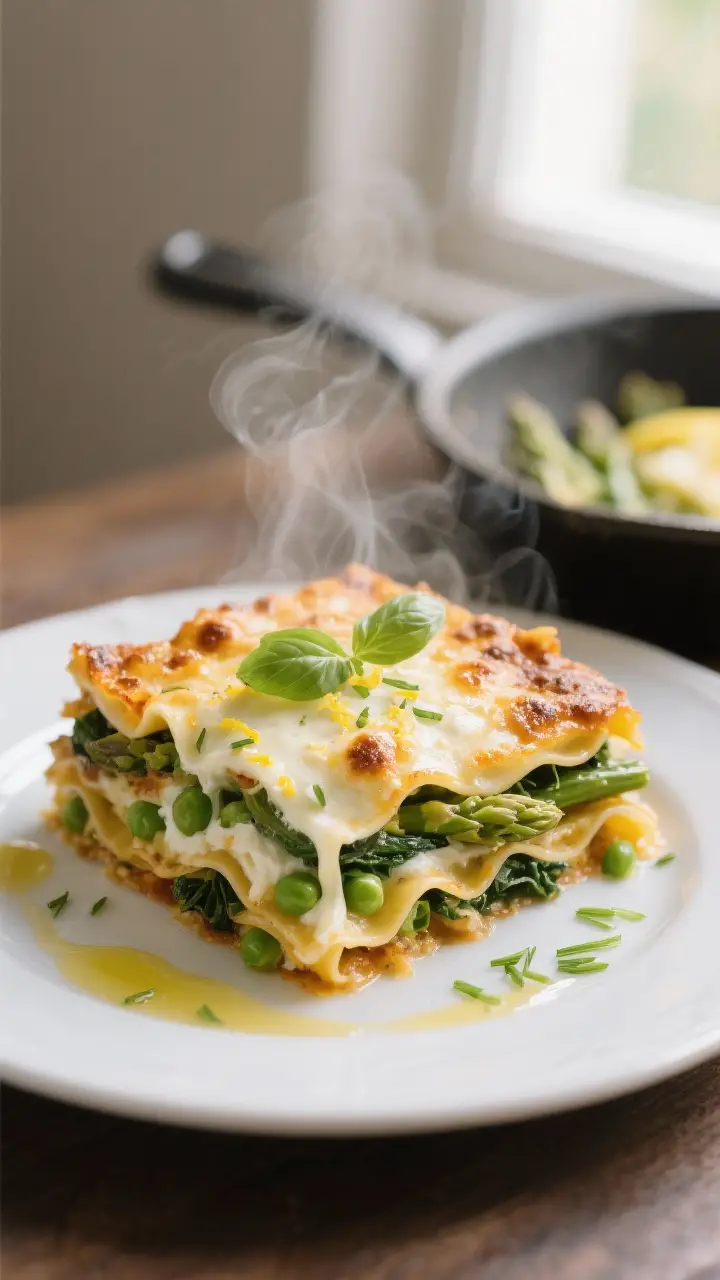
- Seasonal flavor: Asparagus, peas, and spinach bring sweetness, crunch, and vibrant color.
- Light but creamy: A mix of ricotta and a simple béchamel keeps it rich without being heavy.
- No-fuss layering: Uses no-boil lasagna sheets to save time and reduce dishes.
- Make-ahead friendly: Assemble earlier in the day and bake when you’re ready to eat.
- Flexible: Swap in zucchini, leeks, or mushrooms depending on what you find at the market.
What You’ll Need
- No-boil lasagna noodles (about 12–14 sheets)
- Asparagus (1 bunch, trimmed and cut into 1-inch pieces)
- Fresh spinach (5–6 cups, about 5 ounces)
- Green peas (1 cup; fresh or frozen)
- Leek or yellow onion (1 medium, thinly sliced)
- Garlic (3–4 cloves, minced)
- Olive oil (2–3 tablespoons)
- Ricotta cheese (15 ounces, whole milk preferred)
- Mozzarella (2 cups shredded)
- Parmesan (1/2 cup grated, plus more for topping)
- Egg (1, to bind ricotta)
- Lemon zest (from 1 lemon)
- Fresh herbs (such as basil, parsley, or chives; about 1/4 cup chopped)
- Salt and black pepper
- Red pepper flakes (optional, a pinch)
- Milk (3 cups, for béchamel)
- Butter (3 tablespoons, for béchamel)
- All-purpose flour (3 tablespoons, for béchamel)
- Nutmeg (a pinch, optional)
Step-by-Step Instructions
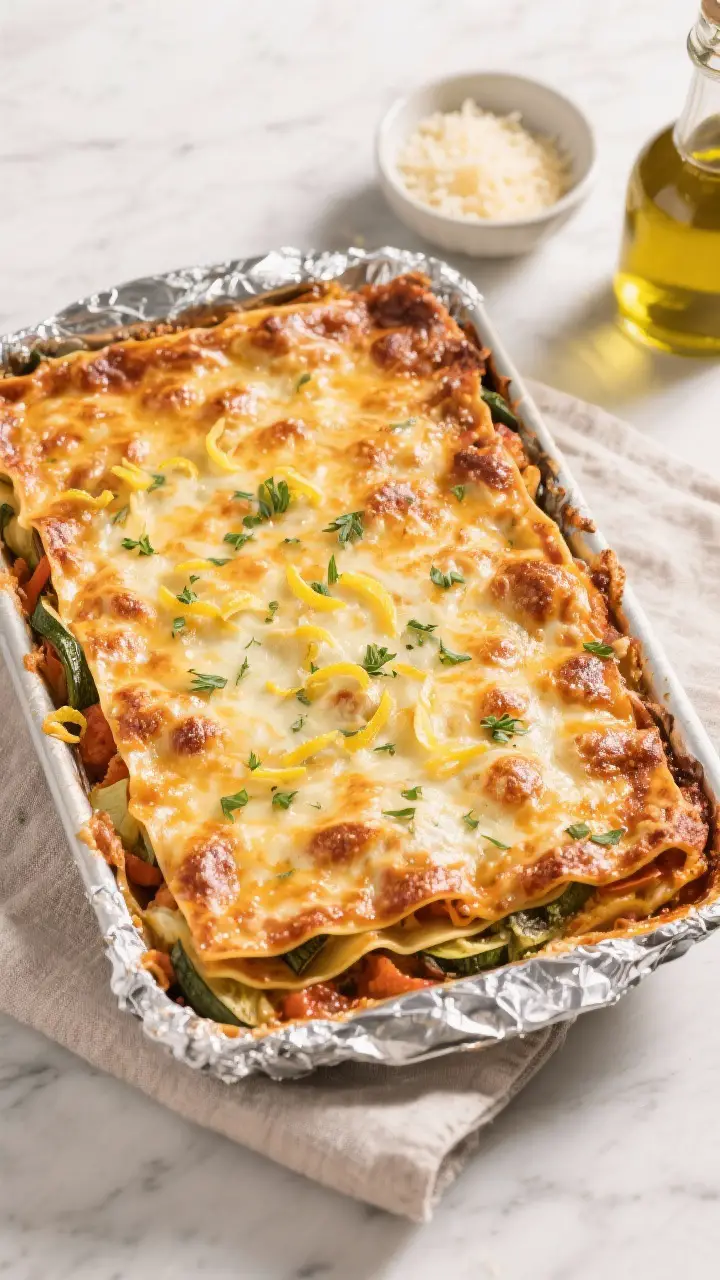
- Heat the oven: Preheat to 375°F (190°C). Lightly oil a 9×13-inch baking dish.
- Make the béchamel: In a saucepan, melt butter over medium heat.
Whisk in flour and cook 1 minute. Slowly whisk in milk until smooth. Simmer 3–5 minutes until slightly thick.
Season with 1/2 teaspoon salt, pepper, and a pinch of nutmeg. Set aside.
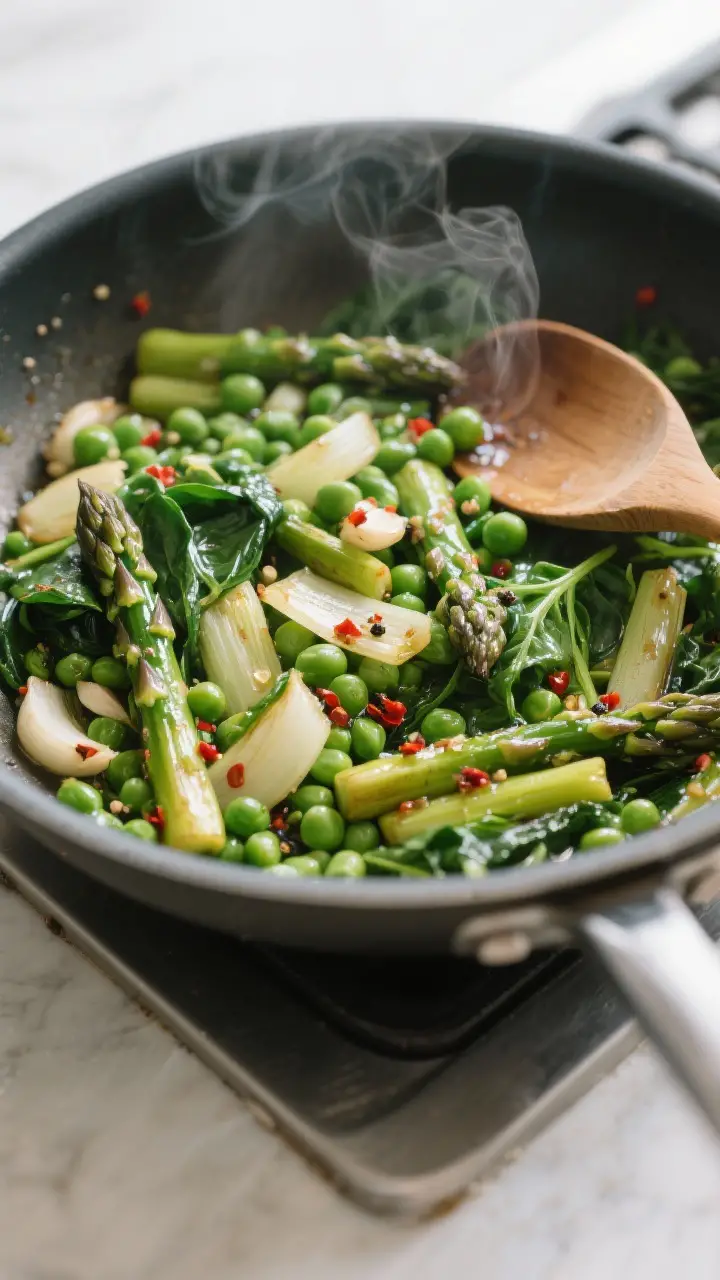
- Sauté the vegetables: Warm 2 tablespoons olive oil in a large skillet. Add leeks or onion with a pinch of salt; cook until soft, 5–7 minutes.
Add garlic; cook 30 seconds. Add asparagus and cook 3 minutes. Stir in peas and spinach; cook until spinach wilts and peas are bright.
Season with salt, pepper, and red pepper flakes if using. Remove from heat.
- Mix the ricotta layer: In a bowl, combine ricotta, egg, 1/4 cup Parmesan, half the lemon zest, and half the chopped herbs. Add a pinch of salt and pepper.
Stir until creamy.
- Start layering: Spoon a thin layer of béchamel into the baking dish. Add a layer of noodles. Spread more béchamel over the noodles.
- Add fillings: Dollop and gently spread a third of the ricotta mixture over the béchamel.
Scatter a third of the vegetable mixture over that. Sprinkle with a third of the mozzarella and a dusting of Parmesan.
- Repeat layers: Add noodles, béchamel, ricotta, vegetables, and cheeses two more times. Finish with a final layer of noodles, a thin layer of béchamel, and the remaining mozzarella and Parmesan.
Sprinkle the remaining lemon zest and herbs on top for a fresh finish.
- Cover and bake: Cover the dish loosely with foil (tent so it doesn’t touch the cheese). Bake 25 minutes. Remove foil and bake another 15–20 minutes, until bubbly and golden at the edges.
- Rest before slicing: Let the lasagna rest 10–15 minutes so it sets.
This makes cleaner slices and better texture.
- Serve: Drizzle with a little olive oil and add extra herbs if you like. A crisp green salad or roasted carrots makes a great side.
How to Store
- Refrigerate: Cool completely, then cover tightly. Store up to 4 days.
- Freeze: Wrap individual portions or the whole dish well.
Freeze up to 2 months. Thaw overnight in the fridge.
- Reheat: Warm covered at 350°F (175°C) for 20–25 minutes, or microwave individual slices until hot. Add a splash of milk if the pasta seems dry.
- Make ahead: Assemble up to 24 hours in advance.
Cover and refrigerate. Add 5–10 minutes to the baking time.
Why This Is Good for You
- Vegetable-forward: Asparagus and spinach offer fiber, folate, and vitamins A, C, and K. Peas add plant protein and sweetness.
- Balanced: You get complex carbs from pasta, protein from ricotta and mozzarella, and healthy fats from olive oil.
- Lighter sauce: Using a milk-based béchamel keeps things creamy without relying on heavy cream.
- Fresh herbs and lemon: Bright flavors mean you can use less salt while keeping the dish lively.
Common Mistakes to Avoid
- Skipping seasoning: Season each component lightly—béchamel, vegetables, and ricotta—so the final dish tastes layered and balanced.
- Watery vegetables: Don’t overcrowd the pan.
Cook off excess moisture so the lasagna sets well.
- Too much sauce: Aim for thin, even layers. Over-saucing can make the noodles mushy.
- Not resting: Cutting too soon leads to sliding layers. Give it 10–15 minutes to settle.
- Overbaking: Golden and bubbling is the goal.
If the top browns too fast, tent with foil.
Alternatives
- Gluten-free: Use gluten-free lasagna noodles and make the béchamel with a gluten-free flour blend.
- No dairy: Swap ricotta for almond or tofu ricotta, use a plant-based mozzarella, and make béchamel with olive oil and unsweetened plant milk.
- Tomato-based: Replace béchamel with a quick marinara for a lighter, tangier version.
- Different veggies: Try zucchini ribbons, leeks, mushrooms, or artichokes. Roast watery vegetables first to avoid sogginess.
- Extra protein: Add white beans to the vegetable layer or fold into the ricotta for a boost without changing the flavor much.
FAQ
Can I use regular lasagna noodles instead of no-boil?
Yes. Cook them until very al dente, then drain well.
Pat dry to remove excess water before layering so the lasagna doesn’t get soggy.
What if I can’t find fresh spring vegetables?
Frozen peas work well, and you can use frozen spinach (thawed and squeezed dry). Broccoli, green beans, or thinly sliced kale are good stand-ins for asparagus.
How do I stop the lasagna from being watery?
Sauté vegetables until their moisture cooks off, use thin sauce layers, and let the lasagna rest after baking. If using frozen veggies, thaw and squeeze dry first.
Can I assemble this the day before?
Absolutely.
Cover tightly and refrigerate. Bake straight from the fridge, adding a few extra minutes to the cook time.
What cheese can I substitute for ricotta?
Cottage cheese is a solid swap. Blend it briefly for a smoother texture, then season as you would ricotta.
Is there a way to add more flavor without more salt?
Use lemon zest, fresh herbs, black pepper, and a pinch of red pepper flakes.
A little extra Parmesan on top also adds savory depth.
In Conclusion
This Vegetable Lasagna with Spring Vegetables is simple, colorful, and comforting. It highlights fresh produce while staying creamy and satisfying. The method is straightforward, the layers are forgiving, and it’s easy to tailor to your taste.
Serve it for a cozy weeknight, a weekend gathering, or meal prep—you’ll get bright flavor in every slice.