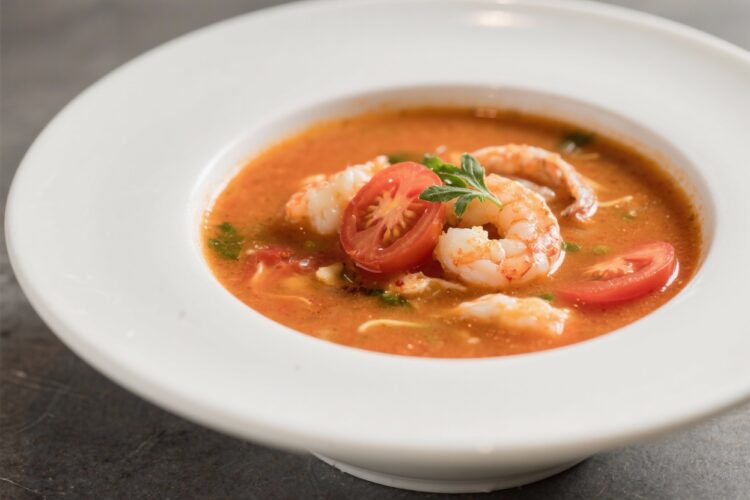
Picture this: steam rising, briny aroma hitting your nose, and a spoonful that makes you wonder why you ever paid $28 for soup at a restaurant. That’s Tomato and Seafood Soup done right—bold, fast, and shockingly easy. We’re talking weeknight-level effort with date-night-level payoff.
Crisp acidity from tomatoes, sweetness from shellfish, and a whisper of heat that keeps you chasing the next bite. If your pantry and freezer can talk, they’re saying, “Let’s make this happen.”
Why This Recipe Works
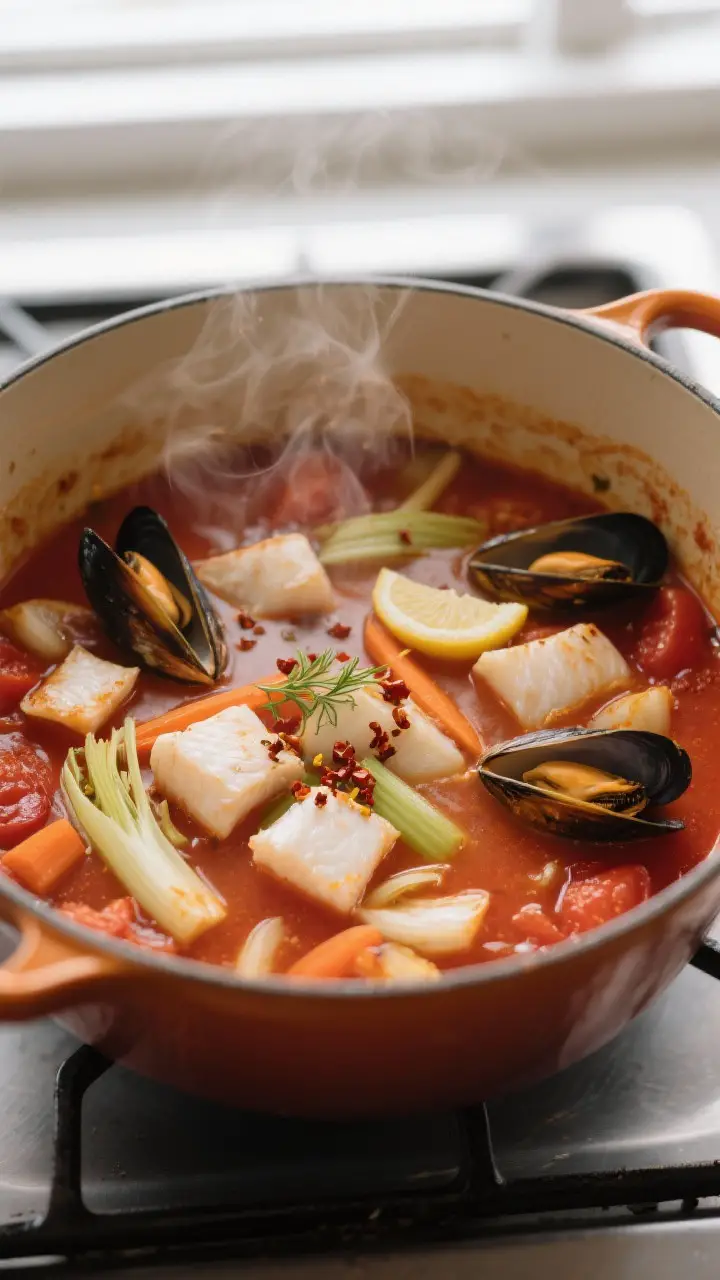
- Acid balances richness: Tomatoes bring brightness that keeps seafood flavors clean and vibrant, not heavy.
- Layered aromatics: Garlic, fennel, and chili flakes create depth without a culinary degree.
- Quick cooking = tender seafood: Shrimp, mussels, and fish cook in minutes, staying juicy and sweet.
- Smart liquid combo: Crushed tomatoes plus seafood or chicken stock produce body without cream—comforting but still light.
- One pot, big flavor: Browning aromatics first builds a base so the final result tastes like it simmered all afternoon.
Ingredients Breakdown
- Olive oil: For sautéing; use extra-virgin for better flavor.
- Onion (1 medium), finely chopped: Sweetens the base.
- Fennel bulb (1 small), thinly sliced: Subtle anise note that loves seafood.
- Celery (2 stalks), diced: Adds savory backbone.
- Carrot (1 small), diced: Natural sweetness to balance acidity.
- Garlic (4 cloves), minced: Non-negotiable.
- Crushed red pepper flakes (1/2–1 tsp): Heat level: your call.
- Tomato paste (1 tbsp): Concentrated umami and color.
- Crushed tomatoes (1 can, 28 oz): The tomato engine.
- Seafood or chicken stock (4 cups): Choose seafood stock for extra ocean-y depth.
- Dry white wine (1/2 cup): Acidity and aroma; optional but recommended.
- Bay leaf (1) + fresh thyme (3 sprigs) or 1 tsp dried: Herbal backbone.
- Smoked paprika (1 tsp): Gentle smokiness, adds warmth.
- Strip of lemon zest (2 inches) + juice of 1/2 lemon: Bright finish.
- Mixed seafood (about 1.5–2 lbs): Shrimp (peeled), firm white fish like cod or halibut (cubed), mussels or clams (scrubbed), and calamari rings if you like variety.
- Fresh parsley and/or basil, chopped (1/4 cup): Fresh top note.
- Salt and black pepper: Season boldly but smartly.
- Crusty bread, for serving: Because you deserve joy.
Step-by-Step Instructions
- Warm the pot: Heat 2 tablespoons olive oil in a large Dutch oven over medium heat until shimmering.
- Sweat the aromatics: Add onion, fennel, celery, and carrot with a pinch of salt. Cook 6–8 minutes, stirring, until soft and lightly golden.
- Add garlic and heat: Stir in garlic and red pepper flakes for 30 seconds, just until fragrant (no burning—your nose will tell you).
- Tomato paste time: Add tomato paste and smoked paprika; cook 1–2 minutes to caramelize.
It should darken slightly.
- Deglaze with wine: Pour in the white wine, scraping up brown bits. Reduce by half, about 2 minutes.
- Build the base: Add crushed tomatoes, stock, bay leaf, thyme, lemon zest, 1 teaspoon salt, and a few grinds of pepper. Bring to a lively simmer.
- Simmer for flavor: Cook uncovered 12–15 minutes.
Taste and adjust salt—this is your flavor blueprint.
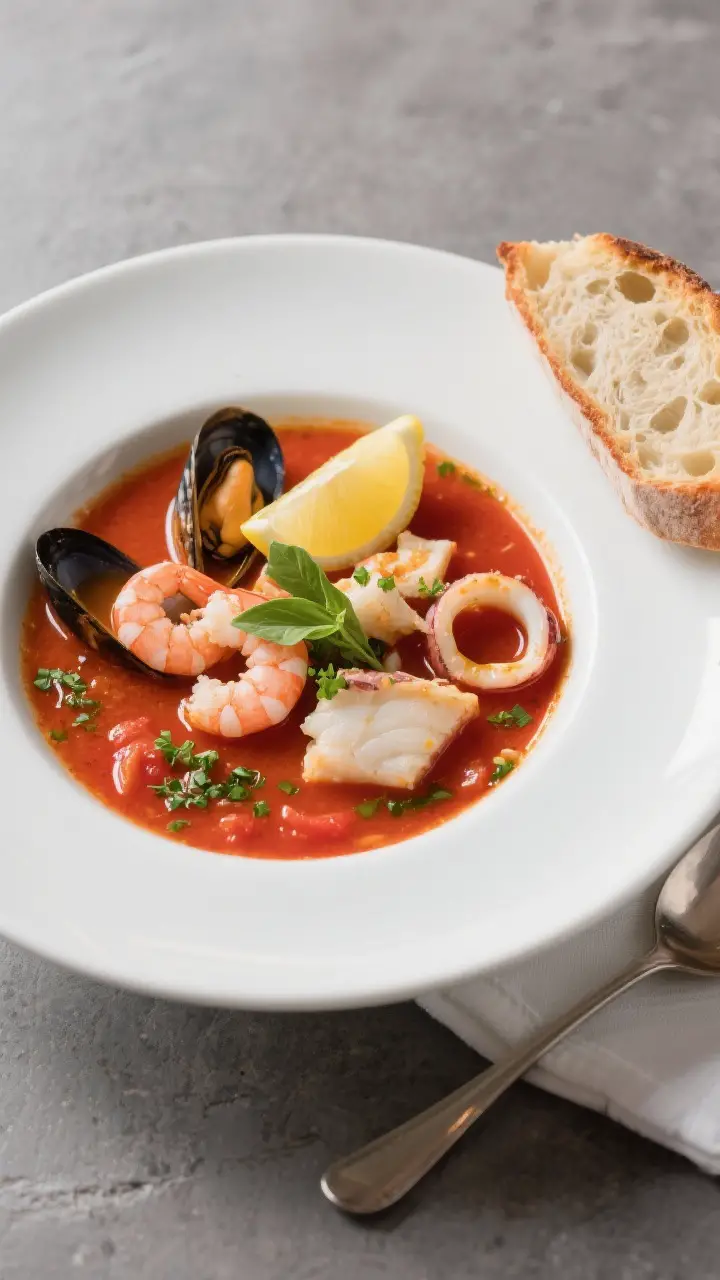
- Seafood staging: Add fish cubes first; simmer 2 minutes. Then add mussels/clams; cover and cook 3–4 minutes until they open. Add shrimp and calamari last; cook 2–3 minutes more until shrimp turn pink and calamari is opaque.
Discard any shellfish that won’t open.
- Finish clean and bright: Remove bay and thyme stems. Stir in lemon juice and herbs. Taste again—add salt, pepper, or a pinch of sugar if tomatoes are extra tangy.
- Serve: Ladle into warm bowls, drizzle with good olive oil, and serve with toasted bread.
Cue applause.
Keeping It Fresh
- Storage: Cool quickly and refrigerate up to 2 days. Seafood is delicate—don’t push it.
- Reheating: Warm gently over low heat until just hot. Boiling will overcook the seafood and invite sadness.
- Freezing: Freeze the tomato base without seafood up to 3 months.
Add fresh seafood when reheating for best texture (FYI, frozen cooked shrimp turns rubbery).
- Brighten leftovers: A squeeze of lemon and fresh herbs revive day-two bowls like magic.
Why This is Good for You
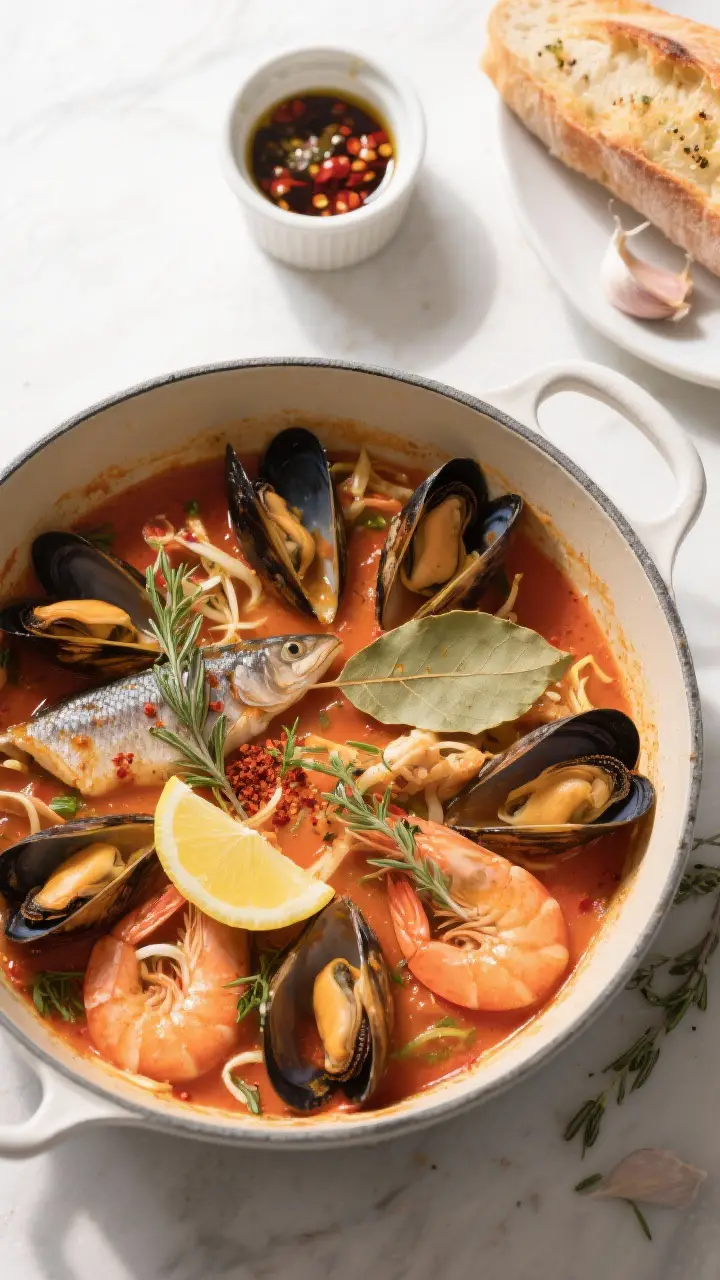
- Lean protein: Shrimp, fish, and shellfish deliver high-quality protein with minimal saturated fat.
- Heart-healthy fats: Omega-3s from fish support brain and cardiovascular health. Your future self says thanks.
- Antioxidant power: Tomatoes bring lycopene, especially when cooked with olive oil—great for cellular health.
- Low-calorie comfort: Big flavor, low heaviness. No cream required to feel cozy.
- Mineral boost: Shellfish add zinc, iron, and selenium—aka the unsung heroes of your immune system.
Common Mistakes to Avoid
- Overcooking seafood: Add in stages and stop cooking when just done.
Residual heat carries it to perfect.
- Skipping the caramelization: Tomato paste needs that 1–2 minute toast to unlock depth.
- Under-salting the base: Season the broth before adding seafood so flavor penetrates, not sits on top.
- Boiling after seafood goes in: Gentle simmer only. A raging boil equals rubber city.
- Ignorance of grit: Rinse mussels/clams well and purge if needed. Sand in soup is not the crunch we want, IMO.
Recipe Variations
- Spicy Sicilian: Add 1 tsp Calabrian chili paste and a handful of olives and capers for briny heat.
- Creamy Basque-ish: Swirl in 1/3 cup crème fraîche at the end with roasted red peppers and smoked paprika.
- Coconut-Tomato: Replace 1 cup stock with coconut milk, add ginger and lime leaves for a coastal fusion vibe.
- Herb Garden: Finish with tarragon and chives instead of parsley/basil; add a splash of Pernod for subtle anise.
- Budget Banger: Use frozen shrimp and white fish only; skip shellfish.
Flavor still sings.
- Hearty Add-ins: Toss in diced potatoes or canned chickpeas during the simmer for extra substance.
FAQ
Can I use canned seafood?
Yes, but choose wisely. Canned clams or mussels work if added at the end just to warm. Avoid canned shrimp—the texture won’t impress anyone.
What if I don’t have fennel?
Use extra onion and a pinch of ground fennel or a splash of Pernod.
Or skip it entirely—still great, just less aromatic.
How do I know the fish is cooked?
It should flake easily and turn opaque, usually 3–5 minutes depending on cube size. Err on slightly under; carryover heat finishes the job.
Which white wine should I use?
A dry, crisp bottle like Sauvignon Blanc or Pinot Grigio. If you wouldn’t sip it, don’t cook with it.
No need to be fancy.
Can I make it spicy without overwhelming the seafood?
Use chili flakes and finish with a drizzle of chili oil in individual bowls. Control freaks, rejoice.
What bread goes best with this?
A rustic sourdough or baguette, lightly toasted and rubbed with garlic. Bonus points for a quick olive oil drizzle and flaky salt.
Is this gluten-free?
Yes, as long as your stock is certified gluten-free and you skip the bread.
The soup itself is naturally gluten-free.
Can I meal prep this?
Prep the base ahead and refrigerate or freeze. Add the seafood when you’re ready to eat for peak texture and flavor.
How do I clean mussels properly?
Rinse under cold water, scrub shells, and remove beards by pulling toward the hinge. Discard cracked shells and any that don’t close when tapped.
What can I use instead of wine?
A splash of apple cider vinegar or lemon juice plus 1/4 cup extra stock gives similar brightness without the alcohol.
In Conclusion
Tomato and Seafood Soup delivers restaurant-level drama with weeknight effort.
It’s bright, savory, and full of tender bites that cook in minutes, not hours. With a smart base, staged seafood, and a lemony finish, you’ve got a bowl that feels special any night of the week. Grab a loaf, pour a glass, and let the soup do the flexing.
Try this too: Thai-Style Mussel Soup That Tastes Like a First-Class Beach Vacation (Without Leaving Your Kitchen).
Try this too: Microwave Asian Chicken Soup That Tastes Like a 5-Star Takeout Hack (In 12 Minutes).
Try this too: Easy Tom Yum Soup.
Try this too: Ratatouille Soup That Slaps.