
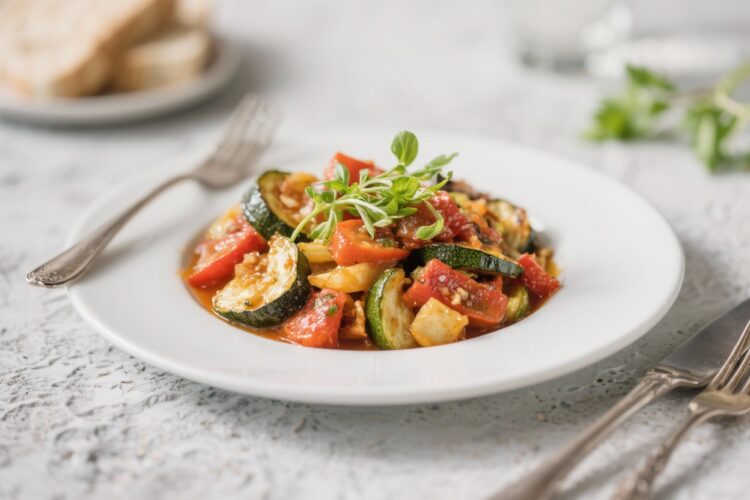
Ratatouille is one of those dishes that feels like home, even if you didn’t grow up with it. This springtime version leans into tender vegetables, lighter flavors, and a gentle, sunny vibe. It’s rustic enough for a weeknight, yet pretty enough for company.
You’ll chop, sauté, and simmer until everything softens and melds into something silky and satisfying. Serve it warm with crusty bread, spoon it over pasta, or pair it with a simple grilled protein.
What Makes This Special
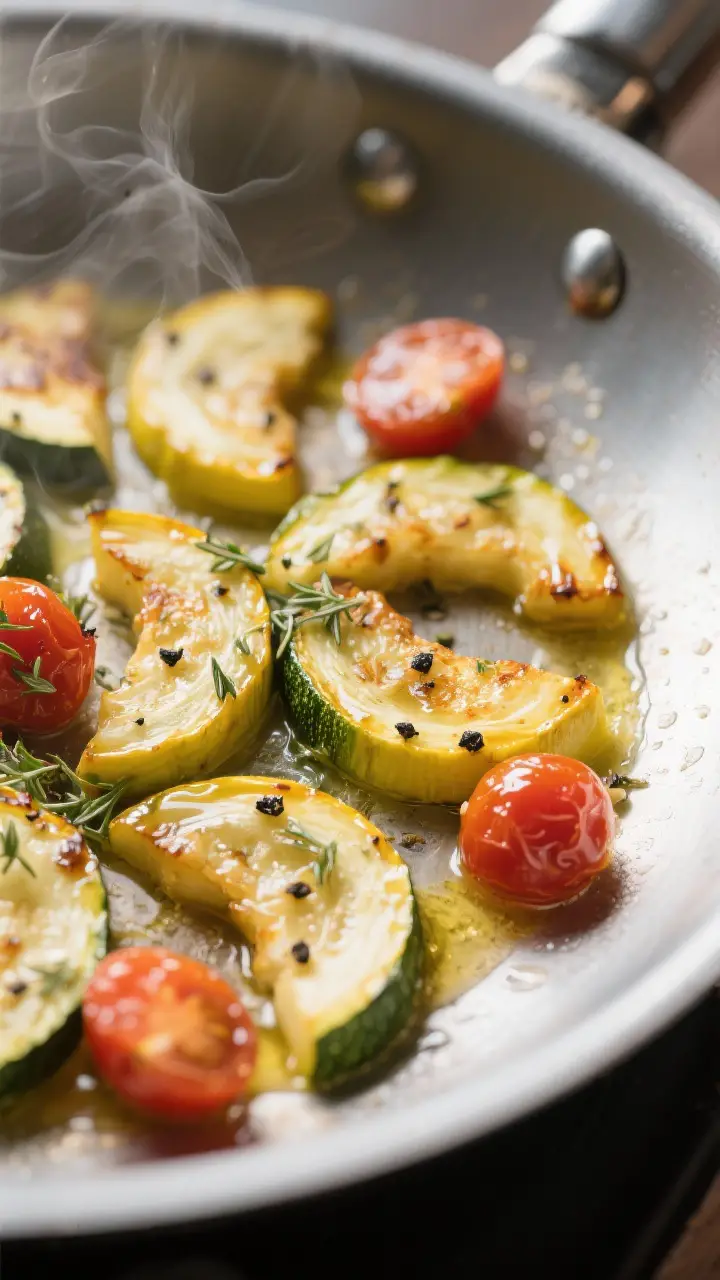
This springtime take keeps the spirit of classic ratatouille—eggplant, zucchini, bell peppers, tomatoes—but treats the vegetables gently so they keep their shape and brightness. Instead of cooking everything into a heavy stew, we sauté each vegetable briefly to build flavor and prevent sogginess.
Then we bring them together to mingle with fresh herbs and a splash of lemon zest. The result is lighter, cleaner, and perfect for warmer days.
- Layered flavor, clean finish: Quick sautéing avoids a muddled taste and keeps textures lively.
- Flexible and forgiving: Works as a side or a main, vegan or topped with cheese.
- Make-ahead friendly: Tastes even better after a short rest as the flavors bloom.
What You’ll Need
- 1 medium eggplant (about 1 pound), cut into 1-inch cubes
- 2 medium zucchini, halved lengthwise and sliced into half-moons
- 1 yellow squash, halved and sliced (optional but lovely for color)
- 1 red bell pepper, cut into 1-inch pieces
- 1 yellow or orange bell pepper, cut into 1-inch pieces
- 1 small red onion, thinly sliced
- 3 cloves garlic, thinly sliced
- 2 cups cherry or grape tomatoes, halved
- 1 (14.5-ounce) can crushed tomatoes or 1 1/2 cups passata
- 1/4 cup extra-virgin olive oil, plus more for finishing
- 1 teaspoon kosher salt, plus more to taste
- Freshly ground black pepper
- 1 teaspoon dried oregano or herbes de Provence
- 1/2 teaspoon red pepper flakes (optional)
- 1 lemon, zested (about 1 teaspoon)
- 1/4 cup fresh basil, torn
- 2 tablespoons fresh parsley, chopped
- Optional garnish: shaved Parmesan or crumbled goat cheese
Instructions
- Salt the eggplant. Toss the eggplant cubes with a big pinch of salt in a colander. Let sit for 20 minutes to draw out bitterness and excess moisture.
Pat dry with a clean towel.
- Warm your pan. Set a large, wide skillet or Dutch oven over medium heat. Add 1 tablespoon olive oil. Sauté the zucchini and yellow squash with a pinch of salt until lightly golden, about 5 minutes.
Transfer to a bowl.
- Sear the peppers. Add another tablespoon oil. Cook the bell peppers with a pinch of salt until they soften but still have some bite, 4–5 minutes. Transfer to the bowl with the squash.
- Cook the eggplant. Add another tablespoon oil to the pan.
Cook the eggplant until golden on at least two sides and tender in the middle, 6–8 minutes. If the pan looks dry, add a drizzle more oil. Transfer to the bowl.
- Soften the aromatics. Lower the heat to medium-low.
Add 1 tablespoon oil if needed, then the red onion and a pinch of salt. Cook until translucent, 4–5 minutes. Add the garlic and cook 30 seconds until fragrant.
- Build the sauce. Stir in the cherry tomatoes and cook until they just begin to slump, 2–3 minutes.
Add crushed tomatoes, oregano or herbes de Provence, red pepper flakes (if using), and several grinds of black pepper. Simmer gently for 5 minutes.
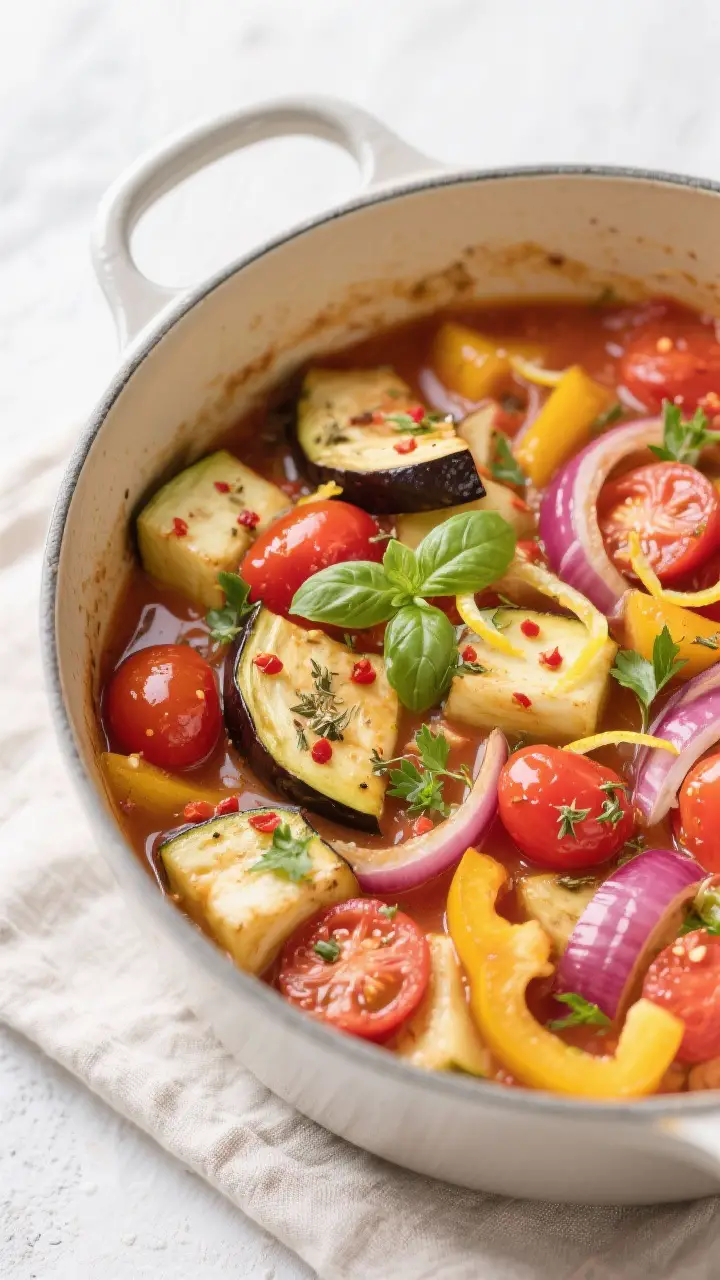
- Bring it all together. Return the eggplant, peppers, zucchini, and squash to the pan. Gently fold to coat with sauce.
Simmer on low for 8–10 minutes, stirring occasionally, until the vegetables are tender but not falling apart.
- Brighten and season. Stir in lemon zest, most of the basil, and the parsley. Taste and adjust salt and pepper. Finish with a thread of olive oil for gloss and richness.
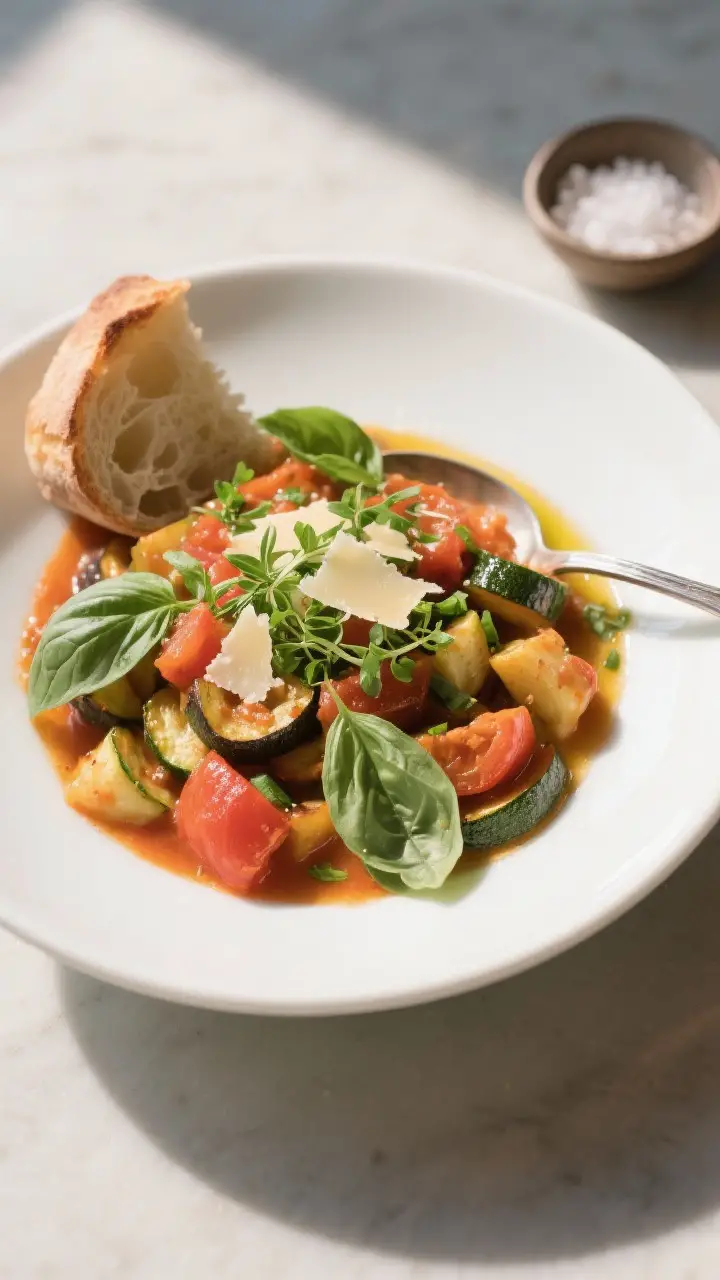
- Serve your way. Spoon into shallow bowls.
Garnish with remaining basil and, if you like, a sprinkle of Parmesan or a bit of goat cheese. Great with crusty bread, over polenta, couscous, or twirled into pasta.
How to Store
- Refrigerate: Cool completely, then store in an airtight container for up to 4 days. The flavors deepen by day two.
- Freeze: Portion into freezer-safe containers and freeze for up to 3 months.
Thaw overnight in the fridge.
- Reheat: Warm gently on the stovetop over low heat with a splash of water or stock. Avoid high heat, which can break down the vegetables.
Why This is Good for You
This dish is loaded with fiber, vitamins, and antioxidants from eggplant, peppers, tomatoes, and squash. The olive oil supports heart health and helps your body absorb fat-soluble nutrients.
You’re getting a balanced mix of slow-digesting carbs and plant-based goodness with relatively little saturated fat. It’s satisfying without feeling heavy, and it leaves room for whatever you pair it with.
What Not to Do
- Don’t overcrowd the pan. Crowding steams the vegetables and makes them limp. Cook in batches for better browning.
- Don’t skip salting the eggplant. This step helps prevent spongy texture and bitterness.
- Don’t overcook. Aim for tender, not mushy.
You want distinct pieces that still have character.
- Don’t drown it in sauce. You want just enough to coat the vegetables and pull them together.
- Don’t forget acidity. Lemon zest (or a splash of vinegar) wakes up the whole dish.
Alternatives
- Different herbs: Try thyme, marjoram, or tarragon instead of basil and parsley. A handful of mint gives a fresh spring twist.
- Tomato swap: Use fresh ripe tomatoes when in season. Peel and chop, then cook them down a bit longer to concentrate flavor.
- Protein add-ins: Add cooked white beans or chickpeas for extra plant protein.
For a non-vegan option, top with a poached egg or serve alongside grilled chicken or fish.
- Cheese options: Goat cheese adds tang and creaminess, Parmesan brings savory depth, and ricotta offers a mild, fluffy finish.
- Spice route: A pinch of smoked paprika or Aleppo pepper can give a gentle warmth without overpowering the vegetables.
- Roasted version: Roast the vegetables on sheet pans at 425°F (220°C) until charred at the edges, then combine with warmed tomato sauce and herbs for a deeper, caramelized flavor.
FAQ
Can I make this ahead?
Yes. Ratatouille actually improves with a little time. Make it earlier in the day or the night before, then reheat gently before serving.
Add fresh herbs and lemon zest right before serving to keep it bright.
What if I don’t have eggplant?
You can use extra zucchini and peppers, or add mushrooms for a meaty bite. The dish will still be delicious—just keep the same overall quantity of vegetables so the sauce-to-veg balance holds.
How do I keep the vegetables from getting soggy?
Cook in batches, use medium heat with enough oil to promote browning, and stop cooking when the vegetables are just tender. Avoid covering the pan for long periods, which traps steam.
Is this gluten-free?
Yes, the ratatouille itself is naturally gluten-free.
If you’re serving it with bread or pasta, choose gluten-free options to keep the entire meal gluten-free.
Can I use dried herbs instead of fresh?
Absolutely. Use dried oregano or herbes de Provence in the sauce, then finish with a small amount of fresh herbs if you have them. If not, a little extra lemon zest will keep things lively.
What should I serve it with?
Crusty bread, polenta, couscous, rice, or pasta all work well.
It also pairs nicely with grilled or roasted fish and chicken. For a light vegetarian dinner, add white beans and a simple green salad.
In Conclusion
Springtime Ratatouille is proof that simple ingredients can feel special with a few smart moves. Quick sautéing, gentle simmering, and fresh herbs bring out the best in early-season vegetables.
It’s versatile, easy to love, and just as good the next day. Keep it simple, keep it bright, and enjoy the kind of comfort that still feels light on its feet.
Printable Recipe Card
Want just the essential recipe details without scrolling through the article? Get our printable recipe card with just the ingredients and instructions.