
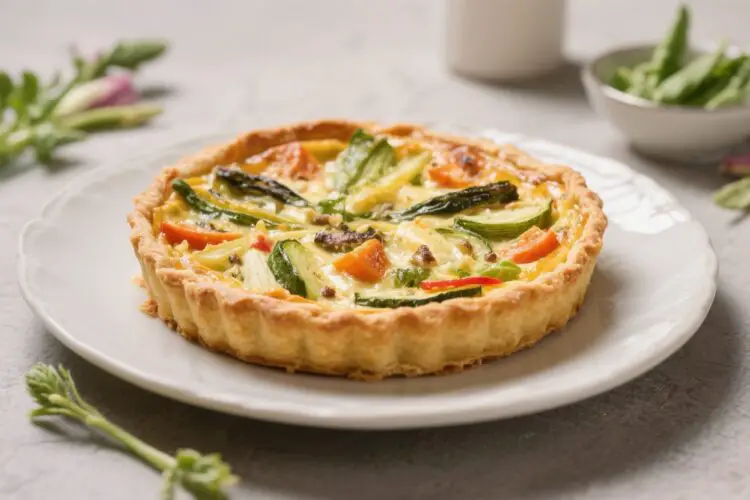
Spring vegetables are crisp, colorful, and full of flavor, and this quiche puts them front and center. It’s a simple, comforting dish that still feels fresh and bright. Whether you’re hosting a weekend brunch or want a make-ahead lunch for the week, this quiche delivers every time.
The flaky crust, creamy custard, and tender veggies make a satisfying combination without feeling heavy. Best of all, it’s flexible, forgiving, and easy to customize with what you have on hand.
Why This Recipe Works
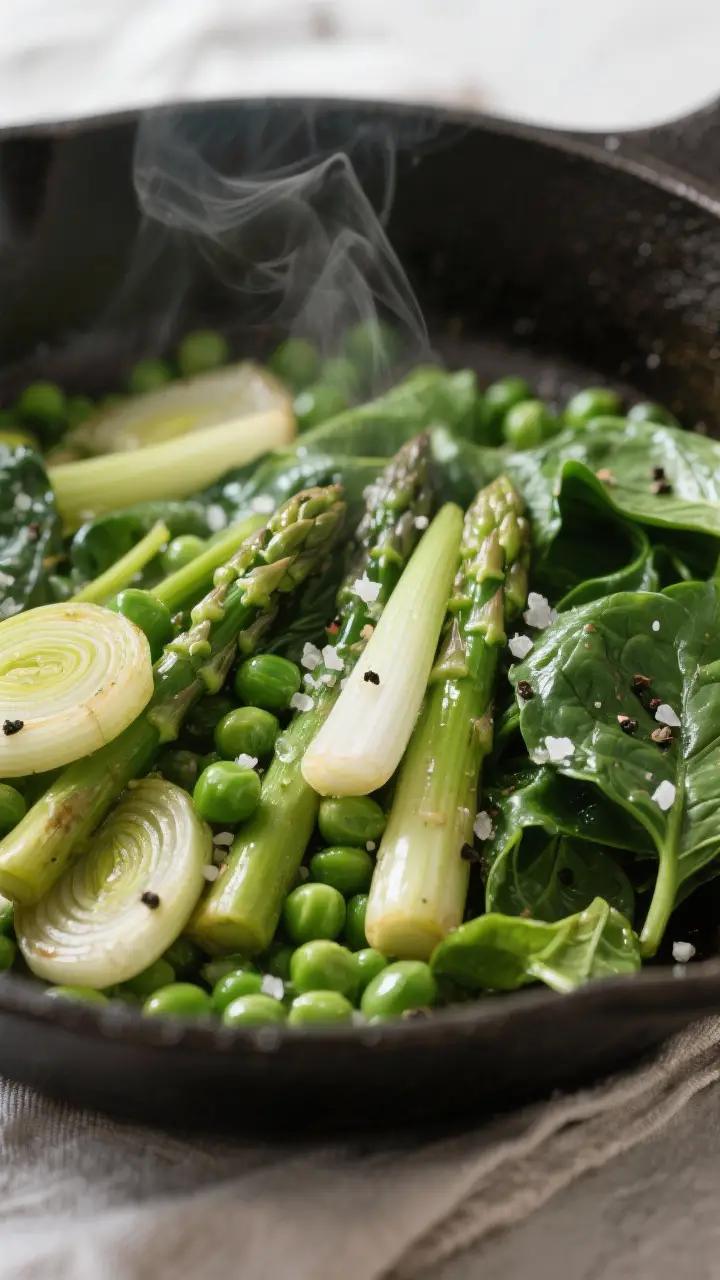
This quiche uses a few smart techniques to keep the texture light and the flavors clean. Par-cooking the vegetables removes extra moisture, so the custard sets properly and the crust doesn’t get soggy.
A mix of whole eggs and milk (with a bit of cream) gives the custard a silky texture without being overly rich. Using fresh spring vegetables like asparagus, peas, and leeks brings natural sweetness and crunch. A small amount of cheese adds depth and a savory finish without overpowering the vegetables.
Ingredients
- 1 9-inch pie crust, homemade or store-bought (blind-baked; see Instructions)
- 1 tablespoon olive oil or unsalted butter
- 1 small leek, white and light green parts only, thinly sliced and rinsed
- 1 cup asparagus, trimmed and cut into 1-inch pieces
- 1/2 cup fresh or frozen peas (no need to thaw if frozen)
- 1/2 cup baby spinach, roughly chopped
- 4 large eggs
- 3/4 cup whole milk
- 1/4 cup heavy cream (or use all milk for a lighter quiche)
- 1 cup shredded cheese (Gruyère, Swiss, or white cheddar work well)
- 1 tablespoon fresh herbs (chives, dill, or parsley), finely chopped
- 1/2 teaspoon kosher salt, plus more to taste
- 1/4 teaspoon black pepper
- Pinch of red pepper flakes (optional)
Instructions
- Blind-bake the crust: Preheat the oven to 375°F (190°C).
Fit the pie crust into a 9-inch pie dish, prick the base with a fork, line with parchment, and fill with pie weights or dried beans. Bake for 12–15 minutes, remove the weights and parchment, and bake 5 more minutes until lightly golden. Let cool slightly.
- Sauté the aromatics: Warm the olive oil or butter in a skillet over medium heat.
Add the sliced leek with a pinch of salt. Cook for 4–5 minutes, stirring, until softened and fragrant, not browned.
- Cook the vegetables: Add the asparagus to the skillet and cook 3–4 minutes until crisp-tender. Stir in the peas and spinach.
Cook 1–2 minutes until the spinach just wilts and any moisture cooks off. Remove from heat and let the vegetables cool for a few minutes.
- Make the custard: In a medium bowl, whisk the eggs, milk, and cream until smooth. Season with salt, pepper, and red pepper flakes if using.
Stir in the fresh herbs.
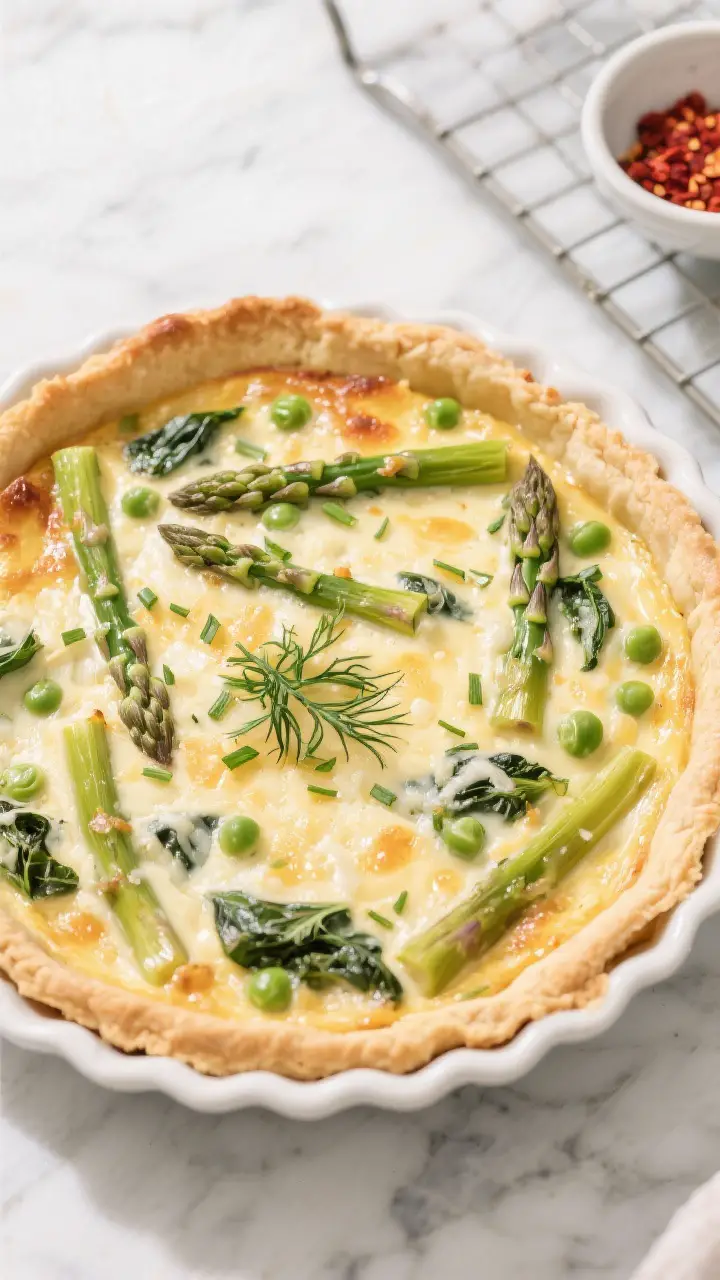
- Assemble the quiche: Spread half the cheese over the bottom of the baked crust. Add the cooked vegetables in an even layer. Pour the custard over the top, then sprinkle with the remaining cheese.
- Bake: Reduce oven to 350°F (175°C).
Bake the quiche for 30–35 minutes, until the center is just set and the top is lightly golden. The middle should jiggle slightly but not slosh.
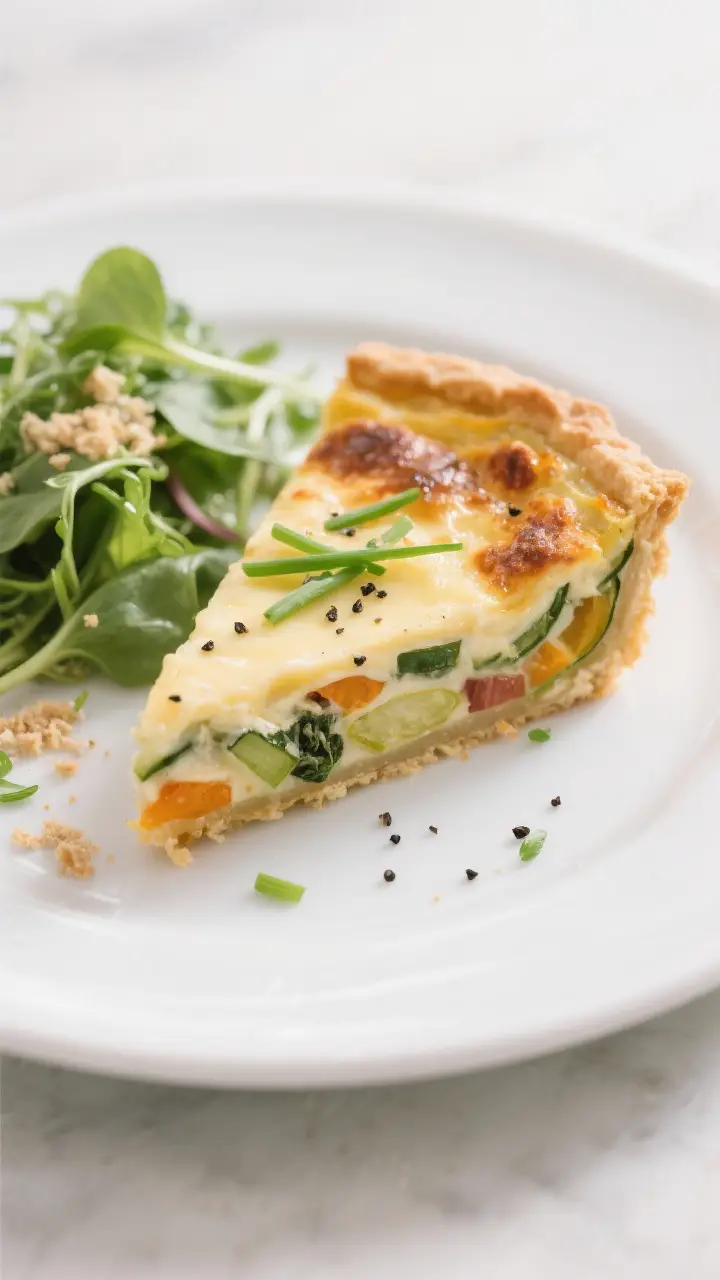
- Cool and serve: Let the quiche rest for at least 15–20 minutes before slicing. This helps the custard finish setting and gives cleaner slices.
Serve warm, at room temperature, or chilled.
How to Store
- Refrigerate: Cool completely, then cover tightly or transfer to an airtight container. Keep in the fridge for up to 4 days.
- Reheat: Warm slices in a 300°F (150°C) oven for 10–15 minutes, or microwave gently in 30-second bursts. Oven reheating keeps the crust crisper.
- Freeze: Wrap individual slices in plastic and foil, or freeze the whole quiche tightly wrapped.
Freeze for up to 2 months. Thaw in the fridge overnight, then reheat in the oven.
Why This is Good for You
Spring vegetables bring vitamins, fiber, and antioxidants that support immune health and digestion. Asparagus and spinach are rich in folate, vitamin K, and iron, while peas add plant-based protein.
The eggs provide high-quality protein and nutrients like choline for brain health. Using milk instead of heavy cream keeps the custard lighter without losing tenderness. Overall, it’s a balanced meal with a mix of protein, veggies, and satisfying flavors.
Pitfalls to Watch Out For
- Soggy bottom: Skip blind-baking and you may end up with a wet crust.
Pre-baking helps seal it and stand up to the custard.
- Watery filling: Undercooked vegetables release moisture as they bake. Sauté until they’re tender and the pan looks dry before assembling.
- Overbaking: Too long in the oven can turn the filling rubbery and crack the surface. Pull it when the center still has a slight jiggle.
- Too much cheese: Cheese adds flavor, but too much can make the texture greasy.
Stick to about 1 cup for a 9-inch quiche.
- Under-seasoning: Eggs and milk need a bit of salt to pop. Taste your vegetables, then season the custard accordingly.
Variations You Can Try
- No-crust quiche: Grease the pie dish and bake the filling without a crust for a lighter, gluten-free option.
- Different cheeses: Try feta with dill, goat cheese with chives, or smoked gouda for a deeper flavor.
- Other spring veggies: Swap in sautéed mushrooms, tender zucchini, or blanched broccolini.
- Protein boost: Add crisp bacon, diced ham, or smoked salmon. Reduce the salt slightly if using salty meats.
- Herb-forward: Double the herbs and add lemon zest for a bright, garden-fresh flavor.
- Dairy tweaks: Use all milk for a lighter custard, or all cream for a richer one.
Nondairy milks that are unsweetened and plain can work in a pinch.
FAQ
Can I use frozen vegetables?
Yes, but thaw and pat them dry first. Sauté to cook off excess moisture before adding them to the crust. This prevents a watery quiche.
What’s the best way to blind-bake without weights?
If you don’t have pie weights, use dried beans or rice.
Keep them labeled and reuse them for future blind-bakes.
How do I know when the quiche is done?
Look for edges that are set and a center that jiggles slightly when you nudge the pan. If it’s puffing dramatically or cracking, it’s overdone.
Can I make this ahead?
Absolutely. Bake it the day before, chill, and reheat gently.
You can also prep the crust and vegetables ahead and assemble just before baking.
What if I don’t have a pie dish?
A tart pan with a removable bottom works well. In a pinch, use an 8-inch square pan; watch the bake time since the thickness may vary.
How do I avoid a tough crust?
Don’t overwork the dough if making it from scratch, and keep everything cold. If using store-bought, avoid stretching it when fitting it into the pan.
Can I make it dairy-free?
Use a dairy-free crust, swap the milk and cream for an unsweetened plant milk plus a splash of unsweetened creamer, and choose a dairy-free cheese or skip the cheese altogether.
What herbs pair best with spring vegetables?
Chives, dill, parsley, and tarragon are excellent.
Use a light hand so they lift the flavors without taking over.
Final Thoughts
Spring Vegetable Quiche is the kind of recipe that feels special but doesn’t ask for much. A little prep, a quick bake, and you’ve got a colorful, satisfying dish that works for breakfast, lunch, or dinner. Keep the method the same, and swap the vegetables with the seasons.
It’s a reliable base you’ll come back to again and again—fresh, flexible, and delicious.
Printable Recipe Card
Want just the essential recipe details without scrolling through the article? Get our printable recipe card with just the ingredients and instructions.