
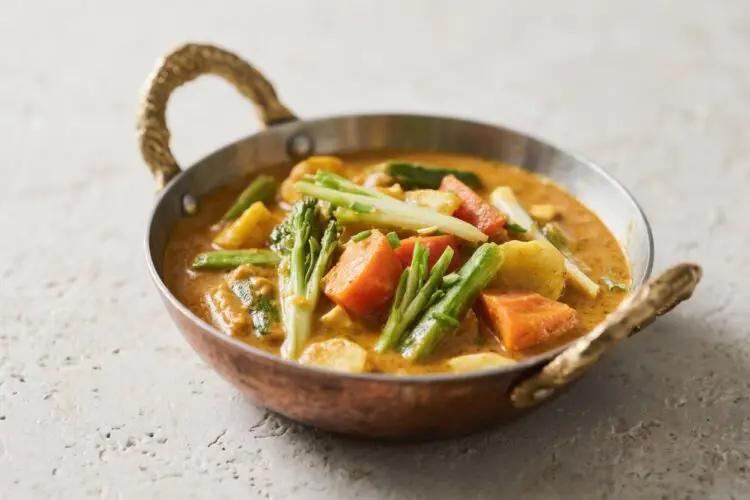
Spring vegetable curry brings together tender greens, sweet peas, and delicate herbs in a cozy, aromatic sauce. It’s the kind of meal that feels fresh without being fussy. You get warmth from spices, crunch from seasonal veggies, and a creamy finish that ties it all together.
Whether you’re cooking for a weeknight dinner or a casual weekend meal, this curry fits easily into your routine. It’s simple to make, flexible with what you have on hand, and satisfying without feeling heavy.
What Makes This Special

This curry celebrates spring produce at its peak. Instead of long-simmered roots, you’ll use quick-cooking vegetables like asparagus, snap peas, spinach, and baby potatoes.
The sauce is fragrant but not overpowering, letting the freshness of the vegetables stand out.
It’s also highly adaptable. You can swap vegetables based on what’s in season or on sale, and adjust the heat to your liking. Plus, it comes together in under 40 minutes, making it friendly for busy nights without sacrificing flavor.
Ingredients
- 2 tablespoons neutral oil (such as avocado or grapeseed)
- 1 small yellow onion, finely diced
- 3 cloves garlic, minced
- 1 tablespoon fresh ginger, grated
- 2 teaspoons curry powder (mild or medium)
- 1 teaspoon ground coriander
- 1/2 teaspoon ground turmeric
- 1/4 to 1/2 teaspoon red pepper flakes (optional, for heat)
- 1 tablespoon tomato paste
- 1 can (14 oz) coconut milk (full-fat for creaminess)
- 1 cup low-sodium vegetable broth
- 8–10 baby potatoes, halved
- 1 bunch asparagus, trimmed and cut into 1-inch pieces
- 1 cup sugar snap peas or snow peas, strings removed
- 1 cup shelled green peas (fresh or frozen)
- 2 cups baby spinach or chopped kale
- 1 small zucchini, sliced into half-moons
- 1 tablespoon fresh lemon juice, plus more to taste
- Salt and black pepper to taste
- Fresh herbs: 1/4 cup chopped cilantro and/or mint for garnish
- Cooked rice or warm flatbread for serving
How to Make It
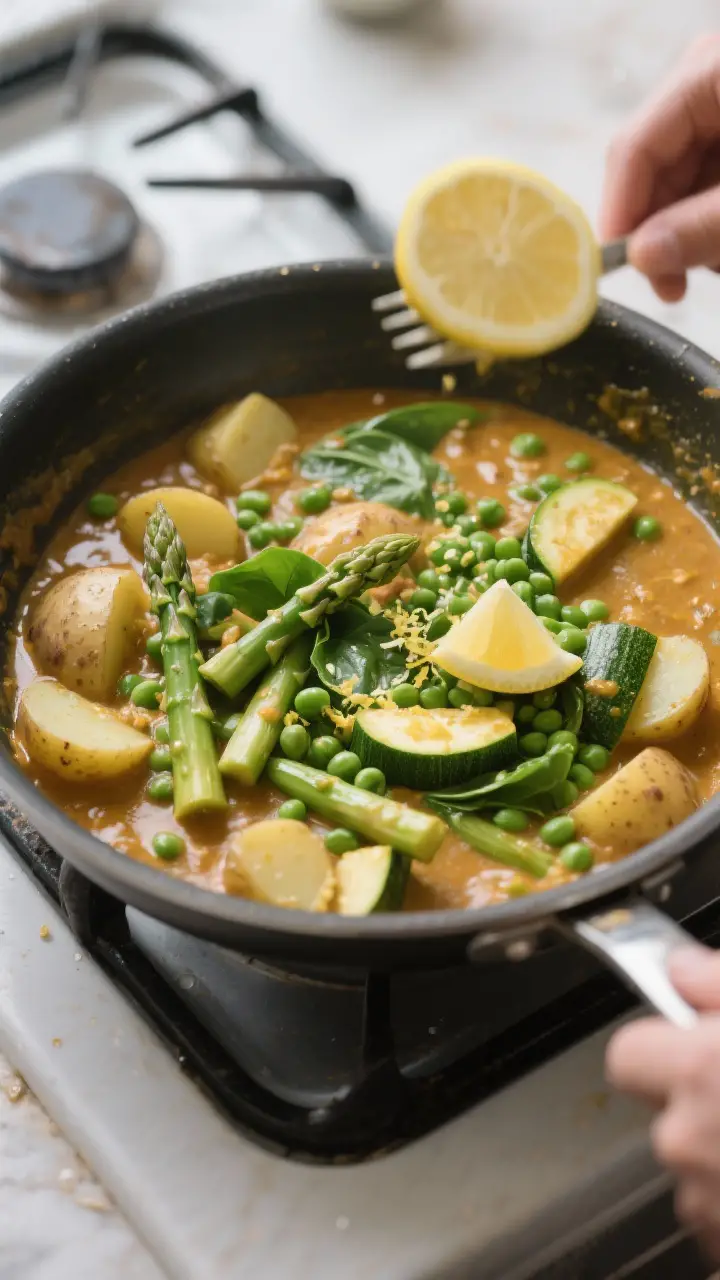
- Sauté the aromatics. Heat the oil in a large skillet or pot over medium heat.
Add the onion with a pinch of salt and cook until translucent, about 4–5 minutes. Stir in the garlic and ginger and cook 1 minute, until fragrant.
- Bloom the spices. Add curry powder, coriander, turmeric, and red pepper flakes. Stir constantly for 30 seconds to 1 minute to release their aroma.
Mix in the tomato paste and cook another minute to deepen the flavor.
- Build the sauce. Pour in the coconut milk and vegetable broth, whisking to combine. Bring to a gentle simmer. Taste and season with a little salt and pepper.
- Cook the sturdy veg. Add the baby potatoes.
Cover and simmer 10–12 minutes, or until just fork-tender. If the sauce reduces too much, splash in more broth.
- Add medium-cook veg. Stir in zucchini and asparagus. Simmer uncovered for 3–4 minutes, keeping the heat gentle to avoid overcooking.
- Finish with quick-cook greens. Add snap peas and green peas, then fold in spinach.
Cook 2–3 minutes, just until the greens wilt and the peas are bright.
- Balance and adjust. Stir in the lemon juice. Taste and adjust seasoning with more salt, pepper, or lemon. If you like more heat, add a pinch of red pepper flakes.
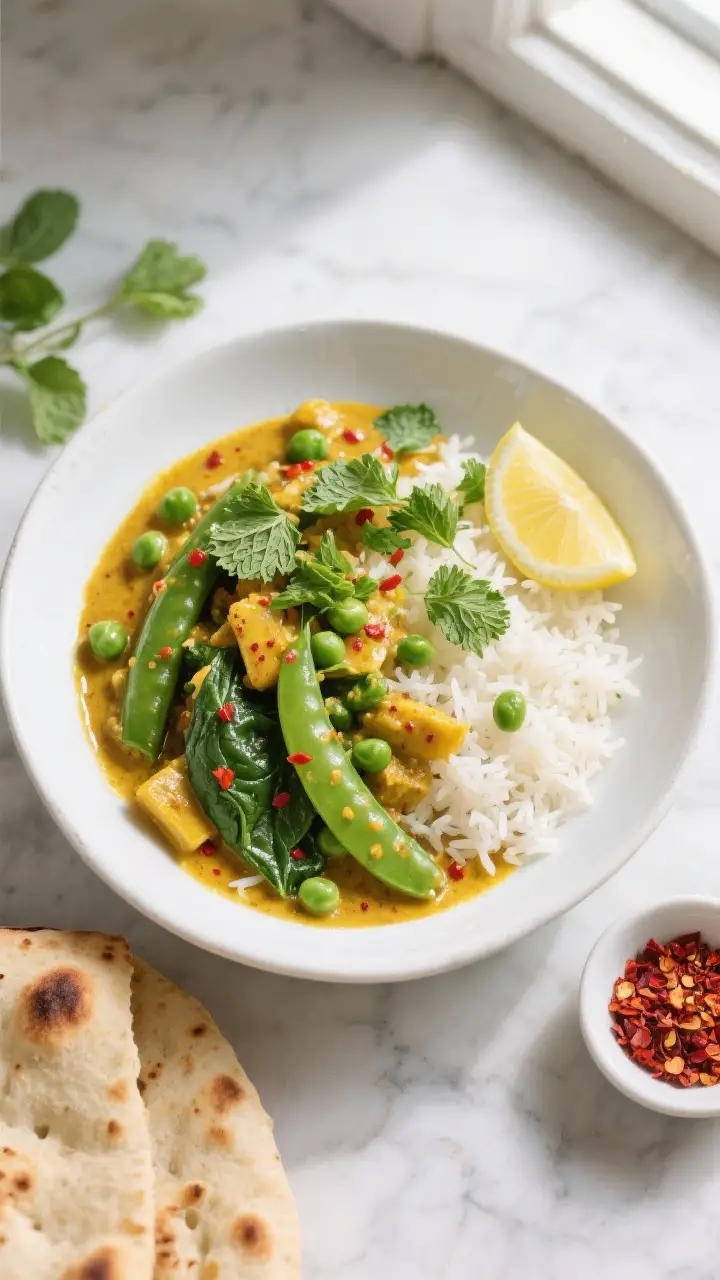
- Serve and garnish. Spoon over warm rice or with flatbread.
Top with chopped cilantro or mint for a fresh finish.
Keeping It Fresh
Spring vegetables are delicate, so timing and heat matter. Add quick-cooking veggies at the end to keep their color and snap. Avoid a rolling boil once the greens are in; a gentle simmer preserves texture.
For leftovers, cool the curry quickly and store it in an airtight container. It keeps up to 3 days in the fridge. Reheat gently over low heat to prevent the coconut milk from separating and the vegetables from turning mushy.
Benefits of This Recipe
- Balanced and satisfying. The coconut milk gives a creamy body while the vegetables keep it light.
- Flexible and seasonal. Swap in what’s available—broccolini, fava beans, or chard work well.
- Quick cleanup. One pot, minimal fuss, and straightforward steps.
- Great for meal prep. The sauce flavors deepen by the next day, making leftovers extra tasty.
- Diet-friendly. Naturally vegetarian and gluten-free; easy to make vegan and dairy-free as written.
Pitfalls to Watch Out For
- Overcooking the greens. Add spinach and peas at the very end to keep them vibrant and crisp-tender.
- Skipping the spice bloom. Briefly toasting spices in oil boosts flavor.
Don’t rush this step.
- Too thin or too thick sauce. If it’s thin, simmer uncovered a few minutes. If it’s too thick, add a splash of broth.
- Underseasoning. Taste as you go. A bit of salt and a squeeze of lemon can brighten the whole dish.
- Using high heat. Keep it at a gentle simmer to protect delicate vegetables and prevent curdling.
Variations You Can Try
- Protein boost. Add chickpeas, tofu cubes (pan-seared or straight in), or cooked lentils for extra heartiness.
- Greens swap. Use baby kale, chard, or arugula in place of spinach.
Adjust cooking times to keep texture.
- Cream tweak. For lighter sauce, use light coconut milk and simmer a bit longer. For richer, add a spoonful of cashew cream.
- Citrus change. Try lime instead of lemon for a brighter, tropical note.
- Spice profile. Add mustard seeds and cumin seeds at the start, or finish with garam masala for warmth.
- Herb finish. Mix cilantro with mint and a few basil leaves for a layered, garden-fresh aroma.
FAQ
Can I make this curry ahead of time?
Yes. Cook the sauce and sturdy vegetables, then cool and refrigerate.
When reheating, add the quick-cooking greens and peas in the last few minutes so they stay bright and tender.
What can I use instead of coconut milk?
You can use cashew cream or a blend of unsweetened almond milk with a spoonful of almond butter for richness. The flavor will be slightly different, but still smooth and satisfying.
How spicy is this recipe?
It’s mild to medium as written. Reduce or skip the red pepper flakes for a gentle curry, or add fresh chili or extra flakes if you prefer more heat.
Do frozen vegetables work?
They do.
Add frozen peas or mixed vegetables near the end and cook just until heated through. Avoid overcooking, as frozen veg soften faster.
What’s the best way to serve it?
Serve over basmati or jasmine rice for a classic pairing. Warm flatbread, quinoa, or cauliflower rice also work well if you want something lighter.
How can I thicken the curry without more coconut milk?
Simmer uncovered to reduce the sauce, or mash a few cooked potatoes into the curry to add body.
You can also stir in a small spoonful of tomato paste for a thicker texture and deeper flavor.
Can I add meat or seafood?
Yes. Add cooked shredded chicken near the end, or gently poach shrimp in the simmering sauce for 3–4 minutes. Adjust seasoning after adding protein.
How do I keep the green color vibrant?
Cook greens briefly and finish with lemon juice off the heat.
A quick sprinkle of fresh herbs right before serving also keeps the dish looking lively.
Final Thoughts
Spring vegetable curry is a simple way to bring the season’s best to your table. It’s bright, adaptable, and layered with flavor without a long ingredient list or complicated steps. Make it your own with the vegetables you love, and don’t be shy with fresh herbs and citrus.
With a pot of rice and a handful of greens, dinner is done and delicious.