
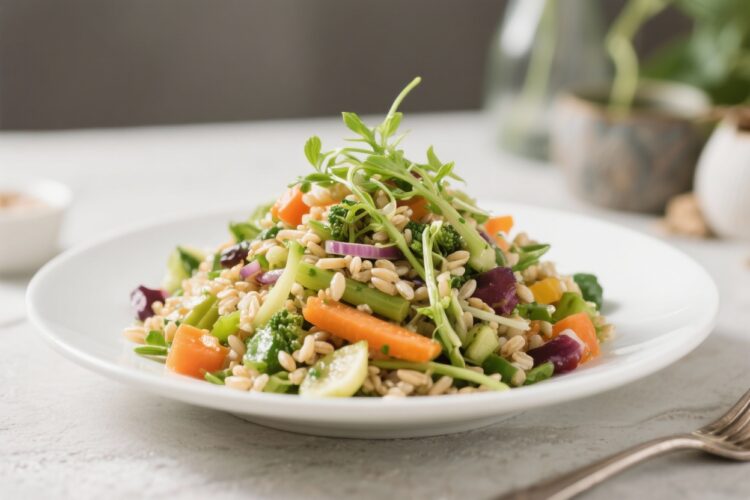
Spring is the season for crisp greens, tender herbs, and produce that tastes like sunshine. This Spring Vegetable and Grain Salad brings all of that to the table in one colorful bowl. It’s hearty enough for lunch, light enough for a side, and easy to customize with whatever fresh vegetables you have on hand.
The grains soak up a lemony dressing, while crunchy vegetables and soft herbs keep every bite lively. Simple to make, easy to love, and perfect for busy weeknights or easy entertaining.
What Makes This Recipe So Good
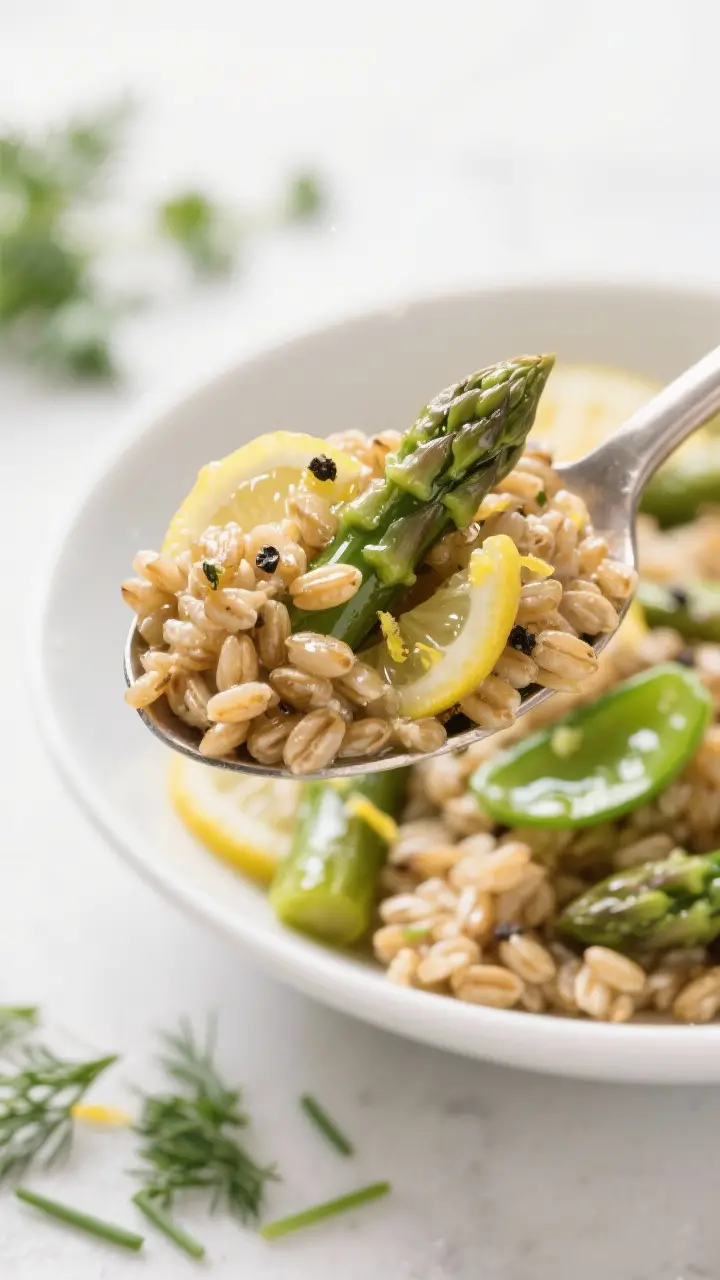
- Balanced textures: Chewy grains, crisp vegetables, and creamy cheese make every bite interesting.
- Bright, clean flavors: A lemon-garlic dressing ties everything together without feeling heavy.
- Make-ahead friendly: The salad holds up well in the fridge and tastes even better after a short rest.
- Flexible: Swap in different grains, add protein, or use whatever spring produce looks best.
- Nutrient-dense: Fiber from grains and veggies, healthy fats from olive oil, and protein options keep you full and energized.
Shopping List
- Grain: 1 cup uncooked farro, quinoa, or barley (farro recommended for chew)
- Greens: 2 cups baby arugula or mixed spring greens
- Spring vegetables: 1 cup snap peas (sliced), 1 cup asparagus (trimmed and cut into 1-inch pieces), 1 cup radishes (thinly sliced), 1 small English cucumber (diced)
- Fresh herbs: 1/2 cup chopped fresh herbs (mix of parsley, dill, chives, and/or mint)
- Cheese (optional): 1/2 cup crumbled feta or shaved Parmesan
- Nuts or seeds: 1/3 cup toasted pistachios, almonds, or pumpkin seeds
- Aromatics: 3 green onions (thinly sliced), 1 small clove garlic (finely grated)
- Lemon dressing: 1 large lemon (zest and juice), 1/3 cup extra-virgin olive oil, 1 teaspoon Dijon mustard, 1 teaspoon honey or maple syrup
- Seasoning: Kosher salt and freshly ground black pepper
Instructions
- Cook the grain: Rinse your chosen grain. Cook according to package directions until tender but not mushy.
Drain well. Spread on a tray to cool quickly, or toss with a drizzle of olive oil to prevent sticking.
- Blanch the asparagus and peas: Bring a small pot of salted water to a boil. Add asparagus and snap peas for 1–2 minutes until bright green and crisp-tender.
Transfer to an ice bath to cool, then drain and pat dry.
- Prep the fresh vegetables: Slice radishes thin. Dice cucumber. Slice green onions.
Set aside with the blanched vegetables.
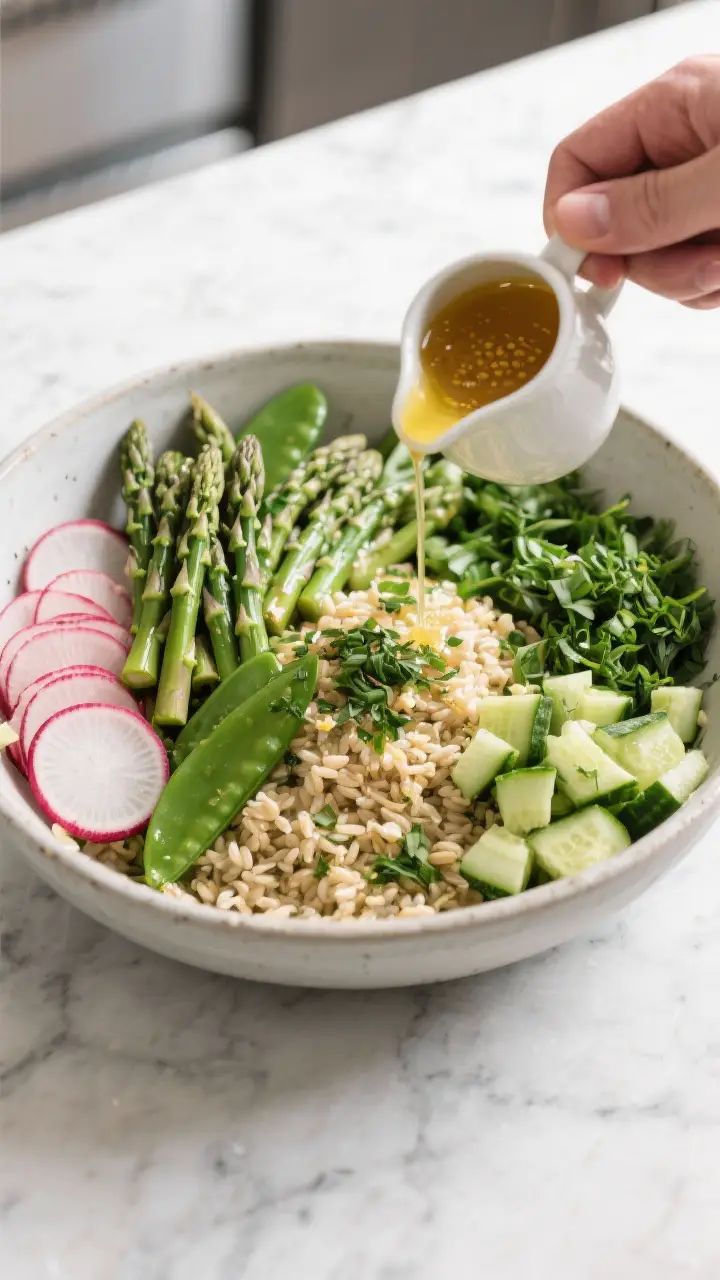
- Make the dressing: In a small bowl, whisk together lemon zest, lemon juice, Dijon, honey, and garlic. Slowly whisk in olive oil until glossy. Season with salt and pepper to taste.
- Toss the grains: In a large bowl, combine the cooled grains with half the dressing.
Add a pinch of salt and pepper and let sit for 5–10 minutes to absorb flavor.
- Add vegetables and herbs: Add asparagus, snap peas, radishes, cucumber, green onions, and chopped herbs. Toss gently to combine.
- Finish with greens: Add arugula or mixed greens and the remaining dressing. Toss again until everything is lightly coated.
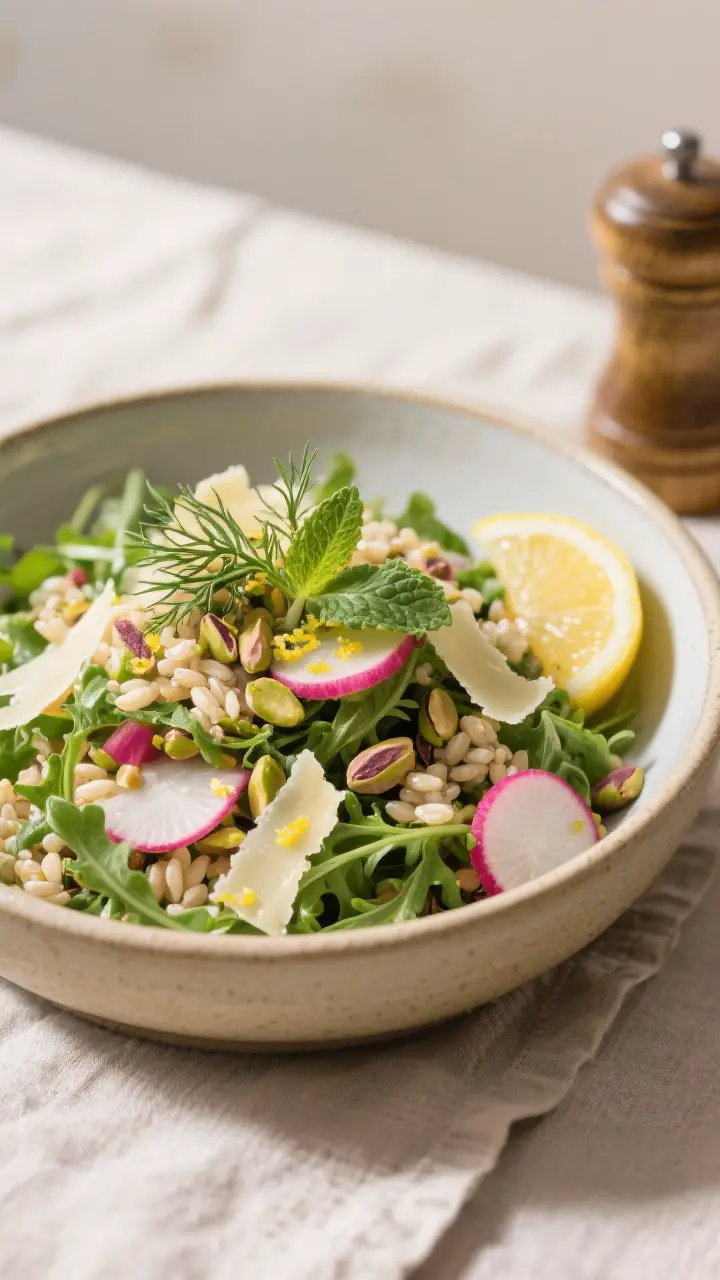
- Top and serve: Sprinkle with nuts or seeds and crumbled feta or shaved Parmesan.
Taste and adjust seasoning with more lemon, salt, or pepper as needed. Serve right away or let it rest 10 minutes for flavors to meld.
How to Store
Short term: Store in an airtight container in the fridge for up to 3 days. The flavors deepen over time, but the greens will soften.
If possible, add the arugula and cheese just before serving for the best texture.
Meal prep tip: Keep components separate—grains and dressing in one container, chopped veggies in another, greens in a third. Combine right before eating for a crisp, fresh salad.
Freezing: Not recommended. Fresh vegetables and greens lose their bite once thawed.
Why This is Good for You
- Fiber and satiety: Whole grains like farro or barley help you feel full and support steady energy.
- Micronutrients: Spring vegetables bring vitamin C, folate, and antioxidants that support immune health and vitality.
- Healthy fats: Extra-virgin olive oil adds heart-friendly monounsaturated fats and helps your body absorb fat-soluble vitamins.
- Herb boost: Fresh herbs provide flavor without sodium and bring phytonutrients to the mix.
Common Mistakes to Avoid
- Overcooking the grains: Mushy grains make the salad heavy.
Cook until just tender and drain well.
- Skipping the cool-down: Hot grains wilt the vegetables and greens. Let them cool before tossing.
- Under-seasoning: Grains need salt. Taste as you go and adjust with salt, pepper, and lemon.
- Drowning the salad: Add dressing in stages.
You can always add more, but you can’t take it away.
- Forgetting texture: Nuts or seeds add crunch. Don’t skip that final sprinkle.
Variations You Can Try
- Protein boost: Add grilled chicken, seared salmon, flaked tuna, or chickpeas for a more filling meal.
- Different grains: Try quinoa for a gluten-free option, bulgur for quick cooking, or wild rice for a nutty bite.
- Cheese swap: Use goat cheese for creaminess or pecorino for a sharper edge.
- Citrus twist: Swap lemon for a mix of lemon and orange juice, or add a splash of apple cider vinegar for extra zing.
- Extra veggies: Add peas, thinly shaved carrots, baby broccoli florets, or roasted cherry tomatoes.
- Herb-forward: Go heavy on dill and mint for a Mediterranean vibe, or basil and chives for something softer and sweet.
- Crunch factor: Toasted hazelnuts, sunflower seeds, or sesame seeds change the personality of the salad in an instant.
FAQ
Can I make this salad ahead?
Yes. Toss the cooled grains with dressing up to a day in advance and store the chopped veggies separately.
Mix in greens, nuts, and cheese just before serving for the best texture.
What grain works best?
Farro offers the best chewy texture and holds up well. Quinoa is great if you want something gluten-free and lighter. Barley is hearty and budget-friendly.
Do I have to blanch the asparagus and peas?
Blanching keeps them crisp and bright.
If you enjoy a raw crunch, you can skip it, but the flavor will be slightly grassier and the texture firmer.
How do I make it dairy-free?
Simply skip the cheese or use a dairy-free alternative. Add extra nuts or seeds for more richness and crunch.
What if I don’t have fresh herbs?
Fresh herbs are ideal for brightness. If you’re out, use a pinch of dried oregano or dill in the dressing and add extra green onions to keep the flavor fresh.
Can I serve this warm?
Absolutely.
Toss the grains while still slightly warm with the dressing, add the blanched vegetables, then fold in greens at the end so they wilt just a touch.
How do I keep the cucumbers from watering down the salad?
Use English cucumbers, which have fewer seeds, and pat them dry before adding. You can also toss them with a pinch of salt and let them drain for 10 minutes, then blot dry.
What nuts pair best?
Pistachios and almonds are top choices for flavor and color. Pumpkin seeds are great if you want a nut-free crunch.
Wrapping Up
This Spring Vegetable and Grain Salad is a reliable, fresh option for easy meals and laid-back gatherings.
It’s versatile, colorful, and satisfying without feeling heavy. Use it as a base, then riff with whatever produce and grains you love. With bright lemon, tender herbs, and a mix of textures, it’s the kind of salad you’ll make on repeat all season long.