
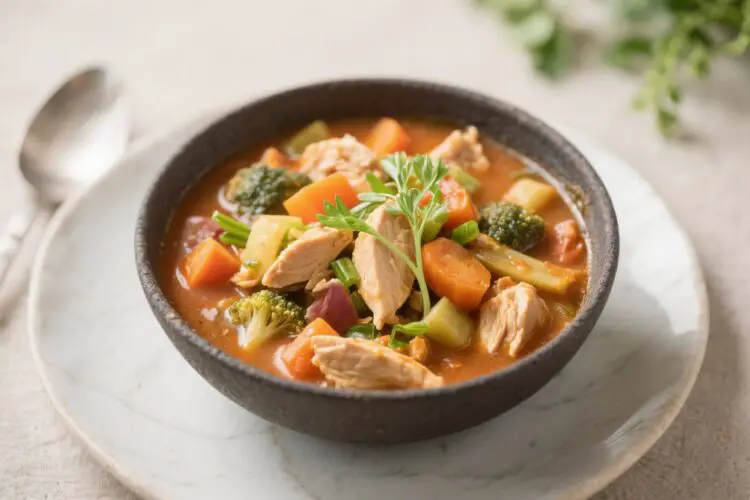
Spring has a way of resetting your appetite. The heavy soups of winter start to feel a bit much, and something brighter sounds right. This Spring Vegetable and Chicken Stew fits that moment perfectly: warm and comforting, yet light, fresh, and full of crisp, seasonal produce.
It’s the kind of meal that works for a weeknight but feels special enough for company. One pot, simple steps, and a bowl that tastes like the season — that’s the goal here.
What Makes This Special
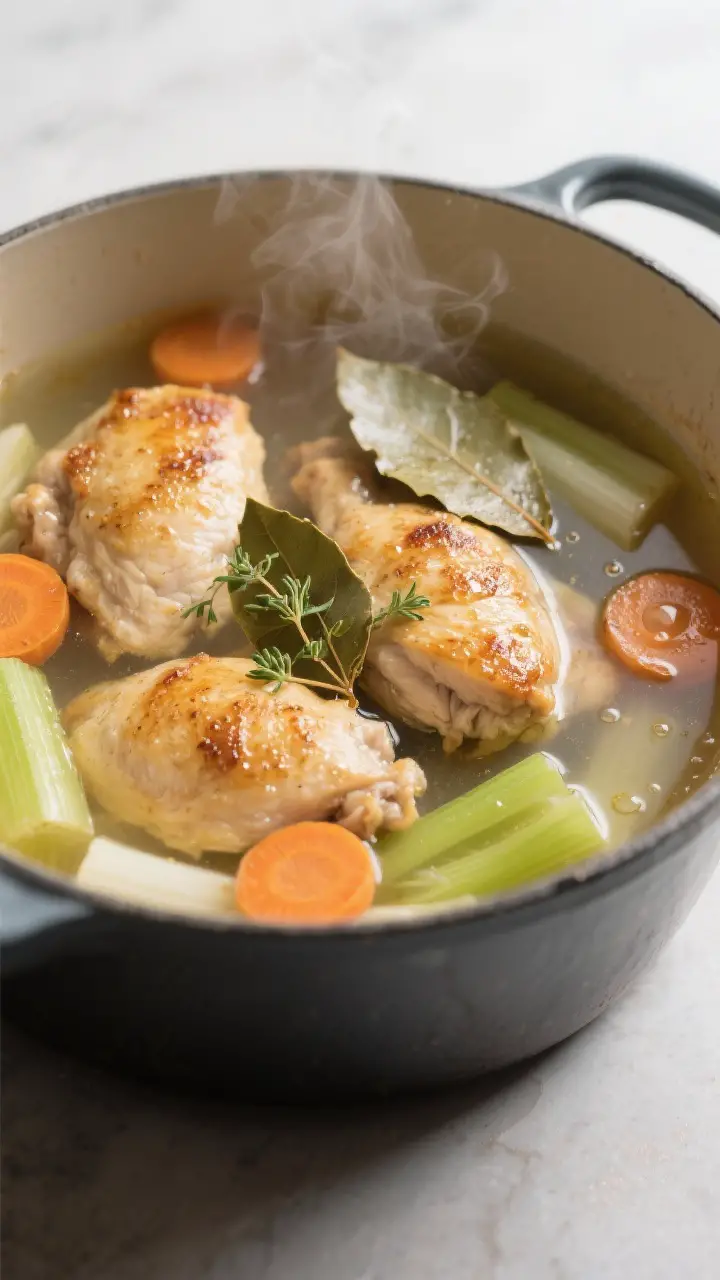
This stew blends tender chicken with vibrant spring vegetables like asparagus, peas, leeks, and carrots, giving you color and crunch without weighing you down. The broth is silky and aromatic, thanks to a quick bloom of garlic, thyme, and lemon zest.
It’s hearty but not heavy, with just enough body from a small splash of cream and a handful of fresh herbs at the end. Best of all, it’s flexible—swap in what you have on hand, and it still delivers clean, bright flavor.
What You’ll Need
- Olive oil: For sautéing and flavor.
- Unsalted butter (optional): Adds a soft richness to the base.
- 1.5–2 pounds boneless, skinless chicken thighs (or breasts), cut into bite-size pieces.
- Kosher salt and freshly ground black pepper: For seasoning throughout.
- 1 large leek, white and light green parts only, sliced thin (or 1 medium onion, diced).
- 2 medium carrots, sliced into coins.
- 3 celery stalks, sliced.
- 3 cloves garlic, minced.
- 1 teaspoon fresh thyme leaves (or 1/2 teaspoon dried thyme).
- 1 bay leaf.
- 6 cups low-sodium chicken stock.
- 1 pound baby potatoes, halved (or 2 cups diced Yukon Golds).
- 1 bunch asparagus, trimmed and cut into 1-inch pieces.
- 1 cup shelled peas (fresh or frozen).
- 1 cup sugar snap peas, halved lengthwise (optional but lovely).
- Zest of 1 lemon and 2 tablespoons lemon juice.
- 1/4 cup heavy cream (optional; coconut milk works for dairy-free).
- 2 tablespoons chopped fresh dill and 2 tablespoons chopped fresh parsley.
- Crusty bread or cooked rice, for serving (optional).
Instructions
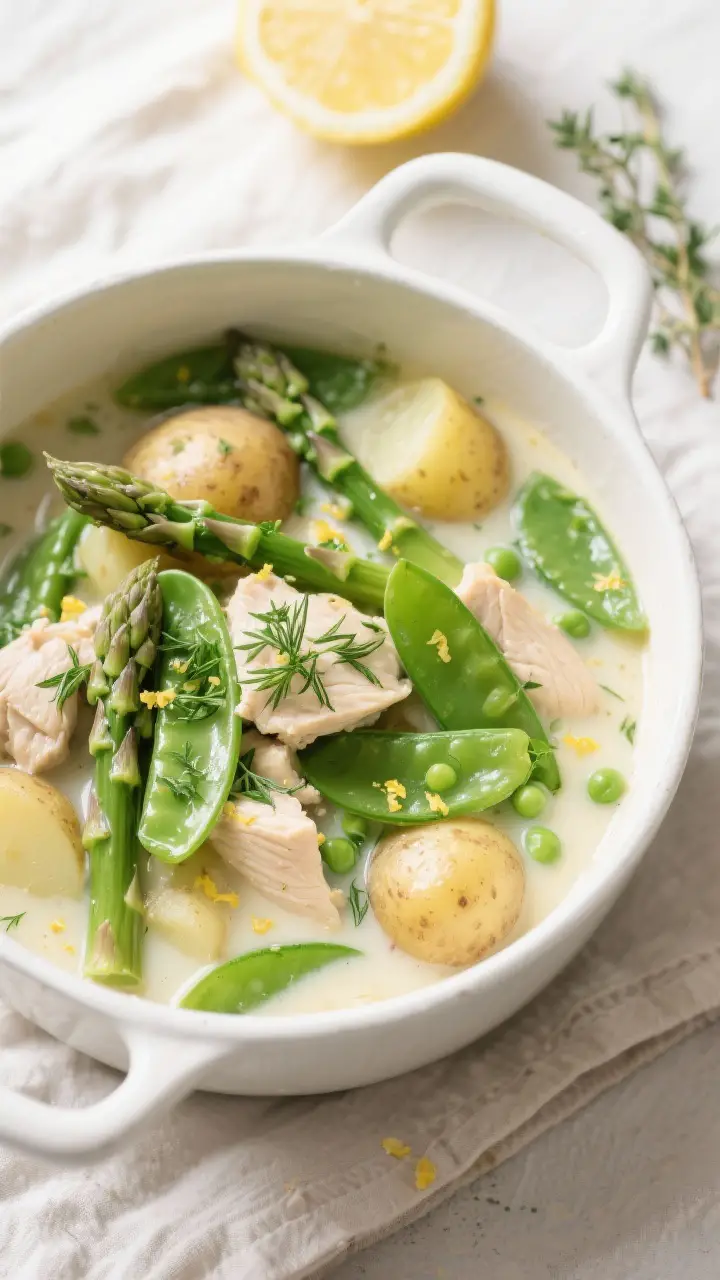
- Season the chicken: Pat chicken dry and season generously with salt and pepper. This builds flavor from the start.
- Sear the chicken: Heat 1 tablespoon olive oil (and butter if using) in a large pot over medium-high.
Sear chicken in batches until lightly browned, 3–4 minutes per side. Transfer to a plate. It doesn’t need to be fully cooked yet.
- Sauté the aromatics: Reduce heat to medium.
Add a splash more oil if needed, then cook leeks, carrots, and celery with a pinch of salt for 5–6 minutes until softened. Stir in garlic and thyme; cook 30 seconds until fragrant.
- Build the base: Return chicken and any juices to the pot. Add bay leaf and chicken stock.
Bring to a simmer, then reduce heat and cook gently for 12–15 minutes.
- Add potatoes: Stir in potatoes and simmer another 10–12 minutes, until just tender. Avoid a hard boil to keep the broth clear and the chicken tender.
- Add spring vegetables: Stir in asparagus, peas, and snap peas. Simmer 3–5 minutes until crisp-tender and bright green.
- Finish the stew: Remove bay leaf.
Stir in lemon zest, lemon juice, and cream (if using). Taste and season with more salt and pepper. The flavor should be fresh, savory, and lightly tangy.
- Herbs and serve: Off the heat, fold in dill and parsley.
Ladle into bowls and serve with crusty bread or over a scoop of rice if you like.
Storage Instructions
- Refrigerator: Cool completely, then store in airtight containers for up to 3–4 days.
- Freezer: Freeze up to 2 months. For best texture, undercook asparagus and peas slightly if you plan to freeze. Thaw overnight in the fridge.
- Reheating: Warm gently on the stove over medium-low, adding a splash of stock or water as needed.
Avoid boiling to keep vegetables vibrant and chicken tender.
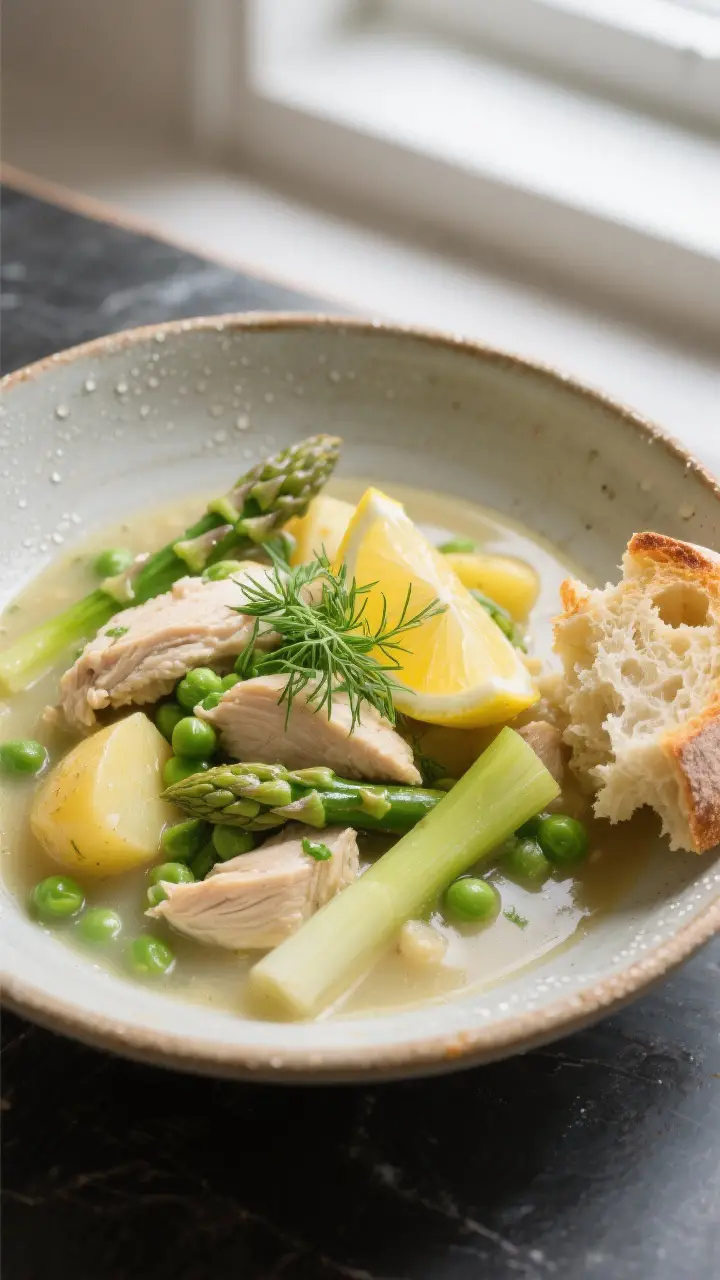
Benefits of This Recipe
- Balanced and satisfying: Lean protein, vitamins from spring vegetables, and steady energy from potatoes.
- Seasonal freshness: Asparagus, peas, and herbs bring bright flavor with minimal effort.
- One-pot convenience: Easy prep and fewer dishes make it weeknight-friendly.
- Flexible ingredients: Swap veggies based on what you have or what looks best at the market.
- Light but cozy: Comforting like a stew, yet clean and fresh enough for warmer days.
Common Mistakes to Avoid
- Overcooking the chicken: A long, rolling boil can make it tough. Keep the simmer gentle.
- Adding spring vegetables too early: Asparagus and peas cook fast. Add them at the end to keep color and crunch.
- Under-seasoning: Taste at multiple points.
The broth needs enough salt and a bright lift of lemon.
- Skipping the sear: Browning the chicken adds depth. It’s a small step that pays off.
- Forgetting herbs: Fresh dill and parsley make the stew sing. Don’t skip them if you can help it.
Variations You Can Try
- Grain boost: Add 1/2 cup uncooked farro or barley with the stock; simmer until tender before adding spring veggies.
- Dairy-free: Use olive oil only and finish with a splash of coconut milk or skip the cream entirely.
- Lemon-chicken orzo: Stir in 1/2 cup orzo after the potatoes, cook until al dente, then finish as directed.
- Herb swap: Try tarragon or chives in place of dill for a subtle twist.
- Extra green: Fold in a few handfuls of baby spinach at the end until just wilted.
- Roast-chicken shortcut: Use shredded rotisserie chicken and add it with the spring vegetables to warm through.
FAQ
Can I use chicken breasts instead of thighs?
Yes.
Chicken breasts work well but cook a bit faster and can dry out. Keep the simmer gentle and consider adding them back to the pot later in the process to avoid overcooking.
How can I thicken the stew without cream?
Mash a few of the cooked potatoes into the broth, or whisk 1 teaspoon cornstarch with 1 tablespoon cold water and stir it in while simmering for a minute. Both methods add body without dairy.
What if I can’t find leeks?
Use a regular yellow onion or a mix of shallot and onion.
The stew will still taste great and aromatic.
Can I make this in a slow cooker?
Yes, but for best flavor, sear the chicken and sauté the aromatics first. Cook on low 4–5 hours with stock and potatoes, then add asparagus and peas in the last 20–30 minutes to keep them crisp.
How do I keep the vegetables bright green?
Add them near the end and avoid overcooking. A squeeze of lemon and a handful of fresh herbs right before serving also helps maintain color and freshness.
Is this gluten-free?
Yes, as written it is naturally gluten-free.
Just make sure your stock is labeled gluten-free and avoid adding grains that contain gluten unless you choose gluten-free alternatives.
Can I make it ahead?
Absolutely. The flavors meld nicely overnight. If you’re planning ahead, cook the base and potatoes, then add the asparagus and peas when reheating to keep their texture vibrant.
Final Thoughts
This Spring Vegetable and Chicken Stew brings the season to your table with minimal fuss.
It’s colorful, deeply comforting, and packed with bright flavor from lemon and fresh herbs. Keep it simple, use good stock, and add the greens at the end. With a slice of warm bread or a spoonful of rice, you’ve got a feel-good meal that fits any night of the week.
Printable Recipe Card
Want just the essential recipe details without scrolling through the article? Get our printable recipe card with just the ingredients and instructions.