
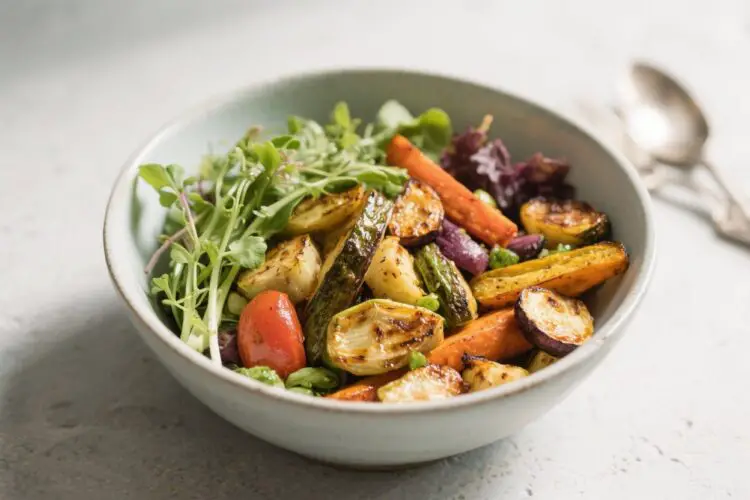
Spring brings crisp greens, sweet carrots, and tender asparagus that practically cook themselves. This harvest bowl celebrates those flavors with simple roasted vegetables, fluffy grains, and a zesty lemon-herb dressing. It’s the kind of meal that tastes clean and vibrant but still fills you up.
No complicated techniques, just smart seasoning and a hot oven. Make it for lunch, a light dinner, or meal prep for the week.
What Makes This Recipe So Good
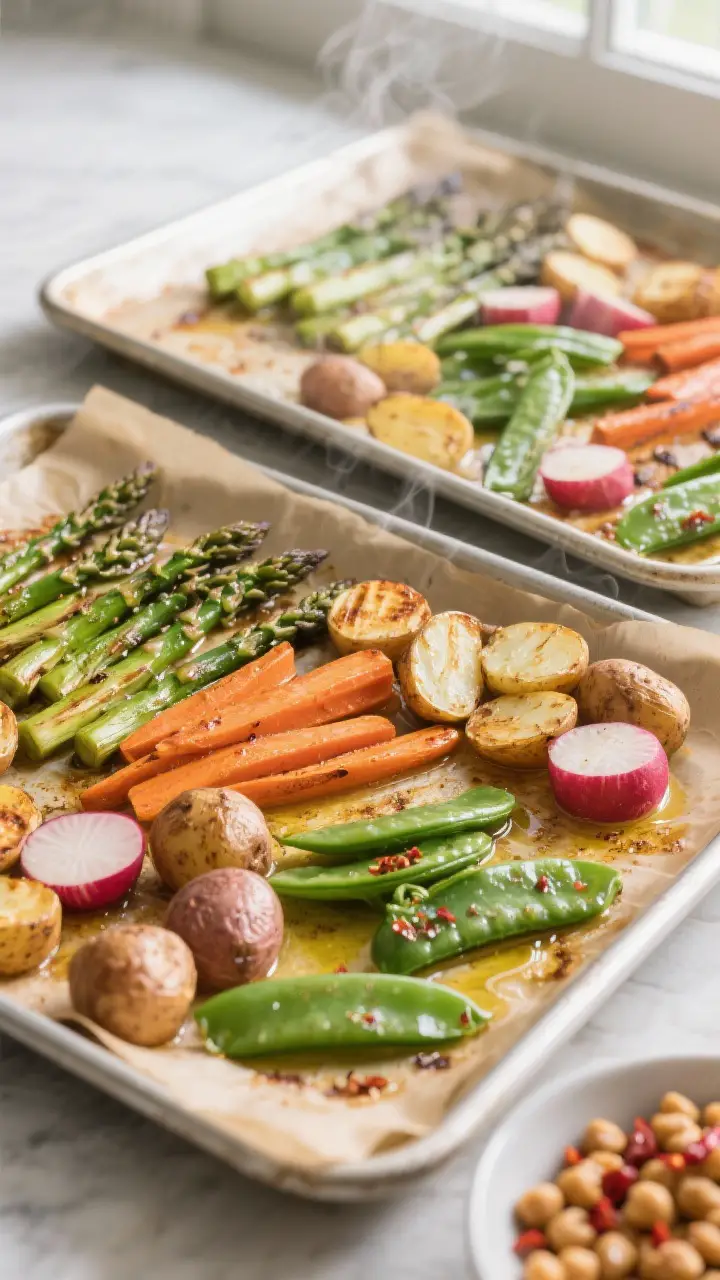
- Bursting with seasonal flavor: Spring produce like asparagus, radishes, and peas shine when lightly roasted or blanched.
- Balanced and satisfying: A good mix of complex carbs, healthy fats, and plant-based protein keeps you full without feeling heavy.
- Meal prep friendly: Most components can be made ahead, then assembled in minutes.
- Flexible and forgiving: Swap in whatever spring vegetables you find at the market. This bowl is a template, not a rulebook.
- Fresh, bright dressing: A lemon-herb vinaigrette ties everything together with a clean, zippy finish.
What You’ll Need
- Grain base: 1 cup dry quinoa, farro, or brown rice (yields about 3 cups cooked)
- Asparagus: 1 bunch, trimmed and cut into 2-inch pieces
- Carrots: 3 medium, peeled and sliced on a bias
- Radishes: 1 bunch, halved (or quartered if large)
- Snap peas or peas: 1 cup, strings removed if using snap peas
- Baby potatoes: 1 pound, halved
- Baby greens: 2 cups arugula or spring mix
- Chickpeas: 1 can (15 oz), drained and rinsed
- Avocado: 1, sliced (optional but recommended)
- Feta or goat cheese: 1/2 cup, crumbled (optional)
- Fresh herbs: 1/2 cup chopped dill, parsley, and chives
- Toasted nuts or seeds: 1/3 cup (pumpkin seeds, sliced almonds, or pistachios)
- Olive oil: 4–5 tablespoons, divided
- Lemon: Zest and juice of 1 large lemon
- Dijon mustard: 2 teaspoons
- Honey or maple syrup: 1 teaspoon
- Garlic: 1 small clove, grated
- Salt and pepper: To taste
- Red pepper flakes: Pinch, optional
How to Make It
- Cook the grains. Rinse quinoa or cook your chosen grain according to package directions.
Fluff and set aside. Season with a pinch of salt and a drizzle of olive oil.
- Preheat the oven. Set to 425°F (220°C). Line two sheet pans with parchment for easy cleanup.
- Prep the veggies. Toss potatoes and carrots with 1–2 tablespoons olive oil, salt, and pepper.
Spread on one sheet pan. On the second pan, toss asparagus and radishes with 1 tablespoon oil, salt, and pepper. Keep snap peas aside for now.
- Roast in stages. Roast potatoes and carrots for 20–25 minutes, stirring once.
After 10 minutes, add the pan with asparagus and radishes. Roast everything until tender with caramelized edges. Add snap peas to the asparagus pan for the last 4–5 minutes to keep them crisp.
- Warm the chickpeas. Toss chickpeas with 1 teaspoon olive oil, a pinch of salt, and red pepper flakes.
Add to a corner of a hot sheet pan for 5–7 minutes just to dry and warm, or toast briefly in a skillet.
- Make the dressing. Whisk together lemon zest and juice, Dijon, honey, garlic, 2–3 tablespoons olive oil, and a pinch of salt and pepper. Stir in chopped herbs. Taste and adjust acidity or salt.
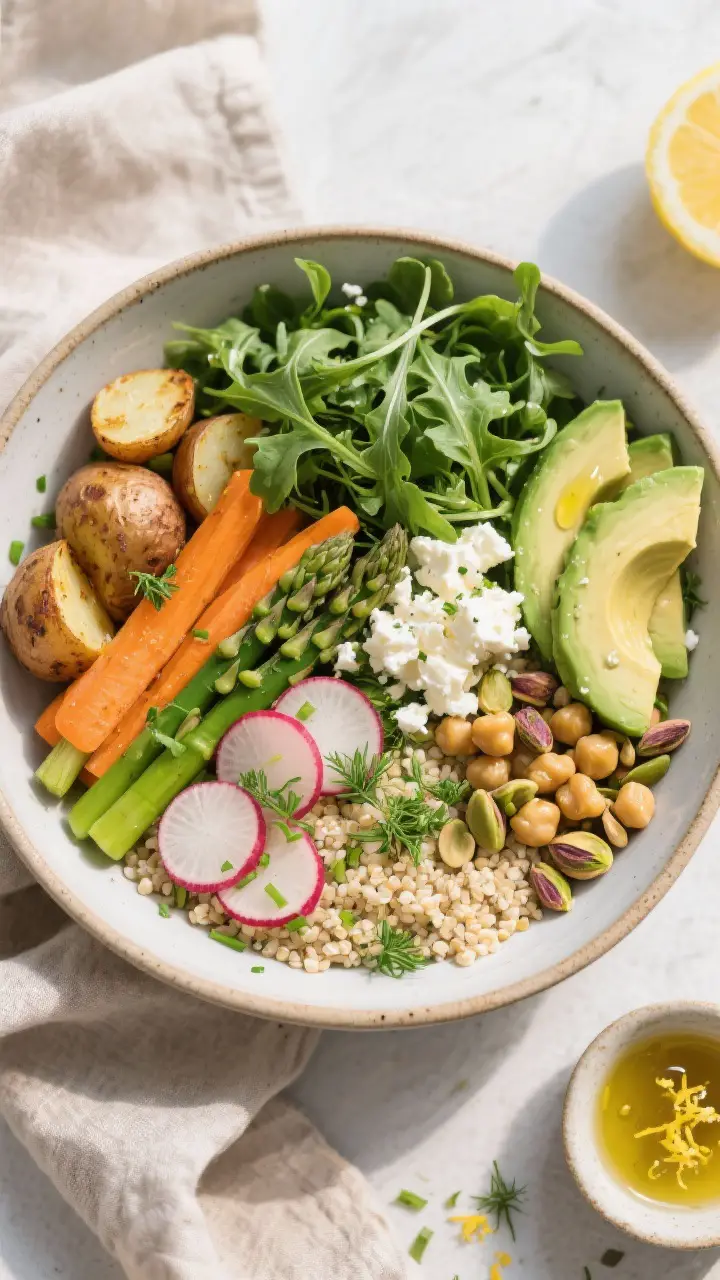
- Assemble the bowls. Add a handful of greens to each bowl.
Spoon in a generous scoop of grains. Top with roasted potatoes, carrots, asparagus, radishes, snap peas, and chickpeas.
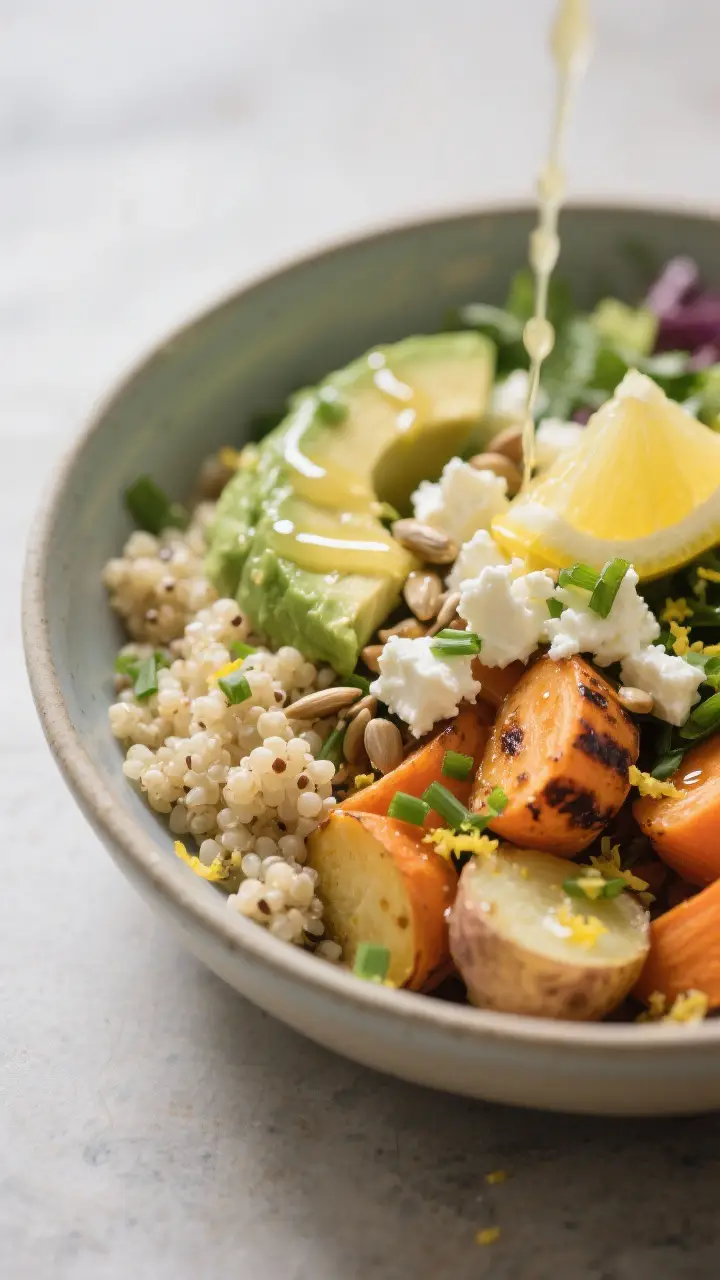
- Finish and serve. Add avocado slices, crumbled feta (if using), and toasted nuts or seeds. Drizzle with the lemon-herb dressing.
Sprinkle extra herbs and black pepper.
How to Store
- Separate components: Store grains, roasted veggies, greens, and dressing in separate containers for 3–4 days.
- Keep it crisp: Add greens and avocado just before serving so they don’t wilt or brown.
- Reheat gently: Warm grains and roasted veggies in a skillet over medium heat or in the oven at 350°F until hot. Avoid microwaving greens.
- Meal prep tip: Portion grains and veggies into containers. Pack dressing and toppings in small jars to add fresh at lunch.
Health Benefits
- Fiber-rich: Whole grains and vegetables support digestion and steady energy.
- Antioxidant-packed: Asparagus, radishes, and peas bring vitamins A, C, K, and plant antioxidants.
- Heart-healthy fats: Olive oil, avocado, and nuts provide monounsaturated fats and omega-3s (if using walnuts).
- Plant-based protein: Chickpeas add protein and minerals like iron and magnesium.
- Lower sodium, high flavor: A bright, homemade dressing means less salt and no additives.
Common Mistakes to Avoid
- Crowding the pan: Overlapping vegetables steam rather than roast.
Use two pans and give them space.
- Undersalting: Season at each step—grains, veggies, and dressing—for full flavor.
- Overcooking tender veggies: Asparagus and snap peas need less time. Add them later to keep color and crunch.
- Skipping texture: Nuts or seeds add crucial crunch. Don’t forget them.
- One-note dressing: Taste and adjust.
A pinch more salt, a touch more lemon, or a drizzle of honey can balance the flavor.
Variations You Can Try
- Protein swap: Add grilled chicken, salmon, or baked tofu. A soft-boiled egg is great too.
- Different grains: Try barley, bulgur, couscous, or cauliflower rice for a lighter option.
- Mediterranean twist: Add olives, sun-dried tomatoes, and a sprinkle of oregano.
- Herb yogurt dressing: Swap the vinaigrette for Greek yogurt blended with lemon, dill, garlic, and olive oil.
- Spice it up: Toss veggies with smoked paprika, cumin, or za’atar before roasting.
- Dairy-free: Skip cheese and add extra avocado or a tahini drizzle.
FAQ
Can I make this bowl gluten-free?
Yes. Use quinoa, brown rice, or millet.
Check labels on mustard and other condiments to ensure they’re gluten-free.
What if I can’t find asparagus?
Use broccolini, green beans, or zucchini. Adjust roasting time so they stay bright and tender.
How can I make it higher in protein?
Add extra chickpeas, tofu, or grilled chicken. A scoop of edamame or a soft-boiled egg works well too.
Can I serve it cold?
Absolutely.
It’s delicious warm, room temp, or chilled. If serving cold, brighten it with extra lemon and herbs before eating.
What nuts or seeds work best?
Pumpkin seeds, pistachios, sliced almonds, or walnuts all add great crunch. Toast them lightly to boost flavor.
How do I keep the avocado from browning?
Slice it right before serving.
If prepping ahead, toss slices with lemon juice and store tightly covered.
Can I roast everything on one pan?
You can if the pan is very large and the vegetables are spaced out. Otherwise, use two pans to avoid steaming.
Is the dressing kid-friendly?
Yes, but you can reduce garlic and mustard for a milder flavor. Add sweetness with a bit more honey if needed.
In Conclusion
This Spring Harvest Bowl with Roasted Vegetables delivers bright flavors, hearty textures, and simple ingredients that feel good to eat.
It’s flexible enough for weeknights and polished enough for company. Mix and match the vegetables you have, keep the dressing zesty, and don’t forget the crunchy topping. Fresh, colorful, and satisfying—this is spring in a bowl.