
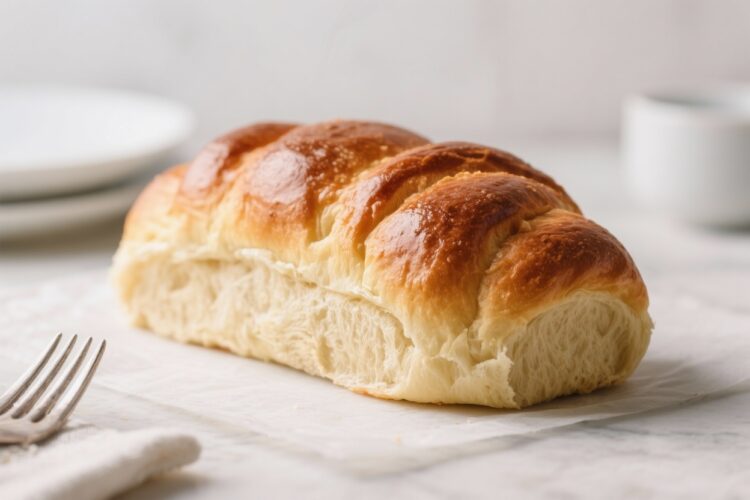
Brioche has a reputation for being fussy, but it doesn’t have to be. This Speedy Brioche keeps the buttery richness and pillowy texture you love, while trimming down the time and effort. It’s perfect for weekend brunch, sandwich buns, or a simple slice with jam.
If you’ve been nervous to try enriched dough, this method is forgiving and beginner-friendly. You’ll get great flavor, a tender crumb, and a beautiful golden crust—without babysitting the dough all day.
Why This Recipe Works
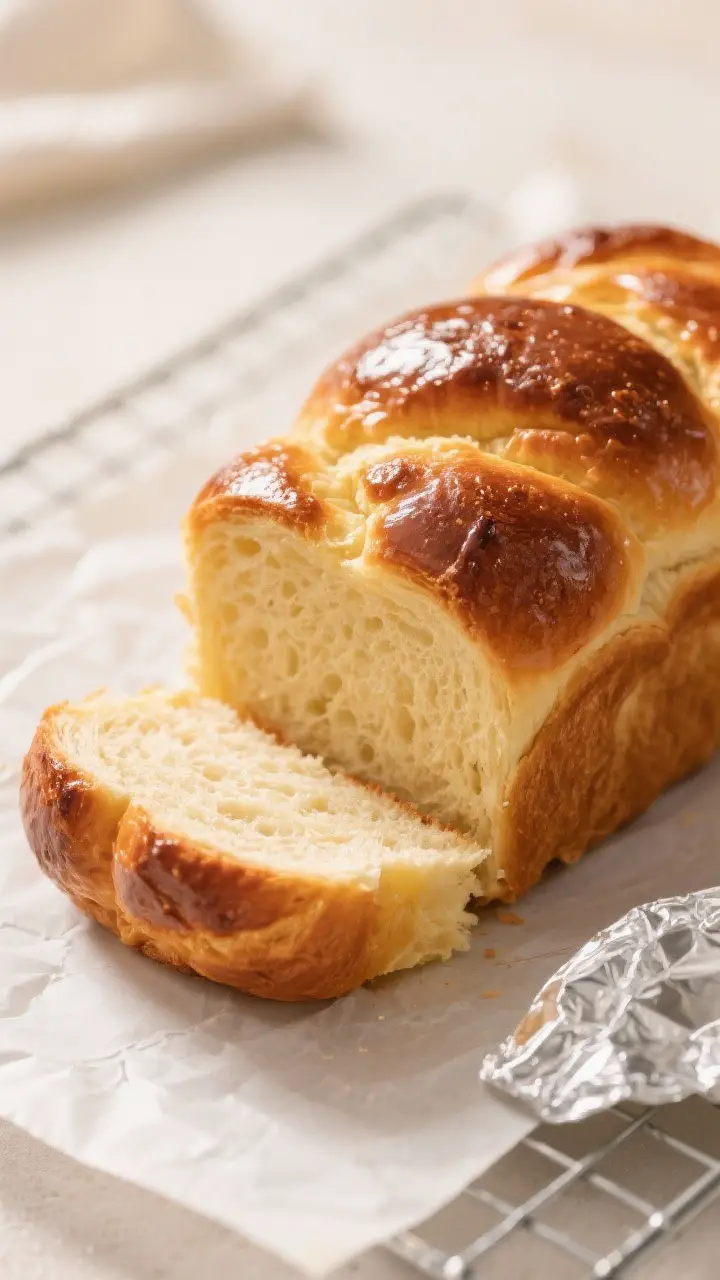
This version streamlines the process without sacrificing the signature brioche texture. The dough uses instant yeast, which works faster and more reliably than active dry.
We also knead longer to develop gluten that can stand up to all the butter. Chilling the dough briefly keeps the butter cool and easy to handle, so it blends smoothly. A slightly higher hydration gives you a soft, light crumb.
Finally, a warm, controlled proof speeds things along while keeping the structure intact.
What You’ll Need
- All-purpose flour – 3 1/4 cups (410 g). Bread flour also works for a slightly chewier crumb.
- Granulated sugar – 1/4 cup (50 g) for gentle sweetness and browning.
- Instant yeast – 2 1/4 tsp (one packet, 7 g) for a fast, reliable rise.
- Kosher salt – 1 1/4 tsp to balance the sweetness.
- Whole milk – 1/2 cup (120 ml), warm to the touch (about 105–110°F / 40–43°C).
- Large eggs – 3, at room temperature for better incorporation.
- Unsalted butter – 10 tbsp (140 g), softened but cool; plus 1 tbsp (14 g) for greasing.
- Vanilla extract – 1 tsp for a subtle aroma (optional but lovely).
- Egg wash – 1 egg beaten with 1 tbsp milk for shine.
Step-by-Step Instructions
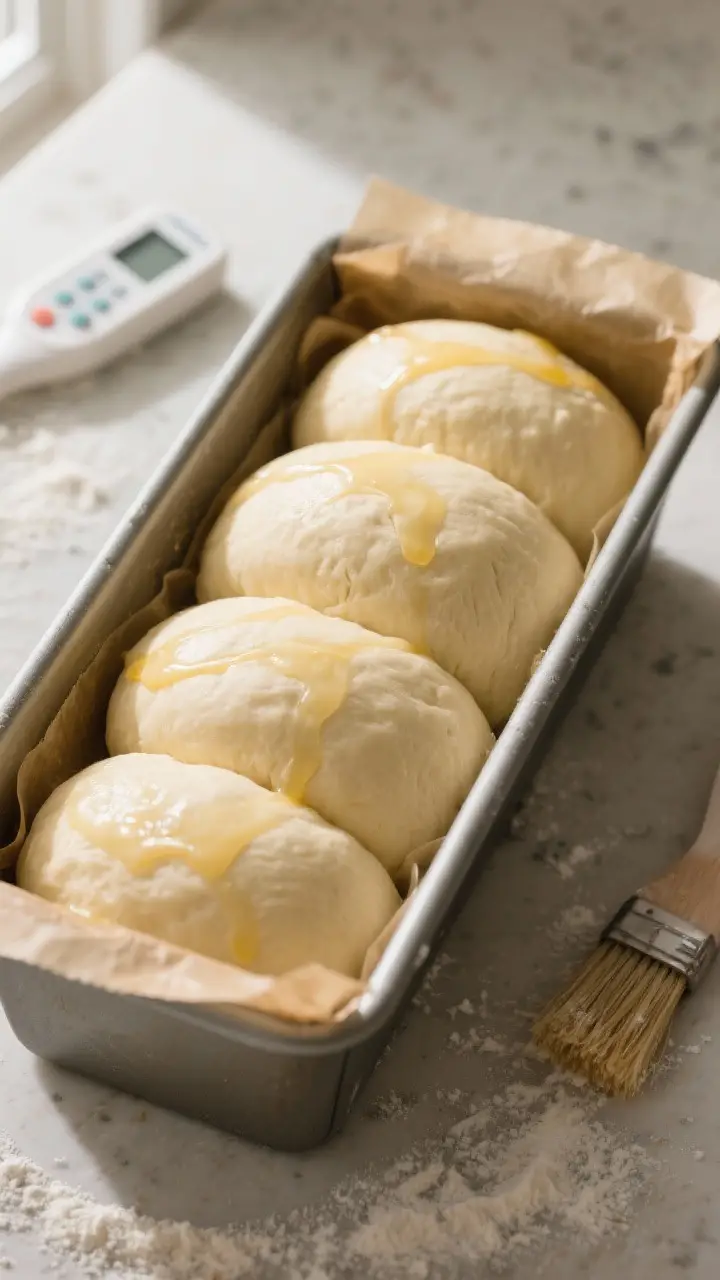
- Prep the liquids. Warm the milk until just warm to the touch, not hot. Crack the eggs into a bowl so they’re ready.
Line a 9×5-inch loaf pan with parchment and lightly butter the sides.
- Mix the dry ingredients. In the bowl of a stand mixer, combine flour, sugar, yeast, and salt. Keep the salt and yeast on opposite sides before mixing so the salt doesn’t hit the yeast directly.
- Form the dough. Add the warm milk, eggs, and vanilla. Mix with the dough hook on low until a shaggy dough forms, about 1 minute.
Increase to medium and knead for 3–4 minutes until smoother.
- Work in the butter. With the mixer running on medium-low, add the softened butter a tablespoon at a time. Let each piece incorporate before adding the next. This step takes about 6–8 minutes.
- Knead to windowpane. Once all the butter is in, continue kneading on medium for 5–7 minutes until the dough is glossy, elastic, and pulls cleanly from the bowl.
It will be soft and slightly tacky. If very sticky, dust in 1–2 tablespoons of flour, but avoid over-flouring.
- Quick chill. Scrape the dough into a lightly greased bowl, cover, and chill for 20–30 minutes. This firms the butter and makes shaping easier without a long rest.
- First rise (speedy). Move the chilled dough to a warm, draft-free spot (75–80°F).
Cover and let rise until puffy and about 60–70% larger, 40–60 minutes. It won’t necessarily double; that’s okay.
- Shape. Turn the dough onto a lightly floured surface. Divide into 4–6 equal pieces.
Roll each into a tight ball by cupping your hand and circling it against the counter. Nestle the balls in the loaf pan, two rows if needed.
- Second rise. Cover loosely and let rise in a warm spot until the dough crowns about 1 inch over the rim of the pan, 35–55 minutes. Press gently; it should spring back slowly and leave a slight dent.
- Preheat and egg wash. Heat oven to 375°F (190°C).
Brush the top with egg wash, getting into the seams. For extra shine, you can do a second coat after 5 minutes of baking.
- Bake. Bake 25–30 minutes until deep golden brown and the internal temperature is around 190°F (88°C). If browning too fast, tent loosely with foil near the end.
- Cool. Let the loaf cool in the pan for 10 minutes, then lift it out and cool on a rack for at least 45 minutes before slicing.
This sets the crumb so it stays soft and fluffy.
Keeping It Fresh
Brioche dries out if left uncovered. Store it at room temperature, wrapped loosely in foil or in a zip-top bag with most of the air pressed out. It keeps soft for 2–3 days.
For longer storage, slice the loaf and freeze in a bag with parchment between slices. Toast from frozen or thaw at room temp. Avoid the fridge—refrigeration stales bread faster.
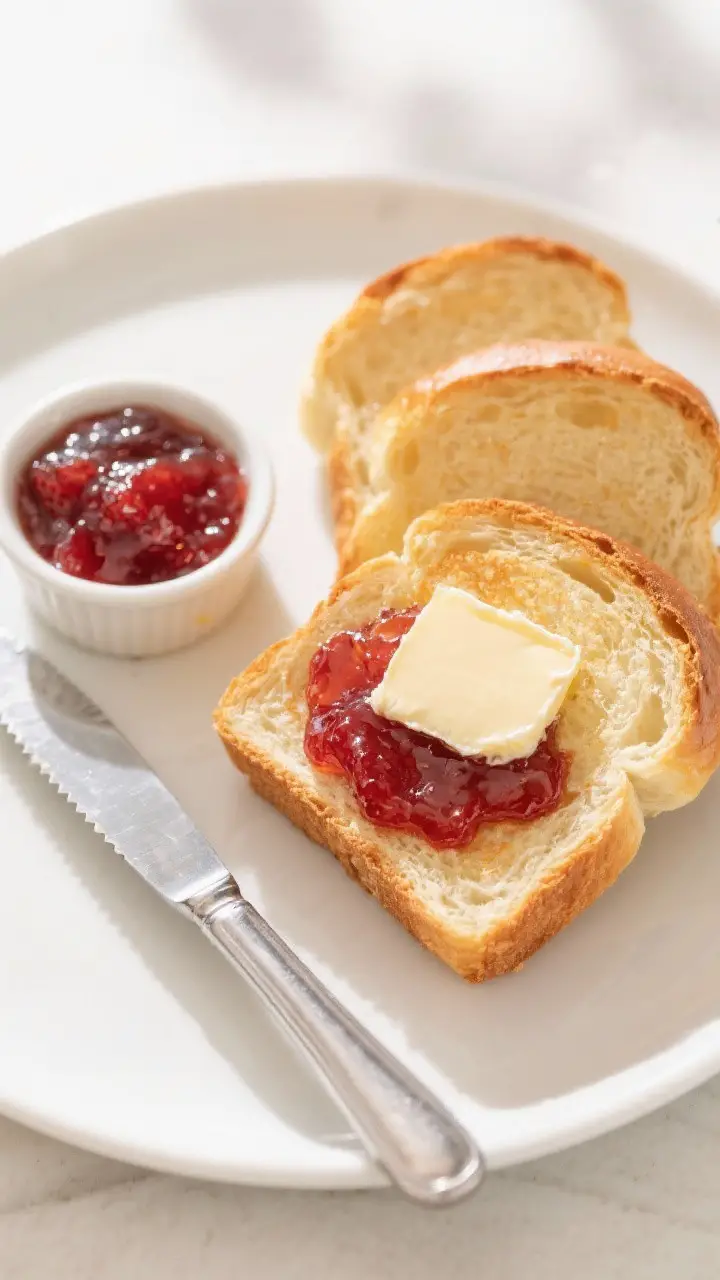
Benefits of This Recipe
- Time-saving. Instant yeast and a warm proof cut hours off traditional brioche.
- Beginner-friendly. The quick chill makes the dough easier to handle, even if you’re new to enriched breads.
- Versatile. Shape into a loaf, rolls, burger buns, or a braided crown.
- Great texture. Soft, slightly sweet crumb with a tender bite and shiny crust.
- Make-ahead options. Freeze dough balls or baked slices for easy breakfasts and sandwiches.
What Not to Do
- Don’t add hot milk. Too-hot liquid can kill the yeast and stall your rise.
- Don’t rush the butter. Add it gradually so the dough emulsifies instead of turning greasy.
- Don’t skip the rest before shaping. The quick chill prevents smearing and tearing.
- Don’t over-flour. Slight tackiness is normal; too much flour makes the crumb dry.
- Don’t slice hot. Cutting too soon compresses the crumb and dries the loaf.
Alternatives
- Dairy-free. Use a rich, unsweetened plant milk and a quality dairy-free butter with at least 75–80% fat.
Expect a slightly different flavor but similar texture.
- Orange or almond twist. Add 1 tsp orange zest or 1/2 tsp almond extract with the vanilla.
- Chocolate chip brioche. Gently fold in 3/4 cup mini chocolate chips after kneading, before the quick chill.
- Rolls or buns. Divide into 8–10 portions, shape into balls, proof on a sheet pan, and bake 15–18 minutes.
- Overnight option. After the first rise, cover and refrigerate up to 12 hours. Shape cold, proof slightly longer, and bake. Flavor deepens, and timing is flexible.
FAQ
Can I use active dry yeast instead of instant?
Yes.
Use the same amount, but bloom it first in the warm milk with a pinch of sugar for 5–10 minutes until foamy. Your rises may take a bit longer.
My dough is very sticky. Is that normal?
A little stickiness is normal with enriched doughs.
Lightly oil your hands and the counter, and add only a tablespoon or two of flour if absolutely necessary. The quick chill also helps.
How do I know the dough is kneaded enough?
It should look smooth and elastic, pull away from the bowl, and stretch thin without tearing when you do a windowpane test. If it tears easily, keep kneading in short bursts.
Can I make this without a stand mixer?
You can, but it’s a workout.
Mix with a spoon, then knead by hand for 12–15 minutes, adding the butter a bit at a time. Use a bench scraper to fold and slap the dough to help it come together.
What if my loaf browns too quickly?
Tent loosely with foil once it reaches a nice golden color. Keep baking until the center hits about 190°F so the crumb sets properly.
Why didn’t my brioche rise?
Common reasons: old yeast, liquid too hot, room too cold, or short kneading.
Check your yeast freshness, keep liquids warm-not-hot, and give the dough a cozy spot to proof.
Can I add fillings like cinnamon sugar?
Yes. Roll the cold dough into a rectangle, brush lightly with butter, sprinkle cinnamon sugar, then roll up and place in the pan. Proof and bake as directed.
How should I slice brioche?
Use a sharp serrated knife and gentle sawing motions.
For neat slices, let the loaf cool completely and wipe the blade between cuts.
Wrapping Up
Speedy Brioche gives you the best parts of classic brioche—buttery flavor, tender crumb, and a glossy top—without the long, complicated schedule. With a few smart steps and simple ingredients, you’ll have fresh, bakery-quality bread in a single afternoon. Make a loaf for toast, shape it into buns, or customize it with chocolate or citrus.
Once you try this streamlined method, brioche will feel like an everyday bake, not a special-occasion project.
Printable Recipe Card
Want just the essential recipe details without scrolling through the article? Get our printable recipe card with just the ingredients and instructions.