

Sourdough focaccia is the kind of bread that makes your kitchen smell like a bakery. It’s crisp on the edges, pillowy in the middle, and packed with flavor from rosemary and flaky sea salt. This version uses active sourdough starter, so you get that gentle tang without any commercial yeast.
The process is relaxed and forgiving, and most of the time is hands-off. If you love simple, beautiful bread that pairs with everything, this is a great place to start.
What Makes This Recipe So Good
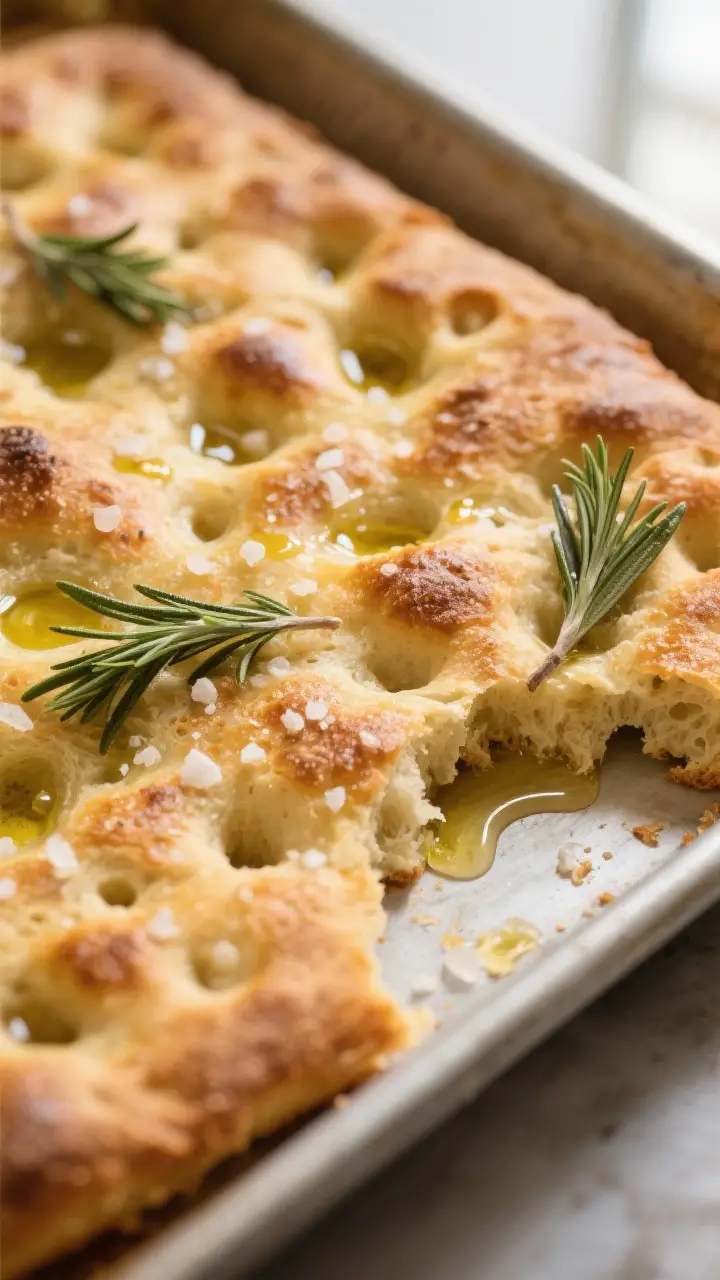
- Big flavor, simple ingredients: Flour, water, salt, olive oil, and starter turn into something special with rosemary and sea salt.
- Fantastic texture: The crumb is open and airy, while the bottom crisps up in olive oil for a golden, crackly crust.
- Low-effort, high-reward: Most of the work happens while the dough rests. Stretch-and-folds replace heavy kneading.
- Flexible timing: The dough can chill overnight, so you can bake when it works for you.
- Great for sharing: It’s ideal for appetizers, sandwiches, or soaking up soups and stews.
What You’ll Need
- 500 g (about 4 cups) bread flour – All-purpose works too; bread flour gives more chew.
- 400 g (1 2/3 cups) water, room temperature – Hydration around 80% for an airy crumb.
- 100 g active sourdough starter (100% hydration) – Bubbly and recently fed.
- 10 g (1 3/4 tsp) fine sea salt
- 40–60 ml (3–4 tbsp) extra-virgin olive oil – For the pan, dough, and topping.
- 2–3 sprigs fresh rosemary, leaves stripped and roughly chopped
- Flaky sea salt – Maldon or similar, for finishing
- Optional toppings: thinly sliced garlic, cherry tomatoes, olives, or caramelized onions
- Equipment: 9×13-inch rimmed baking pan or quarter sheet pan, large bowl, dough scraper, plastic wrap or lid
Instructions
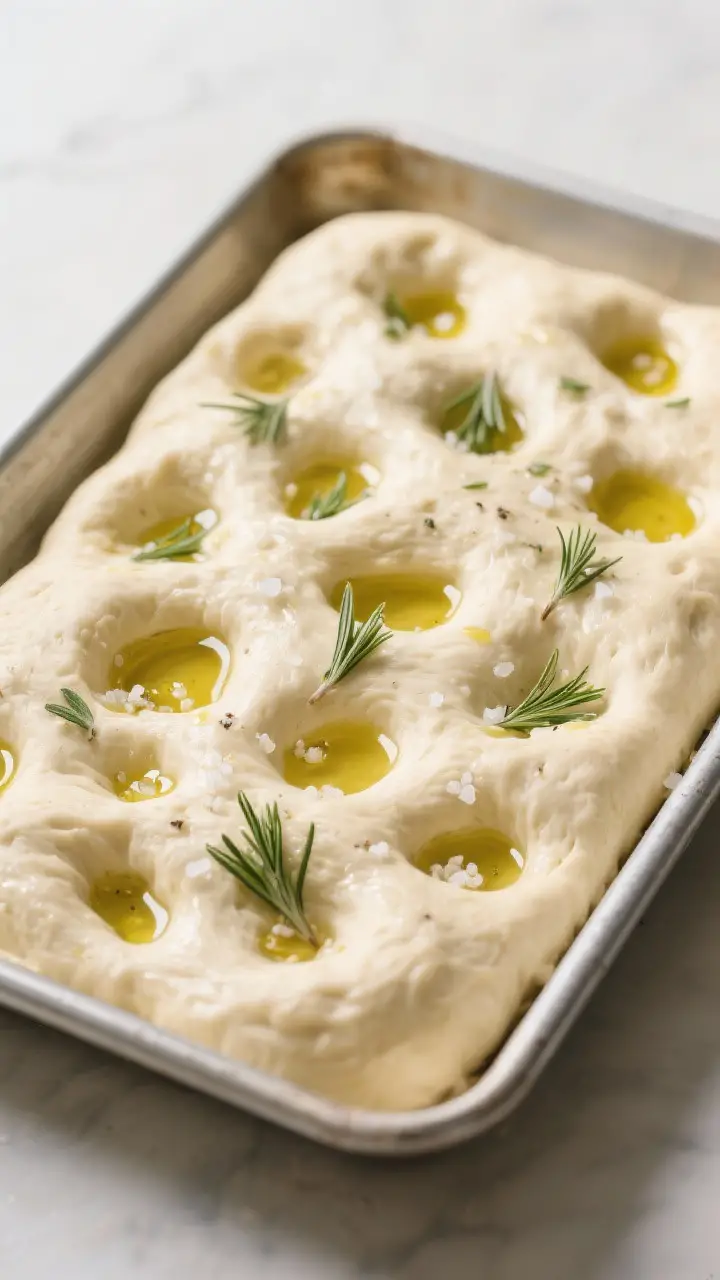
- Mix the dough: In a large bowl, whisk water and active starter until dissolved.
Add flour and salt. Mix with a spatula or your hand until no dry spots remain. The dough will be sticky and shaggy.
Cover and rest for 30 minutes.
- Begin the bulk rise with stretch-and-folds: After the rest, wet your hand and perform 4–6 gentle stretch-and-folds around the bowl. Cover and rest 30 minutes. Repeat this 2 more times (total of 3 rounds over about 90 minutes).
The dough should get smoother and bouncier.
- Let it rise: Cover and let the dough rise at room temperature until puffy and roughly doubled, 2–4 hours depending on temperature. You should see bubbles on the surface and feel lightness when you jiggle the bowl.
- Cold ferment (optional but recommended): For deeper flavor and easier handling, refrigerate the covered dough for 8–24 hours. This step improves texture and makes scheduling easier.
- Prepare the pan: Generously coat your pan with 2–3 tablespoons olive oil.
Don’t skimp—this creates the signature crispy bottom.
- Transfer the dough: Gently tip the dough into the oiled pan. Drizzle 1 tablespoon olive oil on top. With oiled fingers, coax it toward the corners.
If it resists, let it rest 15–20 minutes, then stretch again. Avoid deflating it.
- Final proof: Let the dough rest at room temperature until very puffy and spread to fill most of the pan, about 45–90 minutes. It should wobble like a soft pillow when shaken.
- Heat the oven: Preheat to 450°F (232°C).
If you have a baking steel or stone, place it on the middle rack to help crisp the bottom.
- Dimple and top: Lightly oil your fingers. Press straight down into the dough to create deep dimples across the surface without popping all the bubbles. Sprinkle chopped rosemary and a generous pinch of flaky sea salt.
Add any optional toppings now.
- Bake: Place the pan in the oven and bake 22–28 minutes, until the top is golden with toasted edges and the bottom is well browned. If needed, rotate the pan in the last 5 minutes for even color.
- Finish with olive oil: As soon as it comes out, brush or drizzle another tablespoon of olive oil over the hot focaccia. This boosts flavor and keeps the crust tender on top.
- Cool slightly and serve: Let it cool in the pan 10–15 minutes, then lift out and transfer to a rack.
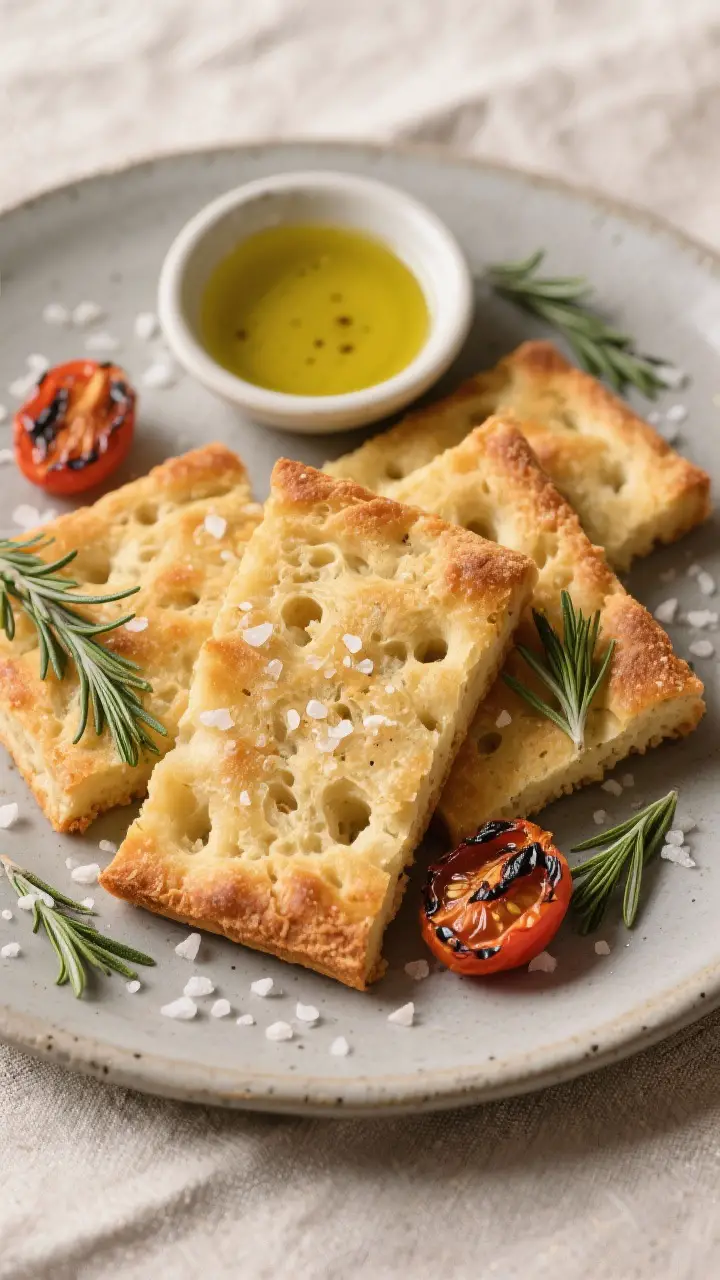
Slice into squares or strips and serve warm.
Storage Instructions
- Room temperature: Store cooled focaccia in an airtight container or wrapped in foil for up to 2 days. Rewarm in a 350°F (175°C) oven for 8–10 minutes.
- Freezer: Wrap pieces tightly in plastic, then foil, and freeze up to 2 months. Reheat straight from frozen at 350°F (175°C) for 12–15 minutes.
- Avoid the fridge: Refrigeration dries out bread quickly.
Freeze instead if not eating within two days.
Why This is Good for You
- Sourdough fermentation: Natural fermentation can make gluten easier to digest for some people and may improve mineral absorption.
- Olive oil: Rich in heart-friendly fats and antioxidants that add flavor without heavy butter.
- Fresh herbs: Rosemary brings aroma and polyphenols, and the strong flavor helps you use less salt overall.
- Satisfying carbs: A balanced way to enjoy bread, especially when paired with vegetables, lean proteins, or beans.
What Not to Do
- Don’t use an inactive starter: If your starter isn’t bubbly and rising, the dough won’t lift properly.
- Don’t skimp on oil in the pan: Oil is key for a crisp, golden bottom and that classic focaccia flavor.
- Don’t rush the proof: If the dough isn’t puffy and jiggly before baking, you’ll get a dense crumb.
- Don’t over-handle after proofing: Rough shaping deflates gas pockets. Be gentle with dimpling.
- Don’t bake too cool: A hot oven gives you lift, color, and texture. Preheat thoroughly.
Variations You Can Try
- Garlic and herb: Add thin garlic slices before baking or infuse olive oil with garlic and brush on afterward.
- Tomato and olive: Press halved cherry tomatoes and pitted olives into the dough before baking.
- Onion and thyme: Scatter caramelized onions and fresh thyme for a sweet-savory combo.
- Cheesy crust: Sprinkle grated Parmesan or pecorino in the last 5 minutes of baking for a salty finish.
- Whole grain boost: Swap 15–20% of the flour for whole wheat.
Increase water by a tablespoon if needed.
- Sheet-pan sandwich bread: Slice horizontally and fill with roasted veggies, mozzarella, and pesto.
FAQ
How do I know my starter is ready?
Your starter should double within 4–6 hours of feeding, look bubbly, and pass the float test (a small spoonful floats in water). It should smell pleasantly tangy, not harsh or boozy.
Can I skip the cold ferment?
Yes. You’ll still get good focaccia, but the cold ferment improves flavor and handling.
If you skip it, make sure the dough is fully puffy before baking.
Why is my focaccia dense?
Common causes are an underactive starter, too-short proof, or handling the dough too roughly before baking. Also check hydration—if the dough is too dry, it won’t open up.
What size pan should I use?
A 9×13-inch pan is standard for this amount of dough. For thicker focaccia, use a slightly smaller pan; for thinner, use a larger sheet.
Adjust bake time by a few minutes as needed.
Can I make it same-day?
Absolutely. Start in the morning, allow a full bulk rise, skip the fridge, proof in the pan until very puffy, and bake by late afternoon.
Is bread flour necessary?
No. All-purpose works fine and gives a slightly softer bite.
Bread flour offers more chew and structure, which many people prefer.
How much rosemary should I use?
About 1 to 1.5 tablespoons chopped rosemary is plenty. It’s potent, so a little goes a long way. You can add more after baking if you want a stronger hit.
Do I need parchment paper?
Not if you oil the pan well.
Parchment can help with easy removal, but heavy oil is what creates the crispy crust.
Can I use part whole wheat flour?
Yes, up to 20%. Whole wheat absorbs more water, so add a touch more as needed to keep the dough soft and sticky.
How do I re-crisp leftovers?
Warm slices in a 375°F (190°C) oven for 5–8 minutes. A light drizzle of olive oil before reheating helps refresh the crust.
In Conclusion
Sourdough focaccia with rosemary and sea salt is a bread that feels special without being fussy.
The method rewards patience, not perfect technique, and the result is fragrant, golden, and wonderfully soft. Keep the steps simple, trust the dough to rise, and let the oven do its work. Serve it warm, tear it with your hands, and enjoy every salty, herby bite.
Printable Recipe Card
Want just the essential recipe details without scrolling through the article? Get our printable recipe card with just the ingredients and instructions.