
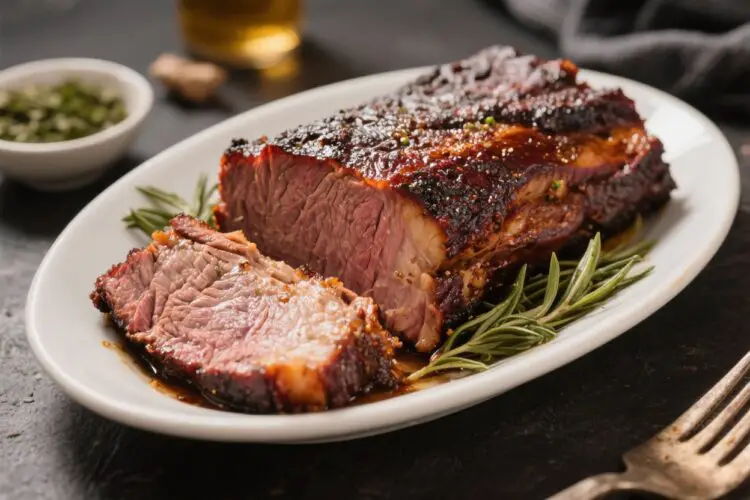
Smoking brisket is one of those kitchen projects that feels like a small event. It takes time, patience, and a little care, but the payoff is slices of tender, smoky beef that can feed a crowd and make you proud. This version is simple, reliable, and flexible for beginners and seasoned pitmasters alike.
You’ll learn how to pick a brisket, set up your smoker, and nail that perfect bark. With a good rub, steady heat, and rest time, you’ll get juicy meat that slices clean and tastes incredible.
What Makes This Recipe So Good
- Foolproof method: Low and slow heat means consistent results with minimal fuss.
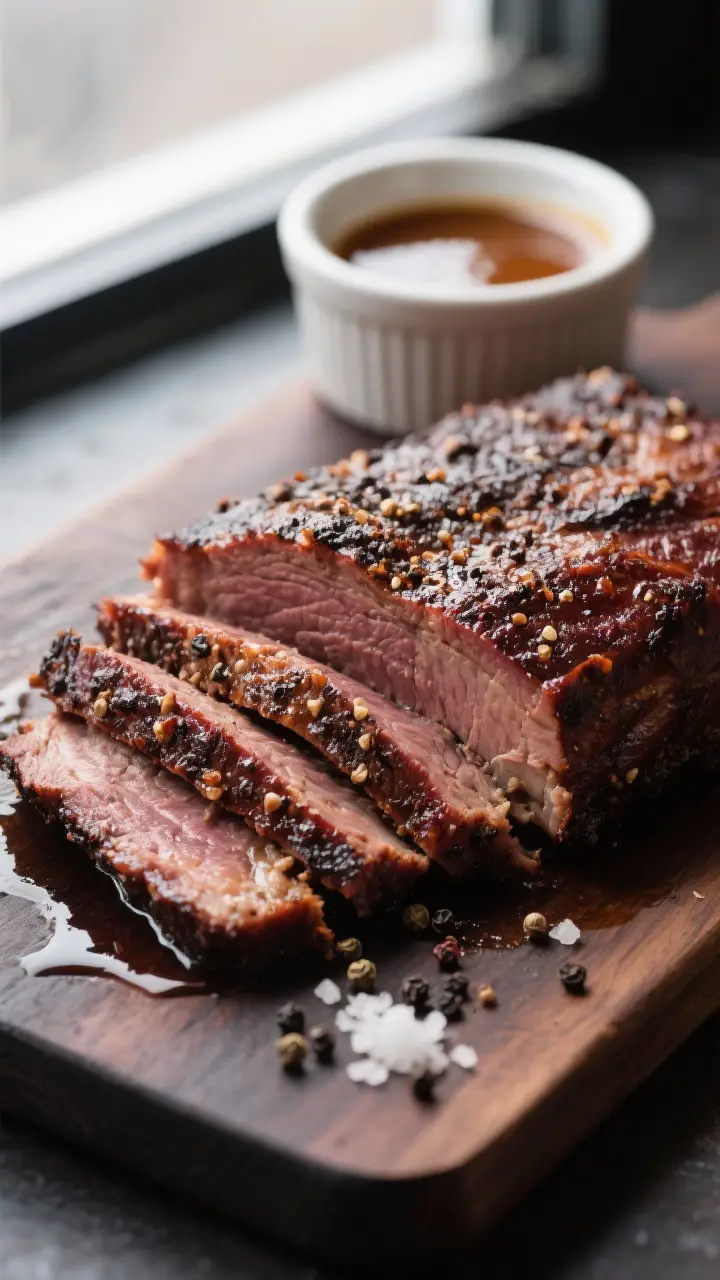
- Flavorful bark: A balanced rub and steady smoke build a crust that’s deeply savory, slightly peppery, and full of character.
- Juicy texture: Proper trimming, temperature control, and resting keep the brisket moist and tender.
- Flexible wood choices: Oak for balance, hickory for punch, or fruit woods for mild sweetness.
- Great leftovers: Brisket reheats beautifully and works in sandwiches, tacos, bowls, and more.
What You’ll Need
- Whole packer brisket (10–14 pounds): Includes both the flat and the point for ideal flavor and juiciness.
- Yellow mustard or oil: Light binder to help the rub stick (optional but helpful).
- Rub:
- 1/4 cup kosher salt
- 1/4 cup coarse ground black pepper
- 2 tablespoons paprika (sweet or smoked)
- 1 tablespoon garlic powder
- 1 tablespoon onion powder
- 1 teaspoon cayenne (optional for heat)
- 1 tablespoon brown sugar (optional for a touch of caramelization)
- Wood: Oak, post oak, hickory, or a mix with apple or cherry.
- Equipment: Smoker or grill set up for indirect heat, sharp knife, instant-read thermometer or probe, butcher paper or heavy-duty foil, spray bottle with water or apple cider vinegar.
How to Make It
- Trim the brisket. Place it cold on a cutting board. Trim the fat cap to about 1/4 inch and remove hard, waxy fat that won’t render.
Square off thin, scraggly edges to prevent burning.
- Mix the rub. Combine salt, pepper, paprika, garlic powder, onion powder, cayenne, and brown sugar if using. Stir well so it’s evenly blended.
- Apply binder and rub. Lightly coat the brisket with mustard or oil. Season generously on all sides.
Press the rub in so it sticks, but don’t rub it off.
- Preheat the smoker. Aim for 225–250°F with clean, thin blue smoke. Use a water pan to help maintain humidity and temperature stability.
- Smoke, fat cap up or down? Choose based on your heat source. If heat comes from below, place fat cap down to protect the meat.
If heat is from above or the side, fat cap up can help baste.
- Spritz occasionally. After the first 2–3 hours, spritz every hour with water or a 50/50 mix of water and apple cider vinegar to keep the surface moist and help the bark set.
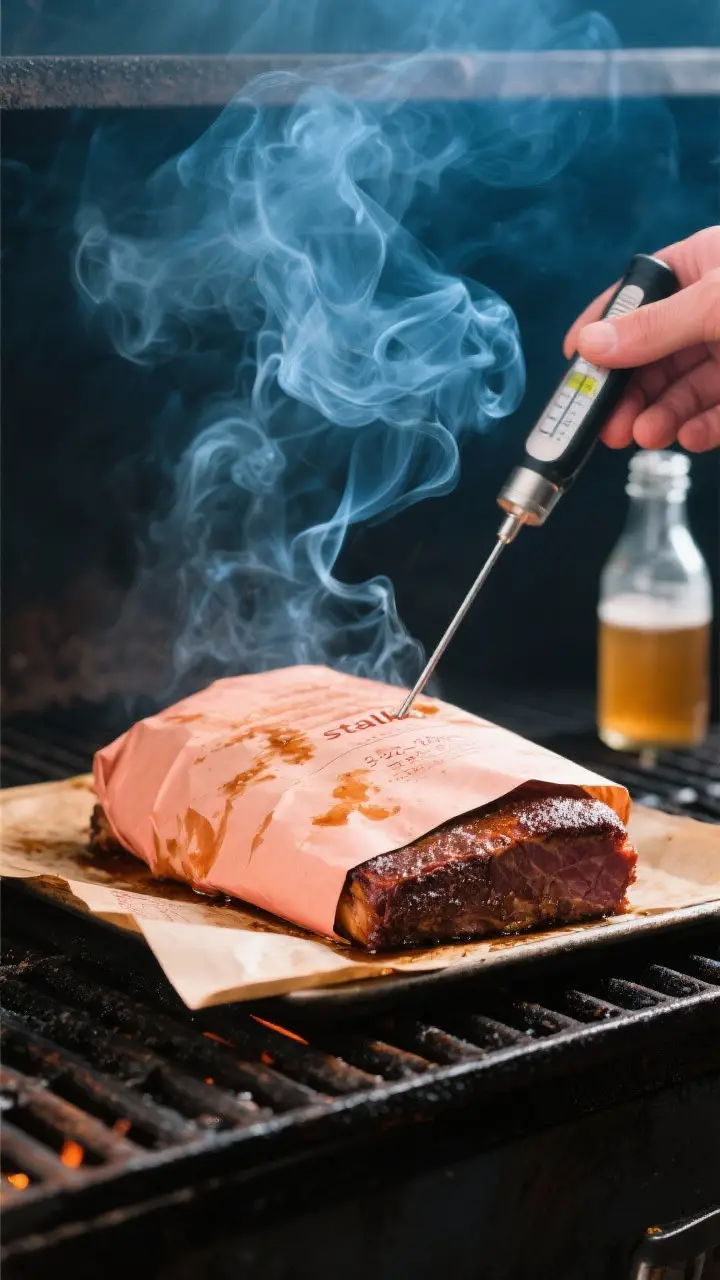
- Monitor temperature. Let the brisket climb slowly to about 165°F internal. Expect a “stall” where the temperature stops rising for an hour or two—that’s normal as moisture evaporates and cools the surface.
- Wrap at the stall. When the bark looks set and dark mahogany and the internal temp is around 165–175°F, wrap tightly in peach butcher paper (preferred for breathability) or foil (for speed). This helps push through the stall and retain moisture.
- Finish cooking. Return the wrapped brisket to the smoker.
Continue until the internal temp reaches 200–205°F, but more importantly, until a probe slides into the flat with butter-like tenderness. Temperature is a guide; feel is king.
- Rest properly. Rest at least 1–2 hours, still wrapped, in a cooler or warm oven (turned off). This allows juices to redistribute and collagen to relax, making it sliceable and tender.
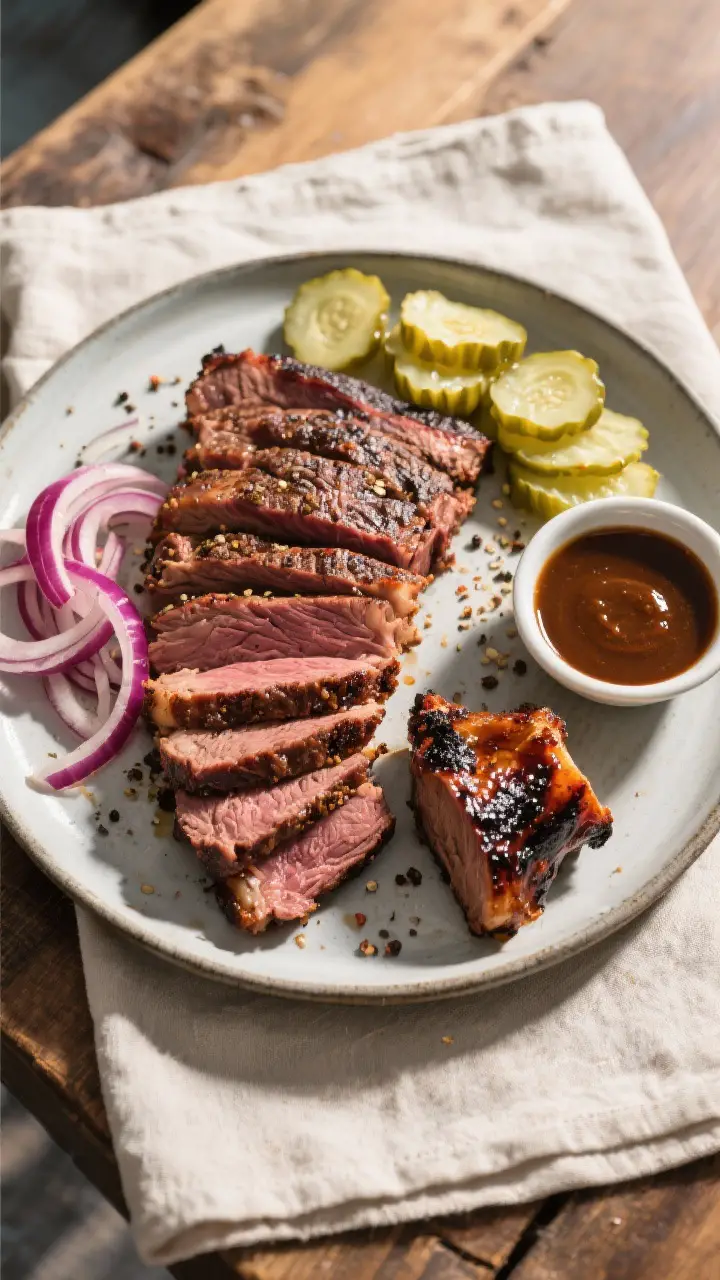
- Slice and serve. Separate the flat and the point along the natural seam.
Slice the flat against the grain into pencil-thick slices. For the point, rotate and slice or cube for burnt ends. Serve with pickles, onions, and your favorite sauce on the side.
How to Store
- Refrigerate: Cool completely, then store sliced brisket with its juices in an airtight container for up to 4 days.
- Freeze: Wrap tightly in foil or vacuum seal with a bit of jus.
Freeze up to 3 months.
- Reheat: Warm gently in a 250°F oven, wrapped with a splash of beef broth or reserved drippings until heated through. Alternatively, reheat sealed slices in simmering water for ultra-juicy results.
Health Benefits
- Protein-rich: Brisket provides complete protein to support muscle repair and satiety.
- Iron and B vitamins: Red meat offers heme iron and B12, which support energy and cognitive function.
- Collagen and gelatin: Slow cooking breaks down connective tissue, contributing to a silky mouthfeel and amino acids like glycine.
- Customizable sodium and sugar: Making your own rub lets you control salt and skip excess sugar if desired.
Pitfalls to Watch Out For
- Skipping the trim: Too much hard fat won’t render and can block seasoning from the meat.
- Dirty smoke: Thick white smoke can turn the bark bitter. Aim for thin, almost invisible smoke.
- Over-seasoning with salt: Brisket is large, but salt penetrates deeply over hours.
Taste your rub and season evenly, not aggressively.
- Rushing the stall: Cranking heat too high can dry the meat. Wrap and wait it out.
- Skipping the rest: Cutting too soon will spill precious juices and toughen the texture.
- Slicing the wrong way: Always cut against the grain, especially on the flat. Rotate when you hit the point.
Variations You Can Try
- Texas-style classic: Keep it simple with a 50/50 salt and coarse black pepper rub, oak wood, and no sugar.
- Sweet heat: Add brown sugar, cayenne, and a touch of chili powder, then finish with a light glaze of warmed honey and hot sauce.
- Coffee rub: Mix in fine-ground coffee and a little cocoa powder for a deep, roasty bark.
- Herb and garlic: Add dried thyme, rosemary, and extra garlic powder for an aromatic twist.
- Burnt ends: Cube the point after cooking, toss with a little sauce and rub, then return to the smoker to caramelize.
FAQ
How long does it take to smoke a brisket?
Plan roughly 1 to 1.5 hours per pound at 225–250°F, plus at least an hour to rest.
A 12-pound brisket often takes 12–16 hours, depending on the stall and your smoker’s stability.
What internal temperature should brisket be?
Target 200–205°F in the thickest part of the flat, but rely on tenderness. When a probe slides in with little resistance, it’s done, even if the number is slightly lower or higher.
Do I need to inject the brisket?
No. A well-trimmed brisket with good marbling, a solid rub, and proper temperature control will be juicy.
Injection can help in leaner cuts or for competition, but it’s optional at home.
What wood is best?
Post oak is classic for brisket. Hickory adds a stronger smoke flavor. Apple or cherry soften the profile.
Mix and match based on your preference, but avoid resinous woods like pine.
Is wrapping necessary?
It’s not mandatory, but wrapping speeds the stall and preserves moisture. Butcher paper keeps the bark crisper, while foil cooks faster but can soften the crust a bit.
Can I make this on a charcoal or gas grill?
Yes. Set up for indirect heat around 225–250°F, add a water pan, and place wood chunks on the hot side.
Keep vents adjusted for steady airflow and temperature.
How do I know which way the grain runs?
Before seasoning, look for the muscle fibers on the flat and make a small corner cut to mark the grain direction. After cooking, slice against that direction for the cleanest bite.
What if my brisket is done early?
Hold it. Wrap tightly and rest in a dry cooler lined with towels.
It can stay hot for 3–4 hours and will be more tender after a long rest.
In Conclusion
Smoked brisket rewards patience more than perfection. Trim it well, season simply, manage clean smoke, and let time do the heavy lifting. Wrap when the bark is ready, rest generously, and slice against the grain.
With this approach, you’ll serve tender, flavorful brisket that keeps people coming back for seconds.